Vested interests — controlling the news about nuclear safety

Who controls the truth about a nuclear disaster?
The end of the monopoly of these experts would allow a proper debate on the risks of nuclear energy. At a time when many voices are speaking out in favor of the development of atomic energy as the lesser evil in the face of climate change, such a debate is urgent.
How monolithic institutions decide what is safe for the rest of us, Beyond Nuclear, By Christine Fassert and Tatiana Kasperski, 12 Sept 21,
In December 2020, twenty years after the final closure of the Chernobyl nuclear power plant, the Ministry of Culture of Ukraine announced its intention to prepare an application to include certain objects in the exclusion zone around Chernobyl in the UNESCO World Heritage List….
The Chernobyl site would symbolize the long history of accidents that have marked the atomic age, from Kychtym and Windscale (1957), to Three Mile Island (1979) and Fukushima (2011), whose tenth anniversary we commemorated this year.
Moreover, the Chernobyl accident constitutes a particular moment in this history, namely the beginning of the institutionalization of the international management of the consequences of nuclear accidents, whose impact became fully apparent at the time of the Fukushima accident.
A small group of organizations
If the origins of accidents are most often explained by factors related to the development of the nuclear industry and its regulatory bodies at the national level, the “management” of their consequences gradually extends beyond national borders
In this respect, Chernobyl established the monopolization of the authoritative knowledge of ionizing radiation by a small group of organizations — the International Atomic Energy Agency (IAEA), the International Commission on Radiological Protection (ICRP) and the United Nations Scientific Committee on the Effects of Atomic Radiation (UNSCEAR).
Through a series of alliances and co-options, these organizations formed a monolithic bloc on the issue of radiological risk.
Relegated to a militant marginality
From that moment on, divergent points of view were de-legitimized and relegated to a form of militant marginality. These included the positions of such individuals as “dissident” scientist Keith Baverstock who directed the radiation protection program at the World Health Organization’s Regional Office for Europe, and those of such organizations as the International Association of Physicians for the Prevention of Nuclear War (IPPNW).
This monopoly translates into an internationalization of accident management that relies on a series of tools designed to establish a “normalization” of the post accident situation through the depoliticization of the management of risks related to radioactive fallout. They enshrine the power of experts close to international nuclear organizations to determine what sacrifices in terms of health and the environment are acceptable.
As physicists Bella and Roger Belbéoch point out:
“Far from calling into question the power they have secured for themselves in society, the nuclear disaster allows them to constitute themselves into a unified international body with even greater powers. It is at the moment when the scientific experts can no longer promise anything other than disaster management that their power inevitably takes hold.”
Fukushima
This monopoly over knowledge and management of an accident was very much present in Japan in 2011, when the Japanese authorities put in place measures, which, by largely referring to international standards, warded off objections: the accident was dealt with by the experts.
However, a shift occurred in this monopoly when a UN rapporteur, Anand Grover, severely criticized Tokyo’s management of the disaster.
At the same time, new conceptual tools proposed by the social sciences, such as the “production of ignorance”, offer a framework for analysis that makes it possible to extend the criticisms beyond the domain of a purely expert debate, opening the way to a re-politicization of the accident and its consequences.
Making nuclear accidents manageable
But, first of all, how can you make a nuclear accident manageable when, as was the case at Chernobyl and Fukushima, it causes very large releases of radioactive particles, spreading around the globe and causing long-term contamination of tens of thousands of square kilometers?
Hundreds of thousands of people have been evacuated or relocated from these territories, and hundreds of thousands of others continue to live in an environment affected by radioactivity.
Zoning, that is, the division of these territories into several “zones” according to the density of contamination and the necessary protective measures, was the first instrument that made it possible, in Japan and in the former Soviet Union, to make the accident manageable……
This zoning mechanism set up by the Japanese government is part of a regulatory framework established by the two major international nuclear institutions, the IAEA and the ICRP. The ICRP sets the dose limit for the public at 1 millisievert (mSv)/year. Since 2007, the ICRP has authorized government authorities to raise this threshold (from 1 to 20 mSv/year) in the case of a nuclear accident.
When the Japanese authorities, like the Soviet authorities in 1986, chose to raise the threshold following the accident, they justified it in terms of the virtual absence of any health risks.
The radiological threshold
The mechanism is based in particular on the choice of a radiological threshold from which the population will be evacuated.
In Japan, government officials consider that the risk of developing cancer from exposure to a dose of 100mSv or less is so low according to “the international (scientific) consensus, (that) it is made undetectable by the carcinogenic effects of other factors.”
Limiting evacuations and compensations
The sociologist and historian of science Sezin Topçu shows how this zoning mechanism, which has become an indispensable element of nuclear accident management, is above all a way of limiting evacuation and compensation for damage caused by an accident, since its costs (economic, political or social) would be prohibitive for the nuclear industry and the State.
This optimization approach is also enshrined at the international level in the recommendations issued by the IAEA and the ICRP.
For example, in the case of Japan, the threshold of 20 mSv/year appears to have been chosen in part to avoid evacuating the Naka Dori region and its major cities: the established zone borders made it possible to exclude such cities in the center of the prefecture, including Fukushima, from evacuation orders…………………………..
Mechanisms of ignorance production
More recently, however, various social scientists have proposed an analysis of the promotion of a reassuring stance on these dangers as part of the mechanisms of ignorance production.
The production of ignorance, which can be both involuntary and intentional, was initially studied for a number of risks, such as tobacco.
Approaching radiological risks in terms of the production of ignorance makes it possible to break with the “exceptionalism” with which the nuclear issue has long been associated, and to consider the dangers of ionizing radiation within the broader field of health risks and its banal issues of power.
Minimizing gravity
The internationalized management of nuclear disasters is in fact based on various mechanisms of ignorance production. For instance, the sociologist of science, Olga Kuchinskaya,- describes the “politics of invisibility” that were adopted after the Chernobyl disaster.
She points out that the public visibility of the effects of ionizing radiation depends on the existence of material infrastructures – such as measuring devices, information systems and equipment — but also institutional infrastructures (for example, following a cohort of people in order to make health effects visible depends on this articulation between material and institutional elements).
This infrastructure is very costly and, in the case of Chernobyl, has not been maintained over time. Moreover, the assessment of the effects of radiation was essentially taken care of by international institutions, while local doctors and researchers, for their part, revealed a completely different and much more alarming picture of the health situation.
Kate Brown describes how various international bodies, primarily the IAEA and WHO, worked to redefine the health effects of Chernobyl, to minimize their severity, and thus actively to produce “ignorance” about the impact of the disaster.
This non-knowledge was in fact a crucial instrument that made the disaster “manageable” and allowed, as Adriana Petryna points out, “the deployment of authoritative knowledge, especially when applied to the management of the exposed population”.
The monopoly of international experts, until when?
By addressing the “exceptional” character of nuclear energy and ionizing radiation, these criticisms, whether they are made within UN bodies or by social science researchers, open the way to questioning the monopoly of international nuclear institutions in assessing radiological risk and framing so-called “post-accident” policies.
A re-politicization of the management of accident consequences that brings the “management” of a nuclear accident into the broader framework of human rights therefore becomes possible.
When the next nuclear accident occurs, it is not a given that citizens will accept the “inevitability” of the power of international experts to decide, on their behalf, what constitutes an acceptable risk.
The end of the monopoly of these experts would allow a proper debate on the risks of nuclear energy. At a time when many voices are speaking out in favor of the development of atomic energy as the lesser evil in the face of climate change, such a debate is urgent.
This article was first published in The Conversation in French on April 26, 2021, as well as on Beyond Nuclear International. English translation provided by the authors.
Christine Fassert is a social anthropologist at Université Paris 1 Panthéon-Sorbonne. Tatiana Kasperski is a research associate– Department of Humanities at Universitat Pompeu Fabra https://beyondnuclearinternational.org/2021/09/12/vested-interests/
@ChristinaMac1
Australian and global fossil fuel giants make $1 trillion bet against global climate efforts — RenewEconomy

Australian and global oil and gas companies continue to pour huge amount of investment growing their production, defying global climate targets, new report finds. The post Australian and global fossil fuel giants make $1 trillion bet against global climate efforts appeared first on RenewEconomy.
Australian and global fossil fuel giants make $1 trillion bet against global climate efforts — RenewEconomy
Australian solar innovator backed by Cannon-Brookes claims world efficiency record — RenewEconomy

Australian solar start-up founded in a garage and backed by billionaire investors included Mike Cannon-Brookes, claims new world solar efficiency record. The post Australian solar innovator backed by Cannon-Brookes claims world efficiency record appeared first on RenewEconomy.
Australian solar innovator backed by Cannon-Brookes claims world efficiency record — RenewEconomy
Fitzgibbon’s departure will free Albanese to take climate fight to Morrison — RenewEconomy

Labor’s coal contrarian Joel Fitzgibbon to leave parliament, just as Albanese promises to be in lockstep with the US on climate policy. The post Fitzgibbon’s departure will free Albanese to take climate fight to Morrison appeared first on RenewEconomy.
Fitzgibbon’s departure will free Albanese to take climate fight to Morrison — RenewEconomy
Expert response to the pro nuclear report by the Joint Research Centre

Any major expansion of nuclear energy would delay the decommissioning of fossil-fired power plants, as the latter would have to remain in operation during this period and therefore make it hard to achieve the climate change mitigation objective. It is even possible to argue that nuclear energy hinders the use of other alternatives with low CO2 emissions because of its high capital intensity. Otherwise this capital could be used to expand alternative energy sources like sun, wind and water
While nuclear power generation in the electricity generation phase has been associated with relatively low greenhouse gas emissions from a historical perspective, the lions’ share of greenhouse gas emissions in the nuclear fuel cycle is caused by the front-end and back-end processing stages. Based on estimates, the CO2 emissions can be broken down into the construction of nuclear power plants (18%), uranium mining and enrichment (38%), operations (17%), processing and storing nuclear fuel (15%) and decommissioning activities at the power plant (18%) (BMK, 2020, p.6)
Generating huge quantities of dangerous waste is being continued for decades without any effective disposal solution being available. The JRC itself says that the primary and best waste management strategy is not to generate any radioactive waste in the first place. However, this assessment is not consistently applied within the report.
The draft of the delegated legal act is based on the recommendations of the so-called Technical Expert Group (TEG). …..The TEG did not recommend that nuclear energy should be included in the EU taxonomy register at that time and recommended an in-depth study of the DNSH criteria (TEG, 2020b).
It is clear that the JRC barely touched on some environment-related aspects of using nuclear energy or did not consider them in its assessment at all.
.… Questions must also be raised about the ageing process and the brittleness of materials and therefore the long-term behaviour of nuclear power plants beyond the original design period.
This very positive presentation of future prospects for nuclear energy, which is shown in the JRC Report, must be viewed critically………..this presentation by the JRC is suspect from a professional point of view and possibly indicates a lack of adequate independence .
Expert response to the report by the Joint Research Centre entitled “Technical assessment of nuclear energy with respect to the ‛Do No Significant Harm’ criteria in Regulation (EU) 2020/852, the ‛Taxonomy Regulation’” Particularly considering the suitability of criteria for including nuclear energy in EU taxonomy The Federal Office for the Safety of Nuclear Waste Management (BASE) with support from the Federal Office for Radiation Protection (BfS) June 2021
Summary
The Federal Office for the Safety of Nuclear Waste Management (BASE) with support from the Federal Office for Radiation Protection (BfS), acting on behalf of the Federal Ministry for the Environment, Nature Conservation and Nuclear Safety (BMU), has examined the report by the Joint Research Centre (JRC) of the European Union (EU) entitled “Technical assessment of nuclear energy with respect to the ‘Do No Significant Harm’ criteria of Regulation (EU) 2020/852 (‘Taxonomy Regulation’)” to see whether the JRC has used expertise that is complete and comprehensible when determining whether the use of nuclear fission to generate energy can be included in the taxonomy register.
The Taxonomy Regulation defines criteria that determine whether an economic activity (and therefore investments in this activity) can be viewed as ecologically sustainable. The JRC, the EU’s research centre, concludes in its report dated March 2021 that the conditions for including nuclear energy in EU taxonomy are met in terms of the “Do No Significant Harm” criteria (DNSH). Prior to this, the Technical Expert Group (TEG) had not yet recommended the inclusion of nuclear energy in EU taxonomy and advised the EU Commission to review the DNSH criteria more closely.
This expert response finds that the JRC has drawn conclusions that are hard to deduce at numerous points. Subject areas that are very relevant to the environment have also only been presented very briefly or have been ignored. For example, the effects of severe accidents on the environment are not included when assessing whether to include nuclear energy in the taxonomy register – yet they have occurred several times over the last few decades. This raises the question of whether the JRC has selected too narrow a framework of observation. The aspects mentioned and others listed in this expert response suggest that this is true.
This expert response also points out that the JRC mentions topics, but then fails to consider them further or in more detail, although they must be included in any assessment of the sustainability of using nuclear energy. The need to consider them is partly based on the fact that certain effects on the other environmental objectives in the Taxonomy Regulation must be expected if the matter is viewed more closely or at least cannot be excluded. In other cases, this need results from the fact that the Taxonomy Regulation refers to the UN approach in its 2030 Agenda in its understanding of sustainability – and the latter, for example, contains the goals of “considering future generations” and “participative decision-making”. Any sustainability, particularly for future generations, can only be guaranteed if attempts are made at an early stage to achieve acceptance in the population, enable future generations to handle the use of nuclear energy and its legacy or waste appropriately and ensure that information and knowledge are maintained in the long term. Generally speaking, it should be noted that the problem of disposing of radioactive waste has already been postponed by previous generations to today’s and it will ‘remain’ a problem for many future generations. The principle of “no undue burdens for future generations” (pp. 250ff) has therefore already been (irrevocably) infringed, while the DNSH-hurdle “significant[ly] harm” has also been infringed.
Continue readingSmall nuclear reactors, uranium mining, nuclear fuel chain, reprocessing, dismantling reactors – extract from Expert Response to pro nuclear JRC Report
.

………… If SMRs are used, this not least raises questions about proliferation, i.e. the possible spread of nuclear weapons as well as the necessary nuclear technologies or fissionable materials for their production. ………..
By way of summary, it is important to state that many questions are still unresolved with regard to any widespread use of SMRs – and this would be necessary to make a significant contribution to climate protection – and they are not addressed in the JRC Report. These issues are not just technical matters that have not yet been clarified, but primarily questions of safety, proliferation and liability, which require international coordination and regulations.
The volume of waste arising from decommissioning a power plant would therefore be significantly higher than specified in the JRC Report in Part B 2.1, depending on the time required to dismantle it
Measures to reduce the environmental impact The JRC Report is contradictory when it comes to the environmental impact of uranium mining: it certainly mentions the environmental risks of uranium mining (particularly in JRC Report, Part A 3.3.1.2, p. 67ff), but finally states that they can be contained by suitable measures (particularly JRC Report, Part A 3.3.1.5, p. 77ff). However, suitable measures are not discussed in the depth required ……..…
Expert response to the report by the Joint Research Centre entitled “Technical assessment of nuclear energy with respect to the ‛Do No Significant Harm’ criteria in Regulation (EU) 2020/852, the ‛Taxonomy Regulation’” 2021
”…………………3.2 Analysing the contribution made by small modular reactors (SMRs) to climate change mitigation in the JRC Report
The statement about many countries’ growing interest in SMRs is mentioned in the JRC Report (Part A 3.2.1, p. 38) without any further classification. In particular, there is no information about the current state of development and the lack of marketability of SMRs.
Reactors with an electric power output of up to 300 MWe are normally classified as SMRs. Most of the extremely varied SMR concepts found around the world have not yet got past the conceptual level. Many unresolved questions still need to be clarified before SMRs can be technically constructed in a country within the EU and put into operation. They range from issues about safety, transportation and dismantling to matters related to interim storage and final disposal and even new problems for the responsible licensing and supervisory authorities
The many theories frequently postulated for SMRs – their contribution to combating the risks of climate change and their lower costs and shorter construction periods – must be attributed to particular economic interests, especially those of manufacturers, and therefore viewed in a very critical light.
Today`s new new nuclear power plants have electrical output in the range of 1000-1600 MWe. SMR concepts, in contrast, envisage planned electrical outputs of 1.5 – 300 MWe. In order to provide the same electrical power capacity, the number of units would need to be increased by a factor of 3-1000. Instead of having about 400 reactors with large capacity today, it would be necessary to construct many thousands or even tens of thousands of SMRs (BASE, 2021; BMK, 2020). A current production cost calculation, which consider scale, mass and learning effects from the nuclear industry, concludes that more than 1,000 SMRs would need to be produced before SMR production was cost-effective. It cannot therefore be expected that the structural cost disadvantages of reactors with low capacity can be compensated for by learning or mass effects in the foreseeable future (BASE, 2021).
There is no classification in the JRC Report (Part A 3.2.1, p. 38) regarding the frequently asserted statement that SMRs are safer than traditional nuclear power plants with a large capacity, as they have a lower radioactive inventory and make greater use of passive safety systems. In the light of this, various SMR concepts suggest the need for reduced safety requirements, e.g. regarding the degree of redundancy or diversity. Some SMR concepts even consider refraining from normal provisions for accident management both internal and external – for example, smaller planning zones for emergency protection and even the complete disappearance of any off-site emergency zones.
The theory that an SMR automatically has an increased safety level is not proven. The safety of a specific reactor unit depends on the safety related properties of the individual reactor and its functional effectiveness and must be carefully analysed – taking into account the possible range of events or incidents. This kind of analysis will raise additional questions, particularly about the external events if SMRs are located in remote regions if SMRs are used to supply industrial plants or if they are sea-based SMRs (BASE, 2021).
Continue readingRadiation, nuclear wastes, transportation, uncertainties – extract from Expert response to pro nuclear JRC Report
The DNSH-related TSCs state, among other things, that the repository facility must guarantee that the waste is contained and isolated from the biosphere. This also applies if extreme natural phenomena occur such as earthquakes, tornadoes, floods or the loss of technical barriers.
…… nuclear energy has been used for several decades, but there is still no repositoryfor high-level radioactive waste operating anywhere in the world. Responsibilities are therefore passed on to following generations and they are restricted in their freedom of choice. Section 6 of this expert response will deal with this matter in greater detail.
General results of the reviewThe JRC Report contains unfounded generalisations at many points. Conclusions are drawn from individual, selected examples and their global validity is assumed. Readers without any detailed specialist expertise will find it hard or impossible to recognise this.
.………. The JRC presents the disposal of high-level radioactive waste as a completely resolved problem by citing the example of the disposal projects in Finland and France. This largely ignores the fact that the Finnish repository is still under construction and the licence application from the operational company has already been delayed on several occasions. Both countries are still years away from starting to operate the facilities.
The JRC Report does not mention the aspect of transportation in its presentation of the life cycle analysis. This would have been necessary for a conclusive overall presentation of all the aspects of nuclear power.
the JRC Report states that a closed fuel cycle provides the advantage of significantly reducing the space required for a deep geological repository for HLW. It is necessary to add here that not only the volume, but also the decay heat at the time of disposing of the waste is relevant for the size of the disposal facility (KOM, 2016, p. 227). Additional low- and intermediate-level waste would also be produced and this would increase the disposal volume.
Expert response to the report by the Joint Research Centre entitled “Technical assessment of nuclear energy with respect to the ‛Do No Significant Harm’ criteria in Regulation (EU) 2020/852, the ‛Taxonomy Regulation’” 2021
“”………… 4.6 Ionising radiation and its impacts on people’s health and the environment during all the life cycle phases (apart from disposal and transportation)The JRC Report largely restricts itself in Part A 3.4 to the “impact of ionizing radiation on human health” (JRC Report, Part A 3.4.1, p. 167ff) and the environment (JRC Report, Part A 3.4.2, p. 173ff). The impact of emissions of non-radioactive substances is only considered at one point (publication [3.4-1]). ……..
The figures quoted for the radiation exposure of human beings in Part A 3.4.1 of the JRC Report are plausible. It is correct that human exposure to radiation as a result of the civil use of radioactive materials and ionising radiation is low in comparison with radiation exposure from natural sources and its range of variation. However, the report does not match the latest findings in radiation protection when specifying average effective doses per head of the population for nuclear facilities and installations. According to the latest recommendations of the International Commission on Radiological Protection (ICRP), the so-called “representative person” in the sense of the ICRP has to be considered an individual in the population, who is exposed to higher levels of radiation because of his or her lifestyle habits.
5 Criterion 2 in the Taxonomy Regulation – the DNSH criteria: disposal of radioactive waste, transportation, research and development The subject of disposing of radioactive waste is considered in this section. It professionally examines the scientific statements in the JRC Report about the topics of storage (section 5.1 of this expert response), disposing of low- and intermediate-level radioactive waste (section 5.2), disposing of high-level radioactive waste (section 5.3), transportation (section 5.4) and research and development (section 5.5). Sub-headlines have been used to interconnect the subsections
……….. The JRC Report does not adequately consider the fact that no successful, deep geological disposal of high-level radioactive waste, including the permanent seal, has yet been introduced anywhere in the world.
5.1 Interim storage of radioactive waste The JRC Report generally fails to provide any basis for the findings that are listed in the Executive Summary of the report related to storing radioactive waste. As a result, questions must be raised about the transparency of the conclusions that are drawn.
………….. the assessment of interim storage consistently takes place according to the standard adopted by the JRC, which, however, is inadequate from an expert point of view. For beyond design basis events it is impossible to exclude that uncontrolled discharges of radioactive substances and therefore considerable effects on the environment may occur through incidents and accidents or by some other intrusion involving third parties (e.g. terrorist attacks) when operating storage facilities; a risk therefore remains. A holistic assessment of using nuclear energy must therefore include a risk assessment related to these events too (cf. section 2.1 and 2.2.1 of this expert response).
Continue readingFuture generations, participative decision-making, proliferation, uranium mining – extract from Expert response to pro nuclear JRC Report
Consideration of participative decision-making in societies in the JRC Report The involvement of stakeholders is greatly oversimplified in the JRC Report and is described in very optimistic terms. For example, NGOs are not considered in the description of interest groups and their role in developing a programme for deep geological repository sites
The effects on indigenous peoples, on whose land most of the uranium mines are located, is not mentioned in the report,
Expert response to the report by the Joint Research Centre entitled “Technical assessment of nuclear energy with respect to the ‛Do No Significant Harm’ criteria in Regulation (EU) 2020/852, the ‛Taxonomy Regulation’” 2021
………………………………...6. Future and further criteria in the Taxonomy Regulation – other sustainability goals and minimum standards The JRC Report deals with other aspects that are important for sustainable development in conjunction with disposing of high-level radioactive waste, in addition to the ecological criteria. The JRC Report particularly highlights consideration for future generations (JRC Report, Part B 5.2.3.3, p. 258) and the importance of participative decision-making (JRC Report, Part B 5.2.3.1, p. 254) when searching for a repository site. The JRC Report formulates both aspects as important requirements when searching for a repository site. The two requirements of “considering future generations” and “participative decision-making“, however, are not considered in any further depth – e.g. mentioning the challenges associated with these requirements when searching for a repository site for radioactive waste. The report emphasises that there is still no repository for high-level radioactive waste in operation anywhere in the world (JRC Report, Part A 1.1.1, p. 17), but leaves open the question of whether there is any connection here with the challenges of “considering future generations” and “participative decision-making”. ..
Regardless of disposal, the problem of proliferation (cf. section 6.3), which is only mentioned in a very rudimentary manner in relation to reprocessing in the JRC Report, and uranium mining (cf. section 6.4) mean that it is necessary to treat the topics of intergenerational justice and participation separately in terms of the sustainability of using nuclear energy. Even in the case of severe nuclear power plant accidents, where large amounts of radioactive substances are discharged into the environment, generational justice is an important aspect of sustainability. The example of Chernobyl shows that coping with the consequences of an accident will also plague future generations – ranging from restrictions or non-usage possibilities in the affected areas and even the planned dismantling of the damaged reactor block and disposing of the retrieved nuclear fuel.
6.1 “Considering future generations” and “participative decision-making” in conjunction with disposal ……..
Considering future generations and participative decision-making in any society represent individual sustainability goals in the United Nations’ 2030 Agenda for Sustainable Development (UN, 2015) …….. These two sustainability goals are not adequately considered in the JRC Report with a view to nuclear disposal, but are important for assessing the fundamental issue of sustainability, which is also part of the Taxonomy Regulation
Consideration of sustainability aspects and future generations in the JRC Report Developing and introducing a geological disposal programme/disposal system takes decades and is associated with costs that are hard to calculate. Monitoring after the closure of the repository will also continue for at least another 100 years. For example, France expects the operational time for a repository alone to exceed 100 years. During this long period, following generations will have to deal with problems that have been caused by previous generations
The risk of long-term financial burdens that are hard to calculate (as the example of the Asse II mine illustrates) and the risks caused by geological disposal for several generations are not adequately treated in the JRC Report. ……… The report fails to provide any in-depth analysis of this aspect and provides a distorted picture, particularly with a view to the aspect of sustainability and intergenerational justice, by ignoring the negative consequences of using nuclear energy.
Consideration of participative decision-making in societies in the JRC Report The involvement of stakeholders is greatly oversimplified in the JRC Report and is described in very optimistic terms. For example, NGOs are not considered in the description of interest groups and their role in developing a programme for deep geological repository sites (JRC Report, Part B 5.2.3.1, p. 253-254). Part B 5.2.3.1, p. 254 of the JRC Report ignores the fact that it may not be possible to reach consensus among the stakeholders. This also oversimplifies the problem of searching for a site and presents it in a one-sided way
There is no discussion either that – where no social consensus on using nuclear energy exists – its use itself can represent a blockage factor for solving the repository issue – at least experience in Germany illustrates this. Abandoning nuclear power and therefore resolving a social field of conflict, which had continued for decades, was a central factor in ensuring that discussions were relaunched about a site election procedure and led to a broad consensus. …….
Conclusion
Overall, it is necessary to state that the consideration of sustainability in the JRC Report is incomplete and needs to be complemented in terms of the minimum objectives and other sustainability goals. The broad sustainability approach adopted by the United Nations is not picked up. EU taxonomy is based on this broad approach. It therefore makes sense to already analyse the use of nuclear energy and the disposal of radioactive waste specifically now – and in the context of other sustainability goals like considering future generations and participative involvement in societies.
6.2 Preservation of records, .Preservation of records, knowledge and memory (RK&M) regarding radioactive waste repositories is only mentioned once as a quotation from Article 17 of the Joint Convention (JRC Report, Part B 1.2, p. 206) and once rudimentarily in Part B 5.2.3.3, p. 259f. This does not do justice to its importance for future generations (cf. sections 2.1 and 6.1 of this expert response). …………. . Requirements like these are not taken into account in the JRC Report.
6.3 Proliferation The JRC Report only mentions the risk of proliferation – i.e. the spread or transfer of fissionable material, mass weapons of destruction, their design plans or launching systems – very briefly in conjunction with the civil use of nuclear power. This analysis is inadequate to do justice to proliferation in the light of the DNSH criteria related to the environmental objectives, as it represents a considerable risk for almost all sustainability goals.
The military and civil use of nuclear energy have been closely connected to each other historically. The technologies for their use are often dual-use items, i.e. they can in principle be used for both civil and military purposes. It is therefore necessary to create an extensive network of international controls as part of using nuclear energy and the supply and disposal of fuels associated with it in order to minimise the risk of military misuse by state or non-state players. This particularly applies to fissionable material like uranium-235 and plutonium-239, which are used when generating nuclear energy or produced in power reactors. In addition to this, significant risks are also created by other radioactive substances if they are stolen and used in an improper manner (“dirty bombs”).
Processes that are particularly important for proliferation are created when manufacturing nuclear fuel (uranium enrichment) and reprocessing spent nuclear fuel materials: the technologies for uranium enrichment can be used with modifications to produce highly enriched uranium to build a nuclear weapon. During reprocessing, plutonium is separated and it can be used for nuclear weapons. Even if the plutonium vector, which is produced in power reactors, does not have the ideal properties for military use from a physics point of view, it is still basically suitable for making weapons (Mark, 1993; US DoE, 1994).
Using nuclear energy to generate electricity is therefore associated with specific risks of proliferation. As nuclear weapons have unique destructive potential in many respects (Eisenbart, 2012), the issue of sustainability for this type of energy generation should not ignore this aspect. ……
6.4 Uranium mining – specific requirements for sustainable mining ……………….. There is no real discussion of the term “sustainable mining” in the JRC Report (cf. particularly JRC Report Part A 3.3.1.4, p. 76 at the bottom). The report does not examine the discussion about sustainable mining has any repercussions for investigating the environmental effects of uranium mining. However, it is important in terms of other sustainability goals or the minimum safeguards laid down in Article 18 of the Taxonomy Regulation (cf. BMK, 2020, p. 22 too)
All those involved in mining and processing uranium ore should be mentioned in conjunction with sustainability. The effects on indigenous peoples, on whose land most of the uranium mines are located, is not mentioned in the report, for example. The rights of these people for a just share in all the resources (ranging from clean water to reasonable healthcare and even the ownership of the raw material, uranium) are not considered, but should be to an extensive degree from sustainability points of view as regards taxonomy …………….. https://www.base.bund.de/SharedDocs/Downloads/BASE/EN/reports/2021-06-30_base-expert-response-jrc-report.pdf.pdf?__blob=publicationFile&v=6
The nuclear lobby gears up to take ”green” nuclear energy spin to the European Commission and on to COP26
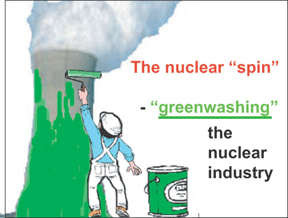
As German election nears, EU plays for time on nuclear’s green recognition. Euractiv, 10 Sept 21, The inclusion of nuclear power in the EU’s green finance taxonomy is “the most likely” outcome in view of the scientific reports submitted to the European Commission in the past months, EU experts believe. But Brussels is not entirely decided yet and is seen playing for time before the German election this month.
Is nuclear electricity a green source of energy or does it pose a “significant harm” to the environment?This seemingly simple debate, which has divided EU politicians for the last two years, is about to reach its climax with a decision expected in the coming months……………
The Commission’s in-house scientific body, the Joint Research Centre, released a much-awaited report on nuclear power on 2 April. Its conclusions were clear: nuclear power is a safe, low-carbon energy source comparable to wind and hydropower, and as such, it qualifies for a green investment label under the EU’s green finance taxonomy.
These conclusions were subsequently backed by two other EU bodies, the Euratom Article 31 expert group and the Scientific Committee on Health, Environmental and Emerging Risks (SCHEER)…………
Diplomats and industry lobbyists consulted by EURACTIV concurred: the most likely outcome is that the European Commission will table a proposal in the coming months, possibly as late as November or December, after the formation of the new German government.
From what we understand, the [proposal] itself will likely come out around October–December this year,” said Jessica Johnson, communications director at Foratom, the trade association representing the nuclear industry in Brussels.
An EU diplomat, for his part, spoke of “September-November”.
German political hurdles
The recognition of nuclear power as a ‘green’ source of energy is not a foregone conclusion though, and the decision could still go either way because of continued opposition to nuclear in Germany and four other EU member states.
In July, Germany’s environment minister Svenja Schulze sent a letter to the Commission – also signed by her counterparts in Austria, Denmark, Luxembourg, and Spain – asking for nuclear to be kept out of the EU’s green finance taxonomy.
The topic is politically sensitive in Germany, which is about to complete its nuclear phase-out next year. Any move by the European Commission to label the energy source as ‘green’ is likely to pollute the political debate ahead of the election on 26 September………….
German political hurdles
The recognition of nuclear power as a ‘green’ source of energy is not a foregone conclusion though, and the decision could still go either way because of continued opposition to nuclear in Germany and four other EU member states.
In July, Germany’s environment minister Svenja Schulze sent a letter to the Commission – also signed by her counterparts in Austria, Denmark, Luxembourg, and Spain – asking for nuclear to be kept out of the EU’s green finance taxonomy.
The topic is politically sensitive in Germany, which is about to complete its nuclear phase-out next year. Any move by the European Commission to label the energy source as ‘green’ is likely to pollute the political debate ahead of the election on 26 September.
“Assuming that the Commission already knows it is going to propose including nuclear in the taxonomy, it would indeed be in its own interest to wait for the outcome of the German elections,” said Thomas Pellerin-Carlin, a researcher and director at the Jacques Delors Institute’s energy centre.
From the Commission’s point of view, the German election may not be the biggest source of worry, though.
In the pro-nuclear camp, positions are possibly even more entrenched, with France leading a coalition of seven pro-nuclear countries, which also includes Czechia, Hungary, Poland, Slovakia, and Slovenia.
France will fight for nuclear to be considered as a decarbonised energy source in Europe,” said the country’s economy minister Bruno Le Maire.
“I don’t want there to be any doubts about this. We will lead this fight with the greatest determination,” he said in April……..
French elections looming large
Seen from Brussels, the political context in France may actually appear more daunting than the German one.
With the presidential election coming up next April, a negative decision on nuclear risks triggering a political backlash in France, just as the country prepares to take the rotating EU Council Presidency in January.
“It would fuel French political attacks on ‘Brussels’” from a wide range of parties, Pellerin-Carlin said. In turn, this would undermine Emmanuel Macron’s re-election campaign because the French president has always positioned himself as a convinced pro-European.
“From a political point of view, the debate on nuclear power and the taxonomy risks raising questions about Macron’s European record and Europe’s place in France,” he said……………
the anti-nuclear camp has not given up just yet. And the most prominent critic is the German environment ministry, which appointed its own expert group to review the EU’s JRC study.
In their conclusions, published on 14 July, the German experts slammed the JRC report for ignoring entire subject areas like the possibility of a nuclear accident.
“For example, the effects of severe accidents on the environment are not included when assessing whether to include nuclear energy in the taxonomy register – yet they have occurred several times over the last few decades,” the report noted. “This raises the question of whether the JRC has selected too narrow a framework of observation,” it added.
The German experts also remarked that the JRC mentions topics like radioactive waste disposal, but then fails to consider them in more detail.
“The JRC itself says that the primary and best waste management strategy is not to generate any radioactive waste in the first place. However, this assessment is not consistently applied within the report,” the German experts wrote.
According to them, “the JRC Report is therefore incomplete and fails to comprehensively assess the sustainability of using nuclear energy.”
A pro-nuclear Commission
So what will the Commission now do?
According to Pellerin-Carlin, the various scientific reports have clearly paved the way for the Commission to label nuclear as ‘green’.
“The current dynamics lead me to think that the Commission will make a proposal in this direction,” he told EURACTIV. “According to expert reports that have been issued, there is not enough evidence that waste is a problem that causes ‘significant’ harm to the environment,” he said.
Besides, the European Commission itself is seen as broadly pro-nuclear. “Within the Commission, President Ursula von der Leyen is not known for taking anti-nuclear positions, unlike many German politicians,” Pellerin-Carlin pointed out.
“In fact, looking at the College of Commissioners, I don’t see anyone who is fiercely anti-nuclear,” he added, saying a majority of Commissioners “have accepted nuclear power as a transitional energy source, and in any case as a necessary evil” in the energy transition, while coal is being phased out.
“And then within the Commission, there is Thierry Breton, who is a key figure on this subject, and who somewhat exceeds his prerogatives as Internal Market Commissioner by campaigning publicly in favour of nuclear power.”
Throwing gas into the mix
The outcome of the Commission’s thinking may be slightly different though, and could also incorporate natural gas into the mix.
In its April communication on the taxonomy, the EU executive said it “will adopt a complementary delegated act” that will cover nuclear energy subject to the completion of the various EU scientific assessments. “This complementary Delegated Act will also cover natural gas and related technologies as transitional activity,” the Commission added………..
French elections looming large
Seen from Brussels, the political context in France may actually appear more daunting than the German one.
With the presidential election coming up next April, a negative decision on nuclear risks triggering a political backlash in France, just as the country prepares to take the rotating EU Council Presidency in January. https://www.euractiv.com/section/energy/news/as-german-election-nears-eu-plays-for-time-on-nuclears-green-recognition/
Independent scientists speak the truth about ionising radiation.
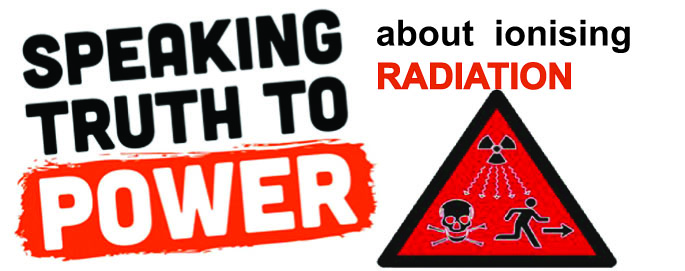
How monolithic institutions decide what is safe for the rest of us, Beyond Nuclear, By Christine Fassert and Tatiana Kasperski, 12 Sept 21,
”………………..The condemnation of this [ Fukushima area radiation] threshold came first of all from within: the special adviser on radiation protection of the Prime Minister’s Office, Professor Toshiso Kosako, resigned in tears on April 30, 2011:
“I cannot accept such a threshold, being applied to babies, children, and elementary school students, not only from an academic point of view, but also because of my humanistic values,” he said.
Many critiques
At the international level, the decision to raise the threshold was also criticized by the two successive UN Special Rapporteurs, Anand Grover and Baskut Tuncak. Moreover, the two experts question the very foundations of radiation protection, which rely on the ALARA principle: As Low as Reasonably Achievable.
This “reasonably” indicates that criteria other than health are taken into account, which Grover criticizes, referring to the “right to health”. Indeed, the rapporteur points out that “the ICRP recommendations are based on the principle of optimization and justification, according to which all government actions should maximize the benefits over the detriments. Such a risk-benefit analysis is not in line with the framework of the right to health, because it gives priority to collective interests over individual rights”.
Tuncak echoes Grover’s criticism in his October 2018 report, stating that “the Japanese government’s decision to increase what is considered the acceptable level of radiation exposure by a factor of 20 is deeply troubling.”
Better protecting individuals
Similar arguments were also used by Belarusian and Ukrainian scientists who, in the late 1980s, opposed the lifetime dose limit of 35 rem (350msv) over a maximum period of 70 years from the time of the accident — a limit that Soviet experts in Moscow, with the support of ICRP representatives, including the head of the French Central Service for Protection against Ionizing Radiation, Pierre Pellerin, were trying to impose as the basis for all post-accident response measures.
The Belarusian and Ukrainian researchers considered the 35 rem criterion to be unacceptable not only from a scientific point of view but also, and above all, from an ethical point of view.
They pointed out that under the conditions of scientific uncertainty about the effects of ionizing radiation, it was dangerous to underestimate the risks that radioactivity represented for the inhabitants of the affected territories, and they considered that the country’s authorities had a moral obligation to devote all the necessary means to greater protection of the inhabitants of the affected regions, especially the most vulnerable individuals.
The danger of low doses
The protagonists of the optimization of radiation protection in the post-accident context insist on the absence of studies proving significant health effects below these thresholds.
For a long time, the arguments for and against these thresholds have been discussed in the public arena and by social scientists in terms of scientific and medical “controversies” — opposing scientists connected to the nuclear sphere who have long denied the harmfulness of low doses, to scientists outside this sphere who consider that the risks were underestimated.
The question of the level of danger of low doses of radioactivity is one of the best known examples of such controversies, which regularly resurface despite the development of scientific knowledge about these risks.
This debate did not arise at the time of the Fukushima accident, but has been going on for a long time and is part of the “motives” also found in the debates about Chernobyl as well as other nuclear accidents such as Kyshtym, in Russia, in 1957………………… https://beyondnuclearinternational.org/2021/09/12/vested-interests/
September 12 Energy News — geoharvey

Opinion: ¶ “Why Did 200 Bitcoin Miners And Oil & Gas Execs Just Have A Secret Meeting In Houston?” • Bitcoin uses massive amounts of energy. To grows, bitcoin needs to find more and more energy, all around the world, keeping dirty power alive. Recently, 200 bitcoin miners and Oil & Gas execs reportedly met […]
September 12 Energy News — geoharvey
Small nuclear reactors – thin end of the nuclear wedge for Australia, as Australian Strategic Policy Institute pushes for submarines

olbloke75 comment on Independent Australia 10 Sept 21
This drive for Australia to embrace Small Nuclear Reactor technology, SMRs, has also been driven by interests within Australian Strategic Policy Institute (ASPI) for sometime.
SMRs are the thin end of the wedge for a nuclear industry which promotes zero emission power production but conveniently neglects the huge costs it generates during setup, storage & decommissioning of facilities. The electric car mobs are the same; don’t talk about the dead batteries!
Clearly there are interests who want to see us embrace nuclear power for these new submarines but the absence of any nuclear industry in Australia prevents that. So that started a push for use to embrace SMRs. That’s exactly what powers nuclear submarines & surface ships; SMRs.
I suspect the left field choice of the French Barracuda for our new subs is not isolated from this nuclear push. It is a new design, large French nuclear sub. Its selection over proven Swedish & German conventional designs doesn’t become clear until you think deeper about motive. To adapted the Barracuda’s yet unproven design, to accept conventional battery & diesel power, virtually the entire sub has to be redesigned. Part of the reason design is behind schedule is, I’d suggest, because of the push & an expectation it will become nuclear powered. What’s more, I suspect that was an undocumented, nod-nod, wink-wink agenda of both the current government, defense & French contractor, Naval.
Methinks there is method why this Sub was selected & the increasing push to embrace SMRs. They’re not talking advanced, slow breeding, large scale energy generators using Thorium technology. SMRs are ‘conventional’ dirty nuclear technology.
Beware of the words used by Morrison & his ministers when they talk about “Technology” being the solution to lowering emissions as part of adopting Net Zero Emissions by 2050. SMRs & nuclear technology fit the Morrison & Liberal definition of ‘technology‘. At the moment he says, nuclear energy has long been ruled out, but I wouldn’t count on it, IF, the win the next election. In the meantime, he emulates Basil Fawlty in more ways than one. ‘Don’t mention the war …… https://independentaustralia.net/environment/environment-display/the-nationals-and-murdoch-media-support-nuclear-power-ahead-of-cop26,15496#disqus_thread
Jane Goodall still has hope for humanity. Here’s why
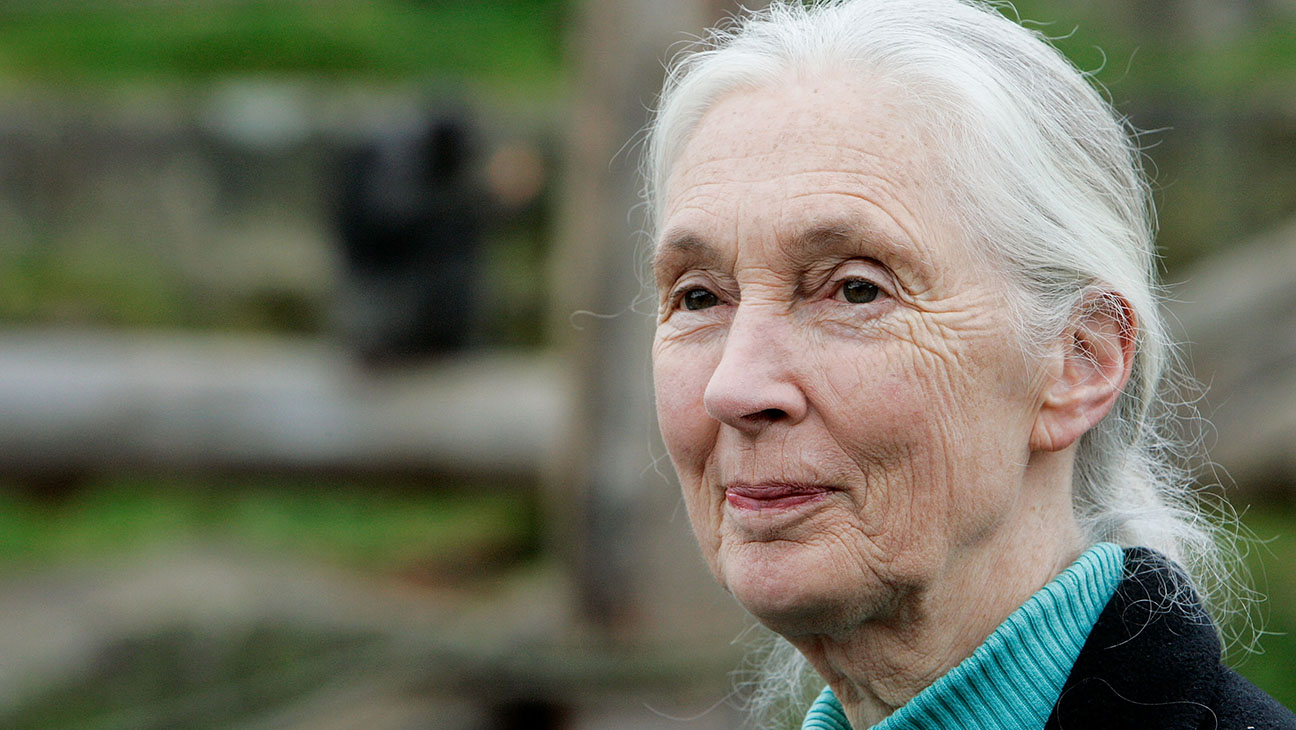
How a tree, a dog and a chimpanzee taught Jane Goodall to hold on to hope
ABC Radio National / By Karen Tong and Meredith Lake for Soul Search 11 Sept 21,
Throughout her life, acclaimed ethologist Jane Goodall has witnessed an array of environmental destruction, from deforestation to the loss of biodiversity to the catastrophic effects of climate change.
But despite this, Dr Goodall still has hope. Lots of it.
“I saw places that we had utterly destroyed, covered with concrete, but give nature a chance and she’ll reclaim it,” she tells RN’s Soul Search.
“I saw animals on the very brink of extinction, [but] because people care, they’ve been given another chance.”
This outlook has not come easily, and Dr Goodall credits it to a collection of “teachers” in life who have given her lessons of “humanity and hope.”
Five of these most important “teachers” include a reading tree, her first dog and – of course – her beloved chimps…………………
Hope for the future
Dr Goodall is still pushing boundaries as a conservation leader and activist – and she’s still cultivating an extraordinary capacity for curiosity, wonder and hope.
“I can’t wave a magic wand, but I can spend all my effort in trying to get everybody to realise that if we get together, if each one of us does what we can to make a difference every day, we start moving away from the doom and gloom,” she says…… https://www.abc.net.au/news/2021-09-11/jane-goodall-on-humanity-and-hope/100375246
Forget plans to lower emissions by 2050 – this is deadly procrastination
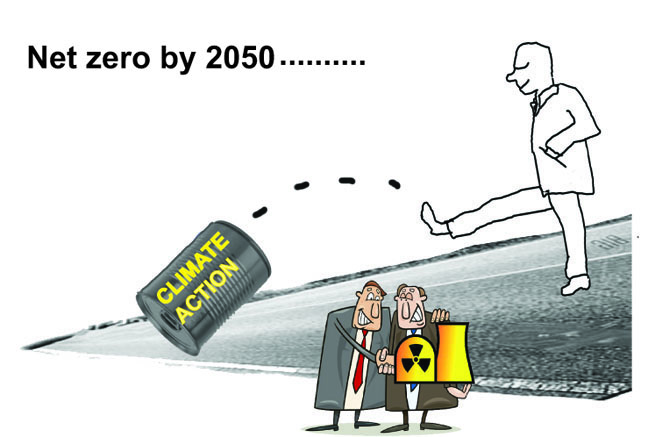
This might seem to have nothing to do with nuclear powet. But I think that it does. The polticians, the pundits, the journalists – well – most will be dead by 2050, or at least out of the limelight.. In the meantime, the technofix spruikers can confidently spruik their favourite fix – clean carbon, ccarbon capture and storage, geoengineering, – with the nuclear lobby enthusiastically joining in the procrastination
Forget plans to lower emissions by 2050 – this is deadly procrastination https://www.theguardian.com/commentisfree/2021/sep/10/net-zero-2050-deadly-procrastination-fossil-fuels, Peter Kalmus
Fixating on ‘net zero’ means betting the future of life on Earth that someone will invent some kind of whiz-bang tech to draw down CO2
The world has by and large adopted “net zero by 2050” as its de facto climate goal, but two fatal flaws hide in plain sight within those 16 characters. One is “net zero.” The other is “by 2050”.
These two flaws provide cover for big oil and politicians who wish to preserve the status quo. Together they comprise a deadly prescription for inaction and catastrophically high levels of irreversible climate and ecological breakdown.
First, consider “by 2050”. This deadline feels comfortably far away, encouraging further climate procrastination. Who feels urgency over a deadline in 2050? This is convenient for the world’s elected leaders, who typically have term limits of between three and five years, less so for anyone who needs a livable planet.
The world has by and large adopted “net zero by 2050” as its de facto climate goal, but two fatal flaws hide in plain sight within those 16 characters. One is “net zero.” The other is “by 2050”.
These two flaws provide cover for big oil and politicians who wish to preserve the status quo. Together they comprise a deadly prescription for inaction and catastrophically high levels of irreversible climate and ecological breakdown.
First, consider “by 2050”. This deadline feels comfortably far away, encouraging further climate procrastination. Who feels urgency over a deadline in 2050? This is convenient for the world’s elected leaders, who typically have term limits of between three and five years, less so for anyone who needs a livable planet.
Pathways for achieving net zero by 2050 – meaning that in 2050 any carbon emissions would be balanced by CO2 withdrawn through natural means, like forests, and through hypothetical carbon-trapping technology – are designed to give roughly even odds for keeping global heating below 1.5C. But it’s now apparent that even the current 1.1C of global heating is not a “safe” level. Climate catastrophes are arriving with a frequency and ferocity that have shocked climate scientists. The fact that climate models failed to predict the intensity of the summer’s heatwaves and flooding suggests that severe impacts will come sooner than previously thought. Madagascar is on the brink of the first climate famine, and developments such as multi-regional crop losses and climate warfare even before reaching 1.5C should no longer be ruled out.
Meanwhile, “net zero” is a phrase that represents magical thinking rooted in our society’s technology fetish. Just presuppose enough hypothetical carbon capture and you can pencil out a plan for meeting any climate goal, even while allowing the fossil fuel industry to keep growing. While there may be useful negative-emissions strategies such as reforestation and conservation agriculture, their carbon capture potential is small compared with cumulative fossil fuel carbon emissions, and their effects may not be permanent. Policymakers are betting the future of life on Earth that someone will invent some kind of whiz-bang tech to draw down CO2 at a massive scale.
The world’s largest direct air capture facility opened this month in Iceland; if it works, it will capture one ten-millionth of humanity’s current emissions, and due to its expense it is not yet scalable. It is the deepest of moral failures to casually saddle today’s young people with a critical task that may prove unfeasible by orders of magnitude – and expecting them to somehow accomplish this amid worsening heatwaves, fires, storms and floods that will pummel financial, insurance, infrastructure, water, food, health and political systems.
It should tell us all we need to know about “net zero by 2050” that it is supported by fossil fuel executives, and that climate uber-villain Rupert Murdoch has embraced it through his News Corp Australia mouthpiece.
So where does this leave us? Stabilizing the rapidly escalating destruction of the Earth will require directly scaling back and ultimately ending fossil fuels. To lower the odds of civilizational collapse, society must shift into emergency mode.
It will be easy to tell when society has begun this shift: leaders will begin to take actions that actually inflict pain on big oil, such as ending fossil fuel subsidies and placing a moratorium on all new oil and gas infrastructure.
Then rapid emissions descent could begin. I believe the global zero-emissions goal should be set no later than 2035; high-emitting nations have a moral obligation to go faster, and to provide transition assistance to low-emitting nations. Crucially, any zero goal must be paired with a commitment to annual reductions leading steadily to this goal year by year, and binding plans across all levels of government to achieve those annual targets. If this sounds extreme, bear in mind that climate breakdown has still only barely begun and that the damage will be irreversible.
Negative emissions strategies must also be left out of climate planning – in other words, forget the “net” in “net zero”. Otherwise they will continue to provide the distraction and delay sought by the fossil fuel industry. It would be beyond foolish to gamble our planet on technologies that may never exist at scale.
Due to the decades of inaction dishonestly engineered by fossil fuel executives, the speed and scale now required is staggering. There is no longer any incremental way out. It’s time to grow up and let go of the fantasy that we can get out of this without big changes that affect our lives. Policy steps that seem radical today – for example, proposals to nationalize the fossil fuel industry and ration oil and gas supplies – will seem less radical with each new climate disaster. Climate emergency mode will require personal sacrifice, especially from the high-emitting rich. But civilizational collapse would be unimaginably worse.
As a climate scientist, I am terrified by what I see coming. I want world leaders to stop hiding behind magical thinking and feel the same terror. Then they would finally end fossil fuels.
This story is published as part of Covering Climate Now, a global collaboration of news outlets strengthening coverage of the climate story.
News Corpse’s new snide approach on climate change – to help Morrison win next election?

“This may be more about giving Morrison cover going into an election year, by establishing the pathetically low bar of ‘net zero carbon by 2050’ as somehow constituting meaningful action, particularly given that he is being roundly criticised by the world community for his meager climate commitments going into COP26,” Mann said on Friday…….
“Focusing on a target of 2050, three decades away, kicks the can so far down the road that it’s largely meaningless.”….…
News Corp about-turn on emissions too little, too late, scientists say, The Age, By Nick O’Malley and Amelia McGuire, September 11, 2021 ”’……….. When The Sydney Morning Herald and The Age reported that News Corp papers were planning a climate push, it made news around the world……
One of the Journal’s own former editors tweeted of the paper’s climate coverage, “No group has been more clueless, duplicitous or irresponsible on climate change than the WSJ edit and op-ed crew.”
He attached a string of climate sceptic headlines from the past six weeks…….
It is hard to exaggerate how News Corp’s coverage of climate change – and of climate scientists themselves – have scarred the sector. In his recent book The New Climate Wars, leading climatologist Michael Mann wrote that the company’s amplification of a false conspiracy known as “climategate” helped derail the Copenhagen climate summit in 2009, setting back global efforts to rein in warming by crucial years.
In Australia critics say the coverage has contributed to decades of policy inertia on the issue………..
In December 2020, Wendy Bacon and Arunn Jegan analysed all news, features, opinion pieces, letters and editorials discussing climate change that appeared in The Daily Telegraph, Herald-Sun, Courier Mail and The Australian between April 2019 and March 2020.
They found 45 per cent of all coverage either rejected or cast doubt on consensus scientific findings. Their research asserted that most News Corp reporters do not promote sceptical views, but of 55 per cent of stories that accepted climate science, misunderstandings about that science were almost always promoted rather than explained, and the reporting on the effects of climate change was negligible.
Half of the news and feature stories either had no source or one source.
Nearly two thirds of published opinion pieces were sceptical of climate science. The top five climate sceptics were Sky News presenters Andrew Bolt, Tim Blair, Peta Credlin, Peter Gleeson and Chris Kenny…….
According to Marian Wilkinson, whose recent book The Carbon Club is a forensic analysis of the interplay between the political, media and industry actors who have stalled action on climate in Australia for decades, News Corp’s coverage influenced other media in the country.
She believes even the ABC “pulled its punches” on climate coverage for fear it would look soft when compared with the Murdoch press’s hardline climate denialism.
Wilkinson is one of many who believe that Australian climate and energy policy has been rudderless for decades, but she does not blame News alone.
Rather she says the Murdoch empire helped derail climate action along with well-connected fossil fuel industry lobbyists and complicit politicians from both parties………
“This may be more about giving Morrison cover going into an election year, by establishing the pathetically low bar of ‘net zero carbon by 2050’ as somehow constituting meaningful action, particularly given that he is being roundly criticised by the world community for his meager climate commitments going into COP26,” Mann said on Friday…….
“Focusing on a target of 2050, three decades away, kicks the can so far down the road that it’s largely meaningless.”……. https://www.theage.com.au/environment/climate-change/news-corp-about-turn-on-emissions-too-little-too-late-scientists-say-20210910-p58qja.html
1 This month.

Australians deserve the truth
about
AUKUS – https://aukuspublicinquiry.com/
Australians deserve the truth
about AUKUS

PETITION – To: Prime Minister Anthony Albanese and the Australian Labor Government

of the week – Australians for War Powers Reform (AWPR)
To see nuclear-related stories in greater depth and intensity
 Antinuclear