Another record tumbles as renewables share reaches 57.3 per cent — RenewEconomy

Record for share of renewable energy in Australia’s main grid tumbles again on Sunday morning. The post Another record tumbles as renewables share reaches 57.3 per cent appeared first on RenewEconomy.
Another record tumbles as renewables share reaches 57.3 per cent — RenewEconomy
September 5 Energy News — geoharvey

Opinion: ¶ “The Truth New York City Cannot Avoid” • Four days after it hit New Orleans, at least 13 New Yorkers died when Hurricane Ida’s remnants hit the Big Apple, more than 1,300 miles away. So far, New York City has more fatalities reported than all of Louisiana. Climate change is scrambling all our […]
September 5 Energy News — geoharvey
Australia sets new records for highest renewables share and lowest coal output — RenewEconomy

Australia’s clean energy transition continues apace with new records being set for renewables and the lowest output for coal generators. The post Australia sets new records for highest renewables share and lowest coal output appeared first on RenewEconomy.
Australia sets new records for highest renewables share and lowest coal output — RenewEconomy
“South Koreans don’t want Australia’s dirty gas:” Call for finance ban on Santos “CO2 factory” — RenewEconomy

Climate activists call on South Korean government to end financial support of “Australia’s dirtiest offshore gas mine,” the Barossa project near Darwin. The post “South Koreans don’t want Australia’s dirty gas:” Call for finance ban on Santos “CO2 factory” appeared first on RenewEconomy.
“South Koreans don’t want Australia’s dirty gas:” Call for finance ban on Santos “CO2 factory” — RenewEconomy
“Missing in Action”: Former Australian security leaders highlight climate-related security threats; call for rapid decarbonisation — The Center for Climate & Security

A new report released yesterday by the Australian Security Leaders Climate Group calls on the Australian Government to “prevent devastating climate impacts by mobilising all resources necessary to reach zero emissions as fast as possible,” starting with a comprehensive Whole-of-Nation Climate and Security Risk Assessment. Missing in Action: Responding to Australia’s climate & security failure,…
“Missing in Action”: Former Australian security leaders highlight climate-related security threats; call for rapid decarbonisation — The Center for Climate & Security
Friends of the Earth and Sierra Club saw it coming – corruption is killing the nuclear industry
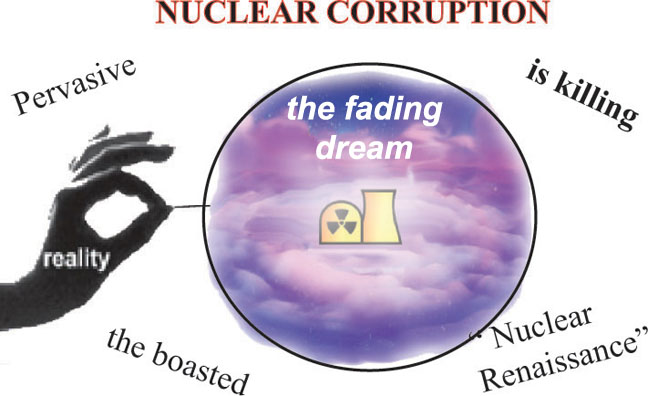
Public interest intervenors were prescient in their early assessments of the project. Friends of the Earth, which intervened before the Public Service Commission against the project in August 2008, noted SCANA’s disregard for energy efficiency and alternative forms of energy. That organization predicted that the project’s fate would be what the US Attorney’s Office affirmed in the August 18, 2021 indictment: “from the outset, the Project was characterized by cost overruns and significant delays.” Likewise, toward the end of the project in June 2017, just after Westinghouse declared bankruptcy, Friends of the Earth and the Sierra Club filed a formal complaint detailing why the project must be canceled. As money hemorrhaged, the owners made that earth-shaking decision a month later. And the mighty crash still reverberates.
With pursuit of large light-water reactors in the United States all but dead, the nuclear industry is now endlessly touting an array of “small modular reactors” and a dizzying menu of so-called “advanced reactors,” all of which exist only on paper. It’s unclear if there’s a path forward for this nuclear renaissance redux, and if there is, whether taxpayers will be put on the hook for financing some of it.
US attorney details illegal acts in construction projects, sealing the fate of the “nuclear renaissance” https://thebulletin.org/2021/08/us-attorney-details-illegal-acts-at-construction-projects-sealing-the-fate-of-the-nuclear-renaissance/By Tom Clements | August 31, 2021
The ill-fated construction of new nuclear reactors in South Carolina—one of two such troubled Westinghouse reactor construction projects in the United States—was abruptly terminated on July 31, 2017, but the effort to determine legal accountability for the project’s colossal failure is only now hitting its stride.
The South Carolina legislature conducted hearings about the project’s collapse. But it has fallen to the United States Attorney for South Carolina to outline internal decisions that led to project abandonment—via court filings, plea agreements, and indictments. These filings are proving to be the best documentation so far of criminal behavior related to projects that were part of a much-hyped “nuclear renaissance” that began in the early-2000s but has since petered out in the United States.
On August 18, 2021, a second Westinghouse official was charged in a federal grand jury indictment filed with the court in Columbia, South Carolina. The charges outline “the scheme” to cover up key details about the problem-plagued project to construct two 1,100 megawatt (MW) Westinghouse AP1000 light-water reactors at the VC Summer site north of Columbia.
The project was initiated in May 2008 and gained final approval in February 2009.
According to the 18-page indictment, former Senior Vice President of New Plants and Major Projects Jeffrey Benjamin “had first-line responsibility for Westinghouse’s nuclear reactors worldwide.” He was charged, according to a news release, “with sixteen felony counts including conspiracy, wire fraud, securities fraud, and causing a publicly-traded company to keep a false record.” On August 30, the US attorney’s office announced that Benjamin would be arraigned on August 31.
The indictment reveals important new information about how Benjamin and Westinghouse conspired to hide crucial information about reactor completion dates from the owners, the publicly held utility SCANA, now defunct, and its junior partner, the state-owned South Carolina Public Service Authority (known as Santee Cooper). It states that the defendant made “false and misleading statements” and “knowingly devised a scheme” to continue the project based on misrepresentations via Westinghouse to the owners, state regulators, the Securities and Exchange Commission, investors, and ratepayers. Nervous SCANA officials played along with the inept cover-up efforts and passed on false and inaccurate information to regulators.
Continue readingHurricane Ida Forces Two Nuclear Plants in Louisiana to Shut Down or Reduce Power
Hurricane Ida Forces Two Nuclear Plants in Louisiana to Shut Down or Reduce Power https://obrag.org/2021/09/hurricane-ida-forces-two-nuclear-plants-in-louisiana-to-shut-down-or-reduce-power/
by MICHAEL STEINBERG on SEPTEMBER 3, 2021 · Nuclear Shutdown News August 2021
By Michael Steinberg / Black Rain Press
Nuclear Shutdown News chronicles the decline and fall of the nuclear industry, and highlights the efforts of those working to create a nuclear free world.
On August 29, 2021, 16 years to the day when Hurricane Katrina devastated New Orleans and environs, Hurricane Ida made landfall twice as a Category 4 storm. Its 150 mph winds raced through the Crescent City, and up cancer alley, by Baton Rouge, an area replete with petrochemical facilities whose surrounding African American populations have high rates of serious health care problems in the best of times.
Almost all of the Gulf coast’s offshore refineries were forced to shut down and a million or more lost electrical power, including all of New Orleans.
Complicating this catastrophe was the loss of two nuclear plants, both upriver from New Orleans and owned by Entergy Corporation. According to an 8-30 report by S &P Global, Entergy shut down its Waterford nuke plant on 8-29 “after off-site electrical power was lost because of Hurricane Ida.”
According to the Nuclear Regulatory Commission, the plant was disconnected from the electrical grid that day “per procedures as storm winds elevated.”
The following day, the River Bend nuclear plant, 25 miles north of New Orleans, “reduced power to 35% of capacity.” The unit reduced power at the request of the Midcontinent Independent System Operator, Entergy’s Mike Bowling said.
“The action was to preserve the integrity of the grid in the wake of Hurrican Ida” Bowling added.
At this point, when the lights will come on is anybody’s guess.
Nuclear Disarmament: What the World can Learn from Africa
Although nuclear disarmament is a global aspiration, Africa teaches that influence on the global stage is best achieved through regional unity. The creation of multiple nuclear-weapons-free zones across the world will send a powerful message to nuclear-armed states who are currently not directly accountable to the conditions of the Ban Treaty. Other current nuclear-weapons-free zones include Central Asia, Latin America and the Caribbean, the South Pacific, and South-East Asia.
Africa: Nuclear Disarmament: What the World can Learn from Africa https://allafrica.com/stories/202109030801.html By Isabel Bosman, 3 Sept 21
On 22 January 2021, the UN Treaty on the Prohibition of Nuclear Weapons (the Ban Treaty) entered into force. Under the Ban Treaty, states are prohibited from ‘developing, testing, producing, manufacturing, acquiring, possessing, or stockpiling nuclear weapons or other nuclear explosive devices’. The Ban Treaty is a culmination of decades-long global campaign efforts to end the development of nuclear weapons. But while its entry into force is widely celebrated, the real work is only just beginning.
The world’s nuclear-armed states oppose the Treaty, and uncertainty about the direction of nuclear programmes in Iran and North Korea adds to the tension. Until such time as a nuclear-armed state decides to join the Ban Treaty, it is up to the world’s non-nuclear-armed states to continue leading disarmament campaigns. Having experienced the destructive power of nuclear weapons testing first-hand in the 1960s, African states are some of the oldest and most outspoken supporters of global nuclear disarmament and non-proliferation. Africa’s commitment to nuclear disarmament holds two important lessons: Firstly, a world free of nuclear weapons begins at home. And secondly, if at first you do not succeed, shift the narrative.
African states are able to influence international opinion on nuclear disarmament partly because they have established a strong regime of disarmament and non-proliferation. The continent’s commitment to nuclear disarmament dates to 1964 and the adoption of the ‘Declaration on the Denuclearisation of Africa’ by the Organisation of African Unity, now the African Union (AU). At present, this commitment is best embodied by the African Nuclear-Weapon-Free Zone Treaty (1996), also known as the Pelindaba Treaty. States party to the Pelindaba Treaty are prohibited from ‘conducting research on, developing, manufacturing, stockpiling, acquiring, possessing, or having control over any nuclear explosive device’. States are also not allowed to receive assistance to research or develop nuclear weapons.
The 12th anniversary of the Pelindaba Treaty’s entering into force was marked on 15 July 2021 (after being opened for signature 25 years ago). During an online event to commemorate this, Messaoud Baaliouamer, Executive Secretary of the African Commission on Nuclear Energy (AFCONE), the implementing body of the Pelindaba Treaty, described it as ‘an important step towards the strengthening of the non-proliferation regime, the promotion of cooperation in the peaceful use of nuclear energy, complete disarmament, and the enhancement of regional peace and security’.
To date, the Pelindaba Treaty has been signed by 52 AU member states and ratified by 42. This uptake makes Africa the largest Nuclear-Weapon-Free Zone in the world. Beatrice Fihn, Executive Director of the International Campaign to Abolish Nuclear Weapons (ICAN), remarked at the same event that the Pelindaba Treaty is ‘testimony’ to Africa’s role as global leader on nuclear disarmament. High levels of commitment to the nuclear weapons ban on a continental level also meant that African states were able to play ‘a leading role in the negotiation, adoption, and promotion’ of the Ban Treaty.
African states’ determined approach was instrumental in ultimately creating the necessary momentum. Fihn noted that African countries have ‘repeatedly challenged the narrative advanced by nuclear-armed states’. The justification traditionally given by nuclear-armed states for possessing nuclear weapons is deterrence of conflict and ensuring ‘inter-State security’. This narrative is gradually being replaced by a humanitarian justification for banning nuclear weapons, which values human security over state security. This narrative has been growing in popularity and attention to the humanitarian impact of nuclear weapons ‘has been more sustained than any other recent initiative to encourage renewed activity on nuclear disarmament’, according to Elizabeth Minor, a researcher at UK NGO Article 36.
The 1945 bombings of Hiroshima and Nagasaki have not been forgotten. However, more than 75 years after the world witnessed the devastating effects of the atomic bomb, there are still over 13,000 nuclear weapons in existence. These are dispersed among the world’s nine nuclear weapons states: China, the USA, the UK, Russia, Israel, France, North Korea, India and Pakistan.
By setting an example through its legal instruments, and continuously promoting the humanitarian narrative, Africa can play an important role in realising a global nuclear weapons ban. African states can strengthen this position by also becoming party to the Ban Treaty. Considering the similarities between the Pelindaba Treaty and the Ban Treaty, signature and ratification should come easily. To date however, the Ban Treaty has been signed by 29 African states but only 9 have ratified it. The continent will be able to make a bigger impact by adopting the Ban Treaty at the same levels seen in the Pelindaba Treaty. This will re-affirm Africa’s commitment to disarmament and non-proliferation. More importantly, it will cement the continent’s reputation as not only a a regional example, but an international example of commitment to nuclear disarmament.
Although nuclear disarmament is a global aspiration, Africa teaches that influence on the global stage is best achieved through regional unity. The creation of multiple nuclear-weapons-free zones across the world will send a powerful message to nuclear-armed states who are currently not directly accountable to the conditions of the Ban Treaty. Other current nuclear-weapons-free zones include Central Asia, Latin America and the Caribbean, the South Pacific, and South-East Asia.
The world’s non-nuclear-armed states stand to gain the most from following Africa’s example. By ascribing to the humanitarian narrative to nuclear disarmament, non-nuclear-weapons states are able to exert moral pressure on nuclear-armed states – a position with significant weight in a debate in which these states were previously at a disadvantage due to the prevailing narrative. Reluctance to dismantle and the threat of expanding nuclear arsenals are but some of the challenges in the path to nuclear disarmament. But with the Ban Treaty now part of international law, nuclear policy will be affected by it whether states are party to it or not.only a regional example, but an international example of commitment to nuclear disarmament. But with the Ban Treaty now part of international law, nuclear policy will be affected by it whether states are party to it or not.
Not Seeing the Contaminated Forest for the Decontaminated Trees in Fukushima — Fukushima 311 Watchdogs

Robert Jacobs Abstract: This article explores how the models of medical risk from radiation established in the aftermath of the nuclear attacks on Hiroshima and Nagasaki are insufficient for understanding the risks faced by people in contaminated environments like Fukushima. These models focus exclusively on levels of external radiation, while the risk faced by people […]
Not Seeing the Contaminated Forest for the Decontaminated Trees in Fukushima — Fukushima 311 Watchdogs
Hedges: The Empire Does Not Forgive — Rise Up Times

“The cynicism of arming and funding the mujahedeen against the Soviets exposes the lie of America’s humanitarian concerns in Afghanistan.”
Hedges: The Empire Does Not Forgive — Rise Up Times
September 3 Energy News — geoharvey

Opinion: ¶ “Climate Scientist: This Is A Dystopian Moment” • I’m a climate scientist. My colleagues and I have been warning for years that human-induced global warming will bring us a future of faster and more furious extreme weather events. But now the events are coming with such speed and ferocity that the moment can […]
September 3 Energy News — geoharvey
Australia’s business leaders want stronger climate policy, but nuclear lobby stooge Senator Matt Canavan wants Australia to boycott COP 26
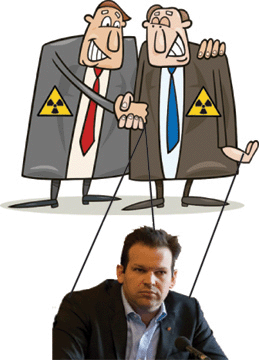
On Wednesday, Queensland Nationals Senator Matt Canavan called on Australia to boycott Glasgow, labelling the conference a “sham” in reaction to news that the nuclear industry has not been granted permission to host exhibits at the conference.
“They have banned nuclear technologies – reliable, emission-free power – from presenting. Climate change activism is not about changing the climate, it is about changing our politics. Australia should not bother going,” Senator Canavan tweeted.
Retiring Flynn MP Ken O’Dowd said Britain, the USA and Canada use nuclear power and he would “tend to agree” with Mr Canavan.
“Why would the Glasgow conference not want to discuss it? It should be one of the first items on the agenda,” Mr O’Dowd said.
Business urges government to take net zero pledge to UN climate talks, https://www.theage.com.au/politics/federal/business-urges-government-to-take-net-zero-pledge-to-un-climate-talks-20210831-p58nma.html By Mike Foley, September 2, 2021 Australia’s energy, business and oil and gas lobbies are joining calls from key international allies for Prime Minister Scott Morrison to set a net zero emissions deadline ahead of the United Nations climate conference in Glasgow this November.
But division within the federal government threatens to block the Prime Minister’s push for a commitment, with the Nationals still opposed to a deadline that is supported by every major farming group.
Senior officials from the European Union, Britain and US have urged Australia to set more ambitious goals. US presidential climate envoy John Kerry said scientists’ dire warnings over global warming placed more pressure on Australia.
Australia has pledged to reduce its greenhouse gas contribution by at least 26 per cent by 2030, based on 2005 emissions, but has not set a deadline to hit net zero emissions. Most other developed nations have committed to roughly halve their emissions by 2030 and reach net zero by 2050 or earlier.
But the government has not committed to greater action because the Nationals party, which has not yet backed a carbon-neutral deadline, has demanded to see the economic cost of greater climate action before signing up.
Mr Morrison says he wants to achieve net zero as soon as possible – “preferably by 2050.”
On Wednesday, Queensland Nationals Senator Matt Canavan called on Australia to boycott Glasgow, labelling the conference a “sham” in reaction to news that the nuclear industry has not been granted permission to host exhibits at the conference.
Australia’s petroleum lobby, its peak employer association, big power generators and investors from the booming clean energy industry say the government should head to the high-profile international climate talks armed with a 2050 commitment for carbon neutrality.
“They have banned nuclear technologies – reliable, emission-free power – from presenting. Climate change activism is not about changing the climate, it is about changing our politics. Australia should not bother going,” Senator Canavan tweeted.
Retiring Flynn MP Ken O’Dowd said Britain, the USA and Canada use nuclear power and he would “tend to agree” with Mr Canavan.
“Why would the Glasgow conference not want to discuss it? It should be one of the first items on the agenda,” Mr O’Dowd said.
However, former Nationals leader Michael McCormack said, in response to Mr Canavan, that Australia must be “at the table” in Glasgow.
“We have to be part of discussions, part of finding the way forward,” Mr McCormack said.
Australian Energy Council, which represents Australia’s largest electricity providers and major emitters including AGL, Origin and EnergyAustralia, backs a net zero deadline. Chief executive Sarah McNamara said the industry had a key role in climate action.
Settling on an economy-wide target will let us then decide the best ways to get there at the lowest cost and undoubtedly prompt a steady reduction in our emissions,” Ms McNamara said.
The Australian Industry Group chief executive Innes Willox said it was crucial government deliver on its promise to release a long-term strategy for climate change before Glasgow.
“(It) should include a clear long term national goal of net zero emissions by 2050 to guide government policy and private investment (and) medium term emissions reduction goals in line with the long-term goal and Australia’s peers,” Mr Willox said.
Australian Petroleum Production and Exploration Association also backed net zero by 2050 and said the industry was investing heavily to reduce emissions.
“Anyone reading the sobering report from the Intergovernmental Panel on Climate Change this week knows the world has no other option but to take practical steps to address the climate challenge,” an APPEA spokesman said.
Peak mining lobby the Minerals Council backs the Prime Minister’s current policy stance to reach net zero by as soon as possible and preferably by 2050. It called for Australia to open its carbon credit scheme, which pays private industry for emissions reduction, to international trading.
The council lodged a submission this week on the Japan-Australia Economic Partnership Agreement which said Japan’s commitment to decarbonise its economy provided a significant opportunity for the mining industry to supply “technologies of the future, including hydrogen with carbon capture storage”.
The Clean Energy Investor Group, which represents Macquarie Bank, Andrew Forest’s Squadron Energy and the world’s largest asset manager BlackRock said Australia would take an economic hit if it took weaker climate commitments to Glasgow.
Chief executive Simon Corbell said Australia should set an economy-wide net zero deadline of 2040 including a 2035 deadline for the electricity sector.
“This would only result in the cost of capital for clean energy projects in Australia remaining more expensive than other advanced economies,” he said.
The Investor Group of Climate Change, backed by funds managing $2 trillion of assets, said many nations had moved beyond net zero and were making more ambitious near term goals
“Australia risks being the only major advanced economy to not substantially and formally increase its 2030 target by Glasgow,” said policy director Erwin Jackson.
“Capital is mobile and will move to countries which deliver the best long-term returns. For long-term investors this is a net zero emission economy. Investors expect nations to demonstrate strong ambition to 2030 to get on an orderly pathway to net zero emission by 2050.”
Napandee nuclear waste site is in fact on farming land, and all too close to the town of Kimba
 |
Roni Skipworth No nuclear waste dump anywhere in South Australia , 2 Sept 21,
Not many people know where the nominated site ‘Napandee property’ is. Let me assist with showing you where this property is, there is a purple cross showing this property on a map. The land is not a flat unproductive site as stated in many reports as last time we travelled pass there were many sheep eating its grass https://www.facebook.com/groups/1314655315214929

Scrutiny on possible fraud in the process of the government bribery grants for South Australian communities to accept a nuclear waste dump

Recently information has become available that has indicates a new path of attack against the planned nuclear waste dump in South Australia.
It is is being reported to the Federal Police Fraud Investigation Branch that several individuals made application for a
community grant fraudulently. These individuals participated in a conspiracy with a “resource agency” who
assisted in making application for the grant fraudulently on behalf of an “Aboriginal Corporation” that does not meet the requirements or criteria for the grant.
Grant approval was obtained successfully and was publicly announced. What this proves is that the entire process was rushed and the money grab that divided and separated local communities was able to be manipulated so easily that some unscrupulous people could illegally take advantage.
The federal police will have all the available evidence shortly (there is a lot) and the corporation and persons involved
in the fraudulent funding application will be held to account and prosecuted under federal law. A win for transparency in the local area.
But it will be a bigger win for the overall fight because it would put the entire grant bribery process and purpose under scrutiny. Hopefully it will lead to very publicly broadcasted news stories following the progress of the investigation and prosecution proceedings.
The ANZUS treaty does not make Australia safer. Rather, it fuels a fear of perpetual military threat

Instead of viewing our region with empathy and generosity — or partnering with the US to prevent the world from becoming poorer, more dangerous or more disorderly — the Australian government seeks to arm itself.
In the process, it serves only to perpetuate a world in which conflict becomes ever more likely, and economic, racial and environmental inequality more entrenched.
The ANZUS treaty does not make Australia safer. Rather, it fuels a fear of perpetual military threat https://theconversation.com/the-anzus-treaty-does-not-make-australia-safer-rather-it-fuels-a-fear-of-perpetual-military-threat-165670?utm_medium=email&utm_campaign=Latest%20from%20The%20Conversation%20for%20September%201%202021%20-%202047620154&utm_content=Latest
Emma Shortis, Research Fellow, RMIT University, September 1, 2021 In June 2020, the Australian federal government announced a new, A$270 billion defence strategy. Part of this entailed spending $800 million on new AGM-158C long-range anti-ship missiles from the United States.
The new spend formed part of a long tradition of Australian defence procurement from the US. In 2017, the Australian National Audit Office estimated the Australian Defence Force (ADF) had spent an eye-watering $10 billion on American weapons and equipment in the previous four years alone.
This trend looks set to continue. This May, for example, the ADF announced the establishment of a $7 billion space division, which will inevitably deepen Australia’s security and economic ties with the US.
And as the Biden administration focuses more attention on “the Quad” — the quadrilateral security arrangement between the US, Australia, Japan and India — to counter Chinese influence in the Asia-Pacific region, Australia will most likely purchase even more American weapons and military equipment.
ANZUS is no security guarantee
These close security linkages reflect the broader consensus underpinning the Australia, New Zealand, United States Security Treaty (ANZUS), which marks its 70th birthday today.
This consensus – shared not just by US and Australian governments, but also by the broader foreign policy and media establishments in both countries – is that ANZUS makes Australia, and the world, safer.
The belief is the treaty — and the deep friendship between our two countries — gives Australia special access to advanced American military technology that we need (although not at a discount).
And, more importantly, that it keeps us under an American security umbrella. Australians can rely, in the recent words of one senior bureaucrat, on the “protection afforded” by ANZUS.
This assumption rests specifically on Article IV of the treaty, in which each party “declares that it would act to meet the common danger”. This language is widely assumed to constitute a security guarantee from the US. However, the reality is, it does not.
The belief is the treaty — and the deep friendship between our two countries — gives Australia special access to advanced American military technology that we need (although not at a discount).
And, more importantly, that it keeps us under an American security umbrella. Australians can rely, in the recent words of one senior bureaucrat, on the “protection afforded” by ANZUS.
This assumption rests specifically on Article IV of the treaty, in which each party “declares that it would act to meet the common danger”. This language is widely assumed to constitute a security guarantee from the US. However, the reality is, it does not.
Reinforcing a perception of perpetual military threat
Why is this? One reason is the treaty (and Australia’s relationship with the US more broadly) reinforces and perpetuates a belief that Australia faces a perpetual military threat.
It also reinforces the idea that military might is needed to meet that threat. The purchase of more American weapons, in the words of Prime Minister Scott Morrison, has the effect of “deterring an attack on Australia and helping to prevent war”.
Even putting the questionable basis of this assumption aside, this focus on military threat at the expense of all else has had significant consequences for both Australia and our region. Other genuine threats, such as climate change, are always treated as peripheral to the core of Australia’s relationship with the US.
It was perhaps telling that as Australian officials were negotiating the purchase of more American weaponry last year, they weren’t using our uniquely close relationship to secure priority access to something that would actually make Australians safer: American vaccines.
When Morrison announced the country’s new defence strategy, he justified both the spending and aggressive posturing on the basis a post-COVID world will be “poorer, more dangerous and more disorderly”.
As I argue in my new book, Our Exceptional Friend: Australia’s Fatal Alliance with the United States, ANZUS reinforces this way of seeing the world.
Instead of viewing our region with empathy and generosity — or partnering with the US to prevent the world from becoming poorer, more dangerous or more disorderly — the Australian government seeks to arm itself.
In the process, it serves only to perpetuate a world in which conflict becomes ever more likely, and economic, racial and environmental inequality more entrenched.
A shift in mentality is needed
ANZUS was born out of a shared experience of war in the 1950s, and particularly Australian perceptions of ongoing, existential threats from non-white neighbours. These perceptions, based on deep racism and fear, were wrong then, and they are wrong now.
Yet, the current US-Australia strategic relationship still requires an enemy – a “common danger”. As a result, the US and Australia will always find one, together.
The only way to change this is through a deep, honest reckoning with the origins of Australia’s security alliance with the US — and its consequences.
This doesn’t mean scrapping ANZUS. Even if that were possible, the structures that exist around it and the ideas that inform Australian foreign policy would endure.
It does mean, however, trying to find different ways for Australia to manoeuvre within those structures, stepping back from a fear-mongering, military threat mentality, and forging genuine relationships with our neighbours.
It means trying to forge a relationship with the United States that is not, in the words of a former US president, “sealed with … blood”.
Yet, even as the recent events in Afghanistan make the consequences of our unquestioning security alliance so glaringly obvious, there is no indication Australia will do anything other than double down on it.
The mindset that has led successive Australian governments to follow the US will not change, no matter what Washington does or who is in charge. The position of the current government is to strengthen the treaty, rather than try to dismantle it.
That’s dangerous for us and the world. Happy birthday, ANZUS.
Emma Shortis’s new book, Our Exceptional Friend: Australia’s Fatal Alliance with the United States, was published last month by Hardie Grant Books.
1 This month.

Australians deserve the truth
about
AUKUS – https://aukuspublicinquiry.com/


PETITION – To: Prime Minister Anthony Albanese and the Australian Labor Government

of the week – Australians for War Powers Reform (AWPR)
To see nuclear-related stories in greater depth and intensity
 Antinuclear