Climate activists raided by anti-terrorist police. Their crime? chalking a sign on pavement.
Extinction Rebellion activists treated as terrorists https://www.greenleft.org.au/content/extinction-rebellion-activists-treated-terrorists, Chris JenkinsPerthAugust 23, 2021 Six activists accused of chalking a sign on a Perth City walkway were raided by an anti-terrorist outfit in the early hours of August 19.
The WA State Security Investigation Group searched five homes for hours before taking six people into police custody. They were charged with property damage and were fined nearly $2000 each.
Two of those people charged are relations and have been ordered not to associate until their court hearing next month.
The messages were chalked on the overpass during a protest, organised by Extinction Rebellion WA, in response to Woodside’s proposed $16 billion offshore Scarborough liquefied natural gas project.
The government has given the go ahead to an underwater pipeline connecting the gas field to Woodside’s Pluto LNG facility on the Burrup Peninsula to process the gas for export.
The messages on the overpass had symbolic value as it joins Parliament House to St Georges Terrace, headquarters of the big mining and fossil fuel companies.
Woodside says the estimated 1.6 billion tonnes of carbon emitted from the Scarborough gas project is “negligible”.
The Conservation Council of WA said it is the equivalent to emissions from 15 coal fired power plants.
Despite community pressure on government not to approve it, Minister for Environment, Climate Action and Commerce Amber-Jade Sanderson gave it the green light, days after the Intergovernmental Panel on Climate Change released its Code Red emergency report.
“Using an anti-terrorism unit to intimidate non-violent climate activists demonstrates the Western Australia government’s subservience to the fossil fuel and mining corporations who effectively govern the state, Petrina Harley XR activist and Socialist Alliance candidate for Fremantle told Green Left.
“Labor has consistently proven itself equal to the Liberals in its determination to protect and promote the interests of the billionaire carbon polluters; it Scarborough approval is just the most recent example.”
The mutual back-scratching by politicians from the two major parties and the resource sector is perhaps best illustrated by former WA Treasurer Ben Wyatt, Harley continued.
“After resigning from government prior to the March election, Wyatt soon reappeared as the newly-minted board member of both Woodside and Rio Tinto.”
Wyatt was a former treasurer and Minister for Aboriginal Affairs when Rio Tinto knowingly destroyed the sacred Juukan Gorge site in the Pilbara last year.
“Both Labor and the Coalition are committed to carbon emission trajectories that would lead to the worst case scenarios outlined in the IPCC’s report,” Harley said.
“The deployment of the Security Investigation Group is a dangerous escalation in the criminalisation of non-violent protest,” she added. Grassroots movements, like Extinction Rebellion, need to be supported as well as the freedoms of speech and assembly Harley concluded.
Texas lawmakers oppose high level nuclear waste coming into their State
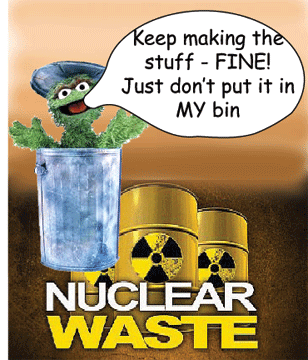
State lawmakers again try to ban most dangerous nuclear waste as feds consider allowing it at West Texas site, https://www.texastribune.org/2021/08/23/texas-nuclear-waste-storage-site-legislature/A failed regular session bill sought to give a financial break to a West Texas nuclear waste disposal company. Now, lawmakers have removed what opponents called a giveaway and are again trying to pass a bill to stop highly radioactive materials from coming to Texas.
BY ERIN DOUGLAS AUG. 23, 2021 After failing this spring, Texas lawmakers are again trying to ban the most dangerous type of radioactive waste from entering the state — at the same time as a nuclear waste disposal company in West Texas pursues a federal application to store the highly radioactive materials.
Environmental and consumer advocates for years have decried a proposal to build a 332-acre site in West Texas near the New Mexico border to store the riskiest type of nuclear waste: spent fuel rods from nuclear power plants, which can remain radioactive for hundreds of thousands of years. Strong political interests in Texas, from Gov. Greg Abbott to some oil and gas companies operating in the Permian Basin, have opposed the company’s application.
But a bill that sought to ban the highly radioactive material failed during the regular legislative session that ended in May. That bill, filed by State Rep. Brooks Landgraf, R-Odessa, whose district includes Andrews County where the existing nuclear waste company Waste Control Specialists operates, included a big break on fees for the company. Some lawmakers also thought the previous bill’s language wasn’t strong enough to actually ban the materials.
Now, Landgraf has again filed a bill during this year’s second special session that seeks to ban the highly radioactive materials from coming to the company’s facility in his district. The House Environmental Regulation Committee on Monday passed House Bill 7, which does not include any changes to fees for the existing company, one of the key criticisms that killed the proposed legislation earlier this year.
“So in other words, this is designed to be clean and easy so that we can go on record as a state [opposing high-level nuclear waste storage],” Landgraf said.
Waste Control Specialists has been disposing of the nation’s low-level nuclear waste — including tools, building materials and protective clothing exposed to radioactivity — for a decade in Andrews County. The company, with a partner, is pursuing a federal Nuclear Regulatory Commission license to store spent nuclear fuel on a site adjacent to its existing facility.
The Nuclear Regulatory Commission is advancing the company’s license. In July, NRC staff recommended in an environmental review that the site be approved to take the highest level of nuclear waste. The license still needs review by the federal commissioners.
Scientists agree that spent nuclear fuel, which is currently stored at nuclear power plants, should be stored deep underground, but the U.S. still hasn’t located a suitable site. The plan by the WCS joint venture, Interim Storage Partners, proposes storing it in above-ground casks until a permanent location is found.
Landgraf’s HB 7 includes a ban on disposing of high-level radioactive waste in Texas other than former nuclear power reactors and former nuclear research and test reactors on university campuses (nuclear power plants must keep the waste generated from operations on site until a long-term disposal site is created). The bill would also bar state agencies from issuing construction, stormwater or pollution permits for facilities that are licensed to store high-level radioactive waste.
Some opponents of nuclear waste, however, say the bill doesn’t go far enough. Karen Hadden, the executive director of the Sustainable Energy and Economic Development Coalition, an alliance of businesses and organizations that oppose the nuclear waste facility, is opposed to the bill because she said the ban leaves out another type of highly radioactive waste, much of it generated by the decommissioning of nuclear power plants. The material — known as “greater than Class C waste” falls into what experts call a gray area between lower-level categories of radioactive materials and spent nuclear fuel.
“We would support a single, well-written ban on spent nuclear fuel and Greater than Class C reactor waste,” Hadden said in an interview with the Tribune. “We question why the bill isn’t better written.”
Albany bids to become global wave power hub with state funding boost — RenewEconomy

WA government chips in funds to help establish coast off Albany as the southern hemisphere’s first testing site for wave energy generation technology. The post Albany bids to become global wave power hub with state funding boost appeared first on RenewEconomy.
Albany bids to become global wave power hub with state funding boost — RenewEconomy
Communities react with shock to news they are being considered as locations for nuclear waste facility
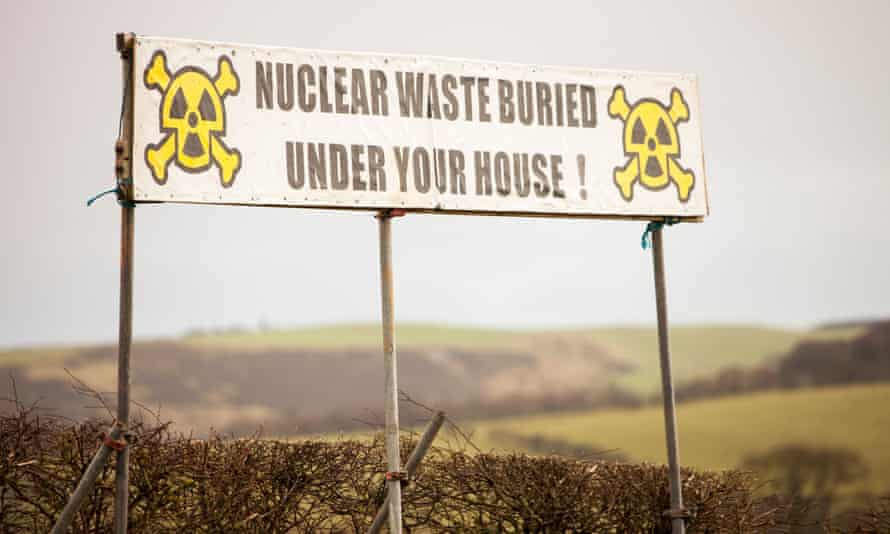
Nuclear storage plans for north of England stir up local opposition
Communities react with shock to news they are being considered as locations for underground facility, Guardian, Tommy GreeneTue 24 Aug 2021 The long-running battle to build an underground nuclear waste facility in the north of England has run into fresh problems, as communities reacted with shock to the news that they were being considered as locations.
The north-east port town of Hartlepool is one of the sites in the frame as a potential site for a geological disposal facility (GDF), while a former gas terminal point at Theddlethorpe, near the Lincolnshire coast, is another. Cumbria, where much of the waste is stored above ground, is also being considered.
Victoria Atkins, a government minister and the MP for Louth and Horncastle, said she was “stunned” by the prospect that her constituency could host a GDF, claiming that the Conservative-controlled Lincolnshire county council’s engagement with the government’s radioactive waste management group had been kept hidden from her.
The facility is intended to deal with the long-running problem of nuclear waste storage by providing a safe deposit for approximately 750,000 cubic metres of high-activity waste hundreds of metres underground in areas thought to have suitable geology to securely isolate the radioactive material. The waste would be solidified, packaged and placed into deep subterranean vaults. The vaults would then be backfilled and the surrounding network of tunnels and chambers sealed……….
Between 70% and 75% of the UK’s high-activity radioactive waste, which would be designated for the GDF, is stored at the Sellafield facility in west Cumbria. The sources of the waste include power generation, military, medical and civil uses.
Existing international treaties prohibit countries from exporting the waste overseas, leading some scientists to argue for underground burial that, they say, would require no further human intervention once storage is complete……………
the proposals have stirred up strong local feeling among both community leaders and residents, and accusations of secrecy have been levelled at councils and the RWM in recent weeks.
In north-east England, the political fallout generated by news of the GDF “early stage” discussions triggered the resignation of Hartlepool council’s deputy leader, Mike Young, on Tuesday evening.
“We are making huge strides in Hartlepool and across Teesside and Darlington,” the Tees Valley mayor, Ben Houchen, said following the decision. “And the last thing we need as we sell our region to the world is to be known as the dumping ground for the UK’s nuclear waste.”
Cumbria county council, which resisted the last efforts to site a GDF locally in 2013, has declined to take part in either of the two existing working groups, saying its involvement would give the process “a credibility it doesn’t deserve”.
There is already considerable opposition from local groups. “The vast majority of people here are horrified by the GDF,” said Jane Bright, a Mablethorpe resident and spokesperson for the Guardians of the East Coast campaign. “I should think it’s no more welcome elsewhere. But there’s a lot of pride in this area and we’ll fight this for as long as it takes.”
Marianne Birkby, a Cumbrian resident and founder of the Radiation-Free Lakeland group, said: “We’re seen as the line of least resistance here. In Cumbria, we’ve been there before with this. Now people are now trying to get their heads around it again, in the middle of a pandemic. This dump would essentially make us a sacrifice zone to the nuclear industry.” https://www.theguardian.com/environment/2021/aug/23/nuclear-storage-plans-for-north-of-england-stir-up-local-opposition
August 23 Energy News — geoharvey

Opinion: ¶ “When Electric Buses Make Sense, And When They Just Don’t” • Electric buses are definitely better than a diesel or natural gas bus. That’s indisputable without seriously bending the facts. The thing is, combustion buses aren’t the only competition electric buses have, and in many situations, there are even cleaner options that we […]
August 23 Energy News — geoharvey
This week’s news – Australia and more
As the Afghanistan crisis continues, many writers consider the underlying causes of the USA’s prolonged wars, and reveal the staggering profits made by the weapons-making corporations. From the corporate point of view, the 20 year war has been a great success.
Coronavirus:more than 212.1 million cases of COVID-19 The reported global death toll stood at more than 4.4 million. The Delta variant puts a strain on health systems. Several countries struggle, with lockdowns needed – e.g.in Vietnam, Australia, New Zealand. Case numbers rise in France. Debates go on about child vaccination, mandatory vaccination, and booster doses of vaccine.
Climate. Global heating and its effects, extreme weather events keep on. The IPCC Report finds we will cross the 1.5C warming danger line in the 2030’s, pretty well no matter what we do.
NUCLEAR, Very quietly indeed – you could easily miss this, – come two positive events for the nuclear-free movement; exclusion of nuclear from the Green Zone at COP26, and USA’s nuclear regulator rejecting the push to weaken radiation safety standards.
Some bits of good news: What went right this week: how we saved Earth before, plus more positive news, Australia’s ‘healing journey’.
AUSTRALIA.
Australia’s participation in America’s wars. Was it worth it? Little chance for genuine community consultation on Napandee nuclear waste dump decision.
Kimberley Land Council: New heritage bill is skewed to the mining industry.. Young people rebel on climate. Australian government moves to limit charities’ ability to campaign during election period
INTERNATIONAL
USA’s Nuclear Regulatory Commission affirms that a little ionising radiation may be bad for health.
Nuclear lobby miserable, but Friends of the Earth relieved, that nuclear industry is excluded from the Green Zone at COP26 Climate Summit.
The tie between climate change and nuclear weapons.
Action on climate change is stalled by unwise spending on small nuclear reactors.
Frozen conflicts and forever wars. WikiLeaks and the Crimes of the West in Afghanistan.
Renewables are beating nuclear,
Bill Gates and the corporates behind the fake solutions to climate change. Arnie Gundersen writes to Bill Gates – about public funding for Gates’ false Natrium nuclear solution to climate change.
Little chance for genuine community consultation on Napandee nuclear waste dump decision

MY COMMENTS
What is difficult about these legislative provisions is to know what they mean and why are they there
They are probably meaningless for it is only an invitation with no result to a very restricted group of persons.
I should have thought that if you had a right or interest in the nominated land then you would have been included in the formal nomination
The only persons with a right or interest may be Aboriginal peoples under customary or ancestral ownership
What’s the betting no one in Pitt’s group will have a proper answer or even knows what it means as it is extremely poor drafting
NATIONAL RADIOACTIVE WASTE MANAGEMENT ACT 2012 as amended in 2021
There appear to be only very limited rights for community consultation underthe National Radioactive Waste Management Act 2012 as recently amended despite statements to the contrary
The problem under subsections (5) and (6) of section 10 of this legislation – and replicated for a subsequent situation by subsections (2) and (3) of section 18 – is that there is reference to only persons with a right or interest in the land
Regrettably this is rather vague and on black letter law extremely narrow in its context – what is the right or interest in the land ? with whom and how is the consultation process started ?
These provisions do not encompass or provide for the general community consultations claimed by virtue of the ultimate amendments to the legislation
In fact the community consultation process under the new legislation is extensively restrictive and does no credit to the senators claiming to have achieved a basis for considerable and comprehensive consultations before a ministerial declaration is made under the legislation.
It is certainly not the strong community consultation lauded as having beenachieved by the recently agreed amendments
Added to the seemingly lack of knowledge or simply ignorance of the technicalities and dangerous nature of nuclear waste and its proper management becomes unintentionally a rather toxic combination playing right into the current responsible minister’s hands.
It is unrealistic to rely on the progressive development of the facility for community consultations as obviously the minister will want to rush throughThe the facility’s establishment without any impediments or delays
Section 10(5) of original 2012 legislation reads
Division 4—Procedural fairness in relation to Minister’s declarations and
approvals
10 Procedural fairness in relation to Minister’s declarations and approvals
Section 10
USA’s Nuclear Regulatory Commission affirms that a little ionising radiation may be bad for health

Nuclear Regulatory Commission Affirms that a Little Radiation may be Bad for Health https://srswatch.org/nuclear-regulatory-commission-affirms-that-a-little-radiation-may-be-bad-for-health/?utm_source=rss&utm_medium=rss&utm_campaign=nuclear-regulatory-commission-affirms-that-a-little-radiation-may-be-bad-for-health SRS Watch 21 August 21 Amazingly, the NRC denies industry friendly petitions that claim “a little radiation is good for you.”
“Petition for Rulemaking; Denial: Linear No-Threshold Model and Standards for Protection Against Radiation”Nuclear Regulatory Commission, August 17, 2021
“The U.S. Nuclear Regulatory Commission (NRC) is denying three petitions for rulemaking (PRMs), submitted by Dr. Carol S. Marcus, Mr. Mark L. Miller, Certified Health Physicist, and Dr. Mohan Doss, et al. (collectively, the petitioners) in correspondence dated February 9, 2015, February 13, 2015, and February 24, 2015, respectively.
The petitioners request that the NRC amend its regulations based on what they assert is new science and evidence that contradicts the linear no-threshold (LNT) dose-effect model that serves as the basis for the NRC’s radiation protection regulations. The NRC docketed these petitions on February 20, 2015, February 27, 2015, and March 16, 2015, and assigned them Docket Numbers PRM-20-28, PRM-20-29, and PRM-20-30, respectively.
The NRC is denying the three petitions because they fail to present an adequate basis supporting the request to discontinue use of the LNT model. The NRC has determined that the LNT model continues to provide a sound regulatory basis for minimizing the risk of unnecessary radiation exposure to both members of the public and radiation workers. Therefore, the NRC will maintain the current dose limit requirements contained in its regulations.”NRC webpage: https://www.regulations.gov/document/NRC-2015-0057-0671
“It’s ridiculous:” Lack of leadership leaves Australia starved of capital for energy transition — RenewEconomy

Leading investment group says Australia is being starved of capital for the energy transition, and the regulatory bodies do not appear to know it. The post “It’s ridiculous:” Lack of leadership leaves Australia starved of capital for energy transition appeared first on RenewEconomy.
“It’s ridiculous:” Lack of leadership leaves Australia starved of capital for energy transition — RenewEconomy
“Massive role:” NSW to play match-maker to bring renewable hydrogen to industry — RenewEconomy

NSW government launches new platform to match-make renewable hydrogen producers and industry, sees “massive role” for new technology. The post “Massive role:” NSW to play match-maker to bring renewable hydrogen to industry appeared first on RenewEconomy.
“Massive role:” NSW to play match-maker to bring renewable hydrogen to industry — RenewEconomy
The American world-wide empire of military bases

American military bases overseas are now scattered across 81 countries, colonies, or territories on every continent except Antarctica. And while their total numbers may be down, their reach has only continued to expand.
As long as this count of 750 military bases in 81 places remains a reality, so, too, will U.S. wars. As succinctly put by David Vine in his latest book, The United States of War, ““Bases frequently beget wars, which can beget more bases, which can beget more wars, and so on.” ………..
New Bases, New Wars
Meanwhile, halfway around the world, thanks in part to a growing push for a Cold War-style “containment” of China, new bases are being constructed in the Pacific.
The All-American Base World August 19, 2021 As long as this current count of 750 military bases in 81 places remains a reality, so, too, will U.S. wars, writes Patterson Deppen. Consortium News By Patterson Deppen
TomDispatch.com ”………….. Having closed down hundreds of military bases and combat outposts in Afghanistan and Iraq, the Pentagon will now shift to an “advise-and-assist” role in Iraq. Meanwhile, its top leadership is now busy “pivoting” to Asia in pursuit of new geostrategic objectives primarily centered around “containing” China. As a result, in the Greater Middle East and significant parts of Africa, the U.S. will be trying to keep a far lower profile, while remaining militarily engaged through training programs and private contractors…………
I’ve just finished compiling a list of American military bases around the world, the most comprehensive possible at this moment from publicly available information. It should help make greater sense of what could prove to be a significant period of transition for the U.S. military.
Despite a modest overall decline in such bases, rest assured that the hundreds that remain will play a vital role in the continuation of some version of Washington’s forever wars and could also help facilitate a new Cold War with China.
According to my current count, our country still has more than 750 significant military bases implanted around the globe. And here’s the simple reality: unless they are, in the end, dismantled, America’s imperial role on this planet won’t end either, spelling disaster for this country in the years to come.
Tallying Up the ‘Bases of Empire’
I was tasked with compiling what we’ve (hopefully) called the “2021 U.S. Overseas Base Closure List” after reaching out to Leah Bolger, president of World BEYOND War. As part of a group known as the Overseas Base Realignment and Closure Coalition (OBRACC) committed to shutting down such bases, Bolger put me in contact with its co-founder David Vine, the author of the classic book on the subject, Base Nation: How U.S. Military Bases Abroad Harm America and the World.
Bolger, Vine and I then decided to put together just such a new list as a tool for focusing on future U.S. base closures around the world. In addition to providing the most comprehensive accounting of such overseas bases, our research also further confirms that the presence of even one in a country can contribute significantly to anti-American protests, environmental destruction, and ever greater costs for the American taxpayer.
Continue readingNo apology from France, as new report reveals the harm done to Pacific islands by atomic bomb tests
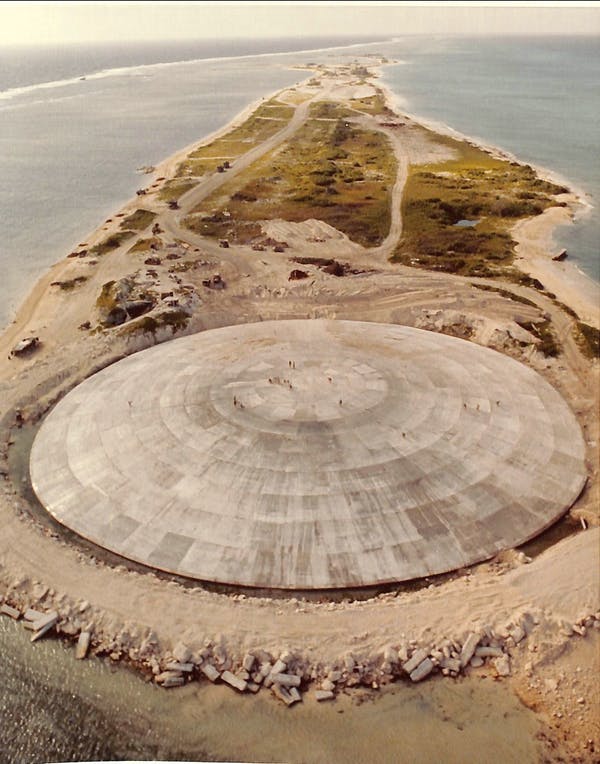
Although testing stopped more than two decades ago, its legacy lives on in French Polynesia’s politics, health, economy and environment,
“In every other Pacific Island, you have the same,” said Colombani, who also spent more than a decade working in French Polynesia’s tourism sector. “You have the postcard, but if you look beyond that, there’s something you cannot even imagine.”
New study on nuclear testing in French Polynesia reveals France’s ‘censorship and secrecy’ https://www.pri.org/stories/2021-08-06/new-study-nuclear-testing-french-polynesia-reveals-france-s-censorship-and
More than 400 claims have been filed against the French government for nuclear tests on French Polynesia between 1966 and 1996. Scientists say about 110,000 people have been affected by radioactive fallout. It’s been nearly two decades since France stopped testing nuclear weapons in French Polynesia.
But many across French Polynesia’s 118 islands and atolls across the central South Pacific were disappointed last month when President Emmanuel Macron, on his very first trip to the territory France has controlled since 1842, failed to apologize for the nearly 200 nuclear tests conducted between 1966 and 1996.
“Faced with dangerous powers in the concert of nations, I wish to say here that the nation owes a debt to French Polynesia,” Macron said in a July 27 speech. He went on to admit that the tests on the Mururoa and Fangataufa atolls were “not clean in any way” — but stopped short of an official apology.
Guillaume Colombani, who works for Radio Te Reo-o-Tefana, said while they weren’t expecting an apology, it was still devastating not to get one.
“So, when you do something wrong, whatever it is, if you go and see the people you have hurt and you say, ‘Listen, I’m sorry for what I’ve done,’” said Colombani, “it is easier for the community to say, ‘OK, we accept, here’s forgiveness,’ or ‘No, we don’t accept. You have to do something for us.’”
Colombani, 41, grew up in Tahiti during the last decades of the nuclear tests and said he remembers seeing images of blue lagoons turning white after bombs were set off. He can recount the hyper-polarization of the issue and the anti-nuclear demonstrations spurred across the Pacific.
Although testing stopped more than two decades ago, its legacy lives on in French Polynesia’s politics, health, economy and environment, he said.
Underestimated exposure levels
Scientists have long estimated some 110,000 people were affected by the radioactive fallout — many of them French Polynesians who worked at the testing sites. However, a study released earlier this year revealed that France underestimated the level of toxic exposure during the atmospheric tests that took place in the 1960s and ’70s.
The Mururoa Files was based on a two-year investigation of more than 2,000 declassified French state documents as well as various interviews conducted in French Polynesia.
“We found that they underestimated the level of exposure by factors of two to 10, depending on the tests and locations,” said Sebastien Philippe, a researcher and lecturer at the Princeton School of Public and International Affairs with the program on science and global security and co-author of the study.
That’s two to 10 times higher than the estimates given by France’s Atomic Energy Commission in a report produced nearly a decade after testing stopped. The findings compiled by Philippe and his team found, among other things, that one reason the estimates of radiation exposure were so low is that France did not take into account contaminated drinking water.
Ultimately, this systematic underestimation not only made it more difficult to link cases of cancer to the nuclear tests, but it also made it harder for victims to get compensated.
“The compensation process was scientifically broken, and I think the reason for that is the government really realized how much money it was going to cost them, and decided it would be easier to deal with this in court,” Philippe said.
More than 400 claims have been filed against the French government, but only about half have been settled in the last 10 years. Philippe said this was allowed to happen because of the French government’s “censorship and secrecy” surrounding the nuclear testing.
One upside of the release of this study, he said, was the French government’s commitment to open more government archives to the public — a commitment that President Macron made on his recent trip. The French government did not respond to The World’s request for comment about Macron’s trip.
Irreversible environmental damage
The underestimation of the radioactive fallout also made it difficult to fully understand the scope of irreversible environmental damage from the nuclear testing.
Keitapu Maamaatuaiahutapu, a physicist and climate scientist at the University of French Polynesia, said the destruction was particularly bad when the testing went underground in the mid-’70s and bombs were set off in boreholes drilled into the atolls.
These bombs had power “100 to 1,000 times more than the bomb dropped on Hiroshima,” he said.
Whole lagoons full of coral were decimated and fish populations were poisoned for years. Now, there’s also a concern that the atolls may break apart — a process being sped up by rising ocean levels due to climate change, he said.
“And the release of the radioactivity from those holes,” Maamaatuaiahutapu said. “Not only would that create [a] tsunami, but it would pollute the ocean.”
France continues to control all of the information about the damage caused by nuclear testing, including heavily guarding the test sites themselves, he said, so there might not be a way to tell when something might happen. Both the Mururoa and Fangataufa atolls are more than 700 miles away from the main island of Tahiti.
Maamaatuaiahutapu also said that he doesn’t believe that French Polynesia will never get an official apology from Paris, and that also creates political problems.
Experts said that French Polynesians who are loyal to France don’t want to criticize Paris, because it supports the territory with some $2 billion a year.
On the other hand, the independent movement, which both Maamaatuaiahutapu and Colombani are part of, supports every effort to hold France accountable, and to spread the word about nuclear tests across the Pacific — a place known mostly for its beauty.
“In every other Pacific Island, you have the same,” said Colombani, who also spent more than a decade working in French Polynesia’s tourism sector. “You have the postcard, but if you look beyond that, there’s something you cannot even imagine.”
August 22 Energy News — geoharvey

Science and Technology: ¶ “How The Climate Crisis Is Changing Hurricanes” • The proportion of high-intensity hurricanes has increased due to warmer global temperatures, according to a UN climate report released earlier this month. Scientists have also found that the storms are more likely to stall and lead to devastating rainfall, and they last longer […]
August 22 Energy News — geoharvey
Give your opinion. Should there be more community consultation on designating the South Australian farm Napandee as nuclear dump site?
Is more nuclear consultation needed? | POLL. – vote at this link https://www.stockjournal.com.au/story/7395908/is-more-nuclear-consultation-needed-poll/?cs=4894&fbclid=IwAR1tI8ZRalqvuxDyGjUJLeoBb2uS_WRBeMVCEz5FLaHDoCJtXPEGt9Uf62E
20 Aug 2021 Federal Resources Minister Keith Pitt believes the Napandee site near Kimba on the Eyre Peninsula should host the country’s radioactive waste storage facility.
……. But before the decision can be made official, a period of further consultation needs to occur, with the Minister considering relevant comments ahead of deciding whether to proceed with declaring the Napandee site.
Earlier this year, the federal government backed down on a key detail of the National Radioactive Waste Management Amendment (Site Selection, Community Fund and Other Measures) Bill 2020. The bill had the chosen site listed as Napandee, but Labor refused support it on the premise that confirming the site in legislation would prevent the possibility of a future legal challenge.
Kimberley Land Council: New heritage bill is skewed to the mining industry
Alex Salmon. Perth. August 20, 2021 https://www.greenleft.org.au/content/kimberley-land-council-new-heritage-bill-skewed-mining-industry
A 400-strong protest organised by the Kimberley Land Council (KLC) on August 19 demanded the Western Australia government halt its Aboriginal Cultural Heritage Act bill (ACH). Traditional Owners have not been consulted on the bill to replace the Aboriginal Heritage Act 1972 (WA).
A 400-strong protest organised by the Kimberley Land Council (KLC) on August 19 demanded the Western Australia government halt its Aboriginal Cultural Heritage Act bill (ACH). Traditional Owners have not been consulted on the bill to replace the Aboriginal Heritage Act 1972 (WA).
The government claims the new bill will protect Aboriginal cultural heritage and “reset” the relationship between land users and Traditional Owners.
Traditional Owners disagree, saying the bill is skewed towards the mining industry and gives them no power to prevent the destruction of sacred sites such as Juukan Gorge, which Rio Tinto destroyed in May last year.
National Native Title Council spokesperson Kado Muir told the National Indigenous Times on July 30 that the draft bill “continues to give the Aboriginal Affairs Minister more power than Traditional Owners”.
“For the Minister of the Crown to be destroying an Aboriginal site without the consent of Traditional Owners is an abuse of human rights,” Muir said.
Greens WA lead Senate candidate Yamatji Noongar woman Dorinda Cox told the rally Aboriginal people must be at the centre of any new ACH law and that principle of Aboriginal self-determination needed to be respected.
The protest marched to Parliament House to hear from other speakers. Slim Parker, an Elder and chair of the Bajima Native Title Aboriginal Corporation, condemned the lack of consultation and the bill for failing to meet international standards set down by the UN Declaration of the Rights of Indigenous People.
Sara Bergmann, a young Aboriginal woman, spoke of the systemic dispossession. Wayne Bergmann from the KLC read out a statement calling upon the government to reconsider the bill, protect the Martuwarra (Fitzroy River), prevent any more Juukan Gorges and to ensure First Nations peoples are able to decide how to update the AHA.
He then presented a bark petition from Traditional Owners of the Kimberly region to Aboriginal Affairs MP Steven Dowson.
1 This month.

Australians deserve the truth
about
AUKUS – https://aukuspublicinquiry.com/
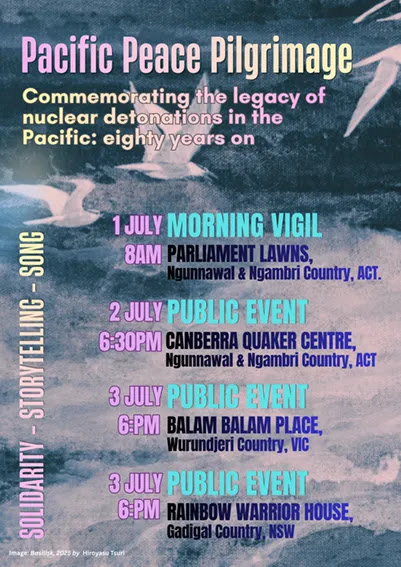


PETITION – To: Prime Minister Anthony Albanese and the Australian Labor Government

of the week – Australians for War Powers Reform (AWPR)
To see nuclear-related stories in greater depth and intensity
 Antinuclear