Degrowth: the necessary climate solution no-one is talking about

The Necessary Climate Solution No-one is Talking About https://www.tasmaniantimes.com/2021/08/degrowth-necessary-climate-solution-no-one-is-talking-about/ Erin Remblance 1 Aug 21,
For all the talk of renewable energy, electric vehicles and plant-based diets, there’s a gaping hole in the way we’re trying to solve accelerating climate change.
We will not stay below 2°C of warming while pursuing economic growth – yet barely anyone talks about it.
Since the end of World War II Gross Domestic Product (GDP) growth has been the metric of human prosperity in Western nations – the idea being that if the productivity of the economy increases so will the wellbeing of the people within that economy. And for a while that was the case – but since the 1970’s increases in GDP have, on average, failed to translate into increases in wellbeing and happiness.
It is not surprising. Research has shown that once a certain GDP threshold, or level of wellbeing, has been met people gain little from consuming more ‘stuff’ – a necessary requirement for continuous GDP growth.
Robert F Kennedy eloquently summed up the inadequacy of GDP as a metric of wellbeing at a speech he gave in 1968:t]
The gross national product does not allow for the health of our children, the quality of their education or the joy of their play. It does not include the beauty of our poetry or the strength of our marriages, the intelligence of our public debate or the integrity of our public officials.
It measures neither our wit nor our courage, neither our wisdom nor our learning, neither our compassion nor our devotion to our country, it measures everything in short, except that which makes life worthwhile.

What’s more, GDP has never been, and can’t be, decoupled from material footprint, including energy[i]. This means we cannot roll out renewable energy fast enough to meet the objectives of the Paris Agreement – to keep warming below 2°C – if we continue growing our economy.
Three percent growth every year for the rest of this decade is 30% growth by 2030. Achieving a 75% reduction on 2005 greenhouse gas (GHG) emissions by 2030 is a Herculean effort already, let alone if the economy is 30% bigger by that time. And surely, given the urgency with which we must decarbonise, reducing energy demand must be a part of the mix, even if it means reducing GDP?
There are nearly 8 billion people in the world today – but they haven’t all contributed equally to the climate crisis. Between 1990 and 2015 the world’s wealthiest 1% were responsible for double the greenhouse gas (GHG) emissions of the poorest 50%. Over that same period, the wealthiest 10% of the world’s population were responsible for 52% of the world’s GHG emissions, while the poorest 50% were responsible for only 7% of the world’s GHG emissions.
Degrowing our economy to fit back within the planetary boundaries will also allow people living below satisfactory standards of human wellbeing to improve their living conditions. Data from 2016 showed that 940 million people still didn’t have access to electricity, and 3 billion people didn’t have access to clean fuels for cooking. These people don’t even own a washing machine, let alone a car and they certainly aren’t flying anywhere. Degrowth is not only necessary to solve the climate crisis, it’s the only way to address widening inequality across the globe.
For all the talk of renewable energy, electric vehicles and plant-based diets, there’s a gaping hole in the way we’re trying to solve accelerating climate change.
We will not stay below 2°C of warming while pursuing economic growth – yet barely anyone talks about it.
Since the end of World War II Gross Domestic Product (GDP) growth has been the metric of human prosperity in Western nations – the idea being that if the productivity of the economy increases so will the wellbeing of the people within that economy. And for a while that was the case – but since the 1970’s increases in GDP have, on average, failed to translate into increases in wellbeing and happiness.
It is not surprising. Research has shown that once a certain GDP threshold, or level of wellbeing, has been met people gain little from consuming more ‘stuff’ – a necessary requirement for continuous GDP growth.
Robert F Kennedy eloquently summed up the inadequacy of GDP as a metric of wellbeing at a speech he gave in 1968:t]he gross national product does not allow for the health of our children, the quality of their education or the joy of their play. It does not include the beauty of our poetry or the strength of our marriages, the intelligence of our public debate or the integrity of our public officials.
It measures neither our wit nor our courage, neither our wisdom nor our learning, neither our compassion nor our devotion to our country, it measures everything in short, except that which makes life worthwhile.
What’s more, GDP has never been, and can’t be, decoupled from material footprint, including energy[i]. This means we cannot roll out renewable energy fast enough to meet the objectives of the Paris Agreement – to keep warming below 2°C – if we continue growing our economy.
Three percent growth every year for the rest of this decade is 30% growth by 2030. Achieving a 75% reduction on 2005 greenhouse gas (GHG) emissions by 2030 is a Herculean effort already, let alone if the economy is 30% bigger by that time. And surely, given the urgency with which we must decarbonise, reducing energy demand must be a part of the mix, even if it means reducing GDP?
There are nearly 8 billion people in the world today – but they haven’t all contributed equally to the climate crisis. Between 1990 and 2015 the world’s wealthiest 1% were responsible for double the greenhouse gas (GHG) emissions of the poorest 50%. Over that same period, the wealthiest 10% of the world’s population were responsible for 52% of the world’s GHG emissions, while the poorest 50% were responsible for only 7% of the world’s GHG emissions.
Degrowing our economy to fit back within the planetary boundaries will also allow people living below satisfactory standards of human wellbeing to improve their living conditions. Data from 2016 showed that 940 million people still didn’t have access to electricity, and 3 billion people didn’t have access to clean fuels for cooking. These people don’t even own a washing machine, let alone a car and they certainly aren’t flying anywhere. Degrowth is not only necessary to solve the climate crisis, it’s the only way to address widening inequality across the globe.
What could life in a degrowth economy look like? It would involve shorter working weeks and less commuting, giving us more time to do things we enjoy. Less individual ownership and more sharing. Less debt and more services provided by the government. A focus on community and connection rather than individualism and perpetually trying to find happiness through our next purchase, holiday or experience.In a degrowth economy environmentally destructive and resource intensive industries would be scaled back, and more people would be working in jobs that benefited one another and the planet, putting more meaning and purpose into our lives.
We would value different things in a degrowth economy and define success differently. A degrowth economy does not need to mean a degrowth lifestyle, indeed we could be richer for it.
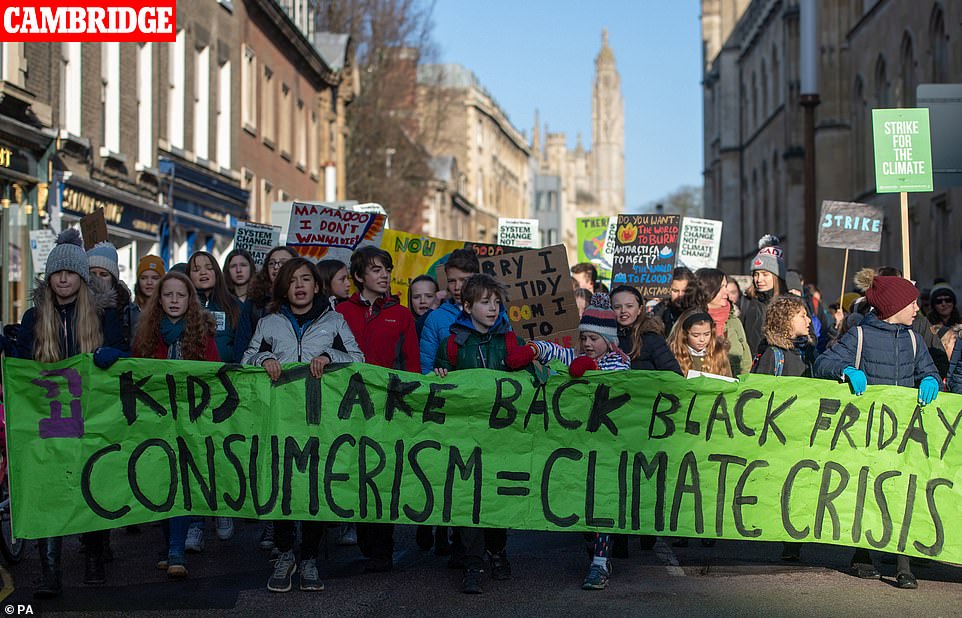
It’s probably tempting to define a ‘degrowth’ economy as socialism, but it’s a false binary that an economic system is either capitalism or socialism. All economies are a mix of both, often with other bits of ‘isms’ thrown in for good measure. Let’s use our imaginations and contemplate what life could look like if we focused on the things that really matter, and not simply the amount of growth in our economy.
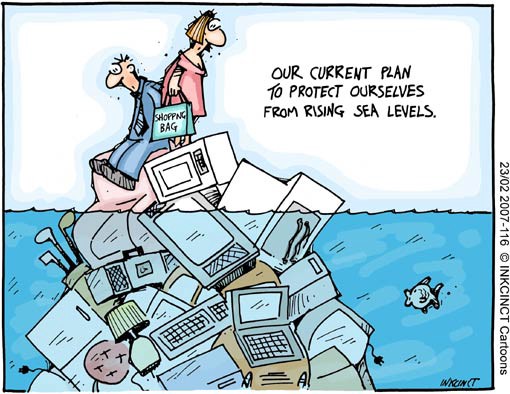
In the end, the economy is a man-made construct. It can be changed. The laws of nature, however, cannot. It would be tragic to look back and think we gave it all up because we weren’t brave enough to challenge the insane notion of endless growth on a finite planet with the urgency it deserves.
[i] Chart page 102, Less is More, Jason Hickel Global GDP & Material Footprint.
Erin Remblance is a mother-of-three who works in carbon reduction, is a climate activist and is studying wellbeing economies.
A hard rain did fall — Hiroshima victims beyond “official” zone will now be compensated

Hiroshima victims beyond “official” zone will now be compensated
A hard rain did fall — Beyond Nuclear International A hard rain did fall, Black rain” victims finally win in court https://beyondnuclearinternational.org/2021/08/01/a-hard-rain-did-fall/ By Linda Pentz Gunter
Just weeks before the 2021 commemoration of the August 6, 1945 US atomic bombing of the city of Hiroshima, a Japanese court ruled that victims of the radioactive “black rain” who were living beyond the officially recognized contamination zone at the time, should be included in the group considered bomb “survivors” or “Hibakusha” and receive the same benefits.
A Hiroshima high court acknowledged in its July 14, 2021 ruling that many more people suffered as a result of exposure to “black rain” than have hitherto been recognized as victims.
“Black rain” was described in a CNN story as a “mixture of fallout particles from the explosion, carbon residue from citywide fires, and other dangerous elements. The black rain fell on peoples’ skin and clothing, was breathed in, contaminated food and water, and caused widespread radiation poisoning.”
When the verdict was first released last month, it appeared that the Japanese government, under Prime Minister Yoshihide Suga, might appeal the decision. Instead, Suga declared his government, the defendants in the case, would not appeal it and even suggested that relief might be extended to other affected people beyond the plaintiffs. According to the Asahi Shimbun, this may even include those exposed to radiation as a result of the 2011 Fukushima nuclear disaster on the Japan coast.
The court ruling was important because it recognized and acknowledged not only the heaths effects of the radioactive “black rain” atomic bomb fallout, but also the internal exposure to radiation through the ingestion of contaminated water and food experienced by the 84 plaintiffs in the case.
The ruling of course comes very late in the day as many Hibakusha are already deceased. Indeed, one of the plaintiffs, 79-year-old Seiji Takato, told CNN he was worried that if there was no verdict soon, “we would all die if this (case were) prolonged”.
The plaintiffs will now receive the same benefits as residents of the state-designated black rain zone. According to the Kyodo News, these will include “free health checkups and atomic bomb survivors’ certificates entitling them to medical benefits in the event that they develop 11 specific illnesses caused by radiation.”
The United States, the country which dropped the two atomic bombs — on Hiroshima on August 6, 1945 and then on Nagasaki three days later — has taken neither responsibility for the devastating health consequences, nor offered an apology or compensation.
Indeed, President Truman, in office when the bombings were authorized, told the Japanese, chillingly, that their sacrifice and suffering were “urgent and necessary.” President Clinton declared that the US “owes no apology to Japan”. He, like other US presidents before and since, clung to the disputable notion that the atomic bombings saved at least one million American lives, an argument ably dispatched by Ward Wilson on these pages in 2018.
To date, Barack Obama is the only sitting US president to have visited Hiroshima, when he traveled there in 2016, but he too failed to apologize for the atrocity. There have been plenty of lively debates on this question: Would an apology open up old wounds, focus too much on the past and be an admission of wrongdoing? Would it also open the door to a floodgate of demands for monetary compensation? Or is an official apology an essential atonement, albeit merely symbolic at this late stage? Could an apology lead in turn to meaningful international engagement on global peace?
Slowly, the Hibakusha have been gaining recognition. One of its most famous and outspoken members, Setsuko Thurlow, accepted the Nobel Peace Prize awarded the International Campaign to Abolish Nuclear Weapons (ICAN) alongside its executive director, Beatrice Fihn, in 2017.
The award came on the heels of the instrumental role the Hibakusha played in persuading the UN to create the Treaty on the Prohibition of Nuclear Weapons, now ratified by 55 countries and counting, five more than the number that ensured it became law this past January. None of the nuclear weapons states, nor Japan, has signed or ratified the treaty.
At the end of the day, the lesson here is the mantra adopted by the nuclear researchers, whistleblowers and watchdogs at Fairewinds Energy Education: “Radiation knows no borders.”
As Fairewinds wrote in the context of the “black rain” verdict: “Radioactive microscopic particles generated from mining uranium ore, reprocessing atomic fuel, bomb tests, and disastrous meltdowns travel well beyond the arbitrary boundaries and demarcation lines that governments establish to limit their liability and to maintain control over others.”
These warnings serve as a compelling reason to neither test nor use atomic weapons and also as a powerful admonition against the continued use of “civil” nuclear power.
Small nuclear reactors, a dangerous experiment, and distraction from real climate action – David Suzuki
Renewables cost less than nuclear, come with fewer health, environmental and weapons-proliferation risks and have been successfully deployed worldwide.
Given rapid advances in energy, grid and storage technologies, along with the absolute urgency of the climate crisis, pursuing nuclear at the expense of renewables is costly, dangerous and unnecessary.
Is smaller better when it comes to nuclear? Pique, By: David Suzuki 1 Aug 21, Nuclear power hasn’t been in the news much since the 2011 Fukushima meltdown in Japan. Thanks to a push by industry and governments, you might soon hear more about how nuclear reactors are now safer and better.
Specifically, the conversation has shifted to “small modular nuclear reactors” or SMNRs, which generate less than 300 megawatts of electricity, compared to up to 1,600 MWe for large reactors.
Some of the 100 or so designs being considered include integral pressurized water reactors, molten salt reactors, high-temperature gas reactors, liquid metal cooled reactors and solid state or heat pipe reactors. To date, the industry is stuck at the prototype stage for all models and none is truly modular in the sense of being manufactured several at a time—an impediment considering the speed at which global heating is worsening.
The benefits touted by industry have convinced many countries, including Canada, to gamble huge sums on nuclear, despite the poor odds. The Small Modular Reactor Action Plan hypes it as the possible “future of Canada’s nuclear industry, with the potential to provide non-emitting energy for a wide range of applications, from grid-scale electricity generation to use in heavy industry and remote communities.” ………
given the seriousness of the climate emergency and the various options for transforming our energy systems to combat it, is nuclear—regardless of size or shape—the way to go? We must rapidly reduce emissions now, and we have readily available technologies to do so.
New nuclear doesn’t make practical or economic sense for now. Building reactors will remain expensive and time-consuming. Studies estimate electricity from small nuclear can cost from four to 10 times that of wind and solar, whose costs continue to drop. SMNRs will require substantial government subsidies.
Even when nuclear has to compete against renewables prepackaged with storage, the latter wins out.
One recent study of 123 countries over 25 years published in Nature Energy found that renewables are much better at reducing greenhouse gas emissions than nuclear—whose benefits in this area are negligible—and that combining nuclear and renewables creates a systemic tension that makes it harder to develop renewables to their potential.
Like all nuclear reactors, SMNRs produce radioactive waste and contribute to increased nuclear weapons proliferation risk—and Canada still has no effective strategy for waste. Nuclear power also requires enormous amounts of water.
Corporate interests often favour large, easily monopolized utilities, arguing that only major fossil fuel, nuclear or hydro power facilities can provide large-scale “baseload” power. But many experts argue the “baseload myth” is baseless—that a flexible system using renewables combined with investments in energy efficiency and a smart grid that helps smooth out demand peaks is far more efficient and cost-effective, especially as energy storage technologies improve.
Even for remote populations, energy systems that empower communities, households, businesses and organizations to generate and store their own energy with solar panels or wind installations and batteries, for example, and technologies like heat-exchange systems for buildings, would be better than nuclear.
Renewables cost less than nuclear, come with fewer health, environmental and weapons-proliferation risks and have been successfully deployed worldwide. Given rapid advances in energy, grid and storage technologies, along with the absolute urgency of the climate crisis, pursuing nuclear at the expense of renewables is costly, dangerous and unnecessary.
David Suzuki is a scientist, broadcaster, author and co-founder of the David Suzuki Foundation. Written with contributions from David Suzuki Foundation Senior Writer and Editor Ian Hanington. https://www.piquenewsmagazine.com/opinion/opinion-is-smaller-better-when-it-comes-to-nuclear-4175458
Australian researchers say simple ‘twist’ could be key to world’s thinnest solar cells — RenewEconomy

Australian researchers show how ‘twisting’ ultra thin ‘2D’ materials could be the key to controlling some of the world’s thinnest solar cells. The post Australian researchers say simple ‘twist’ could be key to world’s thinnest solar cells appeared first on RenewEconomy.
Australian researchers say simple ‘twist’ could be key to world’s thinnest solar cells — RenewEconomy
August 1 Energy News — geoharvey

Opinion: ¶ “Enbridge’s Pipeline 3 Threatens An Endangered Species – Contact The EPA” • The drinking water of people who live along the Mississippi River is put into danger by Enbridge’s Pipeline 3. There are many other reasons to oppose it. One, however, is the survival of a rare mussel species. And that gives us […]
August 1 Energy News — geoharvey
Submission: Medical Association for the Prevention of War (MAPW) supports a new Intermediate Level Solid Waste Storage Facility at Lucas Heights

MAPW supports the construction of a new Intermediate Level Solid Waste Storage Facility at Lucas Heights.
MAPW strongly recommends:
• an open and independent review of nuclear waste production and disposal in Australia, and
• progressing a shift to cyclotron rather that reactor-based production of isotopes for nuclear medicine as rapidly as feasible.
Arguments that radioactive waste should all be at one site overlook the ongoing need for hospitals to store clinical waste. After nuclear medicine is used in a patient, the vast majority of the residual material and radioactively-contaminated equipment is stored on site while the radioactivity decays away. Within a few days, it has lost so much radioactivity that the material can go to a normal rubbish tip. There will always need to be multiple waste storage locations at sites which utilise radiopharmaceuticals.
Clean cyclotron production of Tc99m has recently been approved and is being implemented in
Canada. This should rapidly become the future of isotope production
Medical Association for the Prevention of War (MAPW) 30 July21, Submission to the Public Works Committee regarding Australian Nuclear Science and Technology Organisation Intermediate Level Solid Waste Storage Facility Lucas Heights, NSW.
SUMMARY
MAPW supports the construction of a new Intermediate Level Solid Waste Storage Facility at Lucas Heights. As noted in the ANSTO submission, there will be minimal expected impact on the community and ANSTO has excellent existing security.
This contrasts with the massive distress and community division in regional and remote communities that has been created by a succession of nuclear waste storage proposals.
This facility will be useful over a much greater timeframe if ANSTO’s rapidly expanding production of isotopes for nuclear medicine is reined in. This very heavily subsided export business has only a small minority of the radiopharmaceuticals produced being utilised in the care of Australians. There is no evidence whatsoever of more than minimal cost recovery. The burgeoning amounts of ILW produced will be a liability for Australians or many generations.
More reliable, safer, cheaper and much cleaner cyclotron production of technetium99m (Tc99m) has been shown to work and is being implemented in Canada. Japan, the USA, the UK and several European countries are all looking to implement cyclotron.
The proposed new ILW facility provides an opportunity to identify and implement world’s best practice ILW disposal options and update and reset nuclear medicine production tocleaner, cheaper and more reliable methods.
MAPW strongly recommends:
• an open and independent review of nuclear waste production and disposal in
Australia, and
• progressing a shift to cyclotron rather that reactor-based production of isotopes for nuclear medicine as rapidly as feasible.
Individual criteria will now be addressed.
Continue readingA reminder to gullible followers of Angus Taylor – small nuclear reactors are just not economically viable.

Paul Richards 31 July, 21, SMR is no more than a conventional nuclear reactor, broken down, isolating, the reactor component.
Branding one component, small.’mass produced’ Small reactors destroys the economies of scale of conventional reactors, and they are no longer economically viable.
As every reactor ever built, needs, the other components to function.Same $US trillion-dollar infrastructure, mining, milling, yellowcake, fuel rod manufacture, transport, construction, production, output for the earth’s highest-priced electricity.
Anyone claiming unspent nuclear fuel can be run through twice is lying.The nuclear state has not been able to run unspent fuel through once more, in over 60 years, speaking to economic viably. Let alone the countless times it needs to transmute to make this claim real.
Something to think about is uranium. Uranium is at historic low prices, and running fuel through once more is not even viable.The price will rise, as the resource is limited, making it even far less viable economically.
Australian Labor Party does not trust Angus Taylor’s ”moronic” approach to energy and economics
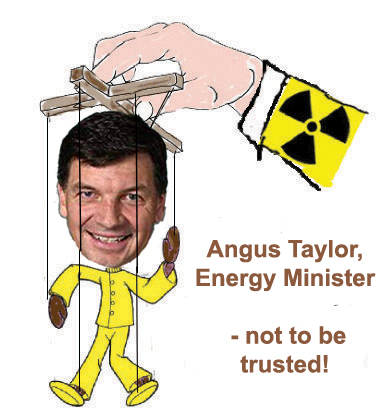
“Nothing better demonstrates the Liberals’ deeply moronic approach to energy and economics,” Josh Wilson, federal MP for Fremantle, tweeted on Friday.
“Nuclear power is not only ferociously expensive, but also slow, inflexible and toxic to the environment and human health.”
Top union leader backs Angus Taylor’s nuclear deal with UK, Jacob Greber AFR, Senior correspondent 30 July 21 One of Australia’s leading union leaders has lent support to Energy Minister Angus Taylor’s decision to enable Australian scientists to work with the UK on next-generation nuclear power development even as two Labor MPs slammed the idea of such power plants as “deeply moronic” and “toxic” to the environment and human health.
Daniel Walton, head of the Australian Workers Union called for “open and pragmatic energy solutions” to reduce carbon footprints at reliable and affordable rates.
If nuclear energy “ticks those three boxes, we should give it serious consideration,” Mr Walton told AFR Weekend. “If it doesn’t tick those boxes, we should move to the next solution.”
Mr Taylor signed a letter of intent this week with his British counterpart, Kwasi Kwarteng, for both countries to collaborate on low-emissions technology, including “advanced nuclear designs and enabling technologies”.
It is understood the co-operation will involve “leveraging” the expertise of the Australian Nuclear Science and Technology Organisation in waste processing and advanced materials to help advance development of small modular reactors, which are about the size of a standard shipping container……….
Reports of the UK-Australia nuclear tie-up triggered an immediate backlash from two West Australian Labor MPs.
“Nothing better demonstrates the Liberals’ deeply moronic approach to energy and economics,” Josh Wilson, federal MP for Fremantle, tweeted on Friday. “Nuclear power is not only ferociously expensive, but also slow, inflexible and toxic to the environment and human health.”
………….Mr Taylor said many Australians, particularly younger Generation Y and X voters, are looking at nuclear plants as a way of getting reliable power.
“All of it comes down to the genuine economic argument. If it’s uncompetitive against existing fossil fuels, then it won’t stack up,” he said. “But we’ll never know that if we never explore nuclear development. https://www.afr.com/policy/energy-and-climate/top-union-leader-backs-angus-taylor-s-nuclear-deal-with-uk-20210730-p58eiz
Tokyo’s Games Are Harming the Nuclear Weapons Ban
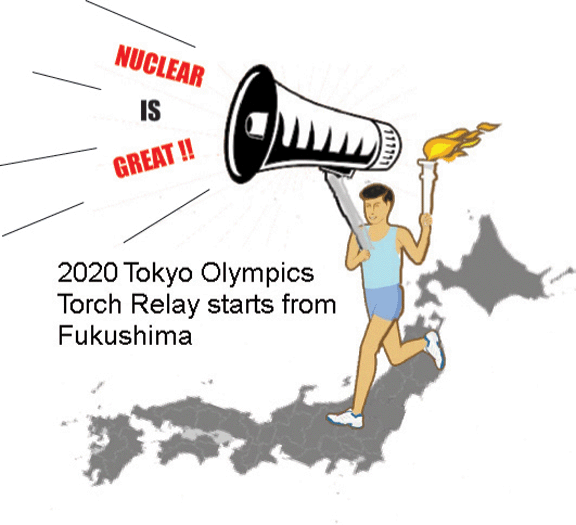
a two-week Olympic media blitz that normalizes nuclear disasters and shrugs at rising nuclear dangers, which illustrates why –
we need a new drive for mass nuclear literacy. With arms control in retreat, an informed citizenry could be our last, best line of defense.
Tokyo’s Games Are Harming the Nuclear Weapons Ban Movement https://www.thenation.com/article/society/tokyo-olympics-nuclear-weapons/
By paying lip service to the Fukushima disaster and the nuclear bombs dropped on Japan, these games are downplaying the growing danger of nuclear catastrophe.
By Alyn Ware
The Olympics are supposed to be a tangible symbol of global cooperation and peaceful competition. But the games carry a lot of baggage—not only from the pandemic but also from the Fukushima disaster and Japan’s nuclear politics.
As Covid cases spread in the Olympic Village and in Tokyo, protesters continue to demand the Olympics be canceled, and they continue to be ignored. But the tone-deafness of these Olympics goes back further—to the Fukushima nuclear disaster. In 2019, then–Prime Minister Shinzo Abe dubbed the Tokyo Olympics the “Recovery Games,” meant “to showcase the affected regions of the tsunami” and the nuclear meltdown of 2011, which continues to pose threats today.
That’s why some Olympic events are being held in Fukushima’s Azuma Stadium, and why Olympic torch runners have been routed through Fukushima prefecture, hitting what the official Olympic website calls “places of interest” near the Fukushima Daiichi nuclear plant. It started at J-Village, a former logistics hub for crews working to remediate the stricken reactors, now a sports complex, where Greenpeace detected a radiation hot spot in late 2019. It passed through Ōkuma and Futaba, where the plant is located, and other nearby towns long abandoned after the disaster.
This is intended to project an image of recovery and normalcy to the world. But it’s government propaganda, deaf to citizens’ concerns, and blind to ongoing threats. Fukushima Daiichi continues to leak radioactivity. New radiation hot spots and other impacts are being discovered all the time.
This sort of Olympic spin tactic has been used before. In the 1964 Tokyo Olympics, the government sought to portray Japan as a modern industrial nation with its own nuclear research program. Yoshinori Sakai, born in Hiroshima on the day the atomic bomb was dropped, lit the Olympic flame. A scant year and half after the Cuban missile crisis, this gesture soft-pedaled the dangers of nuclear technology, nuclear weapons, and the burgeoning arms race.
Today, the tone-deafness continues. This month, on the anniversary of the Trinity nuclear tests that enabled the atomic bombings of Japan, IOC President Thomas Bach went to Hiroshima to lay a wreath at a memorial, prompting an angry response. “President Bach using the image of ‘a peaceful world without nuclear weapons’ only to justify holding of the Olympics by force under the pandemic is a blasphemy to atomic bombing survivors,” a coalition of civic groups wrote. “An act like this does nothing but do harm to the global nuclear weapons ban movement.”
Billions watching the games are imbibing the idea that, protests notwithstanding, Covid, Fukushima, the atomic bombings, and rising nuclear dangers today pose no impediment to normalcy. This should be countered with factual context and truth-telling.
Nuclear Games, a new documentary available online, attempts this by contrasting the Olympic ideals of peace and humanity with our history of nuclear violence and inhumanity (full disclosure: My organization Basel Peace Office is one of several NGOs helping with the project). It uses manga and interactive content to counter Olympic spin and teach mass audiences, including young people, Nuclear History 101: the Cuban missile crisis, Chernobyl, the victims of uranium mining and nuclear testing, the North Korean nuclear program.
We urgently need remedial education on nuclear issues. Most millennials believe nuclear war will occur within the next decade, yet they also rank nuclear weapons as the least important of 12 global issues. They’re both justifiably anxious and badly misinformed.
Achieving basic nuclear literacy is indispensable now. Nuclear dangers are more acute than in 1964, the risk of nuclear war is growing, and the arms control regime is failing. This year, the Bulletin of the Atomic Scientists moved its Doomsday Clock ahead to 100 seconds before midnight—closer to the zero hour than during the Cuban missile crisis.
Nuclear weapons states are turning away from arms control and embarking on a second Cold War–style arms race. As China builds missile silos and Russia builds new types of nuclear weapons, the United Kingdom and Pakistan are expanding their nuclear arsenals, the United States is spending billions to “modernize” its arsenal, and other nuclear powers are following suit.
To be sure, there is pushback. Some 1,200 policy-makers, celebrities, academics, and civil society leaders issued a joint letter to presidents Biden and Putin flagging growing nuclear dangers and urging them to adopt a no-first-use policy to defuse nuclear tensions and facilitate disarmament. US Senators Ed Markey and Jeff Merkley and their colleagues on the Nuclear Arms Control Working group recently called on Biden to guide the Nuclear Posture Review towards a pledge of no first use and the elimination of new types of nuclear weapons.
But such things can hardly compete with a two-week Olympic media blitz that normalizes nuclear disasters and shrugs at rising nuclear dangers, which illustrates why we need a new drive for mass nuclear literacy. With arms control in retreat, an informed citizenry could be our last, best line of defense.
Australia’s carbon emissions down 20% due to wide take-up of renewable energy

Telegraph UK, 29th July 2021, For Australia’s part, our experience with technology-orientated pathways
gives us confidence that with the right investments and partnerships, a prosperous net-zero world is well within our reach.
On the ground, our real-world rollout of renewables has made clear to Australian firms and families the immense benefits of investing in clean technology. Because of their embrace of our new energy future, Australia’s emissions are down over 20 per cent on 2005 levels and green technology continues to be taken
up at record levels right across our nation.
https://www.telegraph.co.uk/news/2021/07/29/technology-key-free-prosperous-net-zero-world/
Japanese civil society calling for the suspension of the Olympic Games — limitless life
\ Dear Friend, The daily covid-19 infections in Japan today surpassed 10 thousand for the first time. Tokyo recorded 3865,the largest number. The explosion of the Delta type of Corona-related infections is now a reality. Civil society has started pleading for the immediate suspension of the on-going Olympic Games. The responsible organizers, the Japanese Government, the […]
Japanese civil society calling for the suspension of the Olympic Games — limitless life
Taylor tries again to redirect renewables funds into hand picked technologies — RenewEconomy

Angus Taylor re-issues ARENA regulations in new attempt to open up the renewable energy agency to the government’s preferred technologies. The post Taylor tries again to redirect renewables funds into hand picked technologies appeared first on RenewEconomy.
Taylor tries again to redirect renewables funds into hand picked technologies — RenewEconomy
Australia’s market operator plans path to zero emissions grid by 2035 — RenewEconomy

AEMO presents five scenarios for the energy transition, but only one delivers on climate targets and requires zero emissions grid by 2035. The post Australia’s market operator plans path to zero emissions grid by 2035 appeared first on RenewEconomy.
Australia’s market operator plans path to zero emissions grid by 2035 — RenewEconomy
Rio Tinto powers ahead on solar farm to supply Pilbara iron ore mine — RenewEconomy

Rio Tinto awards contract to build the mining giant’s first fully-owned solar farm at the Gudai Darri mine in WA Pilbara region. The post Rio Tinto powers ahead on solar farm to supply Pilbara iron ore mine appeared first on RenewEconomy.
Rio Tinto powers ahead on solar farm to supply Pilbara iron ore mine — RenewEconomy
A-bomb survivor activist, 89, calls Japan’s failure to back nuclear ban ‘disgraceful’
A-bomb survivor activist, 89, calls Japan’s failure to back nuclear ban ‘disgraceful’ https://mainichi.jp/english/articles/20210729/p2a/00m/0na/034000c
July 30, 2021 (Mainichi Japan) TOKYO — The world took a major step toward a nuclear-free world when the Treaty on the Prohibition of Nuclear Weapons completely banning the use and storage of atomic arms went into effect in January.
Nuclear powers and countries like Japan which are under the U.S. nuclear umbrella have not signed the treaty, only going as far as joining the Treaty on the Non-Proliferation of Nuclear Weapons (NPT), but the influence of the ban treaty on the NPT is enormous.
However, the COVID-19 pandemic has meant that top-level meetings concerning both treaties have not been held as planned, grinding international discussion of them to a halt. The pandemic has also thrown cold water on citizens’ anti-atomic weapons activism, forcing events to be minimized or canceled outright.
With the 76th anniversaries of America’s atomic bombings of Hiroshima and Nagasaki fast approaching, what do hibakusha — people exposed to the effects of the bomb — still alive today think of these dilemmas?
“This is the only country in the world to have been attacked with nuclear bombs in wartime, and yet it can’t ratify the Treaty on the Prohibition of Nuclear Weapons. I think it’s so pitiful, so disgraceful,” said Terumi Tanaka, the 89-year-old co-chair of the Japan Confederation of A- and H-Bomb Sufferers Organizations. Anger laced his calm tones, obvious even over the online video conference.
In response to the nuclear arms ban treaty going into effect, Tanaka began a petition drive to urge the Japanese government to join the treaty. But half a year has passed now with him unable to go out in the streets due to the pandemic………..
Countries with nuclear weapons won’t attend the conference of the signatories, and only countries without the arms will need to seek ways to ban them. “How do we get nuclear-armed countries involved? I think a time is coming where a great effort will have to be put in (to activism),” he said.
Getting nuclear powers and those under the nuclear umbrella like Japan to take part is no simple task. But while the coronavirus has prevented certain forms of activism, and spread with apparent ease across borders, Tanaka sees a silver lining in the situation, saying, “It’s presented the opportunity to realize that the conflicts countries have between each other are meaningless.”
With this year marking the 65th anniversary of the Japan Confederation of A- and H-Bomb Sufferers Organizations’ founding, Tanaka had in mind that it would mark a sense of closure. Its general meeting is held every June, but due to the state of emergency declared in Tokyo, it has been turned into an on-paper event this year.
“It was very disappointing. We’d needed to do a full review of our activism so far,” Tanaka said regretfully. The average age of hibakusha now is over 83. The generation of people with clear, unshakeable memories of that time like Tanaka, who was 13 when the bomb was dropped on Nagasaki, are gradually but steadily leaving this world.
“We experienced that sound with our bodies. The people who will make up the core of the activism going forward were very young children when they were exposed to the bomb, so they have few memories of the time involving their five senses. But, they might at some point remember what was for them a strange experience. In that sense, those people can be said to have experienced it first hand, too,” he said.
In March, Tanaka ended the international campaign he has pursued for five years to see an earlier implementation of the ban treaty. At the end of May, he resigned as chair of the Saitama Prefecture hibakusha association. After days spent passionately involved in anti-nuclear activism, Tanaka is thinking of using the time he has now to write about the life he spent giving himself to his work.
“Nuclear weapons are so cruel it seems they don’t even qualify for the name ‘weapon’. This testimony must, even when all the hibakusha are gone, be passed down for as long as the human race exists,” Tanaka said.
(Japanese original by Kayo Mukuda, Tokyo City News Department)
1 This month.

PETITION – To: Prime Minister Anthony Albanese and the Australian Labor Government
Chernobyl: The Lost Tapes – A good documentary on Chernobyl on SBS available On Demand for the next 3 weeks– https://www.sbs.com.au/ondemand/tv-program/chernobyl-the-lost-tapes/235274195556

19 May – Webinar- Webinar: No Nuclear Weapons in Australia
Start: 2026-05-19 18:00:00 UTC Canberra, Melbourne, Sydney (GMT+10:00)
End: 2026-05-19 19:30:00 UTC Canberra, Melbourne, Sydney (GMT+10:00)
20 May – Webinar – The dangerous world of AUKUS, US, military occupation and suppression of dissent

National Webinar, 20th May, 2026, 6.30pm AEST. Confronting laws restricting/suppressing protest speech and action
Speakers: Former Sen. Rex Patrick, Lawyer Nick Hanna ,Arthur Rorris ,Jorgen Doyle, Sen David Shoebbridge,
Facilitator Kelley Tranter.

of the week – Australians for War Powers Reform (AWPR)
To see nuclear-related stories in greater depth and intensity
 Antinuclear