The election could be called any day – but Peter Dutton still hasn’t explained how his nuclear proposal will work.
Adam Morton Guardian, 18 Feb 25
His claim that nuclear power would lead to cheaper bills in the near future isn’t supported by the modelling released to back it up. But the soundbite survives.
The election is just weeks away and Peter Dutton has still not answered any of the key questions about how his nuclear energy pitch would work beyond naming the seven sites where the Coalition says it might eventually – mostly in the 2040s – use taxpayer funding to build power plants.
He is rarely even asked. Polling suggests he has a reasonable chance of moving into the Lodge in a few weeks.
If he’s good as his word, Dutton would attempt to put the brakes on investment in large-scale solar and windfarms and battery storage, which has just taken off and begun to approach the pace needed to get close to Labor’s goal of 82% renewable energy by 2030 and replace a fleet of coal-fired power plants nearing the end of their lives.
The election could be called any day – but Peter Dutton still hasn’t explained how his nuclear proposal will work

His claim that nuclear power would lead to cheaper bills in the near future isn’t supported by the modelling released to back it up. But the soundbite survives …
- Follow our Australia news live blog for latest updates
- Get our breaking news email, free app or daily news podcast
Tue 18 Feb 2025 01.00 AEDTShare283
The election is just weeks away and Peter Dutton has still not answered any of the key questions about how his nuclear energy pitch would work beyond naming the seven sites where the Coalition says it might eventually – mostly in the 2040s – use taxpayer funding to build power plants.
He is rarely even asked. Polling suggests he has a reasonable chance of moving into the Lodge in a few weeks.
If he’s good as his word, Dutton would attempt to put the brakes on investment in large-scale solar and windfarms and battery storage, which has just taken off and begun to approach the pace needed to get close to Labor’s goal of 82% renewable energy by 2030 and replace a fleet of coal-fired power plants nearing the end of their lives.
It would require billions of dollars of taxpayer funding to maintain the old, run-down coal plants in an effort to keep them functioning for longer. Experts say there is no guarantee it would succeed.
Over the past year, coal-fired power on the national grid has on average cost 2 ½ times more for each megawatt hour of electricity than solar energy and 60% more than wind energy. Gas-fired power was even more expensive – about twice as much as coal.
Dutton’s claim that his plan would lead to cheaper power bills in the near future isn’t supported by the modelling that was released to back it up. But the soundbite survives.
The Coalition’s approach of burning more coal and gas for longer would also substantially increase greenhouse gas emissions from the electricity grid for at least the next two decades, just as scientists are stressing – again – the need for urgent action and investors are highlighting the potential benefits of developing green industries that may no longer see a future in the US.
Dutton appears immune to these arguments. He has opposed and said he would review, and possibly abolish, measures introduced to limit climate pollution from heavy industry and transport (which, together, are responsible for more than 50% of Australia’s emissions). Both skyrocketed in the Coalition’s near decade in power last time around………………………………………………………………………………………………………… more https://www.theguardian.com/environment/commentisfree/2025/feb/18/peter-dutton-nuclear-power-soundbite-australia-election
Nuclear Gamble is an Economic Wrecking Ball
February 17, 2025 AIMN , Kate Hook
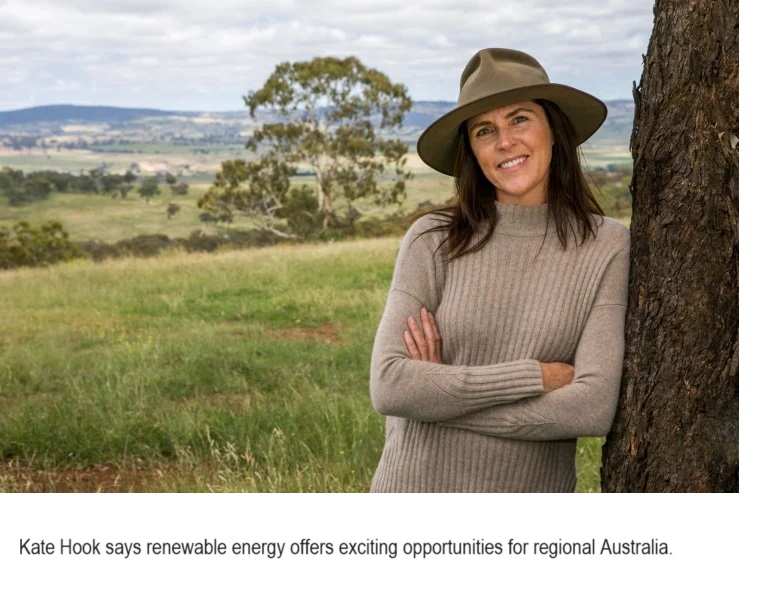
Nuclear gamble is an economic wrecking ball – Lithgow and the Central West deserve better
Independent candidate for Calare, Kate Hook, has slammed the Coalition’s nuclear proposal, calling it an economic wrecking ball that will waste billions, push up power prices, and stall job creation in regional Australia.
“Energy experts, market operators and Australia’s leading economists have been clear – Australia can achieve a secure, reliable, and affordable power system without nuclear power,” Ms. Hook said. “The Coalition’s plan is a costly distraction, and I will not support it.”
“The communities that will suffer most from this reckless policy are the very ones that need investment in real, job-creating industries right now – not in 15 or 20 years.”
Ms. Hook called out the nuclear plan for what it is – a stalling tactic to prop up fossil fuel operators, keep government subsidies flowing to outdated industries, and leave Australian taxpayers to foot the bill.
Nuclear reactors take decades to build and cost tens of billions of dollars – public money that could instead be spent on renewables, storage, and grid upgrades today. By the time nuclear power could even begin operating, Australia’s energy system will already be overwhelmingly powered by cheaper, cleaner alternatives.
“We are at 40% renewable energy now and in the last 6 years alone, we’ve already added over 46 TWh (Terra Watt hours) of annual renewable energy generation to the grid. This number might not mean much to most people but it’s huge! It’s the equivalent of six nuclear power stations. And we did it in six years – not 15 or 20 years,” Ms Hook said.
Renewables and Storage: Reliable, Affordable, and Ready Now
The Australian Energy Market Operator (AEMO) has mapped out the most efficient path forward—and nuclear isn’t part of it. The smart, cost-effective way to secure Australia’s energy future is through renewables, backed by battery storage, pumped hydro, and modern grid technology.
Big battery projects like South Australia’s Hornsdale Power Reserve are already proving their worth. Originally built with a capacity of 129 MWh – enough to power 30,000 homes for a day – it has since expanded to 194 MWh, providing power to 50,000 homes and stabilising the grid within milliseconds during sudden demand spikes.
“This fast response prevents blackouts and keeps energy prices stable—something nuclear power just can’t do,” Ms. Hook said.
Pumped hydro projects like Snowy 2.0 will ensure around-the-clock reliability. When completed, its 2.2 GW capacity will generate enough electricity to power three million homes during peak demand – like when air conditioning use surges on a hot summer evening.
With 350,000 MWh of storage, Snowy 2.0 could power 500,000 homes for an entire week or every home in Sydney for three days.
“We don’t need to waste time and money on nuclear power when we have already invested in proven, ready-to-go solutions that lower energy bills and create jobs right now,” Ms. Hook said.
Lithgow Needs Smart Investments, Not Costly Distractions
Kate Hook recognises that Lithgow has been at the heart of Australia’s energy production for generations. With coal mines closing and Mt Piper Power Station scheduled to shut in 2042, Lithgow needs a real plan for its future – not a decades-long delay.
“Lithgow deserves practical, affordable, and proven energy solutions – not a risky, drawn-out experiment that will leave taxpayers footing the bill for decades,” Ms. Hook said.
Beyond spiralling costs and construction delays, nuclear power comes with long-term risks that regional communities like Lithgow will be forced to bear. The Coalition has no plan for nuclear waste storage, no consultation with impacted communities, and no clear strategy for financing these massive projects.
……………………………………….“Nuclear is a dead-end policy – an economic wrecking ball that will drive up power prices and leave communities paying the price,” Ms. Hook said. “Instead of pouring billions into an outdated, high-risk technology, we should be investing in industries that will deliver affordable energy and secure jobs for Lithgow and all of Calare.”
A Clear Choice on Election Day
With voters in Calare facing a critical decision at the next election, Kate Hook urged the community to reject the Coalition’s nuclear “plan” and back a renewables-led future.
“This election is about who we trust to deliver cheaper energy, good jobs, and a secure future for our region,” Ms. Hook said. “Nuclear power in Australia is an expensive fantasy which is not backed by economic or energy experts – renewables are the real opportunity for Calare.”…………………………. https://theaimn.net/nuclear-gamble-is-an-economic-wrecking-ball/
A dramatic development in the Ukraine situation.
18 February 2025 https://theaimn.net/a-dramatic-development-in-the-ukraine-situation/
The shut-down Chernobyl nuclear reactor was hit by a drone on 14th February, and its outer covering was breached. The International Atomic Energy Agency (IAEA) was quick to gloss over the impact from the latest incident involving the wrecked Chernobyl nuclear reactor – ” Radiation levels inside and outside the so-called New Safe Confinement building “remain normal and stable,”….. and there are no reports of any casualties or radiation leak.”
To be fair, the IAEA did not attribute blame to Russia. Le Monde stated that the cause was a Russian Shahed drone, armed with a high-explosive warhead. So, it actually does look as if the offending drone came from Russia. But that is not certain. However, as far as the Western media goes – the issue is being covered as a deliberate attack by Russia. Youtube after Youtube video, article after article, blames Russia, and repeats Zelensky’s claims –“This is a terrorist attack for the entire world.” Zelensky spoke at the Munich Security Conference accusing Russia of a deliberate attack. Even if it was a Russian drone, there remains the possibility that this was a mistake, rater than intentional. What would Russia have to gain by this? Cui bono?
This event is significant in two ways – First – it could throw a spanner in the works of the current discussions on ending the war in Ukraine . These peace discussion are a whole nother story. Donald Trump is no doubt looking for a way for USA business interests to grab Ukraine resources as one large part of a peace deal in which Russia keeps its invaded territory. Zelensky’s presidency sort of ended on 20 May 2024 – he stays in power because it is war-time – which may well be part of his desire to keep the ear going, no matter what the cost. Zelensky seems to have cast some sort of mesmerising spell over Europe – depicting the Russian bear salivating to gobble up Europe. Good loyal Westerners seem pretty much obligated to oppose Donald Trump on all matters. However a plan to allow some concessions to Russia is a militarily reasonable way to end this war.
Secondly, it could really demonstrate the hypocrisy of the IAEA and its Director Rafael Grossi about nuclear safety

Does anyone really think that this Chernobyl incident is over? All sorted?
“Flames are still raging inside the Chernobyl nuclear station after multiple fires yesterday.” – Luke Alsford and Gergana Krasteva, Metro UK, February 16, 2025
Alsford and Krasteva set out in chilling (perhaps that’s not the right word) detail, the efforts going on, in extreme weather conditions, to prevent a disaster at the power plant, firefighters battling the blaze around the clock. The reactor’s containment shell. now has a 314 square foot gash. With the hermetic seal broken, the ventilation system is affected, and the radiation level will increase.
Those courageous workers at the wrecked Chernobyl nuclear power plant will probably get those fires out before it all gets much, much worse. And mend the hole in the containment shell. And the IAEA and everyone else will breathe sighs of relief. Until the next nuclear near-miss.
Flames are still raging inside the Chernobyl nuclear station after multiple fires yesterday.
Three smoldering fires were detected earlier this morning, forcing teams to jump into action to prevent a disaster at the power plant.
Ukraine’s state agency on exclusion zone management confirmed that no release of radioactive material has been reported yet.
The plant was hit on Friday by a drone carrying a high-explosive warhead, according to Ukraine, 38 years after the nuclear explosion at the site…..
Firefighters continue to battle the blaze round the clock in challenging weather conditions, admitted the International Atomic Energy Agency.
The plant’s fourth reactor now has a 314 square foot gash after the drone strike.
Although no rise in radiation has been reported yet, an expert issued a frightening warning about how Russia’s attack will soon affect nearby radioactivity
Dr Olga Kosharna, founder of the Anti-Crisis Expert Nuclear Centre of Ukraine, said: ‘The hermetic seal has been broken.
‘It is clear that the ventilation systems will [work] differently and the radiation level will increase.
‘But I think that it will not go beyond the industrial site and the exclusion zone.
Chernobyl’s reactors are covered by an outer dome to prevent radioactive leakage after the 1986 disaster – the world’s worst civilian nuclear accident – which sent pollution spewing across Europe.
Video footage shows how the explosion blew a hole in the dome at 1.50am on Friday, before a fire then broke out.
An open fire on the roof structure – officially called the New Safe Confinement (NSC) – was swiftly put out by first responders.
However smouldering fires remain inside the 20ft diameter hole.
The International Atomic Energy Agency [IAEA] said: ‘The ongoing efforts to put out and prevent the spread of any remaining fires – apparently fuelled by inflammable material in the roof cladding – have delayed work to start repairing the damage.’
The organisation’s director Rafael Mariano Grossi added: ‘This was clearly a very serious incident, with a drone hitting and damaging a large protective structure at a major nuclear site.
‘As I have stated repeatedly during this devastating war, attacking a nuclear facility is an absolute no-go, it should never happen.’
Grossi also warned of an ‘increase in military activity in the area around the Zaporizhzhia Nuclear Power Plant.
‘The IAEA remains committed to doing everything we can to help prevent a nuclear accident. Judging by recent events, nuclear safety remains very much under threat.’…………………………….
Zelensky spoke at the Munich Security Conference yesterday, accusing Russia of flaming the conflict with the alleged drone attack……………………………… https://metro.co.uk/2025/02/16/nuclear-expert-issues-chernobyl-update-emerges-fires-still-burning-22567966/
The four accounting tricks behind Peter Dutton’s nuclear cost claims

So according to the data within the Liberal-National Party’s costing document, Dutton’s power system underpinned by nuclear will generate electricity at 6% lower cost than one that doesn’t rely on nuclear. It leads you to wonder – how on earth did Dutton come up with it being 44% cheaper?
There are four accounting tricks behind the 44% cheaper claim which mean that, in reality, Peter Dutton’s plan is not cheaper and is far more risky.
Tristan Edis, Feb 18, 2025, https://reneweconomy.com.au/the-four-accounting-tricks-behind-peter-duttons-nuclear-cost-claims/
The Liberal-National Coalition claims it has found the solution to bring down energy bills – slow the growth of renewable energy and roll-out nuclear power.
According to Liberal Leader Peter Dutton, their plan for a power system including a significant role for nuclear will be 44% cheaper than a system relying predominantly on renewables. This claim is based on energy market economic modelling it released just before Christmas, prepared by an economic consultant – Frontier Economics.
A range of energy analysts and economists have criticised the Coalition’s claims, finding an array of problems with how this number was derived (see the list at the bottom of this article for examples). Nonetheless this hasn’t made any difference to Peter Dutton’s claims, and earlier this month he was on ABC television telling viewers that he had a plan to deliver voters 44% cheaper power bills.
However, you don’t need to be any kind of expert analyst or economist to work out that the claim nuclear will deliver you 44% lower bills is a bit like a wrinkle cream claiming it will make you look 44% younger.
And in the end, though it might not be obvious, this is really about whether Liberal-National Party have discovered a miraculous cure for aging, and quite potentially the laws of physics. It isn’t really about nuclear.
To explain this you need to do a very simple calculation:
1) Get out a basic calculator.
2) Into this calculator type in the $20.5 billion dollars that the Liberal-National Party costing says will be the annual price of their power system once all the nuclear power plants are complete in 2051 (see Figure 12 on page 38 of the consultant’s report).
3) Then divide this cost by the total amount of electricity that system will deliver in 2051 after deducting generation from energy storage, which is roughly 255 million megawatt-hours (see table 8 on page 34).
That gives you the cost of energy under their system of around $80.30 per megawatt-hour.
Now do the same thing for the power system which Dutton claims to represent Labor’s policy (by the way it’s not really Labor’s policy, it’s the Australian Energy Market Operator’s Step Change modelling scenario). So divide $28.5 billion (Figure 12 on page 38 of consultant’s report) by 333 million megawatt-hours (table 5 on page 28).
That gives a cost of energy of close to $85.50 per megawatt-hour for the so called Labor system.
So according to the data within the Liberal-National Party’s costing document, Dutton’s power system underpinned by nuclear will generate electricity at 6% lower cost than one that doesn’t rely on nuclear. It leads you to wonder – how on earth did Dutton come up with it being 44% cheaper?
There are four accounting tricks behind the 44% cheaper claim which mean that, in reality, Peter Dutton’s plan is not cheaper and is far more risky. The four tricks involve the following:
1) It doesn’t reflect the real cost of building nuclear – the Liberal Party costing assumes a cost for nuclear power plants which is around half what nuclear reactors have actually cost to build. Once you use the average construction cost and construction time of real world nuclear plants, the cost per unit of energy for the Liberal-National Party’s power system is two thirds more expensive than what is estimated for Labor’s scenario, once the system is fully built.
2) Only considers electricity costs while ignoring the cost of petrol and gas – The costing omits much of the costs of energy to heat buildings, fuel vehicles and power industry in the Liberal-National party scenario because they seem to prefer that we continue to heavily rely on petrol to fuel our cars and gas instead of electricity to heat homes and run factories.
Meanwhile, a lot of these costs are included in the scenario for Labor, where electricity has largely replaced the use of petrol and gas for fuelling our vehicles and heating buildings and industrial processes. By just accounting for the 203 billion litres of extra petrol consumption in the Liberal-National scenario the claimed 44% saving evaporates and instead you find their energy system is $80 billion more expensive that what they claim is the cost for the Labor scenario.
3) Tries to hide the cost of replacing old coal power stations with nuclear to outside the time period covered by the costing. The costing only includes costs incurred between 2025 and 2051, anything beyond that point is ignored. Under the costing of the Liberal-National Party’s scenario they’ve pushed most of the costs of replacing old coal power stations to outside the 2025-2051 time period. Meanwhile, the costing ignores the risks and potential large costs associated with extended reliance on increasingly unreliable old power stations.
4) Assumes climate change isn’t an important and urgent problem – The modelling consultant has openly acknowledged the availability of economic data that would allow them to cost the damage from carbon emissions. But instead of using this data from the Australian Energy Regulator, they instead completely ignore the damage costs from the higher emissions under the Coalition’s preferred scenario of extended reliance on coal, petrol and gas.
If the consultant had adhered to the basics of first year economics based on work published back in 1920, and placed a cost on carbon in line with AER guidance, it would add $392 billion to the Liberal-National scenario compared to just $75 billion to the Labor scenario. If you add that to the extra cost of petrol then the Liberal-National scenario is almost $400 billion more expensive than the scenario claimed to be Labor’s across 2025 to 2051. That’s even if we ignore the extra costs associated with accounting tricks 1 and 3.
Over the next few days I’ll go into each one of these four accounting tricks in more detail with an article explaining how that trick acts to mislead voters and means that energy consumers would most likely face higher, not lower energy bills.
This isn’t intended to suggest that the Australian Energy Market Operator’s Step Change scenario (said to represent Labor policy) should go unquestioned. The future is full of uncertainties and we need to examine a range of options for how we can sensibly lower emissions while maintaining reliable and affordable energy suppliers.
Unfortunately, the suggestion that Nuclear Power is the easy fix simply ignores the incredible difficulties and costs Europe, North America and Japan have experienced with Nuclear Power.
Tristan Edis is director of analysis and advisory at Green Energy Markets. Green Energy Markets provides analysis and advice to assist clients make better informed investment, trading and policy decisions in energy and carbon abatement markets.
Dutton’s nuclear disaster: Cheap lies and a $20 billion deficit
By Steve Bishop | 17 February 2025, https://independentaustralia.net/politics/politics-display/duttons-nuclear-disaster-cheap-lies-and-a-20-billion-deficit,19447
The Coalition’s nuclear policy announcement comes with a massive price tag but is also built on disinformation, writes Steve Bishop.
A $20 BILLION deficit and cheap lies mean that Opposition Leader Peter Dutton‘s attempt to “extend the life” of coal-fired power plants with a nuclear “fix” has come spectacularly unstuck.
Dutton and the Coalition stand condemned for presenting the public with a shoddy, ill-prepared policy on a multi-billion dollar project that the Climate Council warns could risk power shortages in the 2030s.
On 13 December last year, Mr Dutton promised:
SEARCH
Daily Telegraph tries and fails to stage antisemitic incident
Share the love — Gift an IA Subscription!
Dutton isn’t just exploiting antisemitism — he’s driving it
Dutton’s vow to slash public servant numbers another Coalition disaster
The Apprentice tells Trump’s supervillain origin story
Daily Telegraph tries and fails to stage antisemitic incident
Share the love — Gift an IA Subscription!
Dutton isn’t just exploiting antisemitism — he’s driving it
Dutton’s vow to slash public servant numbers another Coalition disaster
The Apprentice tells Trump’s supervillain origin story
Politics Opinion
Dutton’s nuclear disaster: Cheap lies and a $20 billion deficit
By Steve Bishop | 17 February 2025, 3:00pm | 0 comments |

The Coalition’s nuclear policy announcement comes with a massive price tag but is also built on disinformation, writes Steve Bishop.
A $20 BILLION deficit and cheap lies mean that Opposition Leader Peter Dutton‘s attempt to “extend the life” of coal-fired power plants with a nuclear “fix” has come spectacularly unstuck.
Dutton and the Coalition stand condemned for presenting the public with a shoddy, ill-prepared policy on a multi-billion dollar project that the Climate Council warns could risk power shortages in the 2030s.
On 13 December last year, Mr Dutton promised:
‘By 2050, our plan will deliver up to 14 GW of nuclear energy, guaranteeing consistent and stable electricity for all Australians.’
Yet the Coalition’s costings report, released on the same day, repeatedly deals with only 13 GW.
That’s 1,000 MW short of the target.
Three small modular reactors (SMRs) producing 345 MW each would be needed to make up the shortfall at a cost of almost $20 billion based on the US$4 billion (AU$6.2 billion) price of Opposition energy spokesman Ted O’Brien‘s favoured Natrium reactor.
Just to put this critical mess in focus — that’s twenty thousand million dollars. It makes a mockery of Dutton’s claim that “the Liberal Party has always been a better economic manager…”
And then come the cheap lies.
Mr Dutton claims:
“…electricity is cheaper where there is a presence of nuclear energy. That is a fact.”
No, it’s not a fact. It is a lie.
Ted O’Brien has repeatedly talked about Ontario as having cheap power because it has nuclear reactors.
But Quebec’s electricity prices are far cheaper than Ontario’s. Quebec closed its only nuclear power plant in 2012.
Not only that, but Quebec’s power company paid the provincial government a dividend of $2.5 billion in 2023/24.
On the other hand, the Ontario Government pays subsidies of up to $720 a year to families of four earning less than $65,000 a year.
Coalition frontbencher Dan Tehan says nuclear power contributes to low power prices in Tennessee but Electric Choice shows that this month Idaho, Kentucky, Oklahoma and Utah all have lower power prices — and none of them has nuclear power,
Dutton claims “Australian families at the moment are paying some of the highest energy costs in the world” and they would enjoy ‘massive savings’ if we had nuclear power.
The Opposition Leader also says it’s a fact that countries such as the UK and France, with their nuclear power, have cheaper power prices than Australia.
Here’s the lie exposed again. It’s a complete meltdown. According to Statista, power prices in the UK and France are more expensive than in Australia.
Here’s another lie.
Mr Dutton asserts:
‘…nuclear energy… has proven to get electricity prices and emissions down all over the world…’
Slovenia has a nuclear power plant but is one of the most expensive providers in Europe with Switzerland‘s nuclear power prices not far behind.
Slovakia generates half its power from nuclear plants but power prices are more than twice what Norwegians, with no nuclear power, pay.
Then Dutton has the chutzpah to accuse the Government of lying when it points out that nuclear power is the most expensive type of energy.
In the 2021 edition of its annual cost report, Wall Street firm Lazard estimated that the levelised cost of electricity from new nuclear plants will be $131–204 per megawatt-hour (MWh), whereas newly constructed utility-scale solar and wind plants produce electricity at somewhere between $26–50MWh.
An independent report commissioned by the Clean Energy Council and conducted by Egis, a leading global consulting, construction and engineering firm, has confirmed that nuclear energy is up to six times more expensive than renewable energy.
The Institute for Energy Economics and Financial Analysis (IEEFA) found nuclear power in Australia could result in electricity bills rising by $665 a year on average
And the Commonwealth Scientific and Industrial Research Organisation (CSIRO) has found:
‘…building nuclear reactors in Australia would cost at least twice as much as renewable power…’
No wonder that Coalition whistleblower Senator Matt Canavan revealed the nuclear policy is no more than a fix. It doesn’t even deserve a half-life.
The past week in nuclear news

Some bits of good news. The Revival of Germany’s Carbon-Sequestering Peatlands. Australia’s renewable energy growth doubles in six months. Three good things: projects clearing up junk that’s hidden from view.
TOP STORIES. Netanyahu’s Quest to Attack Iran’s nuclear facilities with the ‘Mother of all Bombs’.
Anatomy of an AI Coup.
The Pentagon Is Recruiting Elon Musk To Help Them Win a Nuclear War.
High-Explosive Drone Pierces Shell Of Chernobyl Nuclear Plant At Very Moment Trump Pushes Ukraine Toward Peace.
Climate. World’s sea-ice falls to record low. Two-thirds of Americans still believe climate change is impacting the Earth, despite what Trump contends.
Noel’s notes. Small Nuclear Reactors: Big safety problems, and who pays the piper? “Jobs Jobs Jobs!” screams the nuclear lobby.
AUSTRALIA. Dutton’s nuclear disaster: Cheap lies and a $20 billion deficit. Why are young people like this 18-year-old fronting the pro-nuclear push in Australia? American or Trump’s values, or are they the same? Nuclear advocates: Splitting atoms and spinning agendas. Australia’s technocratic drive to nuclear ignorance. more Australian nuclear news headlines at https://antinuclear.net/2025/02/13/australian-nuclear-news-10-17-february/ 22 February – protest AUKUS this Sat near Pt Adelaide event https://www.facebook.com/events/13888580289
NUCLEAR ITEMS
ART and CULTURE.
Why Welsh speakers oppose Wylfa nuclear plant.
ECONOMICS.
- The £40bn nuclear project at risk of becoming another British white elephant. ALSO AT https://nuclear-news.net/2025/02/12/2-a-the-40bn-nuclear-project-at-risk-of-becoming-another-british-white-elephant/
- Can the nuclear industry find a better way to build?
- Octopus Energy launches renewables investment platform for consumers.
- South Korea increases support for domestic nuclear industry.
- NUCLEAR BRIBERY: Nuclear Waste Services funds Cumbrian community projects.
- Marketing. India PM Modi ends foreign tour with nuclear deals in pipeline.
| EMPLOYMENT. US government tries to rehire nuclear staff it fired days ago.There really ARE necessary nuclear industry jobs – IN DEMOLISHING NUCLEAR REACTORS! |
| ENERGY Prioritizing nuclear power and natural gas over renewable energy is a risky move for Ontario’s energy future. Green power– not for us? |
| ENVIRONMENT ‘Nothing prepared us for Sizewell C devastation‘. Nuclear Free Local Authorities back petition to save fish at Hinkley C. Nuclear waste plan ‘would scar Lincolnshire Wolds‘. |
EVENTS.
- 19 February – WEBINAR. International Update: Nuclear Waste Burial Programs in the UK, US and EU | Nuclear Waste Online 2025.
- 21 February WEBINAR . What Scientists Are Telling Us About Radiation that Nuclear Boosters Won’t.
- 22 February Drone Wars Online Day Conference.
- 23 February GLOBAL DAY OF ACTION TO CLOSE BASES. – https://worldbeyondwar.org/closebases/
- Third Meeting of States Parties to the Treaty on the Prohibition of Nuclear Weapons .
| HEALTH. Doctors fear health fallout from nuclear energy plans |
| MEDIA. Media must unshackle itself. |
| OPPOSITION TO NUCLEAR Opposition mounts to planned nuclear plant as Starmer confirms new policy of ‘Build, baby, build’. Sizewell C campaigners slammed “clueless” Government. |
| SAFETY.Oops! Trump accidentally fired hundreds of federal workers who maintain our nuclear weapons. Warning sent about need for strategic policing reform to address security of SMRs. Safety Issues and Impact on Marine Environment of Extension of British Nuclear Plant Lifespan Queried by NGO. Would a fallout shelter really protect you in a nuclear blast?‘ Deeply Concerned’ Dems Want to Know If DOGE Can Access Nuclear Weapons Data. Incident. A drone pierced the outer shell of Ukraine’s Chernobyl nuclear plant. Radiation levels are normal. |
| SECRETS and LIES. Engineer who worked on Hinkley Point C nuclear project quizzed on suspicion of being a Russian spy, The Coventry experiment: why were Indian women in Britain given radioactive food without their consent? Secret terror blueprints for US NSC to ‘help Ukraine resist’ exposed. |
| WAR and CONFLICT. NFLAs endorse international appeal for justice over French nuclear tests. |
| WEAPONS and WEAPONS SALES .A New Military-Industrial Complex Arises. Trump wants Russia, China to stop making nuclear weapons, so all can cut defence spending by half. Trump Promises Billions in Defense Cuts. Will U.S. resume nuclear testing? America’s nuclear gamble: The dangerous push to resume atmospheric testing. Trident nuclear submarine project rated “unachievable” third year running. UK Government urged to scrap nuclear weapons ‘once and for all’. |
Taxpayers should not foot the bill for nuclear risk
Australians for Affordable Energy, 17 Feb 25, https://theaimn.net/taxpayers-should-not-foot-the-bill-for-nuclear-risk/
If private insurers refuse to cover nuclear reactors the financial risks will be shifted onto Australian taxpayers, meaning we are still unclear how much taxpayers will have to cover of the nuclear bill.
Australians for Affordable Energy has expressed deep concern over the revelation the private sector may not be able to insure nuclear reactors, following comments on Monday from the CEO of the Insurance Council of Australia.
Many of Australia’s leading insurance companies won’t cover damage from a nuclear disaster, leaving the government as the insurer. By shifting the financial burden of insuring nuclear facilities onto taxpayers, Australians could be exposed to potentially tens of billions of dollars in liabilities if a nuclear accident were to occur.
“We know that private investors won’t put money into building the industry, that we will need to create a massive new government agency to oversee it, and now we are hearing that we will need to pay for the insurance too? What’s next?”
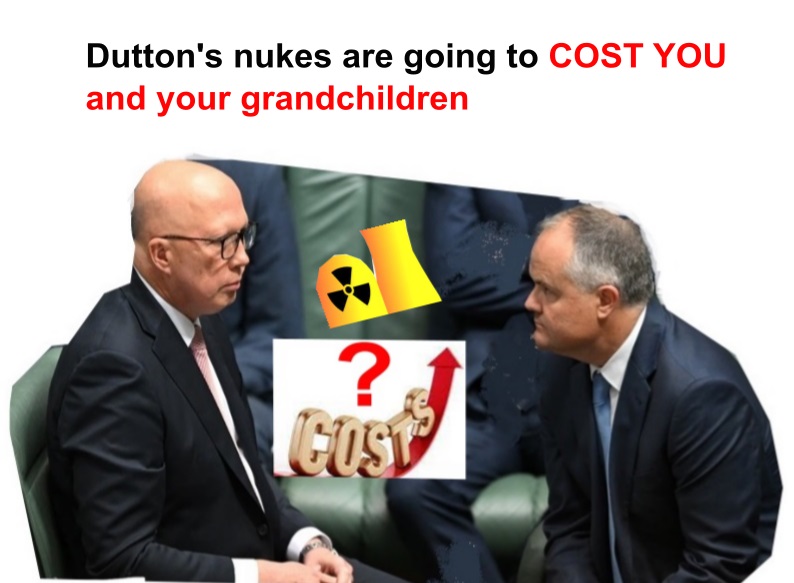
“Advocates for nuclear energy need to say whether it can stand on its own, including paying their insurance. And they need to tell us what other costs we might be asked to carry. The fact is by the time the reactors are done it won’t be us paying the bills for the insurance, it’ll be our grandkids. I’d like to know what we’re signing them up for. ”
Australians for Affordable Energy spokesperson Jo Dodds, a bushfire survivor and advocate for evidence-based policy, said: “Australians are already struggling with rising energy costs, the last thing we need is a power source that could further inflate our electricity bills and our taxes.
“The high costs associated with uninsured nuclear power could be passed onto consumers, who are already looking at paying higher bills if we were to shift to nuclear power. This is money hardworking Australians simply can’t afford to pay.”
AFAE is warning against locking into costly or uncertain energy options and is calling for greater transparency on the long-term costs of competing energy plans.
Small nuclear reactors: Big safety problems, and who pays the piper?

15 February, 2025 https://theaimn.net/small-nuclear-reactors-big-safety-problems-and-who-pays-the-piper/
As usual, in matters nuclear, the Anglophone news is awash with articles extolling the future virtues of Small Nuclear Reactors. Especially in the UK, where Trumpian antics don’t dominate the news the whole time, nuclear news gets a lot of coverage. As I’ve mentioned before, the UK corporate press is ecstatic about SMRs. SMR critics, (of which there are plenty), usually focus their ire on the subject of costs. Other objections centre on health, climate needs, the environment, and the connection between civil and military nuclear technology.
The nuclear lobby has very successfully touted safety as the big plus for the new (though still non-existent) Small Nuclear Reactors (SMRs) . Everyone seemed to buy this idea, because, after all, SMRs can’t melt down in the same dramatic way that big ones can. So, there’s been relatively little fuss made by the anti-nuclear movement on the grounds of safety, regarding SMRs.
Imagine my surprise when I opened up my eyes today – to see a corporate media news outlet, New Civil Engineer, usually pro-nuclear, coming out with a damning criticism of SMRs on the grounds of safety. It’s not as if New Civil Engineer actually condemned SMRs. Oh no! – they did indeed point out that the Department for Energy Security & Net Zero ((DESNZ) is confident that SMR developments are subject to “robust controls“. And the Office of Nuclear Security (ONR) “ensures that the highest levels of safety, security and safeguards are met”
It’s just that New Civil Engineer brought up a few points that have escaped notice, following the publication of the draft National Policy Statement for nuclear energy generation (EN-7) They note that –
“Despite EN-7 being 64 pages, just two lines are dedicated to specifically addressing the security of SMRs.“
The new regulations for SMRs would allow for many new nuclear sites near communities.
For large nuclear power sites, security is funded by the developers themselves. For SMRs, the security needs would be provided by the Civil Nuclear Constabulary (CNC) and also by local police. But these bodies are not under the direction of the ONR or the DESNZ. The writer quotes a policing expert, John McNeill :
“Not even [the government] can direct them.
Policing of airports and football grounds, even schools and educational campuses, shows how hard this will be to fund fairly.”
The expansion of AI and data centres add another complexity to the question of the amount of security needed, and of who pays for it. The proliferation of nuclear sites, closer to populated areas also means the increase in transport of radioactive materials – again bringing the risks of accidents, theft, and terrorism. And again, bringing the need for more security measures.
There’s some community concern in the UK about the safety of prolonging the life of aging nuclear reactors, and of the safety of coastal reactors and the marine environment. There’s also concern about the safety of the SMRs themselves, as the governments relax regulations.

The highly enriched uranium needed for most SMRs poses another risk – as it is useful for nuclear weapons, and therefore attractive to terrorists, and to countries seeking to get nuclear weapons.
So there has been some awareness of safety and security problems amongst critics, especially in the environmental movement. However, this is the first time that I’ve seen the corporate media speak up about this. As the author quotes questions raised in the House of Lords, it looks as though this issue is at last coming to the fore.
I guess that I should not be surprised that the issue of security of Small Nuclear Reactors is at last going to be taken seriously by The Establishment. After all, the examination of the huge and complicated difficulties raised in trying to organise security of SMRs eventually boils down to costs again – “Finally, who pays the piper?”
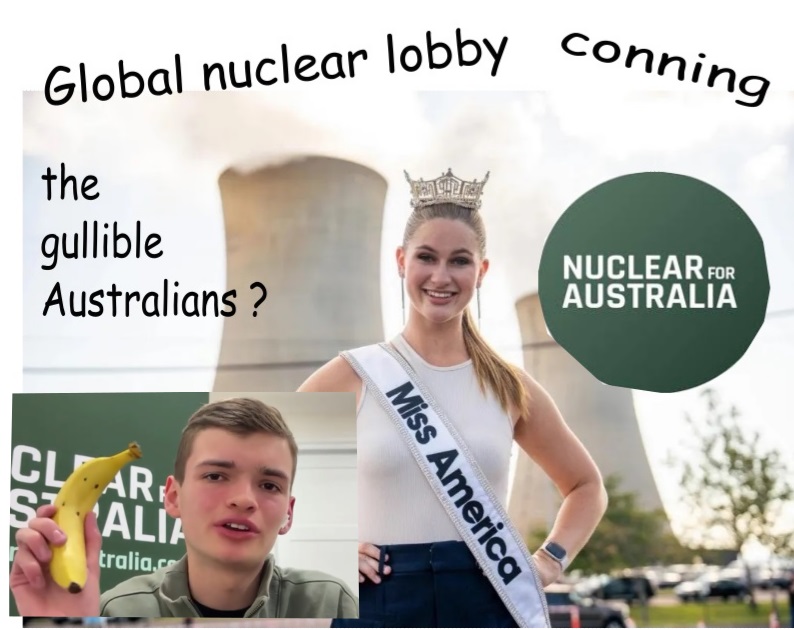
Why are young people like this 18-year-old fronting the pro-nuclear push in Australia?
SBS News, 13 February 2025
The regional sessions were not publicised beforehand on Nuclear for Australia’s social media accounts or the tour page on its website — you could only register for tickets if you knew the URL for the event’s webpage.
Campaigns director for the Conservation Council of Western Australia, Mia Pepper, said when she tried to get tickets for the Perth event online, she was denied. She said a colleague also failed to get tickets using their real name, but able to get in using an alias.
Shackel said Nuclear for Australia Googles people’s names beforehand to determine whether they are “likely going to cause a disruption or a threat”
Some polling suggests older Australians are more supportive of nuclear power than their younger counterparts. So why are young people fronting a pro-nuclear push?
SBS News, By Jennifer Luu, 13 February 2025
In a function room at Brisbane’s The Gabba sports ground, around 600 people have gathered to hear Miss America 2023 try to convince Australians nuclear power is a good idea.
Sporting a blue cocktail dress, blonde hair and a wide smile, 22-year-old Grace Stanke looks the part of a beauty pageant contestant.
She’s also a nuclear engineer touring the country with Nuclear for Australia: a pro-nuclear lobby group founded by teenager Will Shackel and funded by donors that include entrepreneur Dick Smith.
The event — billed as an information evening featuring a panel of experts — is off to a rocky start. A protester steps in front of the audience and speaks into a microphone.
“All of the organisers, presenters and sponsorship of this event tonight has a very deep vested interest — ” he says, before he’s drowned out in a chorus of boos and the mic is seized from his hand.
Audience members continue to disrupt last month’s event, raising their voices and speaking to the crowd before being herded out by security.
Among them is Di Tucker, a retired psychologist concerned about climate change. She said she became upset after submitting half a dozen questions online to be answered by the panel — and felt like they were being deliberately ignored.
“I felt so frustrated by the lack of factual information in that so-called information session forum on the safety, the timescale and the reality of nuclear energy,” Tucker told The Feed.
“I did stand up and I addressed the crowd, and I said something like: ‘You people need to go away and do your own research … it’s glossing over facts’.”
Nuclear for Australia founder Will Shackel, who was emceeing, estimated there were 20 to 30 protesters heckling the room.
He labelled their behaviour “simply unacceptable and … not in the interest of a fair discussion”.
“They were yelling abuse at us on stage. We had people come up to Grace at the end, call her a clown,” he claimed.
Shackel told The Feed: “We had people [who] had to be physically dragged out because they were resisting security … it was pretty ugly and pretty disturbing.”
Tucker disputes this: “Nobody I saw leave the room was hostile or aggressive, physically aggressive towards the security guards.”
“In fact, it was the opposite. The security guards were shoving the people outside.”
Outside, a separate group of protesters wields banners warning against the dangers of radioactive waste.
The words “Nuclear energy distracts from the climate emergency” are projected onto The Gabba over the image of a red herring.
The teen and the beauty queen
Tucker said the audience was mostly male and over 60. So why are two young people fronting the pro-nuclear movement in Australia?………………………….
As well as launching Nuclear for Australia — which describes itself as “the largest nuclear advocacy organisation in Australia” with over 80,000 supporters — he’s addressed a Senate committee and interviewed French President Emmanuel Macron for his organisation’s social media at the COP28 climate conference in Dubai in 2023.
Shackel first became fascinated with the nuclear debate while in high school in Brisbane.
“I’d just done a school assignment on nuclear energy when I realised it was banned. And that, as a 16-year-old kid, was pretty shocking to me,” he said.
Australia is one of the few countries where using nuclear energy to produce electricity is illegal. The ban was introduced in 1998, when the Howard government made a deal with the Greens in order to build a nuclear reactor in Sydney for research purposes.
At 16, Shackel launched a petition calling on Australia to lift its nuclear energy ban, garnering a flurry of media attention……….
As well as launching Nuclear for Australia — which describes itself as “the largest nuclear advocacy organisation in Australia” with over 80,000 supporters — he’s addressed a Senate committee and interviewed French President Emmanuel Macron for his organisation’s social media at the COP28 climate conference in Dubai in 2023……………………………
Nuclear power is still a contentious topic, but more Australians have become supportive of the idea over time.
A 2024 Lowy Institute poll of 2,028 Australians
indicates 61 per cent support Australia using nuclear power to generate electricity, while 37 per cent were opposed.
Among the 18- to 29-year-olds surveyed, 66 per cent supported nuclear power while 33 per cent were opposed.
In contrast,
a December 2024 poll of 6,709 people conducted for the Australian Conservation Foundation suggests young people were less likely to agree that nuclear is good for Australia, compared to older respondents. For example, 42 per cent of males aged 18-24 agreed, while 56 per cent of males over 54 agreed.
There’s also a gender gap — in the same poll, just over a quarter of women thought nuclear would be good for Australia, compared to half of men.
Nuclear for Australia hopes Grace Stanke can convince the sceptics. Dubbed “the real-life Barbenheimer”, she works for the operator of the largest fleet of nuclear power plants in the US, Constellation. (The company operates 21 of the US’s 94 nuclear reactors).
Now 18, Shackel suggests young Australians are more open-minded towards nuclear power than older generations and are more likely to support parties that are concerned about climate change……..
Physicist Ken Baldwin speculates the rise in support for nuclear power is due to shifting demographics.
He said older generations are more likely to have historical hangups around the dangers of nuclear power, having lived through the British and French weapons tests in the Pacific and nuclear catastrophes like the 1986 accident in Chernobyl and the 2011 accident in Fukushima. ……
“The younger generation … doesn’t have that particular historical baggage, and perhaps they’re more attuned to thinking about the need to do something about climate change,” he said.
Nuclear for Australia hopes Grace Stanke can convince the sceptics. Dubbed “the real-life Barbenheimer”, she works for the operator of the largest fleet of nuclear power plants in the US, Constellation. (The company operates 21 of the US’s 94 nuclear reactors)…………….
Nuclear for Australia has been drumming up public support for nuclear power over the past fortnight, touring every capital city (except Darwin) and holding a parliamentary briefing in Canberra.
It also targeted regional areas near the Coalition’s proposed sites for future nuclear power stations — including Morwell in Victoria, Collie WA, Port Augusta SA, Callide and Tarong in Queensland and Lithgow in NSW. The Coalition says its taxpayer-funded plan is for five large and two smaller reactors, with the smaller ones to come online in 2035 and the rest by 2037.
Nuclear for Australia was slow to reveal all the names for a total number of regional locations for the tour. During the first week of the tour, Nuclear for Australia told The Feed there would only be two regional stops.
The regional sessions were not publicised beforehand on Nuclear for Australia’s social media accounts or the tour page on its website — you could only register for tickets if you knew the URL for the event’s webpage.
Campaigns director for the Conservation Council of Western Australia, Mia Pepper, said when she tried to get tickets for the Perth event online, she was denied. She said a colleague also failed to get tickets using their real name, but able to get in using an alias.
She accused Nuclear for Australia of blacklisting known anti-nuclear activists and trying to avoid criticism by attempting to “creep around the country”.
“If they were really genuine about having a mature debate, they would do their best to invite some people like myself that have engaged really respectfully in the debate over many years to answer the tough questions,” she said.
Shackel said Nuclear for Australia Googles people’s names beforehand to determine whether they are “likely going to cause a disruption or a threat”, and that regional events aren’t publicised on social media because they are not relevant to city-based audiences.
“We care about the safety of our attendees, we care about the safety of our experts,” Shackel said.
“If we believe that someone is a known protester … someone who could cause a physical threat to people in there, we will not allow them in.”
Pepper said: “I have never been physically aggressive to anybody in my entire life.”
“The idea that because you are opposed to nuclear power, you somehow would be aggressive or violent is absolutely outrageous.”
Locals left with more questions than answers
South of Perth, around 100 of the 9,000 residents of the tiny coal mining town of Collie showed up to the Nuclear for Australia event, hoping to learn more about how living next to a nuclear reactor could affect them.
The Coalition has proposed converting Collie’s coal-powered station into a nuclear power plant. But the state government is vowing to phase out coal by 2030 and there’s little chance nuclear power could come online by then, leaving coal workers in limbo.
Resident Jayla Anne Parkin said the information session was “an utter waste of time”, and she came away with more questions than answers. “Their whole speech was very generic. They were probably using the same speech for every single area,” she said.
Parkin asked one of the experts where the water for a nuclear power plant would come from — with large amounts needed to cool the radioactive core.
“He gave a long-winded speech about how we can take any body of water, whether it be the ocean, the river, pool, sewage, and treat it and turn it into the water. But at the end of him answering it, he still didn’t tell me what source of water in Collie they were going to use,” she said.
“We’re very limited with water here as it is.”……………………………………………
there have been reports about Shackel’s alleged political ties.
A 2024 research report from progressive activist group GetUp on nuclear disinformation in Australia
analysed Shackel’s LinkedIn connections and reported that their political party affiliation leant heavily towards Liberal Party MPs, Senators and advisors.
GetUp reported at least 36 of Shackel’s connections, including 11 current or former politicians, were directly linked to the Liberal Party — with the party having the highest concentration of current employees from a single organisation in his network…………………………………..
Lobby groups are allowed to have political party affiliations. While registered charities can participate in campaigning and advocacy, they “cannot have a purpose of promoting or opposing a particular political party or candidate”, according to the Australian Charities and Not-for-profits Commission.
……………………………………………………… Professor Ken Baldwin said nuclear is “not really viable” as an option for decarbonising Australia by 2050, as it would take 15 years at the very minimum to develop the necessary regulations and build a nuclear power station.
“We will have, according to the current plans, converted our current energy system to almost an entirely renewable energy system by that time,” Baldwin said.
“Australia is at the leading edge of the renewable energy transition. We’re installing solar and wind at one of the fastest rates per capita of any country in the world.”…………… https://www.sbs.com.au/news/the-feed/article/will-shackel-australia-pro-nuclear-movement-young-people/gucu0iefz
No coal, gas or nuclear: Greens cut deals to “Dutton-proof” Labor’s flagship renewable policies
Sophie Vorrath, ReNewEconomy, Feb 13, 2025
The Australian Greens have had a busy week “Dutton-proofing” the legislation underpinning federal Labor’s flagship renewable energy policies to prevent them being used to support coal, gas or nuclear power in the event of a Coalition election victory this year.
The Greens say they have successfully amended the Albanese government’s Electricity Infrastructure Legislation Amendment Bill 2025 to protect the Capacity Investment Scheme (CIS) from being tweaked to allow fossil fuel plants to participate. The bills were due to go through parliament on Thursday.
Federal Labor’s CIS is designed to accelerate investment in new dispatchable renewable energy capacity, with the goal of delivering at least 23 gigawatts of wind and solar and 9 gigawatts and 36 gigawatt hours of clean storage…………………….
“The Greens have Dutton-proofed government support for wind, solar and storage which is driving coal and gas out of the electricity system,” Greens leader Adam Bandt said in a statement on Wednesday.
“The Greens want to keep Peter Dutton out and get Labor to act in a minority government, but if somehow Peter Dutton ever makes his way to the Lodge, these amendments will keep his hands off the Capacity Investment Scheme and keep renewables and storage on track.”
Two days earlier, the Greens struck a separate deal with Labor to ensure Dutton’s other favourite energy source, nuclear power, will not get a sideways boost from Labor’s Future Made in Australia (Production Tax Credits and Other Measures) Bill, which passed through parliament on Monday.
Amendments secured by the Greens exclude uranium from being eligible for production tax credits under the Future Made in Australia policy, which was designed by Labor to support green hydrogen production and critical minerals processing.
Greens Resources spokesperson Dorinda Cox said the passage of the amended bill means parliament has confirmed in legislation that uranium can not be listed as a critical mineral or receive a tax credit – and demonstrates what a minor party can achieve.
“The Greens have sent a clear message today – nuclear is not the answer, and we won’t let it be used as a smokescreen to prop up coal and gas,” Cox said on Monday.
“There is no place for uranium in our future. We have felt the history of devastation and destruction of country. First Nations communities have suffered greatly and have been left to clean up the destruction. Australians do not and will not benefit from uranium mining, no matter how the Coalition spins it.
“The Greens have Dutton-proofed this bill and secured jobs and investment in critical minerals processing and green hydrogen production, both of which are critical to our climate and our economic future,” added Bandt.
“Peter Dutton’s dangerous nuclear fantasy is a ploy to keep coal and gas in the system for longer, threatening investment in renewables. Locking support for renewables and storage into law will give the industry certainty that the transition is unstoppable.
“If the Parliament works together like this we can get real action on the climate crisis.
Federal Labor, meanwhile, is keeping up its attack on Dutton’s energy policy, this week pushing out data that claims nuclear uses 1.4 times as much water as coal to generate power.
Under the Coalition’s plan, Labor says, nuclear power in Australia would need three times more water than coal to keep the lights on.
“Peter Dutton wants to spend $600 billion in taxpayer money on one of the most water intensive energies, nuclear,” federal energy minister Chris Bowen said on Thursday.
“Peter Dutton needs to find a Sydney Harbour sized reservoir of water every year to keep his nuclear reactors stable and running.
“In a drought-prone nation you have to ask – which regional community will he steal water from to keep the lights on?” more https://reneweconomy.com.au/no-coal-gas-or-nuclear-greens-cut-deals-to-dutton-proof-labors-flagship-renewable-policies/
Doctors fear health fallout from nuclear energy plans
Canberra Times, By Marion Rae, February 12 2025
Doctors have warned of no “safe” level of radiation from a proposed network of nuclear reactors as battlelines are drawn for the federal election.
Similar to other nuclear-powered nations, Australians living within a certain radius of a reactor would need to be issued potassium iodide tablets for use in a radiation emergency, a nuclear briefing has learned.
“The only reason that everyone in that radius is given that is because they might need it,” Assistant Minister for Climate Change and Energy Josh Wilson told a nuclear briefing on Tuesday.
If anyone comes to buy your house, the proximity of a reactor will be noted on the land titles register, and insurers will not cover nuclear accidents, he said.
The warning came as doctors fronted parliament to warn of long-term health risks for workers and surrounding communities, particularly children.
Evidence included a meta-data analysis of occupational and environmental exposure that accumulated data on more than seven million people.
It found living within 30km of a reactor increased overall cancer risk by five per cent, with thyroid cancer increasing by 14 per cent and leukaemia by nine per cent.
A separate study of workers in the nuclear industry in France, the United Kingdom and the United States analysed results from more than 300,000 people who were monitored for over 30 years.
Finding not only increased cancer rates but surprisingly increased rates of heart attacks and strokes, it found impacts at low doses were larger than previously thought.
“There is no ‘safe’ lower dose of radiation. The science is clear. All exposure adds to long-term health risks,” vice-president of the Medical Association for Prevention of War Dr Margaret Beavis said……………………………
Under the coalition’s nuclear energy blueprint, seven reactors would be built across five states to replace ageing coal-fired power plants with more gas-fired plants to provide baseload power in the interim.
“Zero-emissions nuclear plants” are a key part of the Nationals’ election pitch to regions where coal plants are already closing, while Labor is pressing ahead with the transition to renewable energy backed up by big batteries.
Public Health Association of Australia spokesman Dr Peter Tait said the idea that the nuclear industry was free of greenhouse gas emissions was a “furphy”, given the construction and uranium supply chain involved.
Emissions would rise threefold under the nuclear plan due to increased coal and gas use, he warned, with the first plant not due to come online until the late 2030s.
From a public health perspective, Australians can’t afford that delay, Dr Tait said.
Executive director of Doctors for the Environment Dr Kate Wylie said prolonging the dependency on fossil fuels would mean more Australians would be affected by their known health risks, including increased rates of asthma.
Nuclear energy would also put communities at risk during the next drought, when reactors would be first in line for scarce water, Dr Wylie said.
“The ethical thing to do is to choose the least water-intensive energy sources, which are wind and solar,” she said. https://www.canberratimes.com.au/story/8890265/doctors-fear-health-fallout-from-nuclear-energy-plans/?fbclid=IwY2xjawIan3hleHRuA2FlbQIxMQABHaAJ7wF9BUi9CgA1_tQDXS5gC2WCrX8HSFZUrOQPGgXABnNkhEvlgHKolQ_aem_OShH2FPpE3tO3RIv_gAgBg
Revealed: The water supply risks posed by Dutton’s nuclear plan
The Age, By Mike Foley, February 13, 2025
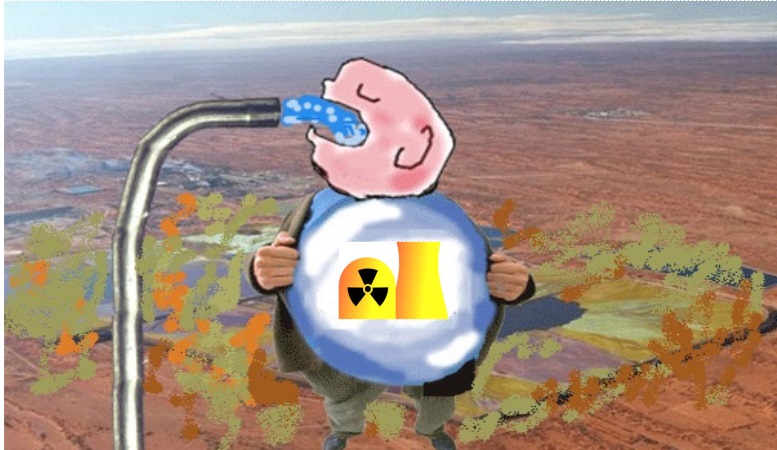
Opposition Leader Peter Dutton’s proposed nuclear plants will suck more water from nearby rivers than the coal plants they would replace, posing a challenge to maintaining drinking supply for local communities and irrigation for farms.
The federal government cites its own modelling to claim nuclear would use up to three times more water than the coal plants that are critical for the opposition’s pledge to help households with power prices and reach net zero emissions by 2050.
A secure water supply is crucial for the communities the opposition has selected as sites for the seven nuclear plants it has pledged to build if it wins the election, due by May.
There is no water to spare in the local rivers that supply the coal plants the Coalition has selected to host a nuclear reactor, where state governments issue licences to manage the competing needs of residents, farming and environmental requirements.
Greater water consumption from nuclear energy could shrink the size of the agriculture sector. Introducing a government buyer into the market would also likely raise water prices for the farmers who remain and create tension between key Coalition voter groups.
For example, Lithgow’s Mt Piper coal power station about 140 kilometres west of Sydney, a site earmarked for a nuclear plant, is located in the Macquarie water catchment where cotton, wine grapes and grains are grown.
Departmental data released by Labor on Wednesday states the opposition’s seven nuclear plants would collectively use 500 gigalitres – roughly the same volume as Sydney Harbour – to generate the amount of power they plan to supply to the grid each year.
The seven coal plants earmarked to be replaced by nuclear use 168 gigalitres a year, generating 48-terawatt hours of electricity.
Why does nuclear need more water than coal?
Coal and nuclear plants both use their heat source to boil water, make steam and spin turbines to generate electricity. This steam is cooled back to water (when most water loss occurs) and then re-used in the plant.
The opposition’s energy policy stipulates their nuclear plants would run at near full capacity every day of the year to recoup costs.
That means nuclear would need to draw on more water, far more often than some of the coal plants they replace, which run about 60 per cent of the time.
What do experts say?
The government cited an Australian National University study to make its claim that nuclear plants use 40 per cent more water than coal plants on average because their cooling processes tend to be less efficient.
ANU engineering professor Andrew Blakers said he stood by his findings.
“The key point is coal and nuclear and thermal power stations need water cooling,” Blakers said. “Solar and wind use vastly less because they don’t need any water for cooling.”…………………………………………………………..
What do farmers say?
NSW Irrigators Council chief executive Claire Miller said “water is a very scarce resource” and all the available supplies around Lithgow and the Hunter Valley are committed to existing industries.
“Governments need to consider very carefully any industries coming in that increase the competition for that resource and what the impacts would be on other water users, including farmers.” https://www.theage.com.au/politics/federal/thirsty-nuclear-plants-will-suck-crucial-water-from-farm-communities-20250212-p5lbfr.html
Australian nuclear news 10 -17 February
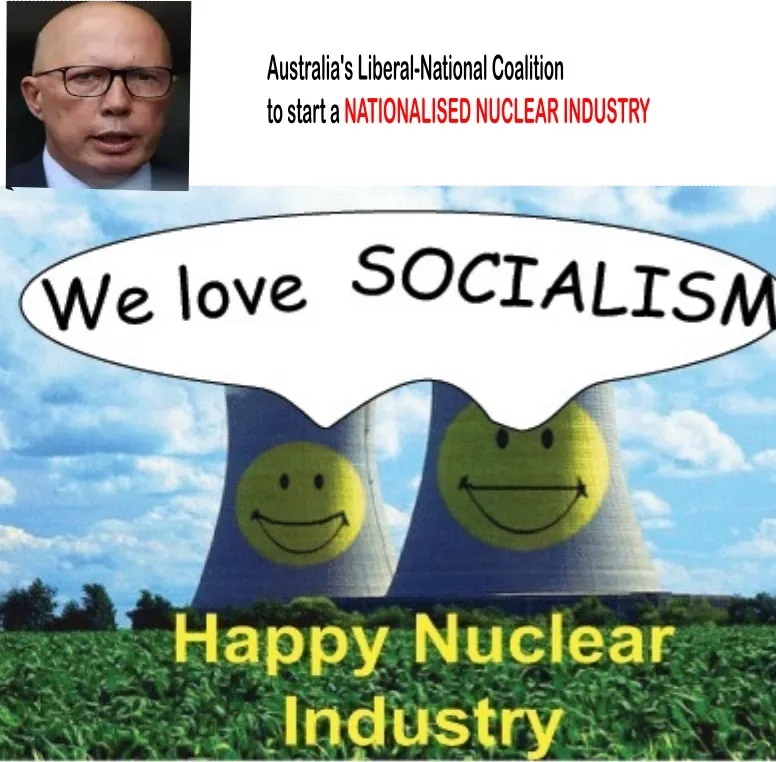
Headlines as they come in:
- No coal, gas or nuclear: Greens cut deals to “Dutton-proof” Labor’s flagship renewable policies
- Why are young people like this 18-year-old fronting the pro-nuclear push in Australia?
- Peter Dutton wants a nuclear future for Australia. Here’s what that might look like
- Doctors fear health fallout from nuclear energy plans
- Revealed: The water supply risks posed by Dutton’s nuclear plan
- Why the USA’s Endless Wars Harm Global Stability & Australia.
- Australia’s technocratic drive to nuclear ignorance.
- Dutton’s nuclear policy is a Coalition scam .
- Nuclear advocates: Splitting atoms and spinning agendas.
Why the USA’s Endless Wars Harm Global Stability & Australia

February 12, 2025 AIMN Editorial, By Denis Hay
Discover how USA’s endless wars destabilise nations and why Australia’s alignment with the US military threatens its sovereignty and security.
Introduction
For over a century, the United States has engaged in military interventions worldwide, often framed as efforts to spread democracy and protect human rights. However, history shows these interventions have frequently served corporate interests, ideological dominance, and geopolitical strategies rather than humanitarian concerns.
From orchestrating coups to funding proxy wars and setting up military bases across the globe, US actions have led to mass displacement, economic turmoil, and loss of sovereignty in many nations. Australia’s increasing alignment with the US military brings significant risks, potentially compromising national security and financial independence.
This article examines the history of US interventions, their consequences, and why Australia must develop an independent foreign policy free from US influence.
The Foundation of US Imperialism
Colonial Expansion and the Displacement of Indigenous Peoples……………….
Military Interventions for Economic and Geopolitical Gain…………………………
US Corporate Interests and Nazi Germany……………….
The Korean War: US Expansion Beyond the 38th Parallel…………………..
Regime Change and Proxy Wars in the Cold War Era………………….
US-Backed Coups in Latin America……………………….
The Vietnam War: A 30-Year US Military Disaster……………
The Post-Cold War Era and US Hegemony……………….
The US Military Empire – 800 Bases Worldwide………………
The Dangers of Australia Aligning with the US Military
Loss of Australian Sovereignty
• The increasing military integration between Australia and the US, including bases and joint operations.
• The AUKUS agreement and its implications for Australian independence.
Increased Risk of Conflict
• Australia’s involvement in US-led wars in Iraq and Afghanistan, despite no direct national security threat.
• Potential entanglements in US-China tensions and future conflicts in the Indo-Pacific.
Economic and Social Costs
• Military spending redirected toward US-led initiatives rather than domestic priorities.
• The risk of Australia becoming a target in global conflicts due to its close military ties with the US.
Conclusion
…………………………………………….. For Australia, continued alignment with US military strategies poses significant risks. By participating in US-led wars, maintaining military bases, and deepening its commitment to the AUKUS agreement, Australia risks being drawn into unnecessary conflicts that do not serve its national interests. Moreover, prioritising militarism over diplomacy diminishes Australia’s ability to foster independent international relationships, negotiate trade agreements on its own terms, and establish a sovereign defence strategy that prioritises regional stability over foreign interventions.
To protect its sovereignty and long-term security, Australia must adopt a foreign policy that prioritises diplomacy, peace-building, and multilateral cooperation rather than blindly following US military agendas. A truly independent approach would involve reassessing military alliances, reducing foreign troop presence, and focusing on strengthening regional partnerships, particularly within the Indo-Pacific, to ensure a more balanced and peaceful international order. Australia has the resources, economic power, and global standing to lead by example – choosing peace over war, cooperation over subservience, and true independence over external influence………………. more https://theaimn.net/why-the-usas-endless-wars-harm-global-stability-australia/
Nuclear advocates: Splitting atoms and spinning agendas
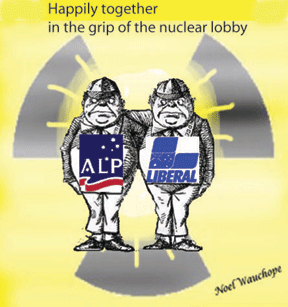
Ed COMMENT. I can’t help noticing how the Liberal ad Labor agendas overlap here – in this carefully controlled pro-nuclear event -described by Sybilla George.
Labor is pushing on with the AUKUS nuclear submarine folly. Liberal is pretending that jt really intends to start nuclear power in Australia.
Both in the grip of USA militarism and the nuclear lobby
Despite having three women on stage – including Stanke – for the panel event, the Celebrity Room at Moonee Valley Racing Club was dominated by men on Saturday night. Opening the evening, Shackel said his charity aimed to “enable civil debate”, yet panels on the tour featured only pro-nuclear views.
By Sybilla George | 6 February 2025, https://independentaustralia.net/environment/environment-display/nuclear-advocates-splitting-atoms-and-spinning-agendas,19407
Former Miss America and nuclear energy activist Grace Stanke‘s Melbourne visit saw a pro-nuclear panel push persuasion over debate, with filtered questions and few dissenting voices, writes Sybilla George.
FOLLOWING EVENTS in Perth and Brisbane, Nuclear for Australia’s ‘An Evening with Miss America 2023 Grace Stanke’ took place last Saturday at the Moonee Valley Racing Club.
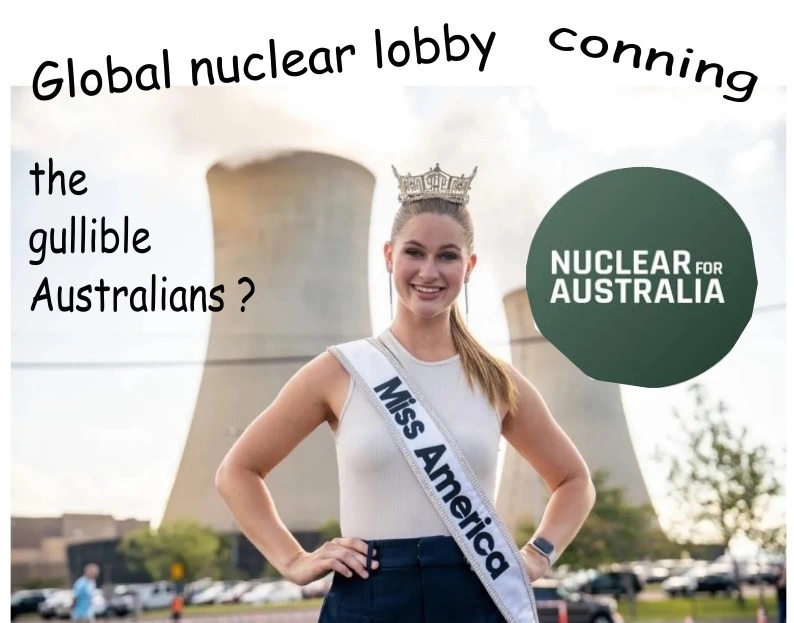
Nuclear for Australia is a nuclear power advocacy charity started in 2023 by teenager Will Shackel and patronised by electronics entrepreneur Dick Smith. The Miss America 2023 Australia Tour is also supported by Smith, according to the Nuclear for Australia website which has served as a platform for Smith’s response to The Guardian’s fact-checking of his anti-renewables arguments.
Nuclear for Australia is a nuclear power advocacy charity started in 2023 by teenager Will Shackel and patronised by electronics entrepreneur Dick Smith. The Miss America 2023 Australia Tour is also supported by Smith, according to the Nuclear for Australia website which has served as a platform for Smith’s response to The Guardian’s fact-checking of his anti-renewables arguments.
The tour aims to ‘help bridge the current divide between men and women for nuclear energy’ and cites the Australian Conservation Foundation statistic that 51% of men versus 21% of women support nuclear energy.
Despite having three women on stage – including Stanke – for the panel event, the Celebrity Room at Moonee Valley Racing Club was dominated by men on Saturday night. Opening the evening, Shackel said his charity aimed to “enable civil debate”, yet panels on the tour featured only pro-nuclear views. Questions put to the panel were selected from those sent in before and during the event, omitting the opportunity for live questions.
Stanke, who has an undergraduate degree in nuclear engineering, advocates for clean energy, including wind, solar and nuclear power. She began working for the United States’ largest nuclear energy provider, Constellation Energy, in 2024. Of Constellation’s energy capacity, 60% derives from nuclear power, while 25% comes from oil and natural gas fossil fuels.
The panel portion of the event featured Stanke alongside fellow American Mark Schneider, former operator of U.S. civil and defence nuclear reactors and current chief nuclear officer for UBH Group — an Australian defence consultancy firm angling for a ‘piece of the AU$368 billion nuclear sub [AUKUS] pie’.
They were joined by energy and resources lawyer Kirsty Braybon and Global Nuclear Security Partners’ (GNSP) Australia branch managing partner Jasmin “Jaz” Diab.
Army officer and nuclear engineer Jaz Diab is a star of the pro-nuclear media circuit. She’s made several appearances on Sky News and spoke at The University of New South Wales (UNSW) Navigating Nuclear conference in May 2024 alongside Coalition Shadow Energy Minister Ted O’Brien, before the Coalition’s nuclear energy plan announcement in July 2024.
Diab joined the business group AUKUS Forum, suggesting GNSP will be making a play for the AUKUS pie and nuclear energy contracts should the Coalition get into government at the next federal election.
As reported by the Australian Financial Review in December 2024, the Australian Department of Defence spent AU$811 million on just the big five consultancy firms in 2022-23.
Braybon, who teaches a subject on nuclear law at the University of Adelaide, responded to a question about the current illegality of nuclear power in Australia under the 1998 Radiation Protection and Nuclear Safety Act.
Some legal barriers to nuclear energy have already been watered down to accommodate AUKUS nuclear-powered submarines, Braybon said, and “no one noticed”, pointing to the entwined framework of defence and civil nuclear programs.
The defence backgrounds of panel members Diab and Schneider also attest to this. Braybon did not specify which law changes she was referring to, however, the Australian Naval Nuclear Power Safety Act 2024, which was pushed through the Senate in October 2024 – designating waste “zones” in Adelaide and Perth for AUKUS-related nuclear waste – was reported on by Independent Australia, Michael West Media, The Advertiser and The Guardian.
While anti-nuclear protesters attended the Perth and Brisbane events – including a community action projecting ‘Nuclear energy distracts from the climate emergency’ outside the Gabba – there were no visible objectors in Melbourne.
However, Latrobe Valley Sustainability Group (LVSG) members attended the Moonee Valley Racing Club ahead of the Morwell event the next evening. The Coalition selected Loy Yang – a coal-fired power station in the Latrobe Valley – as one of seven sites around Australia for proposed nuclear power plants.
LVSG is concerned about the questions that Nuclear for Australia will not answer regarding the impact of nuclear power in fighting climate change and the economic cost of constructing and maintaining nuclear power plants. It points out that renewables have surpassed nuclear energy production in the U.S. in just 15 years and that there is a lack of private investment in nuclear power because of its unprofitability.
Indeed, a popular argument in favour of nuclear power appealing to the increasing energy demands of artificial intelligence data centres took a blow in recent days with the announcement that the Chinese AI program DeepSeek performs a similar function to the U.S. program ChatGPT, at a fraction of the cost and energy.
According to LVSG member Dan Caffrey, the Nuclear for Australia Morwell event attracted 240 attendees, but panel members “expressed a complete ignorance” of issues in the local area that reduce the viability of nuclear power, such as water availability and rehabilitation of the existing coal-fired station. The avoidance of challenging questions about nuclear power was “very disheartening”.
Sybilla George is a freelance writer with an interest in nuclear policy and the Pacific region.
1 This month

of the week – Australians for War Powers Reform (AWPR)
To see nuclear-related stories in greater depth and intensity
 Antinuclear