Expert opinion: why nuclear energy should not be included as sustainable in Europe’s green taxonomy financing.

BASE comments on the JRC report https://www.base.bund.de/SharedDocs/Stellungnahmen/BASE/DE/2021/0714_base-fachstellungnahme-jrc-bericht.html Federal Office for the Safety of Nuclear Waste Management (Bundesamt für die Sicherheit der nuklearen Entsorgung) 14 july 21
Expert opinion on the report of the Joint Research Center “Technical assessment of nuclear energy with respect to the‛ do no significant harm ‛criteria of Regulation (EU) 2020/852‛ Taxonomy Regulation ‛”
There are numerous reasons why the use of nuclear power is not ecologically sustainable and why this form of energy generation is therefore not part of the taxonomy regulation of the European Union ( EU ) – this is the conclusion of the Federal Office for the Safety of Nuclear Waste Management ( BASE ).
The basis for this is a specialist opinion for the Federal Environment Ministry, in which the Federal Office for Radiation Protection was also involved.
BASE statement is a reaction to the report of the Joint Research Center
The reason for this statement is the report of the so-called Joint Research Center, an EU directorate-general whose origin was nuclear research. This came to a positive assessment of nuclear power in March 2021:
According to this, the catalog of criteria of the so-called “do no significant harm” principle is met – an assessment that evaluates forms of energy production according to their environmental balance.
If the EU Commission followed this evaluation by the JRC and rated nuclear energy as an ecologically sustainable form of economic activity, it would also appear attractive as a corresponding form of financial investment and would be equated, for example, with renewable energies.
BASE statement is a reaction to the report of the Joint Research Center
The reason for this statement is the report of the so-called Joint Research Center, an EU directorate-general whose origin was nuclear research. This came to a positive assessment of nuclear power in March 2021:
According to this, the catalog of criteria of the so-called “do no significant harm” principle is met – an assessment that evaluates forms of energy production according to their environmental balance.
If the EU Commission followed this evaluation by the JRC and rated nuclear energy as an ecologically sustainable form of economic activity, it would also appear attractive as a corresponding form of financial investment and would be equated, for example, with renewable energies.
Serious nuclear accidents were not adequately assessed in the JRC report
Background: The evaluation of nuclear power is controversial at the European level. A group of technical experts came to the conclusion in 2020 that a decision in favor of the use of nuclear power as part of the taxonomy should not be made. Thereupon the Joint Research Center of the EU was commissioned to evaluate the atomic energy.
In its report, BASE now points out the following points that should be assessed negatively with regard to nuclear power:
- failure to take into account the risk of major accidents,
- unresolved repository – or disposal problems and
- an insufficient consideration of subsequent loads for future generations.
As a result, the report comes to the following assessment:
“The JRC report only incompletely considers the consequences and risks of the use of nuclear energy for people and the environment as well as for subsequent generations or omits them in its assessment. Insofar as it deals with them, the principles of scientific work are sometimes not correctly taken into account. The JRC report thus provides an incomplete contribution with which the sustainability of the use of nuclear energy cannot be comprehensively assessed. “
Expert opinion (German)
Expert Response (English)
Astronauts to Mars – a game of cancer-russian-roulette, especially dangerous to women

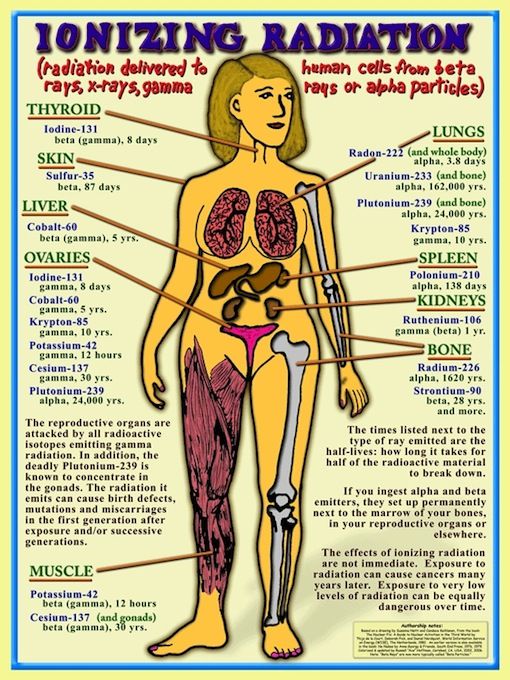
women were more likely to develop lung cancer than men, suggesting a greater sex-based vulnerability to harmful radiation.
the risk to an astronaut exposed to space radiation is long-term rather than immediate. Without proper shielding (which tends to be rather heavy and thus prohibitively expensive to launch) their chances of developing cancer, as well as cardiovascular disease, cataracts and central nervous system damage, slightly increase each day they are in space. In a person’s cells, space radiation can sever both strands of a DNA molecule’s double helix. And while a few such instances might come with very limited risks, each additional severance raises the odds of developing a harmful mutation that could cause cancer………
New Space Radiation Limits Needed for NASA Astronauts, Report Says, Scientific American, By Ramin Skibba on July 14, 2021 https://www.scientificamerican.com/article/new-space-radiation-limits-needed-for-nasa-astronauts-report-says/ Although meant to minimize risks to human health, the proposed new limits would still be exceeded by any conceivable near-future crewed voyage to MarsAstronaut Scott Kelly famously spent an entire year residing onboard the International Space Station (ISS), about 400 kilometers above Earth, and his NASA colleague Christina Koch spent nearly that long “on station.” Each returned to Earth with slightly atrophied muscles and other deleterious physiological effects from their extended stay in near-zero gravity.
But another, more insidious danger lurks for spacefarers, especially those who venture beyond low-Earth orbit.
Space is filled with invisible yet harmful radiation, most of it sourced from energetic particles ejected by the sun or from cosmic rays created in extreme astrophysical events across the universe. Such radiation can damage an organism’s DNA and other delicate cellular machinery. And the damage increases in proportion to exposure, which is drastically higher beyond the protective cocoon of Earth’s atmosphere and magnetic field (such as on notional voyages to the moon or Mars). Over time, the accrued cellular damage significantly raises the risk of developing cancer.
To address the situation, at NASA’s request, a team of top scientists organized by the National Academies of Sciences, Engineering, and Medicine published a report in June recommending that the space agency adopt a maximum career-long limit of 600 millisieverts for the space radiation astronauts can receive. The sievert is a unit that measures the amount of radiation absorbed by a person—while accounting for the type of radiation and its impact on particular organs and tissues in the body—and is equivalent to one joule of energy per kilogram of mass. Scientists typically use the smaller (but still quite significant) quantity of the millisievert, or 0.001 sievert. Bananas, for instance, host minute quantities of naturally occurring radioactive isotopes, but to ingest a millisievert’s worth, one would have to eat 10,000 bananas within a couple of hours.
Every current member of NASA’s astronaut corps has received less than 600 millisieverts during their orbital sojourns, and most, including Koch, have received much less and can thus safely return to space. But a year on the ISS still exposes them to more radiation than experienced by residents of Japan who lived near the Fukushima Daiichi nuclear accidents of 2011.
“Everybody is planning trips to the moon and Mars,” and these missions could have high radiation exposures, says Hedvig Hricak, lead author of the report and a radiologist at Memorial Sloan Kettering Cancer Center in New York City. Using current spaceflight-proved technologies, long-distance voyages—especially to the Red Planet—would exceed the proposed threshold, she says.
That could be a big problem for NASA’s Artemis program, which seeks to send astronauts to the moon in preparation for future trips to Mars. Another problem for the space agency is that the epidemiological data it uses mostly come from a longevity study of Japanese survivors of atomic bomb blasts, as well as from the handful of astronauts and cosmonauts who have endured many months or even years in low-Earth orbit. NASA’s current space radiation limit, which was developed in 2014, involves a complicated risk assessment for cancer mortality that depends on age and sex, yet more relevant data are necessary, Hricak argues. In the atomic bomb survivor study, for instance, women were more likely to develop lung cancer than men, suggesting a greater sex-based vulnerability to harmful radiation. “But with the knowledge we presently have, we know we cannot make a comparison between high exposure versus chronic exposure,” Hricak says. “The environment is different. There are so many factors that are different.”
NASA wants to update its standards now because the agency is on the cusp of sending so many astronauts well beyond low-Earth orbit, where greater amounts of space radiation seem destined to exceed previously mandated exposure limits. Furthermore, Hricak says, having a single, universal radiation limit for all space travelers is operationally advantageous because of its simplicity. A universal limit could also be seen as a boon for female astronauts, [ Ed. a boon?when they still are more susceptible to cancer than men are?] who had a lower limit than men in the old system and therefore were barred from spending as many days in space as their male counterparts.
The new radiation limit proposed by Hricak and her team is linked to the risks to all organs of a 35-year-old woman—a demographic deemed most vulnerable in light of gender differences in the atomic bomb survivor data and the fact that younger people have higher radiation risks, partly because they have more time for cancers to develop. The goal of the radiation maximum is to keep an individual below a 3 percent risk of cancer mortality: in other words, with this radiation limit, at most three out of 100 astronauts would be expected to die of radiation-induced cancer in their lifetime.
“NASA uses standards to set spaceflight exposure limits to protect NASA astronauts’ health and performance, both in mission and after mission,” says Dave Francisco of NASA’s Office of the Chief Health and Medical Officer. He acknowledges that, while astronauts on Mars missions would benefit from the thin Martian atmosphere that provides some limited protection, “transit in deep space has the highest exposure levels.”
That means long-haul space trips come with the biggest risks. A stay on the lunar surface for six months or more—presuming, of course, that astronauts eventually have a presence there and do not spend most of their time in subsurface habitats—would involve nearly 200 millisieverts of exposure, a higher amount than an extended visit to the ISS. And an astronaut traveling to Mars would be exposed to even more radiation. Whether they reached the Red Planet through a lunar stopover or on a direct spaceflight, they could have experienced significant radiation exposure en route. Even before they embarked on the trip back home, they could have already exceeded the 600 millisievert limit. The entire voyage, which would likely last a couple of years, could involve well more than 1,000 millisieverts. So if astronauts—and not just robots—will be sent to Mars, NASA likely will need to request waivers for them,
Hricak says, although the exact process for obtaining a waiver has not yet been laid out.
The report’s proposal for a new radiation maximum is not without its critics. “For a mission to Mars, a 35-year-old woman right at that limit could have an over 10 percent chance of dying in 15 to 20 years. To me, this is like playing Russian roulette with the crew,” says Francis Cucinotta, a physicist at the University of Nevada, Las Vegas, and former radiation health officer at NASA. Despite the supposed benefits the new limits would have for female astronauts, he is concerned that the risks are particularly pronounced for younger women in space.
On the contrary, Hricak says, in its request for new limits, NASA has sought to be conservative. The European, Canadian, and Russian space agencies all currently have a higher maximum allowed dose of 1,000 millisieverts, while Japan’s limit is age- and sex-dependent like NASA’s current one, mainly because of a shared dependence on the atomic bomb survivor data.
But unlike someone in the vicinity of a nuclear explosion, the risk to an astronaut exposed to space radiation is long-term rather than immediate. Without proper shielding (which tends to be rather heavy and thus prohibitively expensive to launch) their chances of developing cancer, as well as cardiovascular disease, cataracts and central nervous system damage, slightly increase each day they are in space. In a person’s cells, space radiation can sever both strands of a DNA molecule’s double helix. And while a few such instances might come with very limited risks, each additional severance raises the odds of developing a harmful mutation that could cause cancer………
considering how little is known about various health risks from different kinds of space radiation, compared with radiation we are familiar with on Earth, researchers will surely continue with more studies like these to protect astronauts as much as possible. “I can tell you exactly how much exposure you’re going to get from a CT scan,” Hricak says, “but there are many uncertainties with space radiation.”….. https://www.scientificamerican.com/article/new-space-radiation-limits-needed-for-nasa-astronauts-report-says/
“Fossil fuel economy has reached its limits”: EU to slash emissions and drag Australia with it — RenewEconomy

Australian exporters to the EU face prospect of $80+ tonne carbon price under an ambitious EU plan to halve emissions by 2030. The post “Fossil fuel economy has reached its limits”: EU to slash emissions and drag Australia with it appeared first on RenewEconomy.
“Fossil fuel economy has reached its limits”: EU to slash emissions and drag Australia with it — RenewEconomy
Breakthrough! AEMO acknowledges energy transition needs social licence — RenewEconomy

The vast majority of Australians are yet to engage with or be exposed to new ways of thinking about and using energy. The post Breakthrough! AEMO acknowledges energy transition needs social licence appeared first on RenewEconomy.
Breakthrough! AEMO acknowledges energy transition needs social licence — RenewEconomy
If you thought that space research had nothing to do with weapons – think again!
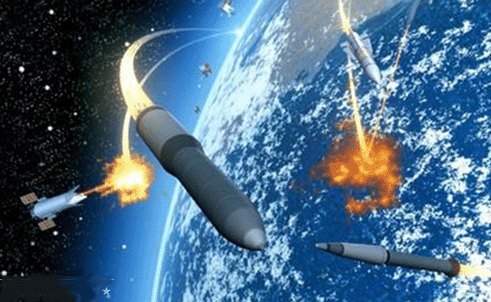
With all three Gunsmoke-J satellites on orbit, the Army is ready to test space-based targeting C4ISR NETBy Nathan StroutTue Jul 13 2021, The Army is keen to use the vantage of space to find and target beyond-line-of-sight (BLOS) threats. While satellite imagery has traditionally been a product of the intelligence community, the development of relatively affordable yet highly capable small satellites that can operate in low Earth orbit has convinced military leaders that it can play a tactical role on the battlefield.
In a demonstration last fall, the Army was able to show that it could take images from satellites on orbit down to Earth, process them with artificial intelligence to find threats, and deliver targeting data to weapon systems in about 20 seconds. That speed is opening a whole slew of possibilities to commanders, enabling them to “see” further down the battlefield in near real time than ever before.
That demonstration used images from commercial satellite constellations, but now the Army has its own trio of imagery satellites to further develop this capability. The Army’s Gunsmoke-J program has launched three cubesats to use “emerging advanced electronics to allow the use of dedicated intelligence assets to provide tactically actionable targeting data to war fighters on a responsive and persistent timeline,” according to an annual budget proposal. Gunsmoke-J is a Joint Capability Technology Demonstration conducted by the Army Space and Missile Defense Command and Assured Position Navigation and Timing/Space Cross Functional Team………..
“This deployment and same day launch of two separate Gunsmoke-J satellites is a major step toward demonstrating what we believe will be enabling tactical warfighter capability,” ……..
If the Gunsmoke experiments are successful, then this work could lead to future systems, which would enhance long-range precision fires in support of the war fighter.” https://www.c4isrnet.com/battlefield-tech/space/2021/07/12/with-all-three-gunsmoke-j-satellites-on-orbit-the-army-is-ready-to-test-space-based-targeting/
Climate denial still features in fossil fuel-funded education materials — RenewEconomy

The fossil fuel industry has long used its influence on education to downplay climate threats. It’s getting worse, and is even turning up at Questacon. The post Climate denial still features in fossil fuel-funded education materials appeared first on RenewEconomy.
Climate denial still features in fossil fuel-funded education materials — RenewEconomy
Australia’s biggest emitter and coal generator says its customers are “strong green” — RenewEconomy

AGL’s next CEO says energy policy should be guided by customers – and says one-third of the coal generator’s customers are “strong green.” The post Australia’s biggest emitter and coal generator says its customers are “strong green” appeared first on RenewEconomy.
Australia’s biggest emitter and coal generator says its customers are “strong green” — RenewEconomy
From coal to inverters, AEMO’s engineering vision is ambitious and necessary — RenewEconomy

George Orwell wrote: “Our civilisation is founded on coal … The machines keep us alive and the machines that make machines, are all directly or indirectly dependent upon coal”. From colonisation until recently, Australia too has been dependent on coal and gas and the large spinning turbines that turn these ancient, buried resources into electrons.…
From coal to inverters, AEMO’s engineering vision is ambitious and necessary — RenewEconomy
July 14 Energy News — geoharvey

Opinion: ¶ “New Republican-Only Conservative Climate Caucus Light On Science, Heavily Pro-Fossil Fuels” • A Conservative Climate Caucus has been formed with a roster of roughly 60 members. Their website is light on content, but it has enough to make a few early assessments. Their actions may pleasantly surprise me one day, but the start […]
July 14 Energy News — geoharvey
As the world starts to panic over climate change, nuclear evangelists offer spurious solutions.

I too wish that the things that the nuclear industry says about itself were true—I wish it was green and renewable. I wish that there weren’t multiple uranium mining sites around the world with thousands of tons of uranium tailings abandoned and open to the elements, continuing to harm the health of generations born long after mining ceased.
I wish that it didn’t take immense, carbon-intensive mining projects to extract uranium from the Earth, and then again to “deposit” the spent nuclear fuel from reactors back half a kilometer underground.
Nuclear Stockholm Syndrome, https://www.counterpunch.org/2021/07/09/nuclear-stockholm-syndrome/
BY ROBERT JACOBS 9 July 21, Bhaskar Sunkara’s recent opinion piece extoling the virtues of nuclear power and castigating its opponents as paranoid and ill-informed, is clearly motivated by his deep concerns over the dire impacts of global warming, which loom closer by the hour. Unfortunately, his arguments amount to little more than regurgitated industry talking points, in their traditional form of a Jeremiad.
First, Sunkara poses the decline of the nuclear industry in the West as an achievement of progressive political movements. Specifically, he cites the decline of nuclear power in Germany as attributable to a “Green party-spearheaded campaign.” This decline has been more reasonably ascribed to both market conditions and missteps by nuclear industry giants such as Westinghouse and AREVA. From its inception, nuclear power has been heavily dependent on government subsidies to appear economically viable (subsidies such as insurance and the disposal of waste largely configured as taxpayer burdens).
Rather than succumbing to its political opponents on the left, the industry has been sunk by its structural economic dysfunctions. In the US, this has sparked schemes to secure additional taxpayer subsidies in legislative fixes such as guaranteed returns for nuclear utilities, and outright bribery of legislators for taxpayer bailouts of failing companies.
The most simplistic recitation of nuclear industry talking points is when Sunkara dismisses concerns about nuclear waste, and extolls the mythic separation between “civilian” and “military” nuclear technologies. He asserts that most nuclear waste “can be recycled to generate more electricity,” an assertion that goes back more than half a century and has been ritualistically recited by an army of nuclear industry PR professionals before him…yet here we are 50 years later and very little spent nuclear fuel has actually been recycled. The most successful nuclear recycling nation is France which, nevertheless, is experiencing a “nuclear exit” and is unlikely to ever use this recycled fuel. AREVA, the French nuclear giant, has gone bankrupt. Reprocessing facilities like the Rokkasho plant here in Japan have never functioned properly, unless you consider their role enabling the stockpiling of plutonium by Japan to hedge against future weapon needs to be an elemental goal.
There is a difference between what can be done, and what actually happens. Rather than being recycled, hundreds of thousands of metric tons of spent nuclear fuel await “final disposal” in deep geological repositories. Some have been waiting for over 70 years. Just last week, a panel advising the EU on categorizing nuclear plant as “green” energy, and thus eligible to receive EU funding as a “sustainable investment,” concluded that the problems of nuclear waste preclude that designation.
I would point out that even though plastics manufacturers assure us that most plastic can be recycled, we still seem to be living a world with ever increasing amounts of plastic waste. Their greenwashing has not eventuated in a world full of plastics made from recycled materials. The market reality is that it is cheaper to manufacture new plastic than it is to manufacture plastic from recycled materials. Similarly, it is cheaper to discard spent nuclear fuel than it is to reprocess it.
Sunkara dismisses the irrevocable link between military and civilian nuclear technologies as imaginary. First, let’s consider the present imbrication. A 2019 Atlantic Council study places the value of the US civilian nuclear complex to the US national security apparatus at $26 billion annually simply in terms of the human capital assets: “In terms of nuclear technology innovation, export capacity, and geopolitics, a vibrant civilian nuclear energy sector is a critically important national security asset.”
However, the civilian operation of nuclear power plants also places future generations at military risk. I have written that, historically, nuclear reactors were “born violent.” That is to say, they were invented by the Manhattan Project in the early 1940s to manufacture plutonium for use in nuclear weapons, and were instrumental in killing almost 100,000 people in 1945. The “first” American commercial atomic plant in Shippingport, PA that went critical in 1958, was actually the 14th industrial nuclear reactor built in the United States, the other 13 only manufactured plutonium, which by then formed the fissile cores of thousands of nuclear weapons.
In nuclear reactors used to make electricity, this plutonium is not separated out for use in weapons. However, all nuclear power plants remain plutonium production factories. The fact that most of those tons of plutonium remain in the spent fuel rods does not mean they will stay there forever. Thousands of years from now, some government or military may dig up the spent fuel in our deep geological repositories and separate that plutonium out to build nuclear weaponry. All it would take is the technology (technology we currently possess) and the will. We continue to manufacture that plutonium—perhaps for them to weaponize. Every nuclear power plant that operates adds to that inventory; more than 99% of existing plutonium was manufactured in nuclear reactors. In 1962, the US successfully detonated a nuclear weapon assembled with just such “reactor-grade” plutonium. Our generation’s use of nuclear power silently stockpiles fissile material that will remain militarily viable for millennia.
I too wish that the things that the nuclear industry says about itself were true—I wish it was green and renewable. I wish that there weren’t multiple uranium mining sites around the world with thousands of tons of uranium tailings abandoned and open to the elements, continuing to harm the health of generations born long after mining ceased. I wish that it didn’t take immense, carbon-intensive mining projects to extract uranium from the Earth, and then again to “deposit” the spent nuclear fuel from reactors back half a kilometer underground. Estimates before construction began at Onkalo spent fuel repository in Finland were that the site would entail a “half-billion-euro construction project will generate some 2,500 person years of employment,” and would take 100 years to complete. That is just to contain the spent fuel from five nuclear power plants. The United States, by contrast, has 94 commercial nuclear power plants. There is still no actual plan for the astonishingly large and carbon-intensive site it will take to bury the more than 140,000 metric tons of spent nuclear fuel, with some hope of containing it for thousands of generations of future human beings. This doesn’t include the thousands of tons of spent nuclear fuel from the nuclear reactors operated by the US military to provide the fissile cores of more than 70,000 nuclear weapons during the Cold War.
The panic-inducing impacts of anthropic climate change spark a desperate need for immediate reassurance and calming: we want to fix it now. We long to turn some corner that will change the situation. It is unlikely that the same short-sighted military-industrial technophilia that brought us to this climate crisis will flip over and provide us the urgent path to its resolution. Technological evangelists have been auditioning for the part of Climate Change Savior to anyone who will listen. Some proffer a Reagan-era Star Wars pitch: they will fill the skies with material to block the enemy (in this case sunlight rather than Soviet ICBMs). These geoengineering quick-fix schemes are more likely to cause unplanned outcomes than to achieve their missions.
At one time nuclear weapon producers imagined they too could geoengineer the planet to shape it to human desires. They tested the use of nuclear weapons to sculpt harbors into coastlines, and to release natural gas trapped in rock formations. These experiments led to some of the most significant radiological distributions and contaminated sites in the wide panoply of nuclear testing. Still, hyper-capitalist techno utopians like Elon Musk envision the key to human habitation on Mars is the detonation of a massive arsenals of thermonuclear weapons to shape it to our needs.
The nuclear industry will ignore its market dilemmas as long as taxpayers continue to backstop its investors. However, to believe that this massive, for-profit, military-based industry has concern for the welfare of the Earth and its inhabitants is akin to believing the plastic industry is actually beavering away to make the plastic waste disappear. Repackaging their talking points out of a genuine concern for living creatures is a resource they will continue to tap so long as it flows freely. Sunkara would do better to advocate for the mass social movements that have shifted giant industries towards social welfare in the past rather than preaching that the industries themselves are saviors. Time is obviously short, wrong turns are catastrophic.
Robert (Bo) Jacobs is a historian at the Hiroshima Peace Institute and Graduate School of Peace Studies at Hiroshima City University. He has written and edited multiple books and articles on nuclear history and culture including, The Dragon’s Tail: Americans Face the Atomic Age, and Filling the Hole in the Nuclear Future: Art and Popular Culture Respond to the Bomb. He is a founder and a principal researcher of the Global Hibakusha Project, studying radiation exposed communities around the world. His book, Nuclear Bodies: The Global Hibakusha, will be published by Yale University Press in 2022. His Global Hibakusha blog can be found here.
British court ruling heightens danger of Assange extradition to the US
British court ruling heightens danger of Assange extradition to the US, WSWS, Oscar Grenfell, 12 July 21, Last week’s ruling by the British High Court allowing prosecutors to appeal an earlier judgment blocking Julian Assange’s extradition, poses the very real danger that the WikiLeaks publisher will be dispatched to his American persecutors in the not-too-distant future.
The ruling is a microcosm of the Assange case as a whole. As they have for the past decade, the British courts have thrown aside the WikiLeaks founder’s legal and democratic rights. They have granted a US appeal that is both duplicitous and irregular under conditions in which the entire attempt by the American state to prosecute Assange has been exposed as an illegal frame-up.
The US appeal is a damning refutation of those, including among Assange’s own supporters, who have peddled dangerous illusions that the US administration of President Joe Biden may drop the prosecution if a sufficient number of moral pleas are addressed to the new occupant of the White House.
The appeal was first issued in the dying days of the Trump administration but it was continued, honed and argued for by Biden’s Justice Department. Assange remains in London’s maximum-security Belmarsh Prison and faces the prospect of lifetime incarceration in the US because Biden is determined to press ahead with the prosecution of a journalist and publisher for exposing American war crimes, human rights violations and illegal spying operations.
That is because the Assange prosecution is viewed as a crucial precedent by the imperialist powers for the suppression of dissent and anti-war opposition amid a ratcheting up of the preparations for military conflict, including the Biden administration’s threats and provocations against China, and the first signs of a resurgence of working-class struggle.
The appeal also confirms the warnings made by the World Socialist Web Site about January’s British District Court decision that barred extradition.
Judge Vanessa Baraitser accepted all the substantive arguments of the US prosecutors, including their right to try a publisher under the Espionage Act. Her ruling, prohibiting extradition, was framed in the narrowest terms. Its purpose was to defuse a groundswell of opposition to the prospect of Assange’s extradition and to provide the US with ample scope for appeal.
Baraitser ruled that extradition would be “oppressive.” Assange’s compromised health and the conditions of his imprisonment in the US would likely result in his suicide.
The deliberate consequence of that judgment was that there was only a legal sliver between Assange and extradition.
The US has exploited this with its appeal claiming that the conditions of imprisonment would not be so oppressive. It has proposed worthless assurances that Assange would not be held under Special Administrative Measures (SAM), regulations that impose almost total isolation on a prisoner, and that he could serve out his sentence in Australia.
The extradition hearing had heard harrowing testimony about the dire psychological consequences of SAMs and conditions at the supermax ADX Florence prison where they are frequently imposed.
The US arguments, accepted as a legitimate basis of appeal by the British court, were demolished by Stella Moris, Assange’s partner and an international human rights lawyer.
In a statement issued on Friday, Moris wrote: “Reports about US undertakings are grossly misleading. On any given day 80,000 prisoners in US prisons are held in solitary confinement. Only a handful are in ADX/under special administrative measures. ADX is just one of dozens of self-described supermax prisons in the United States. The US government also says it may change its mind if the head of the CIA advises it to do so once Julian Assange is held in US custody.
“With regard to the supposed concession of allowing Julian to serve jail time in Australia, it was always his right to request a prisoner transfer to Australia to finish serving his sentence because he is an Australian. It is no concession at all. There are existing agreements between the US and Australian authorities. What is crucial to understand is that prisoner transfers are eligible only after all appeals have been exhausted. For the case to reach the US Supreme Court could easily take a decade, even two.
“What the US is proposing is a formula to keep Julian in prison effectively for the rest of his life. The only assurance that would be acceptable would be for the Biden Administration to drop this shameful case altogether, once and for all. He should not be in prison for a single day, not in the UK, not in the United States, not in Australia—because journalism is not a crime.”
As Moris noted, the US appeal itself reserved the “right” to impose SAMs once Assange is on US soil. Testimony at the extradition hearing, including from a former US prison warden, established that the imposition of SAMs is essentially extra-judicial, often being introduced at the say-so of the intelligence agencies, and with no genuine means of appeal.
“What the US is proposing is a formula to keep Julian in prison effectively for the rest of his life. The only assurance that would be acceptable would be for the Biden Administration to drop this shameful case altogether, once and for all. He should not be in prison for a single day, not in the UK, not in the United States, not in Australia—because journalism is not a crime.”
As Moris noted, the US appeal itself reserved the “right” to impose SAMs once Assange is on US soil. Testimony at the extradition hearing, including from a former US prison warden, established that the imposition of SAMs is essentially extra-judicial, often being introduced at the say-so of the intelligence agencies, and with no genuine means of appeal.
The hearings, moreover, heard evidence of a case in which similar assurances were immediately thrown out the door once extradition was secured……………
Thordarson has now admitted, however, that almost all his testimony consisted of lies proffered in exchange for immunity from US prosecution. The American government thus submitted a false indictment to the British courts……….https://www.wsws.org/en/articles/2021/07/12/assa-j12.html?pk_campaign=assange-newsletter&pk_kwd=wsws
Adani says it wants kids to take climate action, while it grows fossil fuel empire — RenewEconomy

Adani says it wants kids to take personal responsibility for climate action, while new research shows the depth of its fossil fuel ambitions. The post Adani says it wants kids to take climate action, while it grows fossil fuel empire appeared first on RenewEconomy.
Adani says it wants kids to take climate action, while it grows fossil fuel empire — RenewEconomy
WA mulls three gigawatt-scale PV plants to export solar to Asia — RenewEconomy

Plans to build three gigawatt-scale solar farms in Western Australia’s Pilbara and Kimberley regions and sell their output to Indonesia via submarine cables, could soon be commercially viable.
WA mulls three gigawatt-scale PV plants to export solar to Asia — RenewEconomy
July 12 Energy News — geoharvey

Science and Technology: ¶ “Experts Are Close To Generating A New Form Of Renewable Energy From Water” • Splitting water molecules to make green hydrogen requires large amounts of energy. New research suggests, however, that instead of having to use large amounts of power, the same results can be achieved using more effective and energy-efficient […]
July 12 Energy News — geoharvey
The week in nuclear news
No – there’s not really much happening in the nuclear sphere. What is happening is the increasing pro nuke propaganda. It is so noticeable in my country, Australia. Not that it’s widespread (yet), but the pro-nuke spiel from the Murdochracy is so patently, silly, and ill-informed that it deserves mention for its absurdity. I hope to write more about this next time.
CLIMATE Serious as the pandemic is, – I’m thinking that in the total picture, it does not compare with the weather extremes, the suffering, the forced refugees, that the world faces from global heating.
When it happens in America, the media does sit up and take notice. It’s happening in California, with raging temperatures and raging wildfires. I know that this is terrible, and not funny, but still, I wonder if some climate change denialists might be having second thoughts , as they’re finding it hard to get oysters and other luxury shellfish – seeing that these coastal marine organisms are being cooked now, before they can be harvested.https://www.youtube.com/watch?v=DTZD5K6JBGk
CORONAVIRUS. World Health Organisation sounds alarm as global deaths top 4 million, delta variant spreads to 100 countries.
AUSTRALIA.
South Australian law demands an Inquiry into the Federal government’s nuclear waste storage plan. Barngarla Determination Aboriginal Corporation (BDAC) will take legal action against nuclear dump plan if Resources Minister Keith Pitt names Napandee as the site.
Australian Members of Parliament from right and left parties call on US President Biden to drop charges against Julian Assange,
INTERNATIONAL
Reaching net zero without nuclear. Nuclear Energy Will Not Be the Solution to Climate Change – not enough time, even if it were effective.
If They Chose, Biden and Putin Could Make the World Radically Safer, Nuclear arms control hasn’t worked. We need a new approach.
Key witness in Julian Assange case admits to lies in indictment. https://www.youtube.com/watch?v=HlLbAVSHeA8 U.S. government offers meaningless assurances on Julian Assange’s well-being, as it gets right to appeal on UK court ruling against his extradition. U.S. proposals about extradition of Julian Assange are designed to keep him in prison for life.
Rapid growth of global renewable energy: it’s the major energy source in Europe.
Mobile phones/cellphones – the health danger from electromagnetic radiation.
1 This month.
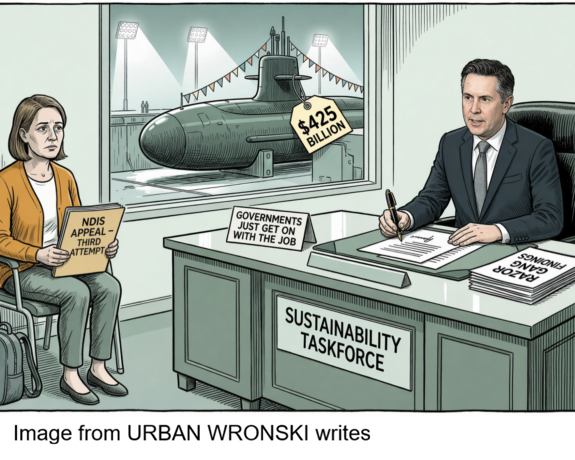

PETITION – To: Prime Minister Anthony Albanese and the Australian Labor Government
Chernobyl: The Lost Tapes – A good documentary on Chernobyl on SBS available On Demand for the next 3 weeks– https://www.sbs.com.au/ondemand/tv-program/chernobyl-the-lost-tapes/235274195556
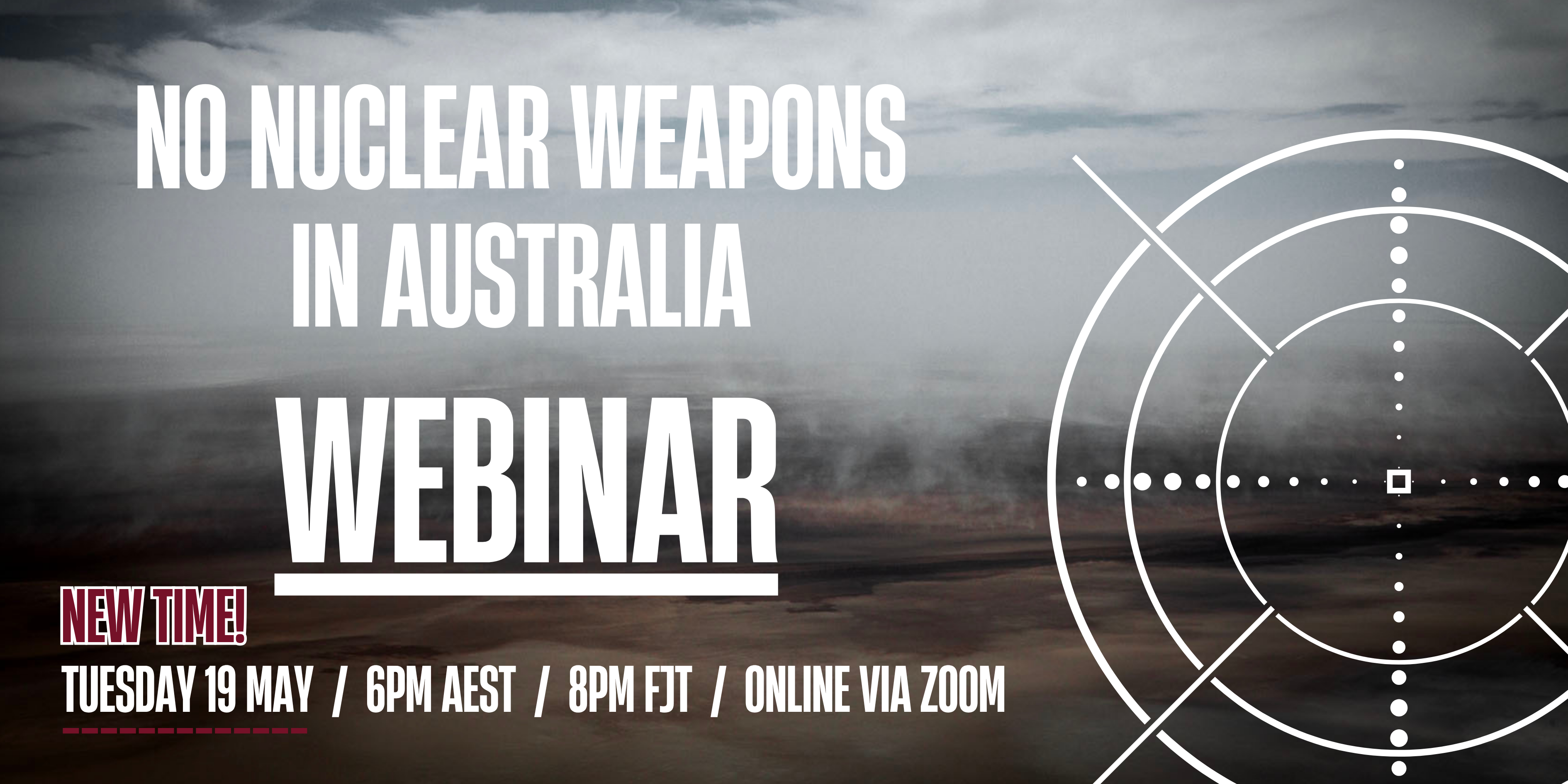
19 May – Webinar- Webinar: No Nuclear Weapons in Australia
Start: 2026-05-19 18:00:00 UTC Canberra, Melbourne, Sydney (GMT+10:00)
End: 2026-05-19 19:30:00 UTC Canberra, Melbourne, Sydney (GMT+10:00)
20 May – Webinar – The dangerous world of AUKUS, US, military occupation and suppression of dissent

National Webinar, 20th May, 2026, 6.30pm AEST. Confronting laws restricting/suppressing protest speech and action
Speakers: Former Sen. Rex Patrick, Lawyer Nick Hanna ,Arthur Rorris ,Jorgen Doyle, Sen David Shoebbridge,
Facilitator Kelley Tranter.

of the week – Australians for War Powers Reform (AWPR)
To see nuclear-related stories in greater depth and intensity
 Antinuclear