New Zealand’s climate ambition isn’t perfect, but it is miles ahead of Australia — RenewEconomy

New Zealand’s climate history and its climate targets are a mixed bag at best, but they are miles ahead of Australia’s coal obsession. The post New Zealand’s climate ambition isn’t perfect, but it is miles ahead of Australia appeared first on RenewEconomy.
New Zealand’s climate ambition isn’t perfect, but it is miles ahead of Australia — RenewEconomy
Tasmania reaches 100 pct renewables – but climate action doesn’t stop there — RenewEconomy

Tasmania, thanks to its hydro and forests, has reached 100 pct renewables. Now it can show the world what the other side of net-zero emissions should look like. The post Tasmania reaches 100 pct renewables – but climate action doesn’t stop there appeared first on RenewEconomy.
Tasmania reaches 100 pct renewables – but climate action doesn’t stop there — RenewEconomy
Your G7 greenwashing guide: How Australia will feign climate ambition — RenewEconomy

Instead of focusing on reducing emissions, Australia’s government is putting great effort into greenwashing and twisting statistics. Here’s how. The post Your G7 greenwashing guide: How Australia will feign climate ambition appeared first on RenewEconomy.
Your G7 greenwashing guide: How Australia will feign climate ambition — RenewEconomy
A People’s Guide to the War Industry -5: Portfolio of Conflicts

“They ignored the real threat: The U.S. Armed Forces’ rampant carbon-based military activity contributes to anthropogenic climate change, which melts Arctic ice, which opens up northern sea lanes, into which the Pentagon projects its polluting arsenal, which puts more carbon in the atmosphere.”
A People’s Guide to the War Industry -5: Portfolio of Conflicts — Rise Up Times A PEOPLE’S GUIDE TO THE WAR INDUSTRY -5: PORTFOLIO OF CONFLICTS June 9, 2021 ·
When war is profit, death ensures a healthy bottom line, writes Christian Sorensen in this final installment of his five-part series on the military-industrial-congressional complex.
Read Part 1, Part 2, Part 3 and Part 4 (also available on Rise Up Times)
By Christian Sorensen Special to Consortium News June 2, 2021 Without looking at military adventurism through the lens of the corporation, analysts are bound to produce error-filled studies. For example, one analyst contended in an interview on The Real News Network, “Military force is almost never going to achieve your political aims. The Americans learned this in Vietnam. They’re learning it in Afghanistan. They’re learning it in Syria… So [President Barack] Obama supporting the Saudis and Emiratis in Yemen is a sign really of incoherence on the part of the United States.”
Far from incoherence, the behavior actually is quite rational. A variety of conflicts, disparate and some seemingly futile, is precisely the aim. Conflict itself — producing untold mountains of profit for war corporations and Wall Street — is the goal.
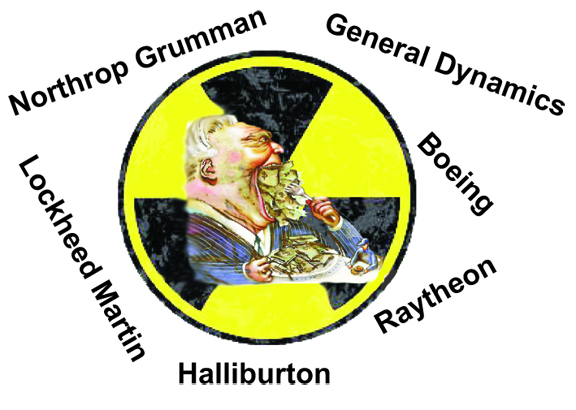
Recall that capital is money used to expand business in order to make more profit. Capital isn’t just building new factories to produce more goods from which to profit.

Capital is also putting money toward cultivating and promoting politicians who advocate for wars and broad military deployments; media and think tanks to propagandize and generate militant narratives; attaining through neoliberal economic policies a U.S. military establishment so rife with corporations that it becomes one bloated, self-sustaining, profitable entity; arranging industry pressure groups and think tanks to encourage and award high-ranking military officers who support and extend conflicts overseas; and marketing, pushing, and operating goods and services that harm populations and destabilize countries around the world, generating more profitable conflict.
The war industry pursues a portfolio of conflicts as any organized, dominant industry views the global marketplace, parses demographics, shapes consumer tastes, and pursues profit maximization at all costs. Afghanistan, Pakistan, Colombia, Iraq, Iran, Korea, Libya, Mexico, Palestine, the Philippines, Somalia, Syria, the Sahel, Ukraine, Yemen — each conflict has advantages and challenges, unique terrain and unique obstacles.
Industry’s products monitor, control and destroy populations. The particular goods and services selected are not the point here. The real rub is that from the eyes of the corporate suite, conflict must endure. Peace is not profitable. A strong portfolio of conflicts, which vary in intensity and scope, is what industry has achieved. Global capitalism demands infinite growth. War corporations’ portfolio approach demands endless, dispersed armed conflicts of varying intensity.
The U.S. war industry sells to capitalist regimes around the world through direct commercial sales and foreign military sales (FMS). FMS tend to deal with big-ticket items or goods and services of a sensitive nature. Through FMS, the U.S. government procures and transfers industry goods and services to allied governments and international organizations.
The U.S. war industry sells to capitalist regimes around the world through direct commercial sales and foreign military sales (FMS). FMS tend to deal with big-ticket items or goods and services of a sensitive nature. Through FMS, the U.S. government procures and transfers industry goods and services to allied governments and international organizations.
The Defense Security Cooperation Agency (DSCA) is the intermediary between the U.S. war industry and the FMS customer overseas. On any given day, DSCA is managing “14,000 open foreign military sales cases with 185 countries,” Lt. Gen. Charles Hooper explained at the Brookings Institution in 2019.
Violent and oppressive regimes are frequent customers, including London, Riyadh, Abu Dhabi and Tel Aviv. The Leahy Law, which is intended to prevent U.S. military assistance from reaching militaries that have committed serious human rights violations, is almost never enforced when it comes to FMS. The Arms Export Control Act requires recipients of U.S. war industry goods and services to use them only in self-defense.
So, customers of the U.S. war industry typically affirm that they’re using the goods and services in self-defense, and the U.S. government doesn’t press them on the matter. After all, there is a lot of cash at stake. In fiscal year 2020 alone, the war industry sold $50.8 billion through FMS and $124.3 billion through direct commercial sales.
The Pentagon often cites industry’s claim that FMS reduces the cost of military systems to the U.S. Armed Forces. The Pentagon supports FMS because foreign militaries dependent on U.S. equipment, knowhow, training, parts, and software are more likely to listen to the U.S. government on military matters, the direction to take in regional conflicts, and international policy.
Without tensions, military provocations, and ongoing hot or cold wars (e.g. Japan v. China, South v. North Korea, Taiwan v. China, absolutist Arab regimes and Apartheid Israel v. Iran, Apartheid Israel v. Arab populations, the global war on drugs) to justify endless transactions, the U.S. war industry would lose billions in annual sales to allied regimes and sales to the U.S. military that is “responding” to such conflict.
Major war corporations place people in charge of selling to each Arab country in the Persian Gulf (e.g. Joe Rank, a career soldier who helped guide Middle East policy for the U.S. Secretary of War, now oversees Lockheed Martin’s business with Saudi Arabia). U.S. flag officers who work on FMS often doff the uniform and then join war corporations to help sell goods and services overseas.
For Profit, Against Democracy
From May 2015 through March 2016, U.S. war corporations sold over $30 billion of goods and services to anti-democratic Arab Gulf allies. Given the U.S. war industry’s long sales history to regimes like Bahrain, Saudi Arabia and the UAE, it stands firmly on the side of profit, and firmly against democracy. Or, as Raytheon’s website puts it,
“With more than 50 years in the Middle East, Raytheon’s steadfast commitment and uninterrupted presence in the region is a testament to the tremendous value we place on being there for our customers.”
The 1945 Quincy Pact between U.S. President Franklin D. Roosevelt and King Abdul Aziz al-Saud started it all: Washington would entrench bases in and around the Persian Gulf and protect the House of Saud, while the latter would keep the oil flowing and give preferential treatment to U.S. corporate interests.
The Saudi regime would later agree to use the dollar in international oil trading. Saudi Arabia purchases a lot of goods and services from U.S. industry, including the war industry. The Washington regime assented when in 2015 the Saudi and Emirati regimes turned U.S. weaponry on Yemen.
The U.S. war industry, in addition to U.S. military and intelligence assistance, has been the cornerstone of the UAE/Saudi destruction of Yemen. Yemenis now suffer from raging famine, disease outbreaks, and crippled infrastructure. The UAE-Saudi coalition has hit civilians (school field trips, funeral processions, weddings, markets) and prevented humanitarian aid from entering Yemen.
In autumn 2018, the head of the U.S. State Department’s legislative affairs team (a former Raytheon lobbyist) certified that Saudi Arabia and the UAE were taking steps to reduce civilian deaths in Yemen. Roughly 233,000 people have died in Yemen as a result of the war, according to the United Nations humanitarian office. Such destruction is evidence of the military-industrial-congressional triangle functioning as designed.
In early February 2021, the Biden administration announced it would halt support for Saudi-UAE “offensive” operations in Yemen. This claim is full of loopholes and is unlikely to substantially alter or end the myriad of ways the U.S. ruling class aids and abets anti-democratic Arab regimes.
Zionism is the ideology that justifies the colonization of Palestine and the maintenance and expansion of that colonization using brutal violence and espionage. Zionists declared independence when they set up a new state, Israel, in Palestine in May 1948, ethnically cleansing hundreds of thousands of Arabs from the land.
Each year, Washington gives roughly $3.8 billion to Israel, which then is supposed to use such monies to purchase from the U.S. war industry. The occupation of Palestine and Zionist aggression against neighboring countries provide the U.S. war industry with a valuable slice of its portfolio: an outsourced proving ground to test, evaluate, use, and improve weaponry.
When war is profit, death ensures a healthy bottom line.
The Advantages of Zionism The aggressive military posture inherent to Zionism is a commercial advantage from an industry perspective. Israel has killed Arabs quite effectively with a variety of aircraft and weaponry purchased from U.S. corporations. The U.S. State Department turns a blind eye, as it is once again doing in the current Israeli operation. Of course, Israel claims self-defense when using U.S. and Israeli weaponry to kill Arabs……….
This is the final installment in the author’s five-part series.
Christian Sorensen is an independent journalist mainly focused on warprofiteering within the military-industrial complex. An Air Forceveteran, he is the author of the recently published book,Understanding the War Industry. He is also a senior fellow at theEisenhower Media Network (EMN), an organization of independent veteranmilitary and national security experts. His work is available atWar Industry Muster. https://riseuptimes.org/2021/06/09/a-peoples-guide-to-the-war-industry-5-portfolio-of-conflicts/
Indonesian activists protest against plan to dump Fukushima nuclear waste in Pacific
Indonesian activists protest against plan to dump Fukushima nuclear waste in Pacific By APR editor – June 10, 2021
Asia Pacific Report newsdesk
Activists from the Fukushima Anti-Nuclear Indonesia (IANFU) movement in Indonesia have held an action commemorating International Ocean Day demanding that the Japanese government not dispose of nuclear reactor coolant waste into the Pacific Ocean, reports Liputan6.
The protesters also staged street theatre outside the Japanese Embassy on Jalan MH Thamrin and in front of the Ministry for Fishing and Maritime Affairs office in Central Jakarta.
“We from Fukushima Anti-Nuclear Indonesia are holding an action against the Japanese government in relation to the disposal of waste, because the disposal of this waste into the sea will damage the Pacific Ocean’s ecosystem,” said IANFU action coordinator Zaki………..
Zaki hopes that the Indonesian government as a maritime country will take a firm position by lodging its objections and opposition to the Japanese government’s plan.
“Our country is a maritime country whose seas are very extensive. The distance between Japan and Indonesia is indeed far, but waste dumped in the sea will impact on the livelihoods of Indonesian fisherpeople,” said Zaki.
Zaki said protests against nuclear waste dumping would continue if the Indonesian government failed to take firm measures.
Translated by James Balowski for IndoLeft News. The original title of the article was “Aktivis Dorong Indonesia Tolak Rencana Jepang Buang Limbah Nuklir ke Laut”. https://asiapacificreport.nz/2021/06/10/indonesian-activists-protest-against-plan-to-dump-fukushima-nuclear-waste-in-pacific/
June 9 Energy News — geoharvey

Opinion: ¶ “Don’t Wait: Start Planning For Worsening Hurricane Seasons” • According to NOAA, the Atlantic hurricane season started on June 1. But nature – especially when it is juiced by extra carbon dioxide in the atmosphere – doesn’t always play by our rules. The time to start planning is before things start to go […]
June 9 Energy News — geoharvey
Euphoria about nuclear costs, especially about decommissioning – Institute for Energy Economics and Financial Analysis (IEEFA) warns Indonesia.
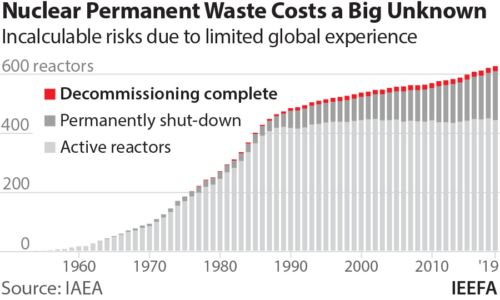
IEEFA: Nuclear power euphoria in Indonesia is all smoke and mirrors with no current technical, financial or market viability,
Renewables should be the focus of Indonesia’s net-zero pledge. (IEEFA Indonesia): In growing energy markets like Indonesia, decision makers are facing a barrage of pro-nuclear media coverage as the nuclear industry floods the market with panels and webinars focused on the potential of nuclear power.
A new report from the Institute for Energy Economics and Financial Analysis (IEEFA) highlights that while nuclear is promising as a baseload substitute for coal power, it currently has no technical, financial, or market viability in the Indonesian context. Author of IEEFA’s report Elrika Hamdi says that Indonesian nuclear power supporters often promise that nuclear will be an affordable, safe and sustainable solution for the problem of over-reliance on fossil fuel.
Yet, 70 years after the first nuclear power developments were announced, the technology is quickly losing market share as global power markets pivot toward more cost-competitive renewables and storage solutions.
“Despite the steady erosion of nuclear power’s competitive potential, key Southeast Asian energy ministries continue to be lobbied by nuclear advocates. Many of these lobbyists are international backers of new small modular reactor (SMR) technologies, who are actively engaging with governments and utilities around the region,” says Hamdi.

As old generation large-scale nuclear units face decommissioning, there is little consensus about how long it will take for newer small-scale nuclear technologies to be economically viable or how long-standing safety and waste disposal risks will be addressed.
“Determining the suitability of nuclear for the Indonesian power market will be a challenging task that will require honest and deep engagement by senior policymakers to ensure there is a high degree of accountability as Indonesians need to know the real cost of having nuclear in the power system as well as how the government will handle the problem of nuclear waste.”
Hamdi says that the short-list of nuclear power issues includes technology reliability, safety and safeguards, the geographic conditions of Southeast Asia, the prospects for decommissioning, waste treatment and permanent disposal, fuel availability, affordability, and the risk of persistent cost overruns and frequently overlooked shut-down costs.
Research has shown that an estimated 97% (175 out of 180 projects examined) of nuclear power projects exceed their initial budgets. The average cost overrun for a nuclear power plant was US$1.3 billion per project with construction delays adding 64% more time than initially projected.
Nuclear waste disposal costs also complicate the cost estimation process—typically raising project costs as political risk factors crystallize. The inability of leading nuclear nations to find safe and affordable solutions for permanent high-level nuclear waste disposal leaves expensive back-end cost issues on the table.
The economics of nuclear power in Indonesia is also blurred by the fact that under existing regulations, nuclear accident liabilities for nuclear owners/operators are capped at a maximum of IDR 4 trillion (US$276 million) for power plants with a capacity of more than 2000MWe. It is cut in half as the capacity decreases. This means smaller nuclear reactors would be liable for only a fraction of potential accident costs.
“These open-ended cost issues make it hard to evaluate claims about the market viability of nuclear power in Indonesia’s cost-sensitive market. This is particularly true when most established nuclear nations are pivoting away from commitments to new nuclear power facilities as more flexible renewable plus storage options reshape power sector economics,” says Hamdi.
“If a decision is reached to move ahead with pilot stage nuclear projects, policymakers and the government will need to do a lot of policy work including the technical evaluation, the regulatory preparation and the financial support, including preparation of the currently non-existent third-party liability insurance framework.
“This will place a serious burden on a government already taxed by the response to the COVID-19 pandemic and efforts to revitalize the financially constrained PT Perusahaan Listrik Negara (PLN), Indonesia’s national power company.”
PLN also recently pledged to become carbon neutral by 2060. However, the plan released shows nuclear only entering the energy mix in 2040. This demonstrates that PLN is realistic about the technical, financial, and market challenges that need to be overcome if nuclear power is to successfully integrate into Indonesia’s future energy mix.
Hamdi says that until these issues have been acknowledged and fully addressed, the safe path for Indonesia, for now, would be to pause and set realistic goals for its power development strategy.
This includes taking advantage of Indonesia’s abundance of renewable energy resources and market viability.
“Currently only 2.5% of Indonesia’s 400GW renewable energy potential has been utilized. That means that new technology options such as nuclear must compete with the deflationary cost curve in evidence with increasingly low-cost and low-risk renewable power solutions.
“New innovations to support grid flexibility such as demand response and storage are providing a cost-effective alternative to baseload-heavy planning disciplines. This trend raises questions about how small-scale nuclear reactors will fit into a more diverse power market where more cost-competitive renewable options could under-cut untested technologies that are years away from realizing economies of scale.
“The smaller, easily dispatchable, and walk-away safe promise of the new Gen-IV SMR technology offer is promising, IF and when the technology reaches commercial stage. But until such technology is proven to be technically and financially feasible, Indonesia’s safest option is to pause and set a more realistic net-zero scenario with resources and technologies that are already readily available with less cost, less risk, and less future liabilities.”
Read the report: Tackling Indonesia’s Nuclear Power Euphoria
Australia and other rich countries push gas dependence over wind and solar in global south — RenewEconomy

Australia and other rich countries are pushing gas projects over wind and solar in global south, but will likely end up as stranded assets. The post Australia and other rich countries push gas dependence over wind and solar in global south appeared first on RenewEconomy.
Australia and other rich countries push gas dependence over wind and solar in global south — RenewEconomy
Are Australia’s biggest states moving fast enough in transition to clean energy? — RenewEconomy

2020 was a strong year for renewables uptake in every Australian state and territory, but are some of the biggest states moving fast enough? The post Are Australia’s biggest states moving fast enough in transition to clean energy? appeared first on RenewEconomy.
Are Australia’s biggest states moving fast enough in transition to clean energy? — RenewEconomy
June 7 Energy News — geoharvey

Opinion: ¶ “Will Tesla’s $1 Billion Investment In Australian Minerals Inspire Australia To Start Refining Its Own Lithium With Renewables” • Recently, Tesla announced that it will spend $1 billion or more on Australian minerals, and Tesla’s Chair Robyn Denholm spoke about how her home country processes lithium. It doesn’t. That could be changed. [CleanTechnica] […]
June 7 Energy News — geoharvey
This week in nuclear news – Australia
Coronavirus – India records 100,636 new cases, tally hits 28,909,975
Climate crisis to shrink G7 economies twice as much as Covid-19, says research.
Chernobyl Guards Have Befriended Abandoned Dogs, Feeding Them and Bringing Medical Care, I00-Year-Old Galápagos Giant Tortoise Found on Fernandina Island is Indeed Member of ‘Extinct’ Species, (but this is a ”good news – bad news’‘ story)
On the nuclear scene, while not a lot is actually happening, in nuclear weapons countries, the determined nuclear weapons push continues, most politicians seem to have been well and truly bought by the industry.
With an eye to the November Climate Summit meeting in Glascow, the nuclear lobby revs up its push for small nuclear reactors, or indeed, any, nuclear reactors as the climate cure.
AUSTRALIA.
- Australia’s nuclear waste policy shambles. At Kimba, the National Radioactive Waste Management Faciity (NRWMF) insert themselves into community events.
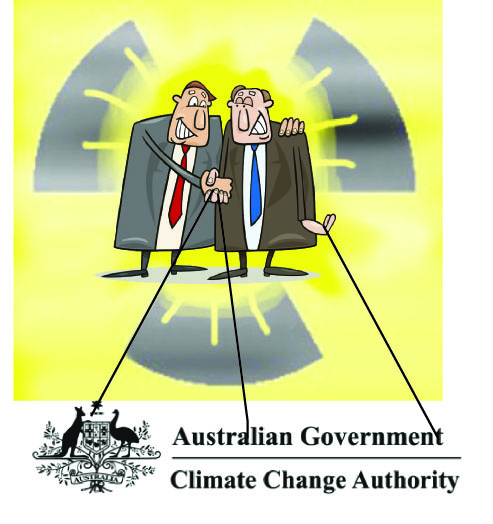
- Australia’s Climate Change Authority now taken over by the nuclear lobby, and influenced by ”secret society” of nuclear promoters. Australia’s pro nuclear lobby, via News Corpse, is revving up the propaganda, especially the ”climate cure” hoax.
- Small nuclear reactors for New South Wales ? – dirty, dangerous, and uneconomic. New South Wales Deputy Premier Barilaro in the grip of the nuclear lobby. New South Wales Productivity Commission slammed for recommending nuclear power while ignoring offshore wind.
- Mulga Rock Uranium Project – VIMY’S mine – unwanted and uneconomic
- Morrison government’s scandalous silence on the Japanese plan to release Fukushima nuclear waste water into the Pacific Ocean.
- The fake charity AMDA Foundation is exposed by Michael West Media’s Michelle Fahy. Independent and Peaceful Australia Network (IPAN) calls for a fossil-free future — not war.
- INTERNATIONAL.
The nuclear lobby’s desperate push to be included in COP26. Nuclear lobby spins its frenzied propaganda – with flimsy arguments for new nuclear power. Only renewables — and not nuclear power — can deliver truly low-carbon energy.
‘‘Fallout: The Hitoshima Cover-up and the Reporter Who Revealed It to the World”Ice sheets melting, ocean currents, and the risk of climate tipping points.
The Rio de Janeiro International Uranium Film Festival 2021 has awarded two film-makers on nuclear disarmament issues. - JAPAN. Fukushima waste water dumped in Pacific Ocean – a critical environmental issue threatening marine pollution.
Australia’s Climate Change Authority now taken over by the nuclear lobby, and influenced by ”secret society” of nuclear promoters.
Grant King flags “secret society” working to lift nuclear power ban, https://reneweconomy.com.au/grant-king-flags-secret-society-working-to-lift-nuclear-power-ban/ .
Michael Mazengarb 7 June 2021 The recently appointed chair of the Climate Change Authority, Grant King, has spoken of his support for nuclear power, and the presence of a ‘secret society’ preparing to lobby governments to lift the ban on nuclear power in Australia.
In a speech to the Minerals Council of Australia, one of his first since his appointment to the CCA was announced in April, King also indicated that he would advocate for clean energy technologies that are compatible with continued fossil fuel use, such as carbon capture and storage.
Everything that reduces emissions is good,” King told the conference. There is no good or bad reduction of emissions. If we are storing carbon safely, that is as good as reducing emissions in some other location, and you cannot get to net zero any other way than recognising that duality exists,” King said.
“There is an enormous amount of sunk capital in old technologies, and their ability to be adapted and evolved and to make a difference today is far greater than people estimate.
“But we like the shiny new stuff, because we think new stuff is better than old stuff, even if you’ve got to wait ten or 20 years for it to be competitive.”
Interestingly, King – a former CEO of Origin Energy – indicated he would use his new position at the CCA to reinvigorate the debate around nuclear power, saying that he believed the economics of small modular reactors could be feasible.
“If we want to get into a debate, it is important that we throw nuclear into the mix and say Australia is going to have to come to grips with that issue and is going to have to decide whether or not it lifts that regulatory prohibition and allows the innovation and investment that is now happening, particularly for modular reactor technology, to be applicable here in Australia,” King said.
“The story is good in terms of risks and the things that we as a generation grew up fearing, we were taught to get under the desk just in case, that is all going to go away.”
King said there was something akin to a “secret society” that had been working in the background to advocate for legislative reforms to lift the prohibition on nuclear power.
“The prohibition has to be lifted and there is a secret society of people out there trying to figure out what conversation needs to be had with the government to lift that prohibition.”
Nuclear energy projects are currently prohibited in Australia under the Environmental Protection and Biodiversity Conservation Act, and suggestions of any lifting of the ban have long been politically contentious, even if many in the Coalition, and some in Labor, support the ban’s removal.
Small modular reactors have been touted as a potentially lower cost and safer way of producing electricity from nuclear fuels, but have had no real-world deployments as a commercial technology.
US-based TerraPower, which has received financial backing from Bill Gates and Warren Buffet, is looking to deploy one of the next-generation nuclear reactors in the state of Wyoming. The project will replace a coal-fired generator and is expected to take at least seven years to get up and running.
As CEO of Origin Energy, King oversaw the company’s significant push into the LNG gas market, and was later the president of the Business Council of Australia.
King was also commissioned to undertake a review of the Morrison government’s Emissions Reduction Fund, recommending that the fund be opened up to providing support for carbon capture projects and to pay large-industrial firms to cut their emissions.
Two’s a crowd — Beyond Nuclear International

Two’s a crowd https://beyondnuclearinternational.org/2021/06/06/twos-a-crowd/
June 6, 2021 by beyondnuclearinternationa
Nuclear and renewables don’t mix
Two’s a crowd — Beyond Nuclear International Only renewables — and not nuclear power — can deliver truly low-carbon energy
Note: The third in the new Beyond Nuclear series of Talking Points, features the work of Benjamin Sovacool, Andy Stirling and colleagues, comparing the efficacy of carbon reductions using nuclear power or renewable energy. As this article reflects, they concluded that renewable energy is not only the better choice but that a ‘do everything’ strategy that includes nuclear power tends to cancel out renewable energy.
By Neil Vowles
If countries want to lower emissions as substantially, rapidly and cost-effectively as possible, they should prioritize support for renewables, rather than nuclear power.
That’s the finding of a new analysis of 123 countries over 25 years by the University of Sussex Business School and the ISM International School of Management which reveals that nuclear energy programs around the world tend not to deliver sufficient carbon emission reductions and so should not be considered an effective low carbon energy source.
Researchers found that unlike renewables, countries around the world with larger scale national nuclear attachments do not tend to show significantly lower carbon emissions — and in poorer countries nuclear programs actually tend to associate with relatively higher emissions.
Published in Nature Energy, the study reveals that nuclear and renewable energy programs do not tend to co-exist well together in national low-carbon energy systems but instead crowd each other out and limit effectiveness.
Published in Nature Energy, the study reveals that nuclear and renewable energy programs do not tend to co-exist well together in national low-carbon energy systems but instead crowd each other out and limit effectiveness.
These include the configuration of electricity transmission and distribution systems where a grid structure optimized for larger scale centralized power production such as conventional nuclear, will make it more challenging, time-consuming and costly to introduce small-scale distributed renewable power.
Similarly, finance markets, regulatory institutions and employment practices structured around large-scale, base-load, long-lead time construction projects for centralized thermal generating plants are not well designed to also facilitate a multiplicity of much smaller short-term distributed initiatives.
Andy Stirling, Professor of Science and Technology Policy at the University of Sussex Business School, said: “This paper exposes the irrationality of arguing for nuclear investment based on a ‘do everything’ argument. Our findings show not only that nuclear investments around the world tend on balance to be less effective than renewable investments at carbon emissions mitigation, but that tensions between these two strategies can further erode the effectiveness of averting climate disruption.”
The study found that in countries with a high GDP per capita, nuclear electricity production does associate with a small drop in CO2 emissions. But in comparative terms, this drop is smaller than that associated with investments in renewable energy.
And in countries with a low GDP per capita, nuclear electricity production clearly associates with CO2 emissions that tend to be higher.
Patrick Schmid, from the ISM International School of Management München, said: “While it is important to acknowledge the correlative nature of our data analysis, it is astonishing how clear and consistent the results are across different time frames and country sets. In certain large country samples the relationship between renewable electricity and CO2-emissions is up to seven times stronger than the corresponding relationship for nuclear.”
The above press release was released at the time of the report’s publication in Nature Energy on October 5, 2020. For more information, read and download Beyond Nuclear Talking Points #3: Does nuclear power effectively reduce carbon emissions?
Assange’s Father on US Tour, includes Minneapolis/St. Paul — Rise Up Times

“Assange’s family members will meet with activists, press, and policymakers to raise awareness of the importance of protecting whistleblowers and journalists, and to advocate for the release of Julian Assange, whom the United Nations has declared “arbitrarily detained” since 2010.”
Assange’s Father on US Tour, includes Minneapolis/St. Paul — Rise Up Times
June 6 Energy News — geoharvey

Opinion: ¶ “First Ride Of The Production Arcimoto Roadster And Fun Utility Vehicle” • Sofiaan Fraval: Arcimoto makes a Roadster and a similar Fun Utility Vehicle. I had a lot of fun on the FUV, but the moment I hopped onto the Roadster, I felt like I was on my motorcycle again. My short experience […]
June 6 Energy News — geoharvey
1 This month.

Australians deserve the truth
about
AUKUS – https://aukuspublicinquiry.com/



PETITION – To: Prime Minister Anthony Albanese and the Australian Labor Government

of the week – Australians for War Powers Reform (AWPR)
To see nuclear-related stories in greater depth and intensity
 Antinuclear