May 9 Energy News — geoharvey

Opinion: ¶ “California Energy Commission Proposal Makes Important Climate Progress, But Falls Short Of Widely Supported All-Electric Building Code” • The California Energy Commission released its official proposal for the 2022 California Energy Code, which, if finalized, will help advance the state toward pollution-free homes and buildings. [CleanTechnica] San Francisco (Timo Strohmann, Unsplash) ¶ “Oil, […]
May 9 Energy News — geoharvey
The nuclear menace from under the seas and from high in the sky- theme for May 21
Why would anyone persist in pushing Small Nuclear Reactors (SMRs) and pretending that they can solve climate change, when they clearly cannot?
Well, the answer is – if you’re a toxic macho nuclear zealot or a nuclear weapons corporation – ( Lockheed Martin, Raytheon Technologies, Northrop Grumman, Boeing, and General Dynamics etc)- this myth about SMRs is manna from heaven.
It means that the tax-payer, not private enterprise investors, will take over the SMR push – and the military-industrial-complex will race away with nuclear sites and weapons in space, and with powerful killer nuclear submarines.

Meanwhile those billionaire nuclear gurus – Elon Musk, Bill Gates, Jeff Bezos, , Richard Branson, Jack Ma and othes , will be laughing all the way to the bank, as they promote ”peaceful, nuclear-powered” space travel.
The global media promotes the joy and delight of space travel, rarely acknowledging its intimate connection with militarism. And there’s a crazy sort of national pride – hubris in being in the space race.
The space race to what? Apart from the obvious – nuclear war and annihilation, there’s the danger of ecosystem plutonium pollution from accidents and leaks, drastic accidents, and the gobbling up of public funds that might otherwise go to the public good – health, education, welfare, climate ation – heck – even good international relations!
The USA and Russia have long been in a toxic competition to militarily control the world especially by nuclear submarines. There’s a strange and unwarranted confidence that nuclerar submarines are ”clean” and somehow ”safe”. That’s because they release their radioactive trash unseen, into the world’s ocean waters. When they have an accident, well they just sink, and their poisonous mess is invisible. Dead nuclear submarines seem to be no trouble, hidden on the sea floor. Now that the world has become (a bit) aware of the radioactive danger of nuclear submarines, the dead ones lie in port, as nobody really knows what to do with them, how to clean up the nuclear mess.
In this time of pandemic, it is urgently necessary to put the brakes on NATO, and Russia – in regard to the increasing danger to the world, of nuclear submarines. Even more than cruise ships, they can be a hot-bed of coronavirus – making them even more unsafe in a number of ways.
Gun totin’ gay-marriage opposing, sports-rorting Senator Bridget McKenzie leads the National Party’s push on behalf of the nuclear lobby.

Sky News.6 May 21, Nationals Senator Bridget McKenzie, Nationals Senators earlier this year drafted legislation which would allow the Clean Energy Finance Corporation to invest in nuclear power. Ms McKenzie told Sky News host Alan Jones “we’re still waiting” for Energy Minister Angus Taylor to put the legislation through parliament and spark debate on the issue.

Bribing a declining rural community – into taking in nuclear waste

Goodwill’ money from proposed nuclear waste site pours into declining Ontario farm town. What if it stops?
Colin Butler · CBC News ·May 07, 2021 A citizens’ group is accusing Canada’s nuclear industry of using its financial might to groom a declining Ontario farm community into becoming a willing host for the country’s most dangerous radioactive waste.
In a pamphlet about the proposed disposal site that was published last year, the Ontario municipality of South Bruce —which encompasses the farming communities of Teeswater, Mildmay, Formosa and Salem — says it’s “on the decline.”
The pamphlet tells of a shrinking population, where rural towns and village “downtowns are fading from what they used to be,” with vacant store windows, big infrastructure bills and few prospects for new economic growth.
Protecting Our Waterways – No Nuclear Waste, a grassroots citizens’ group, accuses the Nuclear Waste Management Organization (NWMO) of taking advantage of the decline by spending millions of dollars on “goodwill” projects the community couldn’t afford on its own.
Bill Noll, a resident of Teeswater and the vice-president of Protecting Our Waterways, said the money has done a lot of good — it’s helped find small-town doctors, boosted senior care, upgraded wells, and even bought local firefighters lifesaving new safety equipment.
Money ‘divorced’ from project, group says
“Its strictly a goodwill gesture,” said Noll. “That money is not tied to anything to do with the project. It is completely divorced. Why would you spend one and a half million dollars on a community if you didn’t expect something back in return?”
The project Noll is referring to is a $23-billion nuclear disposal site where the NWMO wants to inter some three million spent nuclear fuel bundles in a sprawling network of tunnels and holes 500 metres below the ground.
South Bruce is one of two Ontario communities — the other is Ignace, about 2½ hours northwest of Thunder Bay — under consideration for what the NWMO is calling the “deep geological repository.” The NWMO says it’s working with local communities in selecting the site in 2023.
In the case of South Bruce, test drilling recently began north of the dairy town of Teeswater to see if the ancient bedrock is viable enough. But funds from the NWMO have been flowing in since 2012, when the local council volunteered to be considered as a host.
According to a March 2021 report from South Bruce Treasurer Kendra Reinhart, the community has received more than $3.2 million from the NWMO since 2012. It’s been used to pay for everything from St John Ambulance training, to offsetting extra costs of the pandemic, to the salaries of municipal employees.
The report didn’t include all the money, and noted several sources of NWMO funding were omitted. For instance, left out were requests for additional support, such as the $1.5 million the municipality is seeking from a $4-million NWMO-sponsored investment fund to help offset the cost of expanding a local sewage treatment plant.
Michelle Stein, another Teeswater resident and president of Protect Our Waterways, said the money has become so ubiquitous that on March 23, the same day the treasury report was presented to South Bruce council, NWMO appeared on the council agenda 121 times.
Mayor says community ‘foolish not to’ take money……
“Our community has really started to rely on the money from the NWMO,” said Stein.Stein and Noll said the more the municipality of South Bruce becomes intertwined financially with the NWMO, the harder it will be for the community to disentangle itself by saying no to the nuclear disposal site, lest it cut off the community’s newfound source of wealth…….
Australia’s states are forging ahead with ambitious emissions cuts. Imagine if they worked together — RenewEconomy

Ambitious new commitments of state governments go some way to filling the void left by the lack of a national climate policy. The post Australia’s states are forging ahead with ambitious emissions cuts. Imagine if they worked together appeared first on RenewEconomy.
Australia’s states are forging ahead with ambitious emissions cuts. Imagine if they worked together — RenewEconomy
Coalition hands gas subsidy to billionaire as UN calls for rapid methane cuts — RenewEconomy

Morrison government to gift more grants to the gas industry as a new UN report says cutting gas emissions key to limiting global warming. The post Coalition hands gas subsidy to billionaire as UN calls for rapid methane cuts appeared first on RenewEconomy.
Coalition hands gas subsidy to billionaire as UN calls for rapid methane cuts — RenewEconomy
Hydrogen’s “false promise” could hamper climate progress, lock in fossil fuels — RenewEconomy

Study warns universal reliance on hydrogen-based fuels could distract from main game of renewable electrification and lock in fossil fuel dependency. The post Hydrogen’s “false promise” could hamper climate progress, lock in fossil fuels appeared first on RenewEconomy.
Hydrogen’s “false promise” could hamper climate progress, lock in fossil fuels — RenewEconomy
Anti-Olympics campaign gains traction online in Japan — limitless life

Story by Reuters , Fri May 7, 2021 A “No Olympics” banner is placed by protesters in Tokyo during a demonstration against the going ahead of the Tokyo 2020 Olympic and Paralympic Games. (Reuters)An online petition calling for the Tokyo Olympics to be canceled has garnered almost 200,000 signatures in the past few days, as public […]
Anti-Olympics campaign gains traction online in Japan — limitless life
An online petition calling for the Tokyo Olympics to be canceled has garnered almost 200,000 signatures in the past few days, as public concerns mount over holding the Games in a pandemic.
With less than three months to go before the start of the summer Olympics, already postponed for a year due to the coronavirus, questions still remain over how Tokyo can hold the global event and keep volunteers, athletes, officials and the Japanese public safe from COVID-19.
In two days since its launch, an online campaign called “Stop Tokyo Olympics” has gathered more than 187,000 signatures, nearing its 200,000 goal and underscoring public concerns over holding the massive sporting event in Japan’s capital.
Battling a fourth wave of the pandemic and struggling with a sluggish vaccination campaign, the Japanese government is seeking to extend states of emergency in Tokyo and three other areas until the end of May, the economy minister said on Friday.Opinion polls in Japan have found a majority of the public is opposed to the Games, which are due to open on July 23.
“We strongly call for the prevention of spread of coronavirus and protection of lives and livelihood by using available resources to stop the Olympics,” Kenji Utsunomiya, the online petition organizer, wrote on his website. Utsunomiya is a lawyer who has run several times for Tokyo governor.
But, organizers have repeatedly said the Games will go ahead, unveiling detailed Covid-19 protocols for athletes and officials.Pfizer Inc (PFE.N) and its German partner BioNTech SE said on Thursday they had agreed to donate their vaccine to help inoculate those participating in the Games.
UK energy policy is still weighed down by the nuclear dream — Inside track

This post is by Jonathon Porritt, founder director of Forum for the Future. In March 2012, four former directors of Friends of the Earth (myself, Tom Burke, Charles Secrett and Tony Juniper) wrote to Prime Minister David Cameron to warn him that the pro-nuclear bias of his advisers across government posed a significant risk to the government’s ability to fashion a coherent energy policy………….
UK energy policy is still weighed down by the nuclear dream — Inside track
It’s depressing how much of the counter-briefing that we provided him with at that time would be as relevant for Boris Johnson today as it was, nine years ago, for David Cameron. That pro-nuclear bias ………
Using nuclear power still doesn’t make sense
It was this hopelessly inadequate articulation of future energy policy that persuaded me to revisit the case for nuclear power, to see if it makes any more sense now than it did back in March 2012. It doesn’t.
Indeed, many of the inherent problems about nuclear power (getting more and more expensive every year, ever greater construction delays, still no answers on nuclear waste, security problems, both physical and cyber, proliferation risks and so on) are more pronounced now than they’ve ever been.
This pro-nuclear bias is not just an historical aberration; it is arguably the principal reason why we haven’t a hope in hell of achieving the government’s new target of a 78 per cent reduction in emissions of greenhouse gases by 2035. The opportunity costs of keeping these nuclear dreams alive intensify every year, distracting us so damagingly from what we know we have to do: double down on renewables, bring energy efficiency right up the agenda of every sector of the economy, invest in storage and smart grid technologies, get serious about the 2030 target for banning the sale of petrol and diesel vehicles, and crack the heat conundrum by building the kind of supply chain that will ensure the installation not just of 600,000 heat pumps every year (the government’s target) but millions.
It’s all there: we can do this. But not if we’re still weighed down by today’s moribund nuclear industry. https://greenallianceblog.org.uk/2021/05/07/uk-energy-policy-is-still-weighed-down-by-the-nuclear-dream/lbourne netba
May 7 Energy News — geoharvey

Opinion: ¶ “Rooftop Solar Power Comes With Huge “Soft” Benefit Over Utility-Scale Power – Oodles Of Jobs!” • Any policymaker should love creating jobs, and as John Farrell pointed out, rooftop solar power creates nearly 30 times more jobs than utility-scale solar power for the same money. That could be hundreds of thousands of more […]
May 7 Energy News — geoharvey
Hunters Hill low level radioactive trash to be sent to USA
Are you turning green?‘: Neighbours’ relief as radioactive land to be shipped overseas, rioritised. https://www.smh.com.au/national/nsw/are-you-turning-green-neighbours-relief-as-radioactive-land-to-be-shipped-overseas-20210429-p57nk3.html. , 30 Apr 21,
April 30, 2021 — Up to 1800 tonnes of contaminated land affecting six waterfront properties in one of Sydney’s wealthiest suburbs will be sealed up and shipped to the US in a NSW government resolution that ends decades of anxiety over the harbourside blight.
After more than 100 years, pollution from a carbolic acid plant and a uranium refinery that led to the government’s acquisition of three Hunters Hill homes since the 1980s, and later prompted a parliamentary inquiry over health concerns, will be exported to Idaho over a meticulous, 18-month operation starting from July.
Following media reports that deaths and illnesses of former residents could possibly be attributed to contamination, a NSW parliamentary inquiry was set up in 2008 to determine the extent of radioactivity on the site, concluding it was difficult to establish any link between any reported cancer cases and the low doses of radiation.
However, it found there was a need to remediate the site, which included the government-owned foreshore.
In 2012, Property NSW attempted to have the material sent to a landfill in Kemps Creek, in western Sydney, but the proposal was abandoned after fierce backlash from the community.
A May 2019 proposal to encapsulate the contaminated material onsite in purpose-built cement “containment cells” was also rejected by residents as well as the local council………
Mr Stokes said the latest proposal had overwhelming support from the community and that he was pleased the stakeholders had finally reached an agreement.
“This safe and secure plan will mean these waterfront properties, which have laid dormant for decades, can now be used once the waste is safely moved away,” Mr Stokes said.
Member for Lane Cove and government minister Anthony Roberts, whose electorate serves the area, said the decision would be welcomed by residents after the waste “caused a lot of stress over the decades”.
Two of the three lots owned by the government are empty, while one contains an unused four-storey home with an indoor swimming pool that will have to be demolished. It is likely all lots will be sold on the private market once they are decontaminated.
According to a recent NSW government report on the remediation project, the fresh plan involves excavating the contaminated soil, sealing it in bags, loading them into shipping containers and transporting them to a secure facility in Matraville before shipping them overseas in scheduled consignments.
Property and Housing Minister Melinda Pavey said ANSTO would oversee the excavation and transport of the material and the safety of residents would be prioritised.
Nobel prize winner Beatrice Fihn urges Australia to join the Nuclear Weapons Ban Treaty, as public support for it grows
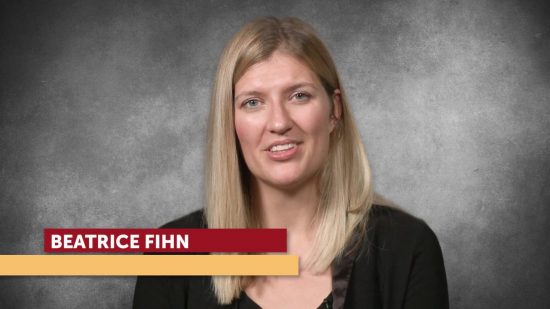
Australian government urged to heed public support for treaty banning nuclear weapons. Nobel prize-winning anti-nuclear campaigner Beatrice Fihn says ‘change is not only possible, it’s inevitable’ https://www.theguardian.com/australia-news/2021/may/06/australian-government-urged-to-heed-public-support-for-treaty-banning-nuclear-weaponsDaniel Hurst Foreign affairs and defence correspondent@danielhurstbne Thu 6 May 2021
The Australian government is being urged to rethink its opposition to a new international treaty banning nuclear weapons, with a leading campaigner warning of the “indiscriminate destructiveness” of such arms.
Beatrice Fihn, the head of the Nobel prize-winning International Campaign to Abolish Nuclear Weapons (Ican), will use a speech in Tasmania on Thursday to implore the government to heed strong public support for joining the treaty.
“Change is not only possible; it’s inevitable,” Fihn will say when she presents the annual Red Cross Oration at the University of Tasmania.
The Australian government has not joined the Treaty on the Prohibition of Nuclear Weapons, a relatively new agreement that requires parties not to develop, test, produce, acquire, possess, stockpile, use or threaten to use nuclear weapons.
So far, the treaty has been signed by 86 countries, of which 54 have formally ratified it – but it has been snubbed by the nuclear weapons states including the US, Russia and China.
“Australia does not support the Treaty on the Prohibition of Nuclear Weapons,” a spokesperson for the Department of Foreign Affairs and Trade said on Wednesday.
The Australian government argues the new treaty “would not eliminate a single nuclear weapon” because none of the nuclear weapons states have signed it and because it “ignores the realities of the global security environment”.
The government also says the treaty would be inconsistent with its US alliance obligations. However, campaigners point out that several US allies, such as New Zealand, Thailand and the Philippines, have already ratified the treaty.
Fihn, who is based in Geneva and will be addressing the University of Tasmania via video link, will call on the government to act on the “strong and growing support that exists in Australia for this crucial new piece of international law”.
According to prepared remarks provided to Guardian Australia in advance, she will describe the treaty as an “incredible step forward towards a world without nuclear weapons”.
Fihn will say the countries that have joined the treaty are “leading the way forward to a world without nuclear weapons”.
“Meanwhile, in countries that have not yet joined the treaty, including Australia, people are speaking up against nuclear weapons and calling on their countries to join,” she will say.
“Cities around the world, including Berlin, Paris and Washington DC are adopting resolutions calling on their governments to join. In fact, the very first city to sign our Cities Appeal was Melbourne, followed soon after by Sydney – and we’re delighted that the City of Hobart is also on board.”
Polling commissioned by Greenpeace in 2017 found 72.7% of 1,669 Australians surveyed said they supported a ban on nuclear weapons as a step towards the elimination of all nuclear weapons.
“From Australia to Canada, Germany, Japan and the United Kingdom, polls show that the majority of people want their government to join,” Fihn will say.
“Thousands of parliamentarians have pledged to work to bring their respective countries on board. In Australia, 88 of the current members of parliament have taken Ican’s pledge.”
The Ican pledge commits parliamentarians “to work for the signature and ratification of this landmark treaty by our respective countries”.
The federal MPs and senators who have signed up are mostly Labor politicians, including the opposition leader, Anthony Albanese, who has been campaigning against nuclear weapons since early in his political career.
The list also includes the Greens leader, Adam Bandt, and crossbenchers. The Liberal National party MP for Flynn in central Queensland, Ken O’Dowd, has also signed up.
In Thursday’s speech, Fihn will also emphasise the need to “amplify the voices of First Nations peoples in Australia and the Pacific who continue to suffer the horrendous impacts of nuclear tests carried out on their lands and in their waters by the United Kingdom, the United States and France”.
More than 75 years after the US bombing of the Japanese cities of Nagasaki and Hiroshima in 1945, she says, nuclear-armed states are spending billions of dollars each year to build new weapons and to keep the 13,000 existing weapons.
But Fihn says nuclear-armed states “do not prepare for what comes next, after the bombs are dropped”, citing reports that about 80% of hospitals were destroyed in Hiroshima. Out of 300 doctors in the city, 270 died or were injured; out of 1,780 nurses, 1,654 were killed or injured.
“They do not prepare for the hundreds of thousands of burn victims, for the blasted hospitals, for the injured and dying medical professionals left to heal an entire city,” Fihn says.
“The trauma of overwhelmed hospitals and overburdened doctors and nurses around the world who are struggling to meet the needs of patients during the Covid-19 pandemic shows just how impossible it would be for medical infrastructure to respond to even one nuclear weapon detonation.” The Australian government and other non-signatories are being encouraged to send officials to attend, as observers, the first meeting of parties in Vienna early next year.
Guardian Australia understands Australia will consider attendance closer to the event.
Boris tells Morrison – ”Ditch coal and go nuclear”
 |
Boris tells Morrison – ”Ditch coal and go nuclear” Daily Mercury , 5 May – (subscribers only)
British PM Boris Johnson hopes to see ‘positive’ moves from Australia on climate change
Stephen DrillNews Corp Australia NetworkThu, 6 May 2021 (Subscribers only) https://thewest.com.au/opinion/british-pm-boris-johnson-hopes-to-see-positive-moves-from-australia-on-climate-change-c-2769175
Angus Taylor, Energy Minister – incompetent and ignorant – SO – VOTE HIM OUT
campaign gathers momentum
Kazzi Jai No nuclear waste dump anywhere in South Australia, 4 May 21
maybe we should start a campaign…. for the Federal Election coming ….with t-shirts which say VOTE RAMSEY OUT!Idea taken from this Bulletin article! ·
CAMPAIGN TO OUST ANGUS TAYLOR GATHERS MOMENTUM
The successful campaign to remove former Liberal prime minister Tony Abbott from his Warringah seat during the 2019 Federal Election is being replicated in other electorates.
A 30-year-old pilot from Thirlmere in the Hume electorate’s north-eastern corner – who has avoided politics until now – is behind the grassroots independent movement to oust his Liberal member and the Minister for Energy, Angus Taylor.
Alex Murphy followed the Vote Tony Out campaign and wondered why there wasn’t similar action to remove Mr Taylor.He set about canvassing local voters in 2020 through the Voices of Hume group. He found others were unhappy with the MP’s energy, climate and emissions reduction policies and involvement in the GrassGate, WaterGate and Clover Moore controversies.
Within three months, the campaign has attracted 350 subscribers and gained momentum by selling T-shirts, face masks and tote bags through social media, emails and meetings.
Its first meeting in Wollondilly on 17 April attracted between 50 and 60 people. The next Vote Angus Out meeting is scheduled for 30 May in Goulburn.
Vote Angus Out campaigners are mostly farmers and retirees who disapprove of many of the MP’s decisions, including his support for fracking on farmland and lack of support for the dairy industry, increasing the age pension and encouraging Australian-based industry.
”He’s there to represent the gas and oil industries first and foremost,” Mr Murphy said.
Mr Murphy believes there is more support for Mr Taylor’s removal, assuming retirees only represent the campaign’s demographic because they have more time on their hands.He also bases subscriber numbers on social media follows and email opens. However, if retirees are the true campaign demographic, there would be many who don’t use social media or email.
“People are getting sick of the same old things happening, and a lot of retirees see it as a way to leave something for their children and grandchildren,” Mr Murphy said.
Mr Murphy said he’s confident Mr Taylor will be gone by the next federal election and is seeking advice from Vote Tony Out campaigners.
It makes our job a lot easier to have a politician who is so easily targeted. His inaction on climate change and emissions reduction, and the fact he’s been implicated in a number of scandals, make him an easy target,” he said.
Mr Taylor was also recently voted the most incompetent cabinet member in the Morrison Government in a poll conducted by The Australian Financial Review.
On the other hand, Mr Murphy recognises that the Hume electorate is a safe Liberal seat.It will be a challenge to convince people not to vote for him, but at the same time, it’s certainly going to be a lot easier for us to convince people not to vote for Angus than not to vote for a lot of other politicians,” he said.
That’s why the Vote Angus Out campaign is also focusing its efforts on finding a strong independent candidate.“The problem is, a lot of the big parties are just as bad at taking large donations from fossil fuel companies. We really want to put forward someone who isn’t going to be beholden to those big donors,” Mr Murphy said.
Similar campaigns are also on the hunt for independents to challenge the Liberal member for North Sydney, Trent Zimmerman, and the Liberal member for Bradfield, Paul Fletcher. Both seats neighbour Tony Abbott’s former seat of Warringah. The Riot ACT / Hannah Sparks
Anti-nuclear resistance in Russia: problems protests, reprisals
| Anti-nuclear resistance in Russia: problems protests, reprisals |

Standing up to Rosatom
https://beyondnuclearinternational.org/2020/06/21/standing-up-to-rosatom/ June 21, 2020 by beyondnuclearinternational
Anti-nuclear resistance in Russia: problems protests, reprisals
The following is a report from the Russian Social Ecological Union (RSEU)/ Friends of the Earth Russia, slightly edited for length. You can read the report in full here. It is a vitally important document exposing the discrimination and fear tactics used against anti-nuclear organizers in Russia and details their courageous acts of defiance in order to bring the truth of Russia’s nuclear sector to light.
Rosatom is a Russian state-owned corporation which builds and operates nuclear power plants in Russia and globally. The state-run nuclear industry in Russia has a long history of nuclear crises, including the Kyshtym disaster in 1957 and Chernobyl in 1986. Yet Rosatom plans to build dozens of nuclear reactors in Russia, to export its deadly nuclear technologies to other countries, and then to import their hazardous nuclear waste.
This report is a collection of events and details about the resistance to Russian state nuclear corporation, Rosatom, and other activities that have led to the pollution of the environment and violation of human rights. Social and environmental conflicts created by Rosatom have been left unresolved for years, while at the same time, environmental defenders who have raised these issues, have consistently experienced reprisals.
Nuclear energy: failures and LiesIn the autumn of 2017, the International Atomic Energy Agency (IAEA) discovered a concentration of the technogenic radionuclide ruthenium–106 in the atmosphere of several European countries. A number of experts linked the ruthenium release to the Mayak plant in the Chelyabinsk Region2 3, but Rosatom continues to deny this.
On the 8th of August 2019, an explosion occurred during a test of a liquid rocket launcher at a marine training ground in Nenoksa Village of Arkhangelsk Region. The administration of the city of Severodvinsk, 30 km from the scene, reported an increase in radiation levels, but later denied the claim. The Ministry of Emergency registered an increase of 20 times (to2 μSv/h) around Severodvinsk, while the Ministry of Defense reported the radiation level as normal. Only two days later, Rosatom reported that five employees were killed and three were injured at the test site. According to media reports, two employees of the Ministry of Defense were also killed and three were injured, and medical personnel who helped the victims were not informed about the risk of radiation exposure.
Expired reactorsMore than 70% of Russian nuclear reactors are outdated. They were developed in the 1970s and were designed to operate for only 30 years. The lifetimes of such reactors have been extended by twice the design limit. Rosatom’s strategy also includes a dangerous increase of the reactor’s thermal power. Rostekhnadzor (Federal Environmental, Industrial and Nuclear Supervision Service) grants licenses for lifetime extensions without an environmental impact assessment and without public consultations.
Especially worrying are the lifetime extensions of reactor-types with design flaws. Chernobyl–type (RBMK) reactors in Leningrad, Smolensk and Kursk regions are still in operation after exceeding their lifetimes, as well as VVER–types, such as at the Kola nuclear power plant (NPP) in Murmansk region. Neither type has a sufficient protective shell to contain radioactivity in case of an accident or to protect the reactor from an external impact or influence.
For many years, Murmansk regional environmental groups have opposed the aging Kola NPP reactor’s lifetime extension. They have participated in public hearings, have organised many demonstrations, and appealed to and received support from the prosecutor’s office, but this was all ignored by Rosatom.
Activists also called on the governor to shut down the old NPP, but environmental organisations were shut down instead. One such organisation is Kola Environmental Center (KEC) – listed as a Foreign Agent in 2017 – and subject to two trials and fined 150,000 rubles. KEC was forced to close down as a legal entity in 2018, but has continued its environmental work as a public movement.
Decommissioning problemsMost of the Russian nuclear power plants, despite their lifetime extensions, are approaching inevitable closure. Over the next 15 years, the NPP decommissioning process will take place. Currently, 36 power units are in operation at 11 NPPs in Russia, and 7 units have been shut down. While the fuel was removed from 5 of these units, the NPPs have not yet been decommissioned. This process will lead to enormous amounts of nuclear waste. Moreover, sufficient funds for the decommissioning process have not yet been earmarked.
The public organisation, Green World, has worked for many years in Sosnovy Bor, Leningrad Region, a city dominated by the nuclear industry and closed to outsiders. Since 1988, activists of the organisation have opposed dangerous nuclear projects in the Baltic Sea region and have provided the public with independent information on the environmental situation.
Green World has consistently called for the decommissioning of Leningrad NPP and took an early lead in collecting and preparing information on how decommissioning should take place, studying the experience of other countries. They have paid particular attention to information transparency and to wide participation in decision–making, including, for example, former employees of the nuclear industry.
Rather than be met with cooperation, the organisation and its activists have, since the beginning, experienced pressure from the authorities and the dirty nuclear industry. Activists faced dismissal, lawsuits and even attempts on their lives.In 2015, Green World was listed as a Foreign Agent and forced to close. In its place, another organisation was opened – the Public Council of the South Coast of the Gulf of Finland. Activists have continued their work as before under this new name.
Uranium mining protest
In the Kurgan region, Rosatom’s subsidiary company, Dalur, has been mining uranium and the local communities fear an environmental disaster. In the summer of 2019, the state environmental appraisal revealed a discrepancy between Dalur’s documentation and the Russian legislation requirements, but the company started the deposit’s development anyway at the end of 2019.
- The ‘Dobrovolnoe’ uranium deposit is located in a floodplain of the Tobol river basin. This means that all the water that flows into the river will pass through the aquifer, flushing out radioactive and toxic compounds into the surrounding environment.
- Since 2017, Kurgan activists have been protesting against the development of the deposit. They have appealed to the authorities and begun protests. One of their videos, ‘Uranium is Death for Kurgan’, has already reached 50,000 views. Several times, activists have tried to start a referendum and demand an independent environmental review, but so far, have received only refusals from the local officials.
- In February 2018, Natalia Shulyatieva, the spouse of activist Andrey Shulyatiev and mother of three children, died after falling into a coma. Activists believe this occurred in reaction to learning that Dalur had filed a lawsuit against her husband, accusing him of undermining the company’s reputation. The lawsuit was withdrawn following Shulyatieva’s death.
Rosatom Importing uranium waste
In the fall of 2019, environmentalists revealed that radioactive and toxic waste (uranium hexafluoride, UF6) were being imported from Germany through the port of Amsterdam into Russia. This is the waste from the uranium enrichment process which will be sent to the Urals or Siberia and stored in containers above the ground. Thus, under the auspices of a commercial transaction, the German uranium–enriching enterprise, Urenco, avoids its nuclear waste problem,
while Rosatom profits by taking the hazardous waste into Russia.In response to this transaction, the groups Russian Social–Ecological Union, Ecodefense and Greenpeace Russia called on Russian civil society to protest. More than 30 organisations and movements joined the common statement, and various demonstrations have taken place in Russia, as well as in Germany and the Netherlands.
As a result of protests, the question of importing radioactive waste was taken up by the Legislative Assembly of St. Petersburg and the transportation of the waste was delayed for three months.
However, in March 2020, when people in Russia were further restricted from protests during the COVID–19 virus quarantine, the import of radioactive waste was resumed through the port of the less populated town of Ust–Luga in Leningrad Region. Additional organisations and residents of the Leningrad region then decided to join the earlier anti–nuclear statement and protest.
Following these protests, a number of activists have faced persecution. Novouralsk is a nuclear industry–dominated and closed city of Sverdlovsk region, and is the end destination of the transported uranium hexafluoride. In response to a series of one–person protests, authorities initiated legal cases against three pensioners at the beginning of December 2019. Charges were later dismissed.
Another example is Rashid Alimov, an expert from Greenpeace Russia, who protested in the center of Saint Petersburg. Later the same day, two police officers together with six other people without uniform detained Alimov in front of his house. He then faced charges and a substantial fine. Charges were later dropped.
Environmental organisations that had previously opposed the import of uranium waste were listed as Foreign Agents. Ecodefense was the first of such, listed in 2014. In 2019, the pressure continued and the organisation’s leader, Alexandra Korolyova, was targeted. Five criminal cases were initiated against her, which forced her to leave the country.
The Mayak plant: Rosatom’s dirty face
The Mayak plant in the Chelyabinsk region is a nuclear waste reprocessing facility, arguably one of the places most negatively affected by the Russian nuclear industry. Firstly, radioactive waste was dumped into the Techa river from 1949 to 2004, which has been admitted by the company. According to subsequent reports by the local organisation For Nature however, the dumping has since been ongoing. As a result, 35 villages around the river were evacuated and destroyed. Secondly, the explosion at the plant in 1957, known as the Kyshtym tragedy, is among the 20th century’s worst nuclear accidents.
One of the first organisations that raised the problem of radiation pollution in the Ural region was the Movement for Nuclear Safety, formed in 1989. During its work, the Movement was engaged in raising awareness, social protection of the affected population, and publishing dozens of reports. After unprecedented pressure and persecution, the organisation’s leader, Natalia Mironova, was forced to emigrate to the United States in 2013. Since 2000, another non–governmental organisation, Planet of Hope, has held thousands of consultations with affected citizens. Nadezhda Kutepova, a lawyer and head of the organisation, won more than 70 cases in defence of Mayak victims, including two cases in the European Court of Human Rights. However, some important cases have still not been resolved. These include 2nd generation victims, cases involving pregnant women who were affected during liquidation, as well as the many schoolchildren of Tatarskaya Karabolka village who were sent to harvest the contaminated crop after the accident.
The state and Rosatom have reacted against the actions of Nadezhda Kutepova, persecuting both her and Planet of Hope. The organisation survived arbitrary inspections in 2004 and 2009, but was labelled a Foreign Agent in 2015 and closed in 2018. After being accused of ‘industrial espionage’ under the threat of criminal prosecution, Nadezhda was forced to flee the country with her children. She nevertheless continues her struggle to bring justice for the victims of Mayak.
Since 2002, the public foundation For Nature has been disputing nuclear activity in the region. The organisation appealed to the Supreme Court of the Russian Federation on the import of spent nuclear fuel from the Paks nuclear power plant in Hungary. The court declared the Governmental Decree to be invalid, thus preventing the import of 370 tons of Hungarian radioactive waste.
In March 2015, For Nature was also listed as a Foreign Agent and fined. In 2016, the court shut down the organisation. In its place, a social movement of the same name was formed, and continues to help the South Ural communities.
Struggle against a nuclear repositoryIn the city of Krasnoyarsk, Rosatom plans to build a national repository for high–level radioactive waste. A site has been selected on the banks of Siberia’s largest river, the Yenisei, only 40 km from the city. Environmental activists consider this project, if implemented, to be a crime against future generations and violates numerous Russian laws. Activists are also concerned that waste from Ukraine, Hungary, Bulgaria (and in the future from Belarus, Turkey, Bangladesh, and other countries) could be transported there as well.
The community is understandably outraged, as no one wants to live in the world’s nuclear dump. Since 2013, for more than 7 years, the people of Krasnoyarsk have been protesting. To date, more than 146,000 people have signed the petition to the President of the Russian Federation protesting against the construction of this federal nuclear repository.
Most of the producing nuclear power plants are located in the European part of Russia, but the waste is going to be sent for ‘the rest of its lifetime’ to Siberia. Local activists refer to this, with good reason, as Rosatom’s “nuclear colonisation” of Siberia.
In 2016, Fedor Maryasov, an independent journalist and leader of the protest, was accused of inciting hatred against ‘nuclear industry workers’ as a social group. A criminal case was initiated under the article on extremism. The basis for this accusation was 125 publications on social networks and the press about nuclear topics. The activist’s apartment was searched and his computer seized, along with a printed report on Rosatom’s activities in the Krasnoyarsk region.
The federal security service also issued Maryasov an official warning for treason. Only wide publicity in the media and the active support of human rights lawyers has thus far prevented further criminal prosecution of the activist.
Conclusion:
Nuclear power is a problem, not a solution.
Despite the nightmare described above, Rosatom is trying to convince us of the nuclear industry’s purity and purported carbon neutrality. In addition, Rosatom is building nuclear plants abroad using money from the Russian Federation’s budget. Nuclear not only won’t save our climate, but will continue to create even more insoluble problems of radioactive waste for thousands of years.
We demand that:
Russia must abandon all further development of nuclear energy.
Current nuclear power plants should be closed and decommissioned as soon as possible.Current funds from the development of nuclear energy should be redirected to the development of local renewable energy sources, to the restoration of contaminated territories and as support for those affected by the activities of the nuclear industry.
The problem of nuclear waste should be discussed widely, openly and inclusively, with the participation of all interested parties, and decisions should be made democratically, taking into account the principles of environmental justice.
Pressure on all activists, including environmental defenders and defenders of victims’ rights, should cease immediately.
And finally, Rosatom should be held responsible for environmental pollution and violation of human rights.
The Russian Social Ecological Union (RSEU)/ Friends of the Earth Russia is a non-governmental, non-profit and member based democratic organization, established in 1992. RSEU brings together environmental organizations and activists from across Russia. All RSEU activities are aimed at nature conservation, protection of health and the well-being of people in Russia and around the world. In 2014, RSEU became the Russian member of Friends of the Earth International. Read the full report.
1 This month.

Australians deserve the truth
about
AUKUS – https://aukuspublicinquiry.com/



PETITION – To: Prime Minister Anthony Albanese and the Australian Labor Government

of the week – Australians for War Powers Reform (AWPR)
To see nuclear-related stories in greater depth and intensity
 Antinuclear