Safety problems in trnsporting nuclear waste nearly 2000 km fromLucas Heights to Kimba, South Australia?
Paul Waldon Fight to Stop a Nuclear Waste Dump in South Australia, 20 Apr 21,
A nuclear waste convoy evading every city, town or metropoulos en-route to a radioactive dump requires more skill than a drunk drive home during a police blitz. We know Kimba, the proposed site of the radioactive dump is 1700 kilometers west of ANSTO, Lucas Heights but how many kilometers would they require to bypass, divert or maintain a safe distance from every populated center. Can it be done???”Every Kilometer Increment is a Increment of Risk.” https://www.facebook.com/groups/344452605899556
USA’s Defense Secretary Lloyd Austin – a ”soldier’s soldier” and a useful purchaser for Raytheon’s military merchandise
Austin’s personal history and connection to the military and Raytheon mark him as a fitting Pentagon chief in an era of destructive militarism and creeping fascism in the U.S.
When civilians no longer control the key institutions of government and war industries ensure the perpetuation of endless wars from which they make obscene profits, the political system can no longer be defined as a democracy.

Defense Secretary Lloyd Austin—Former Member of Raytheon Board of Directors—Has Awarded Over $2.36 Billion in Contracts to Raytheon Since His Confirmation in January, Covert Action Magazine By Jeremy Kuzmarov – April 19, 2021 he Pentagon has awarded the defense giant Raytheon Technologies over $2.36 billion in government contracts since Secretary of Defense Lloyd Austin III’s confirmation on January 22nd.
Austin was on Raytheon’s board of directors prior to his confirmation.
Austin at the time had made a commitment to resign from Raytheon’s board and recuse himself from all matters concerning Raytheon for four years and agreed to divest from his financial holdings in the company, amounting to between $500,000 and $1.7 million in stock.
These initiatives, however, have not prevented Austin from using his position to bolster Raytheon’s fortunes. Nor those of other defense contractors on whose board he has sat such as Booz Allen Hamilton, the world’s “most profitable spy organization,” according to Bloomberg News, and Pine Island Capital, a private equity firm that invests in military industry.[1]
At Austin’s nomination hearing, Senator Elizabeth Warren (D-MA) questioned him about his ties to Raytheon—whose headquarters are based in Warren’s home district (Waltham, Massachusetts).
A year earlier, Warren had proposed legal changes to strengthen ethics at the Defense Department by blocking the revolving door between the Pentagon and giant defense contractors like Raytheon, including by prohibiting big defense contractors from hiring former Pentagon officials for four years after they leave government.
Warren paradoxically voted to confirm Austin’s appointment as Defense Secretary—even though he embodies the danger of the revolving door.
Mark Pocan (D-WI), who with Barbara Lee wrote a letter in November 2020 to President-elect Joe Biden requesting that he nominate a Secretary of Defense with no previous ties to weapons manufacturers, stated that “American national security should not be defined by the bottom lines of Boeing, General Dynamics and Raytheon.”
With men like Austin at the helm, however, it is very clearly being defined in this way…………….
Phyllis Bennis of the Institute for Policy Studies, a left-wing think-tank, told The Intercept that since “Raytheon manufactures the bomb components that are used in Yemen, [General Austin] bears a direct responsibility [for war crimes and civilian deaths]. He was making money as a board member of this company that is directly responsible for the death and destruction there.”
William Hartung, the director of the arms and security project for the Center for International Policy, said that “picking Austin was tantamount to making the position of Secretary of Defense the Secretary of Defense contractors.”
Raytheon’s 2021 Pentagon Contracts
Fitting with Hartung’s assessment, Raytheon has benefitted from multi-million-dollar government contracts on a near-daily basis since Austin has taken charge at the Pentagon.
On February 1st, the company secured a whopping $290,704,534 government contract to produce equipment for depot maintenance facilities and services in support of the F-35 Lightning II, which military analyst Pierre Sprey characterized as “overweight and dangerous.”……………….
Promoting More War
Though Austin claims to have recused himself from decisions involving Raytheon, the Pentagon under his direction is providing his old company with huge contracts on a daily basis that is bolstering its profits and stock price.
Austin furthermore has used his new bully pulpit to advocate for yet greater levels of military spending—to the benefit of Raytheon.
On February 25th, for example, on a visit to the U.S.S. Nimitz, Austin emphasized the need for U.S. warships throughout the globe to deter security threats—from China to Iran. A week later on a tour of Southeast Asia with Secretary of State Antony Blinken, Austin warned about China again and the North Korean nuclear threat and pledged that the U.S. would maintain a robust military presence in the Indo-Pacific.
He further cautioned North Korea that the United States, following military exercises with South Korea, was “ready to fight tonight.”
When fighting resumed in Eastern Ukraine in early April, Austin assured Ukraine’s Defense Minister Andrii Taran of the “U.S. commitment to building the capacity of Ukraine’s forces to defend more effectively against [supposed] Russian aggression”–which was demonstrated by a recent $125 million military aid package–and took to Twitter to reaffirm the U.S.’s “unwavering support for Ukraine’s sovereignty, territorial integrity, and Euro-Atlantic aspirations.”
…………A Soldier’s Soldier
Besides his connection to Raytheon, Austin’s appointment as Pentagon chief was controversial because he had not been retired from the military for the requisite seven years and required a legal waiver.
Traditionally, the role of Defense Secretary is supposed to be a civilian position, ensuring the U.S.’s military apparatus is led not by a warfighter, but a policymaker. That requirement is laid out in the National Security Act of 1947 that established the Defense Department.
Heralded as a “soldier’s soldier” who would endure hardships with his troops, the 6’4” tall Austin graduated from West Point in 1975, and led infantry troops in the capture of Baghdad during the 2003 Operation Iraqi Freedom.
After a stint commanding the 10th Mountain Division in Afghanistan, Austin was appointed as chief of staff of the U.S. Central Command at McDill Air Force Base in Tampa, Florida, a high-tech command post where military officers could watch live imagery on plasma screens and order air-strikes through the Pentagon’s secure internet server.
Groomed for high military command by Admiral Mike Mullen, Chairman of the Joint Chiefs of Staff from 2007 to 2011, Austin was appointed as Commanding General of U.S. forces in Iraq in 2010, and Commander of the U.S. Central Command (CENTCOM), which is responsible for all military operations in the Middle East, by President Obama in 2013.
In this latter capacity, Austin drafted a war plan—approved by Obama—that allowed the U.S. military for the first time to directly provide ammunition and weapons to Syrian opposition forces, who included Islamic jihadists.
President Obama also endorsed General Austin’s idea to increase the air campaign on Islamic State of Iraq and the Levant (ISIS) from Incirlik Air Base in Turkey. The result was an increase in civilian deaths. Journalists Anand Gopal and Azmat Khat determined that one in five of the 27,500 coalition air strikes in the 2nd Iraq War resulted in at least one civilian death, more than 31 times the number that was publicly acknowledged
Austin’s personal history and connection to the military and Raytheon mark him as a fitting Pentagon chief in an era of destructive militarism and creeping fascism in the U.S.
When civilians no longer control the key institutions of government and war industries ensure the perpetuation of endless wars from which they make obscene profits, the political system can no longer be defined as a democracy. https://covertactionmagazine.com/2021/04/19/defense-secretary-lloyd-austin-former-member-of-raytheon-board-of-directors-has-awarded-over-2-36-billion-in-contracts-to-raytheon-since-his-confirmation-in-january/
Japan’s pivot to renewables will kick Australian exports right in the thermals — RenewEconomy

Japan accounts for about one third of Australia’s thermal coal and LNG exports, so if it goes green then Australia better have a plan. The post Japan’s pivot to renewables will kick Australian exports right in the thermals appeared first on RenewEconomy.
Japan’s pivot to renewables will kick Australian exports right in the thermals — RenewEconomy
NSW coal region councils join forces for huge renewable energy mandate — RenewEconomy

As the state by-election for Upper Hunter focuses on coal, seven local councils and Hunter Water join forces for huge renewable energy order. The post NSW coal region councils join forces for huge renewable energy mandate appeared first on RenewEconomy.
NSW coal region councils join forces for huge renewable energy mandate — RenewEconomy
Australian miners in $4 billion lithium play to create world’s 5th biggest supplier — RenewEconomy

The $4 billion merger of Orocobre and Galaxy would create the fifth largest pure-play lithium chemicals company in the world. The post Australian miners in $4 billion lithium play to create world’s 5th biggest supplier appeared first on RenewEconomy.
Australian miners in $4 billion lithium play to create world’s 5th biggest supplier — RenewEconomy
How weapons maker Raytheon determines U.S. foreign policy decisions
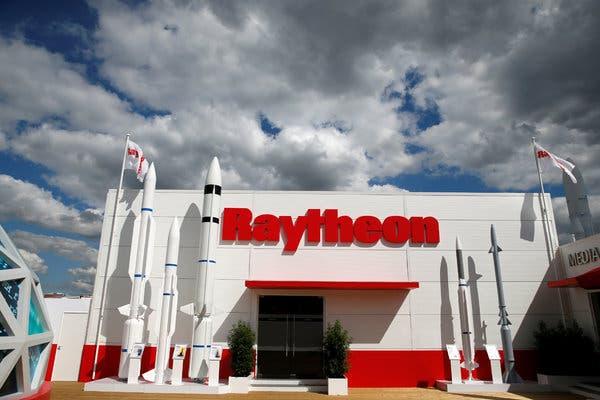
Defense Secretary Lloyd Austin—Former Member of Raytheon Board of Directors—Has Awarded Over $2.36 Billion in Contracts to Raytheon Since His Confirmation in January, Covert Action Magazine By Jeremy Kuzmarov – April 19, 2021
”…………… One of the Raytheon company founders, Vannevar Bush, became president of the Massachusetts Institute of Technology (MIT) and chairman of the U.S. Office of Scientific Research and Development (OSRD) during World War II, which initiated the Manhattan Project that led to the development of the atomic bomb.
In 2003, Raytheon put out a press release bragging that half of all air-to-ground precision guided missiles (PGMs) used by coalition forces in Operation Iraqi Freedom were made by Raytheon.
…………….On February 25th, for example, on a visit to the U.S.S. Nimitz, Austin emphasized the need for U.S. warships throughout the globe to deter security threats—from China to Iran. A week later on a tour of Southeast Asia with Secretary of State Antony Blinken, Austin warned about China again and the North Korean nuclear threat and pledged that the U.S. would maintain a robust military presence in the Indo-Pacific.
He further cautioned North Korea that the United States, following military exercises with South Korea, was “ready to fight tonight.”
When fighting resumed in Eastern Ukraine in early April, Austin assured Ukraine’s Defense Minister Andrii Taran of the “U.S. commitment to building the capacity of Ukraine’s forces to defend more effectively against [supposed] Russian aggression”–which was demonstrated by a recent $125 million military aid package–and took to Twitter to reaffirm the U.S.’s “unwavering support for Ukraine’s sovereignty, territorial integrity, and Euro-Atlantic aspirations.”
The latter implied the joining of the European Union (EU) and North Atlantic Treaty Organization (NATO), which would inevitably escalate conflict between the world’s two major nuclear-armed powers (the U.S. and Russia).
On April 13th, Austin announced that the United States would increase its military presence in Germany by about 500 personnel and was scuttling plans introduced by President Donald Trump for a large troop reduction in Europe.
Austin meanwhile in Tel Aviv affirmed the U.S. “ironclad commitment” to Israel, which receives a record $3.8 billion in U.S. military aid each year, and on a visit to Afghanistan stated that the Biden administration wanted to see a “responsible end” to the Afghan war, but that the “level of violence must decrease” for “fruitful diplomacy” to have a chance.
These comments and many others were music to the ears of Raytheon, which gave $506,424 in donations to Biden’s presidential campaign.
…………….Raytheon was also the first major defense contractor to sell weapons to Saudi Arabia, selling the kingdom over 1,000 cluster bombs designed to maximize civilian casualties between 1970 and 1995. The company further hired members of the Saudi Royal Family as consultants, and opened a branch in Riyadh in 2017.
After the Yemen war began in 2015, Raytheon, according to an analysis by The New York Times, booked more than $3 billion in new bomb sales to the Saudis, causing its stock prices to increase from about $108 to more than $180 per share.
In 2019, Raytheon sold an estimated $8 billion in weapons to Saudi Arabia and the United Arab Emirates, which are centrally involved in the war in Yemen.

After an October 2016 Saudi airstrike on a funeral home in Sana’a that killed 140 people and wounded 500 more, human rights workers discovered a bomb shard bearing the identification number of Raytheon.[2] It was one of at least 12 attacks on civilians that human rights groups tied to Raytheon’s ordnance during the first two years of the war.
In order to secure the lucrative Saudi deals, Raytheon took advantage of federal loopholes by sending former State Department officials to lobby their former colleagues, and later benefitted by having their former top lobbyist, Mark Esper, appointed as Defense Secretary in June 2019 in a precursor to General Austin’s hiring.………..
Defense Secretary Lloyd Austin—Former Member of Raytheon Board of Directors—Has Awarded Over $2.36 Billion in Contracts to Raytheon Since His Confirmation in January
Australian-Chinese company Greenland Minerals to be thwarted in its bid for uranium and rare earth mining in Greenland.

Telegraph 17th April 2021, Overlooking the small fishing town of Narsaq, next to painted houses and slow-moving icebergs, lies one the last great untapped deposits of rare earth materials. About a quarter of the world’s rare earth minerals are thought to be found here, deep in the southern fjords of Greenland, providing key ingredients needed to build everything from wind turbines or electric vehicles. These deposits are crucial to Britain’s dream of developing the technologies required to become a green economy while reducing our rare-earth reliance on China.
But one man could be about to scupper the UK’s plans. Múte Bourup Egede, the 34-year-old leader of the Left-wing Inuit Ataqatigiit party, won a snap election in Greenland lastweek. At the heart of his election campaign was a pledge to halt the Kvanefjeld project by Greenland Minerals, an Australian company with Chinese ownership.
But for Greenlanders, strategic relevance was eclipsed by concerns surrounding the mine’s uranium contents. The territory’s anxieties around radioactive materials can be traced back to the 1968 Thule plane crash, when a US plane carrying nuclear bombs crashed into the sea ice in Greenland’s north. Even though the nuclear material did not
detonate, as part of clean up efforts the US Air Force collected 1.6m gallons of contaminated snow.
https://www.telegraph.co.uk/technology/2021/04/17/battle-rare-earth-minerals-turns-radioactive/
Morrison’s $1 bln energy deal with South Australia points to futility of gas recovery — RenewEconomy

Morrison’s latest energy deal will deliver gas that South AUstralia doesn’t need any more, but could hasten shift to renewables in that state. The post Morrison’s $1 bln energy deal with South Australia points to futility of gas recovery appeared first on RenewEconomy.
Morrison’s $1 bln energy deal with South Australia points to futility of gas recovery — RenewEconomy
U.N. experts concerned at Japan’s decision to dump Fukushima nuclear waste-water into the Paific.
UN Experts Decry Japan’s Plan to Dump Radioactive Fukushima Wastewater Into Ocean, https://www.commondreams.org/news/2021/04/16/un-experts-decry-japans-plan-dump-radioactive-fukushima-wastewater-ocean?utm_campaign=shareaholic&utm_medium=Social&utm_source=facebook&fbclid=IwAR2W9TNN5pZWTgQjFhnnd_99e_F3cH4y7uPJggM1row-iqAzbRtoZvj2tvM
The decision is particularly disappointing as experts believe alternative solutions to the problem are available,” said the three special rapporteurs.by Brett Wilkins, staff writer 18 Apr 21, A trio of United Nations experts on Thursday added their voices to the chorus of concern over the Japanese government’s decision to dump hundreds of millions of gallons of radioactive wastewater from the Fukushima Daiichi Nuclear Power Plant into the Pacific Ocean, saying the move threatens not only the environment but also the human rights of people in and beyond Japan.
Japanese officials announced earlier this week that 1.25 million tonnes of treated radioactive water from the deactivated nuclear plant—which in March 2011 suffered major damage from a magnitude 9.0 earthquake and subsequent tsunami—would be discharged into the sea starting in about two years. Prime Minister Suga Yoshihide called the planned release “a realistic solution.”
However, anti-nuclear campaigners joined Japan’s neighbors China and South Korea in condemning the decision, with Greenpeace saying that it “completely disregards the human rights and interests of the people in Fukushima, wider Japan, and the Asia-Pacific region.”
Marcos Orellana, Michael Fakhri, and David Boyd—respectively the U.N.’s special rapporteurs on toxics and human rights, the right to food, and human rights and the environment—weighed in on the issue Thursday with a joint statement calling Tokyo’s decision “very concerning.”
“The release of one million tonnes of contaminated water into the marine environment imposes considerable risks to the full enjoyment of human rights of concerned populations in and beyond the borders of Japan,” they said, adding that “the decision is particularly disappointing as experts believe alternative solutions to the problem are available.”
Critics say other options for disposing of the the water, including evaporating and then releasing it into the air, were not fully considered, although nuclear experts stress that evaporation would not isolate radioactivity.
Japanese officials claim that levels of radioactive tritium are low enough to pose no threat to human health. However, scientists and other experts warn that the isotope bonds with other molecules in water and can make their way up the food chain to humans.
Cindy Folkers, radiation and health hazards specialist at the advocacy group Beyond Nuclear, said in a statement Wednesday that Fukushima Daiichi operator Tokyo Electric Power Company (TEPCO) “wants us to believe that the radioactive contamination in this water will be diluted in the ocean waters, but some of the radioactive isotopes will concentrate up the food chain in ocean life.”
“Some of the contamination may not travel out to sea and can double back on itself,” said Folkers. “Dilution doesn’t work for radioactive isotopes, particularly tritium, which research shows can travel upstream.”
“TEPCO data show that even twice-through filtration leaves the water 13.7 times more concentrated with hazardous tritium—radioactive hydrogen—than Japan’s allowable standard for ocean dumping, and about one million times higher than the concentration of natural tritium in Earth’s surface waters,” she added.
Japanese officials did reverse one highly controversial policy related to the wastewater dump this week. Amid intense public backlash, the government hastily retired Little Mr. Tritium, an animated radioactive mascot meant to promote and popularize the discharge.

“Some of the contamination may not travel out to sea and can double back on itself,” said Folkers. “Dilution doesn’t work for radioactive isotopes, particularly tritium, which research shows can travel upstream.”
“TEPCO data show that even twice-through filtration leaves the water 13.7 times more concentrated with hazardous tritium—radioactive hydrogen—than Japan’s allowable standard for ocean dumping, and about one million times higher than the concentration of natural tritium in Earth’s surface waters,” she added.
Japanese officials did reverse one highly controversial policy related to the wastewater dump this week. Amid intense public backlash, the government hastily retired Little Mr. Tritium, an animated radioactive mascot meant to promote and popularize the discharge.
“It seems the government’s desire to release the water into the sea takes priority over everything,” Katsuo Watanabe, an 82-year-old fisher from Fukushima, told Kyodo News. “We fisherman can’t understand it.”
South Korea raises with USA its worries about Fukushima water to be dumped into the Pacific Ocean
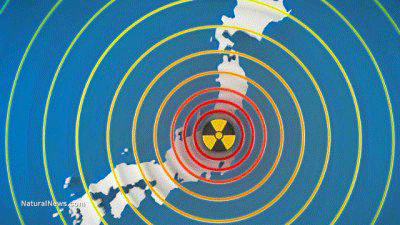
South Korea raises Fukushima concerns with U.S,
Yahoo News, April 18, 2021 As U.S. climate envoy John Kerry appeared in Seoul over the weekend to discuss global warming,
South Korea’s foreign ministry says it raised concerns to him over Japan’s plans to dump contaminated water from its defunct Fukushima nuclear plant into the sea…….
Under the plan, more than 1 million tonnes of water will be discharged from the plant, the site of the world’s worst nuclear disaster since Chernobyl.
Seoul has strongly rebuked the decision……
Kerry’s visit to Seoul precedes U.S. President Joe Biden’s virtual summit with world leaders on climate change, set for two days starting April 22. https://news.yahoo.com/south-korea-raises-fukushima-concerns-080908571.html
US backs Japan’s Fukushima plans despite S Korea’s concerns
US backs Japan’s Fukushima plans despite S Korea’s concerns
Seoul fails to gain US support against Japan’s decision to release contaminated water from Fukushima nuclear plant. Aljazeera, 18 Apr 2021
US climate envoy John Kerry has reaffirmed Washington’s confidence in Japan’s decision to release contaminated water from its crippled Fukushima nuclear plant into the sea despite concerns raised by South Korea.
Kerry arrived in Seoul on Saturday to discuss international efforts to tackle global warming, on a trip that included a stop in China ahead of President Joe Biden’s virtual summit with world leaders on climate change this month.
South Korean Foreign Minister Chung Eui-yong sought to rally support behind the country’s protest against the Fukushima plan at a dinner meeting with Kerry.
Under the plan, more than one million tonnes of water will be discharged from the plant wrecked by an earthquake and tsunami in 2011 into the nearby sea off Japan’s east coast.
Seoul strongly rebuked the decision, with the foreign ministry summoning the Japanese ambassador and President Moon Jae-in ordering officials to explore petitioning an international court.
“Minister Chung conveyed our government and people’s serious concerns about Japan’s decision, and asked the US side to take interest and cooperate so that Japan will provide information in a more transparent and speedy manner,” the ministry said in a statement.
But Kerry, at a media roundtable on Sunday, said Tokyo had made the decision in a transparent manner and will continue following due procedures.
“The US is confident that the government of Japan is in very full consultations with the IAEA,” he said, referring to the International Atomic Energy Agency…….. The former US secretary of state added that Washington would closely monitor Japan’s implementation “like every country, to make certain there is no public health threat”…….. https://www.aljazeera.com/news/2021/4/18/s-korea-us-show-differences-over-japans-fukushima-plans
April 18 Energy News — geoharvey

Opinion: ¶ “Rolling Back The Rollbacks: Putting Cars And Trucks Back On Track To Meet Climate Goals” • As the White House gets ready to release new climate targets, the Union Of Concerned Scientists calls for cutting GHG emissions at least a 50% by 2030, compared to 2005. Passenger cars and trucks, the biggest emissions […]
April 18 Energy News — geoharvey
Necessary trouble — Beyond Nuclear International

Freed priest will continue to stand between flock and nuclear danger
Necessary trouble — Beyond Nuclear International
Australian Strategic Policy Institute sees nuclear submarines as a step towards the full nuclear chain
Nuclear submarines could lead to nuclear power for Australia, The Strategist 15 Apr 21‘‘………..Submarines could lead to a broad nuclear industry in Australia. This possibility will be the subject of a seminar to be held at ASPI on Thursday 15 July, jointly hosted by the Submarine Institute of Australia and UNSW Canberra. More information is available here….””
https://www.aspistrategist.org.au/nuclear-submarines-could-lead-to-nuclear-power-for-australia/
LEAK: EU to table ‘climate taxonomy’, leaving gas and nuclear for later
LEAK: EU to table ‘climate taxonomy’, leaving gas and nuclear for later, By Frédéric Simon | EURACTIV.com with Reuters 16 Apr 21. The European Commission plans to delay a decision on whether to label nuclear and natural gas power plants as a sustainable investment under green finance rules due to be published next week, according to a leaked document seen by EURACTIV.
The EU executive is due to publish on 21 April the first section of its “sustainable finance taxonomy,” a long list of economic activities plus the specific rules they must meet to be labelled as green investments in the EU.
The rules, spelled out in a “Taxonomy Climate Delegated Act”, set out detailed green finance criteria for undisputed low-carbon technologies like renewables but leaves out gas and nuclear power for a separate decision to be take at a later stage by EU member states and the European Parliament.
Gas and nuclear have proven the most contentious issues in the debate on green finance, with countries in eastern and southern Europe threatening to veto an earlier draft because it did not label gas as “green” or “transition” investments.
France, meanwhile, said it would fight to make nuclear recognised as a green technology under the EU’s sustainable finance rules. “This is a real political fight,” said French economy minister Bruno Le Maire who stressed “the determination of France” to get a green investment label for nuclear power under the taxonomy.
Two-step approach
By putting forward a separate proposal for gas, nuclear and other “transition” activities later this year, the Commission is effectively throwing the hot potato to EU member states and the European Parliament, acting as co-legislators.
“The Commission intends to put forward a separate legislative proposal in Q4 2021, specifically covering how certain economic activities, primarily in the energy sector, contribute to decarbonisation,” says a draft Commission proposal obtained by EURACTIV.
According to the EU executive, “this will bring clarity to the debate” and allow legislators to follow up on the December summit where EU leaders acknowledged the role of natural gas as a “transition technology” in the fight against climate change.
The Commission last month suggested labelling some gas plants as green, under strict conditions, when they replace coal in power generation. But that proposal satisfied neither side, nor the EU’s own green finance advisers, who urged Brussels to resist political pressure to weaken the rules, saying their credibility is at stake.
From the Commission’s viewpoint, leaving the decision to the European Parliament and EU member states “will have several advantages”.
“On the one hand, it will allow a transparent debate by co-legislators on the contribution of natural gas and nuclear technologies to the decarbonisation objectives, respecting the right of Member States to determine their energy mix in an appropriate way. On the other hand, it will clarify to investors in a timely manner how such investments should be treated from the perspective of environmental considerations,” says the Commission’s draft document.
Among environmentalists, the two-step approach is seen as a pragmatic response to take the heat out of the debate and move forward with the less controversial aspects of the taxonomy.
“Postponing the discussion on fossil fuels is a political necessity at this stage, due to the fossil fuel lobbies’ enormous pressure on the Commission to greenwash their activities,” said Henry Eviston, WWF spokesman on sustainable finance.
“However, the EU must quickly clarify that fossil fuels are not green. Full stop. The Green Deal’s credibility is at stake here,” he said………….. https://www.euractiv.com/section/energy-environment/news/leak-eu-to-table-climate-taxonomy-leaving-gas-and-nuclear-for-later/
1 This month.


PETITION – To: Prime Minister Anthony Albanese and the Australian Labor Government
Chernobyl: The Lost Tapes – A good documentary on Chernobyl on SBS available On Demand for the next 3 weeks– https://www.sbs.com.au/ondemand/tv-program/chernobyl-the-lost-tapes/235274195556
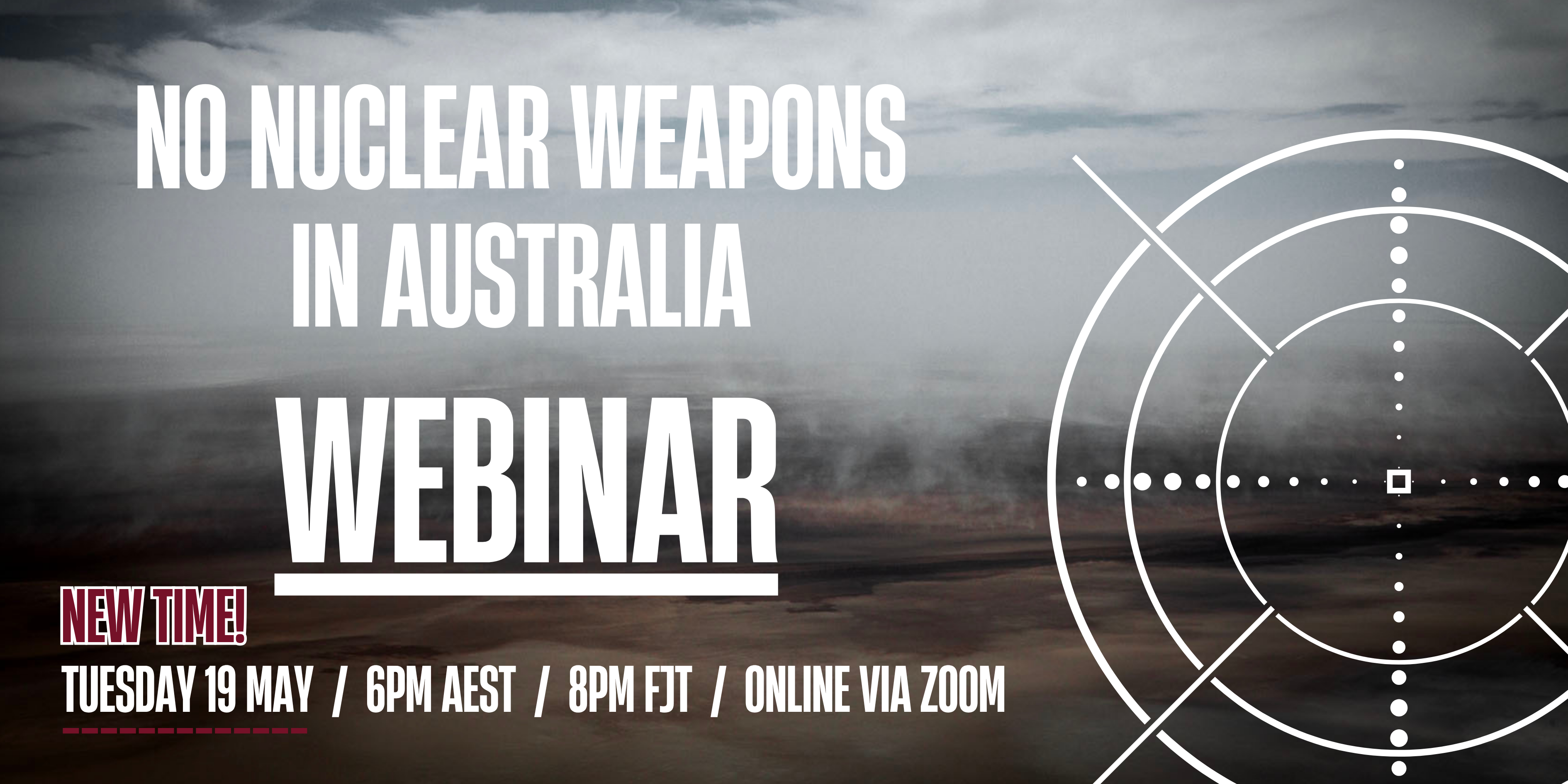
19 May – Webinar- Webinar: No Nuclear Weapons in Australia
Start: 2026-05-19 18:00:00 UTC Canberra, Melbourne, Sydney (GMT+10:00)
End: 2026-05-19 19:30:00 UTC Canberra, Melbourne, Sydney (GMT+10:00)
20 May – Webinar – The dangerous world of AUKUS, US, military occupation and suppression of dissent

National Webinar, 20th May, 2026, 6.30pm AEST. Confronting laws restricting/suppressing protest speech and action
Speakers: Former Sen. Rex Patrick, Lawyer Nick Hanna ,Arthur Rorris ,Jorgen Doyle, Sen David Shoebbridge,
Facilitator Kelley Tranter.

of the week – Australians for War Powers Reform (AWPR)
To see nuclear-related stories in greater depth and intensity
 Antinuclear