Leaked polling shows regional support for renewables.

Colin Packham, January 14th, 2025, https://www.theaustralian.com.au/business/mining-energy/leaked-polling-shows-regional-support-for-renewables/news-story/aeba90ecc98aaa1f39698cfdaa237459
Leaked polling commissioned by renewables industry body The Clean Energy Council has found regional voters support renewable energy rather than nuclear power due to concerns about environmental impacts and the promise of economic opportunities from large-scale wind and solar projects.
Should the polling — seen by The Australian but not yet released publicly — be accurate, it indicates the Coalition has just months to reverse the sentiment ahead of an election where the opposition hopes to sway voters with its centrepiece strategy of building seven nuclear power stations.
A record number of Australians are struggling to pay their utility bills, a situation the Coalition hopes will result in a friendly swing to it when voters return to the polls. But, the research by Freshwater Strategy — a widely respected polling firm — shows regional voters remain concerned about nuclear energy despite also holding misgivings about renewables.
The poll showed regional respondents believed renewables would deliver larger benefits for them than metropolitan voters, as the transition sees a spree of new jobs and offers of financial sweeteners.
Both regional and metropolitan voters said they believed nuclear power is environmentally damaging, a stance which fuelled their broad concern about the fuel source.
The concern over nuclear power was sharper with Labor and Greens voters. Voters who identified as Coalition voters had a far weaker commitment to renewables than Greens voters.
Such a sentiment would aid the Coalition in cementing its standing with its core voter base, but the polling also found those yet to make up their minds about voting intentions had a favourable view on renewables.
These swing voters strongly believed renewables would lower power bills, the polling found.
The Coalition has insisted nuclear will lower power bills and remains the only feasible way Australia is going to meet its net zero emissions by 2050 commitment.
Recent polling shows the Coalition ahead in a two-party preferred vote as years of high inflation and 13 interest rate rises has led to simmering anger among voters.
The federal Labor government hopes for some reprieve from the Reserve Bank of Australia via an interest rate cut or two by May. Labor must return to the polls by May and the market has in recent weeks ramped up bets of a loosening of fiscal policy at the central bank’s meeting in February.
Labor hopes its re-election prospects will be bolstered and has committed Australia to a rapid transition away from coal. Labor has cemented its plan to have renewables generate 82 per cent of the country’s electricity by 2030 — a commitment which requires significant amounts of new wind, solar and batteries.
Some 100,000km of high voltage transmission lines will also need to be built by 2050 if Australia is to meet net-zero emissions targets, which threatens to cause significant upheaval to regional communities.
States and territories have steadily increased their financial compensation offers to affected communities but pockets of opposition remain.
Federal Energy Minister Chris Bowen continues to insist Australia will meet its 2030 targets, though independent figures have said the timetable is increasingly unlikely.
Colin Packham Colin Packham is the energy reporter at The Australian. He was previously at The Australian Financial Review and Reuters in Sydney and Canberra.
Nuclear radiation took her father’s eyesight. Now Karina’s fighting Dutton’s nuclear reactors
TV Channel 9 Jan 11, 2025, The Morning Edition podcast
When opposition leader Peter Dutton proposed nuclear energy reactors on almost every mainland state in June last year, he reignited divisive public debate. It’s a debate Indigenous Australians are unwillingly at the heart of. A story that starts in the 1950s, when radioactive fallout from bomb tests caused illness among Aboriginal communities that were not adequately protected by the government of the day. Today, audio producer Julia Carr-Catzel brings us a special edition of The Morning Edition on the resistance in Aboriginal communities to a potential nuclear energy industry in Australia. Aboriginal and Torres Strait Islander listeners are advised that this podcast contains names of people who have died.
Amazon Is Censoring My Most Recent Magazine Issue
Caitlin Johnstone Jan 14, 2025
Without explanation Amazon has blocked and unpublished my last issue of JOHNSTONE magazine which features my painting of Luigi Mangione on the cover. The link to order it is now dead. When I asked for an explanation or appeal they just sent a template response referring me back to their publishing rules.
So that’s annoying. The pay-what-you-want ebook of the issue is still available for anyone who wants it.
❖
In her bid to secure her confirmation as Trump’s next Director of National Intelligence, Tulsi Gabbard is now pledging to support Section 702 of the FISA Act. This notorious law allows for the warrantless surveillance of Americans, and in congress Gabbard had previously fought to repeal it.
This is how the national security state works. You don’t change the machine, the machine changes you. Anyone who starts off opposing the imperial status quo of authoritarianism, warmongering and corruption either finds themselves excluded from the halls of power or adapts new positions in favor of the status quo.
The Australian political-media class has been rending its garments over a ridiculously fake incident of antisemitic graffiti at a synagogue in Sydney, which features both swastikas and the words “Free Palestine” right next to each other.
It’s weird how few people I see calling this what it so obviously is. Apparently we’re all supposed to take very seriously the idea that either (A) Nazis are spray painting the words “Free Palestine” next to their swastikas, or (B) that supporters of Palestinian rights are spray painting Nazi symbols next to their pro-Palestinian slogans. Apparently we’re all truly expected to pretend we don’t know some Israel supporter did this themselves to provide political cover for the genocide in Gaza.
It is always okay to express skepticism about dubious incidents of “antisemitism” in today’s political environment. Israel’s supporters are shitty, evil people who support genocide, and faking antisemitic incidents is a standard hasbara tactic with a well-documented history…………………………………… https://www.caitlinjohnst.one/p/amazon-is-censoring-my-most-recent?utm_source=post-email-title&publication_id=82124&post_id=154758013&utm_campaign=email-post-title&isFreemail=true&r=1ise1&triedRedirect=true&utm_medium=email
❖
Critical Archival Encounters and the Evolving Historiography of the Dismissal of the Whitlam Government (Part 6
By AIMN Editorial on January 12, 2025, By Jenny Hocking Continued from Part 5
The Lost Archive: Government House Guest Books
In 2010, I first requested access to the Government House guest books held by the Archives, which provide the details of visits and visitors to “their Excellencies” at Yarralumla. The catalogue lists a total of twenty-nine files, enumerated consecutively, constituting visitor books from May 1953 to February 1996. The guest books appear regularly from July 1961 until July 1974, before stopping altogether until December 1982.
The Archives insisted that the guest books for this period had never been transferred from Government House and they now appeared lost since neither institution claimed to hold them. What is puzzling in this regard is that Archives’ enumeration system, which numbers each file consecutively, has two consecutive numbers assigned yet not included in the catalogue corresponding to the missing dates, suggesting two missing files given identification numbers by the Archives which are no longer listed.
. The only other gap in these books, for a much shorter period between 1960 and 1961, has no such missing consecutive numbers in the catalogue which might accommodate a lost file…………………………………………………………………………………………
These missing guest books add fuel to the longstanding speculation that security and defence officials, notably the Chief Defence Scientist Dr John Farrands as the recognised authority on Pine Gap and the Joint Facilities, had briefed Kerr in the week before the dismissal about mounting security and defence concerns over Whitlam’s exposure of CIA agents working at Pine Gap, and his planned Prime Ministerial statement on this in the House of Representatives on the afternoon of 11 November 1975. …………………
The Burnt Archive: Sir John Kerr’s Prominent Supporters
In 1978, soon after Kerr left office, a cache of letters “of outstanding value” to Kerr was accidentally reduced to ashes in the Yarralumla incinerator……………….
Among his correspondents was the Queen’s second cousin, Lord Louis Mountbatten, Prince Philip’s uncle and King Charles III’s great mentor; the former Governor-General and distant royal relation, Viscount De L’Isle; and other prominent individuals supporting Kerr’s dismissal of Whitlam. These names alone indicate that these burnt letters were as important to history as they were to Kerr. …………..
…………… We now know, thanks to letters released in 2020 following the High Court’s decision in my legal action, that King Charles also fully supported Kerr’s actions…………………………..
Until their release in 2020 following the High Court’s decision in the Palace letters case they constituted the most significant “unattainable archive” in the dismissal panoply of secrets. The release of the letters signalled a rare moment of forced archival transparency in the face of determined refusals of access, and the harbinger of a significant historical re-evaluation of the dismissal in which they played a pivotal role.
What is critical for this discussion is that the closures of these otherwise public archives, both the Mountbatten papers and the Palace letters, were enabled by and remained hidden because of a claimed “convention” of Royal secrecy………………………………………………..
And so, this was how Kerr had labelled his letters to and from the Queen, as they had always been labelled, as “personal”. The only way to challenge the denial of access to personal records was to take a Federal Court action, a daunting and lengthy process. In 2016, with the support of a pro bono legal team, I commenced proceedings against the National Archives of Australia in the Federal Court, arguing that these Palace letters were not personal and should be publicly available, and seeking their release.
Four years and three court hearings later, the High Court found in a 6:1 decision that the Palace letters are not personal, leading to their release in full. …………………………………………………………………………………………………………………………..
A more complete history of the dismissal has emerged in fragments, still marred by partisan recollection, misplaced archives, and continuing secrecy. First, that Kerr was in secret contact with Fraser before he dismissed Whitlam; second, the definitive role of High Court justice Sir Anthony Mason, and finally, only in the last decade has the extent of royal involvement in Kerr’s decision become clear………………………………………….more https://theaimn.net/critical-archival-encounters-and-the-evolving-historiography-of-the-dismissal-of-the-whitlam-government-part
Nuclear and related news -week to 14 January

Some bits of good news. World’s largest free meal program, aimed at children and pregnant women. Thai tiger numbers swell as prey populations stabilize in western forests. ‘Extinct’ trees found in Tanzania spark hope for ecosystem recovery.
TOP STORIES. Genocide: The New Normal.
Drone Warfare Has Exploded the Myth of Nuclear Reactor Safety.
Radioactive nightmare: A community’s fight for survival amid soaring cancer rates.
While Los Angeles burns, AI fans the flames.
From the archives. 40 Years Ago: US President Jimmy Carter Pushed For Renewable Energy Funding After Three Mile Island Nuclear Disaster —
Climate. State of the Cryosphere Report 2024.
LA wildfire damages set to cost record $135bn.
Climate crisis ‘wreaking havoc’ on Earth’s water cycle, report finds, Energy efficiency, the forgotten tool for dealing with climate change.
Noel’s notes. The California wildfires and the unmentioned threat of nuclear radiation. The polar playground for a suicidal species?
AUSTRALIA.
- Sovereignty not worth a nickel?
- AUKUS: Flawed and Sinking.
- Nuclear radiation took her father’s eyesight. Now Karina’s fighting Dutton’s nuclear reactors- https://www.youtube.com/watch?v=Us2PJovak2Y
- There’s a gaping hole in Dutton’s nuclear plan: He says it’s Albanese’s problem to solve.
- Los Angeles fire a wake up call for Australia.
- The continual cover up – Jenny Hocking on the strange disappearance of Gough Whitlam’s ASIO file. Critical Archival Encounters and the Evolving Historiography of the Dismissal of the Whitlam Government- series at https://antinuclear.net/ – also other news items.
NUCLEAR ITEMS
| CLIMATE. World’s climate fight needs fundamental reform, UN expert says: ‘Some states are not acting in good faith’. Energy efficiency, the forgotten tool for dealing with climate change. |
| ECONOMICS. Lepreau nuclear plant’s costs will continue to balloon: critic -ALSO AT https://nuclear-news.net/2025/01/09/1-b1-lepreau-nuclear-plants-costs-will-continue-to-balloon-critic/Together Against Sizewell C letter to National Audit Office SZC Value for Money concerns 06.01.25. |
| EMPLOYMENT. No more buckets and spades – would nuke dump end West Cumbrian tourism? |
| ENERGY. Germany deploys 16.2 GW of solar in 2024 .Trump’s war on wind power: Plans to stop windmill construction nationwide.Schneider Electric warns of future where datacenters eat the grid.Is the Haverigg wind project once more under a nuclear threat? |
| ENVIRONMENT. CANDU reactors release WASTE HEAT as well as RADIOACTIVITY.EDF’s UK nuclear plan – salt marsh consultation delay reaction. |
| ETHICS and RELIGION. Are Blinken and Biden’s Gaza genocide denials any different than Nazi WWII genocide denials? |
| EVENTS. WEBINAR: 17 January : Exposed – New book sheds light on radiation science |
| HEALTH. Ohio Community Faces Cancer Crisis from Radioactive Contamination |
| HISTORY. When Carter met Kim – and stopped a nuclear war. |
| INDIGENOUS ISSUES. First Nations chiefs shouldn’t be duped by ‘nuclear-is-green’ deception. |
LEGAL.
- Ireland formally joins ICJ genocide case against Israel.
- An overlooked Supreme Court case could decide the future of nuclear power. Lawsuit challenges NRC on SMR regulation.
- Japanese yakuza leader pleads guilty to trafficking nuclear materials from Myanmar. Japanese crime boss admits to conspiring to sell nuclear material to Iran.
- Judge Orders Britain’s Crown Prosecution Service (CPS) to Come Clean on Deleted Assange Docs.
| MEDIA. Raffi Berg: BBC Middle East Editor Exposed as CIA, Mossad Collaborator. |
| OPPOSITION to NUCLEAR . Campaigners accuse UK government of ‘lack of transparency’ over SizewellC value. – ALSO AT https://nuclear-news.net/2025/01/11/1-b1-campaigners-accuse-government-of-lack-of-transparency-over-sizewellc-value/ |
| PERSONAL STORIES. ‘He was prescient’: Jimmy Carter, the environment and the road not taken. |
| POLITICS. Genocidal President, Genocidal Politics. A new year – but old policies.EDF delays salt marsh consultation for Hinkley Point C. |
POLITICS INTERNATIONAL and DIPLOMACY.
- Report: Israel Refusing To Commit to a Permanent Gaza Ceasefire as Part of Hostage Deal.
- Outgoing CIA director says ‘no sign’ Iran developing nuclear weapons. Iran Condemns US Threats to Nuclear Facilities, Calls for UN Accountability.
- What a second Trump administration may mean for the Saudi nuclear program.
- Why Greenland Is Of Growing Strategic Significance. China Is Not Our Enemy – Brief version at https://nuclear-news.net/2025/01/12/2-b1-why-greenland-is-of-growing-strategic-significance/
| SAFETY. Faslane Peace Camp warns of growing nuclear risks amid rising tensions. Incidents. ‘Alarming’ environmental breaches at nuclear sites spark calls for tougher action. International Atomic Energy Agency (IAEA) staff reported hearing loud blasts near Ukraine’s Zaporizhzhya Nuclear Power Plant (NPP) |
| SECRETS and LIES. How Fukushima’s radioactive fallout in Tokyo was concealed from the public. The Atlas Network has eugenicist roots. |
| TECHNOLOGY. Could AI soon make dozens of billion-dollar nuclear stealth attack submarines more expensive and obsolete?Deep Fission to supply Endeavour data centers with 2GW of nuclear energy from “mile-deep” SMR. Nuclear energy groups race to develop ‘microreactors’. UK will explore nuclear power for new AI data centre plan |
| URANIUM. US to study proliferation risk of HALEU nuclear fuel, after warning by scientists. |
| WASTES. U.S. nuclear spent fuel liability jumps to $44.5 billion.S. Korea’s nuclear agency launches investigation into abnormal discharge of radioactive waste. |
| WAR and CONFLICT. Lancet Study: Gaza Health Ministry Undercounted Death Toll By 41%.How the UK and Nato are preparing for spectre of nuclear war in space. |
| WEAPONS and WEAPONS SALES. Iran has absolutely no intention to build nuclear weapons, president says.There is no such thing as good nuclear proliferation.Trident nuclear submarines leave UK reliant on the US, in lockstep with the US.How to dismantle the deadly arms trade. |
There’s a gaping hole in Dutton’s nuclear plan. He says it’s Albanese’s problem to solve.
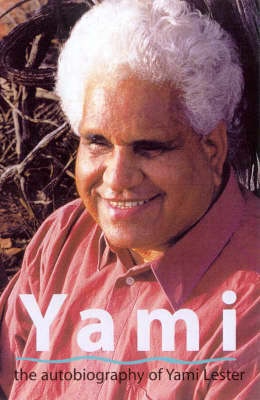
“With Dad’s eyesight, it was a gradual process,” Lester says. “By three, four years after ’53 he was completely blinded, then, by those nuclear tests. So there was a lot of fear, there was a lot of sickness. And there weren’t a lot of answers of what the hell happened in 1953.”
Aboriginal and Torres Strait Islander readers are advised that this article contains names and photos of people who have died.
The Age By Julia Carr-Catzel, 11January 12, 2025
When Opposition Leader Peter Dutton proposed nuclear energy reactors on almost every mainland state last year, he reignited divisive public debate. It’s a debate Indigenous Australians are likely to be at the heart of.
It is little acknowledged that Australia’s nuclear story is largely an Indigenous one. It starts in the 1950s, when radioactive fallout from bomb tests silently settled over Aboriginal communities that were not adequately protected by the government of the day. It encompasses the very beginning of the nuclear cycle: the mining of uranium, to its end – the storage of nuclear waste.
The intergenerational fear of radioactive contamination and distrust of government is fuelling community opposition, particularly among some traditional landowners, to a potential nuclear energy industry here in Australia. And it’s why every proposal for a national nuclear waste repository across the country has, so far, failed.
The nuclear waste problem is unavoidably tied to nuclear energy reactors, a cornerstone of Dutton’s energy policy for 2025. Nuclear waste will also be a major challenge for future governments as they inherit radioactive waste from AUKUS submarines.
Emu Field, 1950s
Karina Lester speaks from her brightly lit office in central Adelaide. She comes from Anangu Pitjantjatjara Yankunytjatjara lands at a homeland called Walatina. “The country is quite stunning, actually. There’s lots of woodland area, so mulga acacias growing there, but there’s beautiful sand dunes through that country and where my late father Yami was born is a creek called Walkinytjanu Creek, which is a beautiful spot as well.”
Lester is describing a special part of the South Australian outback, a 12-hour drive north of Adelaide, where her father, Yami Lester, worked for pastoralists. But on October 15, 1953, Yami, who was only a young boy at the time, playing in the dunes noticed something above.
“That morning was when they felt the ground shake, and the black mist roll. And one thing many of my old people had spoken about was the fact that this black mist rolled silently, so it came with no wind or no, you know, picking up sticks and leaves and grasses. And it didn’t come with a noise like dust storms do. It travelled silently. And it was that that was the real fear. They knew how country operated and worked. But this one was very different.”
What Yami and his family peered up at were the remnants of a giant mushroom cloud from a nuclear weapons test in Emu Field, about a six hour-drive south-west of Walatina.
“Nana recalls a very strong stench to it like a really oily toxic smell and that oil had fallen over the plants, you know, over the trees. Within hours, oranges withered. So, nana mob were digging holes in the sand dunes and trying to bury the children and hide them and protect them.”
Operation Totem was the first of two major nuclear weapons tests conducted by the British in Emu Field, signed off by the Menzies government. It was the 1950s, the beginning of the Cold War. Britain was developing its nuclear capabilities and the Australian outback was the perfect location with its vast remoteness.1
Emu Field was the location of just two of 12 major weapons trials across Australia, and hundreds of minor trials until the 1960s. Some nuclear bombs had a kiloton yield as large as that of Hiroshima.
“Within hours of that toxic fallout, people became really sick … There was panic because that oily sort of black mist rolling put people into panic. And then, of course, people’s eyes became really sore and red and pussy. Nana had skin rashes on her shins, people became really sick, like a lot of the elderly.”
Decades later, in 1985, the McClelland Royal Commission into British Nuclear Tests in Australia concluded that: “Inadequate resources were allocated to guaranteeing the safety of Aboriginal people.” Commissioners concluded the one native patrol officer on duty had an impossible task of locating and warning Aboriginal people scattered over more than 100,000 square kilometres.
“It was tough as it was there, being in 1953, working on a pastoral property, let alone trying to understand what government of the day was going to do,” says Lester. “And then, all of a sudden, experience what happened, without any control or knowledge or understanding.”
Aboriginal people were not the only victims. Aircrews flew through radioactive clouds and scientists walked around sites with minimal protective clothing, sometimes none at all.
“With Dad’s eyesight, it was a gradual process,” Lester says. “By three, four years after ’53 he was completely blinded, then, by those nuclear tests. So there was a lot of fear, there was a lot of sickness. And there weren’t a lot of answers of what the hell happened in 1953.”
Yami dedicated his life to Aboriginal activism. His case was pivotal to the McClelland royal commission, although the commission could not link radiation to health issues, including establishing the cause of Yami’s blindness. Yami died, aged 75, in 2017.
“It was something that I always miss,” Lester says. “That he’d never really seen me grow up, he saw me in a different way of growing up with his disability, of course.”
The government commissioned a study in the 1990s into the link between Australia’s nuclear testing, including that at Emu Field, and the number of cancer cases among mostly military personnel. It didn’t establish a direct link between cancer cases and radiation exposure, but the study did find the mortality and cancer rate were higher than that of the general population.
In Woomera, 600 kilometres downwind of the tests, is a grave where 23 stillborn babies delivered in the years following the tests are buried, according to a class action case against the British Ministry of Defence.
“And there’s not really a lot of data around the health of people. If you look back in clinic records, perhaps at Yalata, or even Oak Valley, there was a period of time that there was a high spike for thyroid cancers. And people have passed now.”
Britain agreed to contribute £20 million towards a $100 million clean-up of Maralinga, the largest and most used site, and modest clean-up efforts were undertaken at the other sites. The Australian government paid $13.5 million to the Indigenous people of Maralinga as compensation for contamination of the land…………………………..
The government nuclear safety watchdog says it conducts regular safety checks and is committed to building trust with Maralinga Tjarutja peoples to feel confident to live on and engage with their land. But Lester says that trust may take a while to build. “There’s a whole lot of data missing around the safety of our environment and our traditional lands [in Emu Field]. And so, you know, we need to look at the path of where Totem 1 had fallen over, which is Walatina, and how safe is it there? You know: what’s in the dust, what’s in the soil? What’s in our waters? How safe are our trees?
“Because we still go digging for witchetty grubs, and we go eating the animals like goannas and perenties, and turkeys, and, you know, we still practise those things because that’s part of our Anangu culture. So it’s the unknown, that is the fear for us.”
When Dutton announced plans for a nuclear reactor on nearly every mainland state, Lester felt fearful again. It came on top of bipartisan support for the AUKUS deal, which locks Australia into storing high-level nuclear waste. “What’s going to happen when you have agreements like the AUKUS agreement?” Lester says. “You know, it’s a real fear for us … the waste of, you know, the UK and the US coming to potentially South Australia, or anywhere in Australia.”
Lester has, like her father, dedicated her adult life to activism. In 2023 , she represented the Australian wing of the International Campaign to Abolish Nuclear Weapons, at the United Nations in New York. She says she will be at the forefront of community opposition. “Our government of the day has a level of responsibility. It is negligent of them to be sticking waste out in community that they think is out of sight, out of mind. Like the industry has completely outdone itself, like yes, it does all these amazing things. But you haven’t worked out your waste solution.
“And the solution that you put on the table constantly to First Nations peoples is stick it in your traditional lands. No, we say ‘no’ to nuclear waste, full stop.”
…………………………………………………………………………………………………………………………………….. Australia stores some of its low and intermediate-level nuclear waste at Lucas Heights, the Sydney suburb home to the country’s only nuclear reactor. Now a radioactive medicine factory, it produces products such as the dye injected into patients for scans to monitor cancers.
Australia has accumulated about 5000 cubic metres of intermediate radioactive waste, about two Olympic-sized swimming pools, and five more pools’ worth of low-level waste.
………………………. “The Commonwealth government has been struggling for 20 years to find a site for permanent storage of low-level waste,” says Ian Lowe, emeritus professor at the School of Environmental Science at Griffith University in Queensland. He has dedicated his life to studying energy supply and sustainability, and has written books on nuclear technology and its role in the energy mix.
Lowe says that the nuclear energy reactors Dutton wants built will produce high-level nuclear waste, requiring disposal in deep geological layers, several hundred metres underground.
……………………………………………………. “The Indigenous community is permanently scarred by the experience of the bomb tests in rural South Australia and the harm that came to some people as a result of those. And every proposal by the Commonwealth government for a low-level waste storage has been resisted by the local Indigenous community,” says Lowe.
“So if we began to set up a site to manage intermediate level waste and high-level waste in the long term, there will have to be very delicate and sensitive negotiations with Indigenous communities to get their permission for an activity like that on their land.”
The Kimba decision
There have been numerous attempts at establishing a national nuclear waste repository in Australia since the late 1990s. The most recent failed nuclear waste depository was in Kimba, a five-hour drive north-west of Adelaide and with a population of just over 1000.
The Kimba proposal became a bureaucratic nightmare, spanning eight years and rife with community divisiveness.
…………………………………………………………………………………… Challenges ahead
Australia’s almost 40-year-history of failed nuclear waste development proposals is less than encouraging for the Coalition’s hopes of a nuclear energy future.
There have been decades of development proposals for a centralised, national nuclear waste repository in states and territories across the country, including Woomera in South Australia in 2004, Muckaty Station in the Northern Territory in 2014, Flinders Ranges in South Australia in 2019, and most recently Kimba. Not one proposal has succeeded.
……………………………………… The failed Kimba project highlights the overwhelming challenge for governments after nearly a decade spanning three ministers, of site assessment and selection, landowner and community consultation and consent, Senate committee hearings and inquiries, legal challenges at state and local levels and countless regulatory hurdles.
And that’s just for a waste repository, at the end of the nuclear fuel cycle, let alone the infrastructure planning needed for a nuclear energy reactor itself.
Dutton says he wants this year’s election to be “a referendum on energy”……………… more https://www.theage.com.au/environment/sustainability/there-s-a-gaping-hole-in-dutton-s-nuclear-plan-he-says-it-s-albanese-s-problem-to-solve-20241113-p5kqe4.html
Sovereignty not worth a nickel?
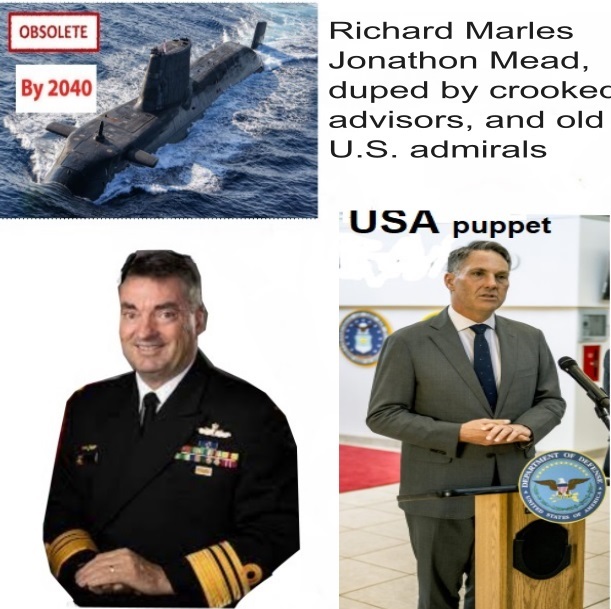
A terse exchange between Greens Senator David Shoebridge and Vice Admiral Jonathan Mead during a Senate Estimates hearing earlier this year revealed that contracts signed by the Australian government that have handed billions of taxpayer dollars to American and British shipyards, supposedly to support the faster delivery of submarines, did not include standard protective clawback provisions.
If we never see a submarine—as is possible—we don’t get any of our billions back.
In influence and dollar terms, foreign-owned companies comprise the vastly dominant proportion of the industrial base, not “part of” it. Research by the Australian Strategic Policy Institute in 2017 showed that the top 15 weapons contractors received 91 per cent of the Department’s expenditure.
A decade of spin from both sides of politics has inured Australians to the stark reality of our loss of independence inside the US alliance. At what cost?
Michelle Fahy, Jan 12, 2025, https://undueinfluence.substack.com/p/sovereignty-not-worth-a-nickel?utm_source=post-email-title&publication_id=297295&post_id=154382292&utm_campaign=email-post-title&isFreemail=true&r=1ise1&triedRedirect=true&utm_medium=emailAustralia’s independence has been dangerously compromised by Labor and Coalition governments, which have signed up to deep-rooted military agreements with the United States of America. These agreements have also underpinned the increasing militarisation of Australia: witness the 2022 speech by Labor’s Richard Marles, the newly appointed deputy prime minister, in Washington DC when he announced that Australian military forces would now become interchangeable with those of the United States.
In August, after this year’s formal annual talks with the United States, Defence Minister Marles announced that the meeting had “built on the last two in seeing a deepening of American force posture in Australia”.
He added: “American force posture now in Australia involves every domain: land, sea, air, cyber and space.”
A decade of spin from both sides of politics has inured us to the stark reality of our loss of independence. Much is made of “defence industry cooperation” with the United States, for example, but this is simply code for the expansion of the US arms industry in Australia in support of its increasing military presence on our soil.
The day before AUKUS was launched in 2021, the US State Department made plain the importance of Australia in supporting America’s military-industrial base:
Australia is one of America’s largest defence customers, supporting thousands of jobs in the United States … The United States is Australia’s defence goods and services partner of choice … the partnership is expected to deepen further over the coming decade, including in the area of defence industry cooperation.
Soon after this statement was published, Marles flew to Washington to endorse its sentiment. He reassured the Americans that when it came to arms production, “our ultimate goal is to supplement and strengthen US industry and supply chains, not compete with them”.
Meanwhile, our much-trumpeted “sovereign defence industrial base” is simply a collection of the world’s top arms multinationals, dominated by the British-owned BAE Systems, the French-owned Thales, and the American-owned Boeing.
Then there is the egregious erosion of Australia’s sovereignty contained within the little-known Force Posture Agreement (FPA) with the United States, which the Abbott Coalition government signed in 2014.
In short, the FPA permits the US to prepare for, launch and control its own military operations from Australian territory.
Yet AUKUS dominates the headlines, even though other decisions by our political leaders that have sold out the public interest have received little coverage in the mainstream media.
A terse exchange between Greens Senator David Shoebridge and Vice Admiral Jonathan Mead during a Senate Estimates hearing earlier this year revealed that contracts signed by the Australian government that have handed billions of taxpayer dollars to American and British shipyards, supposedly to support the faster delivery of submarines, did not include standard protective clawback provisions. If we never see a submarine—as is possible—we don’t get any of our billions back.
The single most important downside of the US alliance, rarely mentioned, is arguably Australia’s military dependence on a foreign power. The Australian Defence Force is critically dependent on US supply and support for the conduct of all operations except those at the lowest level and of the shortest duration.
We were warned about this substantial sacrifice of national freedom of action. In 2001, a Parliamentary Library research paper stated that “it is almost literally true that Australia cannot go to war without the consent and support of the US”.
Foreign-dominated “sovereign” defence industry
Australia’s political and defence hierarchy regularly assert the need to build “a sovereign defence industrial base”. Most people would assume this to mean Australian-owned defence companies, with profits that stay local. This is not what the Defence Department means by it.
The world’s largest weapons companies, including BAE Systems (UK), Thales (France) and US companies Boeing, Lockheed Martin, Raytheon and Northrop Grumman, dominate the local defence industry. Almost all of the top 15 weapons contractors to the Defence Department are foreign-owned. In June 2024, Deputy Secretary Christopher Deeble, the head of the Capability Acquisition and Sustainment Group—the Department’s arms-buying group—explained in a Senate Estimates hearing the government’s definition of “sovereign” in this regard. Deeble agreed with independent senator David Pocock that the local subsidiaries of foreign weapons multinationals, such as Lockheed Martin Australia, were not “sovereign” Australian companies. Nevertheless, he said, the Department considers such foreign-owned subsidiaries to be “part of the sovereign defence industry base here in Australia”.
In influence and dollar terms, foreign-owned companies comprise the vastly dominant proportion of the industrial base, not “part of” it. Research by the Australian Strategic Policy Institute in 2017 showed that the top 15 weapons contractors received 91 per cent of the Department’s expenditure.
Force Posture Agreement
The erosion of Australian sovereignty accelerated in 2011, when Labor prime minister Julia Gillard agreed that up to 2,500 US Marines could be stationed in Darwin on a permanent rotation, and that an increased number of US military aircraft, including long range B-52 bombers, could fly in and out of the Top End and use Australia’s outback bombing ranges.
This agreement was expanded dramatically a few years later by the Force Posture Agreement, which provides the legal basis for an extensive militarisation of Australia by the US, particularly across the Top End.
The tri-nation military pact AUKUS, between Australia, the United Kingdom and the United States, was later negotiated and agreed to, in secret, by the Morrison Coalition government. AUKUS gained bipartisan support within one day of it being revealed to Anthony Albanese’s Labor opposition in September 2021. Among other things, AUKUS, in conjunction with the FPA, ensures that Australia’s navy will be tightly integrated with the US navy for the purpose of fighting China, and that the two navies can operate as one from Australian ports and waters.
Two months after Labor assumed office in May 2022, Marles was in Washington DC announcing that Labor would “continue the ambitious trajectory of its force posture cooperation” with the United States. Australia’s engagement with the US military would “move beyond interoperability to interchangeability” and Australia would “ensure we have all the enablers in place to operate seamlessly together, at speed”.
Non-lethal” F-35 parts
Australia’s newest high-tech major weapons systems make us more reliant than ever on the United States. As veteran journalist Brian Toohey reported in 2020, “The US … denies Australia access to the computer source code essential to operate key electronic components in its ships, planes, missiles, sensors and so on”. This includes the F-35 fighter jets, which both Foreign Minister Penny Wong and Defence Minister Marles have noted form the largest proportion of the air force’s fast jet capacity.
When it agreed to buy Lockheed Martin’s expensive and controversial fifth generation fighter jets, Australia became one of the early members of the F-35 consortium. As part of the deal, Australia negotiated a role for local industry in the F-35 global supply chain. As of June 2024, more than 75 Australian companies had shared in $4.6 billion worth of work, according to the Defence Department.
But there’s been a significant ethical downside. Israel, also a member of the F-35 consortium, is using its F-35s in its war against Gaza. Israel stands accused in the world’s highest court of conducting a genocide in Gaza. Every F-35 built contains Australian parts and components, and for some of these Australia is the sole source.
A senior Defence Department official, Hugh Jeffrey, said in a Senate Estimates hearing in June 2024:
“We are a member of the F-35 consortium [which] exists under a memorandum of understanding … That gives the defence industry opportunity to contribute to that supply chain. It also requires Australia to provide those contributions in good faith…” [emphasis added]
Jeffrey also noted that when assessing any export permit, “we have to have high confidence that, in agreeing to the permit, it’s consistent with our national security requirements and with our international legal obligations”.
What happens if the Department perceives a conflict between Australia’s “national security requirements” and its “international legal obligations”? Is Australia “required” to continue supplying Australian-made arms “in good faith”?
In June, after nine months of spreading disinformation, the Australian government was forced to admit that Australia was still supplying parts and components to the F-35 global supply chain. At the time of writing, the government was allowing this supply to continue despite repeated calls from the UN asking nations—and multinational weapons makers—to cease supplying weapons to Israel, including parts and components, or risk being responsible under international law for serious human rights violations.
Decoded: Defence Department’s deadly deceits
Michelle Fahy, July 10, 2024
Judge Orders Britain’s Crown Prosecution Service (CPS) to Come Clean on Deleted Assange Docs
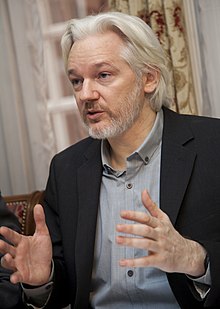
A judge in London has ruled that Britain’s Crown Prosecution Service (CPS) must explain what happened to certain documents in the Julian Assange case that it claims no longer exist, reports Joe Lauria.
By Joe Lauria, Consortium News, January 10, 2025, https://consortiumnews.com/2025/01/10/judge-orders-cps-to-come-clean-on-deleted-assange-docs/
Italian journalist Stefania Maurizi has been waging a legal battle for seven years against the Crown Prosecution Service to discover the truth about a CPS claim that it deleted a number of documents Maurizi has sought in a Freedom of Information request about the case of Julian Assange.
Now a judge on the London First-tier Tribunal has ruled that the CPS must explain to Maurizi what it knows about when, why and how the documents were allegedly destroyed. The Jan. 2 ruling was first reported by Maurizi’s newspaper il Fatto Quotidiano on Friday.
Judge Penrose Foss has given the CPS until Feb. 21 to respond or it could be held in contempt of court.
The ruling says:
The Crown Prosecution Service must, by no later than 4.00 p.m. on 21 February 2025:
- (1) Confirm to the Appellant whether it held recorded information as to when, how and why any hard or electronic copies of emails referred to in the Appellant’s request to the Crown Prosecution Service of 12 December 2019 were deleted;
- (2) If it did hold such information, either supply the information to the Appellant by 4.00 p.m. on 21 February 2025 or serve a refusal notice under section 17 of the Freedom of Information Act 2000, identifying the grounds on which the Crown Prosecution Service relies.A failure to comply with this Substituted Decision Notice could lead to contempt proceedings.”
Swedish Case
The documents Maurizi seeks were in relation to Sweden’s request to the U.K. for Assange’s extradition.
Her argument was heard before the three judges of the tribunal on Sept. 24, 2024. The allegedly deleted emails involved a CPS exchange with Sweden about a Swedish prosecutor’s attempt, beginning in 2010, to extradite the WikiLeaks publisher from Britain.
Assange was wanted at the time in Sweden for questioning during a preliminary investigation into allegations of sexual assault, which was dropped three times, definitively in 2017. He was never charged. After losing his battle against extradition to Sweden at the U.K. Supreme Court, Assange took refuge in the Ecuadorian embassy in June 2012, fearing that Sweden would send him to the United States.
Assange spent seven years in the embassy protecting himself from arrest until April 2019, when British police dragged him from the diplomatic mission and threw him into London’s maximum security Belmarsh prison.
It was only when the U.S. realized it would lose on appeal after a four-year extradition battle that the Department of Justice cut a plea deal with Assange who was released on June 24, 2024 and returned to his native Australia.
Assange had been charged in the United States under the Espionage Act for possessing and publishing defense information, which revealed evidence of U.S. war crimes. Britain took an active role in Assange’s prosecution.
In the earlier Swedish case, the CPS sought to stop Sweden from going to the embassy to question him.
Seeking to learn more about Britain’s role, Maurizi first made a Freedom of Information Act (FOIA) request in 2015 for all emails between the British and Swedish governments concerning Assange.
Some of the emails she obtained showed political motivation on the part of the lead British prosecutor, Paul Close.
One email Maurizi obtained from the Swedish Prosecution Authority (SPA) revealed that Close appeared to be pressuring Swedish prosecutors to continue seeking Assange’s extradition instead of dropping the case or questioning him at the Ecuadorian embassy, where Assange had been granted asylum.
“My earlier advice remains, that in my view it would not be prudent for the Swedish authorities to try to interview the defendant [Julian Assange] in the UK,” Close wrote to the SPA, in 2011, according to one of the emails obtained by Maurizi.
Keir Starmer, the British prime minister, was head of the CPS at this time. He led the service from 2008 to 2013, though it is unknown what role Starmer may have played in this correspondence.
“Don’t you dare get cold feet!!!,” he wrote to Marianne Ny, Sweden’s director of public prosecutions, in 2012. A year after that, Close wrote, “Please do not think this case is being dealt with as just another extradition.”
After Maurizi noticed a sizeable gap in the emails released to her she filed another FIOA seeking to obtain the missing emails.
The CPS first claimed that it had destroyed the emails. It said that when Close retired, his account along with his emails, were automatically destroyed.
But Maurizi did not buy it. She asked the court at the hearing last month to order the CPS to turn over “metadata” — data about data, such as file creation and modification dates, email sender and recipient addresses, timestamps, email routing information, keywords, and subject lines — proving the emails really were deleted and when.
“We have NO certainty whatsoever” that the emails were destroyed, Maurizi wrote in a message to Consortium News. Maurizi went to court because she believes the allegedly deleted emails could provide additional evidence of a politically motivated prosecution of Assange.
She also wants metadata on a CPS document that it says is from 2012 explaining the CPS’ email deletion policy, which was only sent to her in 2023.
The supposed 2012 policy document says that 30 days after an email account is disabled, the “email data” associated with it “will be automatically deleted and no longer accessible.”
“How is it possible that they provided this document only in 2023, after multiple requests, multiple appeals, no-one ever mentioned it or knew about it?” Maurizi told CN.
Such a policy does not explain why thousands of emails related to an ongoing case would be deleted.
Denied on the Metadata
In order to figure out whether the 2012 policy document on deletions is genuine, Maurizi requested the relevant metadata of the file. She wanted to make sure it was not created years later as an attempt at retroactively justifying the deletion of Close’s emails.
Judge Foss for the Tribunal, however, ruled against Maurizi on the release of the metadata. Foss ruled
“In our view there was nothing in the letter or spirit of the 2019 Request as to when, how and why the emails of the CPS lawyer were deleted, which required the CPS to disclose the metadata of any document which substantiated the information it provided in response to that request. […]
It would be extraordinary, in our view, if every time a public authority was presented with a request for information recorded in such a way as to have meant that the creation of that record generated metadata, the request should be taken inevitably to require the metadata behind the form of record.”
Unsatisfactory Explanations
It is simply “not credible” Maurizi’s lawyer argued during the September hearing that Close neither sent nor received emails to Swedish prosecutors when Sweden issued the arrest warrant for Assange; when Assange took refuge in the embassy; and when he was granted asylum by Ecuador.
“[I]t has never been established that there was anything untoward in those gaps, that there were emails that weren’t published,” argued Rory Dunlop KC, on behalf of the prosecution authority, during his closing remarks.
“The CPS are keen to make clear that it has never been accepted and [it has] never been established one way or another,” he insisted. Over the years, in response to FOIA requests and appeals, the CPS’ position on the deletion of Close’s account has varied.
For example, in 2017, after Maurizi challenged the gap in the emails, a CPS employee said in a witness statement that, “If there ever existed further emails they were not printed off and filed” and therefore “are no longer in the possession of the CPS.”
According to an article by Maurizi in il Fatto Quotidiano, five years later, the CPS said in response to a separate FOIA request from Labour MP John McDonnell that “deletion of an email account of a former member of staff at the time would not have led to the deletion of emails held on the case file.”
The CPS also admitted to McDonnell that they are only aware of one other case in the last decade which resulted in the premature destruction of case materials, according to Maurizi’s article.
The Sept. 24 tribunal also heard that the CPS’ Records Management Manual states that general correspondence “should be retained in the case file within five years from the date of the most recent correspondence,” which would not allow for deletion upon retirement by the prosecutor on the case.
Mohamed Elmaazi contributed to this article.
Critical Archival Encounters and the Evolving Historiography of the Dismissal of the Whitlam Government (Part 4)

COMMENT. This is heavy stuff.
I include it because it goes to explain how it came about that the USA pretty much owns Australia. USA has pretty much owned every Prime Minister since Whitlam.
Gough Whitlam had the guts to question the value of USA’s Pine Gap military intelligence hub.
So he paid the price for his courage
January 10, 2025 AIMN Editorial, By Jenny Hocking, Continued from Part 3
Kerr always claimed that the decision to dismiss the Whitlam government was his alone, that the leader of the opposition, Malcolm Fraser, did not know and that he had spoken to the High Court Chief Justice Sir Garfield Barwick only after he had reached his decision, and that the Palace was in no way involved. Sir Martin Charteris wrote on the Queen’s behalf to the Speaker, Gordon Scholes, soon after the dismissal; “The Queen has no part in the decisions which the Governor-General must take in accordance with the Constitution”.
This narrative of the Governor-General faced with an impossible decision and with no other option available but to dismiss the elected government, was well captured by the Sydney Morning Herald’s editorial the following day: “the course he [Kerr] has taken was the only course open to him”. In its recitation of Kerr’s statement of reasons, released within hours of the dismissal, the editorial makes no mention of the half-Senate election despite its pronouncement on whether other options were available to Kerr.
The invisibility of the half-Senate election is one of the notable features of much of the immediate commentary. Which is all the more puzzling since Whitlam was at Yarralumla on 11 November in order to call the half-Senate election, as Kerr well knew. Yet, in his statement of reasons, Kerr made scant reference to it and indeed misrepresented the half-Senate election in a way that then carried into much of the historical assessments to come………………………………………………………………………………………………………………….
Whitlam was due to announce the half-Senate election to the House of Representatives on the afternoon of 11 November 1975, and his signed letter to Kerr setting out the details for it was in his hand as he arrived in the Governor-General’s study. It can be found today among Kerr’s papers in the National Archives, with Kerr’s handwritten notation in the upper right corner: “the recommendation was not made”. The early histories of the dismissal were unaware of just how close Whitlam had been to calling the half-Senate election, some see it only as an option considered and not taken, while others fail to mention it at all.
………………………… The half-Senate election takes its place as a critical dismissal moment much overlooked by historical assessments, alongside the 1974 double dissolution election and the motion of no confidence in Malcolm Fraser two hours after his appointment as Prime Minister.
……………………………………………………. In a strident editorial rebuke “Sir John was wrong”, The Age alone among the immediate commentaries on Kerr’s precipitate action, which it termed his “Yarralumla coup d’etat”, implicitly invoked Hasluck’s response in 1974 of granting the election pending the passage of supply:
We are not convinced the decision he [Kerr] took was the only one open to him, or that it was necessary to take it now […] we should like to know if Sir John considered the possibility of urging Mr. Fraser to allow the Senate to pass interim Supply so that a half-Senate election could be held.
Central to the narrative of lonely inevitability, Fraser and Kerr repeatedly denied having any prior contact or warning before the dismissal,
…………………… after a decade of denial Fraser admitted his prior knowledge of the dismissal and his agreement on the terms of his appointment with Kerr. …………………..
………………………………………………………………………………It is an understatement to say that this shared agreement between the Governor-General and the soon to be appointed Prime Minister lacking the confidence of the House, regarding a policy decision directly affecting the Governor-General himself, raises serious political, ethical, and constitutional issues………………………………………………………. more https://theaimn.net/critical-archival-encounters-and-the-evolving-historiography-of-the-dismissal-of-the-whitlam-government-part-4/
Critical Archival Encounters and the Evolving Historiography of the Dismissal of the Whitlam Government (Part 5)
January 11, 2025 AIMN Editorial, By Jenny Hocking
Continued from Part 4
On the afternoon of 11 November 1975, Kerr revealed that he had secretly met with the Chief Justice of the High Court of Australia, Sir Garfield Barwick, the previous day against the express advice of the Prime Minister, Gough Whitlam. The significance of Barwick’s intervention was made clear within days, with the publication of his letter to Kerr before the dismissal affirming his view that the reserve powers are extant and Kerr’s action legally sound. Although Barwick seemed content to carry the mantle of legal eminence gris behind Kerr’s decision, only decades later did it emerge that in fact, he was not.The critical revelation in this transformational history was of the previously unknown role of then High Court justice, Sir Anthony Mason, as Kerr’s secret confidante and guide over many months, “fortifying me for the action I was to take”, as Kerr described it…………………………Mason had even drafted a letter of dismissal for Kerr which he neither divulged to his fellow High Court justices at the time, nor to our history since. Mason’s view, as he told me was, “I owe history nothing”.
The discovery of that single file, “a discovery of historical importance”, effected a seismic shift in the dismissal historiography, after which the dismissal as previously understood changed irrevocably. Kerr’s insistence that this had been a solo act, that he had neither consulted with nor revealed his intentions to others, was now a very different story of collusion and deception. The Age concluded that Mason’s statement is the final piece in the dismissal jigsaw and, rather than vindicate Sir John’s actions, it makes plain that Sir John deceived Mr Whitlam”.
The revelation of Mason’s role after nearly forty years exposed significant gaps in historical representations of the dismissal. ……………………..
The Unattainable Archive: Destroyed, Lost, and Burnt
……………………………………………. I will describe three types of archival encounters evidencing the unattainable archive and its consequences for historical inquiry: destroyed, burnt, and missing archives. Each of these constituted an evidentiary absence with varying impact on the dismissal history.
fhe Destroyed Archive: Gough Whitlam’s Australian Security Intelligence Organisation File
……………… Clearly, any file maintained by the domestic security service on Gough Whitlam would be a critically important historical record in itself………………………
……………. the Archives informed me that, having maintained this security file for nearly forty years, it had been destroyed in a routine culling, just weeks before I requested it……
……..The misplaced destruction of Whitlam’s security file compounds the unsettled history of the dismissal ………In the absence of the file itself an already clouded history becomes further compromised…………………………….. https://theaimn.net/critical-archival-encounters-and-the-evolving-historiography-of-the-dismissal-of-the-whitlam-government-part-5/
Concludes tomorrow: Part 6
This essay was originally published on Wiley Online Library.
TODAY. The California wildfires and the unmentioned threat of nuclear radiation

Australian Independent Media, https://theaimn.net/the-california-wildfires-and-the-unmentioned-threat-of-nuclear-radiation/ 12 January 2025
So far, the corporate media is not mentioning the potential threat of the Los Angeles horror fires to the Santa Susana Field Nuclear Laboratory.
The Santa Susana Field Laboratory (SSFL) is located approximately 18 miles (29 km) northwest of Hollywood and approximately 30 miles (48 km) northwest of Downtown Los Angeles. The Field Lab was the site of a nuclear meltdown in 1959, and its area is radioactively contaminated. Many locals and doctors condemn inadequate cleanup efforts, and link them to high cancer rates which are 60% higher for those people living within a 2 mile radius of the SSFL.
In 2018 the Woolsey Fire, devastating swathes of Ventura and northwestern Los Angeles Counties, started at the SSFL. The fire burned 96,949 acres (39,234 hectares) of land, destroyed 1,643 structures, and caused the evacuation of over 295,000 people.
California’s Department of Toxic Substances Control said sampling by multiple agencies found no off-site radiation or other hazardous material attributable to the fire. But another study, using hundreds of samples collected by volunteers, found radioactive microparticles in ash just outside of the lab boundary and at three sites farther away that researchers say were from the fire. Here was a case of a wildfire that started at a nuclear facility, with the danger of ionising radiation affecting surrounding areas.
The Woolsey fire started in a nuclear laboratory, but what about wildfires that start elsewhere and spread to nuclear facilities?
In Texas in February 2024, the largest wildfire in Texas history came within 3 miles (5 kilometers) of the Pantex Plant, the nation’s primary nuclear weapons facility. A 2000 wildfire burned to within a half mile (0.8 kilometers) of a radioactive waste site. the 40-square-mile Los Alamos National Laboratory in New Mexico. Also in 2000, a wildfire burned one-third of the 580-square-mile (1,502-square-kilometer) of the plutonium-contaminated Hanford nuclear site in Washington
Across the United States there are 94 operating nuclear power reactors, 54 nuclear power plants operating, 42 permanently shut-down ones, and 31 operating research reactors. Also there are nuclear military facilities, including government-owned sites, military bases, and laboratories.
So far, the corporate media is not mentioning the potential threat to the Santa Susana Field Laboratory, so here’s hoping that SSFL is not going to be impacted by the current wildfires raging in the Los Angeles area, – with the danger of widespread radioactive fallout.
But how long can the authorities and the media pretend that wildfires, that climate change, are not a huge danger to nuclear sites? For how long is the public supposed to believe the fairy tale that nuclear power is the solution to climate change?

The Los Angeles wildfire is a frightening and dramatic example of the new type of fire – an idea that people have not come to grips with. Our former view of wildfires, bushfires, was that they happen in forests. We’re not used to big grassfires. We’re not used to huge fires that travel at a much greater speed than before, that fling embers for great distances, that themselves create greater wind strength.
California has, over the past few years, experiencing drought, and big wildfires, In 2024 a total of 8,024 wildfires burned a cumulative 1,050,012 acres (424,925 ha). While many structures were destroyed, the current fire is a new development- with the shocking revelation that now, not only grassy areas, but cities can be wiped out.
For Australia -what a warning! It could all happen here. Much of Australia’s southeast coast has similarities with coastal California.
Meanwhile, Australia’s Opposition leader, Peter Dutton, is opening his electoral campaign, with the Liberal Coalition’s plan for a nuclear Australia. And the Labor government in concert with the Opposition, is all for the AUKUS nuclear submarine project, with its nuclear problems of terrorism risks, and waste disposal. Neither political party seems aware of Australia’s great opportunity to be the almost completely nuclear-free continent, avoiding the dangers that global heating brings to nuclear sites.
Los Angeles fire a wake up call for Australia
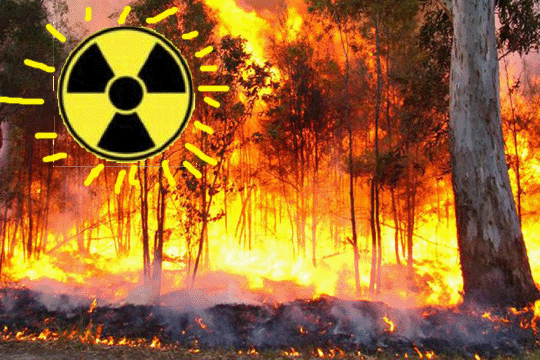
COMMENT. Let’s be aware of the danger to nuclear facilities. The Santa Susana Field Laboratory is located approximately 18 miles (29 km) northwest of Hollywood and approximately 30 miles (48 km) northwest of Downtown Los Angeles. The hot lab suffered a number of fires involving radioactive materials. For example, in 1957, a fire in the hot cell “got out of control and … massive contamination” resulted. A radioactive fire occurred in 1971, involving combustible primary reactor coolant (NaK) contaminated with mixed fission products. The 2018 Woolsey Fire began at SSFL and burned about 80% of the site.
In 2021, the three hour documentary In the Dark of the Valley depicted mothers advocating for cleanup of the site who have children suffering from cancer believed to be caused by the contamination. This could happen in Australia, if Peter Dutton’s foolish nuclear scheme ever came to pass.
January 9, 2025, Friends of the Earth Australia, https://theaimn.net/los-angeles-fire-a-wake-up-call-for-australia/
The fires currently tearing through Los Angeles are a reminder that Australia can no longer rely on northern hemisphere nations for water-bombing aircraft and firefighters during our summer.
“During our Black Summer, more than 1,000 people came from North America to assist in firefighting efforts. Australia recently sent multiple teams to assist with the fires in North America. This sharing of resources, including aircraft, firefighters and specialists, is how we fight fires in the 21st century” said Friends of the Earth campaigns co-ordinator Cam Walker. “And the fact that fires are raging in mid winter in the USA highlights that the world has entered a new phase – the era of the pyrocene – and that our old ways of fighting fires needs to change.”
Normally Australia leases up to six Large Air Tankers (LATs) which are each allocated to a specific state or territory, but which are shared around the country according to greatest need. While we need up to 7 LATs in a bad fire season, we only own one (which is owned by the NSW Rural Fire Service) and we now lease one year round.
The other planes are leased in after their post season maintenance in the northern hemisphere. They all come from North America and arrive in the country during the traditional ‘shoulder’ season. This shoulder is rapidly disappearing as planes are needed for larger sections of the year in each hemisphere.
“As fire seasons extend in both hemispheres, we face the risk of being unable to secure leases for LATs in coming years”.
There is a clear link between the current fires around LA and climate change. For instance, a 2016 study found climate change enhanced the drying of organic matter and doubled the number of large fires between 1984 and 2015 in the western United States (source: NOAA).
After the Royal Commission into Natural Disaster Arrangements that was held to reflect on the lessons of the 2019-20 Black Summer fire season, the commission recommended (Rec 8.1) that the federal government create ‘an Australian-based and registered national aerial firefighting capability, to be tasked according to greatest national need”. In responding to the commission, the federal government decided not pursue the possibility of Australia establishing its own fleet of LATs.
The commission also noted that “extreme weather has already become more frequent and intense because of climate change (and that) further global warming over the next 20 to 30 years is inevitable”.
Mr Walker continued: “In light of all the available science about longer and more intense fire seasons in both hemispheres and the increased difficulty of securing LATs on lease from North America, the federal government must commit to establishing an Australian owned fleet of LATs before the 2025/26 budget”.
The current federal government has taken firefighting capacity seriously and provided significant funding for water-bombing aircraft. With a review of aerial firefighting capability currently underway (expected to report back later this year) now is the right time to acknowledge the reality that we are facing and commit to buying a sovereign fleet of LATs that will be permanently based in Australia.
In addition to buying a fleet of publicly owned LATs, Australia must:
- Stop contributing to even worse global heating, which will continue to lengthen fire seasons and other negative climate change impacts. In the first instance it must stop exporting vast volumes of fossil fuels
- Fast track the development of new technology that will ensure rapid detection of new start fires
- Investigate establishing a national remote area firefighting team which could be deployed as needed to assist state and territory firefighting efforts.
A national remote area firefighting team. As fire threatens World Heritage Areas and national parks across the country, it is time to establish a national remote area firefighting team, which would be funded by the federal government and tasked with supporting existing crews in the states and territories.
Long fire seasons stretch local resources, and sometimes remote areas such as national parks need to be abandoned in order to focus on defending human assets. Having an additional, mobile national team that could be deployed quickly to areas of greatest need would help us protect the wonderful legacy of national parks and World Heritage Areas across the country.
This was recommended by a Senate inquiry after the devastating fires in Tasmania of 2016.
Prelude to an election: Voters beware (Part 1)
January 10, 2025 John Lord, AIM,
“…………………………………………………… 1 Mere days before Christmas, Matt Canavan decided it would be a good time to tell the truth about why the LNP chose a nuclear policy. As he said, it seemed a political ploy or stunt. Senator Pitt decided to leave the Nationals, saying that its leader, David Littleproud, was nothing more than a dill. I agree, but I would have been more dramatic about it. Other members have also quit the party or are retiring. Does any of that register with the voter?
Angus Taylor then spat out a few words that convinced me he needed a manager.
See what you make of this:
“I mean, that’s over time, that’s, you know, to the extent that over time, what you see basic economics, as long as you have good competition policy in place, and we intend to do that, that prices paid reflect costs – underlying costs,” he continued.
“That’s, that’s what you expect to see and that’s economics 101.”
Indeed, when voters see Angus on television, they must see his incompetence and incapacity to be an Australian treasurer or any other minister.
Brett Worthington wrote these words on Facebook:
“Not a plan. Not even a concept of a plan. A sham. It is a shameless con trick meant to divide opinion and stir discontent by projecting a distracting false vision that there is any alternative to renewables replacing coal and that “debate” is needed when there is nothing to discuss. The aim is not to build nuclear power plants but rather to delay the end of coal use to benefit mining billionaires. A bonus for the regressive reactionaries, or perhaps their central aim, is to exacerbate social tensions via bogus ideological dissent. Aka, to keep the heat up in the so-called “culture wars.“
I concur with all his words.
……………………………………………………observe the current political landscape in the United States. There, an unwavering commitment to misleading narratives and persistent propaganda has led to the election of a candidate who prioritises his ambitions and desires over the genuine needs and welfare of the populace………………………………………………………….more https://theaimn.net/prelude-to-an-election-voters-beware/
Critical Archival Encounters and the Evolving Historiography of the Dismissal of the Whitlam Government (Part 2)
I will never forget the day when I, living in a country area, ran to answer a phone call. It was my mother, in the faraway city. And I’ll never forget her exact words: “The queen’s man has sacked our elected Prime Minister!”
My Mum summed it up. Later, I have realised that this was a case of the UK government toeing the line of the USA government, and making sure that Australia got that USA military intelligence hub, Pine Gap.
January 8, 2025 AIMN Editorial, By Jenny Hocking
Continued from Part 1
After years of legal action, still absent from public view are crucial documents from a most contentious time in British imperial history: the 1947 and 1948 diaries covering the Mountbattens’ shared involvements in pre-Independence India, transition and partition, among “scores of other files” not yet released.
These remain locked away, and Lownie has spent £250,000 of his own funds in pursuit of public access to papers which constituted a purportedly public archive, while the Cabinet office has spent £180,000 keeping them secret. Particularly disquieting is Lownie’s recent claims that he has himself become the target of security surveillance as he continues to pursue the closed Mountbatten files.
Somewhere among those voluminous Mountbatten papers are letters between Mountbatten and the Governor-General, Sir John Kerr, about the dismissal of the Whitlam government. These letters were briefly cited by Mountbatten’s authorised biographer Philip Ziegler in which Mountbatten declared that he “much admired” Kerr’s “courageous and constitutionally correct” action in dismissing Gough Whitlam.
Several years ago, I visited Southampton University hoping to see Mountbatten’s dismissal correspondence with Kerr since, as discussed below, bizarre circumstance means that it no longer exists in Kerr’s papers in the National Archives of Australia. Although Ziegler had been granted access and had quoted from Mountbatten’s congratulatory letter to Kerr, I was denied access to the diaries and letters. Instead, I was handed some thin, rather desultory files containing a handful of itineraries, dinner placements, menus, and invitations to Mountbatten during his visit to Australia. No diaries and certainly no letters between Mountbatten and Kerr.
……………………………In relation to Kerr’s secret correspondence with the Queen, “the Palace letters” regarding the dismissal, it was the use of this uniquely powerful word in the archival lexicon – “personal” – that had placed the letters outside the reach of the Archives Act 1983 and necessitated an arduous Federal Court action to challenge their continued closure. Livsey notes in relation to the migrated Kenyan archive that the construction of “regimes of secrecy” in which the label “personal” was used to control access to and knowledge of British colonial practice; “files labelled ‘Personal’ could be consulted by white British officials only and ‘should not be sighted by local eyes’”…………………..
Lownie’s now four-year legal battle has been described as eerily similar to the Palace letters legal action which I took against the National Archives of Australia in 2016, arguing that the Queen’s correspondence with the Governor-General was not personal, and seeking its release. The case ended in the High Court in 2020 with a resounding 6:1 decision in my favour, the Court ruling that the Palace letters are, as I had argued, not personal and that they are Commonwealth records and come under the open access provisions of the Archives Act. The letters were released in full in July 2020, in a striking rebuff to the claimed convention of royal secrecy on which the Archives had in part relied.
…………………………………….. At its most significant, the denial of access to royal documents as “personal” enables the sophistry that the monarch remains politically neutral at all times to persist……………….
…………Although the Queen was publicly a careful adherent of that core requirement of neutrality, something the “meddling Prince” Charles most assertively was and is not, Hocking argues that “the much vaunted political neutrality is a myth, enabled and perpetuated by secrecy”. Professor Anne Twomey similarly notes that “If neutrality can only be maintained by secrecy, this implies that it does not, in fact, exist”.
Our own history gives us a powerful example of the way in which archival secrecy functions as a Royal protector, casting a veil over breaches of the claimed political neutrality of the Crown, in the changing historiography of the dismissal of the Whitlam government. ……………………….
For decades, the dismissal history was constrained by the impenetrable barrier of “Royal secrecy” which denied us access firstly, to any of Kerr’s correspondence with the Queen, ………………………………………….
Sir John Kerr’s abrupt dismissal, without warning, of the Whitlam government on 11 November 1975 just as Whitlam was to call a half-Senate election, was an unprecedented use of the Governor-General’s reserve powers and “one of the most controversial and tumultuous events in the modern history of the nation”, as the Federal Court described it.
These powers, derived from those of an autocratic Monarch untroubled by parliamentary sovereignty and even less by the electoral expression of the popular will, had not been used in England for nearly two hundred years, and never in Australia…………………………………………………………………. more https://theaimn.net/critical-archival-encounters-and-the-evolving-historiography-of-the-dismissal-of-the-whitlam-government-part-2/
Jenny Hocking is emeritus professor at Monash University, Distinguished Whitlam Fellow at the Whitlam Institute at Western Sydney University and award-winning biographer of Gough Whitlam. Her latest book is The Palace Letters: The Queen, the governor-general, and the plot to dismiss Gough Whitlam. You can follow Jenny on X @palaceletters.
TODAY. A genocidal USA President to be followed by another genocidal USA President?
“If those hostages aren’t back, I don’t want to hurt your negotiations, if they’re not back by the time I get into office, all hell will break out in the Middle East and it will not be good for Hamas and it will not be good, frankly, for anyone. All hell will break out. I don’t have to say anymore, but that’s what it is.”
“Democracy” is becoming a joke. With a sort of gerry-mandered system, the USA Electoral College, not the majority of voters, determines the result of the presidential election. Indeed, the majority of U.S. citizens don’t vote, anyway.
So the USA ends up with a lying, foul-mouthed, misogynist, convicted felon as President. But that really doesn’t matter all that much, as whoever gets in can only do so with the backing of the mega-wealthy owners of corporations and media, and indeed, of the “military industrial complex”. So however the President might want to, personally, avoid militarism, he can’t.
Joe Biden has been allout for promoting and supporting and paying, for the proxy war against Russia, and for Israel’s genocidal war in Gaza. All the while, he’s had his slimy, silver-tongued Antony Blinken publicly pretending that the USA wants peace.
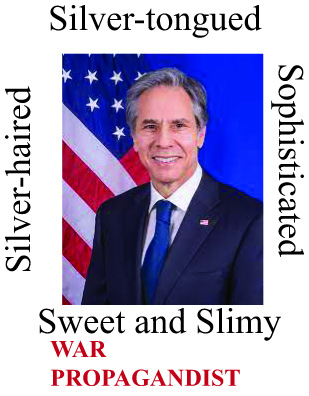
Donald Trump is an interesting contrast. From all that I could find out, he actually hates war, but has this unusual modus operandi of getting what he wants by bullying – so his weapon, preferably, is the threat of war, rather than war itself. He admires dictators, and likes to pal up with them. In the case of Ukraine, he’d probably go for a peace deal, as long as it somehow helps U.S. trade interests, and of course, his own business interests.
In the case of Gaza, perhaps the same thinking applies? If Trump could get the Gazans to hand over all their Israeli hostages back to Israel, perhaps that war would end, so perhaps Trump is using dire threats, to bully Hamas into that action.
Either way, by Biden’s consistent support and promotion of war, or by Trump’s inflammatory bullying tactics threatening war, – militarism is the way to go. And that’s how American business interests like it.
Both administrations are walking on a tightrope, that at any moment could erupt into World War 3. But that’s OK, – in the meantime, lots of weapons sales, lots of corporate profits, lots of shareholder gains, lots of jobs.
1 This month

of the week – Australians for War Powers Reform (AWPR)
To see nuclear-related stories in greater depth and intensity
 Antinuclear