Indecent haste in Australian government’s push for law making Napandee the nuclear waste dump. What’s going on?
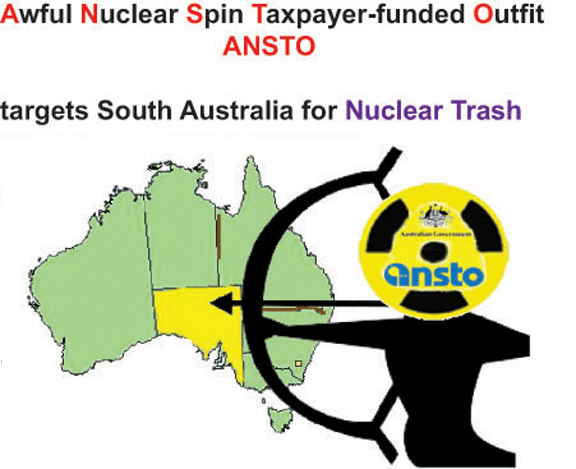
New nuclear legislation set to provide toxic dumping ground in South Australia, Independent Australia, By Noel Wauchope |
UNDER THE PRESSURE of The Australian Nuclear Science and Technology Organisation (ANSTO), The Australian Government is in a hurry to get a new bill passed. It’s not really a new bill, it’s actually a new bit tacked on to an existing one. It’s called the National Radioactive Waste Management Amendment (Site Specification, Community Fund and Other Measures) Bill 2020.
The amendment does two important things: it selects a definite place in South Australia, a farmer’s property called Napandee, as a radioactive waste dump and it removes the possibility of a judicial review of that selection.
The proposed dump is an “interim” radioactive waste facility.
It would consist of two parts:
- Temporary above-ground storage for what is known as low-level waste (LLW). LLW is a general term for a range of objects that are radioactively contaminated, but not considered to be highly radioactive nor toxic for thousands of years.
- A “temporary” above-ground storage for intermediate-level waste (ILW). ILW is a term for a mix of wastes that contains some very long-lived highly toxic radioactive matter, that does require isolation for thousands of years. While this amount would be smaller in volume, it would be far more significant. 95 per cent of this radioactive content would be spent nuclear fuel rods from ANSTO’s nuclear reactor at Lucas Heights, Sydney.
At present, these highly radioactive wastes are stored in giant canisters at Lucas Heights, where there is ample space for further canisters and experienced and skilled staff to monitor them and provide security.
ANSTO has plans to expand its operation and CEO Dr Adi Paterson’s dream of a world-leading business in exporting radionuclides for medicine and industry. Meanwhile, international nuclear security obligations demand that Australia develop a plan for the permanent disposal of nuclear wastes.
Unfortunately, this Napandee plan does nothing towards meeting these obligations. ……….
There is no plan whatsoever for the permanent disposal of this highly radioactive trash.
There’s a vague story that these wastes will later be moved from Napandee to a permanent disposal — anything from 40 to 300 years. They are most likely to suffer the fate of other such facilities in the USA and other countries and become stranded wastes…….
There was a heavy emphasis on “medical” wastes. But the reality is that the vast majority of wastes from nuclear medicine are very short-lived radioisotopes, that have no need to be transported thousands of miles and are routinely disposed of close to places such as hospitals where they are used.
A ballot was held in the area, of ratepayers only, on whether or not to support the project. Some residents close to the property were excluded, as were the Native Title holders, the Barngarla Aboriginal community. The vote result, from 824 voters, was 452 “yes”. The Barngarla held their own vote — 80 Barngarla voted, with the unanimous result of “no”.
The whole issue of the transport of the nuclear wastes and their “temporary” dumping does concern also the region, the state of South Australia and the nation. The decision should not be made solely by 452 ratepayers in one small rural area………
Non-ratepayers did not get a look-in. In this modern, almost Trumpian paradigm, outsiders such as economists, environmentalists, medical experts, sociologists and independent radiation experts are seen as “the elites” that can’t be trusted. Unfortunately, independent overseas experts on nuclear waste management have been excluded, too. Apart from the problems raised for the town and region of Kimba itself, there are serious questions about the appropriateness of the planned system, the area environmentally and geologically……..
Of course, this plan is confined to nuclear wastes produced in Australia. For now.
The plan is obviously helpful to ANSTO. They can pass this uncomfortable buck of 10,000 year-lasting radioactive wastes on to a distant South Australian rural community. It will then be managed and funded by whom? The South Australian and Australian tax-payers.
This will take the pressure of ANSTO, make it look as if they’re doing something about their radioactive trash and avoid any Lucas Heights, or rather Barden Ridge fuss, as they expand their operations. (The residential area previously part of Lucas Heights was renamed Barden Ridge to increase the real estate value of the area, as it would no longer be instantly associated with the nuclear reactor.)
It’s not so helpful to South Australia, or to Australia. The best solution is to leave those nuclear reactor wastes safely stored at Lucas Heights for the time being and to develop a national discussion and plan for what to do with those wastes for permanent disposal. Under this present, rather rushed scheme, Resources Minister Keith Pitt, Dr Paterson and the whole crew of the NRWMF will be dead and gone, long before the stranded wastes at Napandee will be properly dealt with.
A solution for the common good is what’s needed, not just a solution that suits ANSTO. ANSTO is a statutory body — a case of the tail wagging the dog, perhaps?
The National Radioactive Waste Management Amendment (Site Specification, Community Fund and Other Measures) Bill 2020 has been passed by the House of Representatives. It will be debated in the Senate later this year.
Meanwhile the Senate Economics Legislation Committee is holding an Inquiry into this bill…….
it gets interesting. Suddenly, a public hearing becomes private. The topic for this new secrecy was the discussion of some documents from the NRWMFT that had been requested by the Committee and received only a very short time before the hearing. The documents were heavily redacted. They relate to the process by which the Napandee site was selected. How spontaneous was the farmer’s offer of his land? What roles did the NRWMFT, ANSTO and the Industry Department, play in instigating this offer?
So many questions surround this plan:
- Is the new amendment being pushed because Minister Keith Pitt fears the opposition of Aboriginals, or indeed of the public in general?
- The exclusion of the Barngarla from the decision — how does this square with Indigenous rights?
- Why did the Government not provide any independent advice to the Kimba community?
- Why are the South Australian and Australian public excluded from decision-making?
- Why is this Senate Committee public hearing to be held in secret?
- Why is this all happening in such a hurry? https://independentaustralia.net/politics/politics-display/new-nuclear-legislation-set-to-provide-toxic-dumping-ground-in-south-australia,14256
Nuclear nations have handled COVID-19 the worst
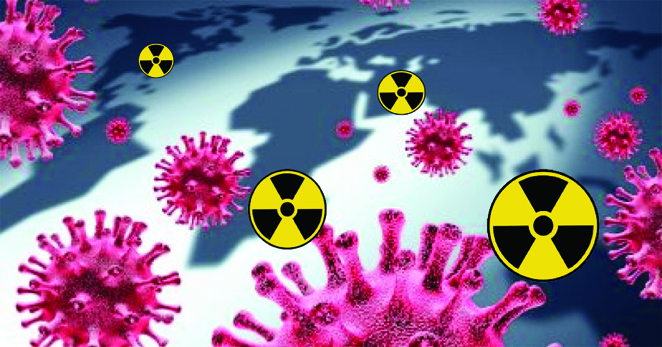
The most useless of arsenals – Nuclear nations have handled COVID-19 the worst https://beyondnuclearinternational.org/2020/08/30/the-most-useless-of-arsenals/, By Tilman Ruff, August 30, 2020 by beyondnuclearinternational
The Covid-19 pandemic has demonstrated that massive arsenals are useless in a pandemic. The countries that have spent obscene sums on nuclear weapons have failed to provide the most basic of protective equipment against the coronavirus, putting their citizens in danger every day.
New pathogens will continue to evolve, spread and disrupt our world. Indeed as we deplete habitats for other species, wreak climate havoc, and grow food industrially, we can expect new infectious diseases more often.
COVID-19 is just the latest; it will certainly not be the last. Bad enough it is, but far from the worst we could expect.
Exposing vulnerability
COVID-19 has caught even the wealthiest nations unprepared; their massive armaments useless against a small, mindless aggregation of single stranded RNA, a few proteins and a thin lipid envelope about 120 nm across.
Nations investing obscene sums in nuclear weapons that must never be used have been unable to provide the most basic of protective equipment – gowns, gloves, and facemasks for their frontline health professionals putting themselves in danger every day.
The best funded public health organization in the world, the Centers for Disease Control and Prevention of the United States, went from recommending N95 respirators for doctors and nurses at risk to recommending improvised bandanas in the face of severe shortages of the most basic protection costing a fraction of a dollar.
The US government rejected international assistance with test kits and was then left with woefully inadequate numbers of its own faulty kits.
Learning from the pandemic
This coronavirus can teach us a lot if we are willing to learn.
It shows where the real threats to our security lie, for which massive military arsenals and the most powerful WMD are not only useless, but get in the way.
It shows our interconnected vulnerabilities and capacities, that globalized problems respect no borders, are shared and demand cooperative solutions.
It has shown how quickly the exceptional hubris of arrogant leaders serving their own and narrow vested interests can enable great harm to occur; evil measured in monumental failures of leadership, causing tens of thousands of deaths that could readily have been prevented.
It has shown the uselessness of ideological baggage in confronting big challenges.
It has laid bare that respect for truth, evidence and science; and listening to the expert custodians of that evidence, are crucial.
It has demonstrated that changes once deemed unthinkable can be made, and made fast.
It has shown that female leaders are often more sensible and reliable in a crisis, and that we need more of them.
It has shown the great ingenuity, resourcefulness and kindness that people everywhere are capable of.
It has shown that what the science and experts tell us – that new pandemics will occur and that we are woefully prepared to deal with them – will occur if warnings are not heeded.
Choosing to listen
We can prevent some new pandemics from occurring. We can always respond better if we listen to the evidence and prepare well for what can be expected.
If we do not listen to or choose to see the overwhelming evidence of accelerating climate disruption, and quickly and drastically reduce greenhouse gas emissions, catastrophe will bear down on us in our lifetimes and the world our children and grandchildren live in will be much more violent, difficult and impoverished.
If we ignore the reality of what nuclear weapons do, and the growing dangers of their use, then what may be a small risk on any given day, over time will become inevitable.
A final epidemic
This COVID pandemic will abate. However after a nuclear war there will be no re-building, no coming back. It would be the final epidemic. There will not be a health care system in overloaded crisis; there will be no health system and no one able to staff it. We can prepare for a pandemic; for nuclear war there is only prevention.
That is why we have to act now to protect our Earth from rampant heating and the abrupt ice age that would follow the radioactive incineration of nuclear war; as if our lives depended on it, because they do.
We can’t stop all new epidemics. And we don’t yet know if we can eradicate the COVID-19 virus.
But we can and must end nuclear weapons before they end us. The Treaty on the Prohibition of Nuclear Weapons provides the best available path forward. We should heed the lessons of COVID and take that path while we still can.
Tilman Ruff is Associate professor at the Nossal Institute for Global Health, School of Population and Global Health, University of Melbourne, Co-President, International Physicians for the Prevention of Nuclear War (Nobel Peace Prize 1985) and Co-founder of the International Campaign to Abolish Nuclear Weapons (ICAN, Nobel Peace Prize 2017)
This article first appeared on Croakey and is republished with kind permission of the author.
Global coronavirus infections reach reach 25 million
 Coronavirus update: India records world’s biggest single-day jump in infections, global cases reach 25 million, ABC News , 31 Aug 20, India has broken a global record for the highest number of coronavirus infections recorded in a day, as the country continues to further ease pandemic restrictions nationwide.The number of confirmed coronavirus cases globally has topped 25 million, according to figures by Johns Hopkins University. Coronavirus update: India records world’s biggest single-day jump in infections, global cases reach 25 million, ABC News , 31 Aug 20, India has broken a global record for the highest number of coronavirus infections recorded in a day, as the country continues to further ease pandemic restrictions nationwide.The number of confirmed coronavirus cases globally has topped 25 million, according to figures by Johns Hopkins University.
Meanwhile, far-right protesters and others have stormed the German parliament building following a protest against the country’s pandemic restrictions. This story will be regularly updated throughout Monday. India records world’s biggest single-day jump in virus casesThe Health Ministry on Sunday local time also reported 948 deaths in the past 24 hours, taking total fatalities to 63,498. India has now reported more than 75,000 infections for four straight days. The surge has raised the country’s total virus tally to over 3.5 million and comes at a time when India is reopening its subway networks and allowing sports and religious events in a limited manner from next month as part of efforts to revive the economy. Even as eight Indian states remain among the worst-hit regions and contribute nearly 73 per cent of the total infections, the virus is now spreading fast in the vast hinterlands, with experts warning that the month of September could be the most challenging. Global cases reach 25 millionThe number of confirmed coronavirus cases globally has topped 25 million, according to a tally kept by Johns Hopkins University. The United States leads the count with 5.9 million cases, followed by Brazil with 3.8 million and India with 3.5 million. The real number of people infected by the virus around the world is believed to be much higher — perhaps 10 times higher in the US, according to the Centres for Disease Control and Prevention — given testing limitations and the many mild cases that have gone unreported or unrecognised. Global deaths from COVID-19 stand at over 842,000, with the US having the highest number with 182,779, followed by Brazil with 120,262 and Mexico with 63,819. Far-right pandemic restriction protesters attempt to storm German parliament Senior German officials have condemned attempts by far-right protesters and others to storm the parliament building following a protest against the country’s pandemic restrictions. Hundreds of people, some waving the flag of the German Reich of 1871-1918 and other far-right banners, breached a security barrier outside the Reichstag late on Saturday local time but were intercepted by police and forcibly removed……… https://www.abc.net.au/news/2020-08-31/coronavirus-update-covid19/12610940 |
|
|
I am appalled at what is being done to Julian Assange
 As an Australian, I am appalled at what is being done to Julian Assange. But not surprised, when I think upon it Very similar things were done decades ago, to Wilfred Burchett. His crime was to go to Hiroshima and report on the sufferings of the people after the atomic bombing. While not an Australian, he had strong connections here, so was banned from this country.
Ever a colony, Australia kowtows to the military industrial complex, and cannot tolerate those who speak truth about it.
I understand that Julian Assange is supposed to be a supporter of the nuclear industry. My websites and campaign are about opposition to that industry. People can’t seem to get it – that I don’t care what Julian thinks about that. The point is (a) this man is being treated cruelly, and (b) freedom of speech, justice, fairness – don’t we care about this?
The travesty of justice that is the UK extradition hearing about Julian Assange
|
August 30, 2020 by craig The travesty that is Julian Assange’s extradition hearing resumes fully on 7 September at the Old Bailey. I shall be abandoning my own legal team and going down to London to cover it again in full, for an expected three weeks. How this is going to work at the Old Bailey, I do not know. Covid restrictions presumably mean that the numbers in the public gallery will be tiny. As of now, there is no arrangement for Julian’s friends and family in place. It looks like 4am queuing is in prospect.
By 7 September it will be six months since I applied to resume my membership of the National Union of Journalists. I STILL have not the slightest idea who objected, or what the grounds were for objection. I have not heard from the NUJ for months. A senior official of an international journalists’ organisation has told us that he inquired, and learnt that the NUJ national executive has considered my application and set up a sub-committee to report. But if so, why is this secret, why have I not been informed, and why am I not allowed to know what the objection is? I find this all very sinister. At this stage it is not paranoid to wonder whose hand is behind this. The practical effect of this is that without NUJ membership I cannot access a Press card, and avail myself of whatever media arrangements are in place for the Assange hearing (just as I was kept out of most of the Salmond trial). I have now reached the stage where I would like to take legal action against the NUJ, but the finances are beyond me. I am not going to ask you to donate because we are going to need all our resources for the contempt case against me, which the Crown drags out. I shall be writing next week about my own case and that hearing earlier this week. I would just note now that the “virtual hearing” is entirely unsatisfactory and unfair on defendants. There was at least one occasion when my QC agreed with a suggestion of the judge when I would have instructed them not to had I been, as I should normally have been, seated near them in court and able to instruct. Unlike our adversaries including the Integrity Initiative, the 77th Brigade, Bellingcat, the Atlantic Council and hundreds of other warmongering propaganda operations, this blog has no source of state, corporate or institutional finance whatsoever. It runs entirely on voluntary subscriptions from its readers – many of whom do not necessarily agree with the every article, but welcome the alternative voice, insider information and debate. |
|

Climate change and its impacts are not just the future: they are now
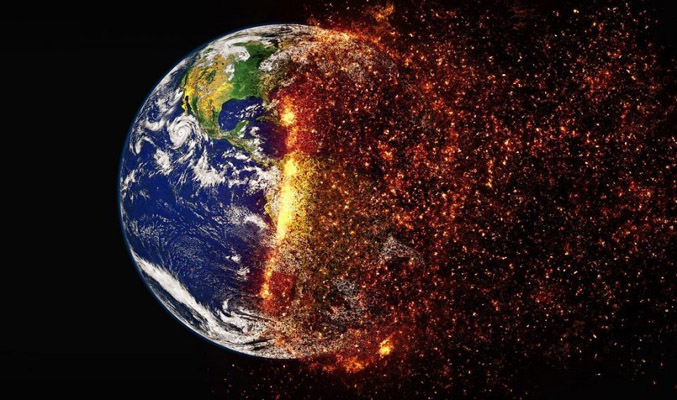
Everything Is Unprecedented. Welcome To Your Hotter Earth, NPR, REBECCA HERSHER, NATHAN ROTT, LAUREN SOMMER-30 Aug 20,
|
The upshot of climate change is that everyone alive is destined to experience unprecedented disasters. The most powerful hurricanes, the most intense wildfires, the most prolonged heat waves and the most frequent outbreaks of new diseases are all in our future. Records will be broken, again and again. But the predicted destruction is still shocking when it unfolds at the same time. This week, Americans are living through concurrent disasters. In California, more than 200,000 people were under evacuation orders because of wildfires, and millions are breathing smoky air. On the Gulf Coast, people weathered a tropical storm at the beginning of the week. Two days later, about half a million were ordered to evacuate ahead of Hurricane Laura. We’re six months into a global pandemic, and the Earth is on track to have one of its hottest years on record. Climate scientist Camilo Mora of the University of Hawaii says if our collective future were a movie, this week would be the trailer. “There is not a single ending that is good,” he says. “There’s not going to be a happy ending to this movie.” Mora was an author of a study examining all the effects of climate change. The researchers concluded that concurrent disasters will get more and more common as the Earth gets hotter. That means we will live through more weeks like this one — when fires, floods, heat waves and disease outbreaks layer on top of one another. “Keep in mind that all these things are related,” Mora explains. “CO2 is increasing the temperature. As a result, the temperature is accelerating the evaporation of water. The evaporation of water leads to drought that in turn leads to heat waves and wildfires. In places that are humid, that evaporation — the same evaporation — leads to massive precipitation that is then commonly followed by floods.” Disease outbreaks are also more likely. The most recent U.S. National Climate Assessment warns that changing weather patterns make it more likely that insect-borne illnesses will affect the U.S. Climate change is also causing people and animals to move and come in contact with one another in new and dangerous ways. If humans dramatically reduce greenhouse gas emissions immediately, scientists say it will help avoid the most catastrophic global warming scenarios. Worldwide emissions are still rising, and the United States is the planet’s second-largest emitter. Mora says helping people connect the dots between the current disasters and greenhouse gas emissions should be every scientist’s priority. “That’s the million-dollar question,” he says. “How do we speak to people in a way that we get them to appreciate the significance of these problems?” Hurricanes and climate change Climate change is making the air and water hotter, and that means more power for hurricanes. “Whenever you get ocean temperatures that are much above average, you’re asking for trouble,” meteorologist Jeff Masters explains. “And we’ve seen some of the warmest ocean temperatures on record for the Atlantic basin this year.” Hot water is like a battery charger for hurricanes. As a storm moves over hot water, like Hurricane Laura did this week, it captures moisture and energy very quickly. In recent years, scientists have seen evidence that global warming is already making storms more likely to grow large and powerful and more likely to intensify quickly. …….. Scientists have also found that hurricanes are dropping more rain, which means more flooding. Flooding is consistently the most deadly and damaging effect of a hurricane. Studies show many people underestimate the flood risks from hurricanes. Just a few inches of moving water can make it impossible to stay on your feet or control your car. Add all that to the current pandemic, and you get a dangerous situation, especially for people living in the path of the storm. As NPR has reported, safe options for people who evacuate this year could be limited because group shelters might accept fewer people in order to maintain social distancing. ………. “People are becoming more vulnerable as this COVID crisis goes on,” Morris says, as more people get laid off or run out of savings. “We have frankly been failing to serve the most vulnerable, and the people who have been made vulnerable by these cascading catastrophes.” Wildfires and Climate Change The fingerprints of climate change are all over the Western wildfires, too. ………. Fires are burning more frequently and intensely in places where they’ve always occurred, and they’re creeping into places where they were previously rare. …………….. How bad it eventually gets depends on how quickly the world can reduce carbon emissions. But the past weeks should make clear: “Climate change and its impacts are not the future,” says Crystal Kolden, a fire scientist at the University of California, Merced. “They are now.” https://www.npr.org/2020/08/28/905622947/everything-is-unprecedented-welcome-to-your-hotter-earth?utm_campaign=storyshare&utm_source=twitter.com&utm_medium=social |
|
Australian government seeks to regurgitate Tony Abbott’s anti environment laws
 ‘Taking an eraser’ to Australia’s wildlife: ad blitz planned to fight environment law ‘Taking an eraser’ to Australia’s wildlife: ad blitz planned to fight environment law
Coalition accused of ‘breach of faith’ as it seeks to introduce almost exact replica of failed Abbott government legislation, Guardian, Lisa Cox, Sat 29 Aug 2020 Conservation groups will launch an advertising campaign aimed at building support for stronger national environment laws in response to what they say is a “breach of faith” by the Morrison government. Groups including Birdlife Australia, WWF and the Australian Conservation Foundation will begin a “Before it’s gone” campaign on Sunday with radio, print, TV and billboard advertisements featuring high-profile species including the koala and greater glider. It follows the Morrison government this week introducing legislation to hand greater powers to the states that included no measures to ensure maintained or strengthened protection for threatened species or ecosystems. Continue reading |
Big oil plans to flood Africa with plastic
Big Oil Is in Trouble. Its Plan: Flood Africa With Plastic. https://www.nytimes.com/2020/08/30/climate/oil-kenya-africa-plastics-trade.html
Faced with plunging profits and a climate crisis that threatens fossil fuels, the industry is demanding a trade deal that weakens Kenya’s rules on plastics and on imports of American trash. NYT, By Hiroko Tabuchi, Michael Corkery and Carlos Mureithi, Aug. 30, 2020
Confronting a climate crisis that threatens the fossil fuel industry, oil companies are racing to make more plastic. But they face two problems: Many markets are already awash with plastic, and few countries are willing to be dumping grounds for the world’s plastic waste……..
Last year, Kenya was one of many countries around the world that signed on to a global agreement to stop importing plastic waste — a pact strongly opposed by the chemical industry. Emails reviewed by The Times showed industry representatives, many of them former trade officials, working with U.S. negotiators last year to try to stall those rules.
The industry thinks it has found a solution to both problems in Africa.
According to documents reviewed by The New York Times, an industry group representing the world’s largest chemical makers and fossil fuel companies is lobbying to influence United States trade negotiations with Kenya, one of Africa’s biggest economies, to reverse its strict limits on plastics — including a tough plastic-bag ban. It is also pressing for Kenya to continue importing foreign plastic garbage, a practice it has pledged to limit.
Plastics makers are looking well beyond Kenya’s borders. “We anticipate that Kenya could serve in the future as a hub for supplying U.S.-made chemicals and plastics to other markets in Africa through this trade agreement,” Ed Brzytwa, the director of international trade for the American Chemistry Council, wrote in an April 28 letter to the Office of the United States Trade Representative.
The United States and Kenya are in the midst of trade negotiations and the Kenyan president, Uhuru Kenyatta, has made clear he is eager to strike a deal. But the behind-the-scenes lobbying by the petroleum companies has spread concern among environmental groups in Kenya and beyond that have been working to reduce both plastic use and waste. Continue reading
Minigrids – the clean energy revolution across Africa and Asia
 The little-known clean energy revolution https://energy.economictimes.indiatimes.com/news/renewable/the-little-known-clean-energy-revolution/77742430
There are about 5,500 mini-grids in operation across 12 countries in Africa and Asia, according to The State of the Global Mini-grids Market Report 2020 published by the international non-governmental organization Sustainable Energy for All and BloombergNEF, Bloomberg, August 26, 2020,
Over the last decade, the number of people in the world without access to electricity has fallen drastically — from 1.4 billion in 2010 to about 900 million in 2018, according to the United Nations. And yet, if current trends persist, the world won’t be able to meet the UN’s sustainable development goal of universal access to electricity by 2030, with as many as 600 million still lacking basic 21st century services.
It doesn’t have to be so. A new technology has matured and become affordable that could help achieve the laudable goal, and it’s called mini-grids.
There are about 5,500 mini-grids in operation across 12 countries in Africa and Asia, according to The State of the Global Mini-grids Market Report 2020, published by the international non-governmental organization Sustainable Energy for All and BloombergNEF earlier this year. The report’s authors found that mini-grids could meet the needs of half the people who still need access to electricity in those regions.
As the name suggests, mini-grids are small, isolated versions of larger power grids. They increasingly use solar power as an energy source, with support from batteries or diesel generators. Because the cost of solar power has fallen drastically , mini-grids have become much cheaper than installing long-distance transmission lines from a central electricity grid.
Universal power access will require $128 billion of spending, the report found, but the world is on track to spend only about $63 billion on mini-grids over the next decade. Plugging the gap would cost less than $600 per target household reached.
The need goes beyond money. “Today the mini-grid market is nascent, despite being the least-cost option for electricity access in many areas,” the report concludes. The international Mini-Grids Partnership, which includes the World Bank and other development agencies from rich countries, has approved $2 billion in awards since 2012 but only disbursed 13% of the money, with many projects stuck because of policy uncertainties.
In 2017, the country passed a law to help mini-grid development, which streamlines the online application process, offers $350 in government subsidies per user once grids with more than 30 users are up and running, and provides for compensation if the main power grid eventually arrives in an area served by a mini-grid. Developers in Nigeria now have simpler processes and clearer guidelines to follow.
The upshot is that mini-grids have become a much more attractive investment. “Now you see a lot of companies flocking to Nigeria,” says Ruchi Soni, program manager at Sustainable Energy for All. “We hear from partners that they would like to replicate Nigeria’s success in their country.”
This offshoot of the clean energy revolution has three benefits: mini-grids can help provide access to electricity to those who lack it and do so in a cleaner and cheaper way. Few things in life are win-win-win.
Welcome to the ‘Pyrocene,’ an Epoch of Runaway Fire
Fire scholar Stephen J. Pyne proposes a pyrocentric view of the last 10,000 years — and warns that California’s wildfires herald a very combustible future. Bloomberg City Lab By Laura Bliss, August 27, 2020 It isn’t just California that’s burning. This summer, smoke from massive wildfires in Siberia choked skies as far as Alaska and set new pollution records, in a second consecutive year of unprecedented blazes in the Arctic Circle. Rising temperatures, a loss of precipitation, and parched vegetation are hallmarks of climate change, scientists say, as are the increasingly extreme wildfires that result, from the arid Western U.S. to some of coldest places on Earth. Continue reading
Renewables and Covid-19 combine to cut Australia’s greenhouse emissions — RenewEconomy

Covid-19 travel restrictions and continued renewables growth contribute to fall in Australia’s emissions, but benefits set to be short lived. The post Renewables and Covid-19 combine to cut Australia’s greenhouse emissions appeared first on RenewEconomy.
Renewables and Covid-19 combine to cut Australia’s greenhouse emissions — RenewEconomy
Solar tariffs reshaped to favour batteries, EVs, and west-facing panels — RenewEconomy

Western Australia to manage booming rooftop solar market by refining grid export payments to batteries and electric vehicles, and paying more at peak times. The post Solar tariffs reshaped to favour batteries, EVs, and west-facing panels appeared first on RenewEconomy.
Solar tariffs reshaped to favour batteries, EVs, and west-facing panels — RenewEconomy
August 30 Energy News — geoharvey

Opinion: ¶ “Power To The People: Why Clean Energy Must Give More Australians A Slice Of The Pie” • Renewable energy is cheap partly because it requires little human intervention, which means lower electricity prices. It means more money can be given back to the community in other ways. But its jobs rely mostly on […]
August 30 Energy News — geoharvey
August 29 Energy News — geoharvey

Opinion: ¶ “Hurricanes, Fires, Floods And Locusts: Science Says Climate Change Is Here But The RNC Refuses To Believe” • The US military warned about climate change in 1990, predicting death, desperation, and tension in distant lands. Now the Hurricanes, fires, and floods are here in the US. But watching the Republican National Convention, you’d […]
August 29 Energy News — geoharvey
Kazzi Jai reports on the latest Senate hearing on Nuclear Waste Amendment Bill
 Kazzi Jai Fight To Stop Nuclear Waste In The Flinders Ranges, 28 Aug 20, I will try and keep this summation as brief as possible regarding the Senate Hearing with DIIS this morning.
1 This month.

PETITION – To: Prime Minister Anthony Albanese and the Australian Labor Government
Chernobyl: The Lost Tapes – A good documentary on Chernobyl on SBS available On Demand for the next 3 weeks– https://www.sbs.com.au/ondemand/tv-program/chernobyl-the-lost-tapes/235274195556
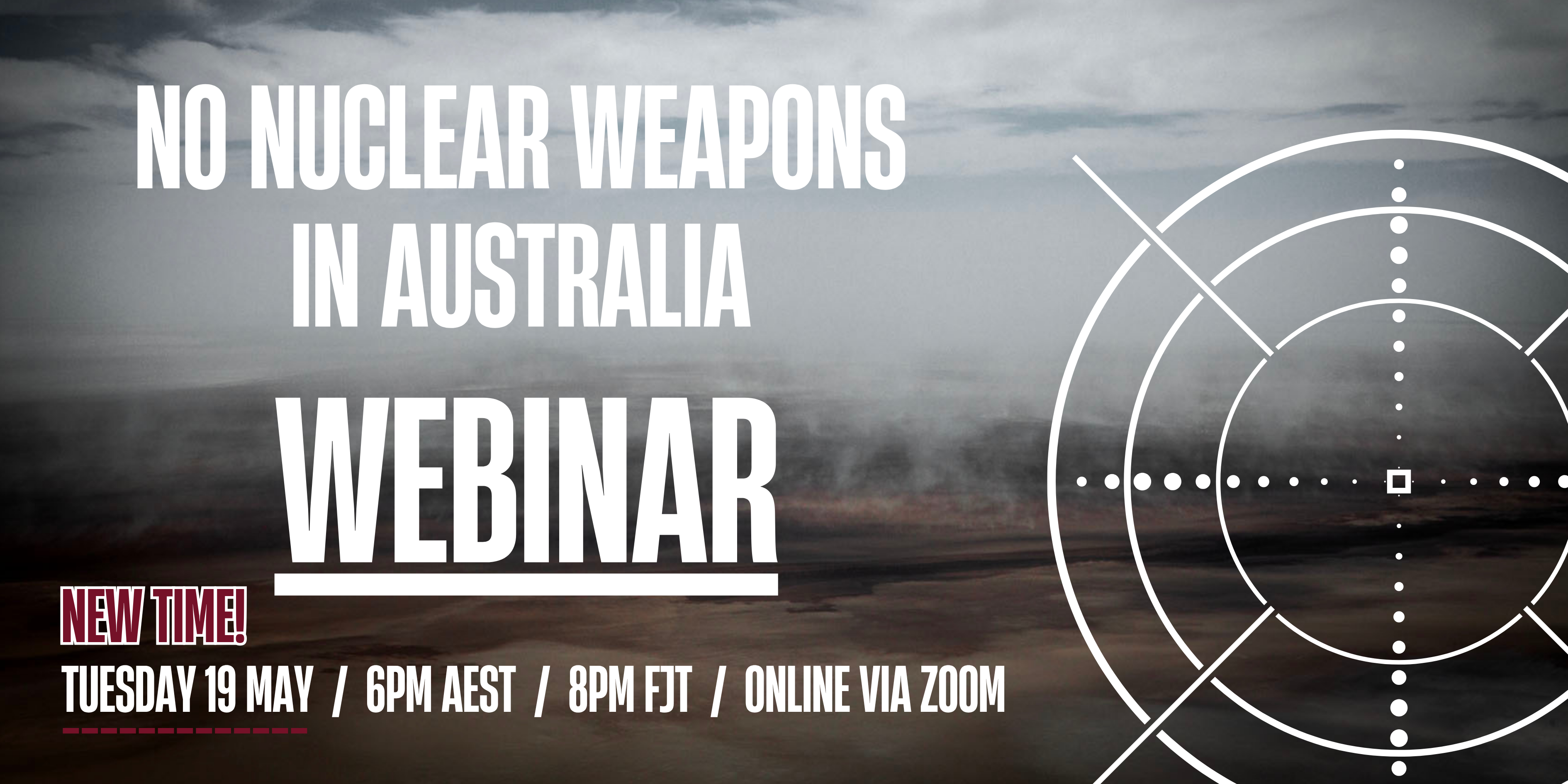
19 May – Webinar- Webinar: No Nuclear Weapons in Australia
Start: 2026-05-19 18:00:00 UTC Canberra, Melbourne, Sydney (GMT+10:00)
End: 2026-05-19 19:30:00 UTC Canberra, Melbourne, Sydney (GMT+10:00)
20 May – Webinar – The dangerous world of AUKUS, US, military occupation and suppression of dissent

National Webinar, 20th May, 2026, 6.30pm AEST. Confronting laws restricting/suppressing protest speech and action
Speakers: Former Sen. Rex Patrick, Lawyer Nick Hanna ,Arthur Rorris ,Jorgen Doyle, Sen David Shoebbridge,
Facilitator Kelley Tranter.

of the week – Australians for War Powers Reform (AWPR)
To see nuclear-related stories in greater depth and intensity
 Antinuclear