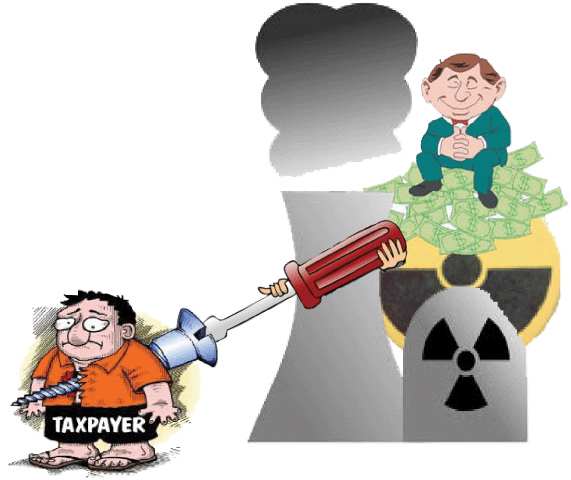
Nuclear power – a big financial risk, must get tax-payer subsidy
 Nuclear plants need government subsidy—expert https://manilastandard.net/business/power-technology/332276/nuclear-plants-need-government-subsidy-expert.html Nuclear plants need government subsidy—expert https://manilastandard.net/business/power-technology/332276/nuclear-plants-need-government-subsidy-expert.html
posted August 24, 2020 at 07:05 pm by Alena Mae S. Flores, An energy analyst said the country’s planned nuclear power development carries a lot of risk and will need government subsidy to make it feasible.“Nuclear, obviously has tail risks and as an analyst, I will look at it from a financial perspective…Nuclear in my view is totally uneconomic without government subsidy,” Sara Jane Ahmed, an energy finance analyst at the Institute for Energy Economics and Financial Analysis, said during a forum by the Institute for Climate and Sustainable Cities.
Ahmed said that of the top 10 major nuclear developments in the world, most of them were 10 to 15 years behind schedule, “and they are double or triple the original investment and the cost to consumers are prohibitively expensive without a lock-in subsidy.” |
|
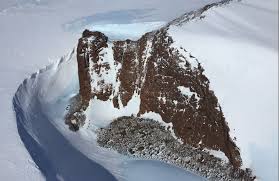
Ice melting at a surprisingly fast rate underneath Shirase Glacier Tongue in East Antarctica

- East Antarctic melting hotspot identified
- https://www.sciencedaily.com/releases/2020/08/200824092000.htm
- August 24, 2020
- Source:
- Hokkaido University
- Summary:
- Ice is melting at a surprisingly fast rate underneath Shirase Glacier Tongue in East Antarctica due to the continuing influx of warm seawater into the Lützow-Holm Bay.
-
Hokkaido University scientists have identified an atypical hotspot of sub-glacier melting in East Antarctica. Their findings, published in the journal Nature Communications, could further understandings and predictions of sea level rise caused by mass loss of ice sheets from the southernmost continent.
The 58th Japanese Antarctic Research Expedition had a very rare opportunity to conduct ship-based observations near the tip of East Antarctic Shirase Glacier when large areas of heavy sea ice broke up, giving them access to the frozen Lützow-Holm Bay into which the glacier protrudes.
“Our data suggests that the ice directly beneath the Shirase Glacier Tongue is melting at a rate of 7-16 meters per year,” says Assistant Professor Daisuke Hirano of Hokkaido University’s Institute of Low Temperature Science. “This is equal to or perhaps even surpasses the melting rate underneath the Totten Ice Shelf, which was thought to be experiencing the highest melting rate in East Antarctica, at a rate of 10-11 meters per year.”
- The Antarctic ice sheet, most of which is in East Antarctica, is Earth’s largest freshwater reservoir. If it all melts, it could lead to a 60-meter rise in global sea levels. Current predictions estimate global sea levels will rise one meter by 2100 and more than 15 meters by 2500. Thus, it is very important for scientists to have a clear understanding of how Antarctic continental ice is melting, and to more accurately predict sea level fluctuations.
Most studies of ocean-ice interaction have been conducted on the ice shelves in West Antarctica. Ice shelves in East Antarctica have received much less attention, because it has been thought that the water cavities underneath most of them are cold, protecting them from melting.
- During the research expedition, Daisuke Hirano and collaborators collected data on water temperature, salinity and oxygen levels from 31 points in the area between January and February 2017. They combined this information with data on the area’s currents and wind, ice radar measurements, and computer modelling to understand ocean circulation underneath the Shirase Glacier Tongue at the glacier’s inland base.
The scientists’ data suggests the melting is occurring as a result of deep, warm water flowing inwards towards the base of the Shirase Glacier Tongue. The warm water moves along a deep underwater ocean trough and then flows upwards along the tongue’s base, warming and melting the ice. The warm waters carrying the melted ice then flow outwards, mixing with the glacial meltwater.
The team found this melting occurs year-round, but is affected by easterly, alongshore winds that vary seasonally. When the winds diminish in the summer, the influx of the deep warm water increases, speeding up the melting rate.
“We plan to incorporate this and future data into our computer models, which will help us develop more accurate predictions of sea level fluctuations and climate change,” says Daisuke Hirano.
Traditional Owners block road to Adani coal mine in central Queensland
‘We want them out’: Traditional Owners block road to Adani coal mine in central Queensland, SBS, 24 Aug 20, An Adani spokesperson said construction on the mine was continuing despite the blockade.
Protesters, including Traditional Owners of Wangan and Jagalingou country, have blocked the main road to the controversial Adani Carmichael coal mine in central Queensland.
More than 20 people had established a camp across the road from the site and negotiators from Mackay and the Whitsundays were at the scene, a Queensland Police spokesperson said on Monday afternoon. No arrests had been made.
The blockade follows a decade-long campaign against the construction of the mine, located more than 400 kilometres inland from Mackay, which is set to be one of Australia’s largest coal mines when completed.
Wangan and Jagalingou man Adrian Burragubba said the blockade aimed to re-establish control of the land and force the mining giant to abandon the project.
“We’re taking back control of our land, that’s what we’re doing here. We’re doing it because we’ve been ignored, as the original Wangan and Jagalingou people, we’ve been ignored through this whole process,” he said.
“We demand an end to the destruction of our unceded territory. We demand Adani Australia abandon their Carmichael mine project immediately. We want them out, we want them to pack up and leave our tribal lands.”
Mr Burragubba was bankrupted in 2018 after repeated failed court actions to stop the Galilee Basin project………
Adani downsized the project in 2018 from a 60 million-tonne-a-year mine, costing $16.5 billion, to a 10-to-15 million tonnes a year mine, costing about $2 billion.
Construction of the site commenced in 2019 following final approvals from the federal and state governments. HTTPS://WWW.SBS.COM.AU/NEWS/WE-WANT-THEM-OUT-TRADITIONAL-OWNERS-BLOCK-ROAD-TO-ADANI-COAL-MINE-IN-CENTRAL-QUEENSLAND
Gas is not transition energy we were promised, new research suggests
 Gas is not transition energy we were promised, new research suggests, SMH, By Nick O’Malley, August 24, 2020 — The good news about natural gas is that when it is burnt it creates between 40 and 50 per cent less carbon dioxide than coal would to create the same amount of energy.This is why it has been embraced by some climate activists and governments as a useful energy source to replace coal and oil while renewable energy technologies catch up with global energy demand.
But the good news ends there, and there is a lot more to the story.
Before it is burnt natural gas is mostly made up of methane, and methane is estimated to be about 28 times more potent a greenhouse gas than carbon dioxide over a 100-year period.
Over a 20-year period – about the time scientists believe we have to try to prevent the worst impacts of global warming – it is up to 80 times more potent at warming the planet than carbon dioxide.
The United States’ Environmental Protection Agency estimates that for every cubic metre of methane extracted by the US oil and gas industry, 1.4 per cent escapes into the atmosphere as so-called fugitive emissions.
But more recent research suggests this estimate is drastically low, and that, in fact, the industry in the US is leaking 13 million metric tonnes of methane a year, or 2.3 per cent.
It is not yet clear how much fugitive methane is released by the Australian gas industry, but new technologies now allow scientists to accurately measure it and the data is expected to be published in the coming months.
The US Environmental Defence Fund estimated that, in America, if just 3 per cent of methane escapes, gas is no cleaner an energy source than coal……. https://www.smh.com.au/environment/climate-change/gas-is-not-transition-energy-we-were-promised-new-research-suggests-20200824-p55ovg.html
Frank Barnaby, nuclear weapons scientist and global hero
he gave evidence in Japan against the used of mixed uranium and plutonium oxide fuel, known as MOX, in a reactor at Fukushima. “Frank’s testimony was so impressive and read by the governor of the region that it stopped the loading of MOX fuel for more than 10 years,” said Shaun Burnie of Greenpeace International. In 2011, the reactor was overwhelmed by a devastating tsunami, but because of this intervention Japan was spared the release of many hundreds of tons of fission products – “in other words the evacuation of 50 million plus and the end of central Japan as a functioning society.
|
Frank Barnaby obituary Radiation physicist at Aldermaston who went on to warn of the dangers posed by the civil and military uses of nuclear energy, Guardian, Tim Radford, 25 Aug 20,
The nuclear weapons scientist Frank Barnaby, who has died aged 92, became one of the most effective critics of the international arms race. As the cold war superpowers competed with ever more advanced weaponry to wage a war that could never be won, Barnaby helped amass an arsenal of reliable information and informed argument to keep an anxious public aware of the deadly devices being developed supposedly to keep the world safe. By the close of the cold war and the beginning of the collapse of the Soviet Union in 1989 he and others had assembled an informal international bureaucracy of peace and provided the intellectual ammunition to persuade politicians, military and public to accept a dramatic reduction in the nuclear weaponry. He contributed dozens of articles to New Scientist and the Guardian, all of them highlighting the rapid advance in technologies of mass destruction and the mechanisms that could spark global thermonuclear war. His persuasive arguments used only the information to hand, and calm reasoning. In the early years of Margaret Thatcher’s government in Britain, and Ronald Reagan’s in the US, global investment in the military was huge. Even before a sharp rise in US spending in 1980, military activities worldwide consumed $1m every minute. US forces already used 10% of all the aluminium, copper, lead, zinc, nickel, molybdenum, tin, chromium, iron and manganese in the US each year. The military consumption of oil alone, Barnaby argued, was about two-thirds that of the whole of Africa at the time. The defence industry had become the world’s second biggest business – after oil – and 40% of the world’s research scientists were funded out of military budgets; while military and defence establishments employed at least 27 million civilians. Soviet and US governments put a military satellite into orbit ever four days on average for two decades………. in 1946 was conscripted into the RAF, leaving after two years to begin a science degree and then a doctorate in nuclear physics through the University of London, before joining the Atomic Weapons Research Establishment at Aldermaston, Berkshire – the laboratory that was to become the focus of marches and demonstrations by the Campaign for Nuclear Disarmament. As a radiation physicist, he twice monitored nuclear weapons tests at a site in Maralinga, South Australia, in 1956 and 1957. ….. He quit Aldermaston in 1957 to become a lecturer at University College London, and joined the Pugwash Conference on Science and World Affairs, a Nobel peace prizewinning group founded by the mathematician philosopher Bertrand Russell. This organisation of distinguished scientists from both sides of the iron curtain served, at the height of the cold war, as almost the only informal contact between two mutually hostile power blocs. In 1967 he became its executive secretary. Then from 1971 to 1981 he was director of the influential Stockholm International Peace Research Institute, known as Sipri, and began writing books and articles on the accelerating advance of nuclear weaponry, its proliferation, and its possible uses. And in those years, and from his later platform as a professor of peace studies at the Free University of Amsterdam (1981-85), he warned of the developments that made the world an increasingly dangerous place. Cruise missiles and other technologies effectively ended the deterrent strategy of Mutually Assured Destruction because they offered the possibility of a nuclear contest that could be “winnable”, but only with a pre-emptive all out first strike. He predicted the coming of the automated battlefield, and of the potential for plutonium as a terror weapon: with a planetary stockpile in 1989 of 2,000 metric tons, who would miss a few kilograms? ……… Working with Greenpeace International in 2001, he gave evidence in Japan against the used of mixed uranium and plutonium oxide fuel, known as MOX, in a reactor at Fukushima. “Frank’s testimony was so impressive and read by the governor of the region that it stopped the loading of MOX fuel for more than 10 years,” said Shaun Burnie of Greenpeace International. In 2011, the reactor was overwhelmed by a devastating tsunami, but because of this intervention Japan was spared the release of many hundreds of tons of fission products – “in other words the evacuation of 50 million plus and the end of central Japan as a functioning society. That was Frank.” While in Stockholm, he met Wendy Field, a young diplomat from Adelaide working in the Australian Embassy. They married in 1972. He is survived by Wendy, their two children, Sophie and Benjamin, and five grandchildren. • Charles Frank Barnaby, physicist and nuclear disarmament expert, born 27 September 1927; died 1 August 2020 https://www.theguardian.com/world/2020/aug/24/frank-barnaby-obituary |
|
Coal generation kills 800 a year in Australia, says new report — RenewEconomy

New report finds pollution from Australia’s 22 remaining coal power plants is causing hundreds of premature deaths a year, thousands of chronic respiratory illnesses. The post Coal generation kills 800 a year in Australia, says new report appeared first on RenewEconomy.
Coal generation kills 800 a year in Australia, says new report — RenewEconomy
WBW News & Action: Nine Nuclear Nations — limitless life
WBW News & Action: Nine Nuclear Nations Online version with language translation. We’re joining organizations from around the world to send an urgent appeal to the presidents, prime ministers, and legislatures of nine nuclear nations: China, France, India, Israel, North Korea, Pakistan, Russia, the United Kingdom, and the United States, to each commit […]
WBW News & Action: Nine Nuclear Nations — limitless life
August 24 Energy News — geoharvey

Opinion: ¶ “Japan Is Closing Its Old, Dirty Power Plants – And That’s Bad News For Australia’s Coal Exports” • Last month, the Japanese government announced a plan to retire its fleet of old, inefficient coal-fired generation by 2030. That matters a lot to Australia. Last year, Australia shipped about 12% of its total thermal […]
August 24 Energy News — geoharvey
Crossbench pushes Coalition to support ISP and community renewables projects — RenewEconomy

Federal crossbenchers call for the creation of a dedicated community energy agency, to support local investment in wind and solar. The post Crossbench pushes Coalition to support ISP and community renewables projects appeared first on RenewEconomy.
Crossbench pushes Coalition to support ISP and community renewables projects — RenewEconomy
Victoria must do something about gas – but there are smarter options than digging for more — RenewEconomy

Victoria has a winter gas problem, but many smart solutions. Somehow, though, we end up bogged down in debates about gas exploration and LNG gas terminals. It’s bizarre. The post Victoria must do something about gas – but there are smarter options than digging for more appeared first on RenewEconomy.
Victoria must do something about gas – but there are smarter options than digging for more — RenewEconomy
Nuclear power in the Green New Deal? — Beyond Nuclear International

Nuclear is incompatible with justice requirements of GND
Nuclear power in the Green New Deal? — Beyond Nuclear International
This week’s nuclear, climate, coronavirus news
On the coronavirus scene – it’s pretty much same same. Spain registered more than 8,000 new cases in 24 hours, France also reported a second consecutive day of more than 4,000 new cases. USA leads the world in Covid-19 deaths, and exceeded 70,000 confirmed infections per day in July – recorded 43,000 new cases on Thursday. With no usable vaccine yet available, the most prominent tool governments have at their disposal is to confine their populations or enforce social distancing. Still, the World Health Organisation hopes that the coronavirus crisis can be over in two years. Making everything more difficult, disinformation about vaccines is flourishing.
Climate change: 2020 Is proving another disastrous year for our Earth’s climate. Don’t blame the IPCC – at least they warned us. Once again, the Arctic is the star, in this ongoing global tragedy.
The nuclear lobby keeps toting small nuclear reactors as clean and green, and journalists and politicians keep buying that story. The U.S. Democratic Party now supports the nuclear industry, making it indistinguishable from the Republicans on this issue.
Some bits of good news. The Latest COVID-19 Tests Work Without ‘Tickling Your Brain’. Large Blue Butterflies Were Extinct in England, But Now Those Beauties Are Back After 50 Years. Beautiful Mural in Warsaw Eats Up Smog, purifying the Air, Equal to 720 Trees.
AUSTRALIA
International Lawyers Make Urgent Appeal to British Government- not to extradite Julian Assange.
NUCLEAR.
Pointless to remove New South Wales Uranium mining ban, as uranium glut continues, and nuclear industry declines. Uranium mining to become legal in NSW, as govt supports OneNation in nuclear push – NSW to start mining uranium after agreement on plan to lift ban. Uranium ban brought benefit to New South Wales. New South Wales Nature organisation calls for the State to remain free of uranium mining.
Reject the racist, undemocratic National Radioactive Waste Management Amendment Bill. Dept of Industry hiding the facts on choice of Kimba nuclear waste site. Conflict of interest in Kimba Community Liaison Officer’s connection to nuclear waste dump push.
BHP’s Uranium mine Olympic Dam makes a financial loss for second year running.
Military to Weapons Sales – Professor Peter Leahy and the revolving door.
CLIMATE. Adam Bandt urges another Labor-Greens coalition for climate action.
Labor Left weighs up plan for ‘drastic’ climate policy How to avoid a housing industry bloodbath – invest in making buildings more efficient.
We’ve been electing governments that damage our children’s future.
The end of the environment – Bob Brown. Slowing of population growth could be a good thing for Australia.
RENEWABLE ENERGY. Wind and solar output surge to new record high in main grid. How rooftop solar is eating into Australia’s biggest coal generator. West Australia’s biggest solar farm sails to full generation capacity. Many car dealers are simply not interested, or don’t have the information, to deal with Electric Vehicle inquiries. Solar drinking water for Adelaide, as Happy Valley Reservoir adds 5B array. Golden Plains wind farm set for 2021 construction after Supreme Court win. Researchers find black and white solution to wind turbine bird deaths.
.Artificial Intelligence brings a new worry into nuclear weaponry.
Take the money away from nuclear weapons – spend it on Covid-19 relief. The Prospects of Nuclear Disarmament in the New Nuclear Architecture.
Greta Thunberg on the global inaction on climate change.
Unprecedented rise in carbon dioxide in the atmosphere.
28 trillion tonnes of ice have disappeared from the surface of the Earth since 1994.
Global warming is bringing new “fire regime”all too quickly. Experts are calling for international collaboration to combat wildfires.
Book Review- Tempting Fate – Nuclear Politics.
ARCTIC. Heat from the ocean’s interior contributes to loss of Arctic sea ice. Permafrost will thaw faster, as global heating causes more rain in the North. Greenland’s meltdown taking flight.
Uranium ban brought benefit to New South Wales
 Uranium ban brought us benefit, Newcastle Herald, Dave Sweeney, Australian Conservation Foundation 23 Aug 20,
THE state government’s proposed removal of a long-standing and popular ban on uranium mining in New South Wales flies in the face of evidence, community interest and market reality. The global uranium price remains depressed following the Fukushima nuclear disaster and is not likely to recover. The uranium market is over supplied and existing producers are shelving projects across Australia and around the world.
In November 2019 the CEO of the world’s largest uranium miner, Canadian company Cameco, stated that “not only does it not make sense to invest in future primary supply, even the lowest-cost producers are deciding to preserve long-term value by leaving uranium in the ground.”
The ban has served NSW well. It has provided policy certainty and avoided the radioactive waste and legacy mine issues affecting other places, including Kakadu, where a massive $1 billion clean-up is underway at the former Ranger mine. This poorly conceived piece of gesture politics could lead to lower tier and inexperienced mining companies cutting corners and increasing environmental and community risk and it simply makes no sense for NSW to jump aboard a sinking nuclear ship. NSW’s energy future is renewable, not radioactive.
World battles new cases, but coronavirus could be over, in two years

World Health Organisation hopes coronavirus crisis can be over in two years, https://www.sbs.com.au/news/world-health-organisation-hopes-coronavirus-crisis-can-be-over-in-two-years [Good graphs] 22 Aug 20 The head of the World Health Organisation hopes the coronavirus pandemic will be shorter than the 1918 Spanish flu and last less than two years.
The world should be able to rein in the coronavirus pandemic in less than two years, the World Health Organisation (WHO) said, as European nations battled rising numbers of new cases.
Western Europe has been enduring the kind of infection levels not seen in many months, particularly in Germany, France, Spain and Italy – sparking fears of a full-fledged second wave.
In the Spanish capital Madrid, officials recommended people in the most affected areas stay at home to help curb the spread as the country registered more than 8,000 new cases in 24 hours.
France also reported a second consecutive day of more than 4,000 new cases – numbers not seen since May – with metropolitan areas accounting for most of those infections.
But WHO chief Tedros Adhanom Ghebreyesus sought to draw favourable comparisons with the notorious flu pandemic of 1918.
“We have a disadvantage of globalisation, closeness, connectedness, but an advantage of better technology, so we hope to finish this pandemic before less than two years,” he told reporters.
By “utilising the available tools to the maximum and hoping that we can have additional tools like vaccines, I think we can finish it in a shorter time than the 1918 flu”, he said.
The WHO also recommended children over 12 years old now use masks in the same situations as adults as the use of face coverings increases to stop the virus spread.
With no usable vaccine yet available, the most prominent tool governments have at their disposal is to confine their populations or enforce social distancing.
Lebanon is the latest country to reintroduce severe restrictions, beginning two weeks of measures on Friday including night time curfews to tamp down a rise in infections, which comes as the country is still dealing with the shock from a huge explosion in the capital Beirut that killed dozens earlier this month.
“What now? On top of this disaster, a coronavirus catastrophe?” said 55-year-old Roxane Moukarzel in Beirut.
Officials fear Lebanon’s fragile health system would struggle to cope with a further spike in COVID-19 cases, especially after some hospitals near the port were damaged in the explosion.
‘We lead the world in deaths’
The Americas have borne the brunt of the virus in health terms, accounting for more than half of the world’s fatalities.
“We lead the world in deaths,” said Joe Biden while accepting the Democratic nomination for the US presidential election late on Thursday.
He said he would implement a national plan to fight the pandemic on his first day in office if elected in November.
“We’ll take the muzzle off our experts so the public gets the information they need and deserve – honest, unvarnished truth,” he said.
Still, new daily cases of the coronavirus have been dropping sharply in the United States for weeks – but experts are unsure if Americans will have the discipline to bring the epidemic under control.
After exceeding 70,000 confirmed infections per day in July, the country recorded 43,000 cases on Thursday.
Further south, Latin American countries were counting the wider costs of the pandemic — the region not only suffering the most deaths, but also an expansion of criminal activity and rising poverty.
Without an effective political reaction, “at a regional level we can talk about a regression of up to 10 years in the levels of multidimensional poverty”, Luis Felipe Lopez-Calva of the UN Development Programme told AFP.
But the WHO said the coronavirus pandemic appeared to be stabilising in Brazil – one of the world’s worst hit countries – and any reversal of its rampant spread in the vast country would be “a success for the world”.
Economic fallout
Economies around the globe have been ravaged by the pandemic, which has infected more than 22 million and killed nearly 800,000 since it emerged in China late last year.
New financial figures laid bear the huge cost of the pandemic in Britain, where government debt soared past AUD $3.7 million for the first time in the UK after a massive programme of state borrowing for furlough schemes and other measures designed to prop up the economy.
“Without that support things would have been far worse,” Finance Minister Rishi Sunak said.
Even Germany, famed for its financial prudence, was waking up to a new reality with Finance Minister Olaf Scholz conceding his country would need to continue borrowing at a high level next year to deal with the virus fallout.
Western European politicians are also beginning to ramp up restrictions to tackle infections that are rising to levels not seen for months.
While Spain has responded with confinement measures and Germany with updated travel guidelines, putting Brussels on its list of risk zones, the UK is now watching clusters in northern England and suggesting some towns could soon face lockdown.
“To prevent a second peak and keep Covid-19 under control, we need robust, targeted intervention where we see a spike in cases,” health secretary Matt Hancock said.
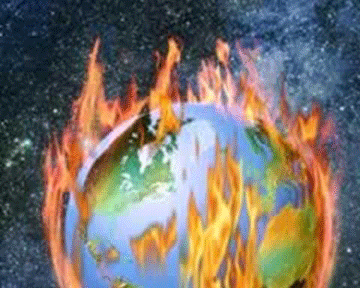
2020 Is Proving Another Disastrous Year For Our Earth’s Climate
 2020 Is Proving Another Disastrous Year For Our Earth’s Climate
The year already has been marked by rising global temperatures, Arctic ice melts and intensifying wildfires and storms. Huff Post, 22 Aug 20
By Nina Golgowski Record-breaking heat, melting ice caps, raging wildfires and a particularly grim hurricane forecast may have taken a backseat in news cycles dominated by politics and a health pandemic, but that doesn’t mean these climate phenomena have gone away.
Here’s a look at just some of the anomalies we’ve faced so far in 2020.
Record-Breaking Heat
The year is expected to rank among the five warmest on record for the planet, according to a July report by a National Oceanic Atmospheric Administration office, which said a 75% chance exists it ends up being the hottest or second hottest.
During the first seven months of the year, the Earth’s global land and ocean surface temperature set its second-highest heat record. The temperature of 58.79 degrees Fahrenheit (14.88 Celsius) was only .007 of a degree less than the record set in 2016.
July also saw the global temperature rise 1.66 degrees Fahrenheit (0.92 of a degree Celcius) above the 20th-century average, tying it with 2016 as the second-hottest July on record. It was just .02-degree short of 2019′s record rise in July of 1.71-degree Fahrenheit (0.95 of a degree Celcius).
The Northern Hemisphere, meanwhile, saw the highest ever recorded combined land and ocean surface average temperature in July, with the mercury rising 2.12 degrees Fahrenheit (1.18 degree Celcius) above average. This combined temperature surpassed July 2019 by 0.14 of a degree Fahrenheit (0.08 of a degree Celcius)……… https://www.huffingtonpost.com.au/entry/2020-another-disastrous-year-for-our-earth_n_5f3d8b59c5b66346157fd6e2?ri18n=true
1 This month.


PETITION – To: Prime Minister Anthony Albanese and the Australian Labor Government
Chernobyl: The Lost Tapes – A good documentary on Chernobyl on SBS available On Demand for the next 3 weeks– https://www.sbs.com.au/ondemand/tv-program/chernobyl-the-lost-tapes/235274195556
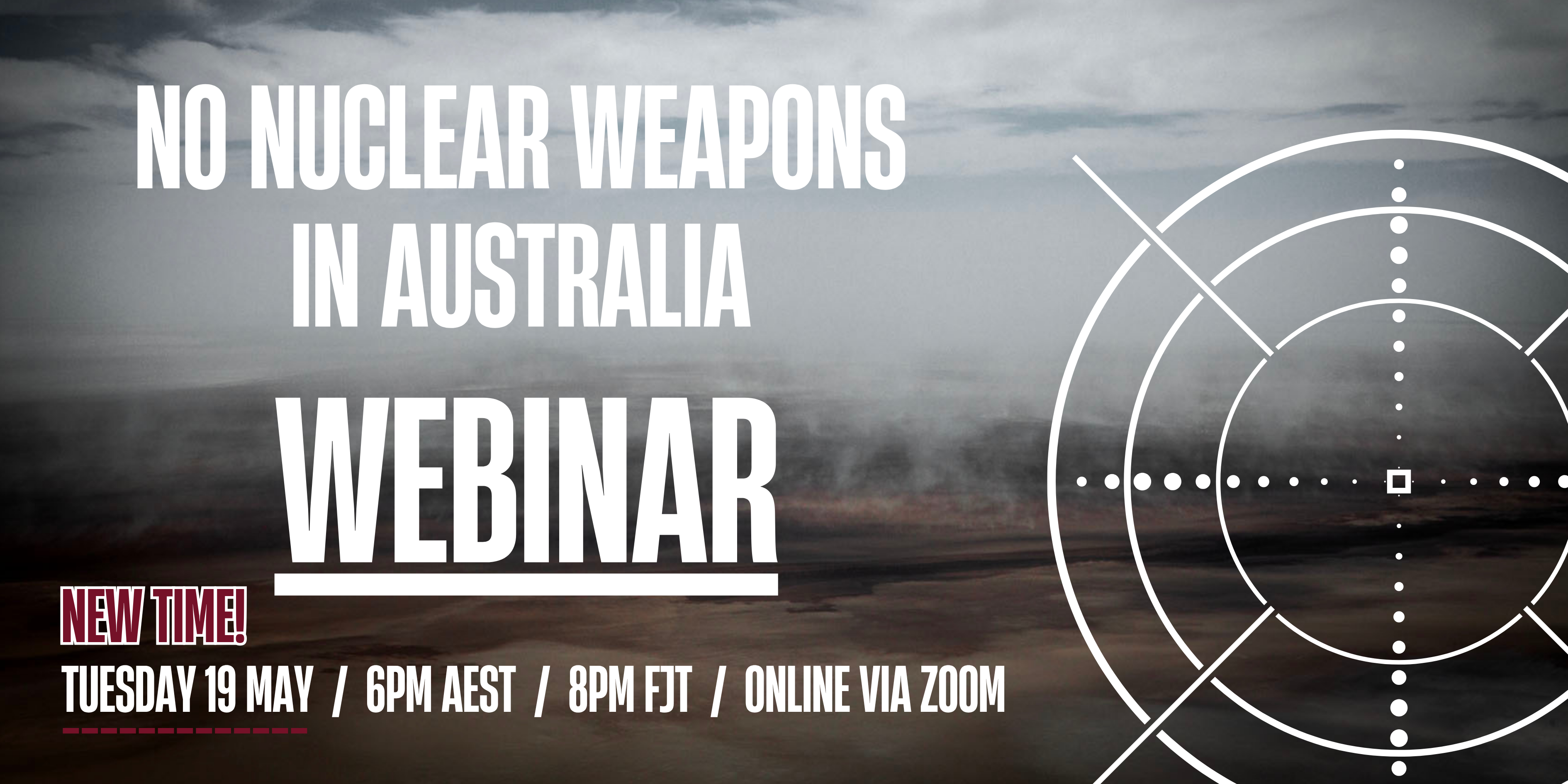
19 May – Webinar- Webinar: No Nuclear Weapons in Australia
Start: 2026-05-19 18:00:00 UTC Canberra, Melbourne, Sydney (GMT+10:00)
End: 2026-05-19 19:30:00 UTC Canberra, Melbourne, Sydney (GMT+10:00)
20 May – Webinar – The dangerous world of AUKUS, US, military occupation and suppression of dissent

National Webinar, 20th May, 2026, 6.30pm AEST. Confronting laws restricting/suppressing protest speech and action
Speakers: Former Sen. Rex Patrick, Lawyer Nick Hanna ,Arthur Rorris ,Jorgen Doyle, Sen David Shoebbridge,
Facilitator Kelley Tranter.

of the week – Australians for War Powers Reform (AWPR)
To see nuclear-related stories in greater depth and intensity
 Antinuclear