How a small nuclear war would transform the entire planet
 How a small nuclear war would transform the entire planet
Cancel The Tokyo Olympic Games! — limitless life
The Tokyo Olympic Games Dear Friends, The conscientious Japanese citizens are shocked by the queer attachment to holding the Tokyo Olympic Games as planned in spite of the declared Corona virus pandemic. The rumored alternative of postponement confirms the lamentable level of understanding as to the purposely ignored Fukushima radioactive dangers which are […]
March 18 Energy News — geoharvey

Opinion: ¶ “A Faltering Fracking Industry, On The Verge Of A Bailout, Mixes Patriotism And Oil In The Permian” • Abundant signs across the Permian Basin, one of the most prolific oil and natural gas plays in the US, suggest that supporting the industry that’s one of the largest contributors to the climate crisis is […]
Victoria seizes power to speed-up network investments, skip RIT-T assessments — RenewEconomy

Victorian parliament passes legislation granting the state’s energy minister new powers to exempt network investments from RIT-T assessments. The post Victoria seizes power to speed-up network investments, skip RIT-T assessments appeared first on RenewEconomy.
via Victoria seizes power to speed-up network investments, skip RIT-T assessments — RenewEconomy
As economy stalls, the government should remap Australia’s energy landscape — RenewEconomy

Australia should use energy transition to re-boot economy as energy markets pause, oil prices crash, and a virus without a vaccine stalls human activity around the world. The post As economy stalls, the government should remap Australia’s energy landscape appeared first on RenewEconomy.
via As economy stalls, the government should remap Australia’s energy landscape — RenewEconomy
Victoria slammed for using misleading data to justify lifting of gas moratorium — RenewEconomy

The Australia Institute slams the Victorian government for using misleading jobs and emissions figures to justify lifting of gas moratorium. The post Victoria slammed for using misleading data to justify lifting of gas moratorium appeared first on RenewEconomy.
via Victoria slammed for using misleading data to justify lifting of gas moratorium — RenewEconomy
Thyroid cancer increasing nine years after Fukushima — IPPNW peace and health blog
Fukushima Medical University has published new thyroid cancer data from its ongoing screening study of children exposed to radioactive contamination from the March 2011 reactor meltdowns at the Fukushima Daiichi nuclear power station. The results, according to a new article by Dr. Alex Rosen, co-chair of IPPNW-Germany, show a disturbing increase in the number of thyroid cancer cases, and increased numbers of nodules and cysts in the thyroid glands of children participating in the screenings.
via Thyroid cancer increasing nine years after Fukushima — IPPNW peace and health blog
WHO Director-General’s Remarks on Coronavirus (COVID-19) – March 16th 2020 — Mining Awareness +
“WHO Director-General’s opening remarks at the media briefing on COVID-19 – 16 March 2020 Good afternoon everyone. In the past week, we have seen a rapid escalation of cases of COVID-19. More cases and deaths have now been reported in the rest of the world than in China. We have also seen a […]
via WHO Director-General’s Remarks on Coronavirus (COVID-19) – March 16th 2020 — Mining Awareness +
Victoria lifts moratorium on onshore gas, but permanently bans fracking — RenewEconomy

Victorian Andrews government to allow onshore gas exploration, but will permanently ban CSG and fracking. Environmental groups and the Greens label it “disaster capitalism”. The post Victoria lifts moratorium on onshore gas, but permanently bans fracking appeared first on RenewEconomy.
via Victoria lifts moratorium on onshore gas, but permanently bans fracking — RenewEconomy
Huge Dundonnell wind farm begins production in Victoria — RenewEconomy

Huge Dundonnell wind farm begins output in Victoria, one of the few large scale wind and solar projects to connect on schedule. The post Huge Dundonnell wind farm begins production in Victoria appeared first on RenewEconomy.
via Huge Dundonnell wind farm begins production in Victoria — RenewEconomy
Nuclear-powered submarines – fraught with legal and political problems

The article below is not about Australia, but it is about small nuclear reactors. Everybody knows, (just quietly) that Australia won’t be getting small nuclear reactors for providing electricity. The real aim is for nuclear-powered submarines. So this article, about the legal and political problems of nuclear reactors for Defence is applicable to Australia, too
|
The Complex Policy Questions Raised by Nuclear Energy’s Role in the Future of Warfare, Just Security by Alex Gilbert, Morgan Bazilian and Julia Nesheiwat, March 16, 2020 The United States military, as well as other militaries around the world, are racing to develop high-energy weapons—lasers, high-powered microwaves, and electromagnetic rail guns—in order to compete with near-peer competitors on the next generation of military technologies. But the electricity to power these systems will need to derive from somewhere, and so military planners are eyeing a new generation of energy-dense nuclear reactors, despite potential policy and legal challenges to doing so…….. The Army is considering mobile nuclear power plants, in part to drive high-energy weapons, an idea one retired three-star hailed as a potential logistics revolution. And should the U.S. build space-based lasers for missile defense, nuclear energy may be the only way to provide the needed megawatts. All this raises key policy concerns in relation to international law, rules of engagement, and the laws of warfare. Basing, or even deploying, nuclear reactors in the territorial waters or land of an overseas ally requires the permission of the host government, which may be averse to expanding nuclear power as in the case of major bases like Yokosuka, Japan. Diego Garcia, an island in the Indian Ocean, provides another challenging case as the ongoing territorial dispute between the United Kingdom and Mauritius threatens the U.S. base there, and a nuclear plant would only complicate the existing dispute. The U.S. Navy already faces constraints on where their nuclear-powered ships can visit. Floating nuclear power plants, like those developed by Russia and China, face similar concerns if they transit foreign waters or, in the case of the South China Sea, are stationed in disputed territories. Similarly, mobile reactors, like those considered by the U.S. Army, would likely be transported by air, requiring permission of all overflight countries. Beyond basing, a critical question is whether the U.S. military would own and operate these new reactors, as the Navy currently does, or whether they would pursue commercial alternatives, as the Army is considering. The U.S. Army report on mobile reactors noted that, with either government or commercial ownership, there are concerns about international rules and licensing that present potential barriers to deployment. In some cases, potential host countries do not even have nuclear regulatory agencies. Further, commercial ownership raises liability concerns, both in the case of a military incident or an accident. International nuclear liability treaties are not well harmonized between the U.S. and most of its allies, especially when it comes to the unique concerns of transportable reactors. Using nuclear power for high-energy weapons also creates targeting dilemmas for the U.S. and foreign militaries. High-energy weapons and their support infrastructure, including reactors, may be initial targets in a conflict. The social, environmental, and reputational impacts of damaging a nuclear reactor, particularly on a country’s home territory, or with effects on a third country, could lead to conflict escalation and international condemnation……. Nuclear-powered laser satellites could aggravate concerns about nuclear arms controls as such systems could be used for anti-ballistic missile or anti-satellite applications. While the Outer Space Treaty prohibits weapons of mass destruction in orbit, it does not prohibit other types of weaponry. During the Cold War, Soviet military space reactors raised calls for bans on space nuclear power, particularly after one accidentally crashed in Canada. Recent calls for space arms control have been unsuccessful. As with terrestrial nuclear-powered lasers, the unique role of laser satellites would make them early targets in any major power conflict, leading to risks of collateral damage from radioactive and dangerous space debris, as occurred after the accidental 2009 collision involving a decommissioned Soviet nuclear satellite.. The article below is not about Australia, but it is about small nuclear reactors. Everybody knows, (just quietly) that Australia won’t be getting small nuclear reactors for providing electricity. The real aim is for nuclear-powered submarines. So this article, about the legal and political problems of nuclear reactors for Defence is applicable to Australia, too
The Complex Policy Questions Raised by Nuclear Energy’s Role in the Future of Warfare, Just Security by Alex Gilbert, Morgan Bazilian and Julia Nesheiwat, March 16, 2020 The United States military, as well as other militaries around the world, are racing to develop high-energy weapons—lasers, high-powered microwaves, and electromagnetic rail guns—in order to compete with near-peer competitors on the next generation of military technologies. But the electricity to power these systems will need to derive from somewhere, and so military planners are eyeing a new generation of energy-dense nuclear reactors, despite potential policy and legal challenges to doing so…….. The Army is considering mobile nuclear power plants, in part to drive high-energy weapons, an idea one retired three-star hailed as a potential logistics revolution. And should the U.S. build space-based lasers for missile defense, nuclear energy may be the only way to provide the needed megawatts.
All this raises key policy concerns in relation to international law, rules of engagement, and the laws of warfare.
Basing, or even deploying, nuclear reactors in the territorial waters or land of an overseas ally requires the permission of the host government, which may be averse to expanding nuclear power as in the case of major bases like Yokosuka, Japan. Diego Garcia, an island in the Indian Ocean, provides another challenging case as the ongoing territorial dispute between the United Kingdom and Mauritius threatens the U.S. base there, and a nuclear plant would only complicate the existing dispute.
The U.S. Navy already faces constraints on where their nuclear-powered ships can visit. Floating nuclear power plants, like those developed by Russia and China, face similar concerns if they transit foreign waters or, in the case of the South China Sea, are stationed in disputed territories. Similarly, mobile reactors, like those considered by the U.S. Army, would likely be transported by air, requiring permission of all overflight countries.
Beyond basing, a critical question is whether the U.S. military would own and operate these new reactors, as the Navy currently does, or whether they would pursue commercial alternatives, as the Army is considering. The U.S. Army report on mobile reactors noted that, with either government or commercial ownership, there are concerns about international rules and licensing that present potential barriers to deployment. In some cases, potential host countries do not even have nuclear regulatory agencies. Further, commercial ownership raises liability concerns, both in the case of a military incident or an accident. International nuclear liability treaties are not well harmonized between the U.S. and most of its allies, especially when it comes to the unique concerns of transportable reactors.
Using nuclear power for high-energy weapons also creates targeting dilemmas for the U.S. and foreign militaries. High-energy weapons and their support infrastructure, including reactors, may be initial targets in a conflict. The social, environmental, and reputational impacts of damaging a nuclear reactor, particularly on a country’s home territory, or with effects on a third country, could lead to conflict escalation and international condemnation…….
Nuclear-powered laser satellites could aggravate concerns about nuclear arms controls as such systems could be used for anti-ballistic missile or anti-satellite applications. While the Outer Space Treaty prohibits weapons of mass destruction in orbit, it does not prohibit other types of weaponry. During the Cold War, Soviet military space reactors raised calls for bans on space nuclear power, particularly after one accidentally crashed in Canada. Recent calls for space arms control have been unsuccessful. As with terrestrial nuclear-powered lasers, the unique role of laser satellites would make them early targets in any major power conflict, leading to risks of collateral damage from radioactive and dangerous space debris, as occurred after the accidental 2009 collision involving a decommissioned Soviet nuclear satellite……….. https://www.justsecurity.org/69056/the-complex-policy-questions-raised-by-nuclear-energys-role-in-the-future-of-warfare/
|
|
The “reconstruction Olympics” will not hide the radioactive and social mess that is Fukushima
Forgetting Fukushima, Jim Green, Online Opinion, 17 March 2020, https://onlineopinion.com.au/view.asp?article=20794&page=0
Last Wednesday marked the ninth anniversary of the meltdowns, fires and explosions that destroyed the Fukushima nuclear plant in March 2011.
Two years after the disaster, Japanese Prime Minister Shinzo Abe assured the International Olympic Committee that “the situation is under control” in and around the stricken plant. Now, with the 2020 Summer Olympics approaching, and some events scheduled to be held in Fukushima prefecture, all sorts of irresponsible and cruel tactics are being used to bury a myriad of social and environmental problems associated with the nuclear disaster.
Most evacuation orders have been lifted around the Fukushima plant, but 337-371 sq kms remain classified as restricted entry zones or ‘difficult to return’ zones. There are hopes that all remaining evacuation orders could be lifted within a few years.
Lifting an evacuation order is one thing, returning the area to something resembling normality is quite another. Only 23% of those living in nine areas that were declared off-limits after the Fukushima disaster had returned as of March 2019, according to government figures. Most people aged under 50 who used to live in the towns of Futaba, Namie and Tomioka have no plans to return, an official survey found in early 2019.
The partial lifting of evacuation orders in the town of Okuma in April 2019 illustrates how the rhetoric of progress masks inconvenient truths. Even after the lifting of the order, about 60% of the town’s land area – covering 96.5% of the pre-Fukushima population – remains off-limits. A 2018 survey found that only 10% of respondents expressed a desire to return to Okuma, while 60% had no plans to return. Few people have returned since the evacuation order was lifted.
About 17 million cubic metres of contaminated waste material has accumulated during decontamination work according to the Japanese Ministry of the Environment. A new occupant in Okuma is a ‘temporary storage facility‘ for some of the contaminated waste.
Contamination Continue reading
USA’s nuclear weapons system woefully unprepared for climate change impacts
 The U.S. Nuclear Deterrent Is Not Prepared For Climate Catastrophe https://www.forbes.com/sites/matthewkorda/2020/03/16/the-us-nuclear-deterrent-is-not-prepared-for-climate-catastrophe/#2136fe1f3a1e The U.S. Nuclear Deterrent Is Not Prepared For Climate Catastrophe https://www.forbes.com/sites/matthewkorda/2020/03/16/the-us-nuclear-deterrent-is-not-prepared-for-climate-catastrophe/#2136fe1f3a1eMatt KordaContributor I write about the nexus between nuclear weapons, climate change, and injustice. Exactly one year ago the nerve center of the U.S. nuclear deterrent was underwater. Triggered by dramatic floods across the entire Midwest, the disaster at Offutt Air Force Base, home to U.S. Strategic Command, destroyed 137 structures and covered a large portion of the runway. Although the flooding itself only lasted a short time, black mold quickly engulfed the base and surrounding housing, and inflicted serious hardship to residents, who were largely left to deal with it on their own. One resident, whose husband worked at Offutt, told the Omaha World Herald that she began suffering from “joint pain, headaches, shortness of breath, muscle twitches, brain fog and panic attacks within a few weeks,” and that it “almost ruined my life and put my family in serious financial burden.” Latest estimates predict that complete recovery of the base will cost over $1 billion and will take at least five years––and what’s worse, the Pentagon had apparently been made aware of the flood risks since 2011, but simply didn’t act in time. It is increasingly evident that the U.S. nuclear enterprise is ill-equipped to deal with the inevitable onslaught of climate catastrophes that will devastate nuclear bases and their employees in the coming months and years. And, by the Pentagon’s own admission, incidents like the flooding at Offutt are going to happen more frequently––and are going to get worse. In 2019, the Department of Defense delivered a report to Congress listing the top military facilities vulnerable to climate catastrophe. Of the 79 installations listed, 23 of them are related to the nuclear mission, and seven actually store nuclear weapons onsite. Those seven bases include both ballistic missile submarine bases at Kings Bay, Georgia, and Kitsap, Washington; the three ICBM bases in Montana, North Dakota, and Wyoming; Whiteman Air Force Base in Missouri, which houses 100 warheads for deployment aboard B-2 nuclear bombers; and the Kirtland Underground Munitions and Maintenance Storage Complex in Albuquerque––the largest nuclear weapons storage site within the United States. Collectively, these seven facilities are home to nearly 6,000 nuclear warheads––almost the entirety of the U.S. nuclear arsenal––and all are will be increasingly threatened by extreme weather events. According to the Pentagon report, all of these facilities are currently affected by some combination of flooding, drought, desertification, and wildfires, and the devastation will only increase in the years to come. This is highly dangerous, as nuclear warheads and their delivery systems are relatively delicate: stored warheads need to be cooled, missile silos need to be kept clean and dry, runways can’t be underwater, and shipyards can’t be flooded. In addition to those installations that actually store nukes onsite, other mission-critical facilities like strategic radar stations, nuclear command centers, missile test ranges, and ballistic missile defense sites are also at risk. A 2018 study found that many Pacific atolls––including Kwajalein Atoll, home to the Ronald Reagan Ballistic Missile Defense Test Site and approximately 13,500 Marshall Islanders––will likely be uninhabitable by 2030, as rising tides will eventually ruin groundwater supplies and damage crops beyond recovery. Despite the inevitable, the Air Force is still spending over a billion dollars to build a new radar installation on the island, amid reports that neither the Pentagon nor the primary contractor, Lockheed Martin, “gave serious consideration to that threat when designing the installation and choosing a site.” In addition to its missile defense test range, both of the United States’ interceptor launch facilities at Fort Greely, Alaska, and Vandenberg Air Force Base, California are expected to experience an uptick in serious climate incidents. By the Pentagon’s own admission, Fort Greely is dealing with melting permafrost, and Vandenberg is subject to periodic wildfires. In 2017, a wildfire burned 380 acres of the Vandenberg base and triggered an evacuation, and in 2016, the Canyon Wildfire burned over 10,000 acres and “came very close to two Space Launch Complexes,” delaying a scheduled rocket launch. Other nuclear-related facilities like Clear Air Force Station, Barksdale Air Force Base, Andersen Air Force Base, and the White Sands Missile Range are also at risk of climate catastrophe. There is little evidence that military leadership is taking the climate-nuclear threat seriously. Not only was the Pentagon’s first attempt at writing its 2019 report sent back for not meeting the legal requirements, but its revised report included no consideration of other types of extreme weather events like hurricanes and tornadoes; it also did not list a single overseas base. Meanwhile, the Navy quietly disbanded its climate change task force in March 2019, ridiculously claiming that it was “no longer needed.” The former commander of the task force subsequently remarked that he saw “little evidence” that the task force’s recommendations had been implemented by the Pentagon. All the while, U.S. emissions are increasing: a recent study by the Costs of War Project revealed that the Pentagon is the single largest institutional carbon emitter on the planet. If it were a sovereign nation, its greenhouse gas emissions would be greater than the output of entire industrialized countries like Sweden or Denmark. The United States is trending in the wrong direction. While barely acknowledging the climate risks, Congress has continuously voted in favor of needless nuclear initiatives, such as a like-for-like replacement of the entire ICBM arsenal. Not only will this cost anywhere between $85 and $150 billion to complete, but by the Air Force’s own admission, its Midwestern silos are highly vulnerable to flooding. In 2009, the Air Force was forced to physically remove and inspect a nuclear-tipped intercontinental ballistic missile from its silo in North Dakota after a record snowfall caused water to penetrate the permanent berm surrounding the site and leak into the silo. According to the Air Force, 40 additional silos in North Dakota alone are located in similarly vulnerable locations that are prone to drainage problems. Congress cannot continue blindly underwriting a nuclear force posture that is ill-suited to the inevitability of climate change. What is the point of re-capitalizing on outdated pieces of the nuclear arsenal that are likely to be rendered ineffective by flooding, when some of that money could be put towards more essential priorities––like offering free COVID-19 testing and treatment to all Americans? It is expected that the Pentagon will revise its climate report sometime in early 2020. If its drafters are thinking proactively, they will include a blunt assessment of how the U.S. nuclear complex in particular will be affected by climate catastrophe. This will give Congress, policymakers, and the public a highly useful tool with which to assess the best direction for the future of U.S. nuclear force posture. |
|
30,000 U.S. soldiers to Corona-infested Europe for “war games”
|
U.S. Army invades virus plagued Europe, http://space4peace.blogspot.com/2020/03/us-army-invades-virus-plagued-europe.html BRUCE K. GAGNON BRUNSWICK, MAINE, UNITED STATES
In the midst of a staggering virus epidemic that has shut much of Europe down, the insane and arrogant United States is presently sending 30,000 Army troops throughout Europe for war games. As the soldiers emerged from their transport planes they shook the hands of US and European military officials welcoming them to the hot bed of corona-virus.
|
|
Legal challenge about Adani’s planned water use for giant coal mine
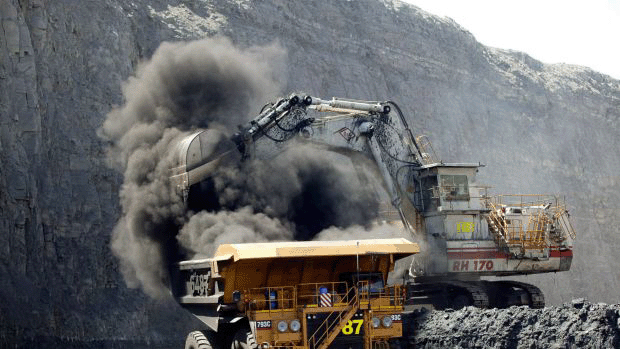 Morrison government faces legal challenge over Adani pipeline plan, Brisbane Times, Peter Hannam, March 16, 2020 The Morrison government’s failure to activate the so-called “water trigger” when assessing the proposed Adani coal mine in Queensland will be challenged in the Federal Court.
Lawyers acting for the Australian Conservation Foundation will test the government’s decision not to refer Adani’s North Galilee Water Scheme, a pipeline supplying the mine, for a thorough assessment as intended by the law.
The water trigger, introduced by the Rudd-Gillard government in mid-2013, was meant to require the government to assess the impact on water of all large coal mines and coal seam gas developments.
However, the government treated Adani’s plan to draw 12.5 billion litres a year from the Suttor River in central Queensland as a pipeline that was not a “large coal mining development”, nor did it involve one.
Similarly, it viewed the pipeline proponent, Adani Infrastructure Pty Ltd, as “a different legal entity” from the coal mine proponent, Adani Mining Pty Ltd.
The foundation plans to test both reasons for the failure not to activate the water trigger in court, arguing that the government made an error in law by ignoring infrastructure that was critical for the coal mine to proceed.
Tony Windsor, the former independent MP who was a key architect of the trigger, said reliable long-term access to clean water was “vital for regional communities and demands that we sustainably manage our rivers and aquifers”.
“Allowing companies to split up mining projects and assess them in isolation makes a nonsense of the process,” he said. “You don’t see much looking at just one piece of the jigsaw – you need to look at the whole puzzle.”……..https://www.brisbanetimes.com.au/environment/sustainability/morrison-government-faces-legal-challenge-over-adani-pipeline-plan-20200316-p54an6.html?ref=rss&utm_medium=rss&utm_source=rss_feed
1 This month.


PETITION – To: Prime Minister Anthony Albanese and the Australian Labor Government
Chernobyl: The Lost Tapes – A good documentary on Chernobyl on SBS available On Demand for the next 3 weeks– https://www.sbs.com.au/ondemand/tv-program/chernobyl-the-lost-tapes/235274195556
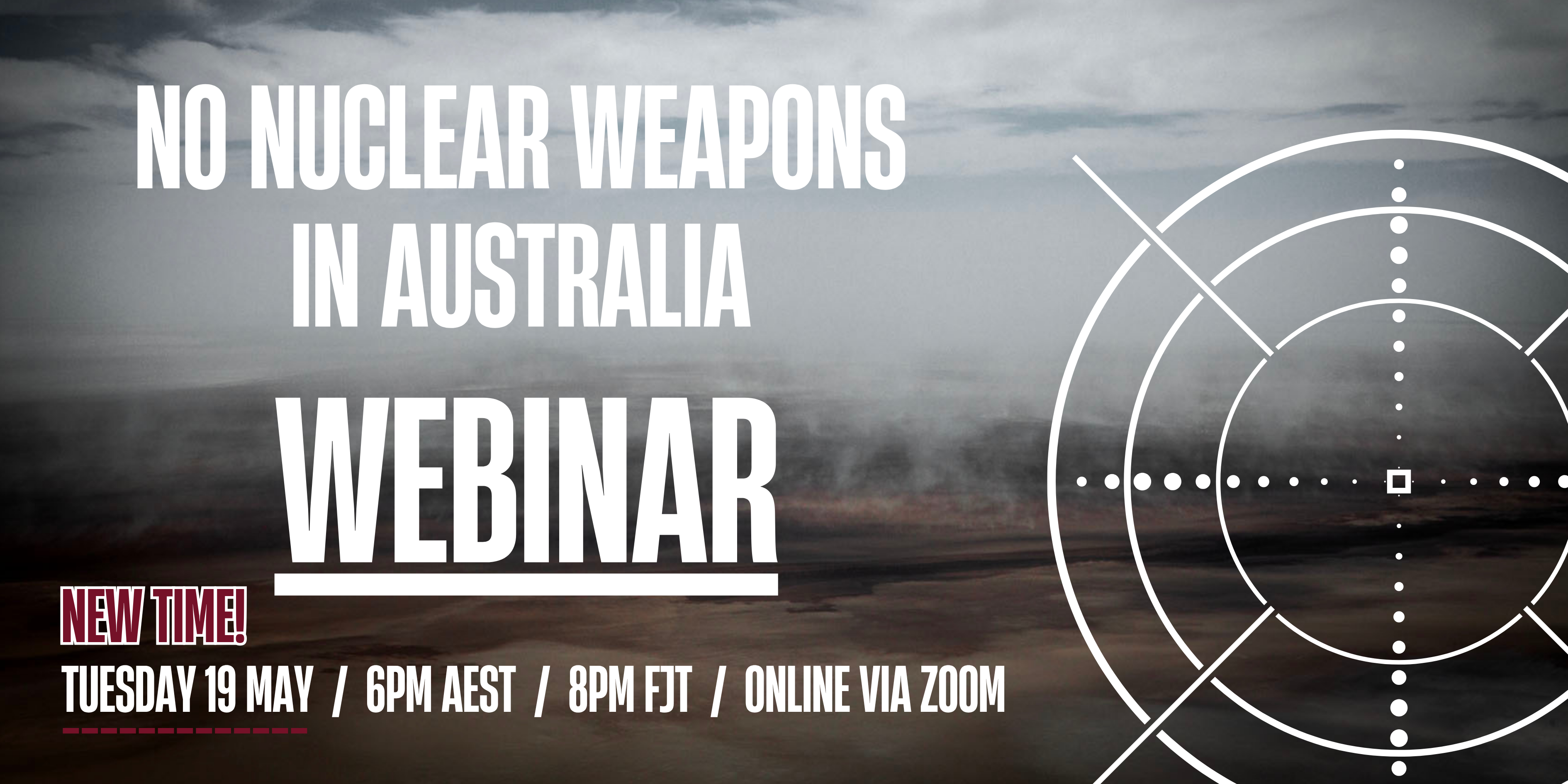
19 May – Webinar- Webinar: No Nuclear Weapons in Australia
Start: 2026-05-19 18:00:00 UTC Canberra, Melbourne, Sydney (GMT+10:00)
End: 2026-05-19 19:30:00 UTC Canberra, Melbourne, Sydney (GMT+10:00)
20 May – Webinar – The dangerous world of AUKUS, US, military occupation and suppression of dissent

National Webinar, 20th May, 2026, 6.30pm AEST. Confronting laws restricting/suppressing protest speech and action
Speakers: Former Sen. Rex Patrick, Lawyer Nick Hanna ,Arthur Rorris ,Jorgen Doyle, Sen David Shoebbridge,
Facilitator Kelley Tranter.

of the week – Australians for War Powers Reform (AWPR)
To see nuclear-related stories in greater depth and intensity
 Antinuclear