Gaslighting on emissions: IEEFA says burning LNG “worse than coal” for climate — RenewEconomy

New analysis suggests natural gas emissions and their impact on climate change have been dangerously underestimated – so much so that the sector could experience a similar reckoning to that of car maker Volkswagen. The post Gaslighting on emissions: IEEFA says burning LNG “worse than coal” for climate appeared first on RenewEconomy.
via Gaslighting on emissions: IEEFA says burning LNG “worse than coal” for climate — RenewEconomy
March 9 Energy News — geoharvey

Opinion: ¶ “What ‘Fukushima 50’ Can Teach Us About Crises” • The film “Fukushima 50” shows graphically that Japan came terrifyingly close to nuclear apocalypse, narrowly averted by heroic efforts of frontline workers, as well as a decision by plant manager Masao Yoshida to ignore orders from officials at TEPCO to stop cooling the reactors […]
Nuclear and climate news in International Women’s Week
The nuclear industry took the opportunity to push itself as an equality-for-women campaigner. Also, in the media, parents were warned to see that their girls got STEM skills (Science Technology Engineering Maths), or else they’d be jobless dropouts.
Now I too believe that these skills are important. But I deplore the downgrading of the so-called “soft” studies, that is going on at the same time. With the crises facing the world now, surely for decision-making, we need people with knowledge of languages, history, sociology, ecology. On the health effects of nuclear radiation, and of global heating, the “soft” sciences of biology and genetics are essential. And, as social commentator Eva Cox has pointed out, the occupations with social values of caring and nurturing ought not to be downgraded and poorly paid, in comparison with the techno world and competitive occupations with macho values.
While climate and nuclear threats are the focus of this newsletter, the reality is that the planetary mess is made of many interconnecting factors, in the unsustainable economy of “endless growth”. A big reminder – investigative journalism – Planet Plastic.
A bit of good news -Farming in the Forest: A Chance to Reverse 1,000 Years of Destructive Land-Use Practices
AUSTRALIA
The demonisation of Julian Assange: Former foreign minister Carr calls on the Australian govt to intervene. Government’s latest pressure on the ABC is slammed by Paul Keating.
NUCLEAR.
- Liberal-National Coalition in nuclear disarray. New South Wales South Coast to become a nuclear wasteland? That’s the plan of the National Party. Nature Conservation Council says the Nationals’ support for nuclear power is a “dangerous and expensive distraction”. Conservative push for nuclear power will drive a wedge into the Coalition. Nuclear free has served NSW well and should remain- Australian Conservation Foundation.
- New South Wales upper house Inquiry, stacked with pro nuclear people, recommends lifting nuclear bans. New South Wales National Party will support Latham’s nuclear power bill, says Barilaro. Liberals coy about nuclear power, Premier Gladys thinks “it doesn’t matter to the people of New South Wales”.
- investigative journalism – Flinders University, South Australia: collusion with nuclear power promotion, Prof Pam Sykes, and the scam of “hormesis”,
CLIMATE. Christiana Figueres– “Australia, you’re not ‘meeting and beating’ your emissions targets” Global heating is causing a decline in River flows in Murray Darling Basin. Kyoto carryover is “legally baseless”, international law experts warn Morrison government. Cosy little cocktail party for Liberal and Labor MPs, with coal industry bigwigs.
RENEWABLE ENERGY. Morrison to cancel Australia’s participation in the Energy Transition Hub. CSIRO spin-off, Windlab, looks to Africa after “year of frustration” in Australia. Solar farms to carry cost of Territory government’s glacial pace on grid reform. Schletter Australia has partnered with SCP ‘Solar Car Parks’ to launch the HELIOPARK range of Solar Car Ports for the Australasian market. Tasmania sets world-leading target of 200 per cent renewables by 2040. Home battery boost as Victoria expands rebate, NSW launches interest-free loans.
INTERNATIONAL
Why don’t we treat the climate crisis with the same urgency as coronavirus?
Investigative journalism – Big Oil and Big Soda and plastically polluted Planet Earth.
The Nuclear Non Proliferation Treaty – now more important than ever.The Threat of a Nuclear War Between the US and Russia Is Now at Its Greatest Since 1983.
A sceptical look at NuScam’s small nuclear reactor plans.
Liberal-National Coalition in nuclear disarray
|
Mr Barilaro’s position is also causing division in his National Party, with some of the party’s coastal MPs concerned that his position would put their seats at risk. The Nationals’ leader last week declared his party would support Mr Latham’s bill when it comes back before the upper house for a vote this month. The bill would allow the bans on uranium mining and nuclear power to be lifted but it has not yet been considered by the Liberal or National party rooms or cabinet. It follows a parliamentary inquiry report, which said the government should support the bill. But the issue has caused such anger within Liberal ranks that one senior minister told the Herald they would quit cabinet before supporting Mr Latham’s bill. A senior Liberal minister said: “I did not get into Parliament to support a One Nation bill”, while another minister said: “Crossbenchers don’t set the government’s agenda”. “It’s amazing that John Barilaro listens to the views of One Nation over his colleagues,” a fourth senior minister said. Last week, Local Government Minister and Liberal MP Shelley Hancock told Parliament she would not support a nuclear reactor in her electorate. But Mr Barilaro shot back and said the Liberals repeatedly say they “support technology agnostic energy policy” but then refuse to have a discussion about the role of nuclear. “Forget about this being a crossbench bill, I would take this to my party room and then put up my own bill if I need to,” Mr Barilaro said. |
|
|

Nuclear reactors, large or small, are NOT “zero carbon”
On the international media, so many articles swallow the line that nuclear power, whether large or small is “zero carbon”. In reality, nuclear reactors themselves DO emit a tiny amount of Carbon 14, – so they’re not “zero”. But when you look at the entire chain of construction through to demolition, and the fuel chain through from mining to waste disposal, – nuclear power is a huge carbon emitter. The whole nuclear propaganda seems now to based on this “zero carbon”story – although nuclear enthusiasts previously were often climate change deniers. The length of time needed to set up millions of these little reactors means that they’d be irrelevant to climate change action. However, that same delay would help the coal industry to just keep on going for much longer than it should. Nuclear and coal – partners in this cover-up of the truth.
Are Small Nuclear Reactors REALLY better?
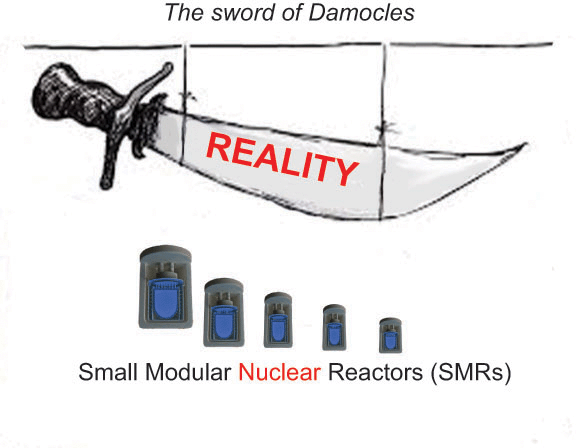
The Smaller Is Better Movement in Nuclear Power, Are miniature reactors really safer?  Mother Jones LOIS PARSHLEY, 8 Mar 20,
Huge computer screens line a dark, windowless control room in Corvallis, Oregon, where engineers at the company NuScale Power hope to define the next wave of nuclear energy. Glowing icons fill the screens, representing the power output of 12 miniature nuclear reactors. Together, these small modular reactors would generate about the same amount of power as one of the conventional nuclear plants that currently dot the United States—producing enough electricity to power 540,000 homes. On the glowing screens, a palm tree indicates which of the dozen units is on “island mode,” allowing a single reactor to run disconnected from the grid in case of an emergency.
Christiana Figueres- “Australia, you’re not ‘meeting and beating’ your emissions targets”

Be honest Australia, you’re not ‘meeting and beating’ your emissions targets https://www.smh.com.au/environment/climate-change/be-honest-australia-you-re-not-meeting-and-beating-your-emissions-targets-20200307-p547u1.html 8 Mar 20, Optimistic. Prosperous. A country of rare beauty, blessed with abundant natural resources. Australia has all the “golden eggs” needed to position itself as a global leader, to help its Asia-Pacific region leapfrog to a new energy future, and to guarantee Australian prosperity in the process.
Watching this summer’s unprecedented firestorms, I was heartbroken by the sheer scale of the human and ecological tragedy. “This must be the tipping point on climate politics in Australia,” I said to myself. “Surely now the politicians will join hands and forge a bipartisan plan for a better future.”
Instead, the climate wars have returned, driven by a handful of deniers afraid to let go of longstanding vested interests, and given air by powerful media sympathisers and a Prime Minister unwilling to fully embrace the science and stare them down.
For Australia, the choice between danger and opportunity is clear, and that choice must be made now. Since the 2008 Stern Review, the world has known that the cost of not acting is much greater than the cost of our current path. And since the 2008 Garnaut Review, Australians have known that without stronger action, droughts and bushfires would become more frequent and intense, and “observable by 2020”. It is time to move on from denial, delusion and delay towards preparedness, productivity and prosperity.
The following three steps will put Australia on track to the future we must create.
First, be honest about where Australia is at. Your country is much more than 1.3 per cent of the global climate problem. Carbon emissions from Australia’s use and export of fossil fuels account for about 5 per cent of the global fossil fuel footprint. With exports included, Australians have the biggest per capita carbon footprint in the world.
Australia is not “meeting and beating” its emissions targets. Emissions have increased in every calendar year since 2014. The government’s own projections say Australia will reduce emissions by only 16 per cent by 2030, not the 26 to 28 per cent it promised in Paris, nor the 50 per cent required by science to limit warming to 1.5 degrees. Kyoto “carryover” can’t be used to make up the gap. The Paris Agreement doesn’t allow it. To suggest otherwise is at best an attempt to paper over Australia’s lagging efforts; and at worst, a legally baseless ploy that encourages cheating and holds back development of the next phase of carbon markets.
A highly vulnerable Australia cannot address climate change on its own, but its heel dragging leaves it without the international credibility to drive a stronger global response. The Australian government must look seriously at how to really meet and beat its 2030 target, and ask other major emitters to join it in an alliance for higher ambition at the COP26 climate summit in Glasgow this November.
Second, Australia needs a bipartisan, long-term vision for decarbonisation. Rattled by the bushfires and growing evidence of climate-related risks and stresses, Australia’s biggest corporations – including Rio Tinto, Qantas, Telstra and BHP – have announced support for a national net zero target for 2050. For them, legislating this target is important to finally end the climate wars, and provide the necessary certainty to underpin investment in the transition.
All states and territories have 2050 net zero targets, as do 73 other nations, including Britain and Canada. British Prime Minister Boris Johnson would welcome Australia joining these ranks ahead of the COP26, and giving consideration to the British model of using an independent expert body to advise government on five-yearly carbon budgets en route to net zero by 2050. Independent MP Zali Steggall’s private members’ bill does exactly that.
Third, Australia must embrace net zero by 2050 as a central pillar of its economic plan for the future. The plan must prioritise the policies, industries and technologies that are scientifically aligned with the 1.5 degree temperature limit, and retire those that are not, albeit with gratitude for the service provided in the past.
Despite a booming renewables industry, coal still accounts for around 60 per cent of Australia’s energy mix. But the technology is tired and unreliable in the summer, highly polluting, and no longer price competitive with solar and wind, firmed up by big batteries or pumped hydro. There is no place for governments signed up to the Paris Agreement to provide subsidies for dying coal. We must instead invest in the future.
These ground-breaking projects are just three examples of how Australia can lead and prosper. With political honesty and vision, ambitious targets, and a stubborn commitment to innovation, Australia stands ready to assume its rightful place as a clean energy superpower of the world. With the right choices, the future is bright.
Christiana Figueres is the former UN climate chief who oversaw the negotiation of the 2015 Paris Agreement, and is convenor of the Mission 2020 climate campaign. She is co-author of The Future We Choose and is visiting Australia this week.
Government advisers warn Britain against costly new nuclear reactors

 Times 7th March 2020, Net Zero Report. Plans for nuclear plants in Britain face fresh uncertainty after government advisers warned against backing costly new reactors. The nuclear industry wants the government to commit to a funding system to back the construction of reactors, including EDF’s proposed Sizewell plant in Suffolk.
However, the National Infrastructure Commission, set up in 2015 to provide impartial advice to the government, reiterated concerns in a report about backing more nuclear plants. It noted that there had been cost reductions in renewable power technologies such as wind and solar over the past ten years, but “costs of building and running nuclear power stations have not
fallen consistently, even in countries that have built fleets of similar reactors”. Given the potential for other non-intermittent technologies to complement renewables, it said that this “weakened the case for committing to a new fleet of nuclear power stations”.
https://www.thetimes.co.uk/article/advisers-raise-doubts-over-new-nuclear-plants-8hd85cr6d
Global heating is causing a decline in River flows in Murray Darling Basin
 ‘We need a serious conversation’: River flows could decline 40% in Australia’s foodbowl, SMH, by Mike Foley, March 8, 2020 River flows in Australia’s food bowl, the Murray Darling Basin, will decline by as much as 40 per cent over the next 50 years under the current trajectory of global warming, one of Australia’s top hydrologists has warned.Internationally recognised hydrologist Francis Chiew, a CSIRO research leader and co-author on the Intergovernmental Panel on Climate Change, said Australia was the driest and among the most water-dependent countries in the world. ‘We need a serious conversation’: River flows could decline 40% in Australia’s foodbowl, SMH, by Mike Foley, March 8, 2020 River flows in Australia’s food bowl, the Murray Darling Basin, will decline by as much as 40 per cent over the next 50 years under the current trajectory of global warming, one of Australia’s top hydrologists has warned.Internationally recognised hydrologist Francis Chiew, a CSIRO research leader and co-author on the Intergovernmental Panel on Climate Change, said Australia was the driest and among the most water-dependent countries in the world.
“We have the driest inhabited continent, we’ve got the least water by far per square kilometres of land surface,” Dr Chiew said. “Australia actually has among the world’s highest per capita water use – comparable to Asia and the Americas.” Dr Chiew said the upper range forecast is for a 40 per cent decline in the volume of water flowing down rivers and a “conservative” forecast sees Australian river flows declining 20 per cent. His forecast is based on global average temperatures increasing by 2 degrees, which is the target of the international emissions reduction targets under the Paris Agreement. The IPCC puts the current trajectory of warming, without increasing emissions reduction, at more than 3 degrees. The modelling includes a range of scenarios. “There is high confidence and strong evidence of declining water availability. But there’s less confidence in how much and by when,” he said……… Dr Chiew urged decision makers to grapple with the hard topics now. “We have got to have a serious conversation about what we want to do under climate change,” he said. https://www.smh.com.au/environment/climate-change/we-need-a-serious-conversation-river-flows-could-decline-40-percent-in-australia-s-foodbowl-20200304-p546t4.html |
|
|
New South Wales South Coast to become a nuclear wasteland? That’s the plan of the National Party
Nationals to support nuclear power;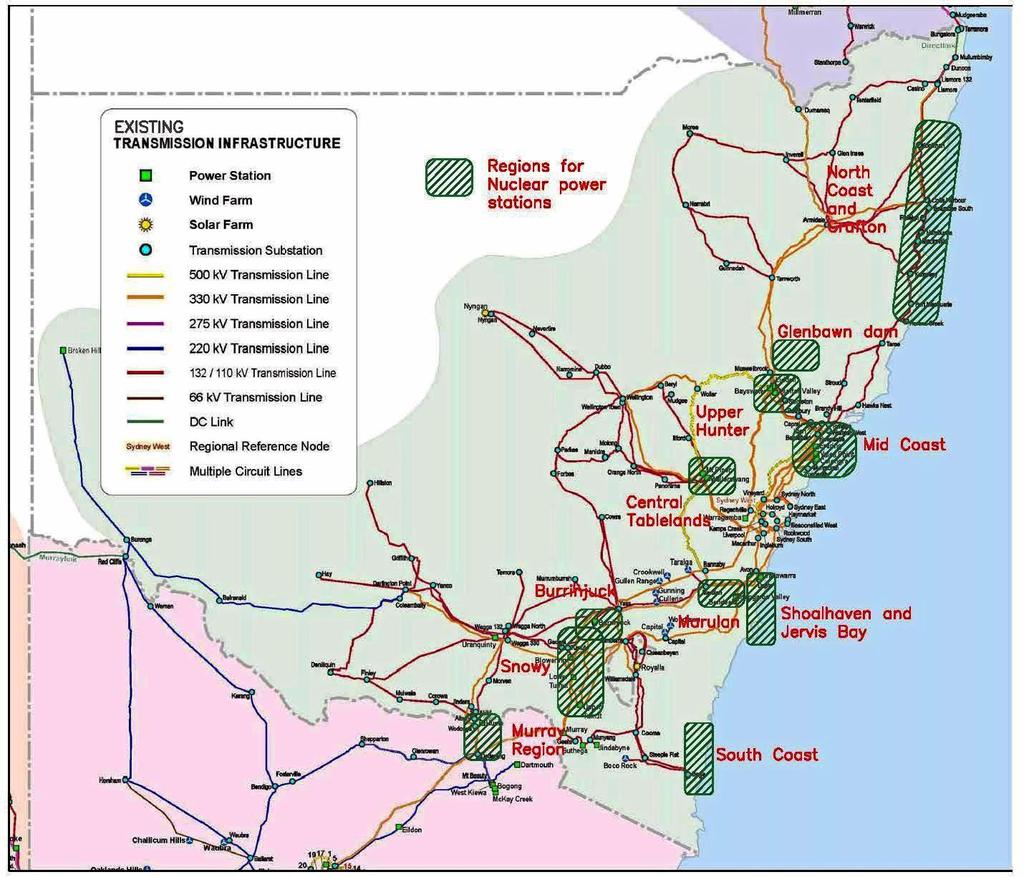 Far South Coast flagged as possible location https://www.begadistrictnews.com.au/story/6665667/nationals-to-support-nuclear-power-far-south-coast-flagged-as-possible-location/, Albert McKnight 6 Mar 20,
The Nationals will support a bill to allow nuclear power in NSW, while separately the Far South Coast has been flagged as a possible location for a nuclear power plant.
When speaking to Sky News earlier this week, Deputy Premier John Barilaro confirmed The Nationals would support a bill proposed by One Nation on the matter, and said the state would not achieve its 2050 net zero emissions target without nuclear energy.
Mr Barilaro has been vocal about the nuclear power issue for years, last year saying it was “guaranteed baseload energy with zero emissions, no fossil fuels and probably the cheapest cost to the average Australian household”.
In a study by Nuclear for Climate Australia published on its website, the area between Bermagui and Merimbula is among 18 proposed areas of interest in NSW for a nuclear power station.
Under its proposal it states the South Coast has potential if included with other power plants that could be built at East Gippsland, the Snowy Mountains or Jervis Bay.
While it states the coast has many sites with “good access to once-through sea water cooling” – running a large amount of water through a power plant’s condensers then discharging it into a waterway with only a small amount of evaporation – an extensive grid upgrade would be required for a 2.2GW plant.
Shadow Minister for Climate Change and Energy Adam Searle confirmed a McKay Labor Government would maintain a ban on uranium exploration, extraction and export.
“Nuclear is the most expensive form of power and its waste is a disaster for the environment,” he said.
“Regional and coastal communities now face the grim prospect of becoming a nuclear power plant wasteland, as a result of Mr Barilaro leading this government by the nose.”
Shadow Minister for the Illawarra and South Coast Ryan Park said coastal communities would never embrace nuclear energy.
“This has clearly divided the Liberal-National Government,” he said.
“[Member for South Coast] Shelley Hancock has already said she would not support nuclear plants on the South Coast.”
He said Member for Bega Andrew Constance should do the same. Mr Constance has been approached for comment.
One Nation’s Mark Latham introduced the bill to lift the ban on nuclear power and uranium mining in NSW, saying it would “create jobs, investment” and “undertake the long-term planning needed to keep the lights on”.
Does NSW need nuclear power? Write a letter to the editor
Nature Conservation Council says the Nationals’ support for nuclear power is a “dangerous and expensive distraction”
|
Environment groups say nuclear push a “dangerous distraction” to clean energy debate, Macquarie Port News, 6 Mar 20, THE Nature Conservation Council says the Nationals’ support for nuclear power is a “dangerous and expensive distraction” from the coal to clean energy debate and is not the sustainable, long-term priority for the environment. Deputy premier John Barilaro has confirmed The Nationals will support a One Nation bill to allow nuclear power in NSW, reigniting debate on the controversial topic. NSW One Nation leader Mark Latham’s Uranium Mining And Nuclear Facilities (Prohibitions) Repeal Bill is currently before the upper house and, if successful, would see the 36-year prohibition on uranium mining and nuclear lifted.
NSW Labor hit back immediately confirming it would not introduce nuclear power in NSW, if elected. Port Macquarie, Kempsey, Grafton and Coffs Harbour have all been flagged as regions of
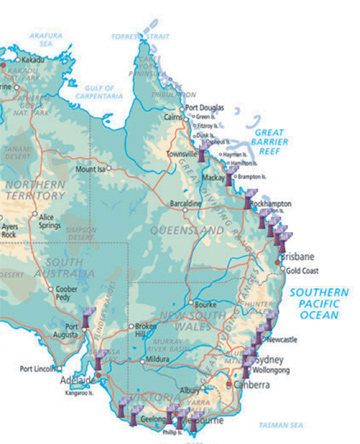 interest for nuclear power plants. interest for nuclear power plants.Other regions include the Upper Hunter (Singleton, Muswellbrook), Shoalhaven (Jervis Bay, Nowra), Central West (Lithgow), Snowy Mountains, and Albury/Wodonga. “Local MPs Leslie Williams and Stephen Bromhead need to tell us whether they support their leader’s plans to make it legal to build a nuclear power plant on the Mid-North Coast,” Nature Conservation Council chief executive Chris Gambian said. “Nuclear power is extremely dangerous and leaves a legacy of radiation pollution that lasts generations. “It is a dangerous and expensive distraction from urgent work we need to do to transition from coal to clean energy and storage. “People on the Mid-North Coast don’t want nuclear power and they don’t need it. “Clean energy is by far the cheapest, cleanest and most sustainable way to meet our energy needs and it offers regional areas a very bright future. “The transition from dirty coal and gas to clean solar, wind and storage will attract $25 billion of investment, result in the construction of about 2,500 wind turbines and installation of more 42 million solar panels across the state.”….. Newcastle MP Tim Crakanthorp slammed the Nationals’ move and condemned the Nationals’ “reckless support” for nuclear power in NSW at its 2019 conference. https://www.portnews.com.au/story/6665518/environment-groups-say-nuclear-push-a-dangerous-distraction/ |
|
Why don’t we treat the climate crisis with the same urgency as coronavirus?
 Why don’t we treat the climate crisis with the same urgency as coronavirus? Owen Jones Guardian, 6 Mar 2020 No Cobra meetings, no sombre speeches from No 10, yet the consequences of runaway global heating are catastrophic, It is a global emergency that has already killed on a mass scale and threatens to send millions more to early graves. As its effects spread, it could destabilise entire economies and overwhelm poorer countries lacking resources and infrastructure. But this is the climate crisis, not the coronavirus. Governments are not assembling emergency national plans and you’re not getting push notifications transmitted to your phone breathlessly alerting you to dramatic twists and developments from South Korea to Italy.More than 3,000 people have succumbed to coronavirus yet, according to the World Health Organization, air pollution alone – just one aspect of our central planetary crisis – kills seven million people every year. There have been no Cobra meetings for the climate crisis, no sombre prime ministerial statements detailing the emergency action being taken to reassure the public. In time, we’ll overcome any coronavirus pandemic. With the climate crisis, we are already out of time, and are now left mitigating the inevitably disastrous consequences hurtling towards us. While coronavirus is understandably treated as an imminent danger, the climate crisis is still presented as an abstraction whose consequences are decades away. Unlike an illness, it is harder to visualise how climate breakdown will affect us each as individuals. Perhaps when unprecedented wildfires engulfed parts of the Arctic last summer there could have been an urgent conversation about how the climate crisis was fuelling extreme weather, yet there wasn’t. In 2018, more than 60 million people suffered the consequences of extreme weather and climate change, including more than 1,600 who perished in Europe, Japan and the US because of heatwaves and wildfires. Mozambique, Malawi and Zimbabwe were devastated by cyclone Idai, while hurricanes Florence and Michael inflicted $24bn (£18.7bn) worth of damage on the US economy, according to the World Meteorological Organization.As the recent Yorkshire floods illustrate, extreme weather – with its terrible human and economic costs – is ever more a fact of British life. Antarctic ice is melting more than six times faster than it was four decades ago and Greenland’s ice sheet four times faster than previously thought. According to the UN, we have 10 years to prevent a 1.5C rise above pre-industrial temperature but, whatever happens, we will suffer.
Pandemics and the climate crisis may go hand in hand, too: research suggests that changing weather patterns may drive species to higher altitudes, potentially putting them in contact with diseases for which they have little immunity. “It’s strange when people see the climate crisis as being in the future, compared to coronavirus, which we’re facing now,” says Friends of the Earth’s co-executive director, Miriam Turner. “It might be something that feels far away when sitting in an office in central London, but the emergency footing of the climate crisis is being felt by hundreds of millions already.”
Imagine, then, that we felt the same sense of emergency about the climate crisis as we do about coronavirus. What action would we take? ….. https://www.theguardian.com/commentisfree/2020/mar/05/governments-coronavirus-urgent-climate-crisis
The demonisation of Julian Assange: Former foreign minister Carr calls on the Australian govt to intervene
As anger mounts over Assange’s persecution, former foreign minister Carr calls for moral appeals to Australian government, WSWS, By Richard Phillips, 6 March 2020
Popular opposition to the ongoing imprisonment and state persecution of WikiLeaks publisher Julian Assange is increasing following last week’s extradition hearing in Britain. The four-day show trial, which blatantly violated Assange’s basic legal rights and subjected him to even more psychological torture, has deeply shocked many people and intensified the determination of those fighting for Assange’s release.
Addressing a public meeting last week in the New South Wales (NSW) parliament, Bob Carr, a former federal foreign minister and state Labor premier from 1995–2005, denounced the bogus espionage charges against Assange and warned that if extradited to the US, he would die.
Carr and other speakers, including Assange’s Australian lawyer Greg Barns and former SBS television journalist Mary Kostakidis, insisted, however, that those defending Assange should concentrate on lobbying state and federal MPs.
This orientation, they suggested, would pressure the Liberal-National Coalition government and Foreign Minister Marisa Payne to ask Washington to release the WikiLeaks publisher.
uCarr called for Payne to have a “friendly chat” with Mike Pompeo, the former CIA chief and current US Secretary of State, and offered some talking points…….
Carr said nothing about Pompeo’s threatening denunciations of WikiLeaks as a “non-state hostile intelligence service,” his visit to Sydney last August when he demanded greater Australian involvement in Washington’s aggressive confrontations with Beijing and Iran, or his role as former CIA chief.
As for Payne, she rejected any defence of Assange, declaring in the Senate a day earlier that the WikiLeaks publisher would receive a fair trial and disparaging UN Special Rapporteur on Torture Nils Melzer’s reports on the decade-long persecution of Assange.
Carr’s opposition to the US-led vendetta against Assange, which he first voiced in May, appears to constitute a remarkable political turn around. Eight years ago, as foreign minister in the Labor government of Prime Minister Julia Gillard—from early 2012 to September 2013—Carr, like other federal Labor MPs and the party as a whole, was virulently hostile to Assange…….
The demonisation of Assange by Australia’s political establishment and the corporate media, which is part and parcel of its commitment to the US alliance, has not convinced tens of thousands of ordinary Australians. Important layers of workers, young people, students and middle-class people have taken up Assange’s defence as part of a growing international movement. …… https://www.wsws.org/en/articles/2020/03/06/carr-m06.html
Keeping the global plastic calamity going – by Big Oil and Big Soda

“They really sold people on the idea that plastics can be recycled because there’s a fraction of them that are,”..“It’s fraudulent. When you drill down into plastics recycling, you realize it’s a myth.” …… “Recycling delays, rather than avoids, final disposal,” the Science authors write. And most plastics persist for centuries. …….
We are all guinea pigs in this experiment, as plastics accumulate in the food web, appearing in seafood, table salt, and ironically even in bottled water. Many plastics are mixed with a toxic brew of colorants, flame retardants, and plasticizers.
PLANET PLASTIC, How Big Oil and Big Soda kept a global environmental calamity a secret  for decades, Rolling Stone, By TIM DICKINSON, MARCH 3, 2020
Every human on Earth is ingesting nearly 2,000 particles of plastic a week. These tiny pieces enter our unwitting bodies from tap water, food, and even the air, according to an alarming academic study sponsored by the World Wildlife Fund for Nature, dosing us with five grams of plastics, many cut with chemicals linked to cancers, hormone disruption, and developmental delays. Since the paper’s publication last year, Sen. Tom Udall, a plain-spoken New Mexico Democrat with a fondness for white cowboy hats and turquoise bolo ties, has been trumpeting the risk: “We are consuming a credit card’s worth of plastic each week,” Udall says. At events with constituents, he will brandish a Visa from his wallet and declare, “You’re eating this, folks!”
With new legislation, the Break Free From Plastic Pollution Act of 2020, Udall is attempting to marshal Washington into a confrontation with the plastics industry, and to force companies that profit from plastics to take accountability for the waste they create. …….
The battle pits Udall and his allies in Congress against some of the most powerful corporate interests on the planet, including the oil majors and chemical giants that produce the building blocks for our modern plastic world — think Exxon, Dow, and Shell — and consumer giants like Coca-Cola, Nestlé, and Unilever that package their products in the stuff. Big Plastic isn’t a single entity. It’s more like a corporate supergroup: Big Oil meets Big Soda — with a puff of Big Tobacco, responsible for trillions of plastic cigarette butts in the environment every year. And it combines the lobbying and public-relations might of all three………
Massive quantities of this forever material are spilling into the oceans — the equivalent of a dump-truck load every minute. Plastic is also fouling our mountains, our farmland, and spiraling into an unmitigatable environmental disaster. John Hocevar is a marine biologist who leads the Oceans Campaign for Greenpeace, and spearheaded the group’s response to the BP oil spill in the Gulf. Increasingly, his work has centered on plastics. “This is a much bigger problem than ‘just’ an ocean issue, or even a pollution issue,” he says. “We’ve found plastic everywhere we’ve ever looked. It’s in the Arctic and the Antarctic and in the middle of the Pacific. It’s in the Pyrenees and in the Rockies. It’s settling out of the air. It’s raining down on us.”
More than half the plastic now on Earth has been created since 2002, and plastic pollution is on pace to double by 2030. At its root, the global plastics crisis is a product of our addiction to fossil fuels. The private profit and public harm of the oil industry is well understood: Oil is refined and distributed to consumers, who benefit from gasoline’s short, useful lifespan in a combustion engine, leaving behind atmospheric pollution for generations. But this same pattern — and this same tragedy of the commons — is playing out with another gift of the oil-and-gas giants, whose drilling draws up the petroleum precursors for plastics. These are refined in industrial complexes and manufactured into bottles, bags, containers, textiles, and toys for consumers who benefit from their transient use — before throwing them away. Continue reading
Morrison to cancel Australia’s participation in the Energy Transition Hub
 Morrison government to stop funding international collaboration on shift to zero emissions. The five-year Australian-German initiative to transition to new energy and low emissions was due to end in 2022, Guardian , Adam Morton Environment editor @adamlmorton Fri 6 Mar 2020 The Morrison government has told researchers at two of Australia’s leading universities it will break a commitment to fund an international collaboration into what is required to shift to a zero emissions future. Morrison government to stop funding international collaboration on shift to zero emissions. The five-year Australian-German initiative to transition to new energy and low emissions was due to end in 2022, Guardian , Adam Morton Environment editor @adamlmorton Fri 6 Mar 2020 The Morrison government has told researchers at two of Australia’s leading universities it will break a commitment to fund an international collaboration into what is required to shift to a zero emissions future.
The Australian-German Energy Transition Hub was announced in 2017 by then prime minister Malcolm Turnbull and German chancellor Angela Merkel as a collaboration that would “help the technical, economic and social transition to new energy systems and a low emissions economy”. Based at the University of Melbourne, the Australian National University and three German institutions, it was to receive $4m over five years from the Department of Foreign Affairs and Trade as part of an eventual full cross-country funding of $20m. But in an email to staff on Friday afternoon, hub managers said the department had told them the government had decided it would “not follow through on its original commitment to fund the hub until 2022”. Government funding for the hub will end in June. Guardian Australia has been told there is $1.75m unpaid from the original agreement. Some researchers said the decision made little sense given the hub’s work included areas of government interest, particularly the development of a clean hydrogen industry. Other hub projects focus on energy storage, energy system modelling, plans for a just transition to clean energy and integrating solar energy into the grid……..https://www.theguardian.com/environment/2020/mar/06/morrison-government-to-stop-funding-20m-international-collaboration-on-shift-to-zero-emissions |
|
|
1 This month.
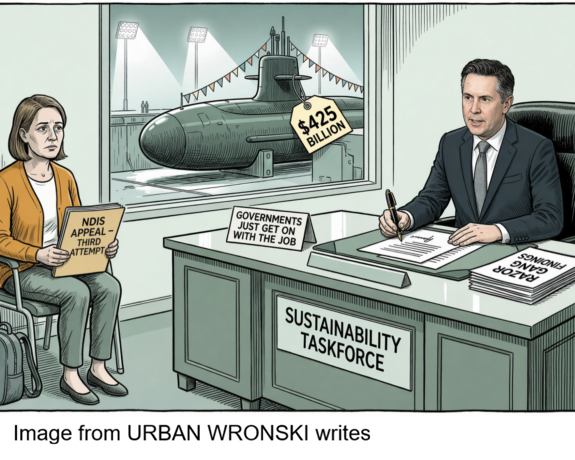

PETITION – To: Prime Minister Anthony Albanese and the Australian Labor Government
Chernobyl: The Lost Tapes – A good documentary on Chernobyl on SBS available On Demand for the next 3 weeks– https://www.sbs.com.au/ondemand/tv-program/chernobyl-the-lost-tapes/235274195556

19 May – Webinar- Webinar: No Nuclear Weapons in Australia
Start: 2026-05-19 18:00:00 UTC Canberra, Melbourne, Sydney (GMT+10:00)
End: 2026-05-19 19:30:00 UTC Canberra, Melbourne, Sydney (GMT+10:00)
20 May – Webinar – The dangerous world of AUKUS, US, military occupation and suppression of dissent

National Webinar, 20th May, 2026, 6.30pm AEST. Confronting laws restricting/suppressing protest speech and action
Speakers: Former Sen. Rex Patrick, Lawyer Nick Hanna ,Arthur Rorris ,Jorgen Doyle, Sen David Shoebbridge,
Facilitator Kelley Tranter.

of the week – Australians for War Powers Reform (AWPR)
To see nuclear-related stories in greater depth and intensity
 Antinuclear