Connection problems push more contractors out of solar market — RenewEconomy

Growing complexity surrounding connections to main grid causing more contractors to abandon large scale solar sector, with some warning of potential contractor shortages. The post Connection problems push more contractors out of solar market appeared first on RenewEconomy.
via Connection problems push more contractors out of solar market — RenewEconomy
Coal generator virtually given away by NSW to get $11m handout for repairs — RenewEconomy

Morrison government set to spend $11 million on Vales Point upgrade, but is it unfairly raising community expectations of new coal investments? The post Coal generator virtually given away by NSW to get $11m handout for repairs appeared first on RenewEconomy.
via Coal generator virtually given away by NSW to get $11m handout for repairs — RenewEconomy
SEC vows “ruthless” political campaign to overcome big solar and wind gridlock — RenewEconomy

Smart Energy Council vows “ruthless and pointed” campaign, as maelstrom of grid constraints, connection delays and policy vacuum threatens to send big solar and wind investment over a cliff. The post SEC vows “ruthless” political campaign to overcome big solar and wind gridlock appeared first on RenewEconomy.
via SEC vows “ruthless” political campaign to overcome big solar and wind gridlock — RenewEconomy
Due 28 February 2020- Submissions to the Victorian Parliamentary Inquiry into Nuclear Prohibition
 Submission to the Victorian Parliamentary Inquiry into Nuclear Prohibition Due 28 February 2020

Nuclear power is a dangerous distraction from real movement on the pressing energy decisions and climate actions we need. Rather than fuel carbon emissions and radioactive risk through domestic coal power plants and the export of coal and uranium, Australia should embrace the fastest growing global energy sector ‒ renewables ‒ and become a driver of clean energy thinking and technology. For more information, see our report: Nuclear Power – No Solution to Climate Change. The easiest (and quickest) way to make a submission is to use the proforma here. You can adapt it as you like. Or email to nuclearprohibition@parliament.vic.gov.au Or send a hardcopy to: The Committee Manager | Standing Committee on Environment and Planning | Parliament House, Spring Street EAST MELBOURNE VIC 3002 | All submissions should include; your full name, contact details (either a postal address or phone number), the text of your submission or an attachment containing your submission and a clear indication if you are seeking confidentiality. The submission closing date is Friday 28 February 2020.
Risk that Environment Protection and Biodiversity Conservation (EPBC) Act could be changed to promote nuclear power

K-A Garlick at Nuclear Free WA, 12 Feb 20
The Environment Protection and Biodiversity Conservation (EPBC) Act is currently under review and will look at how the Act has been operating, and any changes needed for Australia to support ecologically sustainable development into the future.
Currently, under the EPBC Act, nuclear power is banned and the ‘nuclear action’ triggers uranium mining and milling projects to be Federally assessed. This should remain.
There is a real threat that the EPBC Act could change to remove the ban on nuclear power and the ‘nuclear actions’ trigger, so that this dirty industry can push forward. We urge you and your organisation to make a submission to keep the ban on nuclear power and the ‘nuclear action’ triggers.
Don’t nuke the climate is a great new website with a ton of information to use for your submission including last years no nuclear power statement by a broad coalition of faith, union, environmental, Aboriginal and public health groups, representing millions of Australians, that clearly outlines our energy future is renewable, not radioactive. Click here to read the statement.
Submissions are due 17 April 2020. You can send submissions via email to epbcreview@environment.gov.au Or via post to: EPBC Act Review Secretariat Department of the Environment and Energy GPO Box 787 CANBERRA ACT 2601. Please complete and submit this cover page with your submission. All submissions that include this cover sheet will be considered by the review. For more information on the EPBC Act and submissions, click here.
Whyalla is targeted for nuclear waste shipments and should have a right to refuse untenable plans.
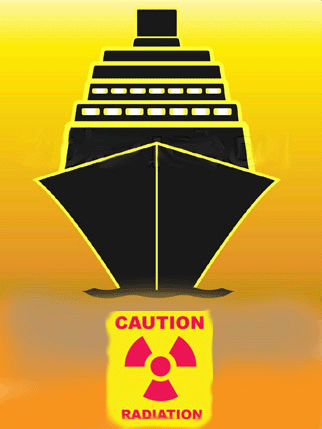 Whyalla is targeted for nuclear waste shipments and should have a right to refuse untenable plans.
Napandee Nuclear Store site nomination also targets Whyalla Port: Nuclear Brief (Feb 2020) by David Noonan, Independent Environment Campaigner
Amidst rising controversy, a Federal Minister has nominated Napandee near Kimba on Eyre Peninsula as a Nuclear Store to take reactor fuel wastes and long-lived wastes from Lucas Heights.
The “Site Characterisation Technical Report: Napandee” (DIIS, July 2018, Proximity to ports p.150) named Whyalla Port to take shipments of nuclear fuel wastes, in the event Napandee is named as a Nuclear Store. Two shipments of reprocessed nuclear fuel wastes, in 130 tonne TN-81 casks, are intended within the first two years of operations of a Nuclear Waste Store at Napandee (p.152).
Some 100 x B-double 50 tonne loads of Intermediate Level Wastes (ILW) are also intended in the first four years of Nuclear Store operations at Napandee (p.152). The Report (p.157-158) states:
“It may be possible to have these containers shipped from Port Kembla to ports such as Whyalla”
However, the Federal government has conspicuously failed to consult the SA community on plans to impose multiple shipments of nuclear waste across SA, including potentially through Whyalla Port.
This flawed practice is in continued breach of advice of the Nuclear Safety Committee (NSC) to the nuclear regulator ARPANSA (Nov 2016) on the NRWMF, on transparency in decisions, stating:
“The ongoing requirement to clearly and effectively engage all stakeholders, including those along transport routes.” With the NSC stating that: “Such engagement is essential…
” Eyre Peninsula, Whyalla and transport route communities have so far been denied a say on these Federal nuclear waste plans and now face potential serious reputational risks and material impacts.”
The Australian Radioactive Waste Management Framework (DIIS, April 2018, p.4) reports total Intermediate Level Wastes at 1,770 m3 – with 95% (by volume) arising as Federal government wastes.
The Federal gov. plans to more than double Intermediate Level Wastes to produce a further 1,960 m3 over next 40 years, with 1,850 m3 (95%) of that arising from ANSTO Lucas Heights operations.
All these nuclear wastes are intended to go to Napandee for up to 100 years above ground storage.
Proposed indefinite above ground storage of nuclear fuel wastes at Napandee may compromise safety and security in SA and contravenes Nuclear Safety Committee advice. The NSC has stated dual handling in transport associated with interim storage “does not represent international best practice” and raises “implications for security”. These federal nuclear plans are also illegal in SA.
The previous SA State Liberal government prohibited the import, transport, storage and disposal of nuclear fuel wastes and reprocessed wastes under the Nuclear Waste Storage (Prohibition) Act 2000.
“The Objects of this Act are to protect the health, safety and welfare of the people of South Australia and to protect the environment in which they live by prohibiting the establishment of certain nuclear waste storage facilities in this State.”
ARPANSA states these nuclear wastes require isolation from the environment for 10 000 years.
Nuclear waste can pose serious Safety, Accident and Security Risks:
“In the event of a major nuclear accident, adverse impacts on the tourism, agriculture and property sectors could potentially be profound.”
SA Nuclear Royal Commission: Tentative Findings, Risks and Challenges, Impacts on other Sectors (Feb 2016, p.28)
Key questions on safety and security in nuclear fuel waste transport and storage remain unanswered (see D Noonan submission to Minister Canavan, p.11-12). These wastes must not be allowed into SA.
The UK Nuclear Free Local Authorities “Briefing: Nuclear security concerns – how secure is the UK civil nuclear sector?”
(NFLA, May 2016) highlights key security threats including the risks from potential malicious attack on a nuclear waste transport or on a nuclear waste storage site. NFLA (p.8) cites the views of nuclear engineer Dr John Large on safety as at the heart of its concerns:
“Movement of nuclear materials is inherently risky both in terms of severe accident and terrorist attack. Not all accident scenarios and accident severities can be foreseen; it is only possible to maintain a limited security cordon around the flask and its consignment; … terrorists are able to seek out and exploit vulnerabilities in the transport arrangements and localities on the route; and emergency planning is difficult to maintain over the entire route.”
NFLA Recommendations (p.15) call for real discussion on the aftermath of a nuclear security incident given the major emergency response issues that arise. That belated debate is yet to be heard in SA.
SA is arguable unprepared for the consequences of nuclear fuel waste accidents or security events. Hundreds of Police were required for security at a 2018 nuclear waste shipment out of Port Kembla.
Whyalla is targeted for nuclear waste shipments and should have a right to refuse untenable plans.
In “Nuclear port potential” (Whyalla News, 3 rd August 2018, p.1) the Mayor said Federal gov. plans to use Whyalla’s port for nuclear waste: “would require significant community consultation”, noting:
“In the past Whyalla has opposed any nuclear or radioactive shipping in this region”.
DIIS’s Napandee Site Characterisation Report refers to potential “occurrences of complete shutdown” (p.154) in Iron Triangle Cities during nuclear waste shipments. This is unacceptable.
These are fundamentally State issues and the SA public have not given consent to proposed nuclear waste transport and storage. Under the leadership of Premier Steven Marshall the SA State Liberal government has a responsibility to protect the public interest and to uphold the law in our State.
The Marshall gov. must protect all SA regional communities and reject a Nuclear Waste Store in SA. For further Information, see: https://nuclear.foe.org.au/waste
Senate opens the door for nuclear developments
Senate opens the door for nuclear developments: From ENuFF[SA]
https://www.facebook.com/sanuclearfree/–13 Feb 20
 February 11 2020
Senator HANSON-YOUNG (South Australia) (16:12): I move:
That the Senate:
(a) affirms its commitment to a complete moratorium on nuclear energy, as expressed in the Australian Radiation Protection and Nuclear Safety Act 1998 and the Environment Protection and Biodiversity Conservation Act 1999;
(b) notes the devastating and lasting impacts of the nuclear disasters in Fukushima, Chernobyl and Three Mile Island; and
(c) call on all Ministers to commit to Australia being a nuclear-free zone.
========================
DIVISION:NOES 35 (6 majority) AYES 29 PAIRS 6
Question negatived.
========================
Rex Patrick voted No
P Wong paired
https://parlinfo.aph.gov.au/parlInfo/search/display/display.w3p;query=Id%3A“chamber%2Fhansards%2Fc220a265-e5aa-42c9-8cd9-19390fabb066%2F0127”
#ScottyFromMarketing ‘s bushfire inquiry studiously ‘ignores’ carbon emissions
 PM’s bushfire inquiry ‘ignores’ carbon emissions, Barr says, Canberra Times, Dan Jervis-Bardy 11 Feb 20, PM’s bushfire inquiry ‘ignores’ carbon emissions, Barr says, Canberra Times, Dan Jervis-Bardy 11 Feb 20,
Chief Minister Andrew Barr has criticised the scope of Scott Morrison’s proposed royal commission into the summer bushfire crisis, saying it overlooks the role that cutting carbon emissions plays in combating climate change and future fire threats.
How the Prime Minister responds to Mr Barr’s concerns will determine if the ACT supports the national inquiry. Mr Barr wrote to the Prime Minister on Tuesday with his feedback on draft terms of reference for the royal commission into the bushfire disaster.
The Chief Minister wants a national inquiry into the horror fire season, but has repeatedly said that any review would be inadequate unless it thoroughly examines the effect climate change has had on the length and ferocity of bushfire seasons…… In his letter to Mr Morrison, the ACT Chief Minister said the inquiry also needed to look at strategies to tackle climate change, such as cutting carbon emissions.
|
|
MPs Andrew Wilkie and George Christensen to UK to help free Julian Assange
 MPs take Assange freedom campaign to UK
https://www.news.com.au/national/breaking-news/mps-take-assange-freedom-campaign-to-uk/news-story/633a9baa272bd155623423565e86e6b4 12 Feb 20,
Tasmanian independent MP Andrew Wilkie and Queensland Nationals MP George Christensen will travel to the United Kingdom to lobby for Julian Assange’s freedom Paul Osborne, Two Australian politicians will travel to the UK this weekend at their own expense to visit Julian Assange in jail and seek his release.
Tasmanian independent MP Andrew Wilkie and Queensland Nationals MP George Christensen, who chair a parliamentary group in support of the WikiLeaks founder, will pay a visit to Belmarsh Prison near London and lobby the British government.
Assange is set to face trial on February 24 to determine whether he should be extradited to the US, where he has been charged with 17 counts of spying and one count of conspiracy to commit computer intrusion.
5.2-magnitude earthquake near Fukushima
|
Japan is rattled by 5.2-magnitude earthquake near Fukushima, Daily Mail UK
By TIM STICKINGS , 12 February 2020 Japan was rattled by a 5.2-magnitude earthquake off the coast of Fukushima province today. The quake struck just over 50 miles from the city of Fukushima where the nuclear disaster occurred in 2011. Witnesses said they had felt a 10-second long shake during the tremor at around 7.30pm local time. No tsunami warning has been put in place by Japan’s meteorological agency. The US Geological Survey said today’s earthquake had struck at a depth of around 50 miles under the sea. One witness told earthquake monitoring service EMSC that the quake produced a ‘weak but long shake’ lasting about 10 seconds. Another said their heater had moved around on its four wheels while making a sound. Officials in Fukushima prefecture warned residents that there could be aftershocks and directed them to official public safety advice. Energy company TEPCO, which runs four nuclear power plants in the prefecture, said it was awaiting further information about the earthquake’s impact. …..https://www.dailymail.co.uk/news/article-7995301/Japan-rattled-5-2-magnitude-earthquake-near-Fukushima.html |
|
New Resources Minister Keith Pitt ignores renewables, pushes for more coal, gas and uranium exports
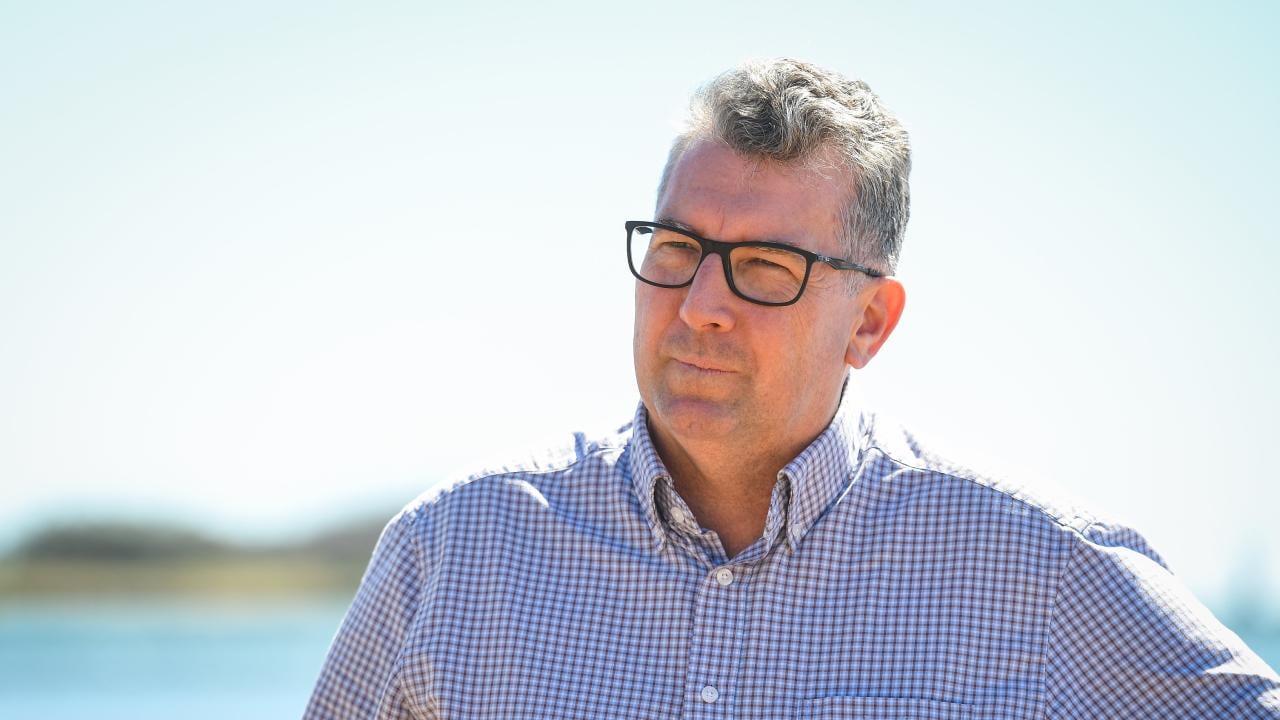 New Resources Minister calls for more coal, gas and uranium exports, Brisbane Times, By David Crowe, February 11, 2020 Australia will need more coal, gas and uranium exports to pay for essential services and lift living standards, incoming Resources Minister Keith Pitt has declared in a warning shot to activists trying to block new projects.Mr Pitt vowed to use his new job to make Australia an even bigger energy exporter and sent a message to state governments to open up new coal seam gas fields to drive down the price of energy for households…… New Resources Minister calls for more coal, gas and uranium exports, Brisbane Times, By David Crowe, February 11, 2020 Australia will need more coal, gas and uranium exports to pay for essential services and lift living standards, incoming Resources Minister Keith Pitt has declared in a warning shot to activists trying to block new projects.Mr Pitt vowed to use his new job to make Australia an even bigger energy exporter and sent a message to state governments to open up new coal seam gas fields to drive down the price of energy for households……
An advocate of nuclear power in the past, Mr Pitt said he would not be making any decisions about nuclear energy given this was the responsibility of Energy Minister Angus Taylor, but he backed more uranium exports……. https://www.brisbanetimes.com.au/politics/federal/new-resources-minister-calls-for-more-coal-gas-and-uranium-exports-20200211-p53zu5.html |
|
Despite historically low uranium prices, nuclear power cannot compete
 Uranium Week: The Nuclear Conundrum https://www.fnarena.com/index.php/2020/02/11/uranium-week-the-nuclear-conundrum/ Uranium Week: The Nuclear Conundrum https://www.fnarena.com/index.php/2020/02/11/uranium-week-the-nuclear-conundrum/
By Greg Peel, Lack of demand continues to drag on uranium prices despite ongoing production curtailments, yet nuclear energy remains a matter of cost. -Uranium spot prices drift lower he world’s largest mining investment conference, now in its 26th year, began in Cape Town last week. Given the tenuous state of South Africa’s energy supply, the focus this year of the “Investing in African Mining Indaba” is on a transition from coal toward renewable and clean energy resources to deal with power shortages across the African continent. (Indaba means meeting.) The five-day conference brought together representatives from 94 countries and regions, including more than 38 ministers, under the theme “Optimizing Growth and Investment in the Digitized Mining Economy.” The CEO of the Minerals Council South Africa said at the conference the Council fully supports a transition from coal to non-fossil fuel forms of power generation such as wind and solar power and, where cost is not prohibitive, nuclear power. “Where cost is not prohibitive” underscores the dilemma facing the global nuclear power and uranium mining industries at present. The US experience is one of US uranium miners being unable to compete with cheaper imports from the likes of Canada and Kazakhstan, with uranium prices near historically low levels. Yet the US nuclear power industry cannot compete with gas-fired and renewable power, despite historically low uranium prices.
|
|
South Australia’s renewable energy future hampered by lack of electricity infrastructure
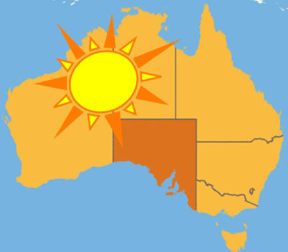 South Australia’s renewable energy future hampered by lack of electricity infrastructure https://www.abc.net.au/news/2020-02-11/sa-renewables-future-hampered-lack-of-instructure/11935392
By Emma Pedler and Lucy Robinson South Australia’s drive to be the national leader in renewable energy is being hampered by infrastructure unable to support the future growth potential, according to economist Ross Garnaut.
Key points:
- A lack of infrastructure is undermining SA’s goal to lead the nation in renewable energy, experts say
- A windfarm that was approved almost 20 years ago was never developed because of a lack of support for large-scale operations
- State officials say a proactive approach to infrastructure would attract businesses and create jobs
Dr Garnaut highlighted the Eyre Peninsula and Spencer Gulf as two of the regions most likely to be able to both create renewable energy and house the industries that want to use it.
But he said the region would not be able to capitalise on opportunities without high voltage transmission infrastructure similar to the interconnector recently approved to link SA and New South Wales.
“We need lots more of that kind of infrastructure … so that we can bring together at single points a range of high quality wind and high quality solar, so that we can balance the requirements of different parts of the region,” he said Continue reading
Correcting Anti-Renewable Energy Propaganda
Correcting Anti-Renewable Energy Propaganda, Clean Technica B1 By Georg Nitsche, 12 Feb 20, In 1989, pro-nuclear lobbyists claimed that wind power couldn’t even provide 1% of Germany’s electricity. A few years later, pro-nuclear lobbyists ran ads in German newspapers, claiming that renewables wouldn’t be able to meet 4% of German electricity demand. After the renewable energy revolution took off, in 2015, the pro-nuclear power “Breakthrough Institute” published an article claiming solar would be limited to 10–20% and wind to 25–35% of a power system’s electricity. In 2017, German (pro-nuclear power) economist Hans-Werner Sinn tweeted that more than 50% wind and solar would hardly be possible. And in 2018, Carnegie Science reported a study claiming that “wind and solar could meet most but not all U.S. electricity needs.” According to one of the authors, their research indicates that “huge amounts of storage” or natural gas would need to supplement solar and wind power. From a pro-renewable perspective, this is encouraging. The claims about the limits of renewable energy have moved from “not even 1% of electricity” to “most but not all of the electricity.” And yet, the anti-renewables message has always been the same: renewables will lead to a dead end. In order to underscore their point, anti-renewable energy propagandists now publish incorrect cost figures that claim a fully renewable electric grid would be unaffordable or way more expensive than other options, such as, you guessed it, nuclear power. Continue reading |
|||||||||

Australia’s global opportunity to lead on solar power
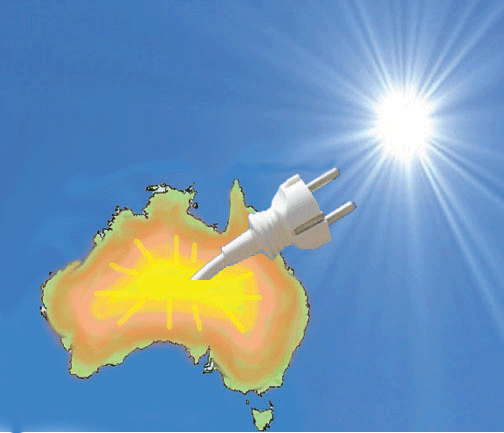 Australia should be leading the way on solar power https://www.crikey.com.au/2020/02/12/daily-fix-solar-power/ We have sunshine falling on vast areas of land that are too hot and dry to be productive in other ways, and we have the scientists and engineers to develop and apply the best available technology.
|
FEB 12, 2020 Australia should become a world leader in solar electricity generation, both on rooftops and on a larger scale. We have sunshine falling on vast areas of land that are too hot and dry to be productive in other ways, and we have the scientists and engineers to develop and apply the best available technology for electricity generation and storage. The federal government needs to facilitate the shift from fossil fuels to solar for most of our electricity generation, and we could become an exporter to Singapore. Once we have abundant clean and cheap electricity, we can shift to electric cars. That will leave meat and dairy as our major source of greenhouse gas emissions. It will be more difficult, politically, for the government to do something about that — but the way people are switching to plant-based foods means that it may happen anyway. Peter Singer is the Ira W. DeCamp Professor of Bioethics at Princeton University. |
|
|
1 This month.
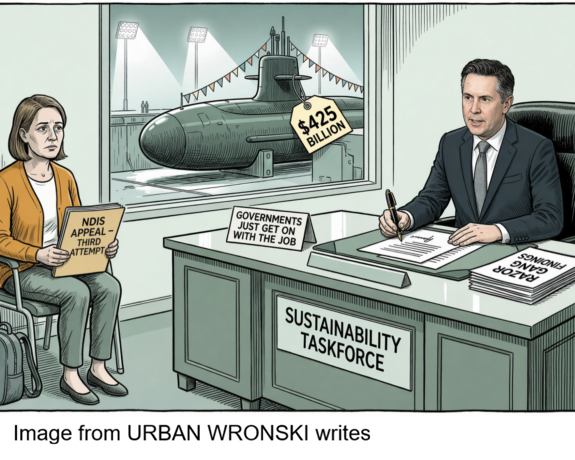

PETITION – To: Prime Minister Anthony Albanese and the Australian Labor Government
Chernobyl: The Lost Tapes – A good documentary on Chernobyl on SBS available On Demand for the next 3 weeks– https://www.sbs.com.au/ondemand/tv-program/chernobyl-the-lost-tapes/235274195556
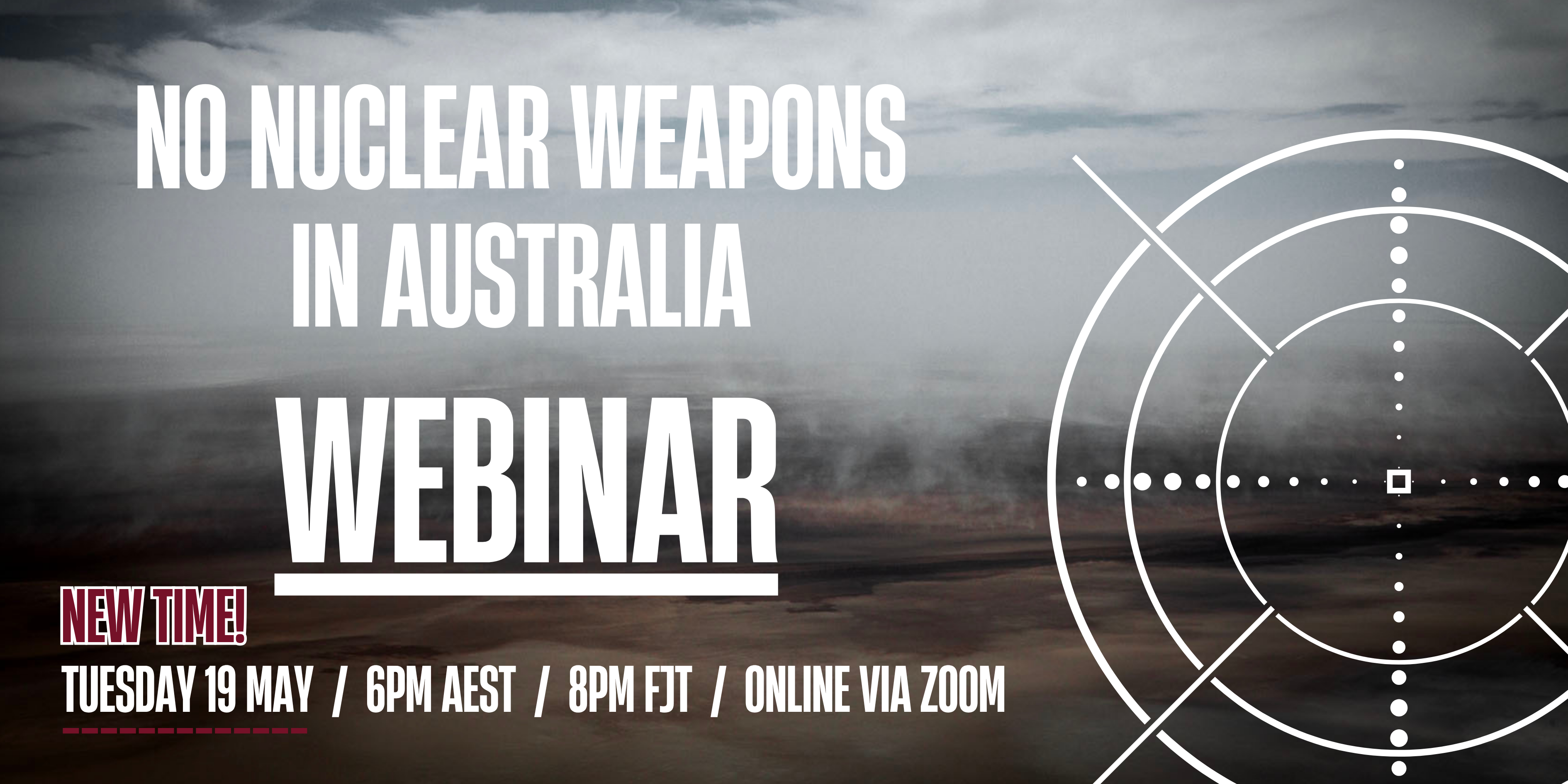
19 May – Webinar- Webinar: No Nuclear Weapons in Australia
Start: 2026-05-19 18:00:00 UTC Canberra, Melbourne, Sydney (GMT+10:00)
End: 2026-05-19 19:30:00 UTC Canberra, Melbourne, Sydney (GMT+10:00)
20 May – Webinar – The dangerous world of AUKUS, US, military occupation and suppression of dissent

National Webinar, 20th May, 2026, 6.30pm AEST. Confronting laws restricting/suppressing protest speech and action
Speakers: Former Sen. Rex Patrick, Lawyer Nick Hanna ,Arthur Rorris ,Jorgen Doyle, Sen David Shoebbridge,
Facilitator Kelley Tranter.

of the week – Australians for War Powers Reform (AWPR)
To see nuclear-related stories in greater depth and intensity
 Antinuclear