Australia: HRF, Jewish Council and ANIC Demand Arrest or Entry Ban of Israeli President
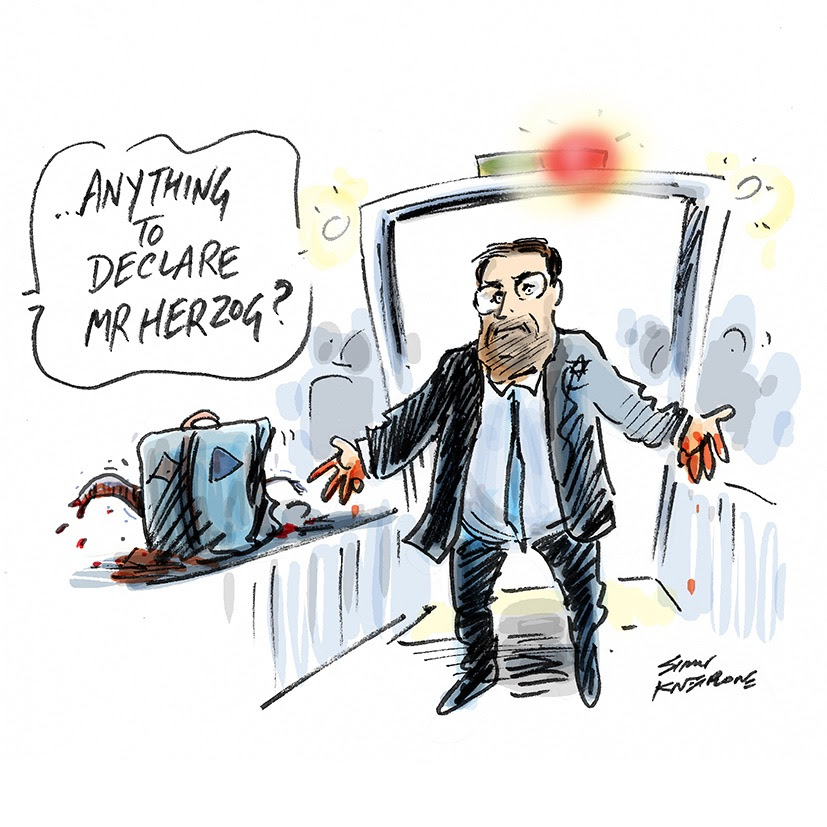
January 30th 2026, https://www.hindrajabfoundation.org/posts/australia-hrf-jewish-council-and-anic-demand-arrest-or-entry-ban-of-israeli-president
In a historic joint action, the Hind Rajab Foundation (HRF), the Jewish Council of Australia, and the Australian National Imams Council (ANIC), have lodged a formal legal complaint to have Israeli President Isaac Herzog arrested or barred from entering Australia. The groups, represented by renowned barrister Robert Richter KC, allege that Herzog has incited genocide and aided and abetted war crimes, rendering him unfit to enter the country under Australian law.
The 30-page submission, sent yesterday to Attorney-General Michelle Rowland, Home Affairs Minister Tony Burke and the Australian Federal Police (AFP), warns that the President’s visit is “highly inflammatory”.
The groups are calling on the AFP to initiate a criminal investigation of Herzog under the Commonwealth Criminal Code.
The urgent request details a “sustained pattern of incitement and hate speech” by the President, specifically citing:
- The “Entire Nation” Declaration: Herzog’s October 2023 statement that there are no “uninvolved” civilians in Gaza, which the groups argue stripped 2.3 million people of their protected status under international humanitarian law and urged the IDF to treat the entire population as a military target.
- Famine Denial: Herzog’s August 2025 claims that images of starving Gazan children were “staged”—a statement made while famine was setting in and which the brief describes as a “conscious effort to obscure war crimes”.
- Endorsement of Military Operations Involving War Crimes: A December 2023 visit to the Nahal Oz military base where Herzog reportedly “encouraged” troops 48 hours before the “wanton destruction” and “flattening” of the Palestinian town of Khuza’a.
The submission rejects any claim that Herzog has diplomatic immunity, citing the Nuremberg Principles and international law to argue that heads of state have no shield against charges of genocide or war crimes. The groups warn that if the government fails to act, it would signal “acquiescence to genocidal rhetoric”.
“If the Prime Minister of Israel is not permitted to visit Australia, the President should not be allowed to act as his surrogate,” the complaint states, referencing the International Criminal Court’s arrest warrants for Israeli Prime Minister Benjamin Netanyahu.
Dyab Abou Jahjah, Hind Rajab Foundation:
“When a head of state publicly denies civilian protection, dismisses famine, and encourages military operations marked by widespread civilian harm and destruction, those acts carry legal consequences everywhere. No country — including Australia — should become a safe haven for individuals credibly accused of inciting genocide or aiding and abetting war crimes. Australia has a duty to uphold the rule of law and protect its communities from such threats.”
Ohad Kozminsky, Executive Member, Jewish Council of Australia:
“President Herzog represents a state found to be committing genocide in Gaza. His presence in Australia would identify this state with Australian Jews, which risks exacerbating social division and endangering Australian Jewish communities. We stand firmly against all forms of racism, and President Herzog’s statements attributing collective guilt to an entire people are a textbook manifestation of anti-Palestinian racism and Israel’s ongoing campaign of dehumanisation.”
Bilal Rauf, Senior Advisor, Australian National Imams Council (ANIC):
“In recent times, Australia’s social cohesion has been under threat. Now more than ever, it is incumbent upon all of us, particularly our political leaders, to seek to protect our social cohesion as a country and society and ensure that individuals who may inflame the situation by their very presence, are not permitted into our country. The proposed visit by the Israeli President Isaac Herzog, a highly controversial foreign head of state accused of serious international crimes, risks inflaming social tensions, undermining Australia’s hate-speech protections, and placing Australian communities at risk. ANIC calls on the Government, which has hurriedly passed laws in the name of social cohesion, to refuse or cancel any visa held by President Herzog. In pursuing this, among other outcomes, ANIC joins with the Jewish Council of Australia and the Hind Rajab Foundation, in pursuing the complaint.”
As Trump Threatens Weekend Strike on Iran, Albanese Pretends Pine Gap Isn’t Complicit
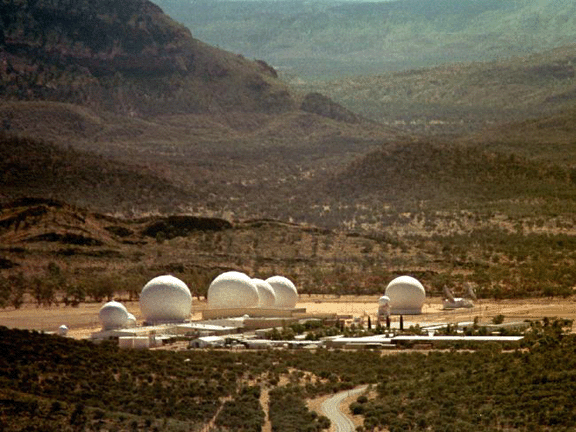
1 February 2026 David Tyler AIM Extra
Albanese’s Iran Illusion: How Australia Sleepwalks into Someone Else’s War
While our federal government waffles on about rules based order, Iran is rewriting the rules of modern warfare. Trump is threatening regime-change. The Strait of Hormuz has become a kill box where $13 billion aircraft carriers play sitting duck to lethal, glorified speedboats, where cyberattacks double as deterrence, and where Australia, ever the loyal deputy, pretends it’s all someone else’s problem. Labor’s silence isn’t prudence. It’s complicity in a US strategy that’s already unravelling, and we’ve got the scars to prove it.
Trump already bombed Iran once. In June 2025, Operation Midnight Hammer saw seven B-2 stealth bombers drop bunker-busters on three nuclear facilities while Pine Gap provided the targeting data. Iran’s face-saving response, a telegraphed missile strike on Al Udeid Air Base in Qatar, fooled no one. But it burned through 25% of America’s total THAAD interceptor stockpiles, missiles the US produces at a rate of roughly one per month. Now Trump’s threatening round two, this time with explicit regime-change goals, and Albanese still won’t acknowledge that Australia’s uncritical alignment has painted a target on our own facilities.
The real damage? Washington’s isolation campaign isn’t weakening Tehran. It’s shoving Iran into Beijing and Moscow’s arms, locking in an anti-Western axis that thrives on American blunders, while teaching every threshold nuclear state that compliance buys nothing but bombs. Why won’t Labor admit the scale of the mess? Because doing so would mean confessing its own role in a policy already fraying at the seams.
Iran’s Budget Warfare: Turning American Strength into Liability
Iran isn’t trying to match the US ship for ship. The Islamic Revolutionary Guard Corps has crafted a playbook that turns American firepower into dead weight: coastal swarms, cyber harassment, proxy deterrence. The goal isn’t winning a war. It’s making escalation so unpredictable, expensive, and politically toxic that the US thinks twice before starting one.
In the cramped waters of the Strait, even Iran’s modest fleet of fast-attack craft becomes a force multiplier. The IRGC doesn’t need a knockout punch, just enough chaos to trap US commanders in a no-win scenario. Push ahead and risk humiliation. Retreat and signal weakness. Dither in the middle while morale drains away. So far, the Pentagon has mostly chosen door number three, proving you can outspend your opponent by billions and still lose the initiative to speedboats and audacity.
The Strait of Hormuz: Where Geography Beats Firepower
The USS Abraham Lincoln isn’t just another, elderly ship in the Strait. It’s a floating monument to American overreach, now redeployed for what Trump calls an “armada larger than Venezuela,” the latest regime-change operation on his scorecard. Iran’s swarm tactics don’t need to sink a nuclear-powered carrier to succeed. They just need to make every transit a gamble, every patrol a potential disaster.
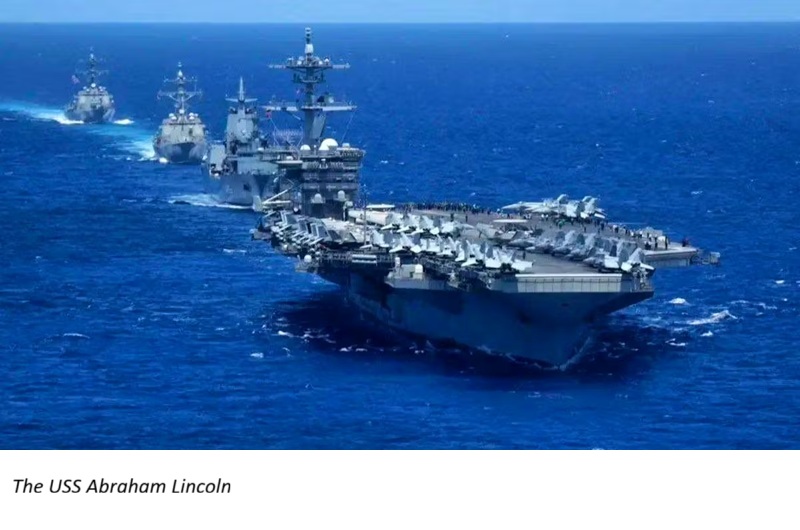
The IRGC’s speedboats may look like dinghies, but in these confined waters where 20% of the world’s oil flows, they’re a constant reminder: geography, not firepower, decides who blinks first. Tehran isn’t trying to win a shootout. It’s turning the Strait into a quagmire where the US loses whether it escalates or backs down, and every crisis burns through irreplaceable defensive systems while China takes notes.
Cyber Jihad: How Iran Turned Hacking into Deterrence
Iran may not match Russia or China’s cyber prowess, but it doesn’t need to. Its campaigns against US, Israeli, and Gulf targets aren’t about knockout blows. They’re about raising costs, sowing doubt, ensuring any strike on Iranian soil comes with a digital counterpunch. From disrupting Saudi oil facilities to probing Israeli water systems, Tehran’s message is simple: hit us, and we hit back, not just with missiles, but with chaos in your backyard.
At home, the regime has weaponised the internet itself, using imported surveillance tech and homegrown censorship to crush dissent. Since January 8, Iran’s internet connectivity has been throttled to 1% of normal levels, a digital blackout designed to hide what appears to be one of the bloodiest crackdowns in modern Iranian history. It’s crude, effective, and one more layer of deterrence the Pentagon now factors into every war plan.
The Massacres Under the Blackout: What Trump’s “Humanitarian” Intervention Ignores
Here’s what Trump won’t mention when he frames the next strike as protecting Iranian protesters: his administration is planning regime change in a country already reeling from mass killings. Since late December, Iran has experienced its largest uprising since 1979, sparked by currency collapse and spreading nationwide. The regime’s response has been catastrophic…………………………………………………………………………………………………………………………………………………………………………………….
The Pine Gap Paradox: Australia’s Uncritical Complicity
Australia isn’t a neutral observer. Through Pine Gap, we provided the intelligence backbone enabling the June 2025 strikes on Iranian nuclear facilities, operations now drawing genocide allegations at the ICJ given the broader context of US-Israeli coordination. That makes us complicit, and Tehran has noticed.
Iranian Brigadier General Mohammad Akraminia was explicit in his warning: if the US strikes again, “the scope of war will certainly extend across the entire region… From the Zionist regime to countries that host American military bases, all will be within range of our missiles and drones.” That’s not bluster. That’s a direct threat to Australian facilities, delivered after we’d already enabled one round of strikes.
The Herzog visit crystallises Labor’s paralysis. Albanese frames it as “solidarity” with Jewish Australians, but the timing, amid ICJ hearings, domestic protests, and credible reports of an “imminent” second US strike aimed at regime change, screams political theatre. Hosting an Israeli president while Pine Gap’s data flows unrestricted into contested operations isn’t tone-deaf. It’s a neon sign for Iranian retaliation: cyberattacks, grey-zone harassment, or worse.
Yet Albanese won’t acknowledge the risks, because doing so would mean admitting our uncritical alignment with Washington has made us a target. So we get silence, deflection, empty platitudes about “shared values,” while senior US military officials tell Middle Eastern allies that Trump may strike Iran “as soon as this weekend.”
Greg Moriarty, our ambassador in Washington, saw this coming. His warnings about blowback from sanctions and military-first strategies should be shaping the debate. Instead, they’ve been sidelined, because realism doesn’t win elections, and admitting the Pine Gap Paradox would require honesty this government doesn’t possess.
The Nuclear Cascade: What Comes After Trump Bombs Iran Again
If Trump follows through, the consequences extend far beyond the Middle East. Every regional power watching this crisis is recalculating. Saudi Arabia has made no secret of its nuclear ambitions, with Crown Prince Mohammed bin Salman publicly declaring the kingdom would pursue weapons if Iran did. Riyadh’s deepening defence cooperation with nuclear-armed Pakistan isn’t coincidence. It’s a hedge against American unreliability and regional instability……………………….
Crossroads: The Choice Albanese Won’t Make
Australia still has options, but the window is closing fast. We can deepen our operational integration with the US, provide targeting for regime-change strikes, and hope Iran decides we’re more trouble than we’re worth. Or we can use our position inside the American security ecosystem to argue for de-escalation, regional guarantees, diplomacy over another roll of the dice with irreplaceable defensive systems and global proliferation architecture.
The second path means telling a distracted superpower our support has limits, that we won’t sign a blank cheque for a strategy multiplying our exposure while delivering only drift. It means acknowledging publicly that Pine Gap’s role in the June strikes has already made Australia complicit, and that a second round aimed at regime change crosses a line we should never have approached.
But if Albanese won’t level with the public about the stakes, we risk sleepwalking into a conflict shaped by other people’s decisions, on other people’s timelines, with Australian facilities providing the targeting data that helps trigger a regional war and global nuclear cascade.
Drop Site News reports the strike could come “as soon as this weekend.” Common Dreams notes 56% of Americans already believe Trump has gone too far with military interventions. Even many Iranian protesters warn the US will exploit their struggle rather than support it. The pieces are in place for a catastrophic escalation, one that makes the June strikes look like a warning shot.
The question isn’t whether Australia can afford to speak plainly about these risks. It’s whether we can afford not to, and whether Albanese has the courage to admit that our “shared values” with Washington don’t extend to enabling regime-change operations that will make us targets while accelerating nuclear proliferation across the Middle East.
The silence from Canberra isn’t prudence. It’s complicity. And if Trump pulls the trigger this weekend, Albanese’s refusal to acknowledge our role will look less like diplomacy and more like dereliction.
This article was originally published on URBAN WRONSKI WRITES, https://theaimn.net/as-trump-threatens-weekend-strike-on-iran-albanese-pretends-pine-gap-isnt-complicit/
The Rules-Based Order: Where America Gets Away with Murder, and Everyone Else Gets the Bombs

When the US bombs Iranian nuclear sites, it’s a “strike”. When Iran defends itself, it’s “aggression”. When the US funds insurrections, arms rebels and sabotages economies, it’s “promoting democracy”.
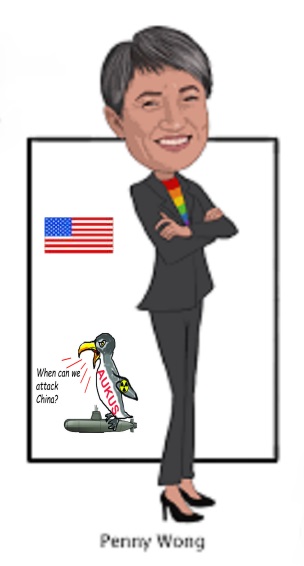
While Ms Penny Wong chants the “rules based order” mantra, Mr Moriarty, gets the gong: he is off to Washington to ensure Australia remains locked in step with the world’s biggest bully. Meanwhile, as the ICJ rules that Israel’s actions in Gaza constitute plausible genocide, and as the US and Australia continue to arm and fund Israel’s apartheid regime, the hypocrisy would knock you over. The “rules based order” isn’t about justice. It’s about power and who gets to wield it without consequences.
31 January 2026 David Tyler , Australian Independent Media
Australia’s Foreign Minister Penny Wong chants “rules based order” like a sacred hymn.
Order? In reality, it’s a squalid, pseudo-legal jargon for a world where might is right. While the US drops depleted uranium on Iraqi children, arms Israeli apartheid and fuels insurrections in Iran, any nation that dares assert its independence is crushed under a tonne of bricks. In Iran’s case, a hail of “precision strikes” designed to wound, maim and cause lifelong agony. Meanwhile, in Gaza, the International Court of Justice has declared Israel’s actions plausible genocide, ordering an immediate halt to atrocities and unimpeded humanitarian access. The US and its allies, including Australia, have ignored every ruling, proving once again that the “rules based order” is nothing more than a mafia protection racket, and we’re collecting the rent.
Depleted Uranium is often said to drop but it’s part of the super new bullets or “rounds” in use. The A-10 Warthog’s GAU-8 Avenger, for example, fires 30mm DU rounds. Tank rounds (e.g., the US M829 series) use DU in their cores to penetrate enemy armour. So kids get a spray of it, rather than a drop.
When these rounds hit a target, they aerosolise into fine, toxic dust, which can be inhaled or contaminate soil and water, leading to long-term health risks (e.g., cancer, birth defects) and environmental damage.
The Rules Based Order A Licence to Kill
Penny Wong stands in Parliament, her voice trembling with moral certainty. To her, Australia stands with the brave people of Iran as they struggle against an “oppressive regime”. She invokes the rules based order like it’s a force field against tyranny, a beacon of justice in a murky, chaotic and mercenary world. Just one snag. The rules apply to everyone else. Only.
When the US bombs Iranian nuclear sites, it’s a “strike”. When Iran defends itself, it’s “aggression”. When the US funds insurrections, arms rebels and sabotages economies, it’s “promoting democracy”.
When anyone else does it, it’s “terrorism”. And as the US sprays depleted uranium, children become cancer statistics? Birth defects are an inter-generational curse, it’s “collateral damage” a euphemism for war crimes.
This isn’t a rules based order. It’s a licence to kill, and Australia through our defence secretary Greg Moriarty, our intelligence agencies and our slavish alignment with US foreign policy is complicit at every step.
And now, as the International Court of Justice declares Israel’s actions in Gaza a plausible genocide, ordering Israel to halt its military operations and allow humanitarian aid, the US and its allies, including Australia, have done what they always do ignored the ruling and doubled down.
Loaded Language “Regime” vs “Government”, “Strikes” vs “Slaughter”
Let’s talk about the language of empire. The US and its press never refer to the “Iranian government”. It’s always the “Iranian regime” a term that strips legitimacy, implies tyranny and justifies intervention. Meanwhile, Saudi Arabia, a brutal monarchy that beheads dissidents and bombs Yemeni school buses, is a “key ally.”
Israel, an apartheid state with nuclear weapons, is a “vibrant democracy”
When the US bombs a Syrian hospital, it’s a “precision strike”. When Iran fires a missile in self defence, it’s “terrorism”. When the US funds, arms and trains insurgents in Iran such as the Network of Iranian Activists for Democracy (NAD), which distribute Molotov cocktails to protesters and boast about “turning Tehran into a warzone” it’s “supporting democracy”. When Iran arrests those same insurgents, it’s “crushing dissent”.
This isn’t reportage. It’s propaganda, and it’s designed to manufacture consent for the next war.
The Dirty Weapons Engineered to Maim, Designed to Terrorise
The US doesn’t just kill. It maims. It terrorises. It leaves behind a legacy of suffering so grotesque that it defies the term “war crime”. What’s happening is worse than death. Generations suffer. The US has used depleted uranium munitions in every major Middle East conflict since the Gulf War. Why? Because DU is dense enough to pierce armour, but its real legacy is cancer, birth defects and environmental poisoning.
In Fallujah, where the US used DU in 2004, doctors reported a 14 fold increase in birth defects; babies born with two heads, missing limbs and organs outside their bodies. The called the city “the new Hiroshima”. In Syria, the Pentagon confirmed using DU in 2015, despite international condemnation. The result? Radioactive dust that lingers for decades, poisoning soil, water and people. In Iraq, the US ignored its own guidelines, firing DU at unarmoured targets, buildings and even troops turning cities into toxic wastelands.
The US knows DU is a war crime in slow motion. It just doesn’t care.
The US military has set out to maximise suffering. From cluster munitions banned by 100 countries, but still used by the US to white phosphorus, which burns through flesh to the bone, the goal isn’t just to win wars it’s to leave populations traumatised, disabled and dependent.
Cluster bombs scatter hundreds of tiny bomblets, many of which fail to explode until a child picks one up years later. White phosphorus doesn’t just burn. It melts flesh and re-ignites when exposed to air, ensuring victims suffer excruciating, prolonged deaths. Drones don’t just kill targets. They terrorise entire communities, turning the sky into a permanent threat and leaving survivors with PTSD for life.
This isn’t warfare. It’s sadism, dressed up in the language of “national security”.
The Australian Connection Greg Moriarty and the Art of Complicity
Australia isn’t just a bystander to this horror-show. We’re in it up to our necks. Greg Moriarty, our defence secretary and soon to be ambassador to the US, cut his teeth in Iran. As Australia’s ambassador to Tehran from 2005 to 2008, he briefed George W. Bush on Iranian politics at the height of US sabotage operations, assassinations and economic warfare against Iran.
Moriarty’s stellar career is a masterclass in how Australia punches above its weight in the US empire from intelligence sharing to military drill, from sanctions enforcement to diplomatic cover for US aggression.
While Ms Penny Wong chants the “rules based order” mantra, Mr Moriarty, gets the gong: he is off to Washington to ensure Australia remains locked in step with the world’s biggest bully. Meanwhile, as the ICJ rules that Israel’s actions in Gaza constitute plausible genocide, and as the US and Australia continue to arm and fund Israel’s apartheid regime, the hypocrisy would knock you over. The “rules based order” isn’t about justice. It’s about power and who gets to wield it without consequences.
Historical Parallels Chile, Guatemala, Iraq, Syria and Now Iran (and Gaza)
This isn’t new. The US has been skittling independence for decades. In Chile in 1973, the CIA sabotaged the economy, funded strikes and backed a coup against Salvador Allende all to protect US corporate interests. The result? Seventeen years of Pinochet’s torture chambers……………………………………………………………………………………………………………………………………………………………………………………………………………………………….. Call tyranny for what it is. While we are still permitted to express dissent.
This article was originally published on URBAN WRONSKI WRITES https://theaimn.net/the-rules-based-order-where-america-gets-away-with-murder-and-everyone-else-gets-the-bombs/
Hate speech. Protecting Israel’s reputation in Australia just got cheaper
by Rex Patrick | Jan 26, 2026 , https://michaelwest.com.au/hate-speech-protecting-israels-reputation-in-australia-just-got-cheaper/
Israel’s reputation is treated as a strategic asset to be managed in Western media and political domains. The Israeli ‘machine’ spends a lot of money and effort doing it. The passing of hate laws in the Parliament just switched some of the cost to us. Rex Patrick explains.
Let’s start with some disclosures. 1) I respect people of Jewish faith. 2) I respect people of Islamic faith. 3) Hamas’ 7 October 2023 attacks on Israeli citizens were wrong. 4) Israel’s genocide in Gaza was wrong. 5) Hezbollah and Houthi attacks on Israeli citizens were wrong. 6) Israel’s attacks on Lebanese citizens were wrong. 7) The terrorist attack at Bondi Beach was wrong.
“Violence against civilians is wrong.“
I’ve been asked to weigh in on the Gaza conflict on numerous occasions. I’ve declined because it’s complicated, requires a substantive understanding of history and involves perspectives that, without significant research, will just leave me speaking from an uninformed place.
I’m also of the view that nothing said here in Australia, including by our Prime Minister, will change the views of the Netanyahu government or Hamas. We might be a “middle power” internationally, but Australia really doesn’t weigh very heavily in the strategic or political balance in the Middle East.
I condemn the violence on all sides and advocate that, whilst everyone has a right to respectful commentary and peaceful protest, Middle Eastern affairs should not be a basis for hateful or violent division in the Australian community.
Balcony over Jerusalem
I did, however, decide to try to find out at least something about the current environment in the Middle East from someone who’s spent time there and I could trust. That’s what caused me to buy John Lyon’s book, ‘Balcony Over Jerusalem’.
Lyons is a leading Australian journalist, currently working for the ABC in Washington and, on occasion, upsetting Donald Trump. He takes the reader of his book through the wonders and dangers of the Middle East experienced and learned in his 6 years as a foreign correspondent living in Israel.
Whilst the book takes the reader on an interesting walk through conflicts across the Middle East, including in Gaza and the Occupied Territories, one clear theme that emerged from the book was the lengths the Israeli ‘machine’ went to try to shape and indeed control the outside world’s perception of Israel.
Controlling the narrative
In the book Lyons argues that Israel treats its international reputation as a strategic asset, and is up there with national security and diplomacy in its importance. It uses a ‘machine’ that doesn’t just react to criticism of Israel, it engages in proactive narrative shaping, which includes systematic engagement with journalists, diplomats and influencers.
Here in Australia members of Parliament are often offered all expenses paid trips to Israel, where see the Israeli perspective on security. I was invited to do so when I was a senator, but declined.
A 2018 study by the Australian Strategic Policy Institute found the Australia/Israel & Jewish Affairs Council (AIJAC), part of the ‘machine’, was the largest sponsor of all non-Australian Government funded trips for federal parliamentarians from 2010 to 2018.
The ‘machine’ is responsible for political donations, predominantly to the Liberal Party, but also to Labor. If the machine wants a motion in the House or Senate, or assistance to confuse Israel/Zionism criticism with antisemitism, all it takes is a phone call.
Former Foreign Minister Bob Carr has called what Israel does a “well-funded foreign influence operation designed to put the interests of Israel above the interests of Australia and its foreign policy”. MP or senators that speak out will be reminded of donations and threatened with the possibility of a well-funded opponent running against them at the next election.
If the reader googles the words “John Lyons Balcony Over Jerusalem review”, the first entry that is returned is a scathing AIJAC’s review. Query “Bob Carr Israeli foreign influence” and the first return is a critical NSW Jewish Board of Deputies’ Facebook Page.
Taxpayer funded study
Whilst the attack that took place at Bondi on 14 December 2025 was clearly antisemitic, and abhorrent, it’s clear that Prime Minister Albanese wasn’t interested in establishing a Royal Commission.
Unrelenting lobbying was clearly behind Albanese’s decision for the Royal Commission to go ahead. The ‘machine’ did not hide its efforts to get him to see things from their perspective.
Firstly, past Royal Commissions have looked at events, institutions, industries, policies etc while, uniquely, this Royal Commission is peering into the minds of the citizenry. If the Royal Commission does its job properly, it will open a can of worms; worms which have proven to be beyond the management of governments trying to deal with religious discrimination or free speech Bills.
“Oh, and you can’t easily put the lid back on the can.’
Secondly, there’s the problem created by the duplicity of the ‘machine’ not wanting Gaza to be brought into the discussion but wanting peaceful protests over Gaza blamed in some way for what happened at Bondi Beach.
But to control that, the ‘machine’ would have to insert its own Commissioner into the chair. It tried, but thankfully Albanese went with his own choice, former High Court Justice Virginia Bell.
Maybe the ‘free’ study the ‘machine’ has got won’t deliver the desired outcome.
Ill-informed premise
Turning to the Combatting Antisemitism, Hate and Extremism (Criminal and Migration Laws) Bill 2026, the Attorney-General stated in her second reading speech:
The violent terrorist attack we saw in Bondi did not occur spontaneously. Violent extremism starts with words, words of hate spread throughout the community by pernicious individuals and organisations. This hatred is corrosive to a multicultural democratic society. This bill targets those that support violence, in particular violence targeted at a person because of their immutable attributes. This conduct is criminal, but, more than that, it is the seed of extremism, the roots of terrorism. It must be stamped out with the full force of the law.A major problem is that we don’t know with sufficient clarity what motivated the Bondi attackers; something the perpetrators heard being said in the community, observation of Israel’s conduct in Gaza (and conflating Israel’s conduct with the principles of the Jewish faith), online teachings from Islamic State that originated overseas or locally generated extremist propaganda.
We might find the Bill advanced through the Parliament on an ill-informed premise.
From the River to the Sea – Hate Speech
The other problem is that the offences under the Bill are open to interpretation.
Saying something hateful doesn’t engage the terms of the Bill. It has to be speech that advocates or threatens violence against a person of a particular a race, or nation, or ethnicity.
So, what happens when someone turns up to a protest against the genocide that took place in Gaza and chants “From the River to the Sea, Palestine will be Free”. The person who says it might not have a violent bone in their body and, from their perspective, be rightly using it as a call for human rights, dignity, and equality for Palestinians living under military occupation in the Occupied Territories or Gaza.
An Israeli or Jew wandering past could, from their perspective, rightly view the words as a direct threat to the existence of Israel and the safety of its Jewish population, or an anti-semitic expression.
The non-violent person may have committed a criminal offence, or given cause for their visa to be cancelled.
When asked about just how this would all work,
“the Attorney-General could not answer.”
The cost burden transferred
That’s great for the ‘machine’.
It’ll surely find a way to test the law (including our Constitution), with the taxpayer now picking up the tab for maintaining the narrative and suppressing criticism.
The chanting defendant might win the case, but lose their house in the process. And more chilling is that the uncertainty will remain because the outcome will most likely have turned on the ‘circumstances of the case’.
And if they’re locked up instead, the chant will change to a different set of words that could mean different things to different people and
“the litigation roundabout will continue to turn.”
Meanwhile, because Michael West, who doesn’t back down on honest reporting, stated the chant in a social media report presenting the non-violent persons perspective, MWM might find itself fighting to avoid being listed as a prohibited hate group.
The outcome of the Court case might not matter – with the taxpayer funding the prosecution, the legal fees might bleed the organisation dry. Noting MWM’s fearless reporting on Gaza, the ‘machine’ would be ecstatic
“In truth, the whole thing is a mess.“
But that won’t worry the ‘machine’. Having got the Australian Government and Parliament to pick up a lot of their work, they’ll be redirecting their very considerable resources to new techniques of influence and control.
The past week in nuclear-related news

Some bits of good news – The Whimsical Floating Schools of Kashmir
Rural Communities Unite To Protect Their Immigrant Neighbors.
Australia’s clean energy transition is going better than almost anyone realises.
TOP STORIES.
UN watchdog warns Ukraine war remains world’s biggest threat to nuclear safety.
The UN is Being Undermined by the ‘Law of the Jungle’
The US Is Pushing So Many Regime Change Agendas It’s Hard To Keep Up. The ‘Peace President’ Who Bombed 10 Countries and Wants $1.5 Trillion for War – https://www.youtube.com/watch?v=Div95RNXX0M
The U.S. plan for Gaza has nothing in it for Palestinians. Trump’s October 10 ceasefire, Board of Peace, simply continues Israeli Palestinian genocide in slow motion. Greenland Is Not a Prize
Is Zelensky still the most reckless, dangerous leader in the world? They poisoned us‘: grappling with deadly impact of nuclear testing.
Another miserable year for nuclear power as renewables surge.
Climate. How climate change is threatening the future of Winter Olympics
Noel’s notes. Harsh realities in the world of journalism.
AUSTRALIA.
- The Afterlife of Failed Prime Ministers. The Preaching Pentecostal: Scott Morrison in Israel.
- United Israel Appeal- Charity channels tax free donations direct to IDF soldiers. Hate speech- Protecting Israel’s reputation in Australia just got cheaper.
- UK to deploy nuclear-powered submarine to Australia.
- ‘From day one, an absolute pleasure’: Nuclear science expert receives Australia Day honour.
- Australia’s New AUKUS Protest Police, and the Quiet Redefinition of Dissent.
- Australia’s Lack Of Speech Protections Means We Should Be MORE Hostile To Speech Regulation.
- *&^%$#@! / * Day Northern Water Desalination Plant.
NUCLEAR-RELATED ITEMS. To see nuclear-related stories in greater depth and intensity – go to https://nuclearinformation.wordpress.com/
| ARTS and CULTURE. The United States of Consumption. |
| EMPLOYMENT. From Net Zero to Nuclear: the skills gap that could stall UK growth. Fears raised that specialist Vulcan MoD work could shift to Sellafield |
| ENERGY. Is nuclear clean, renewable energy? Scottish communities need obstacles to local energy removed . |
| ENVIRONMENT. The War Intervention: AI, Data Centers, and the Environment. Fingleton Review UK: NGOs rail against controversial nuclear report ‘inaccuracies’. |
| ETHICS and RELIGION. The US’s Multi‑Front War: A House of Cards. No Healthy Person Wants To Rule The World Or Become A Billionaire. |
| EVENTS. Stop the AUKUS nuclear submarines! Online public meeting Feb 11. Follow No Nuclear Subs SA on facebook, instagram, X/Twitter |
| HISTORY. Michael Parenti (1933-2026): 1918. |
| LEGAL. Rubio Dodges Accountability at Senate Hearing as Deadly Boat Strikes Continue. Rambling Toward Chaos: Trump and the Nuclear Precipice. Tribunal says Swahili ban at nuclear firm was discrimination. |
| MEDIA. The BBC pushes the case for an illegal war on Iran with even bigger lies than Trump’s. After Trump Declared Gaza War ‘Over,’ Media Lost Interest. |
| POLITICS.What does the US want from Iran? Tracking one month of Trump’s changing demands. As Trump’s ‘Board of Peace’ presses forward, Palestinians in Gaza fear what lies ahead. Is Trump a Useful Idiot?-Project 2025 Is in Power Now. Democrats vote to hand Trump hundreds of billions for immigration crackdown and global war. The ridiculous 2026 “National Defense Strategy“. Project 2025 : The Architecture of an American Upheaval. Inside Japan’s Controversial Shift Back to Nuclear Energy. |
| POLITICS INTERNATIONAL and DIPLOMACY. Barring last-minute nuclear deal, US and Russia teeter on brink of new arms race. Resisting Trump. Europe Rides the Tiger: Jeffrey Sachs on NATO, Trump, and the Collapse of the “Rules‑Based Order Trump shamelessly plays the Russia/China bogeyman card for Greenland grab. The Global Billionaire Steal: Wealth, Authoritarianism and Media. U.S. Department of Energy signs additional OTAs to accelerate nuclear reactor pilot projects. |
| SAFETY. Since 2021, EDF has detected more than80 significant cracks on its French nuclear reactorsThe Trump administration has secretly rewritten nuclear safety rules.A High-Stakes Effort to Relax Radiation Limits and Restart Nuclear Growth. |
| SECRETS and LIES. Leaked Nuclear Secrets: China Arrests Top Military Leader Close to Xi Jinping. We are back in the Middle Ages’: How the EU literally starves dissenting experts like Jacques Baud. |
| SPINBUSTER. Artificial intelligence will not revive the nuclear industry. |
| TECHNOLOGY. Government by AI? Trump Administration Plans to Write Regulations Using Artificial Intelligence. |
| WASTES. Slow worms blamed for holding up Britain’s nuclear deterrent. |
| WAR and CONFLICT. Trump May Launch Strikes on Iran — Regime Change, Not Nukes, Is the Goal – https://www.youtube.com/watch?v=a6913gyCwTQ Upcoming Trump attack on Iran likely to kill thousands of Americans and Israelis. It is now 85 seconds to midnight. Ukraine KILLED 5520 CIVILIANS in the Donetsk Peoples Republic alone since February 17, 2022, and KILLED 9894 DPR CIVILIANS since 2014 (not including Lugansk or elsewhere in Russia). The Gratuitous Barbarity of Trump’s So-Called ‘Board of Peace’. The Funeral of Hegemony. Aldermaston named on Russia nuclear war UK ‘strike list’. |
| WEAPONS and WEAPONS SALES. Doomsday Clock setting feels more like 8 or 7 seconds to midnight than 87 seconds. Over 2 Million Ukrainians Are Dodging The Draft. War is Silicon Valley’s new business. US military moves Navy, Air Force assets to the Middle East: What to know. A Note On the 2026 US National Defense Strategy and Extended Deterrence. Brian Goodall concerned about nuclear subs at Rosyth |
The Preaching Pentecostal: Scott Morrison in Israel
29 January 2026 Dr Binoy Kampmark, https://theaimn.net/the-preaching-pentecostal-scott-morrison-in-israel/
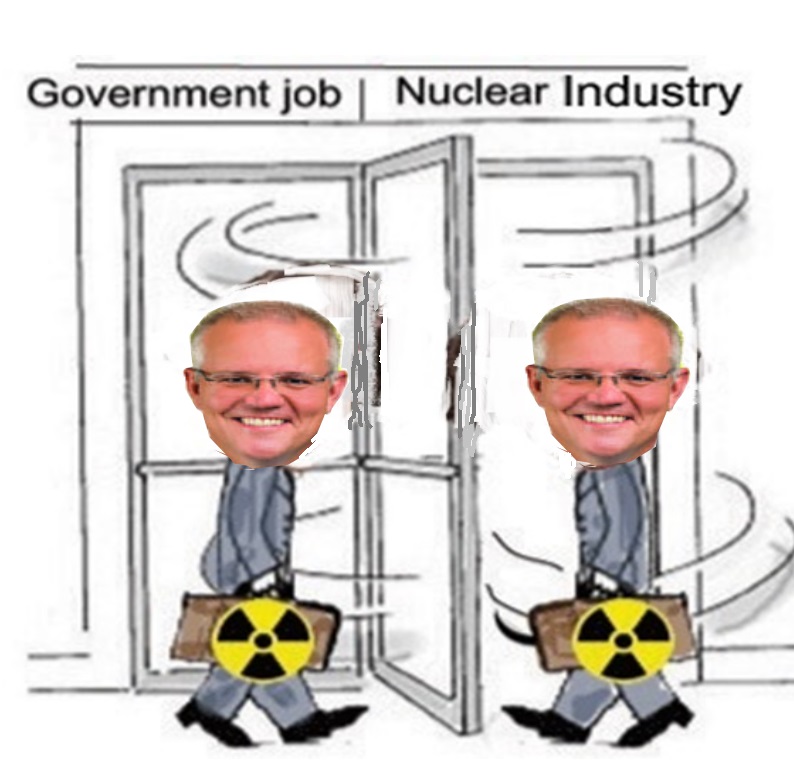
Australia’s former Prime Minister and faithful Pentecostal Scott Morrison never passes up the chance to express an opinion if it will net him a reward. As one of various politicians of the right (and far rightist) hue invited by Israel’s Minister for Diaspora Affairs and Combating Antisemitism, Amichai Chikli, he was in good company. The occasion: the second international conference on combating antisemitism held between January 26 and 27 at Jerusalem’s International Convention Center, ambitiously titled Generation Truth.
The December 14, 2025 attack by two ISIS-inspired gunmen on those attending a Hanukkah event on Sydney’s Bondi Beach had supplied him with a hot script. Australia’s Albanese government had been previously barked at by Israeli Prime Minister Benjamin Netanyahu for going wobbly on Israel and soft on Palestinians. Morrison was in hearty agreement, claiming that the Labor government had “walked away from the Jewish state while antisemitism has taken root in Australia,” feeding the hate through unilateral recognition of Palestinian statehood.
In keeping with various Christian groups of the right, Morrison is of the view that Israeli interests need to be protected, shielded and treasured against other, undesirable members of the Book. Christians and Jews can make a common alliance against their enemies, even if evangelical Christianity has a well-stocked reserve of antisemitic attitudes. As Prime Minister, Morrison recognised West Jerusalem as Israel’s capital, despite its contested status in international law, going so far as to open a Trade and Defence Office there in 2019. In 2021, his government officially adopted the definition of antisemitism proposed by the International Holocaust Remembrance Alliance (IHRA), one that fudges criticism of Israeli policies with antisemitism. Since losing office he has been further courting Israel’s favour by attacking the United Nations for being a forum for antisemitism garbed in the argot of human rights.
The January 27 address recapitulated these points, and more. He pointed to a five-fold rise in antisemitic incidents in Australia following the October 7, 2023 attacks on Israel by Hamas. Context, such as Israel’s historical suppression of Palestinian autonomy and its ruthless campaign of pulverisation in Gaza, was absent. Regular protests in Sydney and Melbourne, including a Sydney Harbour Bridge march numbering 100,000 people, were all cut from the same cloth of antisemitism. Again, Israel’s conduct and policies deserved no mention, while slogans such as “from the river to the sea” and “globalising the intifada” could only be seen as antisemitic declarations.
With political illiteracy typical of the man, Morrison then linked the protests and a softer approach to Palestinian statehood directly to the Bondi attacks, his mind unblemished by any understanding about what ISIS is, and its hostility to Hamas. Shades, here, of the sham groupthink that marked Cold War analysis from Washington to Canberra on monolithic communism. Just as communism of the Chinese, Soviet and Vietnamese character was just communism, so can all forms of Islamism be considered identical.
The usual cod analysis of the “progressive Left,” with its “neo-Marxist identity frameworks” and the “radical Right,” with its “conspiratorial and ethno-nationalist forms,” are offered, both serving as the conduit for “grievance politics.” “When failure is moralised as systemic injustice, liberal norms collapse.” This is the golden apologia for Israel writ large: do not blame institutions and injustice as having any consequences, the spawn of their practices. Abandon grievance; it has no role.
This sets the scene for Morrison’s real concern, and in this, he was keeping to the theme pushed by Chikli from the outset. Whatever the issues on the Left and Right of politics, Islam posed the greatest antisemitic threat, with its “imported European conspiracy theories, recasting Jews as a hidden enemy responsible for global disorder.”
His solution to such malignancy in a Western secular context? More religion, not less. Morrison quotes Lord Rabbi Jonathan Sacks quoting Jonathan Swift: “we have just enough religion to make us hate, but not enough to make us love.” But the faith in question had to be of the “good” sort, an inward individual consideration, rather than the “bad” variety that externalised the grievance and made people rush for placards, street rallies and arms.
That bilious right-wing figures demanding the expulsion of Palestinians from the West Bank and Gaza have more than enough religion to go around (Israel’s National Security Minister Itamar Ben Gvir and Finance Minister Bezalel Smotrich come to mind) suggests this formula to be flawed. But Morrison singles out Islamic leaders and institutions within Australia as alone in lacking accountability. What was needed was “a recognised accreditation framework for imams, a national register for public-facing roles, clear training and conduct requirements, and disciplinary authority for governing councils.” Sermons should also be translated into English, and links to foreign Islamic groups policed and curbed.
In Australia, Liberal Senator Andrew Bragg spoke approvingly of the former PM’s tarnishing method, with Australian Muslims having to “take some responsibility” for terrorist acts. “Unfortunately,” he told ABC radio on January 28, “there has been a mutation of Islam in Australia and other Western countries where they have sought to kill citizens, not just Jewish people, but other citizens.”
The Australian National Imams Council (ANIC), the Australian Federation of Islamic Councils (AFIC) and the Islamic Council of Victoria were suitably unimpressed. Chief executive of the Islamic Council of Victoria, Zakaria Wahid, made the far from startling point that the Australian government did “not hold entire communities accountable for acts of violence committed by individuals, and the same standard must apply to Muslims.”
Morrison has shown that he can be a good Pentecostal when required, demonstrating the sort of charity that never leaves his home or the halls of the Hill Song Church. As a cabinet minister and prime minister in various conservative governments, he showed a glacial contempt for women, welfare recipients, refugees, asylum seekers, those warning about climate change and open government. As prime minister, he gave Australia AUKUS, a criminally exorbitant, foolishly negotiated security pact between Canberra, London and Washington that has turned his country into an American satellite and forward base against China. But his less than secular admiration for Israel has won him friends, a point Chikli has unreservedly acknowledged. No doubt some well remunerated consultancy work is in the bag.
Project 2025 : The Architecture of an American Upheaval

30 January 2026 Dr Andrew Klein, PhD, https://theaimn.net/project-2025-the-architecture-of-an-american-upheaval/
In an era of complex global challenges, a blueprint for the radical restructuring of the United States government and its role in the world has moved from the fringes of policy workshops to the centre of power. Known as Project 2025, this initiative is no mere political manifesto; it is a detailed, nearly thousand-page operational plan to consolidate executive power, dismantle long-standing federal institutions, and reorient American society and foreign policy according to a specific, hardline conservative vision.
While its architects publicly frame it as a preparatory tool for any conservative president, its DNA is unmistakably Trumpist. The project is a direct response to the perceived failures of Donald Trump’s first term, designed to ensure that a future administration is not hindered by a non-compliant bureaucracy or a lack of ideological clarity. An analysis found that just four days into his second term, nearly two-thirds of Trump’s executive actions “mirror or partially mirror” proposals from Project 2025. This is not a coincidence; it is the implementation of a premeditated design.
The Architects and the Blueprint
Project 2025 is the brainchild of The Heritage Foundation, a cornerstone of American conservative thought, which has orchestrated a coalition of over 100 partner organisations. The project’s director is Paul Dans, a former chief of staff in Trump’s Office of Personnel Management, and its president is Kevin Roberts, who has openly described the organisation’s role as “institutionalizing Trumpism.”
The initiative is built on “four pillars” that function as an integrated system for seizing the levers of government: a 920-page policy bible called the “Mandate for Leadership“; a personnel database of vetted, ideologically loyal individuals; a training academy for these recruits; and a secretive “Playbook” of draft executive orders for the first 180 days. The project operates with a stated budget of $22 million and is supported by a network of groups, with nearly half having received funding from a dark money network linked to Leonard Leo, a key architect of the conservative judiciary.
Core Aims and Ideological Drivers
The agenda laid out in Project 2025 is sweeping, touching upon nearly every aspect of governance and American life. Its central ideological drivers are the concentration of presidential power, the advancement of a Christian nationalist social agenda, and a dramatic rollback of the federal government’s regulatory and social welfare functions.
In the realm of government and power, the plan aims to dismantle the “administrative state” by reinstating “Schedule F,” a measure that would reclassify up to 50,000 career civil servants as political appointees, allowing for their replacement with administration loyalists. It also seeks to bring independent agencies like the Department of Justice and the FBI under direct presidential control.
On social policy, the blueprint is equally transformative. It proposes using the 1873 Comstock Act to criminalise the mailing of abortion pills and to reverse FDA approval of the abortion medication mifepristone. It aims to remove legal protections against anti-LGBTQ+ discrimination, mandate discrimination against transgender people in the military and in disaster assistance, and eliminate all Diversity, Equity, and Inclusion (DEI) programs across the federal government.
For the economy and environment, the project advocates for slashing corporate taxes, instituting a flat individual income tax, and cutting spending on social programs like Medicare and Medicaid. On the environment, it calls for the United States to withdraw from international climate agreements and to unleash maximum domestic fossil fuel production under a mantra of “drill, drill, drill,” with one proposal going so far as to suggest abolishing the National Oceanic and Atmospheric Administration (NOAA).
Regarding immigration and security, the plan outlines a policy of executing the arrest, detention, and mass deportation of undocumented immigrants. It also proposes ending birthright citizenship, dismantling the asylum system, and deploying the U.S. Armed Forces for domestic law enforcement.
The Trump-Project 2025 Nexus
Despite Donald Trump’s public attempts to distance himself, the connections are deep. The initiative is staffed by over 200 former Trump administration officials, and at least six of his former cabinet secretaries are authors or contributors to the project’s policy bible. Crucially, key figures behind the project have been appointed to Trump’s second-term administration. Russell Vought, a Project 2025 co-author, was reappointed as Director of the Office of Management and Budget. Stephen Miller, whose group advised the project, was appointed as a White House advisor. Tom Homan, a contributor, was appointed as “Border Czar,” and Pam Bondi, an ardent supporter, was nominated for U.S. Attorney General. This integration demonstrates that the project’s ultimate aim – to provide a “government in waiting” – has been realised.
Global Implications and the Australian Context
The project’s vision explicitly aims to reshape America’s role in the world. Its foreign policy prescriptions include a “pivot” to counter China, which analysts suggest would come at the expense of focus on Russia and European democracies. It advocates for a “comprehensive cost-benefit analysis of U.S. participation in all international organizations,” signaling a strong isolationist and unilateralist turn. Furthermore, it would embed conservative religious goals into foreign policy, for instance, by making “protecting life” a “core objective” of foreign assistance.
For Australia, the direct mentions in the project’s materials are few, primarily suggesting greater defence collaboration. However, the indirect consequences would be profound. A U.S. withdrawal from climate agreements and a massive increase in fossil fuel production would cripple global efforts to combat climate change, a dire outcome for a region highly vulnerable to its effects. A shift in U.S. commitment to international institutions would create significant uncertainty and force a realignment of strategic partnerships in the Indo-Pacific. The Heritage Foundation’s open admiration for Viktor Orban’s Hungary as “the model” for conservative statecraft indicates a foreign policy more friendly to authoritarian leaders, potentially altering the global democratic landscape in which Australia operates.
A Contested Legacy
Project 2025 is celebrated by its proponents as a necessary measure to dismantle an unaccountable bureaucracy. Its critics, including pro-democracy advocates and civil liberties unions, have labeled it an authoritarian and Christian nationalist plan that would undermine the rule of law, separation of powers, and civil liberties.
The implementation of this project represents a fundamental test for the American system of government. It is a deliberate, well-funded, and systematic effort to transform the structure of the state itself. As this blueprint becomes reality, its effects will reverberate far beyond Washington, D.C., challenging democratic norms and international alliances, and forcing nations like Australia to navigate a world reshaped by an America that has chosen a radically different path.
The Afterlife of Failed Prime Ministers
30 January 2026 Roswell , https://theaimn.net/the-afterlife-of-failed-prime-ministers/
There is a curious phenomenon in modern politics whereby leaders rejected by voters at home are reborn as sages abroad. It is a kind of political reincarnation, except instead of coming back as something wiser, they come back with a microphone, an expense account, and a suspiciously friendly audience.
Take Tony Abbott and Scott Morrison. Two of the most out-of-their-depth, ineffectual, policy-light and spectacularly uninspiring Australian prime ministers of the past 50 years. Governments so underwhelming that voters didn’t merely change their minds – they slammed the door, locked it, and put the furniture up against it.
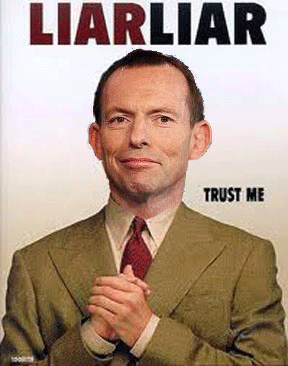
This is surprising, because while neither man excelled at governing Australia, they have since been warmly embraced on the international speaking circuit – mainly by right-wing conferences, “freedom” forums, and governments that find Western accents useful when saying deeply illiberal things.
Tony Abbott, whose prime ministership was defined by instability, internal warfare and three-word slogans that passed for policy, is now invited to explain leadership. Abbott struggled to explain his own government to his own party room, but apparently this has not deterred organisers elsewhere.
Scott Morrison’s record is fresher – and stranger. A prime minister who treated government as a branding exercise, communicated almost exclusively through slogans, and managed crises with photo opportunities rather than competence. A man so committed to secrecy that, in his final months in office, he quietly appointed himself to five ministries without telling the ministers involved.
Ironically, since leaving office, Morrison appears to have lost the ability to keep secrets altogether.
The man who secretly ran half the government now speaks endlessly. Panels, conferences, fireside chats. There is no shortage of words – just an ongoing shortage of insight. Morrison’s speeches are long on grievance, heavy on culture-war talking points, and light on anything resembling reflection or accountability.
One might reasonably ask: who is paying to hear this?
The answer is not “the public.” These are not broad, curious audiences wondering what went wrong. They are curated rooms. Friendly rooms. Rooms where applause is guaranteed and difficult questions are optional. Rooms where electoral defeat is reframed as martyrdom and democratic accountability as persecution.
Failure, it seems, has become a credential.
In a healthy democracy, losing office used to mean something. It was feedback. A verdict. An instruction to step aside. Now it is merely the start of a second career – one in which rejection at home is marketed overseas as proof of courage.
None of this is illegal. None of it is particularly new. But it is revealing.
If Abbott and Morrison had left office respected, effective, and admired, their global speaking careers would make sense. Instead, they left behind governments remembered largely for chaos, secrecy, and exhaustion. And yet, somewhere overseas, there is always a stage, a lectern, and an audience eager not to ask why.
Australia’s New AUKUS Protest Police, and the Quiet Redefinition of Dissent
28 January 2026 AIMN Editorial, By Denis Hay
AUKUS protest police: FOI documents reveal the AFP’s Orcus Command and how protest is being treated as a national security issue in Australia.
Introduction
Public discussion of AUKUS has focused on submarine delivery dates, strategic alignment, and cost blowouts. Far less attention has been given to how the Australian government is preparing for domestic opposition to the agreement.
Freedom of Information documents obtained by transparency advocate Rex Patrick and reported by Michael West Media reveal that the Australian Federal Police has quietly established a new unit, Orcus Command, dedicated to protecting AUKUS-related defence facilities. The documents show this unit is also planning for public order management, including protest and political dissent connected to Australia’s growing role in US and UK military operations.
This matters because protest is a cornerstone of democratic accountability. When dissent is framed primarily as a security risk, the balance between public order and civil liberties shifts in ways that deserve close public scrutiny.
What has received far less attention is how the government is preparing to manage Australians who oppose it.
Internal link: “Australia’s AUKUS agreement”.
Editor’s note:
This analysis is based on Freedom of Information documents obtained by transparency advocate Rex Patrick and reporting by Michael West Media. All claims in this article are drawn from released documents, budget papers, and publicly available statements. Care has been taken to distinguish between documented facts, lawful policing powers, and broader democratic implications.
What Is Orcus Command
Orcus Command is a specialised AFP unit created to provide protective security for the AUKUS nuclear-powered submarine program, particularly at strategically significant defence bases such as HMAS Stirling in Western Australia.
FOI documents show that:
- The unit was created with minimal public disclosure.
- It has a mandate extending beyond physical asset protection.
- It is embedded within the Department of Defence, not a civilian oversight body.
- Its planning includes public order and protest activity.
This institutional placement is significant. By situating Orcus Command within Defence rather than a civilian agency, protest management around AUKUS is treated as a national security issue rather than a matter of routine democratic policing.
Internal link: “Defence influence in Australia”.
Protest and Dissent as a Security Issue
Internal AFP documents explicitly reference the monitoring and response to political opposition and protest activity linked to AUKUS and the expanding US military presence in Australia.
This reflects a broader shift in Australian governance. Over recent years, most states have introduced or strengthened laws restricting protest, increasing police powers, and imposing harsher penalties for disruption.
Rather than being framed as a democratic expression to be facilitated and protected, protest is increasingly framed as a risk to continuity and order.
The Orcus Command documents indicate:
- Planning for escalation scenarios
- Proactive monitoring of protest groups
- Coordination with state police
- Anticipation of increased protest intensity
Internal link: “right to protest in Australia”
Why is Protest Being Framed as a National Security Issue Under AUKUS?
The documents state that Orcus Command has Commonwealth responsibility for protecting the nuclear submarine program under existing legislative powers.
This places protest activity in the same conceptual space as counterterrorism and critical infrastructure protection. While such powers are lawful, their application to political dissent raises difficult questions.
When a protest is absorbed into a national security framework:
- Thresholds for intervention are lowered.
- Decision-making becomes less transparent.
- Oversight mechanisms are weakened.
- Civil liberties are more easily subordinated to strategic objectives.
This does not mean that protest is automatically criminalised. It does mean that the lens through which protest is viewed has changed.
Internal link: “national security frameworks”.
One of the most sensitive revelations in the AFP briefing material is the inclusion of lethal force within Orcus Command’s armed protection planning.
Lethal force authorisations are standard in many armed federal policing and counter-terrorism contexts. Their inclusion alone is not unlawful or unusual. However, the context matters.
These provisions appear within documents that also discuss protest and public order management. This signals that scenarios involving political dissent are being contemplated within a framework that allows for the highest level of force available to federal police.
This does not suggest protesters will routinely face lethal force. It does show that dissent around AUKUS is being planned for within a security paradigm where extreme outcomes are legally contemplated.
That distinction is important, but it should not be dismissed.
Reassuring Allies, Managing Citizens
FOI emails reveal that Australian authorities are keen to show to the United States and the United Kingdom that protest activity will not disrupt or delay AUKUS operations.
This highlights a core tension: Australian policing resources are being used not only to keep domestic order, but also to reassure foreign military partners.
The documents emphasise:
- Proactive responses to identified protest risks.
- The importance of continuity for allied operations
- Minimising disruption to US and UK interests
Internal link: “Foreign policy dependence“.
Budget Allocations Signal Long-Term Expansion
Funding figures reinforce the seriousness of the operation.
- $73.8 million allocated to Orcus Command in late 2025.
- Funding rising to $125.2 million in 2026.
This near doubling suggests the government expects expanded responsibilities and sustained operations, rather than a short-term security task.
Budgets reflect priorities. In this case, substantial public funds are being committed to a policing unit designed to manage both infrastructure security and anticipated dissent.
Internal link: “public money priorities”.
Secrecy, FOI, and Democratic Oversight
AUKUS is one of the most secretive projects in Australia’s modern history. While some confidentiality around defence capabilities is legitimate, secrecy has expanded far beyond technical details.
The government has:
- Refused a comprehensive public inquiry.
- Limited parliamentary scrutiny
- Relied heavily on national security exemptions
- Restricted public access to key information
Without FOI requests and investigative journalism, the existence and scope of Orcus Command would remain unknown.
The Broader Democratic Context
The creation of Orcus Command does not occur in isolation. It sits alongside:
- Tightened protest laws across states
- Expanded police powers.
- Increasing surveillance of activists
- Reduced tolerance for disruption
Taken together, these trends suggest a gradual rebalancing of the state’s relationship with citizens, particularly where dissent intersects with powerful economic or strategic interests.
Why This Matters for Democracy……………………………………………………………………………………. https://theaimn.net/australias-new-aukus-protest-police-and-the-quiet-redefinition-of-dissent/
United Israel Appeal. Charity channels tax free donations direct to IDF soldiers
by Stephanie Tran | Jan 28, 2026 , https://michaelwest.com.au/united-israel-appeal-channels-tax-free-donations-direct-to-idf-soldiers/
Since 2013, more than $400 million in tax-deductible donations have flowed through an Australian charity, including direct to IDF soldiers. Stephanie Tran reports.
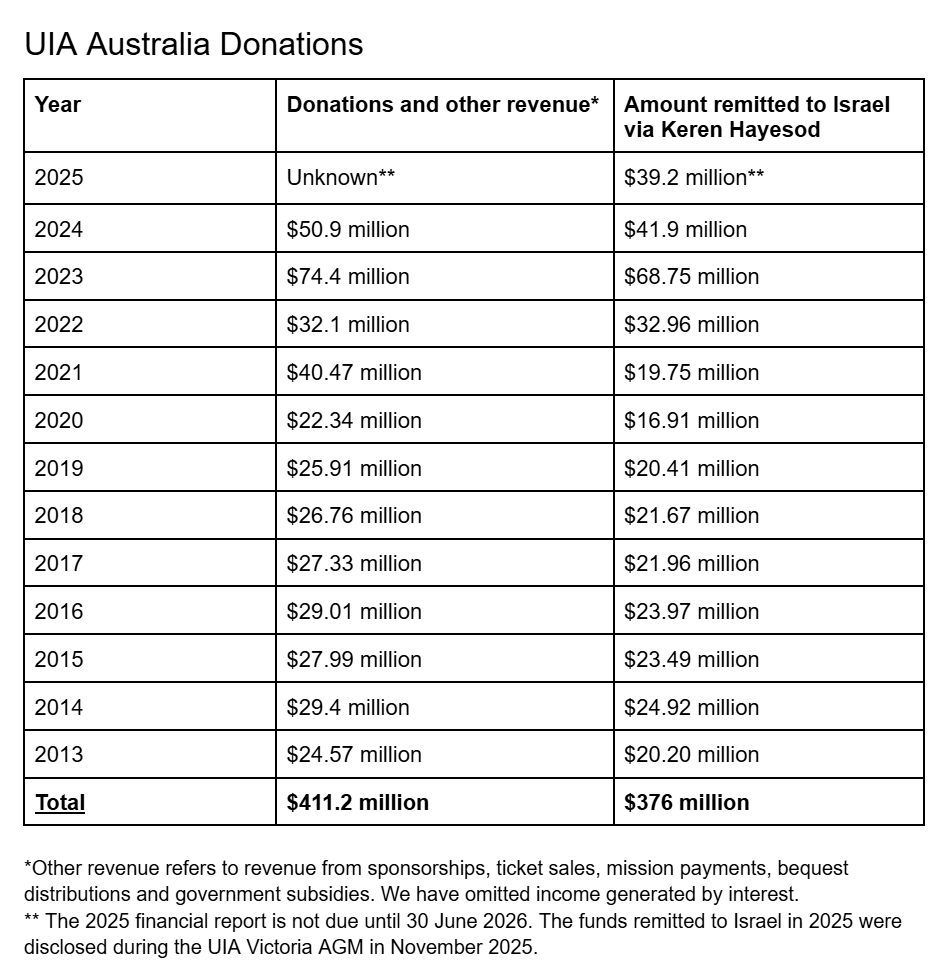
United Israel Appeal (UIA) Australia has remitted $376m to Israel since 2013 via its global partner Keren Hayesod, according to ACNC financial disclosures.
In 2024 alone, UIA Australia received $50.9m in tax-deductible donations and sponsorships.
Financial statements from Keren Hayesod, the Israel-based body that receives and distributes UIA funds, show it received AU$323m in global donations in 2024, with 98.5% originating overseas.
On that basis, Australian fundraising accounted for roughly 13% of Keren Hayesod’s worldwide donation base last year.
UIA Australia first received tax deductible status in January 1998. However, ACNC financial disclosures only go back to 2013. The amount of tax deductible donations made to UIA over its lifetime is likely significantly higher than the figure calculated in this article.
In a press release announcing the decision, then-treasurer Peter Costello stated that “in recognition of the valuable humanitarian service undertaken by [United Israel Appeal], the Government has decided to specifically list it as an international affairs recipient. Legislation to give effect to the Government’s decision will be introduced as soon as practicable.”
“Every dollar aligned with Israel’s national priorities”
At the UIA Victoria AGM in November 2025, UIA leadership were explicit about the organisation’s role in Israel. David Slade, president of UIA Victoria, told members:
“We are the only organisation in Australia raising funds for Israel that holds a seat at every table of decision-making authority mandated to rebuild the country from the north to the south.”
“We are proud that every dollar we distribute is aligned with Israel’s national priorities.”
Julian Black, outgoing federal treasurer of UIA, reported that $39.2m had been sent to Israel nationally, including $14.4m from Victoria, in the 2025 campaign period to mid-November.
UIA Australia describes its central mission as supporting aliyah, “ascent”, referring to Jewish immigration to Israel, and strengthening Israeli society. They state that they “raise funds within Australia and transfer them directly to Keren Hayesod-UIA.”
Keren Hayesod, founded in 1920, describes itself as the “preeminent worldwide fundraising arm for the people of Israel,” operating in dozens of countries. UIA Australia functions as its Australian partner, channelling hundreds of millions of dollars in tax-deductible donations to the fund.
At the 2025 AGM, Slade said:
“This is not theory. It’s delivery. It’s national in scale, national in scope. It aligns with Israel’s priorities and is executed by our global partners.”
1×1515
0:10 / 8:09
1×1515
0:10 / 8:09
Since 2013, more than $400 million in tax-deductible donations have flowed through an Australian charity, including direct to IDF soldiers. Stephanie Tran reports.
United Israel Appeal (UIA) Australia has remitted $376m to Israel since 2013 via its global partner Keren Hayesod, according to ACNC financial disclosures.
In 2024 alone, UIA Australia received $50.9m in tax-deductible donations and sponsorships.
Financial statements from Keren Hayesod, the Israel-based body that receives and distributes UIA funds, show it received AU$323m in global donations in 2024, with 98.5% originating overseas.
On that basis, Australian fundraising accounted for roughly 13% of Keren Hayesod’s worldwide donation base last year.
Source: ACNC
UIA Australia first received tax deductible status in January 1998. However, ACNC financial disclosures only go back to 2013. The amount of tax deductible donations made to UIA over its lifetime is likely significantly higher than the figure calculated in this article.
In a press release announcing the decision, then-treasurer Peter Costello stated that “in recognition of the valuable humanitarian service undertaken by [United Israel Appeal], the Government has decided to specifically list it as an international affairs recipient. Legislation to give effect to the Government’s decision will be introduced as soon as practicable.”
“Every dollar aligned with Israel’s national priorities”
At the UIA Victoria AGM in November 2025, UIA leadership were explicit about the organisation’s role in Israel. David Slade, president of UIA Victoria, told members:
“We are the only organisation in Australia raising funds for Israel that holds a seat at every table of decision-making authority mandated to rebuild the country from the north to the south.”
We are proud that every dollar we distribute is aligned with Israel’s national priorities.
Julian Black, outgoing federal treasurer of UIA, reported that $39.2m had been sent to Israel nationally, including $14.4m from Victoria, in the 2025 campaign period to mid-November.
UIA Australia describes its central mission as supporting aliyah, “ascent”, referring to Jewish immigration to Israel, and strengthening Israeli society. They state that they “raise funds within Australia and transfer them directly to Keren Hayesod-UIA.”
Keren Hayesod, founded in 1920, describes itself as the “preeminent worldwide fundraising arm for the people of Israel,” operating in dozens of countries. UIA Australia functions as its Australian partner, channelling hundreds of millions of dollars in tax-deductible donations to the fund.
At the 2025 AGM, Slade said:
“This is not theory. It’s delivery. It’s national in scale, national in scope. It aligns with Israel’s priorities and is executed by our global partners.”
Support for “lone immigrant soldiers”
Among the programs UIA promotes in Australia is assistance for “lone immigrant soldiers”, individuals who migrate to Israel and serve in the Israel Defense Forces (IDF) without immediate family support in the country.
Through the “Wings Program”, UIA partners with the Jewish Agency for Israel to provide grants and assistance to immigrant IDF soldiers. UIA states that they supported 2,200 lone immigrant soldiers in 2024.
According to a report compiled by the Knesset, in August 2024, there were 6,731 lone soldiers serving in the IDF.
Overseas funding networks and settlement links
In 2022, Pastor Larry Huch raised $8 million for Keren Hayesod through his ministry to help “settlements take over produce farms in the West Bank”.
“One of the main Bible prophecies is helping Jews return to the nation of Israel, so we started working with Keren Hayesod with projects such as making aliyah. We help settlements take over produce farms in the West Bank, which is Judea and Samaria,” Hutch said.
According to an analysis by Canadian human rights organisation Just Peace Advocates, public filings by UIA Canada show that funds linked to the broader Keren Hayesod network have supported organisations assisting IDF veterans and institutions located in Israeli settlements in the occupied West Bank.
At the same AGM, Slade disclosed that his own son is currently serving in the IDF as a lone soldier, describing himself as “a lifelong Zionist”.
UIA also funds the Net@ program, which provides technology education for youth. Promotional materials for the program state that graduates are “strong candidates for elite IDF units”.
[excellent charts here on original]
Comparable program-level detail is not disclosed in Australian ACNC filings, which aggregate remittances to Keren Hayesod. UIA Australia did not respond to questions regarding whether they have oversight of which initiatives are supported by the funds they provide to Keren Kayesod and whether they engage in due diligence practices to ensure that these programs comply with ACNC External Conduct Standards and DGR conditions.
A charity operating in a genocide
UIA’s fundraising expansion has occurred during the Gaza genocide and escalating violence across the occupied Palestinian territories.
A January 2026 report by the UN Office of the High Commissioner for Human Rights found that Israeli laws, policies and practices have created “asphyxiating” conditions for Palestinians in the West Bank and East Jerusalem.
The report stated that there has been an “unprecedented deterioration of the human rights situation” since October 2023, as Israeli government “further expanded the use of unlawful force, arbitrary detention and torture, repression of civil society and undue restrictions on media freedoms, severe movement restrictions, settlement expansion and related violations in the occupied West Bank”.
In his National Press Club address, Chris Sidoti, a commissioner on the UN Commission of Inquiry on Palestine and Israel, stated that in light of the Commission’s finding that Israel has committed genocide in Gaza,
“anyone who has served in any arm of the Israeli military in Gaza should be treated as a suspect.“
UIA CEO Yair Miller previously told MWM that “the United Israel Appeal is fully compliant with Australian law”. They did not respond to a follow-up request for comment regarding the matters discussed in this article.
MOBILISE AGAINST THE F35s!

MOBILISE AGAINST THE F35s!
U.S. OUT! CANCEL AUKUS! CLOSE PINE GAP!
WAGE PEACE invites allies and collaborators to a week of action against the F35 genocide jet on the unceded lands of this continent, from 27th March to 2nd April, 2026. (NB Mobilisations never start on the day they say!)
The F35 ‘genocide jet’ is made by the US and the world’s biggest weapons company, Lockheed Martin. The Israeli F35 genocide jets can not fly without Australian replacement parts.
Managed by Lockheed and on US orders, at least 71 packages of F35 parts have been sent from Sydney to Israel. Parts stored at the genocide jet ‘sustainment’ facility at Williamtown RAAF base, just north of Newcastle, were loaded onto commercial Thai Airways passenger flights (WTF!), then forwarded to the Israeli Airforce base at Nevatim.
Turns out, parts produced in Australia can be requisitioned by the US at any time to serve US — and Israeli interests. No matter where F35 parts are made, the US owns them and Lockheed manages them. It’s been like this for more than 10 years. According to Defence Minister Richard Marles, ‘Australia is an F35 country’. We are owned and directed by the disordered, cruel, unjust mess that is the USA and their weapons corporations. The USA’s genocide is our genocide. We are dragged into Israel’s cruelty.
Mass mobilisations of Australian people have said we do not consent to complicity in Israel’s genocide. We have demanded that the Department of Defence and all the companies involved refuse to supply F35 parts or any other weapons to Israel. Yet the supply continues.
CAN WE WIN?
We have wins already!
In a single week in October, 18 actions were held against the weapons industry in 6 cities. Then, in early November, the Department of Defence emailed weapons suppliers in Australia ‘suggesting’ they cancel or refuse further contracts with Israel.
Our friends in the Netherlands have had a win. In October 2025 Supreme Court judges gave the Dutch government six weeks to review its policy on export licenses; the decision was made in a matter of hours: a continuation of the arms embargo from 2024 – no F35 parts.
Supplying a genocide is against International Law and Australia’s own weapons regulations. This acknowledgement by governments that arming Israel might lead to war crimes prosecutions was a huge win for the anti-genocide movement.
Since the genocide began, our movement has constantly picketed, blocked and vandalised companies supplying the genocide jet. In the first week of December we disrupted 3 different F35 suppliers in the Newcastle area alone.
At the same time as our Newcastle actions unfolded, David Shoebridge was grilling Defence officials in Senate Estimates about who signed what and when, and Peter Cronau was reporting on Lockheed Martin’s delivery of Australian genocide jet components from Newcastle to Israel.
Lockheed is worried. The men who sign the defence export permits are even more worried.
WHAT IF WE WERE ABLE TO STOP THE SUPPLY OF AUSTRALIAN PARTS TO F35 GENOCIDE JETS?
The F35 genocide jet is a very inefficient machine, needing 5 hours of ‘sustainment’ for every hour of operation. The genocide jet has been a major contributor to Israel’s bombardment of Gaza, and now Lebanon, so the need for spare parts is still constant.
The F35 weapons transfers from Newcastle to Israel STILL NEED AN EXPORT PERMIT signed by Australian Defence Department officials and approved by Defence Minister Richard Marles for these stored parts.
This is where we think we can make impact.
What if Defence Department officials were publicly named and called upon to refuse to facilitate transport of genocide jet components? What if those Defence officials and Ministers Marles, Wong (Foreign Affairs) and Conroy (Defence Industries) decided that the personal risk of facing a war crimes tribunal in the future outweighed the obligation to serve Lockheed Martin?
COLLABORATIVE PEOPLE-POWERED ACTION
Using the tools we wield the best ¬— community-based direct action and participatory resistance ¬— we propose to work in concert with key politicians, journalists and human rights organisations to problematise the supply of components to Lockheed’s genocide jets. We aim to create a crisis for Defence officials and staff, such that they are no longer willing to sign off on F35 exports, by raising the real possibility their names will end up on war crimes prosecutors’ lips in The Hague.
UK to deploy nuclear-powered submarine to Australia
27 January 2026 | By Andrew McLaughlin, https://psnews.com.au/uk-to-deploy-nuclear-powered-submarine-to-australia/172179/
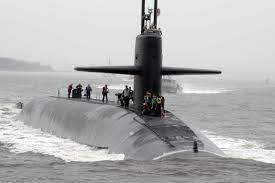
The UK’s Royal Navy will soon deploy a nuclear-powered attack submarine (SSN) to Australia for six months as part of its commitment to the AUKUS construct and to its presence in the wider Indo-Pacific region.
The Astute-class submarine HMS Anson arrived in Gibraltar earlier this month after it departed its home base of Faslane in Scotland on 10 January.
The boat is expected to patrol the Indian and western Pacific oceans during its deployment, and will be the UK’s first commitment to the Submarine Rotational Force–West (SRF-West) that was established under Pillar 1 of AUKUS in 2022.
The respected independent online news site Navy Lookout says, of the five Astute-class SSNs to enter RN service to date, HMS Anson is currently the only boat capable of being deployed. The class has suffered from build delays and poor availability since the lead boat, HMS Astute was commissioned in August 2010, and the remaining four boats are laid up at Faslane undergoing various stages of maintenance.
Two more Astute-class SSN boats are planned, with one currently undergoing sea trials, and the seventh boat scheduled to enter service in late 2028. After this, development of the planned SSN-AUKUS class boats – for which Australia will be a partner – is expected to gain pace.
The UK’s Defence Minister Luke Pollard told the British Parliament in December that an Astute-class boat would join SRF-West as “a core planning assumption for the RN under AUKUS”. Despite very low availability of the Astute-class in recent months, Mr Pollard said the government judges the commitment to be “both realistic and manageable within existing force planning”.
SRF-West is based at HMAS Stirling south of Fremantle in WA, and the Australian Government has committed billions of dollars to upgrade the base and the adjacent Henderson shipyard to support not only UK and US nuclear-powered submarine deployments, but also those of Australia from the mid-2030s, and to boost Australia’s shipbuilding capabilities.
SRF-West has taken its first few tentative steps forward, with a US Navy Virginia class SSN USS Vermont having completed a Submarine Maintenance Period at Stirling in November using a mixed US Navy and Australian maintenance workforce.
Other US Navy SSNs have conducted port visits to Stirling in recent years and these visits are expected to increase as the base and its infrastructure become more capable of supporting these vessels.
‘From day one, an absolute pleasure’: Nuclear science expert receives Australia Day honour
26 January 2026
Sky News host Chris Kenny sits down with former ANSTO CEO Dr Adi Paterson to go over how the Australia Day honours and how he was honoured for his work in nuclear technology. ………………………………………………………………………………. https://www.skynews.com.au/opinion/chris-kenny/from-day-one-an-absolute-pleasure-nuclear-science-expert-receives-australia-day-honour/video/2a31513901d504547fb3d25ee0ad7af9
Another miserable year for nuclear power as renewables surge.

All renewables (including hydro) accounted for 47.7 percent while nuclear (which fell by nearly two percent last year) now accounts for less than half that amount (23.4 percent)
Jim Green, Jan 27, 2026, https://reneweconomy.com.au/another-miserable-year-for-nuclear-power-as-renewables-surge/
The latest World Nuclear Industry Status Report has crunched the numbers to show that 2025 was another underwhelming year for nuclear power.
Here are the key 2025 global figures:
- * power reactor startups (grid connections): 4 reactors, 4.4 gigawatts (GW) capacity
- * permanent shutdowns: 7 reactors, 2.8 GW
- * net growth of nuclear capacity: 1.6 GW
- * power reactor construction starts: 11 reactors, 12.0 GW
The four reactor startups were in China (2), Russia and India. That is the lower number of startups since 2017.
The seven permanent reactor shutdowns were in Belgium (3), Russia (3) and Taiwan.
The net decline of three operating reactors makes 2025 the worst year on that criterion since 2012, when many reactors were permanently closed due to the Fukushima disaster in March 2011.
The 11 construction starts in 2025 — the highest number since 2010 — were in China (9), South Korea and Russia.
As of 1 January 2026, according to the World Nuclear status report – WNISR-2026:
- * 404 nuclear power reactors were operating in the world — five less than a year earlier and 34 less than the historic peak of 438 in 2002.
- * Nuclear accounted for 9.0 percent of global electricity generation, barely half its historic peak of 17.5 percent in 1996.
- * 31 countries were operating nuclear power plants worldwide, one fewer than a year earlier as Taiwan closed its last reactor in May 2025.
Taiwan is the fifth country to abandon its nuclear power program following Italy (1990), Kazakhstan (1999), Lithuania (2009) and Germany (2023).
Overall, the 25-year pattern of global stagnation continues, with no end in sight. Installed nuclear capacity of 4.4 GW in 2025 was 180 times lower than the estimated 793 gigawatts of solar and wind capacity (up from 717 GW in 2024).
In China, new nuclear capacity in 2025 amounted to 2.5 GW whereas solar capacity installed in the first 11 months of 2025 amounted to an estimated 275 GW. The nuclear share of electricity generation in China has fallen for four years in a row after peaking at 5.0 percent in 2021.
That’s despite China’s status as the only significant growth market in the world, with a net growth of around 50 reactors over the past 20 years and a net decline of around 50 reactors in the rest of the world.
Conspicuously absent from the lists of reactor startups and construction starts are any small modular reactors or any ‘Generation IV’ reactors such as fast neutron reactors, fusion reactors, molten salt reactors, etc.
Dramatic drop in number of countries building reactors
The number of countries building power reactors has fallen off a cliff. WNISR-2026 notes:
“The number of building countries declined by almost one third, from 16 to 11, in just two years, with several countries having completed their last construction project (France, United Arab Emirates, United States), or suspended if not terminated construction (Argentina, Brazil, Japan), while only one country was added to the list (Pakistan).
“Only eight of the 31 countries currently operating commercial nuclear plants are building new ones, while three are newcomer countries (Bangladesh, Egypt, Türkiye) in the course of building their first reactors, all implemented by the Russian nuclear industry.”
The number of countries operating power reactors reached 32 in the mid-1990s. Since then it has fallen to 31.
Globally, the number of power reactors under construction increased by seven in 2025 — entirely due to China. China has 36 reactors under construction, more than half of the global total of 66.
Not a single power reactor is under construction across the 35 countries of the American continent.
Only one reactor is under construction in the European Union (in Slovakia). Solar and wind (30 percent combined) overtook fossil fuels (29 percent) for EU electricity generation last year.
All renewables (including hydro) accounted for 47.7 percent while nuclear (which fell by nearly two percent last year) now accounts for less than half that amount (23.4 percent).
Over the six-years from 2020-26, Chinese and Russian companies have been the only builders worldwide responsible for reactor construction starts, with the exception of one project in South Korea. Only Russia, China and France are building reactors abroad.
The ‘peaceful atom’
WNISR-2026 notes that of the total of 66 reactors under construction in 11 countries, 63 (95 percent) are either in nuclear-weapon states (50) or are implemented by companies controlled by nuclear-weapon states in other countries (13). Only the three construction projects in South Korea fall outside this category.
Iran’s uranium enrichment program drew attention to the potential to weaponise the ‘peaceful atom’ and the military attacks on Iran’s nuclear facilities last year by Israel and the US added to the long history of nation-states attacking nuclear plants to prevent weapons proliferation (or for that reason among others).
Other examples of conventional military attacks on nuclear plants to prevent weapons proliferation include Israel’s destruction of reactor components awaiting shipment to Iraq, in France in 1979; Israel’s destruction of a research reactor in Iraq in 1981; military strikes by Iraq and Iran on each other’s nuclear facilities during the 1980-88 war; the United States’ destruction of a research reactor in Iraq in 1991; Iraq’s attempted missile strikes on Israel’s nuclear facilities in 1991; and Israel’s bombing of a suspected nuclear reactor site in Syria in 2007.
Russia’s attacks on nuclear plants in Ukraine probably aren’t motivated by weapons proliferation concerns. Nonetheless, the risk of a nuclear catastrophe on top of the ongoing mass murder of conventional warfare highlights the role of nuclear plants as stationary terrorist targets or weapons of mass destruction.
International Atomic Energy Agency chief Rafael Grossi recently said that fighting around the Zaporizhzhia nuclear power plant has left Europe’s largest nuclear plant in an “extremely fragile, volatile condition”.
Apart from the fragile, volatile situation at Zaporizhzhia, low-lights in 2025 included a drone attack which seriously damaged the protective dome over the stricken Chernobyl #4 reactor and, more importantly, more than 10 attacks on nuclear power plant substations in Ukraine which are, according to the IAEA, “essential for nuclear safety and security” and “absolutely indispensable for providing the electricity all nuclear power plants need for reactor cooling and other safety systems.”
Industry hype
Despite the 25-year pattern of stagnation, the World Nuclear Association claims that global nuclear power capacity could more than triple to reach 1,446 GW by 2050. But there’s plenty of fine-print undermining this absurd projection:
* A big chunk of the projected growth (542 GW) “is not yet supported by identified projects”.- * Another big chunk (425 GW) comprises reactors that are planned, proposed or potential … all essentially meaningless categories.
- * A “substantial” share of the required capacity growth depends “on large-scale programmes for proposed, potential, and government-targeted capacity that are not yet supported by firm investment decisions”.
- * The required 65 GW per year from 2046-2050 is “roughly double the historic peak build rate seen in the 1980s”.
- * Achieving the projection will require “unprecedented construction rates, strategic lifetime extension of existing reactors, and significant policy and market reforms”.
- * Several national targets (such as the 293 GW of new capacity required to meet the United States’ 400 GW target) “rely heavily on an expansion of nuclear capacity where there is currently little or no ongoing construction, or identified reactors planned or proposed for deployment”.
Here’s the World Nuclear Association’s decidedly ‘iffy’ conclusion:
“If governments uphold their stated ambitions, if regulatory and market frameworks are adapted to support both existing and new reactors, and if the nuclear industry expands its capacity to deliver at scale, the world’s nuclear fleet can more than triple by 2050.”
It’s all comical nonsense. But put yourself in the position of a spin-doctor employed by the World Nuclear Association … could you do any better than to play make-believe?
A much more likely scenario is that the past 25 years of nuclear stagnation will be followed by another 25 years of stagnation. If there is any growth — and there may not be due to the ageing of the global reactor fleet and the industry’s other challenges — it will be marginal growth.
Nuclear power is staggeringly, stunningly and possibly irretrievably uneconomic
At the top of the list of the industry’s challenges is that it is staggeringly, stunningly and possibly irretrievably uneconomic. Here are the costs of some recent and proposed projects:
| USA — Vogtle (Georgia) US$34 billion / 2.4 GW | A$23.5 billion / GW (completed) |
| UK — Hinkley Point£46 billion / 3.2 GW | $A29.4 billion / GW (under construction) |
| UK — Sizewell C£47.7 billion / 3.2 GW | A$30.6 billion / GW (construction yet to begin) |
| France — Flamanville€19.1 billion / 1.6 GW | A$21.3 billion / GW (completed) |
| SMR — NuScale (USA)US$9.3 billion / 462 MW | A$30.1 billion / GW (cancelled before construction began) |
| SMR — Darlington (Canada)C$20.9 billion / 1.2 GW | A$19.1 billion / GW (construction yet to begin) |
| SMR — CAREM (Argentina)US$750 million / 32 MW | A$34.0 billion / GW (construction began in 2014, abandoned 2025) |
Nuclear stagnation vs. renewables growth
As noted above, installed nuclear capacity of 4.4 GW in 2025 was 180 times lower than new solar and wind capacity.
The International Energy Agency (IEA) predicts the installation of 4,600 GW of new renewable capacity in the five years from 2025-2030, twice as much as in the previous five years. (Current global nuclear capacity is 369 GW.)
The IEA stated in October 2025 that:
- * Renewables will surpass coal at the end of 2025 (or by mid-2026 at the latest) to become the largest source of electricity generation globally. (The World Economic Forum states that renewables overtook coal in the first half of 2025.)
- * The share of renewables in global electricity generation is projected to rise from 32 percent in 2024 to 43 percent by 2030.
- * From 2025-2030, renewables are expected to meet over 90 percent of global electricity demand growth.
Over the past decade we’ve seen renewable electricity generation double then triple nuclear power generation. By the end of this decade renewables will out-generate nuclear by a factor of 5-7.
Dr. Jim Green is the national nuclear campaigner with Friends of the Earth Australia and a member of the Nuclear Consulting Group.
1 This month
Chernobyl: The Lost Tapes – A good documentary on Chernobyl on SBS available On Demand for the next 3 weeks– https://www.sbs.com.au/ondemand/tv-program/chernobyl-the-lost-tapes/2352741955560
15 April – Zoom –Nuclear Power is Not the Solution
Apr 15, 2026 01:00 AM in Canberra, Melbourne, Sydney

Join the International Physicians for the Prevention of Nuclear War (IPPNW) on Tuesday, April 14th for a timely webinar exploring the risks associated with nuclear power and challenging the myth that it offers a simple, safe, carbon-free solution to the climate crisis

21 April Webinar: No Nuclear Weapons in Australia
Start: 2026-04-21 18:00:00 UTC Canberra, Melbourne, Sydney (GMT+10:00)
End: 2026-04-21 19:30:00 UTC Canberra, Melbourne, Sydney (GMT+10:00)
Event Type: Virtual
A virtual link will be communicated before the event.
Host Contact Info: australia@icanw.org

of the week – Australians for War Powers Reform (AWPR)
To see nuclear-related stories in greater depth and intensity
 Antinuclear