Minimal role for nuclear in UK government agency’s Clean Energy plan
NFLA 6th Nov 2024 https://www.nuclearpolicy.info/news/minimal-role-for-nuclear-in-government-agencys-clean-energy-plan/
The Nuclear Free Local Authorities have noted that a report from Labour’s new National Energy System Operator (NESO) just out identifies a miniscule contribution from nuclear in Britain’s future clean energy mix.
Clean Power 2030 highlights the priorities for the new agency and two primary pathways – one with and one without a flexible contribution from biomass, hydrogen and Carbon Capture and Storage – to achieve a clean power network by the end of this decade.
In a network generating 143 gigawatts (GW) through a mix of renewable technologies, nuclear is only earmarked to provide a supplement of 4.1 GW.
The report calls for a tripling in offshore wind generation from 15 to 43 – 50 GW, a doubling in onshore wind from 14 to 27 GW, and a tripling of solar panel generation from 15 to 47 GW.
NESO also emphasises the need to dramatically increase battery storage capacity from 5 GW to over 22 GW, to increase long-duration storage capacity from 3 to 8 GW, and to invest significant sums to quickly roll out the necessary enhanced transmission system to support the transition of heat, industry and transport to electrification[i].
The derisory contribution from nuclear is clearly a sop to the nuclear industry and unions, and a means to retain the necessary transferable knowledge to maintain Britain’s nuclear arsenal.
It is calculated by assuming that one reactor at Hinkley Point C will come on-line by 2030 and that an existing Advanced Gas Cooled reactor plant and Sizewell B remain in operation[ii].
Generation from Hinkley’s second reactor will come sometime beyond that date, and any deployment of Small Modular Reactors and development of Sizewell C remains uncertain.
Commenting NFLA Chair Councillor Lawrence O’Neill said: “NESO recognises that a clean power future means our reliance upon electricity generated by renewables. Renewable generation can be delivered quicker and cheaper, without risk or radioactive contamination, deliver many new jobs, and provide this nation and its people with homegrown energy security.
“Not so long ago there was much talk of the need for nuclear power as a baseload, but in this report, this myth is destroyed as the contribution of nuclear power is identified as marginal. Its inclusion in the mix is clearly them a sop to the nuclear industry and unions, and a means to retain the necessary transferable knowledge to maintain Britain’s nuclear arsenal.
“Nuclear and clean power should not be seen in the same room for how can nuclear be clean when the National Audit Office has recently identified that to ‘clean up’ the radioactive legacy at Sellafield could cost taxpayers up to £253 billion in a mission lasting a further 100 years?”
“Nuclear and clean power should not be seen in the same room for how can nuclear be clean when the National Audit Office has recently identified that to ‘clean up’ the radioactive legacy at Sellafield could cost taxpayers up to £253 billion in a mission lasting a further 100 years?”
.For more information contact NFLA Secretary Richard Outram by email to richard.outram@manchester.gov.uk
[i] Page 18, https://www.neso.energy/document/346651/download
[ii] Page 28, Ibid
TODAY. The Trump period and the use of language

I struggle to think about what language to use.
Today, Caitlin Johnstone writes “The Evil Warmongering Zionist Won” – (No Not That One, The Other One)
I read her article, and agree with every word. But do some readers find this title a “turnoff”? I did, because I was brung up to believe that quieter, less emotive language was the way to go. Now, I’m not sure.
The people of world’s greatest power have elected a foul-mouthed, misogynist, deluded megalomaniac who is a convicted felon, strongly supported by another deluded billionaire megalomaniac the ketamine-and-Mars addled Elon Musk. Trump is surrounded by yes-mean of no integrity whatsoever, and promoted by billionaires of no integrity.
How did it happen?
How did they put it over not only the disgruntled poor of the USA, but many others – to believe that if times are bad now – this despicable sociopath could magically put things right?
By now, some of my very limited reading public will have turned away – because of my use of language. But I’m not as “bad” as Caitlin. Trouble is – we’re actually telling the truth.
It is going to be very hard now, for all of us to weave our way through all the commentaries – all made more difficult by the tsunami of social media, of the ‘respectable mainstream media’ and of AI.
I wish that I could give wonderful advice on how to assess the truth or otherwise, of what we read, see and hear. But there are people of integrity out there, and it is our job to find them and listen to them – and indeed , to avoid emotive language (when possible).
Nuclear waste could add billions to energy supply costs
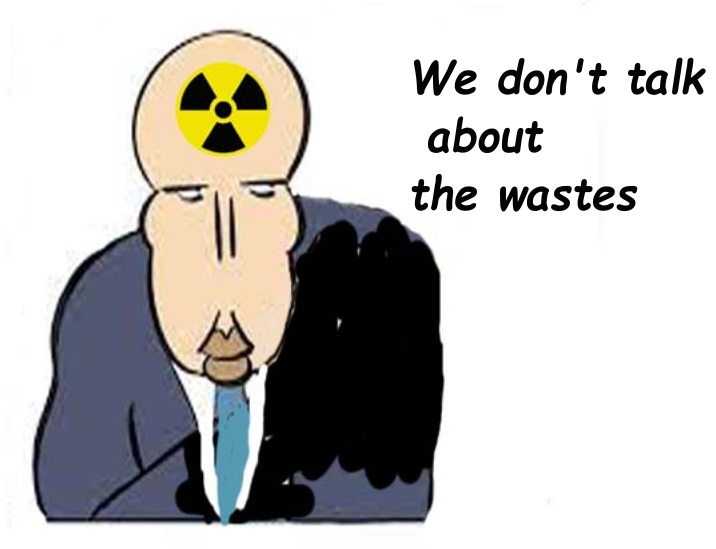
Canberra Times, By Jennifer Dudley-Nicholson, November 7 2024
Handling and storing nuclear waste could add significant costs to Australia’s future energy bills, an inquiry has heard, with Canada set to spend $26 billion to safely store depleted fuel from its reactors.
The cost and time to build nuclear power plants in Australia also remained a mystery, two academics told the Nuclear Power Generation inquiry on Thursday, including the demands of small modular reactors proposed for two states.
The testimony comes on the third hearing of the nuclear energy inquiry, created in October after federal Liberal leader Peter Dutton announced plans to establish nuclear power plants in seven Australian locations after the next election.
But the details of an Australian switch from a renewable energy future to one powered by nuclear plants remain unclear, with the inquiry set to probe financial, technical, legal and environmental impacts of a change.
York University environmental studies Professor Mark Winfield told MPs the Canadian experience had been a troubling and expensive one, with its seven nuclear plants now reduced to four in operation.
Canada also faced a bill of $26 billion to handle, move and safely store wasted nuclear fuel, he said, of which the country had three million bundles and produced between 85,000 and 90,000 each year.
The bundles, he said, were about the size of a small log.
It’s physically hot when it comes to the reactor, it’s also highly radioactive when it comes out of the reactor, the swimming pools are supposed to be for the first 50 years or so, while it cools down a bit,” Prof Winfield told the committee.
“The nuclear waste management organisations planning assumption then is that long-term management or disposal would need to occur on a time frame of a million years.”
Questions also remained about the price of new-build nuclear plants, the inquiry heard, and Princeton University senior research scientist Dr Chris Greig said naming a price for small modular reactors was a tricky challenge.
Small modular reactors have been tipped for sites in South Australia and West Australia under the coalition’s proposal, with 2035 as a potential start date.
“The people who are ordering them right now, Dow being one of them and Google and Microsoft and OpenAI and Meta, they don’t know what the cost is going to be yet,” he said.
“They have targets but, frankly, none of us have any confidence in those targets.”
The time it would take to build small reactors was also challenging to estimate, he said, with the most optimistic estimates seeing plants operating in the early 2030s………………… https://www.canberratimes.com.au/story/8814018/nuclear-waste-could-add-billions-to-energy-supply-costs/
United Nations to study impact of nuclear war for first time since 1989 amid ‘elevated risk’
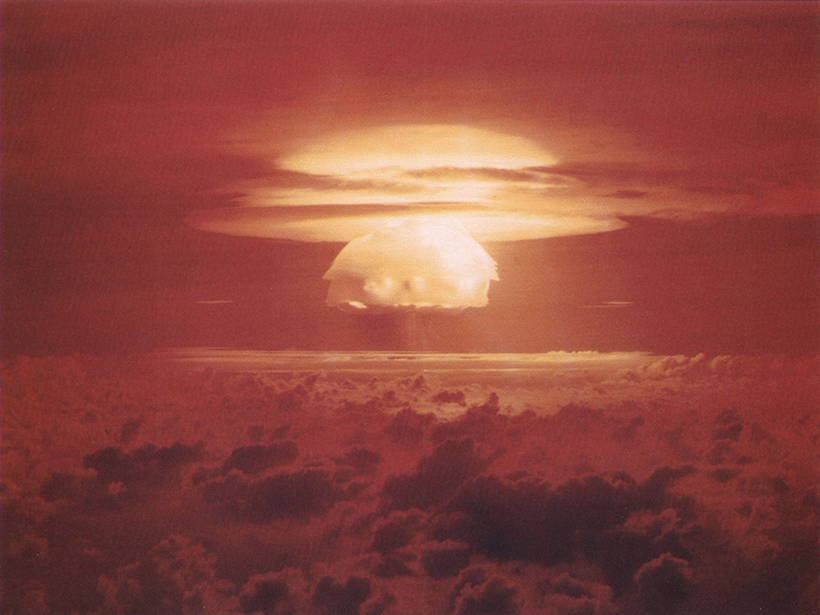
ABC By Lachlan Bennett, 7 Nov 24
In short:
The United Nations will set up an expert panel to investigate how nuclear war would impact all facets of society.
It’s the first study of its kind since 1989 and has been prompted by concerns about geopolitical tensions.
What’s next?
The panel will deliver its final report in 2027 and make recommendations for future research.
You don’t need to watch too many apocalyptic blockbusters to realise that nuclear war would be devastating.
But when it comes to understanding the impact of a modern nuclear exchange, our data is nearly as old as The Terminator.
The last comprehensive United Nations study into nuclear war was published in 1989, back before the Soviet Union collapsed and before the first internet browser was released.
In the decades since, new nuclear powers have emerged and weapons technology has advanced.
The lack of holistic research into the consequences of nuclear conflict has the scientific community worried.
An atomic fact-finding mission
In light of these concerns, the UN First Committee last week voted to establish a panel of 21 international experts to assess how nuclear war would impact all facets of life, from public health and population to economics and agriculture.
The panel will harness the expertise of UN agencies, such as the International Atomic Energy Agency, while also soliciting data from governments and organisations like the Red Cross.
It will explore the role of new technology, such as artificial intelligence, and new risks, such as cyber-attacks.
And after consulting with “the widest range of scientists and experts”, a final report will be delivered in 2027.
Australia was one of 144 voters to support the move, while 30 abstained and three nuclear-armed nations opposed: the UK, France and Russia.
New Zealand and Ireland introduced the resolution.
“At a time of elevated risk of nuclear conflict, there is a clear need to publicly establish an accurate and up-to-date understanding of the impacts of a nuclear war,” they said.
Is nuclear war more likely today?
Nuclear war may seem a fading relic of the Cold War era, with global stockpiles declining from around 70,000 weapons in the 1980s to just over 12,000 today.
But many disarmament treaties are no longer in force, and new nuclear powers are expanding their arsenals.
Historic rivals India and Pakistan had only just established their nuclear programs when the last UN report was released.
They now have more 300 weapons between them.
……………………………………………………..Nuclear powers ‘don’t want the world to know’ the real risks
Nuclear disarmament advocates have welcomed Australia’s support for the UN study, especially given the opposition of its ally, the UK.
The UK Foreign Office told The Guardian the world did not need an independent scientific panel to know that “nuclear war would have devastating consequences”.
But Dr Hanson said the nuclear powers “don’t want the world to know just how devastating a nuclear war will be”.
“Or indeed the fact that we’ve had numerous close calls,” she said.
One of the most famous close calls occurred in 1983, when a Soviet early-warning system falsely reported missiles flying towards Russia from the US.
Despite Soviet protocol, the officer on duty did not report the false alarm to his superiors, preventing a potential retaliation.
According to the memoirs of former US Secretary of State Mike Pompeo, there was a more recent close call in 2019 when India launched strikes against militants in Pakistan following an attack in Kashmir.
Dr Hanson said the world had been “extremely lucky” to avoid a nuclear conflict.
“Our luck is not going to hold out forever,” she said.
Why do we need another study?
Various governments and institutions have studied aspects of nuclear weapons in recent decades.
But a lot of research has focused on areas of “military relevance”, according to International Campaign to Abolish Nuclear Weapons founding member Tilman Ruff.
“We really understand very little about the psychological, climatic, economic, social, political and infrastructure implications of nuclear weapons in the modern era,” he said.
Dr Ruff said the UN panel would provide authoritative and transparent research, without the “bias or needs of any particular country”.
“It gives it much more credibility and currency. Nations can’t say, ‘Oh, this doesn’t apply to us’,” he said…………………………………more https://www.abc.net.au/news/2024-11-07/un-votes-for-nuclear-weapons-scientific-panel/104564126
Australian nuclear news 4-11 November.
Headlines as they come in:
- Airstrip One: How Albanese has integrated Australia into Trump’s military machine
- Australia US Alliance: Is It Time to Rethink Our Loyalty?
- Nuclear waste management could add billions to electricity supply costs
- ‘Loophole’ in Victoria’s uranium ban allows mine to ship element to US
- 10 reasons why Donald Trump can’t derail global climate action.
- What from Trump? | The West Report https://www.youtube.com/watch?v=N4GK0sY-cgc
- Matt Kean says Australia must take ‘strong and decisive action’ on climate crisis despite Trump re-election
- Reconsider AUKUS, say former Labor foreign ministers
- Nuclear waste could add $billions to energy supply costs .
- ‘No bigger rent-seeking parasite’ than nuclear industry, Matt Kean tells former Coalition colleagues in heated debate.
- Nuclear a ‘rent-seeking parasite’ that will push up power prices: Kean .
—
Nuclear a ‘rent-seeking parasite’ that will push up power prices: Kean
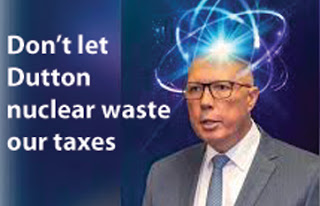
Hannah Wootton https://www.afr.com/policy/energy-and-climate/nuclear-a-rent-seeking-parasite-that-will-push-up-power-prices-kean-20241104-p5knu5—
Climate Change Authority head Matt Kean has slammed the nuclear power industry as a rent-seeking parasite, warning that developing plants in Australia would just drive up electricity bills and accusing those wanting to do so of vested interests.
The former NSW treasurer said the alternative energy source was “old outdated technology” and only “a very brave person” would bet on it, building on months of criticism of nuclear since taking the CCA job.
Mr Kean believes nuclear power will be too expensive and take too long to develop to meaningfully contribute to Australia’s energy transition. Last month, he said the opposition’s controversial plan to extend coal-fired power stations until nuclear plants could be built was a “wild fantasy”.
He said this plan and any development of a nuclear industry would stymie investment in renewables, accusing those promoting either of being “delay mongers”.
On Monday, Mr Kean told Senate estimates that those who wanted to fund nuclear plants or prolong coal-fired power stations just wanted “to pay a lot of rent to these vested interests”.
“There’s no bigger rent-seeking parasite than the nuclear industry,” he said.
“If you want to see who is trying to pull one over the eyes of the Australian public it’s the nuclear industry, who are there propping up the coal industry who want to extend their business models, squeeze out the last bits of profits at the expense of Australian consumers.
“They’re coming to the people of Australia for a handout … but here’s no business case or economic case for it.”
Dramatic reductions in the cost of batteries and energy storage also meant the business case – “not that there was one” – for Australia to invest in nuclear power was even less than it previously had been.
“Battery technology is falling so rapidly that it’s eating other technologies’ lunch – or it will certainly do so,” he said.
Mr Kean said nuclear reactors would not be built quickly enough to replace coal-fired generators anyway, and that shifting to renewables was a faster and cheaper way to decarbonise the economy.
Nationals senator Ross Cadell rejected this, despite the CSIRO and Australian Energy Market Operator both finding that renewables are much cheaper than nuclear energy.
He accused Mr Kean of failing to properly scrutinise these findings, calling for a balanced energy mix in the transition.
But Mr Kean called on the opposition to back renewables, saying nuclear power would “drive up the cost of electricity for millions of Australians across the country”.
Pushing nuclear power in Queensland would be ‘hugely messy’ for a future Dutton government, constitutional law experts say

By Matt Eaton, 30 Oct 24, https://www.abc.net.au/news/2024-10-30/nuclear-power-plebiscite-peter-dutton-david-crisafulli/104532888
A clear line in the sand divides Queensland’s new Liberal National government from the federal Coalition on the topic of nuclear power.
On Sunday, just hours after the LNP’s state election victory, federal Nationals leader David Littleproud said he expected Queensland to fall into line on nuclear power if the Coalition wins the next federal election.
The Coalition has a plan to roll out nuclear power nationwide should it win office, including two nuclear power plants in Queensland.
Asked again about nuclear power yesterday, Queensland Premier David Crisafulli held firm to the LNP’s position that it will not repeal the state’s nuclear ban.
What does the law say?
Building nuclear reactors is prohibited by the Queensland Nuclear Facilities Prohibition Act 2007.
Constitutional law experts say Queensland ultimately has no legal power to stand in the way of a federal government determined to build nuclear reactors in this state.
Section 109 of the Australian Constitution is unequivocal on such a dispute: “When a law of a State is inconsistent with a law of the Commonwealth, the latter shall prevail, and the former shall, to the extent of the inconsistency, be invalid.”
But University of Queensland electoral law expert Graeme Orr thinks having a federal government override the state in this case would be nowhere near that simple.
On the contrary, he believes it would be “hugely messy”.
“There isn’t a simple precedent for this kind of thing, let alone for it being Liberal-on-Liberal conflict,” Professor Orr said.
“First of all, if the state doesn’t want to give up Crown land, the Commonwealth have to forcibly acquire that Crown land, pay for it and transfer it.”
Professor Orr said he was not opposed to nuclear power.
“My brother is a nuclear physicist in France, there’s benefits to it. But the economics of it are going to be problematic enough.”
‘A political minefield’
Australian National University legal expert Dr Ron Levy said there would be another problem.
Queensland’s nuclear prohibition bill includes a clause that if the relevant Queensland minister believes the Commonwealth is moving to construct a “prohibited nuclear facility”, the minister must seek Queenslanders’ views on the matter.
“If the federal government builds nuclear plants in the state, the people will vote on it,” Dr Levy said.
“That would not be binding — it would, however, be a political minefield for any future Dutton government.”
Professor Orr agrees the plebiscite clause makes the issue “fascinating”.
He said this clause of the Queensland law could not be overridden by the Commonwealth.
“It would have to be undone by the Queensland government, who now have a majority,” he said.
“If the Queensland government did roll over behind the scenes … that becomes like a loss of faith, particularly for the areas that are earmarked for possible nuclear power stations.”
‘No bigger rent-seeking parasite’ than nuclear industry, Matt Kean tells former Coalition colleagues in heated debate

Kean, a former Liberal energy minister turned Climate Change Authority chair, clashes with senators Gerard Rennick and Ross Cadell
Lisa Cox Environment and climate correspondent, Guardian, 4 Nov 24
Matt Kean, the chair of the Climate Change Authority and a former New South Wales Liberal energy minister, has told a parliamentary estimates hearing there is “no bigger rent-seeking parasite than the nuclear industry” during a heated exchange with pro-nuclear senators.
Appearing at estimates for the first time since his appointment in June, Kean argued with the independent senator Gerard Rennick about the cost of nuclear, telling the hearing: “If you want to see who are needing rent-seeking [and] trying to pull one over the eyes of the Australian public, it’s the nuclear industry.”
Kean said the nuclear industry was “there propping up the coal industry, who want to extend their business models, squeeze out the last bits of profit at the expense of Australian consumers”.
He also clashed with the Nationals senator Ross Cadell over analysis by Australia’s science agency CSIRO, which found nuclear was the most expensive form of large-scale energy available, estimating an initial plant could cost more than $16bn.
Kean told Cadell “most rational people do trust the CSIRO, this is the body that developed wifi” and that their advice “is good enough for me and it should be good enough for our political leaders”……………….
He later told Rennick that advice from CSIRO and the Australian Energy Market Operator was that the cheapest way to replace Australia’s ageing electricity infrastructure was with renewables.
The Coalition has proposed seven sites where it says it would eventually replace coal-fired power plants with nuclear plants but not how much this would cost.
Multiple energy analysts have argued nuclear energy would be more expensive than other options and a nuclear industry would not be possible in Australia until after 2040………………………………………..
The chair of the Australian Energy Regulator, Clare Savage, told a parliamentary inquiry she did not believe nuclear plants could be built in time to cover the closure of coal-fired power plants. https://www.theguardian.com/australia-news/2024/nov/04/no-bigger-rent-seeking-parasite-than-nuclear-industry-matt-kean-tells-former-coalition-colleagues-in-heated-debate
Why Nimbys are wrong about solar farms- even in the UK!
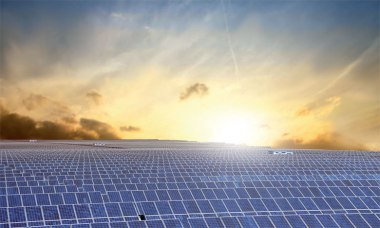
Opponents of solar farms often say that solar panels should be put on roofs and that fields should be left for agriculture so i asked the experts on whether they agreed
By Tom Bawden, Science & Environment , November 3, 2024 ,
https://inews.co.uk/news/environment/why-nimbys-are-wrong-about-solar-farms-3355702
Tory leadership loser Robert Jenrick said that solar panels are “for roofs not fields” when asked byi last month if he supported a proposed giant solar farm in his Nottinghamshire constituency.
He is by no means alone in that view, which is a common argument given by opponents of solar farms.
Those who protest against solar farm developments argue fields would be better used for growing food, while solar panels could and should be concentrated on roofs, of which there are quite literally millions in the UK.
“I’ve said that we must ban solar farms from prime agricultural land and I mean it. These facilities are despoiling our beautiful countryside and jeopardising our food security. We must end it,” Mr Jenrick added.
But since Labour came to power Energy Secretary Ed Miliband has approved four of the five biggest solar farms to be given planning permission in the UK.
Mr Miliband has vowed to take on “the blockers, the delayers, the obstructionists” who oppose large solar and onshore wind development to help the UK meet its ambitious targets to make the country’s energy supply virtually carbon neutral in just six years.
As the Government steps up its campaign to drive through new solar and wind projects, it is likely we will be seeing more projects of a similar scale too that opposed by Mr Jenrick in the coming years.
i asked experts whether it was feasible for the UK to do without new solar farms and instead confine new solar panel installations to the rooftops of households, offices and other business properties, and what effect this could have on food security.
The sale of the solar challenge
Experts were clear that there needs to be a huge and rapid increase in renewable energy generation if the UK is to have any chance of meeting its highly ambitious climate targets.
And, as the cheapest source of renewable energy – now costing less than onshore and offshore wind, according to government figures – solar will inevitably play a key role in the transformation of the UK’s energy supply.
The Conservative’s British Energy Strategy in April 2022 outlines the need for 70 gigawatts (GW) of solar power to be installed by 2035 – enough to power 20 million homes, according to National Grid.
As of June 2024, the UK only had about 17GW installed capacity (powering around 4.5million homes), meaning the country needs to quadruple its solar power generation in the next 11 years.
Two thirds of the current solar power is generated by solar farms with panels on the ground – known as “ground mount” – with the remaining third coming from the rooftops of businesses and over 1.5 million homes.
Meanwhile, government advisor the Climate Change Committee estimates that we will need 90GW of solar by 2050 (5.3 times current capacity) if we are to hit our legally binding target of becoming Net Zero.
Dr Simon Harrison, a member of the Government’s new advisory commission to help make the UK’s power generation virtually carbon neutral by 2030, told i the task is so great that it’s “going to require vastly more renewable energy generation” – meaning that “in practice both solar farms and roof top solar will be needed at scale to meet our needs”.
“There’s a significant role for both,” added Professor Rob Gross, who also sits on the commission.
What are the advantages of solar farms?
The first major advantage of solar farms is the sheer amount of energy they produce.
The 600 MW Cottam Solar farm that was granted planning permission in September would be the UK’s largest – supplying 180,000 homes, or 1,500 homes for every 5MW of energy generated.
By contrast, large solar rooftop installs, say over an airport or large of space, typically generate hundreds of kilowatts (kW) potentially up to a few megawatts (MW).
While the average solar rooftop installation size on someone’s home for their own use is typically 4kW.
So the Cottam Solar project would generate at least 200 times the electricity of the very largest commercial roof top installations and around 150,000 times as much as a typical household solar panel setup.
Tony Slade, technical director of Beaverbrook Energy, which designs, finances and builds low-carbon energy generators, told i: “Ground mounted solar farms also suffer from less ‘shading’ (blocking of direct sunlight through obstacles and obstructions) and ‘directional losses’ by being angled in the wrong direction.
“About 50 per cent of roofs face the wrong way and of those that face the right way about 25 per cent suffer from shading issues,” he said.
Are solar farms cheaper than roof panels?
Yes, in part because they benefit from economies of scale. In other words, the bigger the solar farm, the cheaper each unit of electricity will be, as more panels can benefit from the infrastructure.
Professor Gross, who is also director of the UK Energy Research Centre coalition of researchers, told i “the principal advantages are economic”.
“It is far cheaper to install each solar panel in a large array of thousands of panels than it is to install a handful of panels on a roof.
“Ground mounted is cheapest, followed by larger arrays on commercial units, followed by new build, followed by residential retrofit. All categories are getting cheaper but it is impossible to get away from the fundamentals – the cheapest solar will always be the simplest to install, in the largest arrays,” he said.
“And ground mounted developers building large schemes may also be able to negotiate the best deals for panels and equipment,” he added.
Mr Slade explains that greenfield ground mount solar panels on fields typically cost two thirds as much, per unit of energy, as large scale solar panel arrays on commercial buildings such as warehouses, shopping centres and factories – as well as new build domestic and commercial buildings, where the solar panels are fitted as part of the original construction.
Meanwhile, installing solar panels above car parks is typically twice as expensive as wind farms and retrofitting homes is about three times as expensive, he said.
What about food security?
Opponents of large solar farms often argue that the land would be better used for agriculture and that too many of them could impact food security.
But the Department for Energy Security and Net Zero firmly rebuts those suggestions, arguing the amount of agricultural land involved would make very little difference to the UK’s food production.
“Our plans to boost solar power do not risk the UK’s food security. The total area of agricultural land used for solar is very small and is often the lowest grade quality for food production.
“Even in the most ambitious scenarios, solar would still occupy less than 1 per cent of the UK’s agricultural land, while bringing huge benefits for the British public and our energy security,” the spokesperson added.
Meanwhile, in July, National Farmers’ Union boss Tom Bradshaw warned MPs against making “sensationalist” claims about food security.
“It’s a small amount of land which is being taken out of production,” he told the Politico Europe website.
The role of rooftop solar panels
“They can potentially play a very important role, accounting for perhaps 40 per cent of new installation of solar. But it’s important to be clear that rooftop and ground based are additive not competitive,” Professor Gross said.
Dr Harrison says “there are serious considerations to make on where solar is placed”, meaning that sometimes roof top solar power can be far more suitable than those in fields.
“In the simplest terms, there is more space in rural areas for solar panel installations and it is often easier to optimise their positioning for greater energy capture. But they are generally further from existing grid connections and with sometimes competing requirements for land use,” he said.
“On the other hand, rooftop solar, most commonly in urban settings, often avoids use of congested electricity networks, especially when combined with local batteries, and when used in homes tends to drive greater awareness and action by residents in other areas such as energy efficiency improvements, as well as reducing bills. In practice both will be needed at scale to meet our needs.”
The Government estimates there are 250,000 hectares of south-facing, industrial roof space across the country. That’s an area bigger than London and Manchester combined, with the potential for a vast amount of solar panels.
Even a very conservative estimate suggests that this commercial roof space could provide an area big enough to generate approximately 25GW of energy.
This amounts to nearly half the total amount recommended by the Climate Change Committee (CCC), according research by University College London for the Campaign to Protect Rural England (CPRE).
Mr Ramandani agrees that fields and rooftops can play different, complementary, roles in UK energy generation.
“We need about 18GW more of rooftop solar to hit 70GW by 2035 to keep us on the right path to Net Zero. So it will play a massive role,” he said.
“Rooftop solar can power people’s homes and business onsite without needing to pull from the grid, and excess generation can be stored or exported back to the grid, which supports the flexibility and security of the grid. And they operate at a smaller scale with some export to the overall grid system.
“Solar farms, meanwhile, are not onsite generation – they operate at a much bigger scale and power the grid with greater quantities of energy, which is used by the whole system and not specific to a home or business (before they export the excess generation that they don’t use or store).”
Is there a big role for household solar panels?
UK households are already waking up to solar panels, receiving record sums last year for the amount of excess energy they generated that they sold back to the grid, Ofgem said last week.
Homeowners received more than £30m for the energy they didn’t need in the year to March 2024, four times the £7.2m they made the previous year.
Although this amounted to a relatively small amount of energy – enough to power 88,000 homes – experts say there is considerable scope to increase this and they expect this to happen in the coming years.
“There is definite major role for rooftop solar in the UKs future energy mix,” said Mr Slade. “As installations become cheaper and the market for excess generation becomes fairer to the home owner rooftop domestic solar will continue to grow,” he said.
Mr Ramandani says: “Onsite solar rooftop generation takes money off consumer’s bills as they purchase less from the grid, and excess generation can be exported to the grid for income. This in turn creates a stable grid system with less demand side pressure, as well as supplementary energy generation from homes and businesses.
For a typical house, installing a PV system could lower bills by the equivalent of nearly 330 every year over the 30-year lifespan of the system, according to a study by Cambridge University and the Think Three property development company for Solar Energy UK.
To 4 November – nuclear news, and more

Some bits of good news – Public health wins in Kenya, Uganda, Bangladesh, and Tanzania. Peace on the horizon between China and India.
A decline in carbon emissions in China is still in play.
People power – 30 years of renewable energy: one company’s success story
**********************************
TOP STORIES.
The Rise and Fall of NuScale: a nuclear cautionary tale.
“Ford Watch: The Largest Nuclear Expansion in Canada’s History”.
New Nuclear – Unaffordable, Undesirable and Unachievable
***********************
Climate. UK lobbyists accused of ‘greenwashing’ oil-rich Azerbaijan before Baku COP summit
Record levels of heat-related deaths in 2023 due to climate crisis, report finds. Half of world’s biggest cities to face severe climate risks by 2050, LSEG finds. Why were the floods in Spain so bad? A visual guide. Climate Researchers Warn: Warmer Climate Could Lead To “Cold Waves Across Northern Europe”!
Noel’s notes. Canadians are waking up to the nuclear scam– Why are the media and other nations pretending that nuclear is just dandy?
******************************************************
AUSTRALIA.
Australian Civil Society Statement for COP29Baku, Azerbaijan. Australia votes at the UN General Assembly. More Australian news at https://antinuclear.net/2024/10/24/australian-nuclear-news-21-28-october/
NUCLEAR ITEMS
| ATROCITIES. Banning United Nations Relief and Works Agency (UNRWA) is a new way to kill children, aid groups warn. Oxfam reaction to Knesset decision. Israeli Knesset Passes Bill To Ban UN Palestinian Relief Agency. |
| CLIMATE. New Paper: Nuclear Weapons and Our Climate. |
| CIVIL LIBERTIES. Witnesses say the Israeli army is using facial recognition technology in its assault on north Gaza. |
| CULTURE. The Mainstream Western Worldview Pretends The Global South Does Not Exist. Israel will eventually pay price for Gaza genocide going on for a year: Turkish President Erdogana- https://www.youtube.com/watch?v=dtoWptrhPOM |
ECONOMICS.
- Next ERA No Longer Bullish on Nuclear SMRs.
- Lepreau nuclear headaches could add up to an extra $150M.
- Ontario’s huge nuclear debt and other things Dutton doesn’t understand about cost of electricity.
- Race to build Britain’s first mini-nukes delayed again in Budget.
- Ultra Safe” Nuclear Corp.-Major Microreactor Developer Enters Bankruptcy
- Sizewell C nuclear project proceeds by stealth – vast sums of public money spent, with no public disclosure about its true cost.
- Czech watchdog prohibits nuclear power contract signing amid appeals.
- IEA: Global clean tech market set to be worth $2tr a year by 2035.
EVENTS. CND to protest return of US nuclear weapons to Britain ahead of US presidential election. PETITION. Call for Peacekeeping Forces to Stop Israel’s Genocide
| INDIGENOUS ISSUES. Saugeen Ojibway Nation stands firm on nuclear waste decision despite South Bruce vote |
| LEGAL. South Africa Files 750 Pages of ‘Overwhelming’ Evidence in ICJ Genocide Case Against Israel. |
| MEDIA. Israel Kills Five Journalists in Sunday Gaza Attacks. Israel kills the journalists-Western media kills the truth of genocide in Gaza . Despite History of Fabrication, Press Uncritically Covers IDF-Provided Documents on Hamas. 101 BBC journalists say it is biased against Palestine. Atomic Reaction – a highly recommended feature-length documentary film. |
| OPPOSITION to NUCLEAR .South Bruce Deep Geological Repositary (DGR) opposition promises to keep fighting. Gravelines nuclear power plant: EDF refuses to respond on flood risks and tries to silence whistleblowers. Campaigners slam chancellor Rachel Reeves for £2.7 billion pledge to nuclear power station. After two months, Nuclear Free Local Authorities receive vague response on Advanced’ Gas-Cooled Reactors (AGRs). |
POLITICS.
- Settlers prepare for ’resettlement in Gaza’.
- Labour just railroaded a secretive US-UK nuclear treaty renewal deal. Nuclear Free Local Authorities (NFLAs) believe UK budget is opportunity to lobby Ministers to ditch Sizewell C. Will Susan Holt’s new government continue New Brunswick’s nuclear fantasies ?
- Launch of papers on UK’s unachievable nuclear programme.
- New Brunswick’s nuclear plant’s ongoing troubles an early threat to Holt government finances. South Bruce Municipality narrowly votes to host underground nuclear waste disposal site.
POLITICS INTERNATIONAL and DIPLOMACY.
- Ukraine and Russia in talks about halting strikes on energy plants.
- UK urged to break with France, North Korea and Russia on UN nuclear war resolution.
- WILL THE 2024 U.S. PRESIDENTIAL ELECTION BRING AN END TO THE WAR IN UKRAINE?.
| SAFETY. Reeves urged not to cut Sellafield funds amid concern at rise in ‘near misses’. The non-proliferation considerations of nuclear-powered submarines. Onagawa nuclear plant’s restart sparks concerns over evacuation routes. |
| SECRETS and LIES. Yeah, Yeah, United Nations Relief and Works Agency (UNRWA) Is Hamas. Everyone Israel Hates Is Hamas. Lest we forget – Nuclear Power Runs on Dirty Money: The Corporate Scandal of the Proposed National Nuclear Subsidy. Congress Must Investigate Corruption in Nuclear Energy Industry. |
SPACE. EXPLORATION, WEAPONS.
ExoAnalytic observes 500 pieces of debris from Intelsat 33e breakup
WASTES.
- The global nuclear industry has no idea how to decommission Fukushima nuclear plant, but hopes that a tiny robot might help. Nuclear fuel debris retrieved at Tepco Fukushima plant.
- France wrestles with the idea that nuclear wastes might be useful, “retrievable” for future generations.
- South Bruce voters narrowly approve being host to nuclear waste.
- Technical troubles delay new tests at huge Eastern WA radioactive waste melter.
- The Wylfa nuclear power station site needs “better storage facilities for waste” .
- NGOs call for more secure interim storage facilities for Germany’s nuclear waste.
- Safety analysis is not yet approved for Sweden’s nuclear waste dump plan, despite the hype.
| WAR and CONFLICT. South has raised risk of nuclear war, North Korea says. |
| WEAPONS and WEAPONS SALES. Report: US Sitting on Nearly 500 Reports of US Weapons Killing Civilians in Gaza. Department of Defense Releases Fiscal Year 2024 Military Intelligence Program Budget – just the bare $29.8 billion. Why ‘British’ nuclear weapons are really very American. |
Support for nuclear power will evaporate at next election, Chris Bowen predicts
Polling shows that Australians prefer renewables, climate change and energy minister says
Adam Morton Climate and environment editor, https://www.theguardian.com/australia-news/2024/nov/04/nuclear-power-support-australia-election-chris-bowen
Support for nuclear power is likely to evaporate once Australians face a clear choice at the next election and realise the Coalition’s policy would mean relying more on old coal plants and increased risk of blackouts, Chris Bowen says.
The climate change and energy minister said that while some polling had suggested some voters were open to nuclear plants being allowed in Australia surveys had also consistently found they preferred renewable energy.
“Every bit of research I’ve seen, public and private, says that when shown details and given a choice between nuclear and other forms of energy, nuclear fares very, very badly,” he said. “If you look at the popularity of different forms of energy, it’s solar, wind, gas, daylight, coal, nuclear, in that order, every single time.”
Support for nuclear power is likely to evaporate once Australians face a clear choice at the next election and realise the Coalition’s policy would mean relying more on old coal plants and increased risk of blackouts, Chris Bowen says.
The climate change and energy minister said that while some polling had suggested some voters were open to nuclear plants being allowed in Australia surveys had also consistently found they preferred renewable energy.
“Every bit of research I’ve seen, public and private, says that when shown details and given a choice between nuclear and other forms of energy, nuclear fares very, very badly,” he said. “If you look at the popularity of different forms of energy, it’s solar, wind, gas, daylight, coal, nuclear, in that order, every single time.”
The Coalition has named seven sites where it says it would eventually replace coal-fired power plants with nuclear plants but not how much this would cost. Multiple energy analysts argue nuclear energy would be more expensive than other options and a nuclear industry would not be possible in Australia until after 2040. The bulk of the country’s coal plants are scheduled to close in the 2030s.
The opposition has suggested it would limit the rollout of large-scale renewable energy – it has criticised Labor’s goal of 82% renewable energy by 2030 – and bridge the gap by keeping ageing coal plants running longer and using more gas-fired power.
It has not yet said what type of gas plants this means. With nuclear banned, gas is the most expensive form of electricity in the national electricity market and it use is largely restricted to “peaking” power turned on only when needed. It provided less than 3% of electricity in the national grid over the past month.
The chair of the Australian Energy Regulator, Claire Savage, told a parliamentary inquiry she did not believe that nuclear plants could be built in enough time to cover the closure of coal-fired power plants. More than a quarter of the coal power capacity in the national grid was offline on the day she gave evidence due to planned and unplanned outages.
Australia votes at the UN General Assembly

A few days ago, Australia voted on a number of nuclear weapons resolutions at the UN General Assembly. Thank you to the hundreds of you that emailed Foreign Minister Wong urging Australia to vote in the right way! In good news, Australia voted “Yes” on the scientific research resolution (L.39) supporting a major new UN-mandated study on the effects of nuclear weapons. Several nuclear-armed states were trying to mobilise supporters to vote against this resolution so we know they are threatened by it. Knowledge is power!
Disappointingly, Australia continued its abstention on the TPNW resolution (L.37) and humanitarian impacts resolution (L.36), instead of voting “Yes”.
Earlier in October ICAN visited Parliament to advocate for the TPNW with parliamentarians across the political spectrum. We were also delighted to have met with Siswo Pramono, Indonesia’s Ambassador to Australia, and congratulate him on Indonesia’s recent ratification of the TPNW. Mr Pramono addressed the Parliamentary Friends of the TPNW group and stated that the success of the TPNW also hinges upon the participation of countries who possess nuclear weapons. “We need a concerted effort to convince them to become Parties to the Treaty,” he said. “In doing so, leadership from developed countries such as Australia is needed.”
New Paper: Nuclear Weapons and Our Climate

Today, we are launching a new briefing paper: ‘Nuclear Weapons and Our Climate’ written by ICAN co-founder, A/Prof Tilman Ruff AO.
In the lead up to the climate COP29, this timely paper sharply lays out how the “two paramount human-made existential threats we confront—nuclear weapons and climate change—exacerbate each other and need to be addressed together—with utmost urgency,” writes A/Prof Ruff. “One harms us and our biosphere every day, the other could deplete it irrevocably and end human civilisation and many species in less than a day.”
The paper’s key findings are:
- Smoke from burning cities ignited by a nuclear war involving 2% of the global arsenal would suddenly plummet temperatures worldwide to ice age levels, decimate agriculture, disrupt ocean food chains and starve to death over two billion people.
- Militaries are large and mostly unconstrained greenhouse gas emitters. Growing conflicts and nuclear threats undermine international cooperation needed to address the climate crisis. Rising military spending and nuclear arsenals have huge opportunity costs and make conflicts more dangerous. An increased risk of war leading to nuclear escalation is the greatest danger of the climate crisis.
- Nuclear power inseparably creates the capacity to build nuclear weapons. In most nuclear-armed states, the infrastructure, personnel, expertise, industrial capacity and government investments in nuclear power are also key to their nuclear weapons programs.
- Nuclear reactors, spent fuel storage ponds and reprocessing plants are effectively pre-positioned large radiological weapons, vulnerable to direct attack or disruption of power and water for essential cooling. Russia’s invasion of Ukraine has seen, for the first time, multiple nuclear power plants attacked and weaponised in war, risking a radiological disaster.
| The paper is a call to action, as “everyone everywhere, everything we treasure and our living planet is threatened by nuclear weapons, this is everyone’s business.” Please share the report with your friends and networks and discuss how you can help prevent climate disruption and nuclear war in your work and daily lives. |
Grazing sheep among solar panels could produce higher quality wool, study finds
Sophie Vorrath, Nov 1, 2024,
https://reneweconomy.com.au/grazing-sheep-among-solar-panels-could-produce-higher-quality-wool-study-finds/
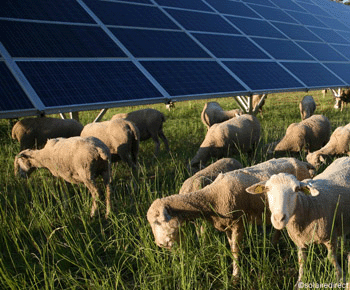
The co-location of solar farming with sheep grazing does not have a negative affect on wool production and could even improve the quality of the wool produced, a new study has found.
The study is based on the results of a second round of wool testing at the Wellington solar farm, south east of Dubbo in New South Wales, which has shared its site with 1,700 merino sheep for the past three years.
Legend has it that the decision to graze sheep at the solar farm came about when an employee of Lightsource bp, the owner of the Wellington project, complained to a local, sixth-generation wool farmer about the hassle and cost of mowing the solar farm six times a year.
According to Tony Inder, who heads up the Allendale Merino Stud, the effect on his sheep has been a lot better than he thought it would be – he says the wool quality they are producing has “increased significantly.”
But Lightsource bp – which is now wholly owned by the oil and gas giant BP, after completing the acquisition of the remaining 50.03% interest – has used the opportunity to gather some formal data.
The study, conducted by EMM Consulting with support from Elders Rural Services, compares two groups of merino sheep – one group grazed in a regular paddock and the other at the Wellington solar farm.
The latest findings show grazing sheep among solar panels does no harm to wool production, even in the case of pre-existing high-quality standards. And it says that some parameters even indicate an improvement in wool quality, although conclusive benefits require further long-term measurement.
Lightsource bp says that while the study at the Wellington solar farm is ongoing, it is another indication that solar farms can exist side-by-side with sheep farming, for the benefit of both enterprises.
“These results are very encouraging and highlight the potential for solar farms to complement agricultural practices,” says Emilien Simonot, Lightsource bp’s head of agrivoltaics.
“By integrating sheep farming with solar energy production, we can achieve dual benefits of sustainable energy together with agricultural output.” . By co-locating grazing with renewable energy, land can remain in agricultural use, offering farmers additional revenue while contributing to cleaner energy for the planet.
“Finding ways for agriculture and clean energy to work together is crucial for a more sustainable future,” says Brendan Clarke, interim head o environmental planning Australia and NZ at Lightsource bp.
“The promising results from this study indicate that we are on the right path, and working closely with farmers to grow our knowledge in this area is paramount.”
As for the sheep, Inder says they “just do really well” when grazing among the Wellington solar farm panels.
“I like to say that panel sheep are happy sheep.”
Sophie is editor of One Step Off The Grid and deputy editor of its sister site, Renew Economy. She is the co-host of the Solar Insiders Podcast. Sophie has been writing about clean energy for more than a decade.
Dangerous Hype: Big Tech’s Nuclear Lies

M.V. Ramana, November 1, 2024, https://www.counterpunch.org/2024/11/01/big-techs-nuclear-lies/
In the last couple of months, Microsoft, Google, and Amazon, in that order, made announcements about using nuclear power for their energy needs. Describing nuclear energy using questionable adjectives like “reliable,” “safe,” “clean,” and “affordable,” all of which are belied by the technology’s seventy-year history, these tech behemoths were clearly interested in hyping up their environmental credentials and nuclear power, which is being kept alive mostly using public subsidies.
Both these business conglomerations—the nuclear industry and its friends and these ultra-wealthy corporations and their friends—have their own interests in such hype. In the aftermath of catastrophic accidents like Chernobyl and Fukushima, and in the face of its inability to demonstrate a safe solution to the radioactive wastes produced in all reactors, the nuclear industry has been using its political and economic clout to mount public relations campaigns to persuade the public that nuclear energy is an environmentally friendly source of power.
Tech giants like Microsoft, Amazon, and Google, too, have attempted to convince the public they genuinely cared for the environment and really wanted to do their bit to mitigate climate change. In 2020, for example, Amazon pledged to reach net zero by 2040. Google went one better when its CEO declared that “Google is aiming to run our business on carbon-free energy everywhere, at all times” by 2030. Not that they are on any actual trajectory to meeting these targets.
Why are they making such announcements?
Greenwashing environmental impacts
The reasons underlying these companies investing in such PR campaigns is not hard to discern. There is growing awareness of the tremendous environmental impacts of the insatiable appetite for data from these companies, as well as the threat they pose to already inadequate efforts to mitigate climate change.

Earlier this year, the Wall Street company Morgan Stanley estimated that data centers will “produce about 2.5 billion metric tons of carbon dioxide-equivalent emissions through the end of the decade”. Climate scientists have warned that unless global emissions decline sharply by 2030, we are unlikely to limit global temperature rise to 1.5 degrees Celsius, a widely shared target. Even without the additional carbon dioxide emitted into the air as a result of data centers and their energy demand, the gap between current emissions and what is required is yawning.

But it is not just the climate. As calculated by a group of academic researchers, the exorbitant amounts of water required in the United States “to operate data centers, both directly for liquid cooling and indirectly to produce electricity” contribute to water scarcity in many parts of the country. This is the case elsewhere, too, and communities in countries ranging from Ireland to Spain to Chile are fighting plans to site data centers.
Then, there are the indirect impacts on the climate. Greenpeace documented, for example, that “Microsoft, Google, and Amazon all have connections to some of the world’s dirtiest oil companies for the explicit purpose of getting more oil and gas out of the ground and onto the market faster and cheaper.” In other words, the business models adopted by these tech behemoths depend on fossil fuels being used for longer and in greater quantities.

In addition to the increasing awareness about the impacts of data centers, one more possible reason for cloud companies to become interested in nuclear power might be what happened to cryptocurrency companies. Earlier this decade, these companies, too, found themselves getting a lot of bad publicity due to their energy demands and resulting emissions. Even Elon Musk, not exactly known as an environmentalist, talked about the “great cost to the environment” from cryptocurrency.
The environmental impacts of cryptocurrency played some part in efforts to regulate these. In September 2022, the White House put out a fact sheet on the climate and energy implications of Crypto-assets, highlighting President Biden’s executive order that called on these companies to reduce harmful climate impacts and environmental pollution. China even went as far as to banning cryptocurrency, and its aspirations to reducing its carbon emissions was one factor in this decision.
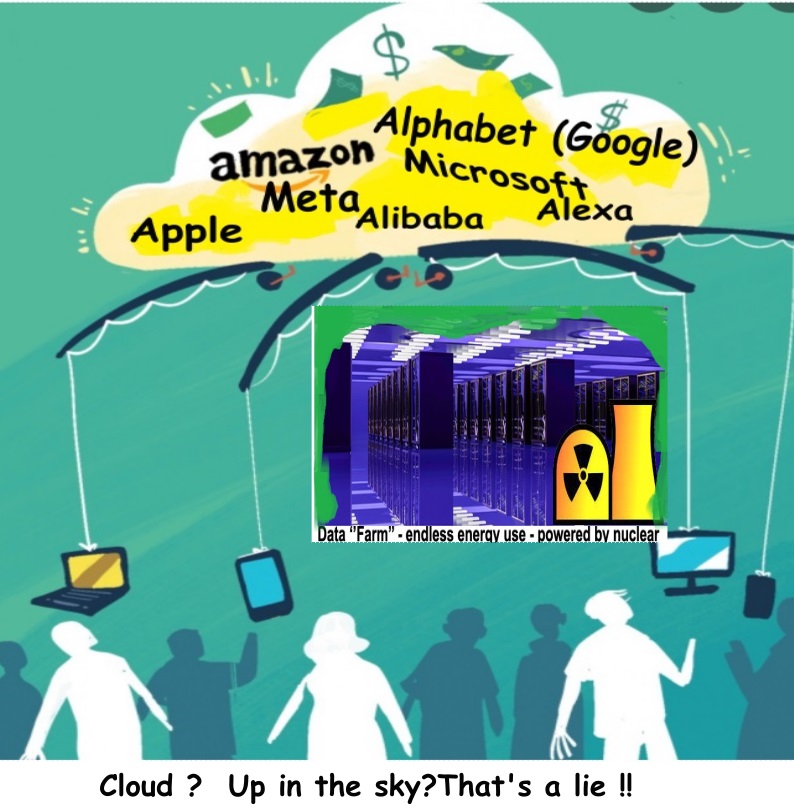
Crypto bros, for their part, did what cloud companies are doing now: make announcements about using nuclear power. Amazon, Google, and Microsoft are now following that strategy to pretend to be good citizens. However, the nuclear industry has its reasons for welcoming these announcements and playing them up.
The state of nuclear power
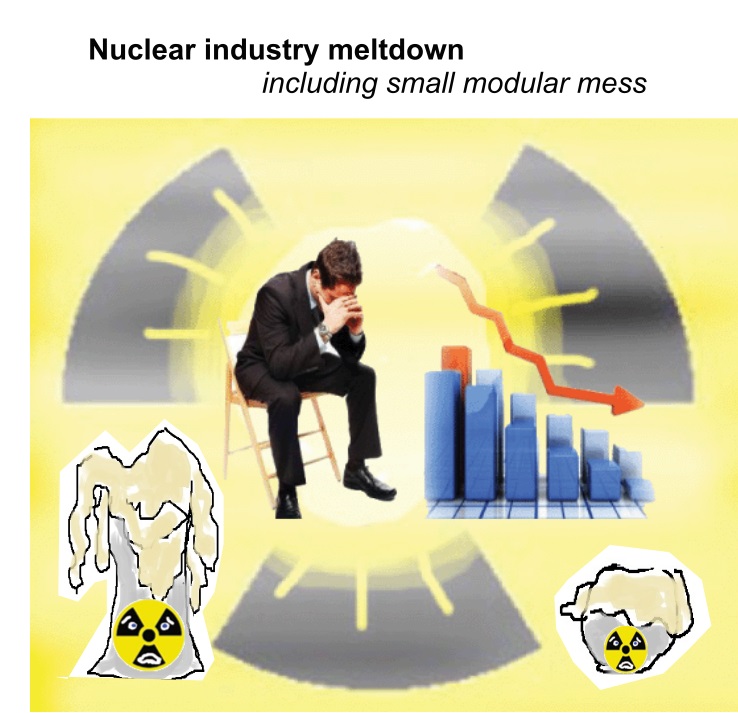
Strange as it might seem to folks basing their perception of the health of the nuclear industry on mainstream media, that technology is actually in decline. The share of global electricity produced by nuclear reactors has decreased from 17.5% in 1996 to 9.15% in 2023, largely due to the high costs of and delays in building and operating nuclear reactors.
A good illustration is the Vogtle nuclear power plant in the state of Georgia. When the utility company building the reactor sought permission from the Nuclear Regulatory Commission in 2011, it projected a total cost of $14 billion, and “in-service dates of 2016 and 2017” for the two units. The plant became operational only this year, after the second unit came online in March 2024, at a total cost of at least $36.85 billion.
Given this record, it is not surprising that there are no orders for any more nuclear plants.
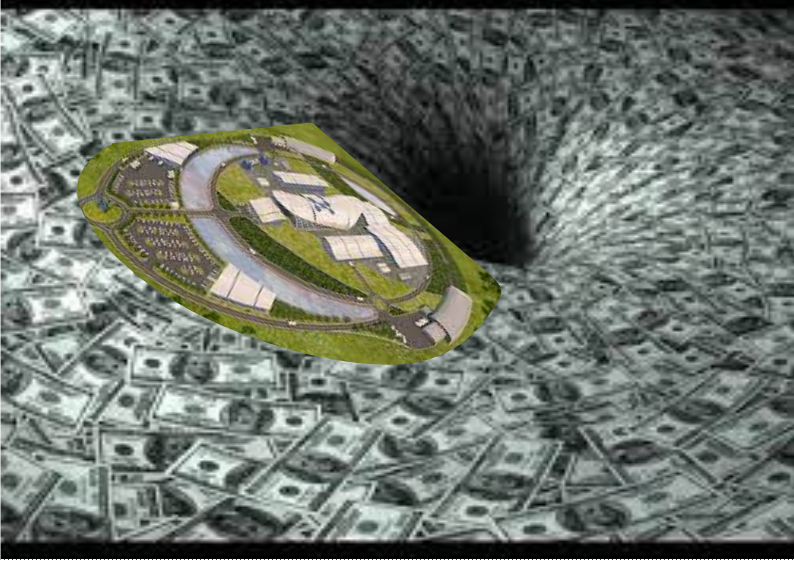
As it has been in the past, the nuclear industry’s answer to this predicament is to advance the argument that new nuclear reactor designs would address all these concerns. But that has, yet again, proved not to be the case. In November 2023, the flagship project of NuScale, the small modular reactor design promoted as the leading one of its kind, collapsed because of high costs.
Supporters of nuclear power are now using another time-tested tactic to promote the technology: projecting that energy demand will grow so much that no other source of power will be able to meet these needs. For example, UK energy secretary Ed Davey resorted to this gambit in 2013 when he said that the Hinkley Point C nuclear plant was essential to “keep the lights on” in the country.
Likewise, when South Carolina Electric & Gas Company made its case to the state’s Public Service Commission about the need to build two AP1000 reactors at its V.C. Summer site—this project was subsequently abandoned after over $9 billion was spent—it forecast in its “2006 Integrated Resource Plan” that the company’s energy sales would increase by 22 percent between 2006 and 2016, and by nearly 30 percent by 2019.
This is the argument that the growth in data centres, propped up in part by the hype about generative artificial intelligence, has allowed proponents of nuclear energy to put forward. It remains to be seen whether this hype about generative AI actually materializes into a long-term sustainable business: see, for example, Ed Zitron’s meticulously documented argument for why OpenAI and Microsoft are simply burning billions of dollars and why their business model might “simply not be viable”.
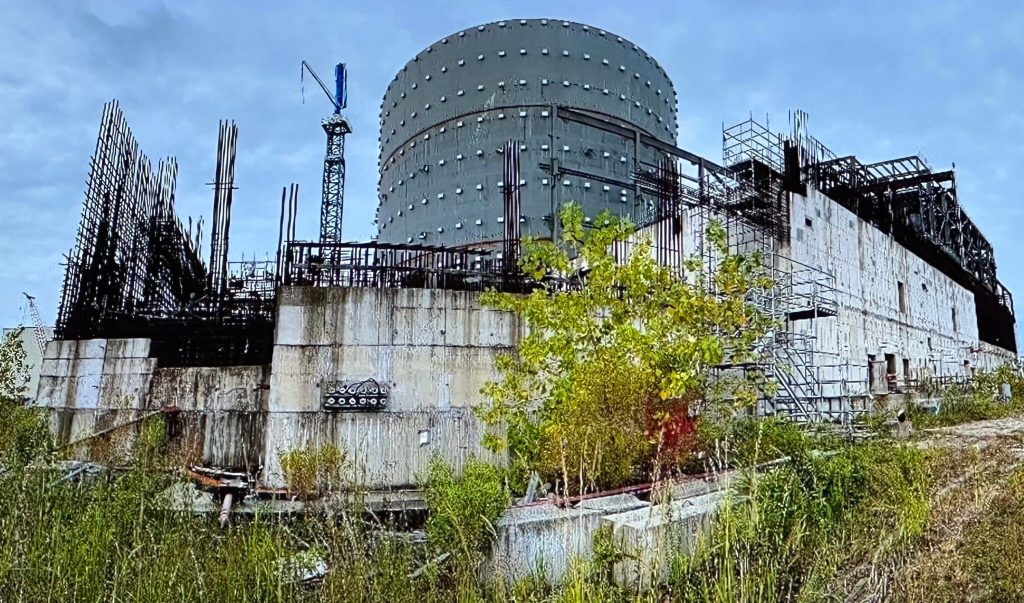
In the case of the V.C. Summer project, South Carolina Electric & Gas found that its energy sales actually declined by 3 percent compared to 2006 by the time 2016 rolled around. Of course, that did not matter, because shareholders had already received over $2.5 billion in dividends and company executives had received millions of dollars in compensation, according to Nuclear Intelligence Weekly, a trade publication.
One wonders which executives and shareholders are going to receive a bounty from this round of nuclear hype.
What about emissions?
Will the investments in nuclear power by companies like Google, Microsoft, and Amazon help reduce emissions anytime soon?

The project expected to have the shortest timeline is the restart of the Three Mile Island Unit 1 reactor, which Constellation Energy projects will be ready in 2028. But if the history of reactor commissioning is anything to go by, that deadline will come and go without any power flowing from it.
Restarting a nuclear plant that has been shutdown has never been done before. In the case of the Diablo Canyon nuclear plant in California, which hasn’t been shut down but was slated for decommissioning in 2024-25 till Governor Gavin Newsom did a volte-face, the Chair of the Diablo Canyon Independent Safety Committee explained why doing so was very difficult: “so many different programs and projects and so on have been put in place over the last half a dozen years predicated on that closure in 2024-25 and each one of those would have to be evaluated and some of them are okay, and some of them won’t be and some are going to be a real stretch and some are going to cost money and some of them aren’t going to be able to be done maybe”.

The cost of keeping Diablo Canyon open has been estimated by the plant’s owner at $8.3 billion and by independent environmental groups at nearly $12 billion. There are no reliable cost estimates for reopening Three Mile Island, but Constellation Energy, the plant’s owner, is already seeking a taxpayer-subsidized loan that would likely save the company $122 million in borrowing costs.
One must also remember that Microsoft already announced an agreement with Helion Energy, a company backed by billionaire Peter Thiele, to get nuclear fusion power by 2028. The chances of that happening are slim at best. In 2021, Helion announced that it had raised $500 million to build its fusion generation facility that would demonstrate “net electricity production” in three years, i.e., “in 2024”. That hasn’t happened so far. But going back further, one can see a similar and unfulfilled claim from 2014: then, the company’s chief executive had told the Wall Street Journal that the company hoped that its product would generate more energy than it would use “in the next three years” (i.e., in 2017). It is quite likely that Microsoft’s decision-makers knew of how unlikely it is that Helion will be able to supply nuclear fusion power by 2028. The publicity value is the most likely reason for announcing an agreement with Helion.
What about the small modular nuclear reactor designs—X-energy and Kairos—that Amazon and Google are betting on? Don’t hold your breath.
X-energy is an example of a high-temperature gas-cooled reactor design that dates back to the 1940s. There have been four reactors based on similar concepts that were operated commercially, two in Germany and two in the United States, respectively, and test reactors in the United Kingdom, Japan, and China. Each of these reactors proved problematic, suffering a variety of failures and unplanned shutdowns. The latest reactor with a similar design was built in China. Its performance leaves much to be desired: within about a year of being connected to the grid, its power output was reduced by 25 percent of the design power capacity, and even at this lowered capacity, it operated in 2023 with a load factor of just 8.5 percent.

Kairos, on the other hand, will be challenged by its choice of molten salts as coolant. These are chemically corrosive, and decades of search have identified no materials that can survive for long periods in such an environment without losing their integrity. The one empirical example of a reactor that used molten salts dates back to the 1960s, and this experience proved very problematic, both when the reactor operated and in the half-century thereafter, because managing the radioactive wastes produced before 1970 continued to be challenging.
Simply throwing money will not overcome these problems that have to do with fundamental physics and chemistry.
Just a dangerous distraction
Although Amazon, Google, and Microsoft claim to be investing in nuclear energy to meet the needs of AI, the evidence suggests that their real motive is to greenwash themselves.
Their investments are small and completely inadequate with relation to how much is needed to build a reactor. But their investments are also very small compared to the bloated revenues of these corporations. So, from the viewpoint of top executives, investing in nuclear power must seem a cheap way to reduce bad publicity about their environmental footprints. Unfortunately, “cheap” for them does not translate to cheap for the rest of us, not to mention the burden to future generations of human beings from worsening climate change and, possibly, increased production of radioactive waste that will stay hazardous for hundreds of thousands of years.
Because nuclear power has been portrayed as clean and a solution to climate change, announcements about it serve as a flashy distraction to focus public attention on. Meanwhile, these companies continue to expand their use of water and draw on coal and especially natural gas plants for their electricity. This is the magician’s strategy: misdirecting the audience’s attention while the real trick happens elsewhere. Their talk about investing in nuclear power also distracts from the conversations we should be having about whether these data centers and generative AI are socially desirable in the first place.
There are many reasons to oppose and organize against the wealth and power exercised by these massive corporations, such as their appropriation of user data to engage in what has been described as surveillance capitalism, their contracts with the Pentagon, and their support for Israel’s genocide and apartheid. Their investment into nuclear technology, and more importantly, hyping it up, offers one more reason. It is also a chance to establish coalitions between groups involved in very different fights.
M. V. Ramana is the Simons Chair in Disarmament, Global and Human Security at the School of Public Policy and Global Affairs, University of British Columbia and the author of The Power of Promise: Examining Nuclear Energy in India.
1 This month


Help Aunty Sue Protect Her Land and Sacred Sites From Destructive Rocket Testing.
.

Australians deserve the truth
about
AUKUS – https://aukuspublicinquiry.com/

PETITION – To: Prime Minister Anthony Albanese and the Australian Labor Government

of the week – Australians for War Powers Reform (AWPR)
To see nuclear-related stories in greater depth and intensity

