The Release of Julian Assange: Plea Deals and Dark Legacies
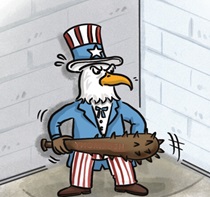
It ultimately goes to the brutal exercise of US extraterritorial power against any publisher, irrespective of outlet and irrespective of nationality…………….. the measure extracts a pound of flesh from the fourth estate. It signals that the United States can and will seek out those who obtain and publish national security information that they would rather keep under wraps under spurious notions of “harm”.
June 27, 2024, by: Dr Binoy Kampmark https://theaimn.com/the-release-of-julian-assange-plea-deals-and-dark-legacies-2/
One of the longest sagas of political persecution is coming to its terminus. That is, if you believe in final chapters. Nothing about the fate of Julian Assange seems determinative. His accusers and inquisitors will draw some delight at the plea deal reached between the WikiLeaks founder’s legal team and the US Department of Justice. Others, such as former US Vice President, Mike Pence, thought it unjustifiably lenient.
Alleged to have committed 18 offences, 17 novelly linked to the odious Espionage Act, the June 2020 superseding indictment against Assange was a frontal assault on the freedoms of publishing and discussing classified government information. At this writing, Assange has arrived in Saipan, located in the US commonwealth territory of Northern Mariana Islands in the Western Pacific, to face a fresh indictment. It was one of Assange’s conditions that he would not present himself in any court in the United States proper, where, with understandable suspicion, he might legally vanish.
As correspondence between the US Department of Justice and US District Court Chief Judge Ramona V. Manglona reveals, the “proximity of this federal US District Court to the defendant’s country of citizenship, Australia, to which we expect he will return at the conclusion of proceedings” was also a factor.
Before the US District Court for the Northern Mariana Islands, he will plead guilty to one count of conspiracy to obtain and disclose national defence information under the Espionage Act of 1917, or section 793(g) (Title 18, USC). The felony carries a fine up to $10,000 and/or up to 10 years in prison, though Assange’s time in Belmarsh Prison, spent on remand for some 62 months, will meet the bar.
The felony charge sheet alleges that Assange knowingly and unlawfully conspired with US Army intelligence analyst Chelsea Manning, then based at Operating Base Hammer in Iraq, to receive and obtain documents, writings and notes, including those of a secret nature, relating to national defence, wilfully communicated those documents from persons with lawful possession of or access to them to those not entitled to receive them, and do the same from persons unauthorised to possess such documents.
Before turning to the grave implications of this single count and the plea deal, supporters of Assange, including his immediate family, associates and those who had worked with him and drunk from the same well of publishing, had every reason to feel a surreal sense of intoxication. WikiLeaks announced Assange’s departure from London’s Belmarsh Prison on the morning of June 24 after a 1,901 day stint, his grant of bail by the High Court in London, and his release at Stansted Airport. Wife Stella regularly updated followers about the course of flight VJ199. In coverage posted of his arrival at the federal court house in Saipan, she pondered “how overloaded his senses must be, walking through the press scrum after years of sensory depravation and the four walls” of his Belmarsh cell.
As for the plea deal itself, it is hard to fault it from the emotional and personal perspective of Assange and his family. He was ailing and being subjected to a slow execution by judicial process. It was also the one hook upon which the DOJ, and the Biden administration, might move on. This being an election year in the US, the last thing President Biden wanted was a haunting reminder of this nasty saga of political persecution hovering over freedom land’s virtues.
There was another, rather more sordid angle, and one that the DOJ had to have kept in mind in thinning the charge sheet: a proper Assange trial would have seen the murderous fantasies of the CIA regarding the publisher subject to scrutiny. These included various possible measures: abduction, rendition, even assassination, points thoroughly explored in a Yahoo News contribution in September 2021.
One of the authors of the piece, Zach Dorfman, posted a salient reminder as news of the plea deal filtered through that many officials during the Trump administration, even harsh critics of Assange, “thought [CIA Director Mike] Pompeo’s extraordinary rendition plots foolhardy in the extreme, and probably illegal. They also – critically – thought it might harm Assange’s prosecution.” Were Pompeo’s stratagems to come to light, “it would make the discovery process nightmarish for the prosecution, should Assange ever see trial.”
From the perspective of publishers, journalists and scribblers keen to keep the powerful accountable, the plea must be seen as enormously troubling. It ultimately goes to the brutal exercise of US extraterritorial power against any publisher, irrespective of outlet and irrespective of nationality. While the legal freight and prosecutorial heaviness of the charges was reduced dramatically (62 months seems sweetly less imposing than 175 years), the measure extracts a pound of flesh from the fourth estate. It signals that the United States can and will seek out those who obtain and publish national security information that they would rather keep under wraps under spurious notions of “harm”.
Assange’s conviction also shores up the crude narrative adopted from the moment WikiLeaks began publishing US national security and diplomatic files: such activities could not be seen as journalistic, despite their role in informing press commentary or exposing the venal side of power through leaks.
From the lead prosecuting attorney Gordon Kromberg to such British judges as Vanessa Baraitser; from the national security commentariat lodged in the media stable to any number of politicians, including the late California Democrat Dianne Feinstein to the current President Joe Biden, Assange was not of the fourth estate and deserved his mobbing. He gave the game away. He pilfered and stole the secrets of empire.
To that end, the plea deal makes a mockery of arguments and effusive declarations that the arrangement is somehow a victory for press freedom. It suggests the opposite: that anyone publishing US national security information by a leaker or whistleblower is imperilled. While the point was never tested in court, non-US publishers may be unable to avail themselves of the free speech protections of the First Amendment. The Espionage Act, for the first time in history, has been given a global, tentacular reach, made a weapon against publishers outside the United States, paving the way for future prosecutions.
Julian Assange is free, but curly legal questions about his case remain
National Tribune, 26 Jun 2024, Holly Cullen, Adjunct Professor in Law, The University of Western Australia
Today Julian Assange walked out of the Federal Court Building in Saipan, North Marianas Islands, a free man. He pleaded guilty to one count of breaching the US Espionage Act.
With the court accepting his 62 months already spent in Belmarsh Prison as a sufficient sentence, he has no more case to answer, and no more sentence to serve.
However, this case leaves behind it a trail of unanswered legal questions and unresolved controversies. In particular, there are questions of fundamental human rights that can only now be addressed in future cases, if ever.
Can freedom of speech concerns stop extradition?
Once Assange had formally pleaded guilty, the US government’s lawyers announced they would immediately withdraw the request to extradite Assange from the UK.
That means the appeal that would have been heard later this year will not go ahead.
To recap, in May the UK High Court gave Assange the right to appeal the UK Home Secretary’s order for his extradition. This was granted on two grounds, both related to free speech.
The first ground of appeal accepted by the court was that extradition would be incompatible with Assange’s right to freedom of expression, as guaranteed in the European Convention on Human Rights.
The second ground, related to the first, is that he would be discriminated against on the basis of his nationality because he could, as a non-citizen of the US, be unable to rely on First Amendment freedom of speech rights.
But as this appeal is no longer proceeding, the issue of whether a threat to the accused’s freedom of expression can stop extradition will therefore not be argued or decided. The European Court of Human Rights and other human rights bodies have never addressed this point. It’s unlikely to arise again soon.
An espionage precedent?
Also on freedom of expression, the relationship between the US Espionage Act and the First Amendment of the US Constitution remains an open question.
In today’s pleadings, Assange and the US government took different views on whether the exercise of freedom of expression should constitute an exception to the offences under the Espionage Act. Nonetheless, Assange accepted that no existing US case law established such an exception.
This leads to the question of whether today’s guilty plea establishes a precedent for prosecuting journalists for espionage.
In the strict legal meaning of precedent in common law, which refers to a binding judicial interpretation, it does not.
The judge made no determination on whether Assange or the US government was legally correct. However, the US government can now point to this case as an example of securing a conviction against a journalist under the Espionage Act.
The question of how much a non-national of the US can rely on the First Amendment likewise continues to be on the table. This issue would also have been addressed in the extradition appeal, as a question of whether Assange would be discriminated against on the basis of his nationality.
Detention or confinement?
Finally, today’s hearing revived the question of whether the time Assange spent in the Ecuadorian embassy between 2012 and 2019 counts as detention.
As the judge moved to determine whether the sentence of “time served” was a sufficient penalty for his offence, the US government insisted the judge could only consider the 62 months in Belmarsh……………………………………………………
Today, the main story is that Assange no longer faces prosecution for espionage and is now free to return to his family. However, some of the legal issues emerging from this case remain tantalisingly unresolved. https://www.nationaltribune.com.au/julian-assange-is-free-but-curly-legal-questions-about-his-case-remain/
‘Julian Assange Is Free’: WikiLeaks Founder Strikes Plea Deal With US
“We thank all who stood by us, fought for us, and remained utterly committed in the fight for his freedom,” said WikiLeaks. “Julian’s freedom is our freedom.”
COMMON DREAMS STAFF, Jun 24, 2024, https://www.commondreams.org/news/julian-assange-plea-deal
WikiLeaks founder Julian Assange on Monday reached a deal with the U.S. government, agreeing to plead guilty to one felony related to the disclosure of national security information in exchange for his release from Belmarsh Prison in the United Kingdom.
A related document was filed in federal court in the Northern Mariana Islands, a U.S. commonwealth. Under the plea agreement, which must still be approved by a judge, the Department of Justice will seek a 62-month sentence, equal to the time that the 52-year-old Australian has served in the U.K. prison while battling his extradition to the United States.
Assange faced the risk of spending the rest of his life in U.S. prison if convicted of Espionage Act and Computer Fraud and Abuse Act charges for publishing classified material including the “Collateral Murder” video and the Afghan and Iraq war logs. Before Belmarsh, he spent seven years in the Ecuadorian Embassy in London with asylum protections.
“Julian Assange is free,” WikiLeaks declared on the social media platform X, confirming that he left Belmarsh Friday “after having spent 1,901 days there,” locked in a small cell for 23 hours a day.
He was granted bail by the High Court in London and was released at Stanstead Airport during the afternoon, where he boarded a plane and departed the U.K.,” WikiLeaks said. “This is the result of a global campaign that spanned grassroots organizers, press freedom campaigners, legislators, and leaders from across the political spectrum, all the way to the United Nations.”
“He will soon reunite with his wife Stella Assange, and their children, who have only known their father from behind bars,” the group continued. “WikiLeaks published groundbreaking stories of government corruption and human rights abuses, holding the powerful accountable for their actions. As editor-in-chief, Julian paid severely for these principles, and for the people’s right to know. As he returns to Australia.”
The news of Assange’s release was celebrated by people around the world, who also blasted the U.S. for continuing to pursue charges against him and the U.K. for going along with it.
“Takeaway from the 12 years of Assange persecution: We need a world where independent journalists work in freedom and top war criminals go to prison—not the other way around,” the progressive advocacy group and longtime Assange supporter RootsAction said on social media.
Leftist Colombian President Gustavo Petro said in a statement: “I congratulate Julian Assange on his freedom. Assange’s eternal imprisonment and torture was an attack on press freedom on a global scale. Denouncing the massacre of civilians in Iraq by the U.S. war machine was his “crime”; now the massacre is repeated in Gaza I invite Julian and his wife Stella to visit Colombia and let’s take action for true freedom.”
Australian Greens leader Adam Bandt, who represents Melbourne in Parliament, said on social media that “Julian Assange will finally be free. While great news, this has been over a decade of his life wasted by U.S. overreach.”
“Journalism is not a crime,” Bandt added. “Pursuing Assange was anti-democratic, anti-press freedom, and the charges should have been dropped.”
The women-led peace group CodePink said in a statement:
Without Julian Assange’s critical journalism, the world would know a lot less about war crimes committed by the United States and its allies. He is the reason so many anti-war organizations like ours have the proof we need to fight the war machine in the belly of the beast. CodePink celebrates Julian’s release and commends his brave journalism.
One of the most horrific videos published by WikiLeaks was called “Collateral Murder,” footage of the U.S. military opening fire on a group of unarmed civilians–including Reuters journalists–in Baghdad. While Julian has been in captivity for the past 14 years, the war criminals that destroyed Iraq walked free. Many are still in government positions today or living off the profits of weapons contracts.
While Julian pleads guilty to espionage—we uphold him as a giant of journalistic integrity.
Vahid Razavi, founder of Ethics in Tech and host of multiple NSA Comedy Nights focusing on government mass surveillance, told Common Dreams that “they took a hero and turned him into a criminal.”
“Meanwhile, all of the war criminals in the files exposed by WikiLeaks via Chelsea Manning are free and never faced any punishment or even their day in court,” he added. “You can kill journalists with impunity, just like Israel is doing right now in Gaza.”
British journalist Afshin Rattansi said, “Let no one think that any of us will ever forget what the British state did to the most famous journalist of his generation.”
“They tortured him—according to the United Nations special rapporteur on torture—at the behest of the United States,” Rattansi noted.
Andrew Kennis, a professor of journalism and social media at Rutgers University, told Common Dreams that “Julian Assange is nothing less than the Daniel Ellsberg of our time.”
Judges Named for Assange Appeal

By Joe Lauria / Consortium News June 14, 2024, https://consortiumnews.com/2024/06/14/judges-named-for-assange-appeal/
Consortium News will be back inside the courtroom in London July 9-10 to cover Julian Assange’s appeal against extradition
The judges in Julian Assange’s two-day appeal hearing on July 9-10 are the same who granted Assange a rare victory last month: his right to appeal the Home Office’s extradition order to the United States.
Justices Jeremy Johnson and Victoria Sharp granted Assange the right to appeal on only two of nine requested grounds, but they are significant:
1). his extradition was incompatible with his free speech rights enshrined in the European Convention on Human Rights; and 2.) that he might be prejudiced because of his nationality (not being given 1st Amendment protection as a non-American).
However the denial of his rights in an American courtroom would go beyond the First Amendment to all of his U.S. constitutional rights, according to the 2020 U.S. Supreme Court ruling in USAID v. Alliance for Open Society International Inc., which says that a non-U.S. citizen acting outside the U.S. has no constitutional protections at all.
The United States was unable to provide assurances that the European equivalent of his constitutional rights would be protected, required under British extradition law. That raises hopes for Assange in his appeal.
Assange has been imprisoned in London’s notorious Belmarsh Prison for more than five years on remand pending the outcome of his extradition. He has been charged in the United States for publishing classified documents that revealed prima facie evidence of U.S. state crimes.
CN has received an award and many accolades for our coverage of the Julian Assange case. We will be inside the courtroom and outside the Royal Courts of Justice in London for both days of the hearing, bringing you the latest news, analysis and commentary.
The Slow-Motion Execution of Julian Assange Continues .
Free speech is a key issue. If Julian is granted First Amendment rights in a U.S. court it will be very difficult for the U.S. to build a criminal case against him, since other news organizations, including The New York Times and The Guardian, published the material he released.
The ruling by the High Court in London permitting Julian Assange to appeal his extradition order leaves him languishing in precarious health in a high-security prison. That is the point.
CHRIS HEDGES, MAY 24, 2024, https://chrishedges.substack.com/p/the-slow-motion-execution-of-julian-986?utm_source=post-email-title&publication_id=778851&post_id=144930141&utm_campaign=email-post-title&isFreemail=true&r=ln98x&triedRedirect=true&utm_medium=email
The decision by the High Court in London to grant Julian Assange the right to appeal the order to extradite him to the United States may prove to be a Pyrrhic victory. It does not mean Julian will elude extradition. It does not mean the court has ruled, as it should, that he is a journalist whose only “crime” was providing evidence of war crimes and lies by the U.S. government to the public. It does not mean he will be released from the high-security HMS Belmarsh prison where, as Nils Melzer, the UN Special Rapporteur on Torture, after visiting Julian there, said he was undergoing a “slow-motion execution.”
It does not mean that journalism is any less imperiled. Editors and publishers of five international media outlets —– The New York Times, the Guardian, Le Monde, El Pais and DER SPIEGEL —– which published stories based on documents released by WikiLeaks, have urged that the U.S. charges be dropped and Julian be released. None of these media executives were charged with espionage. It does not dismiss the ludicrous ploy by the U.S. government to extradite an Australian citizen whose publication is not based in the U.S. and charge him under the Espionage Act. It continues the long Dickensian farce that mocks the most basic concepts of due process.
This ruling is based on the grounds that the U.S. government did not offer sufficient assurances that Julian would be granted the same First Amendment protections afforded to a U.S. citizen, should he stand trial. The appeal process is one more legal hurdle in the persecution of a journalist who should not only be free, but feted and honored as the most courageous of our generation.
Yes. He can file an appeal. But this means another year, perhaps longer, in harsh prison conditions as his physical and psychological health deteriorates. He has spent over five years in HMS Belmarsh without being charged. He spent seven years in the Ecuadorian Embassy because the U.K. and Swedish governments refused to guarantee that he wouldn’t be extradited to the U.S., even though he agreed to return to Sweden to aid a preliminary investigation that was eventually dropped.
The judicial lynching of Julian was never about justice. The plethora of legal irregularities, including the recording of his meetings with attorneys by the Spanish security firm UC Global at the embassy on behalf of the CIA, alone should have seen the case thrown out of court as it eviscerates attorney-client privilege.
The U.S. has charged Julian with 17 counts under the Espionage Act and one count of computer misuse, for an alleged conspiracy to take possession of and then publish national defense information. If found guilty on all of these charges he faces 175 years in a U.S. prison.
The extradition request is based on the 2010 release by WikiLeaks of the Iraq and Afghanistan war logs — hundreds of thousands of classified documents, leaked to the site by Chelsea Manning, then an Army intelligence analyst, which exposed numerous U.S. war crimes including video images of the gunning down of two Reuters journalists and 10 other unarmed civilians in the Collateral Murder video, the routine torture of Iraqi prisoners, the covering up of thousands of civilian deaths and the killing of nearly 700 civilians that had approached too closely to U.S. checkpoints.
In February, lawyers for Julian submitted nine separate grounds for a possible appeal.
A two-day hearing in March, which I attended, was Julian’s last chance to request an appeal of the extradition decision made in 2022 by the then British home secretary, Priti Patel, and of many of the rulings of District Judge Baraitser in 2021.
The two High Court judges, Dame Victoria Sharp and Justice Jeremy Johnson, in March rejected most of Julian’s grounds of appeal. These included his lawyers’ contention that the UK-US extradition treaty bars extradition for political offenses; that the extradition request was made for the purpose of prosecuting him for his political opinions; that extradition would amount to retroactive application of the law — because it was not foreseeable that a century-old espionage law would be used against a foreign publisher; and that he would not receive a fair trial in the Eastern District of Virginia. The judges also refused to hear new evidence that the CIA plotted to kidnap and assassinate Julian, concluding — both perversely and incorrectly — that the CIA only considered these options because they believed Julian was planning to flee to Russia.
But the two judges determined Monday that it is “arguable” that a U.S. court might not grant Julian protection under the First Amendment, violating his rights to free speech as enshrined in the European Convention on Human Rights.
The judges in March asked the U.S. to provide written assurances that Julian would be protected under the First Amendment and that he would be exempt from a death penalty verdict. The U.S. assured the court that Julian would not be subjected to the death penalty, which Julian’s lawyers ultimately accepted. But the Department of Justice was unable to provide an assurance that Julian could mount a First Amendment defense in a U.S. court. Such a decision is made in a U.S. federal court, their lawyers explained.
Assistant U.S. Attorney Gordon Kromberg, who is prosecuting Julian, has argued that only U.S. citizens are guaranteed First Amendment rights in U.S. courts. Kromberg has stated that what Julian published was “not in the public interest” and that the U.S. was not seeking his extradition on political grounds.
Free speech is a key issue. If Julian is granted First Amendment rights in a U.S. court it will be very difficult for the U.S. to build a criminal case against him, since other news organizations, including The New York Times and The Guardian, published the material he released.
The extradition request is based on the contention that Julian is not a journalist and not protected under the First Amendment.
Julian’s attorneys and those representing the U.S. government have until May 24 to submit a draft order, which will determine when the appeal will be heard.
Julian committed the empire’s greatest sin — he exposed it as a criminal enterprise. He documented its lies, routine violation of human rights, wanton killing of innocent civilians, rampant corruption and war crimes. Republican or Democrat, Conservative or Labour, Trump or Biden — it does not matter. Those who manage the empire use the same dirty playbook.
The publication of classified documents is not a crime in the United States, but if Julian is extradited and convicted, it will become one.
Julian is in precarious physical and psychological health. His physical and psychological deterioration has resulted in a minor stroke, hallucinations and depression. He takes antidepressant medication and the antipsychotic quetiapine. He has been observed pacing his cell until he collapses, punching himself in the face and banging his head against the wall. He has spent weeks in the medical wing of Belmarsh, nicknamed “hell wing.” Prison authorities found “half of a razor blade” hidden under his socks. He has repeatedly called the suicide hotline run by the Samaritans because he thought about killing himself “hundreds of times a day.”
These slow-motion executioners have not yet completed their work. Toussaint L’Ouverture, who led the Haitian independence movement, the only successful slave revolt in human history, was physically destroyed in the same manner. He was locked by the French in an unheated and cramped prison cell and left to die of exhaustion, malnutrition, apoplexy, pneumonia and probably tuberculosis.
Prolonged imprisonment, which the granting of this appeal perpetuates, is the point. The 12 years Julian has been detained — seven in the Ecuadorian Embassy in London and over five in high-security Belmarsh Prison — have been accompanied by a lack of sunlight and exercise, as well as unrelenting threats, pressure, prolonged isolation, anxiety and constant stress. The goal is to destroy him.
We must free Julian. We must keep him out of the hands of the U.S. government. Given all he did for us, we owe him an unrelenting fight.
If there is no freedom of speech for Julian, there will be no freedom of speech for us.
‘Bring Julian home’: the Australian campaign to free Assange
Assange’s supporters say what Wikileaks revealed about power and access to information is as relevant today as ever.
Aljazeera, By Lyndal Rowlands 19 May 2024
Melbourne, Australia – At home in Australia, Julian Assange’s family and friends are preparing for his possible extradition to the United States, ahead of what could be his final hearing in the United Kingdom on Monday.
Assange’s half-brother Gabriel Shipton, who spoke to Al Jazeera from Melbourne before flying to London, said he had already booked a flight to the US.
A filmmaker who worked on blockbusters like Mad Max before producing a documentary on his brother, Shipton has travelled the world advocating for Assange’s release, from Mexico City to London and Washington, DC.
Earlier this year, he was a guest of cross-bench supporters of Assange at US President Joe Biden’s State of the Union address.
The invitation reflected interest in his brother’s case both in Washington, DC and back home in Australia. Biden told journalists last month he was “considering” a request from Australia to drop the US prosecution.
Assange rose to prominence with the launch of Wikileaks in 2006, creating an online whistleblower platform for people to submit classified material such as documents and videos anonymously. Footage of a US Apache helicopter attack in Baghdad, which killed a dozen people, including two journalists, raised the platform’s profile, while the 2010 release of thousands of classified US documents on the wars in Afghanistan and Iraq, as well as a trove of diplomatic cables, cemented its reputation.
Shipton told Al Jazeera the recent attention from Washington, DC had been notable, even as his brother’s options to fight extradition in the UK appeared close to running out.
“To get attention there on a case of a single person is very significant, particularly after Julian’s been fighting this extradition for five years,” Shipton told Al Jazeera, adding that he hoped the Australian prime minister was following up with Biden.
We’re always trying to encourage the Australian government to do more.”
A test for US democracy
Assange’s possible extradition to the US could see freedom of expression thrown into the spotlight during an election year that has already seen mass arrests at student antiwar protests.
Shipton told Al Jazeera the pro-Palestinian protests had helped bring “freedom of speech, freedom to assembly, particularly in the United States, front of mind again”, issues he notes have parallels with his brother’s story.
While Wikileaks published material about many countries, it was the administration of former US President Donald Trump that charged Assange in 2019 with 17 counts of violating the Espionage Act.
US lawyers argue Assange is guilty of conspiring with Chelsea Manning, a former army intelligence analyst, who spent seven years in prison for leaking material to WikiLeaks before former US President Barack Obama commuted her sentence.
“It’s an invaluable resource that remains utterly essential to understand how power works, not just US power, but global power,” Antony Loewenstein, an independent Australian journalist and author, said of the Wikileaks archive.
“I always quote and detail [Wikileaks’s] work on a range of issues from the drug war, to Israel/Palestine, to the US war on terror, to Afghanistan,” Loewenstein said, noting that Wikileaks also published materials on Bashar al-Assad’s Syria and Vladimir Putin’s Russia.
“It’s just an incredible historical resource,” he said.
Loewenstein’s most recent book, the Palestine Laboratory, explores Israel’s role in spreading mass surveillance around the world, another issue Loewenstein notes, that Assange often spoke about.
“One thing that Julian has often said, and he’s correct, is that the internet is on the one hand an incredibly powerful information tool… but it’s also the biggest mass surveillance tool ever designed in history,” said Loewenstein……………………………………………. more https://www.aljazeera.com/features/2024/5/19/bring-julian-home-the-australian-campaign-to-free-assange
Flicker of Hope: Biden’s Throwaway Lines on Assange
April 12, 2024 by: Dr Binoy Kampmark, https://theaimn.com/flicker-of-hope-bidens-throwaway-lines-on-assange/
Walking stiffly, largely distracted, and struggling to focus on the bare essentials, US President Joe Biden was keeping company with his Japanese counterpart, Prime Minister Fumio Kishida, when asked the question. It concerned what he was doing regarding Australia’s request that the WikiLeaks founder Julian Assange be returned to Australia.
Assange, who has spent five tormenting years in Belmarsh Prison in London, is battling extradition to the US on 18 charges, 17 tenuously and dangerously based on the US Espionage Act of 1917.
The words that followed from the near mummified defender of the Free World were short, yet bright enough for the publisher’s supporters. “We’re considering it.” No details were supplied.
To these barest of crumbs came this reaction from from Australian Prime Minister Anthony Albanese on ABC’s News Breakfast: “We have raised on behalf of Mr Assange, Australia’s national interest, that enough is enough, that this needs to be brought to a conclusion, and we’ve raised it at each level of government in every possible way.” When pressed on whether this was merely an afterthought from the president, Albanese responded with the usual acknowledgments: the case was complex, and responsibility lay with the US Department of Justice.
One of Assange’s lawyers, the relentless Jennifer Robinson, told Sky News Australia of her encouragement at Biden’s “response, this is what we have been asking for over five years. Since 2010 we’ve been saying this is a dangerous precedent that’s being set. So, we certainly hope it was a serious remark and the US will act on it.” Assange’s brother, Gabriel Shipton, also told Sky News that the statement was significant while WikiLeaks editor-in-chief, Kristinn Hrafnsson thought the utterance “extraordinary”, cautiously hoping “to see in the coming days” whether “clarification of what this means” would be offered by “those in power” and the press corps.
The campaign to free Assange has burgeoned with admirable ferocity. The transformation of the WikiLeaks founder from eccentric, renegade cyber thief deserving punishment to prosecuted and persecuted scribbler and political prisoner has been astonishing.
The boggling legal process has also been shown up as woefully inadequate and scandalous, a form of long-term torture via judicial torment and deprivation. The current ludicrous pitstop entails waiting for a UK Court of Appeal decision as to whether Assange will be granted leave for a full reconsideration of his case, including the merits of the extradition order itself.
The March 26 Court of Appeal decision refused to entertain the glaringly obvious features of the case: that Assange is being prosecuted for his political views, that due process is bound to be denied in a country whose authorities have contemplated his abduction and murder, and that he risks being sentenced for conduct he is not charged with “based on evidence he will not see and which may have been unlawfully obtained.” The refusal to entertain such material as the Yahoo News article from September 2021 outlining the views of intelligence officials on kidnapping and assassination options again cast the entire affair in a poor light.
Even if Assange is granted a full hearing, it is not clear whether the court will go so far as to accept the arguments. The judges have already nobbled the case by offering US prosecutors the chance to offer undertakings, none of which would or could be binding on the DOJ or any US judge hearing the case. Extradition, in other words, is likely to be approved if Assange is “permitted to rely on the First Amendment”, “is not prejudiced at trial (including sentence) by reason of his nationality” and that he “is afforded the same First Amendment protection as a United States citizen, and that the death penalty not be imposed.” These conditions, on the face of it, look absurd in their naïve presumption.
Whether Biden’s latest casual spray lends any credibility to a change of heart remains to be seen. In December 2010, when Vice President in the Obama administration, Biden described Assange as a “high-tech terrorist” for disclosing State Department cables. He failed to identify any parallels with previous cases of disclosures such as the Pentagon papers.
Craig Murray, former British diplomat and Assange confidant, adds a note of cautious sobriety to the recent offering from the president: “I’m not going to get too hopeful immediately on a few words out of the mouth of Biden, because there has been no previous indication, nothing from the Justice Department so far to indicate any easing up.”
For all that, it may well be that the current administration, facing a relentless publicity campaign from human rights organisations, newspapers, legal and medical professionals, not to mention pressure from both his own party in Congress and Republicans, is finally yielding. Caution, however, is the order of the day, and nothing should be read or considered in earnest till signatures are inked and dried. We are quite a way off from that.
UK court orders delay to extradition of WikiLeaks founder Julian Assange to US on espionage charges
By Associated Press, By OLIVER PRICE , 27 March 2024 https://www.dailymail.co.uk/news/article-13239885/Julian-Assange-appeal-against-extradition-court-rules.html?fbclid=IwAR05bAhgRzHKwygiC0ljNnPEU_bL1uwPz2mIRy7vU9RzSU0J_Qbi4aOpK_M_aem_AahKjiDK6G3wRltDvIaC_MtPOcRzYRMwUFpdRPeR7yiJcdMyJyjQi03SWVMX6MWQenTiiAm9LmgWVamqopIy9ZT_
The United States must give assurances that Julian Assange will not face the death penalty before judges will consider dismissing the WikiLeaks founder’s bid to bring an extradition appeal, the High Court has ruled.
Assange, 52, faces prosecution in the US over an alleged conspiracy to obtain and disclose national defence information following the publication of hundreds of thousands of leaked documents relating to the Afghanistan and Iraq wars.
In a 66-page ruling, Dame Victoria Sharp said: ‘Before making a final decision on the application for leave to appeal, we will give the respondent an opportunity to give assurances.
‘If assurances are not given then we will grant leave to appeal without a further hearing.
‘If assurances are given then we will give the parties an opportunity to make further submissions before we make a final decision on the application for leave to appeal.’
These assurances are that Assange would be protected by and allowed to rely on the First Amendment – which protects freedom of speech in the US, that he is not ‘prejudiced at trial’ due to his nationality, and that the death penalty is not imposed.
The judges said the US authorities had three weeks to give those assurances, with a final hearing potentially taking place in late May.
In her ruling, Dame Sharp said any assurances from the United States would need to include ‘that the applicant (Julian Assange) is permitted to rely on the First Amendment, that the applicant is not prejudiced at trial, including sentence, by reason of his nationality, that he is afforded the same First Amendment protections as a United States citizen, and that the death penalty is not imposed’.
Speaking after the judgment, the Australian’s wife Stella Assange described the ruling as ‘astounding’.
She said: ‘What the courts have done has been to invite a political intervention from the United States… send a letter saying ‘its all ok’. I find this astounding.
‘This case is a retribution. It is a signal to all of you that if you expose the interests that are driving war they will come after you, they will put you in prison and will try to kill you.
‘The Biden administration should not issue assurances. They should drop this shameful case that should never have been brought.’
Addressing Julian Assange’s legal ground about freedom of speech guarantees in the US, Dame Victoria Sharp said: ‘The applicant wishes to argue, at any trial in the United States, that his actions were protected by the First Amendment.
‘He contends that if he is given First Amendment rights, the prosecution will be stopped. The First Amendment is therefore of central importance to his defence to the extradition charge.’
She continued: ‘If he is not permitted to rely on the First Amendment because of his status as a foreign national, he will thereby be prejudiced, potentially very greatly prejudiced, by reason of his nationality.’
Dame Victoria concluded: ‘It follows that it is arguable that the applicant might be treated differently at trial on the grounds of his nationality.
‘Subject to the question of whether this could be addressed by means of an assurance from the respondent, we would grant leave to appeal.’
WikiLeaks initially reacted positively to the news, saying Assange had been granted ‘leave to appeal’ his extradition, but he will only be allowed to do so if ‘assurances’ are not met.
Reacting to the ruling on X, formerly Twitter, this morning, WikiLeaks posted: ‘Julian Assange has been granted leave to appeal extradition to the US.
‘Having spent almost five years detained at the UK’s most secure prison the publisher will continue his long detention separated from his young family for revealing war crimes. #FreeAssangeNOW.’
WikiLeaks has now deleted this tweet.
WikiLeaks later added: ‘The court has given US Gov 3 weeks to give satisfactory assurances: That Mr. Assange is permitted to rely on the First Amendment to the US constitution; not prejudiced at trial by reason of his nationality; and that the death penalty is not imposed. #FreeAssange.’
The hearing at the Royal Courts of Justice today was attended by Assange’s wife Stella, dozens of journalists and members of the public, with hundreds observing remotely.
Dozens of people stood outside the central London courthouse to await the judgment, holding placards bearing the message ‘Free Julian Assange’ and chanting ‘There is only one decision, no extradition’.
Speaking at a press conference after Julian Assange’s bid to appeal against extradition to the US was delayed, Jennifer Robinson, WikiLeaks legal counsel, said the decision raised ‘fundamental concerns about free speech’.
She added: ‘It is absurd that we are five years into this case and the US has not offered assurance to protect him from (the death penalty).’
Ms Robinson added: ‘The judgment today demonstrates that if Julian was extradited to the United States there is a real risk and concern that he would not be afforded free speech protections.
‘We say the US should not be offering assurance in response to this judgment, they should be dropping the case and it is a case that should never have been brought in the first place.’
Speaking after the latest Julian Assange ruling, Michelle Stanistreet, general secretary of the National Union of Journalists, said: ‘A temporary reprieve is clearly preferable to an extradition that would have taken place in the coming days.
‘However, the conditionality around the grounds of appeal, which are contingent on the examination of US government assurances that he will not face the death penalty and has the right to free speech, mean the risks to Assange and press freedom remain stark.
‘Assange’s prosecution by the US is for activities that are daily work for investigative journalists – finding sources with evidence of criminality and helping them to get their stories out into the world.
‘If Assange is prosecuted, free expression the world over will be damaged.’
She added: ‘The nuanced nature of this appeal judgment makes an alternative ending to this situation even more pressing.
‘In recent months there has been increasing speculation about some kind of plea deal, to bring this saga to a swift and straightforward conclusion. I urge the US to return to these options.
‘Media freedom is under threat all over the world, compassion and common sense from the US Department of Justice would do much to restore Washington’s reputation as a bastion of free expression.’
Former Labour leader Jeremy Corbyn has called for the US to drop the charges against Julian Assange.
Speaking outside the Royal Courts of Justice, Mr Corbyn said Tuesday’s decision was ‘big step forward’ for Assange’s case but that it is ‘not the victory’ his supporters are looking for.
Mr Corbyn said: ‘Above all, the pressure has to be on the US administration to drop the charges against Julian Assange.
‘He’s a brave journalist who tells the truth.’
When asked why Assange’s case was important to him, the Corbyn said: ‘Because he’s told some very uncomfortable truths about the military activities in Iraq and Afghanistan and other places around the world, but also the effects of corporate greed on the natural world and environment.
‘If Julian goes down for that, then every serious journalist around the world is going to be feel a bit constrained, and that’s dangerous.’
n a January 2021 ruling, then-district judge Vanessa Baraitser said that Assange should not be sent to the US, citing a real and ‘oppressive’ risk of suicide, while ruling against him on all other issues.
But later that year, US authorities won their High Court bid to overturn this block, paving the way towards Assange’s extradition.
During a two-day hearing in February, lawyers for the 52-year-old asked for the go-ahead to challenge the original judge’s dismissal of other parts of his case to prevent his extradition.
And in a judgment today, Dame Victoria Sharp and Mr Justice Johnson dismissed most of Assange’s legal arguments but said that unless assurances were given by the United States, he would be able to bring an appeal on three grounds.
The judges said the US authorities had three weeks to give those assurances, with a final decision to be made in late May.
At the start of Assange’s bid last month, Mark Summers KC argued the US’s prosecution would be retribution for his political opinions, meaning it would be unlawful to extradite him under UK law.
However the two judges rejected this argument.
Dame Victoria said: ‘The applicant’s case before us amounts simply to a reassertion of his case on this issue, and a disagreement with the (district) judge’s conclusion.
‘It does not engage with the judge’s reasoning. Far less does it identify any flaw in her factual conclusions.’
Assange’s final appeal – Your man in the public gallery, part 2

Craig Murray, Sott.net, Wed, 21 Feb 2024
Comment: This is the continuation of Craig Murray’s coverage of Julian Assange’s final extradition hearing in the UK Royal Court on February 21, 2024. Read the first part here.
Julian Assange is a person in political conflict with the view of the United States, who seeks to affect the policies and operations of the US government.
Section 87 of the Extradition Act 2003 provides that a court must interpret it in the light of the defendant’s human rights as enshrined in the European Convention of Human Rights. This definitely brings in the jurisdiction of the court. It means all the issues raised must be viewed through the prism of the ECHR and from not other angle.
To depend on the treaty yet ignore its terms is abuse of process and contrary to the ECHR. The obligation in UK law to respect the terms of the extradition treaty with the USA while administering an extradition under it, was comparable to the obligation courts had found to follow the Modern Slavery Convention and Refugee Convention
(quotes given here)
Mark Summers KC then arose to continue the case for Assange. A dark and pugnacious character, he could be well cast as Heathcliff. Summers is as blunt and direct as Fitzgerald is courteous. His points are not so much hammered home, as pile-driven.
This persecution, Summers began, was “intended to prohibit and punish the exposure of state level crime”. The extradition hearing had heard unchallenged evidence of this from many witnesses. The speech in question was thus protected speech. This extradition was not only contrary to the US/UK Extradition Treaty of 2007, it was also plainly contrary to Section 81 of the Extradition Act of 2003.
(quotes given here)
This prosecution was motivated by a desire to punish and suppress political opinion, contrary to the Act. It could be shown plainly to be a political prosecution. It had not been brought until years after the proposed offence; the initiation of the charges had been motivated by the International Criminal Court stating that they were asking the Wikileaks publications as evidence of war crimes. That had been immediately followed by US government denunciation of Wikileaks and Assange, by the designation as a non-state hostile intelligence agency, and even by the official plot to kidnap, poison, rendition or assassinate Assange. That had all been sanctioned by President Trump.
This prosecution therefore plainly bore all of the hallmarks of political persecution.
The magistrates’ court had head unchallenged evidence that the Wikileaks material from Chelsea Manning contained evidence of assassination, rendition, torture, dark prisons and drone killings by the United States. The leaked material had in fact been relied on with success in legal actions in many foreign courts and in Strasbourg itself.
The disclosures were political because the avowed intention was to affect political change. Indeed they had caused political change, for example in the Rules of Engagement for forces in Iraq and Afghanistan and in ending drone killings in Pakistan. Assange had been highly politically acclaimed at the time of the publications. He had been invited to address both the EU and the UN.
The US government had made no response to any of the extensive evidence of United States state level criminality given in the hearing. Yet Judge Baraitser had totally ignored all of it in her ruling. She had not referred to United States criminality at all.
At this point Judge Sharp interrupted to ask where they would find references to these acts of criminality in the evidence, and Summers gave some very terse pointers, through clenched teeth.
Summers continued that in law it is axiomatic that the exposure of state level criminality is a political act. This was protected speech. There were an enormous number of cases across many jurisdictions which indicate this. The criminality presented in this appeal was tolerated and even approved by the very highest levels of the United States government. Publication of this evidence by Mr Assange, absent any financial motive for him to do so, was the very definition of a political act. He was involved, beyond dispute, in opposition to the machinery of government of the United States.
This extradition had to be barred under Section 81 of the Extradition Act because its entire purpose was to silence those political opinions. Again, there were numerous cases on record of how courts should deal, under the European Convention, with states reacting to people who had revealed official criminality.
In the judgment being appealed Judge Baraitser did not address the protected nature of speech exposing state criminality at all. That was plainly an error in law.
Baraitser had also been in error of fact in stating that it was “Purely conjecture and speculation” that the revelation of US war crimes had led to this prosecution. This ignored almost all of the evidence before the court.
The court had been given evidence of United States interference with judicial procedure over US war crimes in Spain, Poland, Germany and Italy. The United States had insulated its own officials from ICC jurisdiction. It had actively threatened both the institutions and employees, of the ICC and of official bodies of other states. All of this had been explained in detail in expert evidence and had been unchallenged. All of it had been ignored by Baraitser.…………………………………………………………………………………………………………………………………………
Political persecution was also apparent in the highly selective prosecution of the appellant. Numerous newspapers had also published the exact same information, as had other websites. Yet only Assange was being prosecuted. Baraitser had simply ignored numerous facts which were key to the case, and therefore her judgment was plainly wrong.
……………………………………………………………………………………………………………………………………………………………………………………………………………… Separately, the Secretary of State had failed in her specific duty to obtain assurances that the death penalty would not be implemented, before agreeing an extradition. The United States could add further charges at any time were Assange in the US, including aiding and abetting treason or other Espionage Act charges which attract the death penalty. It was routine in these circumstances to obtain assurances against the death penalty, and it was sinister they had not been obtained.
The law on this point was very clear; in the absence of assurances against the death penalty, the extradition must be stopped by the Home Secretary and the defendant discharged.
On this rather sombre point, Judge Sharp called the end of the day, and we staggered out into a wet London evening. It was a huge amount to pack into our heads in a day for those of us with brains smaller than Mr Fitzgerald, and the large crowd that roared its approval as we emerged hardly registered with me at all.
It had gone better than I expected……………………………………………. https://www.sott.net/article/489199-Assanges-final-appeal-Your-man-in-the-public-gallery-part-2
Chris Hedges: Julian Assange’s Day in Court

The defense must convince the two judges that the District Judge made serious legal errors to see an appeal granted.
They argued that espionage is, as a matter of law, a political offense and that the extradition treaty with the U.S. prohibits extradition for political offenses. They focused on the extensive UK law, common law and international law that defines espionage as a “pure political offense” because e it is directed against a state apparatus. For this reason, those charged with espionage should be protected from extradition.
The hearing was, after those in 2020 that focused on Julian’s mental and psychological health, refreshing in that it discussed the crimes committed by the U.S. and the importance of making them public.
Julian Assange’s lawyers — in a final bid on Tuesday to stop his extradition — fought valiantly to poke holes in the case of the prosecution to obtain an appeal.
By Chris Hedges https://scheerpost.com/2024/02/21/chris-hedges-julian-assanges-day-in-court/
LONDON — By the afternoon the video link, which would have allowed Julian Assange to follow his final U.K. appeal to prevent his extradition, had been turned off. Julian, his attorneys said, was too ill to attend, too ill even to follow the court proceedings on a link, although it was possible he was no longer interested in sitting through another judicial lynching. The rectangular screen, tucked under the black wrought iron bars that enclosed the upper left hand corner balcony of the courtroom where Julian would have been caged as a defendant, was perhaps a metaphor for the emptiness of this long and convoluted judicial pantomime.
he arcane procedural rules — the lawyers in their curled blonde wigs and robes, the spectral figure of the two judges looking down on the court from their raised dais in their gray wigs and forked white collars, the burnished walnut paneled walls, the rows of lancet windows, the shelves on either side filled with law books in brown, green, red, crimson, blue and beige leather bindings, the defense lawyers, Edward Fitzgerald KC and Mark Summers KC, addressing the two judges, Dame Victoria Sharp and Justice Johnson, as “your lady” and “my lord” — were all dusty Victorian props employed in a modern Anglo-American show trial. It was a harbinger of a decrepit justice system that, subservient to state and corporate power, is designed to strip us of our rights by judicial fiat.
The physical and psychological disintegration of Julian, seven years trapped in the Ecuadorian Embassy in London and nearly five years held on remand in the high-security HM Prison Belmarsh, was always the point, what Nils Melzer the former U.N. Special Rapporteur on torture calls his “slow-motion execution.” Political leaders, and their echo chambers in the media, fall all over themselves to denounce the treatment of Alexei Navalny but say little when we do the same to Julian. The legal farce grinds forward like the interminable case of Jarndyce and Jarndyce in Charles Dickens’ novel Bleak House. It will probably grind on for a few more months — one can’t expect the Biden administration to add the extradition of Julian to all its other political woes. It may take months to issue a ruling, or grant one or two appeal requests, as Julian continues to waste away in HM Prison Belmarsh.
Julian’s nearly 15-year legal battle began in 2010 when WikiLeaks published classified military files from the wars in Iraq and Afghanistan — including footage showing a U.S. helicopter gunning down civilians, including two Reuters journalists in Baghdad. He took refuge in London’s Ecuadorian embassy, before being arrested by the Metropolitan Police in 2019 who were permitted by the Ecuadorian embassy to enter and seize him. He has been held for nearly five years in HM Prison Belmarsh.
Julian did not commit a crime. He is not a spy. He did not purloin classified documents. He did what we all do, although he did it in a far more important way. He published voluminous material, leaked to him by Chelsea Manning, which exposed U.S. war crimes, lies, corruption, torture and assassinations. He ripped back the veil to expose the murderous machinery of the U.S. empire.
The two-day hearing is Julian’s last chance to appeal the extradition decision made in 2022 by the then British home secretary, Priti Patel. On Wednesday the prosecution will make its arguments. If he is denied an appeal he can request the European Court of Human Rights (ECtHR) for a stay of execution under Rule 39, which is given in “exceptional circumstances” and “only where there is an imminent risk of irreparable harm.” But the British court may order Julian’s immediate extradition prior to a Rule 39 instruction or may decide to ignore a request from the ECtHR to allow Julian to have his case heard by the court.
District Judge Vanessa Baraitser in January 2021, at Westminster Magistrates’ Court, refused to authorize the extradition request. In her 132-page ruling, she found that there was a “substantial risk” Julian would commit suicide due to the severity of the conditions he would endure in the U.S. prison system. At the same time, she accepted all the charges leveled by the U.S. against Julian as being filed in good faith. She rejected the arguments that his case was politically motivated, that he would not get a fair trial in the U.S. and that his prosecution is an assault on the freedom of the press.
Baraitser’s decision was overturned after the U.S. government appealed to the High Court in London. Although the High Court accepted Baraitser’s conclusions about Julian’s “substantial risk” of suicide if he was subjected to certain conditions within a U.S. prison, it also accepted four assurances in U.S. Diplomatic Note no. 74, given to the court in February 2021, which promised Julian would be treated well. The “assurances” state that Julian will not be subject to Special Administrative Measure. They promise that Julian, an Australian citizen, can serve his sentence in Australia if the Australian government requests his extradition. They promise he will receive adequate clinical and psychological care. They promise that, pre-trial and post-trial, Julian will not be held in the Administrative Maximum Facility in Florence, Colorado.
Continue readingJulian Assange judge previously acted for MI6
The judge set to rule on the Assange extradition case was previously paid to represent the interests of MI6 and the Ministry of Defence – whose activities WikiLeaks has exposed.
MARK CURTIS AND JOHN MCEVOY, 19 FEBRUARY 2024
One of the two High Court judges who will rule on Julian Assange’s bid to stop his extradition to the US represented the UK’s Secret Intelligence Service (MI6) and the Ministry of Defence, Declassified has found.
Justice Jeremy Johnson has also been a specially vetted barrister, cleared by the UK authorities to access top secret information.
Johnson will sit with Dame Victoria Sharp, his senior judge, to decide the fate of the WikiLeaks co-founder. If extradited, Assange faces a maximum sentence of 175 years.
His persecution by the US authorities has been at the behest of Washington’s intelligence and security services, with whom the UK has deep relations.
His persecution by the US authorities has been at the behest of Washington’s intelligence and security services, with whom the UK has deep relations.
Assange’s journalistic career has been marked by exposing the dirty secrets of the US and UK national security establishments. He now faces a judge who has acted for, and received security clearance from, some of those same state agencies.
As with previous judges who have ruled on Assange’s case, this raises concerns about institutional conflicts of interest.
Exactly how much Johnson has been paid for his work for government departments is not clear. Records show he was paid twice by the Government Legal Department for his services in 2018. The sum was over £55,000.
Briefed by MI6
Justice Johnson became a deputy High Court judge in 2016 and a full judge in 2019. His biography states he has been “often acting in cases involving the police and government departments”.
As a barrister, in 2007 he represented MI6 as an observer during the inquests into the deaths of Princess Diana and Dodi Al Fayed.
Johnson worked alongside Robin Tam QC, previously described by legal directories as a barrister who “does an enormous amount of often sensitive work” for the UK government…………………………………………………….
Defending the ministry
Johnson has also represented the UK Ministry of Defence (MoD) on at least two occasions.
In 2013, he acted for the department during the high-profile Al-Sweady inquiry, which looked into allegations that “British soldiers torture and unlawfully killed Iraqi prisoners” in 2004.
The MoD’s lawyers said the Iraqi allegations were a “product of lies” and that those making the claims “were guilty of a criminal conspiracy”.
Johnson argued there was “compelling and extensive and independent forensic evidence” to refute the case. The five-year inquiry, which cost around £25m, exonerated the British troops.
Johnson also acted for the MoD in 2011, in an appeal case against Shaun Wood, a Royal Air Force (RAF) serviceman. ………………………….
‘Highest security clearance’
Johnson was appointed by the Attorney General to be a “special advocate” in around 2007, Declassified understands. These are specially vetted barristers who act for the purpose of hearing secret evidence in a closed court.
Special advocates “must undergo and obtain Developed Vetting (the highest level of HM Government security clearance) prior to their appointment”, government guidance states.
Developed Vetting is required for individuals having “frequent and uncontrolled access to TOP SECRET assets or require any access to TOP SECRET codeword material”. ………………………………………………………………………………………………………………………….. https://www.declassifieduk.org/julian-assange-judge-previously-acted-for-mi6/
After years of avoiding extradition, Julian Assange’s appeal is likely his last chance. Here’s how it might unfold (and how we got here)
On February 20 and 21, Julian Assange will ask the High Court of England and Wales to reverse a decision from June last year allowing the United Kingdom to extradite him to the United States.
There he faces multiple counts of computer misuse and espionage stemming from his work with WikiLeaks, publishing sensitive US government documents provided by Chelsea Manning. The US government has repeatedly claimed that Assange’s actions risked its national security.
This is the final avenue of appeal in the UK, although Stella Assange, Julian’s wife, has indicated he would seek an order from the European Court of Human Rights if he loses the application for appeal. The European Court, an international court that hears cases under the European Convention on Human Rights, can issue orders that are binding on convention member states. In 2022, an order from the court stopped the UK sending asylum seekers to Rwanda pending a full review of the relevant legislation.
The extradition process has been running for nearly five years. Over such a long time, it’s easy to lose track of the sequence of events that led to this. Here’s how we got here, and what might happen next.
Years-long extradition attempt
From 2012 until May 2019, Assange resided in the Ecuadorian embassy in London after breaching bail on unrelated charges. While he remained in the embassy, the police could not arrest him without the permission of the Ecuadorian government.
In 2019, Ecuador allowed Assange’s arrest. He was then convicted of breaching bail conditions, and imprisoned in Belmarsh Prison, where he’s remained during the extradition proceedings. Shortly after his arrest, the United States laid charges against Assange and requested his extradition from the United Kingdom.
Assange immediately challenged the extradition request. After delays due to COVID, in January 2021, the District Court decided the extradition could not proceed because it would be “oppressive” to Assange.
The ruling was based on the likely conditions that Assange would face in an American prison and the high risk that he would attempt suicide. The court rejected all other arguments against extradition.
The American government appealed the District Court decision. It provided assurances on prison conditions for Assange to overcome the finding that the extradition would be oppressive. Those assurances led to the High Court overturning the order stopping extradition. Then the Supreme Court (the UK’s top court) refused Assange’s request to appeal that ruling.
The extradition request then passed to the home secretary, who approved it. Assange appealed the home secretary’s decision, which a single judge of the High Court rejected in June 2023.
This appeal is against that most recent ruling and will be heard by a two-judge bench. These judges will only decide whether Assange has grounds for appeal. If they decide in his favour, the court will schedule a full hearing of the merits of the appeal. That hearing would come at the cost of further delay in the resolution of his case.
Growing political support
Parallel to the legal challenges, Assange’s supporters have led a political campaign to stop the prosecution and the extradition. One goal of the campaign has been to persuade the Australian government to argue Assange’s case with the American government.
Cross-party support from individual parliamentarians has steadily grown, led by independent MP Andrew Wilkie. Over the past two years, the government, including the foreign minister and the prime minister, have made stronger and clearer statements that the prosecution should end.
On February 14, Wilkie proposed a motion in support of Assange, seconded by Labor MP Josh Wilson. The house was asked to “underline the importance of the UK and USA bringing the matter to a close so that Mr Assange can return home to his family in Australia.” It was passed.
In addition, Attorney-General Mark Dreyfus confirmed he had recently raised the Assange prosecution with his American counterpart, who has the authority to end it.
What will Assange’s team argue?
For the High Court appeal, it is expected Assange’s legal team will once again argue the extradition would be oppressive and that the American assurances are inadequate. A recent statement by Alice Edwards, the United Nations Special Rapporteur on Torture, supports their argument that extradition could lead to treatment “amounting to torture or other forms of ill-treatment or punishment”. She rejected the adequacy of American assurances, saying:
They are not legally binding, are limited in their scope, and the person the assurances aim to protect may have no recourse if they are violated.
The argument that extradition would be oppressive remains the strongest ground for appeal. However, it is likely Assange’s lawyers will also repeat some of the arguments which were unsuccessful in the District Court proceedings.
One argument is that the charges against Assange, particularly the espionage charges, are political offences. The United States–United Kingdom extradition treaty does not allow either state to extradite for political offences.
Assange is also likely to re-run the argument that his leaks of classified documents were exercises of his right to freedom of expression under the European Convention on Human Rights. To date, the European Court of Human Rights has never found that an extradition request violates freedom of expression. For the High Court to do so would be an innovative ruling.
The High Court will hear two days of legal argument and might not give its judgement immediately, but it will probably be delivered soon after the hearing. Whatever the decision, Assange’s supporters will continue their political campaign, supported by the Australian government, to stop the prosecution.
How British Intelligence Framed Julian Assange As Russian Agent
KIT KLARENBERG FEB 19, 2024
February 20/21st could mark WikiLeaks founder-and-chief Julian Assange’s final opportunity to avoid extradition to the US. London’s High Court has scheduled two days of arguments over whether he can ask an appeals court to block his transfer Stateside. If unsuccessful, he could be sent across the Atlantic, where he faces prosecution under Washington’s draconian Espionage Act, and penalties ranging from 175 years in a “supermax” prison, to death, for exposing the lies and crimes of US global empire.
It is the most important press freedom case of all time. Yet, at no point during Julian’s seven years of arbitrary detention in London’s Ecuadorian embassy, or five years at His Majesty’s Pleasure in Belmarsh Prison, Britain’s “Gitmo”, have the mainstream media or international human rights groups taken a serious interest in his plight. Many Western citizens – including those who had hitherto full-throatedly supported WikiLeaks, and Julian’s crusade against official secrecy – were also indifferent over, if not outright supportive of, his violent explusion from the Ecuadorian embassy.
Much of this conspiracy of silence and apathy can be attributed to a concerted campaign of calumny, incubated in London and Washington DC, designed to extinguish public sympathy for Julian. As Nils Melzer, the United Nations special rapporteur on torture, wrote in a June 2019 op-ed Western media refused to publish, he was “systematically slandered to divert attention from the crimes he exposed,” and once he’d been “dehumanized through isolation, ridicule and shame, just like the witches we used to burn at the stake, it was easy to deprive him of his most fundamental rights without provoking public outrage worldwide.”
A prominent libel against Julian was that he operated upon the orders, and in the interests, of the Kremlin. Built up as an omnipotent villain on the world stage following the February 2014 Western-sponsored Maidan coup in Ukraine, and all manner of domestic political upheaval in Europe and North America small and large framed as somehow Moscow-orchestrated ever after, anyone and anything branded as even vaguely sympathetic to Russia automatically became an FSB and/or GRU chaos agent.
When British police forcibly hauled Julian handcuffed out of the Ecuadorian embassy, many mainstream outlets – and a great many Russiagaters – cheered, believing he would soon be indicted for his GRU-assisted role in subverting the outcome of the 2016 US Presidential election. No such charges have been forthcoming. And in September 2021, Yahoo News inadvertently let an incongruous cat out of the bag. The outlet revealed the CIA had explored plans to surveil, kidnap, and even kill Julian while he was ensconced in the Ecuadorian Embassy.
The explosive report was almost entirely ignored by the mainstream media – although one fundamental aspect of the article even its advocates and promoters largely overlooked was the disclosure that the CIA possessed no evidence Julian or WikiLeaks had any ties whatsoever with Russia. “Difficulty” in proving he or his organization had operated “at the direct behest of the Kremlin” was reportedly a “major factor” when, in April 2017, Mike Pompeo, then-C.I.A. director, designated WikiLeaks a “non-state hostile intelligence service.” That unfounded assertion opened the floodgates for the Agency’s untrammeled surveillance, harassment, and persecution of Julian and his collaborators. It also served as justification for its assassination plots.
There is another dimension to this mephitic myth that has largely remained unexplored. Integrity Initiative, a covert British intelligence information warfare operation, was pivotal to perpetuating the narrative of Julian as Kremlin asset. This sordid tale reveals just how flimsy Western propaganda campaigns are concocted and then disseminated through compliant media. Now, with Julian facing extradition to the US, it has never been more urgent to expose.
Killing Hope
A major component of the Integrity Initiative scandal was the organisation’s construction of cloak-and-dagger “clusters”. These were – and may well remain today – clandestine networks of journalists, scholars, politicians and military and intelligence operatives, which the Initiative could mobilise to disseminate black propaganda, therefore influencing policy and perceptions, targeting domestic and overseas adversaries. One little-known example of the potency of clusters was an aggressive campaign to falsely connect Julian with the Kremlin.
The Initiative’s Spanish cluster was particularly instrumental in this regard. The largest and most influential of any Initiative cluster outside the UK, its ranks include a number of prominent journalists, academics, think tank representatives, lawmkaers from several parties, government ministers, and military officials.
Initiative documents leaked in November 2018 by Anonymous, the “hacktivist” collective, detail how this nexus has successfully subverted the Spanish political process. There is, for instance, the case of Pedro Baños, a colonel in the Spanish army and formerly chief of counterintelligence and security for the European Army Corps. His fate is highly relevant to the Initiative’s role in framing Assange as a Russian asset.
In June 2018, the spook-staffed Initiative learned Madrid’s governing Socialist Workers’ Party was to appoint Baños director of Spain’s National Security Department, roughly the equivalent of the US Department of Homeland Security. Baños had repeatedly appeared on RT and Sputnik in the months prior, and publicly called for constructive, harmonious relations between the European Union and Moscow.
The Initiative couldn’t tolerate his appointment to such an influential post. Within hours of learning this confidential information, the Spanish cluster covertly passed dossiers on the colonel to local and international media outlets and activated its overseas clusters to publish negative comments about the proposed move on social media, to “generate international support” for its blockage.
The Initiative’s London-based team also set up a dedicated WhatsApp group “to coordinate Twitter response, get contacts to expand awareness and get people retweeting the material.”
The cluster, moreover, sent material to El País and El Mundo, leading Spanish dailies. Representatives of the People’s Party—which has cluster operatives within its ranks—and Ciudadanos, another centrist party, publicly called for Prime Minister Pedro Sánchez to block the appointment, while some Spanish diplomats also expressed their “concerns.” As the day drew to a close, it was confirmed Baños was no longer in the running for the post……………………………………………………………………………………………………………………………………………………………………………………………………………………….
The cluster, moreover, sent material to El País and El Mundo, leading Spanish dailies. Representatives of the People’s Party—which has cluster operatives within its ranks—and Ciudadanos, another centrist party, publicly called for Prime Minister Pedro Sánchez to block the appointment, while some Spanish diplomats also expressed their “concerns.” As the day drew to a close, it was confirmed Baños was no longer in the running for the post.
Even more damningly, McGrath found Julian featured in just 17 of 596 stories about Catalonia published by RT and Sputnik from September – December 2017. Meanwhile, of the 1,508 tweets shared by the pair’s English- and Spanish-language Twitter accounts on Catalonia within this timeframe, a mere 22 – 1.46% – mentioned him. Ironically, El País published considerably more stories referencing Julian than Sputnik and RT combined during this period. McGrath concluded:
“Claims about fake news, especially those published in the media and brought before legislative bodies, need to be more thoroughly scrutinized. It is important to conduct further research to understand how widespread of an issue fake news about fake news is and how these unfounded allegations come about. It is necessary to explore how claims of fake news can themselves be used as a manipulative tactic and understand the impact this has on society.”……………………………………………………………………………………..
This egregious saga is a particularly pitiful example of the ease with which Western intelligence agencies can flood corporate media with outright fiction on the flimsiest of bases, in the knowledge credulous, pliable “journalists” will peddle their fallacious lies as fact in the manner of religious conviction, and never face consequenceso.
If and when their lies are exposed, they can pick themselves up and hurry off as if nothing happened, safely clinging to their legitimizing awards, sanitised Wikipedia entries, and plaudits. Meanwhile, Julian is approaching the fifth anniversary of his arrival in “Britain’s Gitmo”. Each and every day since, his mental and physical health has deteriorated.
Now, his only path to liberation from that hellish structure may be a 175–year sentence in a supermax prison, situated not far from the headquarters of a spying agency that not long ago drew up elaborate plans to murder him in cold blood. https://www.kitklarenberg.com/p/how-british-intelligence-framed-julian-088?utm_source=post-email-title&publication_id=552010&post_id=141816575&utm_campaign=email-post-title&isFreemail=true&r=ln98x&utm_medium=email
Chris Hedges: Julian Assange’s Final Appeal

Julian Assange will make his final appeal this week to the British courts to avoid extradition. If he is extradited it is the death of investigations into the inner workings of power by the press.
By Chris Hedges / ScheerPost, 18 Feb 24
LONDON — If Julian Assange is denied permission to appeal his extradition to the United States before a panel of two judges at the High Court in London this week, he will have no recourse left within the British legal system. His lawyers can ask the European Court of Human Rights (ECtHR) for a stay of execution under Rule 39, which is given in “exceptional circumstances” and “only where there is an imminent risk of irreparable harm.” But it is far from certain that the British court will agree. It may order Julian’s immediate extradition prior to a Rule 39 instruction or may decide to ignore a request from the ECtHR to allow Julian to have his case heard by the court.
The nearly 15-year-long persecution of Julian, which has taken a heavy toll on his physical and psychological health, is done in the name of extradition to the U.S. where he would stand trial for allegedly violating 17 counts of the 1917 Espionage Act, with a potential sentence of 170 years.
Julian’s “crime” is that he published classified documents, internal messages, reports and videos from the U.S. government and U.S. military in 2010, which were provided by U.S. army whistleblower Chelsea Manning. This vast trove of material revealed massacres of civilians, torture, assassinations, the list of detainees held at Guantanamo Bay and the conditions they were subjected to, as well as the Rules of Engagement in Iraq. Those who perpetrated these crimes — including the U.S. helicopter pilots who gunned down two Reuters journalists and 10 other civilians and severely injured two children, all captured in the Collateral Murder video — have never been prosecuted.
Julian exposed what the U.S. empire seeks to airbrush out of history.
Julian’s persecution is an ominous message to the rest of us. Defy the U.S. imperium, expose its crimes, and no matter who you are, no matter what country you come from, no matter where you live, you will be hunted down and brought to the U.S. to spend the rest of your life in one of the harshest prison systems on earth. If Julian is found guilty it will mean the death of investigative journalism into the inner workings of state power. To possess, much less publish, classified material — as I did when I was a reporter for The New York Times — will be criminalized. And that is the point, one understood by The New York Times, Der Spiegel, Le Monde, El País and The Guardian, who issued a joint letter calling on the U.S. to drop the charges against him.
Australian Prime Minister Anthony Albanese and other federal lawmakers voted on Thursday for the United States and Britain to end Julian’s incarceration, noting that it stemmed from him “doing his job as a journalist” to reveal “evidence of misconduct by the U.S.”
The legal case against Julian, which I have covered from the beginning and will cover again in London this week, has a bizarre Alice-in-Wonderland quality, where judges and lawyers speak in solemn tones about law and justice while making a mockery of the most basic tenants of civil liberties and jurisprudence.
How can hearings go forward when the Spanish security firm at the Ecuadorian Embassy, UC Global, where Julian sought refuge for seven years, provided videotaped surveillance of meetings between Julian and his lawyers to the CIA, eviscerating attorney-client privilege? This alone should have seen the case thrown out of court.
How can the Ecuadorian government led by Lenin Moreno violate international law by rescinding Julian’s asylum status and permit London Metropolitan Police into the Ecuadorian Embassy — sovereign territory of Ecuador — to carry Julian to a waiting police van?
Why did the courts accept the prosecution’s charge that Julian is not a legitimate journalist?
Why did the United States and Britain ignore Article 4 of their Extradition Treaty that prohibits extradition for political offenses?
How is the case against Julian allowed to go ahead after the key witness for the United States, Sigurdur Thordarson – a convicted fraudster and pedophile – admitted to fabricating the accusations he made against Julian?
How can Julian, an Australian citizen, be charged under the U.S. Espionage Act when he did not engage in espionage and wasn’t based in the U.S when he received the leaked documents?
Why are the British courts permitting Julian to be extradited to the U.S. when the CIA — in addition to putting Julian under 24-hour video and digital surveillance while in the Ecuadorian Embassy — considered kidnapping and assassinating him, plans that included a potential shoot-out on the streets of London with involvement by the Metropolitan Police?
How can Julian be condemned as a publisher when he did not, as Daniel Ellsberg did, obtain and leak the classified documents he published?
Why is the U.S. government not charging the publisher of The New York Times or The Guardian with espionage for publishing the same leaked material in partnership with WikiLeaks?
Why is Julian being held in isolation in a high-security prison without trial for nearly five years when his only technical violation of the law is breaching bail conditions when he sought asylum in the Ecuadorian Embassy? Normally this would entail a fine. ………………………………………………………………………………………………………………………….
Julian’s lawyers will attempt to convince two High Court judges to grant him permission to appeal a number of the arguments against extradition which Judge Baraitser dismissed in January 2021. His lawyers, if the appeal is granted, will argue that prosecuting Julian for his journalistic activity represents a “grave violation” of his right to free speech; that Julian is being prosecuted for his political opinions, something which the U.K.-U.S. extradition treaty does not allow; that Julian is charged with “pure political offenses” and the U.K.-U.S. extradition treaty prohibits extradition under such circumstances; that Julian should not be extradited to face prosecution where the Espionage Act “is being extended in an unprecedented and unforeseeable way”; that the charges could be amended resulting in Julian facing the death penalty; and that Julian will not receive a fair trial in the U.S. They are also asking for the right to introduce new evidence about CIA plans to kidnap and assassinate Julian.
If the High Court grants Julian permission to appeal, a further hearing will be scheduled during which time he will argue his appeal grounds. If the High Court refuses to grant Julian permission to appeal, the only option left is to appeal to the ECtHR. If he is unable to take his case to the ECtHR he will be extradiated to the U.S.
…………………………………………………………………………………………………………………………….. No other contemporary journalist has come close to matching his revelations.
Julian is the first. We are next. https://scheerpost.com/2024/02/18/chris-hedges-julian-assanges-final-appealchris-hedges/—
Julian Assange’s Final Appeal at the Royal Courts of Justice 20-21 Feb. What to Expect.
Day X is here! Julian Assange’s Final Appeal at the Royal Courts of Justice.
STELLA ASSANGE, FEB 19, 2024, Stella Assange – The Fight to Save my Husband
The new public hearing dates are upon us. We will be gathering outside the Royal Courts of Justice on Tuesday and Wednesday, 20-21 February. It may be the final chance for the UK to stop Julian’s extradition.
Date: 20-21 February 2024
Location: Royal Courts of Justice
Time: 8:30 am GMT
On Wed 21 Feb, there will be a march to Downing St after the hearing.
Here’s what to expect on the two days.
Meet our presenters that will be live outside the Royal Courts of Justice…………………….
JADC (The Committee to Defend Julian Assange), one of the oldest grassroots groups here in the UK will be helping us to sell T-shirts, bags, badges and our new hoodies. So, make sure to come by and say hi to Emmy and Jeannie who will be manning our table.
There will be speakers throughout the two days! Including:
Apsana Begum
Tim Dawson
John Hendy
Richard Burgon
Peter Oborne
Jeremy Corbyn
John McDonnell
Zarah Sultana
Chris Hedges
Andrew Feinstein
Andrew Wilkie
Tariq Ali
Rebecca Vincent
Ben Westwood
PEN International
Clare Daley
Mick Wallace
Chip Gibbons
Here’s how you can help………………………………………..
1 This month

of the week – Australians for War Powers Reform (AWPR)
To see nuclear-related stories in greater depth and intensity
 Antinuclear
