Very late and over budget: Why newest large nuclear plant in US is likely to be the last

Fereidoon Sioshansi Jun 20, 2024
With a lot of exaggerated fanfare, in early May 2024 the Georgia Power Company announced that the 1,114 MW Unit 4 nuclear power reactor at Plant Vogtle near Waynesboro, Georgia, entered commercial operation after 11 years of construction.
The former CEO of the company reportedly had installed a TV screen in his office remotely monitoring the progress of the work at the construction site. It must have been the most boring show to watch since on most days very little was actually happening at the site. He was mostly watching delays.
Vogtle unit 3 began commercial operation in July 2023. The plant’s first two older reactors, with a combined capacity of 2,430 MW, began operations in 1987 and 1989, respectively. The Plant Vogtle’s total generating capacity is nearly 5 GW surpassing, the 4,210-MW Palo Verde nuclear plant near Phoenix in Arizona.
Construction of the last 2 reactors began in 2009 and was originally expected to cost $US14 billion with a start date in 2016 and 2017. But as often happens the project suffered construction delays and cost overruns – exceeding $US30 billion ($A45 billion).
It is the latest – and possibly the last – addition to the US nuclear installed capacity, which is currently around 97 GW and accounted for nearly 19% of domestic electricity production in 2023, making it the second-largest source of electricity generation after gas, which was around 43% last year.
Vogtle Units 3 and 4 use the Westinghouse AP1000 design (cited enthusiastically by Australian opposition leader Peter Dutton this week) which includes new passive safety features that allow the reactors to shut down without any operator action or external power source.
Two similar reactors were planned for South Carolina, but the utilities halted construction in 2017 amidst escalating costs and delays.
The Executive Director of American Nuclear Society (ANS) Craig Piercy congratulated Southern Company, the parent of Georgia Power Company, and Westinghouse:
“This milestone … secures a generational investment in clean energy. Now complete, Vogtle 3 and 4 will deliver 17 million MWhrs of carbon-free power to Georgia annually – equivalent to the energy from all California’s wind turbines – and will be available 24/7.”
Fair enough but Mr. Piercy failed to mention that it took 11 years and $US30 billion of ratepayer money to build it – few private investors can afford the time or the capital.
Nor did he mention that currently there are no other nuclear reactors under construction anywhere in the US and none are presently contemplated. It may be the end of an era despite ANS’ obviously biased praise of the technology.
The story is much the same in France where the state-owned nuclear power giant Électricité de France (EDF), which operates a fleet of 56 reactors in one of the most nuclear dependent countries in the world, has been struggling to complete its last reactor.
The 1.6 GW Flamanville plant in northwest France is 12 years behind schedule and more than four times over budget – for the usual reasons. A faulty vessel cover needs to be fixed, pushing operation date to 2026.
In the meantime, the estimated cost to construct 6 new nuclear reactors, ordered by President Emanuel Macron, has risen to €67.4 billion ($A110 billion), from the original €51.7 billion, and is likely to go higher before they are completed. Nuclear plants are not cheap…………………………………………………
One of the few places where new reactors are being built without long delays is China, but even there the scale of nuclear build is dwarfed by solar and wind by orders of magnitude.
In the past 10 years, more than 34 GW of nuclear power capacity were added in China, bringing the country’s number of operating reactors to 55 – barely shy of the 56 in France – with net capacity of 53.2 GW as of April 2024 (visual on right on original ). Some 23 reactors are reported under construction in China
Globally, nuclear, while a low-carbon and baseload form of generation, is struggling to make much of a dent despite a few isolated places where it is maintained on the agenda – generally by government fiat and through generous subsidies.
It is hard to come up with a conceivable scenario where its fortunes will significantly improve. A hefty global carbon tax, for example, may help but even in this case, it will simply make renewables, not nukes, even more attractive than they already are.
Fereidoon Sioshansi is editor and publisher of EEnergy Informer, and president of Menlo Energy Economics, based in California. https://reneweconomy.com.au/why-the-newest-large-nuclear-plant-in-the-us-is-likely-to-be-the-last/
Nuclear proposal rejected by premiers, who say Dutton has no power to lift state nuclear bans
In Queensland, where the Coalition has proposed establishing two nuclear power stations, the state Liberal-National Party has voiced its opposition to nuclear, leaving the opposition without allies at a state level.
ABC News, By political reporter Jake Evans and staff, 19 June 24
- In short: State premiers have unanimously rejected the federal Coalition’s nuclear proposal, which would require lifting several state bans
- Some state Liberal and National members have also distanced themselves from nuclear, though the NSW opposition is open to the idea
- What’s next? The Coalition has been pushed to detail costings of its proposal for seven nuclear sites, and to provide more detail
Among the many hurdles for the Coalition to leap before it can break ground on a single nuclear site will be the state’s premiers, who have lined up against a proposal to establish nuclear power plants at seven locations across the country.
The Coalition has announced its proposal for Australia to go nuclear, eschewing the ramp up of more solar and wind power, to instead build either traditional nuclear plants or small modular reactors on retiring coal sites in Queensland, NSW, Victoria, South Australia and in Western Australia.
To do so, a future Coalition government would first have to convince federal parliament to lift a prohibition on nuclear power, establish viable sites, find a solution for nuclear waste, convince local communities and train workers before a first plant could be built by late next decade.
And state premiers have emerged as another barrier to entry, with Labor premiers in the states proposed to go nuclear unequivocal in their opposition to the plan — but also some Liberal and National MPs in those states saying they won’t be buying in.
NSW Premier Chris Minns and Victorian Premier Jacinta Allan said even if Liberal leader Peter Dutton managed to lift the federal nuclear ban, he would also have to overcome bans at a state level.
“We’ve got our ban in place … if there’s a constitutional way for a hypothetical Dutton government to move through the state planning powers, I’m not aware of it, but that’s probably a question for him to answer,” Mr Minns said.
Ms Allan said building a plant in Gippsland would also require repealing state legislation in Victoria.
“They want to bring more expensive, more risky, more toxic energy solutions to the people of this country. We won’t stand for that,” Ms Allan said.
The Victorian premier has since written to Mr Dutton to confirm her government “won’t be negotiating” and would do all in its power to stop a nuclear plant in the Latrobe Valley.
In Queensland, where the Coalition has proposed establishing two nuclear power stations, the state Liberal-National Party has voiced its opposition to nuclear, leaving the opposition without allies at a state level.
Queensland Opposition Leader David Crisafulli said his party had been “clear” nuclear was not part of their plan.
“That’s a matter for Canberra. We’ve been consistent the whole way through,” Mr Crisafulli said…………………. https://www.abc.net.au/news/2024-06-19/premiers-reject-nuclear-proposal-nuclear-bans/103997020
Lockheed Martin, Australian Government: joined at the hip
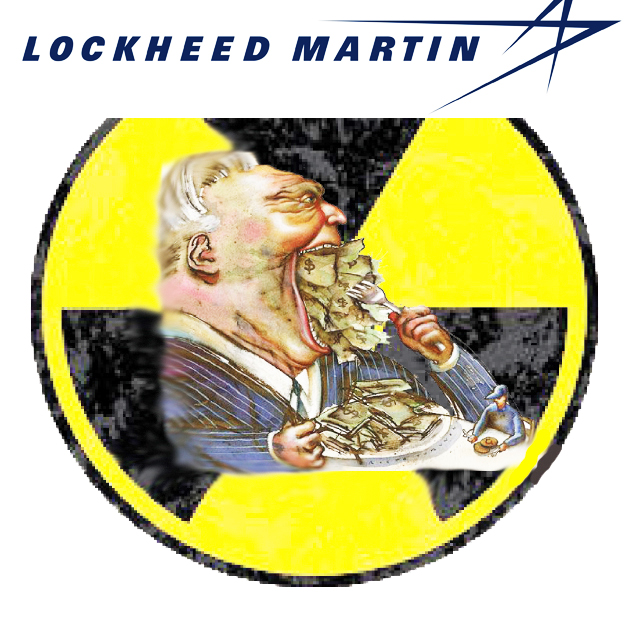
There is a remarkable “revolving door” of top people between Australian government and Defence Department roles and the world’s no 1 weapons-maker
MICHELLE FAHY, JUN 19, 2024
Global weapons giant Lockheed Martin – which has deleted from its website details about Australia’s key role in building F-35 fighter jets – has long had deep ties to the Australian government, investigations show.
Analysis shows a remarkable “revolving door” of people between top government and Defence Department roles and the world’s largest weapons-maker, whose F-35 fighter jets Israel is using to bomb Gaza.
The revolving door between government and corporations is well documented as a factor helping to undermine democracy.
In 2022, Lockheed Martin’s total global revenue was US$66 billion, with 90 per cent of it (US$59.4 billion) from the sale of arms.
Some of Australia’s most senior government officials, military officers, and Defence Department staff have been appointed to Lockheed Martin Australia’s board or have served as its chief executive or in other positions in recent years.
Constantly revolving door
Lockheed’s current CEO for Australia and New Zealand, retired Air Marshal Warren McDonald, officially joined the weapons maker’s ANZ leadership team as chief executive elect on July 1, 2021 having exited his 41-year career in the Royal Australian Air Force (RAAF) just seven months earlier. McDonald formally commenced as Lockheed’s local CEO in November 2021.
McDonald was deputy chief of the RAAF until mid-2017 when he was promoted into a new role as the Defence Force’s inaugural Chief of Joint Capabilities, a group comprising space, cyber and the defence networks tasked with preparing space and cyber power, and logistics capabilities, to serve the modern integrated defence force.
When later asked what had interested him about joining Lockheed Martin, McDonald said: “From all domains – space to the sea floor – Lockheed Martin has in its hands the combat capability of the Defence Force”…………………………………………………………………………more https://undueinfluence.substack.com/p/lockheed-martin-australian-government?utm_source=post-email-title&publication_id=297295&post_id=145632377&utm_campaign=email-post-title&isFreemail=true&r=ln98x&triedRedirect=true&utm_medium=email
Peter Dutton reveals seven sites for proposed nuclear power plants
By political reporter Tom Crowley and national regional affairs reporter Jane Norman, 19 June 24 https://www.abc.net.au/news/2024-06-19/dutton-reveals-seven-sites-for-proposed-nuclear-power-plants/103995310—
Peter Dutton has told his Coalition colleagues he will go to the next election promising to build seven nuclear power stations.
Mr Dutton will promise the first two sites can be operational between 2035 and 2037, several years earlier than the timeframe the CSIRO and other experts believe is feasible.
As had been previously flagged, the stations are all on retiring or retired coal sites.
The seven sites are:
- Tarong in Queensland, north-west of Brisbane
- Callide in Queensland, near Gladstone
- Liddel in NSW, in the Hunter Valley
- Mount Piper in NSW, near Lithgow
- Port Augusta in SA
- Loy Yang in Victoria, in the Latrobe Valley
- Muja in WA, near Collie
Five of the seven are in Coalition seats: Muja in Rick Wilson’s seat of O’Connor, Loy Yang in Darren Chester’s seat of Gippsland, Port Augusta in Rowan Ramsey’s seat of Grey, Callide in Colin Boyce’s seat of Flynn and Tarong in Nationals leader David Littleproud’s seat of Maranoa.
Mount Piper is in the seat of Calare, held by independent Andrew Gee who was elected as a Nationals MP in 2022 but quit the party.
Liddel is in only site in a Labor seat, the seat of Hunter, held by Labor’s Dan Repacholi.
Further details are expected later this morning, including about how much government funding would be required and whether the proposal is for large-scale nuclear reactors, small modular nuclear reactors, or a combination.
The Coalition had been promising a nuclear policy, including specific sites, for several months amid expert concerns over the cost and timeframe.
Last week, Mr Dutton also revealed the Coalition would campaign against the Labor government’s legislated target to reduce emissions by 43 per cent by 2030, and would not outline a 2030 emissions reduction target of its own before the election.
Coalition energy spokesperson Ted O’Brien and Nationals leader Mr Littleproud will address an energy conference held by The Australian today.
This morning, Treasurer Jim Chalmers will tell that conference the Coalition’s nuclear plan is “the dumbest policy ever put forward by a major party” and will seek to contrast the Coalition’s plan, likely to require significant public funding, with Labor’s plan to encourage private investment in renewables and gas.
Nuclear misinformation in Australia is Hail Mary policy by the Opposition
The Fifth Estate, DARRIN DURANT, Dr Darrin Durant is Senior Lecturer in Science and Technology Studies at the University of Melbourne.17 JUNE 2024
Having promised a nuclear power policy for several years, the Australian Liberal-National Party finally announced one: no reactors before 2040 and approving new gas and coal projects instead. At the same time, it is abandoning the emissions reduction target for 2030 (a 43 per cent cut compared with 2005 levels) and refusing to commit to details about nuclear projects until after the May 2025 election.
This is a Nuclear Hail Mary Policy: reduce emissions aspirations and hope a final play two decades from now will work out.
Most commentary has focused on what this nuclear Hail Mary implies for Australia’s commitment to the Paris Agreement. Some suggest the LNP plans to “rip up” the agreement. Others that the LNP plans to “breach the text and spirit” of the agreement.
Closest to the mark, I suggest, is that LNP is internally fractured and confused about both what its nuclear and emissions policy should be and how it should conduct itself regarding international agreements.
Opposition Leader Peter Dutton’s climate backtracking on Saturday, 8 May 2024, pushed from the news cycle a clear marker of the LNP’s policy vacuum on nuclear power, climate emissions and international. On 7 June, the LNP engaged in disinformation about regional cooperation on decarbonization.
The occasion for the LNP’s disinformation campaign was the signing by the Albanese Labor government of the Indo-Pacific Economic Framework (IPEF) Clean Economy Agreement. The IPEF was signed by Australia and 13 other nations on 6 June 2024.
Ted O’Brien MP (Shadow Minister for Climate Change and Energy in the LNP) claimed the ALP signing of the IPEF “exposes rank hypocrisy”, demonstrates a “lack of integrity”, and amounts to “treating Australians like mugs”.
None of the claims by O’Brien and the LNP are true. It is the LNP nuclear disinformation campaign that displays hypocrisy and duplicity and treats Australians like mugs.
The IPEF Clean Economy Agreement
The IPEF agreement aims to build regional economic cooperation across four pillars: trade, supply chains, clean energy, and tax. Australia joined IPEF on 23 May 2022, after the 21 May 2022 election in which Labor swept the LNP from power. Since then, eight rounds of negotiations between the member nations have taken place…………………………………………………………………………………………………..
Australian nuclear misinformation goes walkabout
Thus far, Coalition claims about nuclear prospects have been domestic doomsday claims about Australia’s fate if it does not “go nuclear”.
Yet the Coalition’s claims routinely hinge on misinformation: inflating estimations of transmission projects, over-playing the risk of load shedding, over-estimating G20 reliance on nuclear, exaggerating renewables-related land use, and inventing risks from windfarms (on and offshore).
While the international nuclear renaissance has been a farcical (short) history of massive cost and construction blowouts, the Coalition has sidelined those facts at home, leading to claims that Coalition nuclear plans are a delay tactic to perpetuate coal and gas………..
The IPEF stipulates that the Parties should:
“promote transparent licensing, siting, and permitting for clean energy and related generation, transmission, distribution, and storage projects in the electricity sector” (Sect 4, Point 2b)
Furthermore, for those parties supportive of nuclear, they should:
“ensure that sound policy and regulatory frameworks in nuclear safety and waste management are in place when considering the adoption of nuclear energy technologies” (Sect. 4, Point 7a).
The LNP has spent years spruiking nuclear power, yet the Australian public remains in the dark about those two important clauses in the IPEF agreement.
The LNP cannot be ‘transparent’ if it has provided no detail to the Australian public about licensing, siting and permitting. The LNP claims to be considering nuclear, yet where are any serious policy proposals regarding the regulatory frameworks for nuclear safety and nuclear waste?
Instead, the LNP treats citizens as incapable of spotting fabrications and omissions.
For instance, the O’Brien’s/LNP press release tells citizens they will find the IPEF “supporting small modular reactors (SMRs) in the Indo Pacific”. This is a fabrication: the negotiated text of the agreement never mentions SMRs. Similarly, the Coalition omits that the IPEF agreement strongly supports windfarms and energy efficiency, two key elements of the ALP’s Rewiring the Nation plan………….
Treating citizens like mugs
……………………………To be a mug is to be easily deceived. The LNP must assume citizens are mugs if it thinks Australian voters cannot spot the LNP’s misrepresentation of the IPEF agreement. No, Labor is not in contradiction for opposing domestic nuclear and signing the IPEF, because the IPEF favours clean energy in general and advocates for member nations to pursue their own pathway (which may or may not include nuclear power)
Yet even if tempted by the Coalition logic, just remember, the Coalition opposes most of what is supported in the IPEF agreement. The Coalition is not talking straight about either energy policy or international agreements, and voters should keep this in mind as the Coalition obfuscates important international agreements like the Paris Agreement. https://thefifthestate.com.au/columns/spinifex/nuclear-misinformation-in-australia-is-hail-mary-policy-by-the-opposition
Superficial coverage of Dutton’s nuclear policy does Australia a disservice
By Ernst Willheim, Jun 17, 2024, https://johnmenadue.com/superficial-coverage-of-duttons-nuclear-policy-does-australia-a-disservice/
Noel Turnbull correctly writes that media coverage of the federal opposition’s nuclear power proposal is superficial. There is a very wide range of as yet unanswered issues.
First, who will build and operate the proposed nuclear power stations.
Many years ago, when the Commonwealth proposed establishment of a nuclear power station, it settled on Jervis Bay because the ‘territories’ power in the Commonwealth Constitution gave the Commonwealth plenary power. The proposal was well advanced, and a large concrete platform was built, before the proposal was eventually abandoned because it proved to be uneconomic.
The opposition apparently contemplates location of nuclear power stations on the sites of disused coal fired power stations. Does the opposition believe the Commonwealth has constitutional power to establish and operate nuclear power stations in the States?
The States would of course have the constitutional power to establish nuclear power stations. Remember State electricity authorities used to be publicly owned before they were privatised. But has any of the States indicated any enthusiasm for establishing and operating nuclear power stations?
If the opposition doesn’t envisage either Commonwealth or State government involvement, do they envisage private enterprise.
There are many capable private operators around the world but I haven’t seen any evidence of private corporations clamouring for the right to build nuclear power stations in Australia. Could it be that the private sector understands that privately owned nuclear power stations in Australia would not be competitive, that is, they would not return a profit.
There remain a range of wider regulatory issues, who would be responsible for planning, oversight and safety. How would liability and insurance be handled. Would the opposition envisage that Australia should become a party to the Vienna Convention on Civil Liability for Nuclear Damage. What about safeguards. Would the opposition accept oversight by the International Atomic Energy Agency?
It is not clear that the opposition has addressed any of these issues.
Dutton’s energy plan to cost $97 billion as we wait for nukes to lumber into action

Australia facing a $97 billion bill for Peter Dutton’s energy policy — on generous assumptions, that is.
BERNARD KEANE, Crikey.com JUN 17, 2024
Peter Dutton’s nuclear-plus-coal energy plan will require nearly $100 billion in investment across new nuclear power plants, propping up existing coal-fired power plants and building ultra-efficient new ones, a conservative costing shows, with taxpayers set to bear a substantial amount, if not all, of the cost.
Crikey’s costing of the Coalition policy — which Dutton has steadfastly refused to release the details of — relies on the construction from scratch of six new nuclear power plants by 2040, to which Dutton has committed, the maintenance of a number of existing coal-fired power plants beyond their closure dates to 2040, and the construction of three new 1,000 MW coal-fired power plants to meet additional power demand and security of supply in the absence of further investment in renewables.
Based on either CSIRO costings from its most recent GenCost report or the cost of the NSW Labor government’s recent handout to Origin Energy to keep the Eraring coal-fired power plant operating beyond next year, the total cost to deliver Dutton’s vision would be $97 billion by 2040.
Nuclear power
The CSIRO concluded in its GenCost report that the construction of nuclear power stations in Australia would cost around $8.25 billion for a 1,000 MW plant built as a series of at least five new plants. However, it noted that construction of the first one — dubbed “First of a Kind (FOAK)” — would attract a large premium, noting “FOAK premiums of up to 100% cannot be ruled out.” Crikey has conservatively estimated only a 50% premium for the first nuclear power plant, bringing the total for six plants to $56.3 billion in current dollars.
However, we have also inflated the cost by an additional 26% to take account of persistent cost overruns that plague all of Australia’s major infrastructure projects. According to the Grattan Institute 2020 report on large project cost overruns, the average cost overrun for projects costing between $350 million and $1 billion between 2001 and 2020 was 26%. The average cost overrun of projects above $1 billion was even higher, at 30%, reflecting that “bigger projects tend to be more complex, so it’s not surprising that they are more prone to cost overruns. They also tend to overrun by more, in dollar terms, and often in percentage terms as well.” Crikey has conservatively chosen the lower overrun figure, for a total cost of $70.8 billion.
Moreover, we have not assumed that nuclear power stations suffer from the same delays as all other new nuclear power stations have suffered from, but assume they will all be operating by 2040 — an assumption bordering on the implausible but made to allay any doubt about the veracity of the costing.
Where will this money come from? There may be companies willing to undertake such a large-scale project stretching across one-and-a-half decades, despite the immense risk of a reversal of political fortunes for a Coalition government at any point in that 15-year construction process. Such private investment will require loan guarantees from the Commonwealth at best, and as the experience from the last nuclear reactor to be built in the United States shows, it will be very costly for consumers. At worst, taxpayers will have to foot the entire $70.8 billion.
Dutton’s energy plan to cost $97 billion as we wait for nukes to lumber into action
Australia facing a $97 billion bill for Peter Dutton’s energy policy — on generous assumptions, that is.
JUN 17, 2024
Share

Peter Dutton’s nuclear-plus-coal energy plan will require nearly $100 billion in investment across new nuclear power plants, propping up existing coal-fired power plants and building ultra-efficient new ones, a conservative costing shows, with taxpayers set to bear a substantial amount, if not all, of the cost.
Crikey’s costing of the Coalition policy — which Dutton has steadfastly refused to release the details of — relies on the construction from scratch of six new nuclear power plants by 2040, to which Dutton has committed, the maintenance of a number of existing coal-fired power plants beyond their closure dates to 2040, and the construction of three new 1,000 MW coal-fired power plants to meet additional power demand and security of supply in the absence of further investment in renewables.
Based on either CSIRO costings from its most recent GenCost report or the cost of the NSW Labor government’s recent handout to Origin Energy to keep the Eraring coal-fired power plant operating beyond next year, the total cost to deliver Dutton’s vision would be $97 billion by 2040.
Nuclear power
The CSIRO concluded in its GenCost report that the construction of nuclear power stations in Australia would cost around $8.25 billion for a 1,000 MW plant built as a series of at least five new plants. However, it noted that construction of the first one — dubbed “First of a Kind (FOAK)” — would attract a large premium, noting “FOAK premiums of up to 100% cannot be ruled out.” Crikey has conservatively estimated only a 50% premium for the first nuclear power plant, bringing the total for six plants to $56.3 billion in current dollars.Dutton’s nuclear nonsense catches up with him — while Labor keeps runningRead More
However, we have also inflated the cost by an additional 26% to take account of persistent cost overruns that plague all of Australia’s major infrastructure projects. According to the Grattan Institute 2020 report on large project cost overruns, the average cost overrun for projects costing between $350 million and $1 billion between 2001 and 2020 was 26%. The average cost overrun of projects above $1 billion was even higher, at 30%, reflecting that “bigger projects tend to be more complex, so it’s not surprising that they are more prone to cost overruns. They also tend to overrun by more, in dollar terms, and often in percentage terms as well.” Crikey has conservatively chosen the lower overrun figure, for a total cost of $70.8 billion.
Moreover, we have not assumed that nuclear power stations suffer from the same delays as all other new nuclear power stations have suffered from, but assume they will all be operating by 2040 — an assumption bordering on the implausible but made to allay any doubt about the veracity of the costing.
Where will this money come from? There may be companies willing to undertake such a large-scale project stretching across one-and-a-half decades, despite the immense risk of a reversal of political fortunes for a Coalition government at any point in that 15-year construction process. Such private investment will require loan guarantees from the Commonwealth at best, and as the experience from the last nuclear reactor to be built in the United States shows, it will be very costly for consumers. At worst, taxpayers will have to foot the entire $70.8 billion.
Keeping coal going
The Coalition has now admitted — as its abandonment even of Scott Morrison’s 26-28% emissions cut by 2030 shows (actually 26-28% was Tony Abbott’s target, so Dutton is proposing to be even worse than Abbott on emissions) — nuclear power plants won’t be ready until the 2040s, necessitating extending the lives of existing coal-fired power stations.
Crikey has used the Minns government’s handout to Origin Energy to keep the Eraring coal-fired power station operating for two extra years at $225 million a year as a template and estimated the cost, per megawatt, of keeping those coal-fired plants scheduled to close before 2040 going until that year. However, we have capped that spending at 10 years, assuming that coal-fired plants already at the end of their lives could not be extended beyond that date without massive extra investment. This “Coalkeeper” process would cost a comparatively modest $5.98 billion over 2025-40 in current dollars. Where will this money come from? It will be a direct subsidy from governments — presumably the Commonwealth — to fossil fuel companies.
Dutton’s energy plan to cost $97 billion as we wait for nukes to lumber into action
Australia facing a $97 billion bill for Peter Dutton’s energy policy — on generous assumptions, that is.
JUN 17, 2024
Share
Peter Dutton’s nuclear-plus-coal energy plan will require nearly $100 billion in investment across new nuclear power plants, propping up existing coal-fired power plants and building ultra-efficient new ones, a conservative costing shows, with taxpayers set to bear a substantial amount, if not all, of the cost.
Crikey’s costing of the Coalition policy — which Dutton has steadfastly refused to release the details of — relies on the construction from scratch of six new nuclear power plants by 2040, to which Dutton has committed, the maintenance of a number of existing coal-fired power plants beyond their closure dates to 2040, and the construction of three new 1,000 MW coal-fired power plants to meet additional power demand and security of supply in the absence of further investment in renewables.
Based on either CSIRO costings from its most recent GenCost report or the cost of the NSW Labor government’s recent handout to Origin Energy to keep the Eraring coal-fired power plant operating beyond next year, the total cost to deliver Dutton’s vision would be $97 billion by 2040.
Nuclear power
The CSIRO concluded in its GenCost report that the construction of nuclear power stations in Australia would cost around $8.25 billion for a 1,000 MW plant built as a series of at least five new plants. However, it noted that construction of the first one — dubbed “First of a Kind (FOAK)” — would attract a large premium, noting “FOAK premiums of up to 100% cannot be ruled out.” Crikey has conservatively estimated only a 50% premium for the first nuclear power plant, bringing the total for six plants to $56.3 billion in current dollars.Dutton’s nuclear nonsense catches up with him — while Labor keeps runningRead More
However, we have also inflated the cost by an additional 26% to take account of persistent cost overruns that plague all of Australia’s major infrastructure projects. According to the Grattan Institute 2020 report on large project cost overruns, the average cost overrun for projects costing between $350 million and $1 billion between 2001 and 2020 was 26%. The average cost overrun of projects above $1 billion was even higher, at 30%, reflecting that “bigger projects tend to be more complex, so it’s not surprising that they are more prone to cost overruns. They also tend to overrun by more, in dollar terms, and often in percentage terms as well.” Crikey has conservatively chosen the lower overrun figure, for a total cost of $70.8 billion.
Moreover, we have not assumed that nuclear power stations suffer from the same delays as all other new nuclear power stations have suffered from, but assume they will all be operating by 2040 — an assumption bordering on the implausible but made to allay any doubt about the veracity of the costing.
Where will this money come from? There may be companies willing to undertake such a large-scale project stretching across one-and-a-half decades, despite the immense risk of a reversal of political fortunes for a Coalition government at any point in that 15-year construction process. Such private investment will require loan guarantees from the Commonwealth at best, and as the experience from the last nuclear reactor to be built in the United States shows, it will be very costly for consumers. At worst, taxpayers will have to foot the entire $70.8 billion.
Keeping coal going…………….. https://www.crikey.com.au/2024/06/17/peter-dutton-energy-policy-nuclear-coal-renewables/
Key question Peter Dutton refuses to answer about his nuclear power plan

- Peter Dutton refused to answer question
- He was probed about nuclear power policy
By NCA NEWSWIRE and ELEANOR CAMPBELL FOR NCA NEWSWIRE, 16 June 2024 https://www.dailymail.co.uk/news/article-13534571/Key-question-Peter-Dutton-refuses-answer-nuclear-power-plan.html
Peter Dutton has again refused to reveal key details on the Coalition’s nuclear power policy, declaring he would consider announcing his alternative 2035 emissions reduction goal if the government released modelling on interim climate targets.
In a fiery interview on Sunday with Sky’s Sunday Agenda host Andrew Clennell, the federal Opposition Leader became defensive after being pressed to reveal the locations and costings of his six proposed nuclear power plants.
Mr Dutton said he would reveal the opposition’s energy plan within ‘weeks’ in March but again declined to spell out the full details of his vision for Australia’s energy transition.
‘What we’ve said, the sites that we’re looking at are only those sites where there’s an end-of-life coal-fired power stations,’ he told Sky on Sunday.
‘One of the main reasons is that people in those communities know that they’re going when coal goes and we have the ability to sustain heavy industry, we have the ability to keep the lights on.’
A recent report from peak scientific body CSIRO suggested that building a large-scale nuclear power plant in Australia would cost at least $8.5bn and take at least 15 years to deliver.
The Coalition has refused to confirm reports of the locations of up to seven proposed power sites, which according to speculation, include sites in two Liberal-held seats and four or five Nationals-held seats.
Potential sites include the Latrobe Valley and Anglesea in Victoria, the Hunter Valley in NSW, Collie in WA, Port Augusta in South Australia, and potentially a plant in the southwest Queensland electorate of Maranoa, held by Nationals leader David Littleproud.
When pressed on the locations of the sites, Mr Dutton responded: ‘We’ve said that we’re looking at between six and seven sites, and we’ll make an announcement at the time of our choosing, not of Labor’s choosing.’
When asked if a power plant would be placed on each of the unspecified sites, Mr Dutton did not answer directly, saying only that he would consider output and environmental impact.
The Opposition Leader was then asked if the plants would be government subsidised, and responded by saying all power sources, other than coal, receives funding.
‘We’ll make an announcement in due course, but I just make the point that wind and solar don’t work without government subsidy,’ he said.
Mr Dutton also came under scrutiny this week after revealing he would oppose a legislated 2030 carbon emissions target at the next election.
Asked directly if he would consider a 2035 interim reduction target, which would be legally required under the 2015 Paris agreement, the Liberal leader said he would ‘take advice’ from the treasury before changing climate legislation, citing concerns about the nation’s economic situation
‘I think we have a look at all of that information and if there were settings we need to change … it doesn’t mean exiting Paris or walking away from our clear commitment to be net zero by 2050,’ he said.
Mr Dutton was asked for a second time if he would set a 2035 target, but again spoke at length about cost of living pressures facing the country.
Trade Minister Don Farrell said Mr Dutton’s comments were ‘outrageous’ and argued watered down climate commitments would damage Australia’s standing with its international allies.
‘It’s beyond the pale to be perfectly honest,’ Mr Farrell said on Sunday.
‘We went to the last election committing to a 2030 target and despite what Mr Dutton might say, we’re on track to meet that target.’
Judges Named for Assange Appeal

By Joe Lauria / Consortium News June 14, 2024, https://consortiumnews.com/2024/06/14/judges-named-for-assange-appeal/
Consortium News will be back inside the courtroom in London July 9-10 to cover Julian Assange’s appeal against extradition
The judges in Julian Assange’s two-day appeal hearing on July 9-10 are the same who granted Assange a rare victory last month: his right to appeal the Home Office’s extradition order to the United States.
Justices Jeremy Johnson and Victoria Sharp granted Assange the right to appeal on only two of nine requested grounds, but they are significant:
1). his extradition was incompatible with his free speech rights enshrined in the European Convention on Human Rights; and 2.) that he might be prejudiced because of his nationality (not being given 1st Amendment protection as a non-American).
However the denial of his rights in an American courtroom would go beyond the First Amendment to all of his U.S. constitutional rights, according to the 2020 U.S. Supreme Court ruling in USAID v. Alliance for Open Society International Inc., which says that a non-U.S. citizen acting outside the U.S. has no constitutional protections at all.
The United States was unable to provide assurances that the European equivalent of his constitutional rights would be protected, required under British extradition law. That raises hopes for Assange in his appeal.
Assange has been imprisoned in London’s notorious Belmarsh Prison for more than five years on remand pending the outcome of his extradition. He has been charged in the United States for publishing classified documents that revealed prima facie evidence of U.S. state crimes.
CN has received an award and many accolades for our coverage of the Julian Assange case. We will be inside the courtroom and outside the Royal Courts of Justice in London for both days of the hearing, bringing you the latest news, analysis and commentary.
Why bet on a loser? Australia’s dangerous gamble on the USA
June 15, 2024, by: The AIM Network, By Michael Williss, https://theaimn.com/why-bet-on-a-loser-australias-dangerous-gamble-on-the-us/
A fresh warning that the US will lose a war with China has just been made by a US data analytics and military software company with US Department of Defense contracts.
It seems no-one is prepared to back the US to win a war with China, so why is Australia going all-out to align itself with provocative moves and hostility from the US directed at China?
Govini released its latest study of US capacity to fight China in June. Its annual reports measure the performance of the US federal government, looking at 12 top critical national security technologies through the lens of acquisition, procurement, supply chain, foreign influence and adversarial capital and science and technology.
It concluded that it is nearly impossible for the US to win a war against the PLA if a conflict were to break out between the two global superpowers.
The report also found that China has more patents than the US in 13 of 15 critical technology areas, further demonstrating how the US is falling behind in AI development.
“This year’s report also highlighted another reason a US conflict with China could be unwinnable: the very real possibility of parts scarcity.”
It identified serious risks within seven major DoD programs, including the cornerstone of AUKUS, namely the Virginia-class submarines. Not that this will worry the cargo-culters in Canberra who keep throwing billions at the fraught arrangement.
Another factor was China’s lead in the global supply chains.
-ADVERTISEMENT-
Govini CEO Tara Murphy Dougherty said:
”China still has a dangerously high presence in US government supply chains. The Departments of the Navy and Army showed a decreasing reliance on Chinese suppliers over the past year, however, the Department of the Air Force showed a 68.8 percent increase in the usage of Chinese suppliers.”
Govini’s report adds to a number of similar scenarios in recent years, starting with the headlined warning by The Times on May 16, 2020 “US ‘would lose any war’ fought in the Pacific with China.”
In the New Atlanticist, Lieutenant Colonel Brian Kerg, an active-duty US Marine Corps operational planner, critiqued biases in modern US war games, in which military planners command opposing armed forces in simulated warfare. He writes that instead of a short, sharp war over Taiwan with a win for the US, as predicted by war games, the greater likelihood is one of a years-long war with China with uncertain outcomes. One of those, too terrible to contemplate, must be the likelihood of Chinese retaliation against Australia for joining the US, for being fully interoperable with its military, and the consequent rubbleisation of Australian cities and attacks on US military bases here.
Retired US Army Colonel Dr John Mauk agrees that any conflict over Taiwan will almost certainly be a prolonged war, and he says that it would be one that favours China. He writes:
“U.S. military forces are too small, their supply lines are too vulnerable, and America’s defense industrial capacity is far too eroded to keep up with the materiel demands of a high-intensity conflict. Another critical factor undermining U.S. capacity to sustain a war is that Americans lack the resilience to fight a sustained, brutal conflict.”
By contrast, China is well-postured to sustain a protracted high intensity war of attrition.
He says that the current political divide in the US impedes its ability to respond to national security crises, and that:
“Americans in general are unprepared for, unwilling, or incapable to perform military service. Short of reinstituting a draft, U.S. military services cannot attract or retain enough manpower quickly enough to sustain a fight with China.”
Former US assistant secretary of state for Europe and Eurasia, A. Wess Mitchell, believes that “United States is a heartbeat away from a world war that it could lose.” He writes that:
“… today’s U.S. military is not designed to fight wars against two major rivals simultaneously. In the event of a Chinese attack on Taiwan, the United States would be hard-pressed to rebuff the attack while keeping up the flow of support to Ukraine and Israel.”
Comparing US and Chinese naval growths, Mitchell says that the US is no longer able to “outproduce its opponents”. With US debt already in excess of 100% of GDP, he says that the debt loads incurred through war with China would risk catastrophic consequences for the U.S. economy and financial system.
He raises the possibility of a Chinese fire-sale of US debt:
“China is a major holder of U.S. debt, and a sustained sell-off by Beijing could drive up yields in U.S. bonds and place further strains on the economy.”
Hillary Clinton raised this quandary facing the US with then PM Kevin Rudd in 2010 when she asked him “How do you deal toughly with your banker?” It is a question that the US has yet to find an answer to.
And questions there are. Harlan Ullman, a senior adviser at the Atlantic Council, opens a January 2024 article with the observation that:
“Since World War II ended, America has lost every war it started. Yes, America has lost every war it started – Vietnam, Afghanistan and the second Iraq War.”
He sounds a warning:
“… given likely weapons expenditure rates should a war with China erupt, the U.S. has the capacity for about a month before, as in Ukraine, it runs out of inventory,” before asking his questions: “War with China would be a strategic catastrophe. The U.S. has not explained how such a war could be fought and won. The economic consequences would be disastrous. And how would such a war end? Can anyone answer these questions?”
China is quite adept at utilising sentiments such as these. Major Franz J. Gayl, a retired Marine Corps infantry officer has regularly written for Chinese online news outlet Global Times. Last year, a number of his contributed articles to GT were published as a book, “The United States Will Lose the Coming War with China” which is available on Amazon.
Australia’s Liberal-Labor pro-US coalition has placed a $368 billion bet on the ability of the US to prevent the expansion of Chinese influence in the South Pacific or its recovery of the island province of Taiwan.
It is an expensive way to be taught the African proverb that when the elephants dance, it is the grass that suffers.
Lithgow mayor SLAMS Peter Dutton’s plan for nuclear power plant in her town
By PADRAIG COLLINS FOR DAILY MAIL AUSTRALIA 14 June 24
A mayor whose town is rumoured to be earmarked for a nuclear power plant if Peter Dutton wins the next Federal Election, slammed that plan on Friday – despite some locals being in favour of it.
On Wednesday, Shadow Energy Minister Ted O’Brien did not deny that the central western NSW town of Lithgow was one of the sites where the Coalition plans to place a nuclear plant.
But fired up Lithgow mayor Maree Statham has shut down speculation that her town could go nuclear if Mr Dutton becomes prime minister in an election to be held within a year.
‘More than four decades ago, this council declared the city to be a nuclear free zone. This policy position remains in place,’ Ms Statham, an independent, said.
‘It is my intention to invite Peter Dutton to visit Lithgow and explain to this community why they should welcome a nuclear power plant in their backyard when no other community across Australia would do this.’
Ms Statham also pointed out that her district is also responsible for supplying water to Australia’s biggest city
‘I will suggest that he also then speak to the more than five million people in Sydney who drink water that is sourced from the catchment where he would like to place nuclear power plants,’ she said.
Another Lithgow councillor, Stephen Lesslie, told Daily Mail Australia that he opposes having a nuclear plant in the town because it would be ‘Expensive, unsafe (and there are) no waste solutions.’
But he said he does not expect much support from people in other parts of Australia for keeping Lithgow nuclear free.
‘If this means that the power plant won’t go where they live then the rest of Australia probably won’t give a damn,’ Mr Lesslie said.
Voters will pass judgment at a coming election in the next year on Mr Dutton’s vision for a nuclear Australia and Anthony Albanese’s government pursuing a renewable-led energy transition.
Until this week, the Coalition had been very coy about where it would put nuclear plants, but Mr O’Brien let the cat out of the bag by not denying a suggestion from radio host Ben Fordham that Lithgow was a prime target………………………………………………………………………………………………… https://www.dailymail.co.uk/news/article-13529083/Lithgow-mayor-slams-Peter-Dutton-nuclear-plant.html
Countering the nuclear lobby’s spin – and more, this week
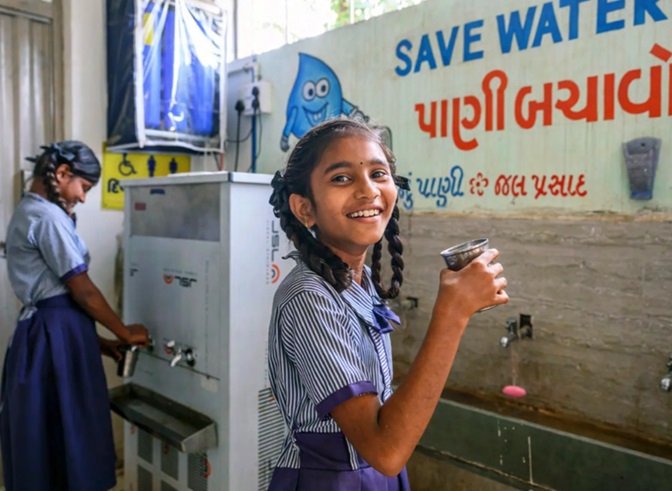
Some bits of good news – Incredible global progress on water, sanitation, and hygiene. The incredible comeback of Britain’s Barn Owls.
TOP STORIES The Military-Industrial Complex Is Killing Us All.
The omnicidal and unnecessary Nuclear Triad.
Energy buffs give small modular reactors a gigantic reality check.
Stockpiling nuclear weapons? That will do nothing for national security, Keir Starmer.
From the archives. Jeremy Corbyn was smeared for rejecting the use of nuclear weapons – but he was right.
Climate. Global warming happening at fastest speed in history. Climate crisis made May heatwaves 1.5C hotter in India, study says.
Noel’s notes. Time to get real about anti-semitism – the renewed danger. A voice of sanity in the UK– Jeremy Corbyn is back! Turning Point: The Bomb and the Cold War -Episode 5 – War Games – and then Glasnost, a welcome thaw.
AUSTRALIA. Opposition’s nuclear-energy policy would increase defence risk .Dutton to ditch Paris Agreement: analysis reveals nuclear impact on emissions.
Dutton’s nuclear policy a disaster for Australia. Dutton spruiks gas and nuclear to win back Victoria. Experts unite to condemn Coalition nuclear policy meltdown. Peter Dutton proposes decades of delay on climate: Federal Liberals still with no climate plan.
If regional communities don’t want a windfarm, why would they accept a nuclear power station? Resources Minister Madeleine King challenges Peter Dutton to name Western Australia nuclear power station sites.
The network of conservative think-tanks out to kill the switch to renewables.
Eraring deal signals death of baseload power in Australia, and Dutton’s nuclear fantasy.
Submarine boss refuses to answer questions over multi-billion-dollar AUKUS payments, A Detectable Subservience – Australia’s ill-fated nuclear submarine deal? Will Port Adelaide, Fremantle or Port Kembla be the Australian Chernobyl? Lockheed Martin deletes Australian F-35 ties.
Was ABC’s firing of Antoinette Lattouf influenced by a pro-Israel group? | Real Talk – Online.
NUCLEAR ISSUES
| ATROCITIES. Report: Vast Majority of Children Under 5 in Gaza Going Full Days Without Food. | CIVIL LIBERTIES. Journalist, critic of U.S. Ukraine policy, pulled off plane, U.S. seizes his passport. | CULTURE. How Nato seduced the European Left. The anti-war movement has fallen for a progressive circus. |
| ECONOMICS. Should USS Investment Builder invest in nuclear power? | EDUCATION. University of Ghent to cease all collaboration with Israeli institutions. | EMPLOYMENT. Allegations managing director of Scotland nuclear complex was ‘shipped out‘ over long-running pay dispute. |
| ENERGY. The ugly truth behind ChatGPT: AI is guzzling resources at planet-eating rates. | HEALTH. Radiation Exposure Compensation for impacted downwind communities is expiring Friday. Speaker Johnson, bring it to a vote.Samsung workers treated for exposure to radiation in South Korea |
| HISTORY. “In Ukraine, a war for memory.”. | LEGAL. ‘We Want Peace’: Spain Applies to Join ICJ Genocide Case Against Israel. | MEDIA. CNN’s Israel bias has been laid bare. But CNN is the norm, not the exception. |
| POLITICS Keir Starmer’s Trident triple lock: how Britain’s obsession with nuclear weapons has become part of election campaigns. Labour pledges to launch Great British Energy ‘within months’ of general election victory: it includes nuclear power. UK Labour talks up nuclear weapons to banish Corbyn’s shadow. UK’s nuclear deterrent key to Starmer’s plans to keep Britain safe.Scots urged to vote in anti-nuclear MPs to ‘take target off our backs’ We should aim for nuclear disarmament – Plaid leader, UK.Corporate lobbying heats up around governments’ nuclear power plans despite concerns from anti-nuclear advocates….ALSO AT https://nuclear-news.net/2024/06/06/1-b1-corporate-lobbying-heats-up-around-governments-nuclear-power-plans-despite-concerns-from-anti-nuclear-advocates/. 42 House Democrats Help GOP Pass Bill Targeting ICC Officials Over Israel. Dutch government is socialist when it comes to funding nuclear power. | POLITICS INTERNATIONAL and DIPLOMACY. Senior U.S. Diplomats, Journalists, Academics and Secretaries of Defense Say: the U.S. Provoked Russia in Ukraine. Peace talks without Russia ‘laughable’ – John Mearsheimer.Putin warns West over Ukraine armaments, nuclear arsenal in news conference. UN offers nuclear inspection deal to Iran’s new leadership. Nuclear watchdog votes to censure Iran for non-cooperation with inspectors. Why a substantive and verifiable no-first-use treaty for nuclear weapons is possible. |
| SAFETY. Restarting Zaporizhzhia nuclear plant ‘difficult to envisage’ during war, says IAEA chief. | SECRETS and LIES. President Biden’s subliminal D Day speech in France |
TECHNOLOGY. U.S. Micro Nuclear Reactors happy to join with NATO military.
URANIUM. The weapons potential of high-assay low-enriched uranium.
| WASTES. No nuke waste down under: Nuclear Free Local Authorities spokesperson receives assurance MOD still committed to decommissioning British nuclear subs at home. China urges long-term supervision over Japan’s radioactive water discharge. | WAR and CONFLICT. NATO plans Europe-wide escalation of war against Russia. Russia doesn’t need nuclear weapons to succeed: Putin. Ralph Nader -on Joe Biden: Pushing America Deeper into the Russian/Ukrainian War. Guterres warns humanity on ‘knife’s edge’ as AI raises nuclear war threat. Israel kills over 200 Palestinians to rescue 4 captives; U.S. allegedly involved in operation- https://www.youtube.com/watch?v=xJnF2CLbibw |
WEAPONS and WEAPONS SALES.
- US Bombs Used in Israeli Massacre of 40 in Gaza Refugee Camp. – https://www.youtube.com/watch?v=m2hjy3e1i2o
- U.S. Considers Expanded Nuclear Arsenal, a Reversal of Decades of Cuts – ALSO AT https://nuclear-news.net/2024/06/09/2-a-u-s-considers-expanded-nuclear-arsenal-a-reversal-of-decades-of-cuts/ US issues major nuclear weapons alert amid fears of all-out war: ‘If that day comes…’
- A Nuclear-Armed European Union? A Proposal Under Fire. European Nuclear Deterrent a Harebrained Illegal Proposal.
- Blinken Confirms Biden Change On Policy Toward Ukraine Using U.S. Weapons Inside Russia. France to give fighter jets to Ukraine – Macron.
- What’s Next for Battlefield America? Israel’s High-Tech Military Tactics Point the Way.
- China: US nuclear weapons in South Korea would undermine its security.
- Russia nuclear-powered submarine to visit Cuba amid rising tensions with US.
Submarine boss refuses to answer questions over multi-billion-dollar AUKUS payments
By defence correspondent Andrew Greene, https://www.abc.net.au/news/2024-06-07/submarine-bossmulti-billion-aukus-payments/103952528
The head of the AUKUS submarine program has refused to say whether an almost $5 billion government payment to the United States will be refunded if no nuclear-powered boats are delivered to Australia.
Under the tri-nation agreement, Australia is providing multi-billion-dollar contributions to the United States and United Kingdom to help expand their submarine industrial bases, but for months officials have declined to discuss details of the transfers.
During a Senate estimates hearing, Greens senator David Shoebridge attempted to extract details of the impending $4.7 billion payment to the US from the head of the Australian Submarine Agency, Vice Admiral Jonathan Mead.
Under questioning late on Thursday, the ASA boss repeatedly refused to say if a refund clause was included with Australia’s payment in case the United States fails to transfer Virginia class submarines in the 2030s.
“I just go back to the original statement — the US has committed to providing two US submarines from its submarine industrial base in the early 2030s and a third one on procurement,” the vice admiral told the committee.
What if the United States determines not to give us a nuclear submarine? Is there a clawback provision in the agreement?” Senator Shoebridge then demanded to know.
“That’s a hypothetical and I’m not going to entertain … The US has committed to transferring two nuclear-powered submarines to Australia,” the ASA boss asserted.
“It may be embarrassing that you have entered into an agreement that sees Australian taxpayers shelling out $4.7 billion — which we don’t get back if we don’t get our nuclear submarines,” Senator Shoebridge responded.
Under the final stage of AUKUS the United Kingdom will help develop a new class of nuclear-powered submarine to be known as SSN-AUKUS, with Australia’s boats to be built locally in Adelaide.
Ahead of the ambitious venture, Australia will hand almost $5 billion to British industry over the next decade for design work and to expand production of nuclear reactors that will eventually be installed on AUKUS submarines
Navy apologises to traditional land owners over nuclear expansion
Defence has apologised to traditional land owners in Western Australia who live around the Garden Island naval base for not consulting them about upgrades being made to accommodate visiting nuclear-powered submarines.
During Senate estimates, Greens senator Dorinda Cox, who is a Yamatji-Noongar woman, expressed concerns on behalf of her community about the AUKUS work that will soon occur at HMAS Stirling.
Chief of Navy Vice Admiral Mark Hammond told the Senator he wanted to discuss the matter on his next visit, an offer she accepted.
“I’m just surprised that this has been such an oversight for an extended period of time, I do apologise, I’m in Western Australia in a couple of weeks’ time and again in July. I’d like to formally engage with your concurrence.”
Dutton spruiks gas and nuclear to win back Victoria
Gus McCubbing, AFR, Jun 7, 2024
“……………………… During a wide-ranging speech in which he spruiked the safety credentials of nuclear small modular reactors, attacked former Victorian premier Daniel Andrews and the Suburban Rail Loop, and claimed that teal MPs are Greens in disguise, Mr Dutton on Friday told a Melbourne business lunch the Liberals were “back in town”.
……………………………………. Mr Dutton said Australia must embrace next-generation nuclear technologies as part of its energy mix to achieve cheaper, consistent and cleaner power, despite the CSIRO last month warning the first large-scale nuclear power plant could cost as much as $17 billion in today’s dollars, and would not be operational until at least 2040.
He claimed that a 470-megawatt small modular reactor produces waste the size of a Coca-Cola can each year, with zero emissions…………….

COMMENT. While the toxic radioactive residue from small nuclear reactors IS small in volume – it is so highly toxic that it requires larger space between used fuel rods in disposal – so ending up with an equally dangerous waste problem.
When asked why his former government never moved to roll out nuclear energy during its nine years in office, Mr Dutton said there was no political appetite before AUKUS.
“I don’t think it would have been possible for us to adopt the position that we have if the Labor Party hadn’t signed up to nuclear [powered] submarines,” Mr Dutton said… https://www.afr.com/politics/dutton-spruiks-gas-and-nuclear-to-win-back-victoria-20240605-p5jjcl
Lockheed Martin deletes Australian F-35 ties
The world’s biggest weapons manufacturer, Lockheed Martin, has deleted from its website details about Australia’s key role in building F-35 fighter jets, which Israel is using to bomb Gaza.
MICHELLE FAHY, JUN 05, 2024 https://theklaxon.com.au/lockheed-martin-australian-government-joined-at-the-hip/
Among the details quietly scrubbed from Lockheed Martin’s website are that Australian businesses are supplying components ‘for the entire F-35 fleet’ and that, ‘Every F-35 built contains some Australian parts and components’.
The material was included in the section ‘Industrial Partnerships’, which was deleted entirely between March 15 and April 7 this year.
Around that time, Lockheed Martin and the Albanese Government were under heavy scrutiny following a February Senate hearing in which the supply of ‘weapons’ to Israel was hotly contested, specifically F-35 parts and components.
The deleted ‘Industrial Partnerships’ section of the Lockheed Martin site states: ‘As a programme partner, Australian businesses are supplying components for the entire F-35 fleet, not just Australian aircraft.’
It continues: ‘In total, more than 70 Australian companies have been awarded export contracts valued at AU$4.13 billion.’
Web archive Wayback Machine, which sporadically screenshots webpages, shows the ‘Industrial Partnerships’ section was on Lockheed Martin’s site until March 15, but had been deleted by April 7, the next time it screenshot the page.
Also deleted from the site is a profile of Melbourne F-35 parts manufacturer Marand Precision Engineering, which supplies the F-35 ‘global fleet’ with an ‘engine removal and installation mobility trailer’ comprised of ‘around 12,000 individual parts’.
The Marand article was on the Lockheed site when the Wayback Machine took a screenshot of the page on March 28, but it had been deleted by the time of the next screenshot taken on May 9.
Lockheed Martin’s Australian F-35 page now contains only information relating to the Australian Defence Force’s F-35 program.
On March 25, Greens Senator David Shoebridge tried (and failed) to move a motion in the Senate that accused the Federal Government of being ‘content to send weapons and weapons parts to Israel to literally fuel the genocide’.
On February 14, participating in a Senate committee, Shoebridge asked Hugh Jeffrey, a Department of Defence deputy secretary: ‘Do you consider parts of an F-35 fighter jet, such as the parts manufactured in Australia and used on Israeli Defence Force fighter jets to open the bomb bay doors, to be weapons?’
Jeffrey responded: ‘A pencil is used for writing. It’s not designed in and of itself to be a weapon, but it can be, if you want to use it as a weapon.’
Shoebridge said: ‘Bomb bay doors are generally used to release bombs.’
Jeffrey said that under the UN definition, ‘weapons are defined as whole systems’, such as ‘armoured vehicles’, ‘tanks’ and ‘combat helicopters’.
The Albanese government has repeatedly said that no ‘weapons’ have been sent to Israel for at least the past five years.
Focusing on the word ‘weapons’ enables the government to ignore exports of ‘ammunition/munitions’ and ‘parts and components’, all of which are covered by the 2014 Arms Trade Treaty, which Australia championed at the United Nations and ratified in 2014.
The Albanese government is coming under increasing pressure, with concerns mounting that Australia will be found to be complicit in genocide because it has not ceased military exports to Israel.
More than 800 public servants last week released a signed open letter calling on the government to immediately stop all military exports to Israel.
The Department of Defence has admitted it approved two new export permits to Israel after the October 7 attack.
In a Senate estimates hearing on February 14, the Defence Department‘s Hugh Jeffrey said: ‘Two export permits have been granted since the time of the last estimates’, the date of which was 25 October 2023. The permits were approved between October 25 and October 31. Mr Jeffrey refused to say what items the new permits covered.
The Defence Department and DFAT have also refused to answer questions about whether approved military export permits that were in place before the Hamas attacks have been suspended.
Australia’s key role in the F-35 fighter jet program
More than 70 Australian companies supply parts and components into the global supply chain of the F-35.
Several of the companies are the sole source of the parts they produce. Without them, new F-35 jets cannot be built, nor can parts be replaced.
In December last year a US Congressional hearing revealed that the F-35 joint program office had been moving ‘at a breakneck speed to support … Israel … by increasing spare part supply rates’. (Emphasis added.)
On October 30, the Defence Department issued a media release trumpeting the important role played by Australian industry in the production and maintenance of the global F-35 fleet. The release announced that Melbourne company Rosebank Engineering had established an important repair depot under the F-35 global support solution for aircraft operating in or deployed to the Indo-Pacific region. Rosebank Engineering and the Defence Department had partnered with the US F-35 joint program office and Lockheed Martin to establish the new facility.
Rosebank has been part of the F-35 supply chain since 2004 and now manufactures more than 150 components for the landing gear and weapons bay systems on the F-35, including the components that enable the bombs to be dropped on Gaza. Rosebank (formerly RUAG Australia) is the sole source global supplier of the F-35’s ‘uplock actuators’ that open and close the F-35’s weapons bay doors.
Sydney-based Quickstep Holdings is another long-term supplier to the F-35 program. In December 2020, it announced it had produced its 10,000th component – just 20% of its commitment to the program. Quickstep manufactures more than 50 components and assemblies, worth about $440,000 in each F-35, it says.
Lockheed Martin also acknowledged Queensland’s Ferra Engineering in providing products for the F-35 since 2004 and said it remained a vital partner.
Rosebank Engineering, Quickstep Holdings and Ferra Engineering have all supplied parts and components into the F-35’s supply chain during the past five years.
1 This month

of the week – Australians for War Powers Reform (AWPR)
To see nuclear-related stories in greater depth and intensity
 Antinuclear