Inside story: Will Iran’s supreme leader revise his ‘nuclear fatwa’?
https://amwaj.media/article/inside-story-will-iran-s-supreme-leader-revise-his-nuclear-fatwa 5 May 24
The direct confrontation between Iran and Israel has sparked speculation about a potential shift in the Islamic Republic’s nuclear policies under the leadership of Ayatollah Ali Khamenei.
Following Iran’s Apr. 14 military action against Israel in response to the Apr. 1 bombing of the Iranian consulate in Damascus, a senior commander of the Islamic Revolutionary Guard Corps (IRGC) explicitly suggested the possibility of a revision to Tehran’s objection to atomic weapons. The suggestion may only be a part of the war of words between Iran and Israel. However, the fact that such discourse is rapidly becoming mainstream in Iran raises questions of what may lie ahead—including whether a shift may take place under Khamenei, who has long opposed atomic weapons on a religious basis.
Rapidly changing discourse
Amid media speculations of a major Israeli attack in response to Iran’s Apr. 14 drone and missile strike on sites inside Israel, Gen. Ahmad Haqtalab—the commander of the Protection and Security Corps of Nuclear Centers—on Apr. 18 stated, “If the Zionist regime wants to use the threat of attacking our country’s nuclear centers as a tool to pressure Iran, it is possible to review the nuclear doctrine and policies of the Islamic Republic of Iran and deviate from the previous considerations.”
The warning was rare, and even as tensions eased between Tehran and Tel Aviv, Iranian officials continued to underscore the significance of the matter. Four days after Haqtalab’s intervention, former IRGC commander and current MP Javad Karimi Qoddousi tweeted, “If permission is issued, there will be [only a] week before the first [nuclear] test.” Qoddousi separately posited that the same amount of time was needed to test missiles with an increased range of 12,000 km (7,456 miles).
However, Iranian Foreign Ministry spokesman Nasser Kanani promptly interjected, dismissing the notion of any alteration to the country’s nuclear doctrine. Meanwhile, government-run Iran daily slammed Qoddousi, characterizing his statements as “untrue” and possibly being exploited by “enemies” to pursue further sanctions and fear mongering against Iran. Several other outlets, including conservative-run media, notably echoed such criticisms.
Yet, despite the blowback, Qoddousi went ahead and posted a video on Apr. 25 in which he said that Iran needs only half a day to produce the 90%-enriched uranium necessary to build nuclear bombs.
Khamenei and the ‘nuclear fatwa’
In Shiite Islam, a fatwa is a religious edict issued by a high-ranking Islamic jurist on the basis of interpretation of Islamic law. To followers of the jurist in question, fatwas are binding and the primary point of reference for everything from major life decisions to day-to-day matters. Fatwas can also be a part of state policies.
Ayatollah Khamenei has on multiple occasions over the past two decades reiterated his objection to the development, stockpiling, and usage of nuclear weapons as haram or religiously impermissible. Among believers, violating what is deemed haram would have serious consequences both in this life and the hereafter. In 2010, the supreme leader reiterated his objection to weapons of mass destruction in a message to an international conference on nuclear disarmament, stating they “pose a serious threat to humanity” and that “everyone must make efforts to secure humanity against this great calamity.”
Critics of what became known as the nuclear fatwa have over the years raised a variety of objections, from the modality of Khamenei’s religious edict to the manner in which it has been presented. Some even question whether the ruling really exists. What is indisputable, however, is that the religious edict has previously averted conflict by aiding diplomacy.
For instance, in connection with the 2013-15 nuclear negotiations that led to the signing of the Joint Comprehensive Plan of Action (JCPOA) between Iran and world powers—which saw Tehran agree to restrictions on its atomic program in exchange for sanctions relief—there were suggestions that the Islamic Republic should codify the fatwa.
Amid the nuclear negotiations with Iran, then-US secretary of state John Kerry in 2014 stated, “We take [Khamenei’s fatwa] very seriously….a fatwa issued by a cleric is an extremely powerful statement about intent. Our need is to codify it.” In another interview the same year, Kerry asserted that “the requirement here is to translate the fatwa into a legally binding, globally recognized, international understanding…that goes beyond an article of faith within a religious belief.”
Only days after the signing of the JCPOA in 2015, Khamenei said, “The Americans say they stopped Iran from acquiring a nuclear weapon. They know it is not true. We had a fatwa, declaring nuclear weapons to be religiously forbidden under Islamic law. It had nothing to do with the nuclear talks.”
Will Khamenei change his fatwa?
Khamenei is not the first Iranian Islamic jurist to issue a fateful religious edict on a highly politicized matter. Back in 1891, Mirza Mohammad Shirazi (1815-95), a leading Shiite religious authority at the time, issued a hokm or verdict against the usage of tobacco in what became known as the Tobacco Protest. The move came in protest against a concession granted by the Qajar monarch Naser Al-Din (1848-98) to the British Empire, granting control over the growth, sale, and export of tobacco to an Englishman. The hokm issued by Shirazi ultimately led to the repeal of the concession.
Neither a fatwa nor a hokm is set in stone and can be revised. The main distinction between the two types of rulings is that a hokm tends to have more conditions and requirements attached to it. Moreover, while a fatwa must be followed by the followers of the Islamic jurist who issued it, a hokm must be followed by all believers—including Shiites who are not followers of the jurist in question.
Explaining the intricacies of a hokm, a cleric and professor of Islamic law (fiqh) at the Qom Seminary told Amwaj.media, “There are primary hokm and secondary hokm. The former is like the necessity of the daily prayer that is mentioned in the Quran and the hadiths [traditions], or the prohibition on consuming alcohol. The secondary hokm is based on expediency and necessity that leads to the first ruling being changed. For example, if alcohol helps someone stay alive, then it is not haram [religiously impermissible] for him or her [to make use of it].” He added, “A fatwa can be changed too.”
University Investments: Divesting from the Military-Industrial Complex

The salient warning that universities were at risk of being snared by government interests and, it followed, government objectives, was well noted by President Dwight D. Eisenhower in his heralded 1961 farewell address, one which publicly outed the “military-industrial complex” as a sinister threat.

The nature of this complex stretches into the extremities of the education process, including the grooming and encouragement of Stem (science, technology, engineering and mathematics) students.
Lockheed Martin Day, part of a sweeping national effort to establish defense industry recruitment pipelines in college STEM.”
May 1, 2024, by: Dr Binoy Kampmark, https://theaimn.com/university-investments-divesting-from-the-military-industrial-complex/
The rage and protest against Israel’s campaign in Gaza, ongoing since the October 7 attacks by Hamas, has stirred student activity across a number of US university campuses and beyond. Echoes of the Vietnam anti-war protests are being cited. The docile consumers of education are being prodded and found interested. University administrators and managers are, as they always tend to, doing the bidding of their donors and funders in trying to restore order, punish the protesting students where necessary and restrict various forms of protest. Finally, those in the classrooms have something to talk about.
A key aspect of the protest centres on university divestment from US military companies linked and supplying the Israeli industrial war machine. (The pattern is also repeating itself in other countries, including Canada and Australia.) The response from university officialdom has been to formulate a more vigorous antisemitism policy – whatever that means – buttressed, as was the case in Columbia University, by the muscular use of police to remove protesting students for trespassing and disruption. On April 18, in what she described as a necessary if “extraordinary step”, Columbia President Minouche Shafik summoned officers from the New York Police Department, outfitted in riot gear, to remove 108 demonstrators occupying Columbia’s South Lawn. Charges have been issued; suspensions levelled.
Students from other institutions are also falling in, with similar results. An encampment was made at New York University, with the now predictable police response. At Yale, 45 protestors were arrested and charged with misdemeanour trespassing. Much was made of the fact that tents had been set up on Beinecke Plaza. A tent encampment was also set up at MIT’s Cambridge campus.
The US House Committee on Education and the Workforce has also been pressuring university heads to put the boot in, well illustrating the fact that freedom of speech is a mighty fine thing till it aggrieves, offends and upsets various factional groups who wish to reserve it for themselves. Paradoxically enough, one can burn the US flag one owns as a form of protest, exercise free speech rights as a Nazi, yet not occupy the president’s office of a US university if not unequivocal in condemning protest slogans that might be seen as antisemitic. It would have been a far more honest proposition to simply make the legislators show their credentials as card carrying members of the MIC.
The focus by students on the Israeli-US military corporate nexus and its role in the destruction of Gaza has been sharp and vocal. Given the instinctive support of the US political and military establishment for Israel, this is far from surprising. But it should not be singular or peculiar to one state’s warring machine, or one relationship. The military-industrial complex is protean, spectacular in spread, with those in its service promiscuous to patrons. Fidelity is subordinated to the profit motive.
The salient warning that universities were at risk of being snared by government interests and, it followed, government objectives, was well noted by President Dwight D. Eisenhower in his heralded 1961 farewell address, one which publicly outed the “military-industrial complex” as a sinister threat. Just as such a complex exercised “unwarranted influence” more broadly, “the free university, historically the fountainhead of free ideas and scientific discovery, has experienced a revolution in the conduct of research. Partly because of the huge costs involved, a government contract becomes virtually a substitute for intellectual curiosity.” The nation’s academics risked “domination … by Federal employment, project allocations, and the power of money.”
This has yielded what can only be seen as a ghastly result: the military-industrial-academic complex, heavy with what has been described as “social autism” and protected by almost impenetrable walls of secrecy.
The nature of this complex stretches into the extremities of the education process, including the grooming and encouragement of Stem (science, technology, engineering and mathematics) students. Focusing on Lockheed Martin’s recruitment process on US college campuses in his 2022 study for In These Times, Indigo Olivier found a vast, aggressive effort involving “TED-style talks, flight simulations, technology demos and on-the-spot interviews.” Much is on offer: scholarships, well-paid internships and a generous student repayment loan program. A dozen or so universities, at the very least, “participate in Lockheed Martin Day, part of a sweeping national effort to establish defense industry recruitment pipelines in college STEM.”
Before the Israel-Gaza War, some movements were already showing signs of alertness to the need to disentangle US learning institutions from the warring establishment they so readily fund. Dissenters, for instance, is a national movement of student organisers focused on “reclaiming our resources from the war industry, reinvest in life-giving services, and repair collaborative relationships with the earth and people around the world.”
Such aspirations seem pollyannaish in scope and vague in operation, but they can hardly be faulted for their intent. The Dissenters, for instance, took to the activist road, being part of a weeklong effort in October 2021 comprising students at 16 campuses promoting three central objects: that universities divest all holdings and sever ties with “the top five US war profiteers: Boeing, Lockheed Martin, Northrop Grumman, Raytheon and General Dynamics”; banish the police from campuses; and remove all recruiters from all campuses.
Demanding divestment from specific industries is a task complicated by the opacity of the university sector’s funding and investment arrangements. Money, far from talking, operates soundlessly, making its way into nominated accounts through the designated channels of research funding.
The university should, as part of its humane intellectual mission, divest from the military-industrial complex in totality. But it will help to see the books and investment returns, the unveiling, as it were, of the endowments of some of the richest universities on the planet. Follow the money; the picture is bound to be an ugly one.
Ukraine war – the changing face of weaponry
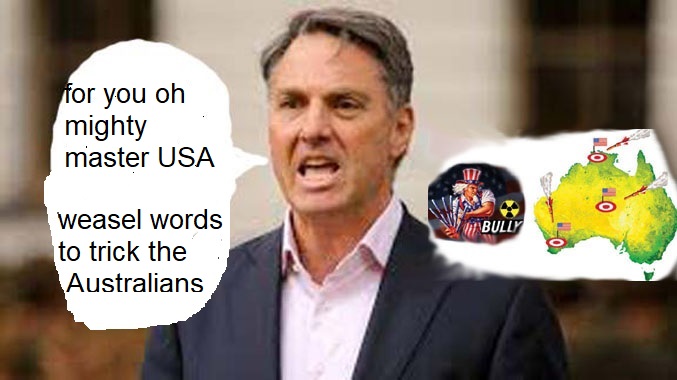
I mused today on the lovely words of the lovely war-mongering Australian Minister for Defence – Richard Marles. He’s nearly as good as that USA smarm master Antony Blinken – in choosing the nicest words to cover nasty stuff.
Today he was talking about Australia sending $millions to Ukraine – for:
uncrewed aerial systems air-to-ground precision munitions spurring on competition among Western nations to harness technology and drive down the equipment’s production cost.
All these weasel words sort of obscure the reality that one big goal is to support the American, Australian, and even Israeli weapons companies. Yes – Israel. In February, the Israeli company Elbit Systems received a A$917 million contract from the Australian Defence Department.
The other goal is to be part of American militarism and its experimental work in Ukraine.
You see – the beauty of the Ukraine war, for America, is that there should be no American lives at risk. Tough about the Ukrainian lives, (and of course the thousands more Russian soldiers’ lives don’t count).
But this is a sort of experimental interim-type war – between having troops of soldiers getting killed and just having heaps of civilians getting killed, (and seeing if America can win by having no persons at risk in it).
World War 1 was the classic – the ultimate war for killing soldiers. – estimated 9.7 million and also 10 million civilians
World War 2 an even bigger killer of soldiers – 20 million, but also 40 million civilians – an “improvement” in killing civilians.
The “in-between” wars – Korea, Vietnam, Iraq, Afghanistan – have still been a mixture of killing soldiers and civilians – but especially with the Afghanistan war – the emphasis shifted towards drone killings, with the officer directing the killing from the distant comfort of an office in USA.
So – getting back to the lovely Marles – he avoided words like “drones” and “missiles” – thus sort of obscuring the fact that Australian weapons are headed right into Russian territory as part of an American long distance attack. Of course, it is called defence – though it is not at all clear that Australia is under military threat from Russia.
Anyway, Ukraine is a good practise ground for deploying weapons that can kill civilians of another country. The weapons-makers are getting better and better at this. The Biden administration last month secretly shipped long-range missiles to Ukraine. The newest 1$billion package will include additional long-range ATACMS. Nuclear weapons might be deployed in Poland. Biden administration’s $850 billion defense budget request for fiscal year 2025 includes $69 billion for nuclear weapons.
It’s all great fun. USA will be able to more or less comfortably fight another country (? China) without putting any “boots on the ground”, (except perhaps a few Taiwanese boots – but after all, they’re not even being worn by white feet, so – no matter, really)
The only fly in the ointment is that American militarism is causing a reaction in other countries. They have populations and leaders who feel that they will have to reciprocate. And they too have gee-whiz clever men with little-boy minds who devise killing machines.
It is truly a vicious circle. There’s a lack of leaders with wisdom. But no shortage of the mealy-mouthed Marles and Blinkens who make it sound as if everything is OK.
Biden signs $95bn aid bill to be sent ‘right away’ – for wars in Ukraine, Israel, and provocations in Taiwan

SOTT – Signs of the Times, BBC, Wed, 24 Apr 2024
US President Joe Biden has signed a $95bn (£76bn) package of aid for Ukraine, Israel and Taiwan.
“It’s going to make America safer, it’s going to make the world safer,” he said after signing the bill into law.
The president said the US would “right away” send fresh weapons and equipment to Ukraine to help Kyiv fend off Russian advances.
Comment: The West has depleted much of its weapon stocks, so much of the money is to go to US weapons manufacturers to actually make the weapons, first.
He spoke a day after the US Senate approved the aid package following months of congressional gridlock.
Ukraine has recently stepped up its calls for Western assistance as Russia makes steady gains in its invasion.
Included in the package is $61bn in military aid for Ukraine. It passed the Senate in a bipartisan vote of 79-18.
Tuesday evening’s approval came after the measurepassed the US House of Representativeson Saturday.
Democratic Senate Majority Leader Chuck Schumer said: “After more than six months of hard work and many twists and turns in the road, America sends a message to the entire world: we will not turn our back on you.”
Comment: They will, however, turn their backs on their own citizens.
Reacting to the vote, Ukrainian President Volodymyr Zelensky said it “reinforces America’s role as a beacon of democracy and leader of the free world”.
The Senate passed a similar aid package in February, but a group of conservatives who oppose new Ukraine support had prevented it from coming to a vote in the House of Representatives.
Last week, Democrats and Republicans in the lower chamber joined together to bypass this opposition.
They ultimately agreed to a package bill that included the foreign aid as well as legislation to confiscate Russian assets held by Western banks; new sanctions on Russia, Iran and China; and a provision that will force the Chinese company ByteDance to sell the popular social media service TikTok.
Comment: The theft of Russian assets will backfire, both with Russia’s retaliation, and global investors who will be reluctant to operate in the US; as will the sanctions; and the control of TikTok only further serves as proof of America as a surveillance state
In the House on Saturday, a majority of Republicans in the chamber voted against the foreign aid package.
The bill also faced resistance among a handful of Senate Republicans who opposed any new aid to Ukraine.
Fifteen voted with two Democrats – as well as independent Senator Bernie Sanders who objected to providing new offensive weapons to Israel – against the bill.
“Pouring more money into Ukraine’s coffers will only prolong the conflict and lead to more loss of life,” Republican Senator Tommy Tuberville said in remarks on Tuesday.
“No-one at the White House, the Pentagon, or the state department can articulate what victory looks like in this fight.”
The aid package is expected to provide a significant boost to Ukraine’s forces, which have suffered from a shortage of ammunition and air defence systems in recent months.
On Tuesday, Ukraine’s second city, Kharkiv, faced the latest in a series of recent drone and missile strikes, with authorities saying two people in a residential neighbourhood were injured.
The commander of Ukraine’s National Guard, Oleksandr Pivnenko, said he was expecting an attempt by Russian forces to advance on the city, which is near the Russian border.
Between February 2022 and January 2024, the US gave Ukraine more than $40bn in military aid, according to German research organisation, the Kiel Institute.
Comment: The EU has allocated 50 Billion euros of taxpayers money.
Aid for Israel and Taiwan
The foreign aid package passed on Tuesday also allocates $17bn to Israel, as well as $9bn for civilians suffering in conflict zones around the world, including Palestinians in Gaza.
Comment: So $17 billion to wage genocide, less than a few billion for those suffering from it?
Israeli Foreign Minister Israel Katz reacted to the vote by thanking congressional leaders for their “unwavering commitment to Israel’s security”.
“Israel and the United States stand together in the fight against terrorism, defending democracy and our shared values,” he said.
The US already provides Israel with $3.8bn in military aid each year.
Over in Asia, a Chinese government spokeswoman called the military aid for Taiwan a “serious violation of the one-China principle” that would “send the wrong signal to the pro-independence separatist forces” in Taiwan.
“We urge the US to take practical actions to fulfil its commitment not to support Taiwan independence by not arming Taiwan in any way,” she said.
Taiwan’s incoming President William Lai said the aid package would “strengthen deterrence against authoritarianism”.
Taiwan is a self-governing island and considers itself distinct from China, but Beijing views it as a breakaway province and hopes to bring it back under its own control.
TikTok ban
The national security package also includes a provision that could lead to a nationwide ban on TikTok………………….. more https://www.sott.net/article/490878-Biden-signs-95bn-aid-bill-to-be-sent-right-away-for-wars-in-Ukraine-Israel-and-provocations-in-Taiwan
New civil nuclear programmes crossing over into military nuclear programmes

New Nuclear Dual-Use Risk: Beating Swords into Ploughshares? By Dr. Paul Dorfman, https://nct-cbnw.com/new-nuclear-dual-use-risk-beating-swords-into-ploughshares/ 24 Apr 24.
Dr. Paul Dorfman discusses whether new civil nuclear programs could cross over into military nuclear programs, and what this means for global non-proliferation efforts.
According to key global finance advisory and asset management firm Lazard, new nuclear power systems perform poorly compared to renewables’ storage, energy efficiency, cost, roll-out speed, and management. So why invest in new nuclear?
Prof. Andy Stirling and Dr. Phil Johnstone, from the University of Sussex Science Policy Research Unit (SPRU), argue that the answer lies in the clear and present link between civil and military nuclear infrastructure. This is because civil nuclear energy maintains the skills and supply chains also needed for military nuclear programs, without which the costs of nuclear military capabilities could become politically unsupportable.
As they point out, the U.K. Government’s ‘Civil Nuclear: Roadmap to 2050’ report includes sets of statements on civil and military nuclear ambitions in order to “identify opportunities to align the two across government”, strengthening existing interconnections between civil and military industries’ research and development, and thereby minimizing costs for both the weapons and power sectors.
More recently, in March 2024, U.K. Prime Minister Rishi Sunak explicitly linked military nuclear weapons production capability with civil nuclear power generation development. French President Emmanuel Macron has gone further, saying that “without civil nuclear power, no military nuclear power, without military nuclear, no civil nuclear”. And the fact is that 90% of all new nuclear construction projects worldwide involve corporations controlled by states with nuclear weapons
New Nuclear, New Proliferation Risk
The increasingly tense geopolitical environment makes nuclear a controversial issue, with nation states concerned that neighbors might use notionally civilian nuclear programs for military ends. In this sense, there are unique challenges and perceived opportunities when it comes to new civil nuclear ambitions.
Choice of offensive or defensive doctrine affects the way other states evaluate their respective security and, in turn, influences the probability of cross-over between civil and military nuclear capacity. Indeed, current movements in military doctrines share the common denominator of adopting more offensive postures.
Meanwhile, according to the U.K. Royal Society, all forms of nuclear production pose weapons development risks, as “there is no proliferation proof nuclear fuel cycle – the dual use risk of nuclear materials and technology and in civil and military applications cannot be eliminated.”
Unhelpfully, Small Modular Nuclear Reactors (SMRs), which are the best new hope for fissile fuel, could make the weapons proliferation problem even worse as any potential SMR roll-out to either developed or developing countries is likely to increase nuclear proliferation and security risks. This is especially so if any of those states prove politically unstable or have relatively limited resources to support a robust nuclear security and regulatory infrastructure.
Nuclear Cross-over in an Increasingly Unstable World
Unless uranium enrichment and reprocessing technologies are effectively regulated against the diversion of civil materials for military purposes, the reality is that new nuclear plants can provide the cover to develop and make nuclear weapons. Whether that capability is turned into actual weapons depends largely on political inclination.
Saudi officials have made it clear on more than one occasion that there’s another reason for their interest in civil nuclear energy technology which was not captured by the royal decree on the Saudi nuclear program – the relationship of the civil program to nuclear weapons. More recently, Saudi Arabia is pushing for the right to produce nuclear fuel, a move that poses further significant proliferation risk. The International Atomic Energy Agency (IAEA) has voiced concerns about Saudi intentions and safeguards.

Unfortunately, the IAEA’s support for Saudi’s civil nuclear clashes with their position on the Kingdom’s military ambition. This is not the first time that the UN nuclear regulator has been caught in this uncomfortably dualist situation.
More worryingly, the Director General of the IAEA, Rafael Grossi, has just met with Syrian President Bashar al-Assad in Damascus to “agree on a new engagement between Syria and IAEA with a view to providing confidence in the peaceful uses of nuclear energy for the benefit of its people”. Given the deeply problematic military and human rights history of al-Assad’s regime, the IAEA’s actions seem profoundly concerning, and bring the IAEA’s role in the global nuclear arena into sharp focus.

Thinking this through, an important question springs to mind. Due to the apparent potential for civil-military nuclear cross-over, could the IAEA’s mission – to work for “the safe, secure and peaceful application of nuclear science and technology” – inevitably result in weapons proliferation by default?
Irrational Paradoxes
Back in Eastern Europe, although Ukraine runs a substantive civil nuclear power program, it’s no longer a nuclear weapons state. Ukraine, once briefly the third-largest nuclear power in the world, made the decision to give up nuclear weapons on the basis that the U.S., U.K., and Russia would guarantee Ukraine’s security via the Budapest Memorandum.
In this sense, both Putin’s invasion of an independent state and subsequent nuclear weapons threats highlight the very real practical distinction between unilateral and multilateral nuclear weapons disarmament in an increasingly unstable world.
And then there’s Zaporizhzhia, where a civil nuclear power plant has become a target of war at the very same time that Russia’s role as a major player in the global civil nuclear power sector continues to expand via Moscow-backed international nuclear new-build projects and technology, uranium supply and enrichment, and spent nuclear fuel management.
Direction of Travel
While it appears reasonably clear that civil and military nuclear can enmesh, one must ask whether one inevitably leads to the other. While the usual concern is that civil nuclear infrastructure leads to military development, according to former Australian Prime Minister Scott Morrison, Australia is bucking the trend: “Let me be clear: Australia is not seeking to establish […] a civil nuclear capability […] a civil nuclear energy industry is not a requirement for us to go through the submarine program.”
In other words, despite the new nuclear submarine AUKUS deal, the current Australian government has no plans to develop new civil nuclear infrastructure.
So, does that start to negate the civil-military nexus hypothesis? Well, it’s not that nuclear military interests are the sole drivers of support for civil nuclear power, but for some states dual-use technology may comprise a significant complementary factor.
In the end, it’s the direction of travel that counts. While all key energy institutes and research organizations agree that renewables will do the heavy-lifting for the net-zero energy transition, it’s worth considering the implications of U.S. Energy Secretary Jennifer Granholm’s speech to Australia’s Energy Forum: “No country has ever been held hostage for access to the sun. No country has ever been held hostage for access to the wind. They have not ever been weaponized, nor will they be.”
Dr. Paul Dorfman is the Chair of the Nuclear Consulting Group, a Visiting Fellow at the Science Policy Research Unit (SPRU) of the University of Sussex, U.K., a Member of the Irish Government’s Radiation Protection Advisory Committee, and a Former Advisor to the U.K. Ministry of Defence Nuclear Submarine Dismantling Project.
U.S. Senate Passes $95 Billion Foreign Military Aid Bill
The bill passed in a vote of 79-18
by Dave DeCamp April 23, 2024, AntiWar.com
On Tuesday night, the Senate passed a $95 billion spending bill that includes military aid for Ukraine, Israel, and Taiwan in a vote of 79-18. The bill has already passed through the House and now heads to President Biden’s desk for his signature.
Earlier in the day, the Senate rejected an effort by some senators to add amendments to the legislation in a vote of 48-50. The legislation, which also includes a provision that could ban TikTok, was passed through the House as four separate bills but was combined into one in the Senate.
The legislation includes $61 billion for the proxy war in Ukraine, much of which will go to US weapons makers to replenish US stockpiles. It includes over $9 billion in economic aid in the form of repayable loans, but Ukraine is not actually expected to pay it back. Another provision will authorize the US to sell off frozen Russian assets, which could be used to pay the loans. CNN previously reported that the Biden administration will also be able to cancel the debt.
The bill also includes $26 billion to support Israel. About $9 billion will go toward humanitarian aid in Gaza and other places, while the remaining $17 billion will go toward military aid to support the slaughter of Palestinians in Gaza and replenish Israeli air defenses. The aid is on top of the $3.8 billion in military assistance that Israel receives from the US each year.
Another $8 billion will go toward military aid for Taiwan and other spending in the Indo-Pacific region to prepare for a future war with China. It includes $1.9 billion to replenish weapons sent to Taiwan and regional countries and $2 billion in Foreign Military Financing, a State Department program that gives foreign governments money to purchase US weapons. Over $3.3 billion will go toward submarine infrastructure in the region.
The massive spending on foreign military aid was put forward by House Speaker Mike Johnson (R-LA), who previously killed a deal that would have included similar foreign aid spending and billions for border security and changes to migrant policies………….. more https://news.antiwar.com/2024/04/23/senate-passes-95-billion-foreign-military-aid-bill/
TODAY. Oh it’s a great time to be an American – with shares in “Defense” companies!

The USA Congress knows this. These worthy persons understand that their job is to enrich weapons companies and the people “wise” enough to have shares in them. After all, “defense” is the USA’s fastest growing and most successful industry. And of course, that’s the job of a patriotic American government – to promote American business.
Some think that the proper role of government is not solely protection of people from attack, but also to provide for the general well-being of the people. But that second purpose is not a goal of American government. And I would argue that even the first purpose is not a real goal – as the practices of diplomacy, negotiation, discussion and respect for other countries would be the best methods – rather than bullying and sabre-waving.
Anyway, the U.S. Senate just passed a $95Billion Bill for weapons for Ukraine, Israel and Taiwan. Law-makers of both stripes are keen to promote weapons. Probably the Congress will approve this.
The U.S. Congress has the power to pull back, to prevent wars. But once they’ve given the White House the money for weapons – then the President (advised by warmongers like Jake Sullivan and Antony Blinken) can go ahead and wage war – Congress will then have no say.

Once the Congress approves an appropriation the President as commander-in chief can use the money any way he likes. If the aim of warmongers is eventual war against Iran, providing money for weapons will be Congress’s role in following this aim. Think tanks and media enthusiastically go along with this.
There seems to be no awareness that USA’s endless strikes on distant countries – Iraq , Syria, backing Israel against Palestine, Iran – are arousing fierce anger among millions of people. In Ukraine whole generations of men are being wiped out.
Weapons get used. Then you make and sell more weapons. That means continuing, endless wars. That’s the business. It’s great when there’s no, or relatively few, American soldiers killed. Terrific – only “the others” are dying.
It’s great for business. Lockheed Martin’s shares are up. Investing advice enthuses “Where there’s war, there’s money to be made, and rising geopolitical tension in the Middle East, and the two-year-long war in Ukraine are leaving investors to shield their portfolios with defense stocks………….no better time than being in the business of defense contracting than right now“
But one day – the shit will hit the fan! Shock horror – it might even happen in the lifetime of those making $millions from weapons sales.
Bankers upgrade Lockheed stock after Iran strikes at Israel

defense contractors are actively shaping U.S. foreign policy through lobbying and campaign contributions, among other tactics.
The American company has played an outsized role in Tel Aviv’s bombing and invasion of Gaza since Oct. 7
NICK CLEVELAND-STOUT, APR 17, 2024 https://responsiblestatecraft.org/lockheed-martin-israel-war/
Over the weekend, Iran launched over 300 missiles at Nevatim Air Base, a base in southern Israel that houses U.S.-made F-35 fighter jets. Israeli Prime Minister Benjamin Netanyahu, who oversaw a strike on an Iranian consulate in Syria just a few weeks ago, has already promised to retaliate. Observers viewed these brewing tensions with concern, ringing the alarm bells of the breakout of a wider war.
Not JP Morgan analyst Seth Seifman. On Monday morning, Seifman upgraded JPMorgan’s outlook from “hold” to “buy” for Lockheed Martin, the manufacturer of Israel’s F-35s, and set a higher price target for the stock.
Seifman says the change was pre-planned, but noted that these developments could be good for business. “What we can say is that it’s a dangerous world and while that is not a sufficient condition for defense stocks to outperform,” he said, “it is a potential source of support, especially when they are under-owned.” JP Morgan owns $355 million worth of Lockheed Martin stock, about a third of which was bought in the last quarter of 2023.
UK investment bank Liberum Capital was similarly bullish on defense stocks, so long as a wider war does not break out. “In our base case scenario of Israel retaliating but in a limited way that keeps the conflict from escalating further, this could lead to a 5-10% correction in the stock market together with further strength in the U.S. dollar,” Liberium told investors. “The obvious short-term winners will be oil & gas stocks as well as defense contractors.”
As finance journalist Jacob Wolisnky put it in a recent preview of defense stock picks, “Where there’s war, there’s money to be made.” At least one member of Congress agrees. Yesterday, Rep. Kevin Hern (R-Okla.) disclosed that he bought Lockheed Martin stock on March 29.
Lockheed Martin has played a large role in Israel’s bombing and invasion of Gaza, manufacturing Hellfire missiles, providing transport planes, and supplying F-16 and F-35 fighter jets. A missile that hit journalists on November 9 of last year in Gaza City was reportedly manufactured by Lockheed Martin. “Their core business model has no respect for human rights,” said Jilianne Lyon, who leads shareholder advocacy campaigns at Investor Advocates for Social Justice.
While privately acknowledging conflict is good for business, the defense industry and its financiers publicly claim they are simply doing America’s bidding. As Lockheed Martin CEO James Taiclet once said, “It’s only up to us to step to what we’ve been asked to do and we’re just trying to do that in a more effective way, and that’s our role.” After all, it was the U.S. government — not Lockheed Martin — that came to Israel’s defense and intercepted the majority of Iran’s missiles.
But this “we just do what we’re told” defense doesn’t quite work given that defense contractors are actively shaping U.S. foreign policy through lobbying and campaign contributions, among other tactics. Aaron Acosta, program director at Investor Advocates for Social Justice, told Responsible Statecraft that defense contractors “are often the ones creating demand by lobbying the U.S. government and pushing for sales of these weapons.”
In 2023, Lockheed Martin spent over $14 million lobbying Congress. The three companies that lobbied the House’s version of the annual defense policy bill the most were RTX (formerly known as Raytheon), Lockheed Martin, and General Dynamics. During the 2022 election cycle, Lockheed Martin contributed nearly $4 million to political candidates. So far, 2024 promises similar results. In its 2023 annual report, Lockheed Martin wrote that, “Changes in the U.S. Government’s priorities, or delays or reductions in spending could have a material adverse effect on our business.”
Sure, 84% of voters might be concerned about the U.S. being drawn into conflict in the Middle East. But as far as defense companies and their shareholders are concerned, business is booming.
Under UN Charter, Iran’s Attack Was a Legal Response to Israel’s Illegal Attack

Iran’s attack on Israel was lawful self-defense carried out in compliance with international humanitarian law.
On April 13, Iran’s aircraft struck two air bases in the Negev desert, where the April 1 attack on Iran’s consulate had been launched. “Iran retaliated against those targets in Israel directly related to the Israeli attack on Iran,”
By Marjorie Cohn , TRUTHOUT, April 18, 2024
On April 1, Israel mounted an unprovoked military attack on a building that was part of the Iranian Embassy complex in Damascus, Syria, killing seven of Iran’s senior military advisers and five additional people. The victims included Gen. Mohamad Reza Zahedi, head of Iran’s covert military operations in Lebanon and Syria, and two other senior generals.
Although Israel’s attack violated the United Nations Charter, the UN Security Council refused to condemn it because the United States, the U.K. and France exercised their vetoes on April 4.
Iran considered this attack on its consulate “an act of war,” Trita Parsi wrote at Foreign Policy.
On April 11, the Permanent Mission of the Islamic Republic of Iran to the United Nations stated: “Had the UN Security Council condemned the Zionist regime’s reprehensible act of aggression on our diplomatic premises in Damascus and subsequently brought to justice its perpetrators, the imperative for Iran to punish this rogue regime might have been obviated.”
Then, on April 13, in response to Israel’s attack, Iran fired more than 300 drones and missiles at the Israeli air base from which the April 1 attacks had emanated. Only two of them landed inside Israel and no one was killed; a Bedouin girl was injured. The U.S., U.K., France, Jordan and Israel intercepted the remaining Iranian missiles and drones. A senior U.S. military official said “there’s no significant damage within Israel itself.”
The Iranian mission to the UN wrote in an April 13 letter to the UN secretary-general that Iran’s action was conducted “in the exercise of Iran’s inherent right to self-defense” under Article 51 of the UN Charter “and in response to the Israeli recurring military aggressions, particularly its armed attack” on April 1 “against Iranian diplomatic premises, in the defiance of Article 2(4) of the Charter of the United Nations.”
The April 1 attack was not the first time Israel had attacked key Iranian personnel………………………………………………………………………….
Iran made clear that it seeks to avoid further escalation that could spark a widespread regional war. An April 13 social media post from Iran’s permanent mission to the UN stated, “The matter can be deemed concluded. However, should the Israeli regime make another mistake, Iran’s response will be considerably more severe. It is a conflict between Iran and the rogue Israeli regime, from which the U.S. MUST STAY AWAY!”
At a Security Council meeting on April 14, Iran’s UN Ambassador Saeid Iravani defended the lawfulness of the missile and drone attack on Israel. He noted the hypocrisy of the U.S. and its allies that claim Israel is acting in self-defense as it conducts its genocide of the Palestinian people:………………………………………..
Israel’s Attack on Iranian Consulate Violated the UN Charter and Vienna Conventions
Iran’s April 13 attack on Israel was a lawful exercise of self-defense in response to Israel’s unlawful April 1 attack on the Iranian consulate. The Israeli attack was an illegal act of aggression.
Article 2 (4) of the UN Charter states, “All Members shall refrain in their international relations from the threat or use of force against the territorial integrity or political independence of any state, or in any other manner inconsistent with the Purposes of the United Nations.”
An act of aggression is inconsistent with the purposes of the UN. Article 39 of the Charter says, “The Security Council shall determine the existence of any threat to the peace, breach of the peace, or act of aggression.”
An “‘act of aggression’ means the use of armed force by a State against the sovereignty, territorial integrity or political independence of another State, or in any other manner inconsistent with the Charter of the United Nations,” under the Rome Statute for the International Criminal Court. Aggression includes “the invasion or attack by the armed forces of a State of the territory of another State.”
Moreover, “Consular premises shall be inviolable,” according to Article 31 of the 1963 Vienna Convention on Consular Relations. Article 1 defines consular premises as “the buildings or parts of buildings and the land ancillary thereto, irrespective of ownership, used exclusively for the purposes of the consular post.”
The 1961 Vienna Convention on Diplomatic Relations likewise provides in Article 22.1 that, “The premises of the mission shall be inviolable. The agents of the receiving State may not enter them, except with the consent of the head of the mission.”
During Israel’s bombing of Iran’s consulate in Syria, it targeted and killed very senior Iranian officials. The attack constituted an act of aggression, which triggered Iran’s right to self-defense.
Iran’s April 13 Attack on Israel Constituted Lawful Self-Defense
Article 51 states, “Nothing in the present Charter shall impair the inherent right of individual or collective self-defense if an armed attack occurs against a Member of the United Nations, until the Security Council has taken the measures necessary to maintain international peace and security.”
An armed attack includes not just an attack against the territory of a state, including its airspace and territorial sea, but also attacks directed against its armed forces or embassies abroad.
On April 13, Iran’s aircraft struck two air bases in the Negev desert, where the April 1 attack on Iran’s consulate had been launched. “Iran retaliated against those targets in Israel directly related to the Israeli attack on Iran,” former U.S. weapons inspector Scott Ritter wrote.
Nevertheless, the Security Council has failed to adopt a resolution condemning Israel’s attack on Iran’s consulate, as Iran pointed out in its April 13 letter to the UN secretary-general.
At an April 14 meeting of the Security Council, the Israeli representative declared that Iran is the number one global sponsor of terrorism and the world’s worst human rights violator. It is Israel, however, that has killed nearly 34,000 Palestinians — two-thirds of them women and children — during its campaign of genocide in Gaza that has now entered its seventh month.
Iran’s self-defense action was the natural outcome of Israel’s violations of international law — both on Syrian territory and elsewhere — the representative from the Syrian Arab Republic said at the April 14 council meeting. Israel is trying to cover up its genocide and military failures in Gaza, the Syrian representative added.
Iran’s Attack Satisfied the Principles of Proportionality, Distinction and Precautions……………………………………………………………….
Netanyahu Is Gunning for War With Iran
Israeli Prime Minister Benjamin Netanyahu would like nothing better than to start a war with Iran. Netanyahu considers Iran an “existential threat” to Israel. He persuaded former President Donald Trump to pull out of the Iran nuclear deal, which was working to prevent Iran from developing nuclear weapons.
As the world waits for Israel’s response to the Iranian attack, President Joe Biden said the U.S. would not assist Israel in an offensive military action against Iran but it would give Israel defensive support if Iran attacks Israel. “But the distinction between offensive or defensive support becomes meaningless the second a war breaks out,” wrote Trita Parsi.
Today, the U.S. and U.K. imposed additional punishing sanctions on Iran. Unilateral coercive measures, levied without the imprimatur of the Security Council, are illegal and generally harm only the general population…………………………………………………………………………………………… more https://truthout.org/articles/under-un-charter-irans-attack-was-a-legal-response-to-israels-illegal-attack/
Iran Israel: An audible sigh of relief in the Middle East

By Lyse Doucet,Chief international correspondent, 20 Apr 24, more https://www.bbc.com/news/world-middle-east-68861607
The latest round in the region’s most dangerous rivalry appears to be over, for now.
Israel still has not officially acknowledged that the attack in Iran in the early hours of Friday morning was its doing.
Meanwhile, Iran’s military and political leaders have downplayed, dismissed and even mocked that anything of consequence happened at all.
The accounts over what kind of weaponry was deployed on Friday and how much damage was caused are still conflicting and incomplete.
American officials speak of a missile strike, but Iranian officials say the attacks, in the central province of Isfahan and in northwest Tabriz, were caused by small exploding drones.
“The downed micro air vehicles caused no damage and no casualties,” Iran’s Foreign Minister Hossein Amir-Abdollahian insisted to the semi-official Tasnim News Agency.
But these simple quadcopters are Israel’s calling card – it has deployed them time and again in its years of covert operations inside Iran.
This time their main target was the storied central province of Isfahan, which is celebrated for its stunning Islamic heritage.
Of late, however, the province is more famous for the Natanz nuclear facility, the Isfahan Nuclear Technology Centre and a major air base, which was used during Iran’s 14 April attack on Israel.
It is also an industrial heartland housing factories which produce the drones and ballistic missiles that were fired by the hundreds in Israel’s direction last Sunday.
So a limited operation seems to have carried a powerful warning – that Israel has the intelligence and assets to strike at will at Iran’s beating heart.
It is a message so urgent that Israel made sure it was sent before, rather than after, the start of the Jewish Passover, as was widely predicted by Israel watchers.
US officials have also indicated that Israel targeted sites such as Iran’s air defence radar system, which protects Natanz. There is still no confirmed account of its success.
So this attack may also be just an opening salvo. But it was, for the moment, an unintended 85th birthday gift to Iran’s Supreme Leader, Ayatollah Ali Khamenei.
Israel’s official silence gave Iran’s ultimate decision-maker vital political space. Tehran did not have to invoke its new rule that whenever its arch-enemy strikes, Iran will hit back hard, with the risk of sparking a perilous escalatory spiral.
Hardline President Ebrahim Raisi did not even mention these most recent events in his Friday speeches.
For the Islamic Republic, it is all about what it dubs Operation True Promise – its unprecedented onslaught against Israel in the dead of night last Sunday. He hailed what he called his country’s “steely will”.
Iran has prided itself for years on its “strategic patience”, its policy of playing a long game rather than retaliating immediately and directly to any provocations.
Now, it is invoking “strategic deterrence”. This new doctrine was triggered by the 1 April attack on its diplomatic compound in Damascus, which destroyed its consular annex and killed seven Revolutionary Guards, including its most senior commander in the region.
Iran’s supreme leader was under mounting pressure to draw a line as Israel ramped up its targets during the last six months of the grievous Gaza war.
No longer just striking Tehran’s assets, including arms caches, buildings, bases and supply routes on battle grounds like Syria and Lebanon, Israel was also assassinating top-ranking officials.
A decades-long hostility, which had previously played out in shadow wars and covert operations, erupted in open confrontation.
Whatever the specifics of this latest tit for tat, there is a more fundamental priority for both sides: deterrence – a more solid certainty that strikes on its own soil will not happen again. If they do, there is a cost to pay, and it will hurt.
For the moment there is an audible sigh of relief in the region, and in capitals far and wide.
Israel’s latest move, under anxious urging from its allies to limit its retaliation, will have eased this tension, for now. Everyone wants to stop a catastrophic all-out war. But no one will be in any doubt that any lull may not last.
The region is still on fire.
The Gaza war grinds on, causing a staggering number of Palestinian casualties.
Under pressure from its staunchest allies, Israel has facilitated the delivery of greater quantities of desperately needed aid, but the blighted territory still teeters on the brink of famine.
Israeli hostages have still not come home, and ceasefire talks are stalled. Israel still warns of battles to come in Hamas’s last stronghold in Rafah – what aid chiefs and world leaders say would be yet another untold humanitarian disaster.
Iran’s network of proxies across the region, what it calls an “Axis of Resistance” stretching from Hezbollah strongholds in Lebanon through Iran-aligned militias in Iraq and Syria, to the Houthis of Yemen, are at the ready, still attacking daily.
In the last few weeks, simultaneously everything and nothing has changed in the region’s darkest, most dangerous days.
No more Russian language on air in three months – Kiev

COMMENT: It is a sad thing to see the Western world, supposed bastion of freedom, individual rights, “multiculture”…. complacently agreeing with the cultural repression that is going on in Ukraine.
Ukraine has long been a bilingual country, and also a country which valued the very good parts of its Russian heritage.
It’s one thing to trash and destroy Ukrainian cultural history, like the memory of Catherine the Great – who promoted public health and education, especially for women, and who established Kiev as a centre of the arts.
Even worse is the frenzied nationalism that punishes the quite large minority of Russian-only speakers across Ukraine, and especially in the Donbass area.
Thu, 18 Apr 2024 , https://www.sott.net/article/490743-No-more-Russian-language-on-air-in-three-months-Kiev
Ukraine’s goal of eradicating bilingual media content has almost been achieved, the government has claimed
Ukraine’s ban on using the Russian language in the media will take full effect three months from now, Kiev’s state language protection commissioner, Taras Kremin, has said.
Since gaining independence, Ukraine has been a bilingual nation, with most citizens able to speak or understand both Russian and Ukrainian. After the US-backed coup in Kiev in 2014, the new nationalist authorities adopted policies aimed at suppressing the Russian language, on the grounds of national unity and security.
The restrictions include a requirement for national media to predominantly use Ukrainian in broadcasts. The permitted share of content in Russian has declined from 40% in 2016 to an almost complete ban, which will come into force in July – the deadline that Kremin referred to in his statement on Wednesday.
“Today national television channels practice bilingual Ukrainian-Russian programming, in which participants use the Russian language without a translation or subtitles,” he said. “Starting on July 17, this practice will end. There will be more Ukrainian language!”
The push by Ukrainian nationalist leaders to impose the state language on Russian-speakers living in the east of the country was a major reason for locals’ rejection of the post-coup authorities. One of the first acts of those who seized power in Kiev was to abolish a law adopted in 2012, which gave the Russian language official regional status.
The new authorities have been adopting laws to eradicate Russian from all spheres of public life, including education, entertainment, and even services provided by private businesses.
In an interview last year, Kremin denied that some Ukrainian citizens could be called Russian-speaking, describing the term was “a marker introduced by Russian ideology,” and declared that “everyone in the country must have a command of the Ukrainian language.”
In contrast, this week the leader of another post-Soviet nation, Kazakhstan, rejected the notion that one language spoken by his people should be favored over others.
“Young people now are fluent in the state [Kazakh] language, in Russian language, in English and other languages, and that is good,” President Kassym-Jomart Tokayev said on Tuesday. “It’s ridiculous to ramp up hysterics over a language, let alone fight against one, as they did in some other states. We all see what they have now as a result.”
The Kazakh leader did not specify which other nations he was referring to.
Comment: The current policies of the Ukrainian government is what the collective west with few exceptions support. If voters in Western countries have difficulties finding out what their governments are about, keep the example of Ukraine in mind. if their government supports them, they might themselves not be far behind in how far they would be willing to go given the chance.
22 Nov, 2023 15:22
‘There are no Russian-speaking Ukrainians’ – Kiev
There is no such thing as a Russian-speaking Ukrainian citizen, Kiev’s state language protection commissioner, Taras Kremin, has declared. In recent years, the country has introduced a frenzy of measures to sever historical and cultural ties with Russia, as it scrambles to strengthen the status of its own language despite accusations of prejudice against national minorities.
In an interview aired by the Ukrainian branch of the US state-run Radio Free Europe/Radio Liberty (RFE/RL), Kremin rejected the suggestion that some Ukrainians could be called “Russophones,” describing the term as “a marker introduced by the Russian ideology.”
“We are all Ukrainian citizens… Ukrainian is the dominant language in all spheres of public life. Regardless of whether it is national communities or foreigners, everyone in the country must have a command of the Ukrainian language,” the ombudsman insisted.
Earlier this year, Kremin stated that Ukrainians who speak Russian should not be referred to as “Russian-speaking,” claiming that the term had been used for decades by “Russian propaganda” to promote internal divisions in Ukraine. Citing a 2021 Constitutional Court ruling, he also insisted there were only Ukrainian citizens who had been “Russianized.”
According to a March 2022 poll by the Sociological Group Rating, about 20% of Ukrainians considered Russian to be their native language. A Social Monitoring survey in 2021 suggested that more than 50% of Ukrainians were willing to read books and watch movies in Russian.
Ukrainian authorities embarked on a campaign to push Russian out of all areas of life immediately after the 2014 Western-backed Maidan coup. The measures sparked widespread public outrage and were among the key reasons behind the hostilities in Donbass.
In 2018, the Ukrainian Constitutional Court overturned a 2012 law granting regional status to the Russian language, while at the same time Kiev adopted initiatives seeking to curb its use in education, mass media, business, and culture.
Russia has repeatedly denounced Ukraine’s language policies. President Vladimir Putin said that Moscow’s military operation against its neighbor was partly to protect people who consider themselves part of Russian culture.
On Monday, the speaker of the Ukrainian parliament, Ruslan Stefanchuk, went as far as to deny the existence of Russian ethnic minorities, arguing that they had no special rights. The statement sparked outrage in Moscow, with Foreign Ministry spokeswoman Maria Zakharova saying the remarks came from “the Nazis of the 21st century.”
4 Apr, 2024 20:19
Zelensky’s comedy partner slams campaign against Russian language
Boris Shefir co-founded the Kvartal 95 (District 95) comedy studio in 2003 with Zelensky and a group of their school friends. Most of these comedians and producers – including Shefir’s brother, Sergey – followed Zelensky into politics, taking prime positions in his administration after he was elected president of Ukraine in 2019.
Shefir was not among them.Speaking to the Ukrainian branch of the US government-funded Radio Free Europe/Radio Liberty (RFE/RL) outlet on Thursday, he said that he has had “no relationship” with Zelensky since the conflict with Russia began in 2022.
“For two years, I have not called or talked to him,” Shefir said. “He is working with other people now. He does not communicate with me, does not call me. My calls remain unanswered.”
“Well, you see, I speak Russian,” he explained. “I love the Russian language, Russian culture…I can’t watch Pushkin’s monuments being destroyed in my country.”
Iran Closes Nuclear Sites Fearing Israeli Attack: IAEA Chief
Tuesday, 04/16/2024 Iran International Newsroom, https://www.iranintl.com/en/202404162504
Iran shut down its nuclear facilities last Sunday over “security considerations,” UN nuclear chief Rafael Grossi has said, expressing concern over the “possibility” of an Israeli attack on Iran’s nuclear sites.
Speaking to reporters in New York on Monday, IAEA Director General confirmed that the facilities had reopened within 24 hours, but with no IAEA supervision, as the agency has decided to keep its inspectors away until the situation is “completely calm.”
Grossi was referring to rising tensions between Israel and Iran, which many fear may lead to an all-out war between the two countries and potentially engulf the whole Middle East.
Israel bombed Iran’s consulate in Damascus on 1 April, killing seven members of the Islamic Revolution’s Guards Corpse (IRGC), including a high-ranking commander and his deputy. Iran retaliated on 13 April, launching more than 300 missiles and drones towards Israel –all but a few of which were intercepted by Israel and its allies.
On Monday, Israeli officials vowed to respond to the attack. When asked about the possibility of Israel hitting Iran’s nuclear sites, Grossi said, “We are always concerned about this possibility.” He urged both sides to show “extreme restraint”.
Grossi also reiterated the IAEA’s concerns about Iran’s nuclear program.
“A bit more than a year ago, I went to Tehran and signed a joint declaration with the Iranian government indicating a number of actions that we will be taking together with Iran,” Grossi said. “We started that process and that process was interrupted. And I have been insisting that we need to go back to that understanding that we had in March 2023.”
In September 2023, Iran withdrew the designation of several inspectors assigned to conduct verification activities in Iran under the Non-Proliferation Treaty Safeguards Agreement. Iran’s nuclear chief Mohammad Eslami later claimed that those expelled had had a history of “extremist political behavior”.
“We are always urging, asking and requiring Iran to cooperate with us in full,” Grossi told Iran International’s Maryam Rahmati. “It’s not that we are not there, but we are not there at the level that we consider we should be.”
The IAEA reported in February that Iran is enriching and stockpiling near-weapons-grade uranium, warning that such elevated purity cannot be explained by civilian applications.
When asked about Iran’s enrichment levels by Iran International, Grossi siad, “the fact that there is an accumulation of uranium enriched at very, very high levels does not automatically mean you’re having a weapon…but it raises questions in the international community.”
Iran has always denied seeking nuclear weapons, but no other state has enriched to that level without producing them.
A report published last month by the Institute for Science and International Security claimed that Iran is moving ahead with building a nuclear site deep underground near Natanz.
“This Iranian nuclear weapons-making facility could be impervious to Israeli and perhaps even American bombs,” Foundation for Defense of Democracies CEO Mark Dubowitz said at the time. “Time is quickly running out, as Iran moves into a zone of nuclear immunity, to deny the regime permanent use of this deadly site.”
Fujitsup-ing UK ‘s Post Office IT system, – and now its Nuclear Lab?

The UK government’s National Nuclear Laboratory has given Fujitsu a £155k contract for ‘software support’ IT – for nuclear science and experimental programmes in nuclear power and weapons.
Fujitsu? The Japanese software company that supplied, and apparently is still supplying, the British Post office with software – its bodgy Horizon IT programme being at the root of one of the most widespread miscarriages of justice in UK history.. Yes, that one!
It doesn’t fill you with confidence about the safety of the UK’s nuclear lab activities, does it?
The Post Office’s contract with Fujitsu was, (is) extremely complex, with the Post Office lacking the expertise to understand how the IT system works. Does the nuclear lab have the same problem?
These types of contracts deliberately lock the buyer in, with the supplier having control of all upgrades, fixing of any technical problems. The Post Office contract also limited the amount of information they could get from the system.
This created a dependance by the Post Office on the company Fujitsu. Is the British military and nuclear system also locked into dependance on Fujitsu? A source told the i newspaper that the Japanese firm has been managing a secretive computer system facilitating the “strategic command and control of UK Armed Forces” for decades.
The contract for the National Nuclear Laboratory is the first government contract with Fujitsu in 2024, – to the anger and frustration of many, as the inquiry into the Post Office software scandal is still underway, with more litigation likely to come.
Bombs and viruses: The shadowy history of Israel’s attacks on Iranian soil
From cyberattacks and assassinations to drone strikes, Israel-linked plots have targeted Iran and its nuclear programme for years.
Israel’s leaders have signalled that they are weighing their options on how to respond to Iran’s attack early Sunday morning, when Tehran targeted its archenemy with more than 300 missiles and drones.
Iran’s attack, which followed an Israeli strike last week on the Iranian consulate in Damascus, Syria, that killed 13 people was historic: It was the first time Tehran had directly targeted Israeli soil, despite decades of hostility. Until Sunday, many of Iran’s allies in the so-called axis of resistance — especially the Palestinian group Hamas, the Lebanese group Hezbollah, Yemen’s Houthis and armed groups in Iraq and Syria — were the ones who launched missiles and drones at Israel.
But if Israel were to hit back militarily inside Iran, it wouldn’t be the first time. Far from it.
For years, Israel has focused on one target within Iran in particular: the country’s nuclear programme. Israel has long accused Iran of clandestinely building a nuclear bomb that could threaten its existence — and has publicly, and frequently, spoken of its diplomatic and intelligence-driven efforts to derail those alleged efforts. Iran denies that it has had a military nuclear programme, while arguing that it has the right to access civil nuclear energy.
As Israel prepares its response, here’s a look at the range of attacks in Iran — from drone strikes and cyberattacks to assassinations of scientists and the theft of secrets — that Israel has either accepted it was behind or is accused of having orchestrated.
Assassinations of Iranian scientists
- January 2010: A physics professor at Tehran University, Masoud Ali-Mohammadi, was killed through a remote-controlled bomb planted in his motorcycle. Iranian state media claimed that the US and Israel were behind the attack. The Iranian government described Ali-Mohammadi as a nuclear scientist.
- November 2010: A professor at the nuclear engineering faculty at Shahid Beheshti University in Tehran, Majid Shahriari, was killed in a car explosion on his way to work. His wife was also wounded. The president of Iran at the time, Mahmoud Ahmadinejad, blamed the United States and Israel for the attacks.
- January 2012: Mostafa Ahmadi Roshan, a chemical engineering graduate, was killed by a bomb placed on his car by a motorcyclist in Tehran. Iran blamed Israel and the US for the attack and said Ahmadi Roshan was a nuclear scientist who supervised a department at Iran’s primary uranium enrichment facility, in the city of Natanz.
- November 2020:Prominent nuclear scientist Mohsen Fakhrizadeh was killed in a roadside attack outside Tehran. Western and Israeli intelligence had long suspected that Fakhrizadeh was the father of an Iranian nuclear weapons programme. He was sanctioned by the United Nations in 2007 and the US in 2008.
- May 2022: Colonel Hassan Sayyad Khodaei of the Islamic Revolutionary Guard Corps (IRGC) was shot five times outside of his home in Tehran. Majid Mirahmadi, a member of Iran’s Supreme National Security Council, alleged the assassination was “definitely the work of Israel”.
Israel’s cyberattacks on Iran
- June 2010:The Stuxnet virus was found in computers at the nuclear plant in Iran’s Bushehr city, and it spread from there to other facilities. As many as 30,000 computers across at least 14 facilities were impacted by September 2010. At least 1,000 out of 9,000 centrifuges in Iran’s Natanz enrichment facility were destroyed, according to an estimate by the Institute for Science and International Security. Upon investigation, Iran blamed Israel and the US for the virus attack.
- April 2011: A virus called Stars was discovered by the Iranian cyberdefence agency which said the malware was designed to infiltrate and damage Iran’s nuclear facilities. The virus mimicked official government files and inflicted “minor damage” on computer systems, according to Gholamreza Jalali, the head of Iran’s Passive Defense Organization. Iran blamed Israel and the US.
November 2011: Iran said it discovered a new virus called Duqu, based on Stuxnet. Experts said Duqu was intended to gather data for future cyberattacks. The Iranian government announced it was checking computers at main nuclear sites. The Duqu spyware was widely believed by experts to have been linked to Israel.- April 2012: Iran blamed the US and Israel for malware called Wiper, which erased the hard drives of computers owned by the Ministry of Petroleum and the National Iranian Oil Company.
- May 2012: Iran announced that a virus called Flame had tried to steal government data from government computers. The Washington Post reported that Israel and the US had used it to collect intelligence. Then-Israeli Vice Prime Minister Moshe Yaalon did not confirm the nation’s involvement but acknowledged that Israel would use all means to “harm the Iranian nuclear system”.
- October 2018: The Iranian government said that it had blocked an invasion by a new generation of Stuxnet, blaming Israel for the attack.
- October 2021: A cyberattack hit the system that allows Iranians to use government-issued cards to purchase fuel at a subsidised rate, affecting all 4,300 petrol stations in Iran. Consumers had to either pay the regular price, more than double the subsidised one, or wait for stations to reconnect to the central
- distribution system. Iran blamed Israel and the US.
- May 2020: A cyberattack impacted computers that control maritime traffic at Shahid Rajaee port on Iran’s southern coast in the Gulf, creating a hold-up of ships that waited to dock. The Washington Post quoted US officials as saying that Israel was behind the attack, though Israel did not claim responsibility.
Israel’s drone strikes and raids on Iran
- January 2018: Mossad agents raided a secure Tehran facility, stealing classified nuclear archives. In April 2018, Israeli Prime Minister Benjamin Netanyahu announced that Israel discovered 100,000 “secret files that prove” Iran lied about never having a nuclear weapons programme.
- February 2022: Former Israeli Prime Minister Naftali Bennett admitted in an op-ed published in The Wall Street Journal in December 2023, that Israel carried out an attack on an unmanned aerial vehicle, and assassinated a senior IRGC commander in February of the previous year.
- May 2022: Explosives-laden quadcopter suicide drones hit the Parchin military complex southeast of Tehran, killing an engineer and damaging a building where drones had been developed by the Ministry of Defence and Armed Forces. IRGC Commander Hossein Salami pledged retaliation against unspecified “enemies”.
- February 2024: A natural gas pipeline in Iran was attacked. Iran’s Oil Minister Javad Owji alleged that the “explosion of the gas pipeline was an Israeli plot”.
- January 2023: Several suicide drones struck a military facility in central Isfahan, but they were thwarted and caused no damage. While Iran did not immediately place blame for the attacks, Iran’s UN envoy, Amir Saeid Iravani, wrote a letter to the UN chief saying that “primary investigation suggested Israel was responsible”.
Flicker of Hope: Biden’s Throwaway Lines on Assange
April 12, 2024 by: Dr Binoy Kampmark, https://theaimn.com/flicker-of-hope-bidens-throwaway-lines-on-assange/
Walking stiffly, largely distracted, and struggling to focus on the bare essentials, US President Joe Biden was keeping company with his Japanese counterpart, Prime Minister Fumio Kishida, when asked the question. It concerned what he was doing regarding Australia’s request that the WikiLeaks founder Julian Assange be returned to Australia.
Assange, who has spent five tormenting years in Belmarsh Prison in London, is battling extradition to the US on 18 charges, 17 tenuously and dangerously based on the US Espionage Act of 1917.
The words that followed from the near mummified defender of the Free World were short, yet bright enough for the publisher’s supporters. “We’re considering it.” No details were supplied.
To these barest of crumbs came this reaction from from Australian Prime Minister Anthony Albanese on ABC’s News Breakfast: “We have raised on behalf of Mr Assange, Australia’s national interest, that enough is enough, that this needs to be brought to a conclusion, and we’ve raised it at each level of government in every possible way.” When pressed on whether this was merely an afterthought from the president, Albanese responded with the usual acknowledgments: the case was complex, and responsibility lay with the US Department of Justice.
One of Assange’s lawyers, the relentless Jennifer Robinson, told Sky News Australia of her encouragement at Biden’s “response, this is what we have been asking for over five years. Since 2010 we’ve been saying this is a dangerous precedent that’s being set. So, we certainly hope it was a serious remark and the US will act on it.” Assange’s brother, Gabriel Shipton, also told Sky News that the statement was significant while WikiLeaks editor-in-chief, Kristinn Hrafnsson thought the utterance “extraordinary”, cautiously hoping “to see in the coming days” whether “clarification of what this means” would be offered by “those in power” and the press corps.
The campaign to free Assange has burgeoned with admirable ferocity. The transformation of the WikiLeaks founder from eccentric, renegade cyber thief deserving punishment to prosecuted and persecuted scribbler and political prisoner has been astonishing.
The boggling legal process has also been shown up as woefully inadequate and scandalous, a form of long-term torture via judicial torment and deprivation. The current ludicrous pitstop entails waiting for a UK Court of Appeal decision as to whether Assange will be granted leave for a full reconsideration of his case, including the merits of the extradition order itself.
The March 26 Court of Appeal decision refused to entertain the glaringly obvious features of the case: that Assange is being prosecuted for his political views, that due process is bound to be denied in a country whose authorities have contemplated his abduction and murder, and that he risks being sentenced for conduct he is not charged with “based on evidence he will not see and which may have been unlawfully obtained.” The refusal to entertain such material as the Yahoo News article from September 2021 outlining the views of intelligence officials on kidnapping and assassination options again cast the entire affair in a poor light.
Even if Assange is granted a full hearing, it is not clear whether the court will go so far as to accept the arguments. The judges have already nobbled the case by offering US prosecutors the chance to offer undertakings, none of which would or could be binding on the DOJ or any US judge hearing the case. Extradition, in other words, is likely to be approved if Assange is “permitted to rely on the First Amendment”, “is not prejudiced at trial (including sentence) by reason of his nationality” and that he “is afforded the same First Amendment protection as a United States citizen, and that the death penalty not be imposed.” These conditions, on the face of it, look absurd in their naïve presumption.
Whether Biden’s latest casual spray lends any credibility to a change of heart remains to be seen. In December 2010, when Vice President in the Obama administration, Biden described Assange as a “high-tech terrorist” for disclosing State Department cables. He failed to identify any parallels with previous cases of disclosures such as the Pentagon papers.
Craig Murray, former British diplomat and Assange confidant, adds a note of cautious sobriety to the recent offering from the president: “I’m not going to get too hopeful immediately on a few words out of the mouth of Biden, because there has been no previous indication, nothing from the Justice Department so far to indicate any easing up.”
For all that, it may well be that the current administration, facing a relentless publicity campaign from human rights organisations, newspapers, legal and medical professionals, not to mention pressure from both his own party in Congress and Republicans, is finally yielding. Caution, however, is the order of the day, and nothing should be read or considered in earnest till signatures are inked and dried. We are quite a way off from that.
1 This month

of the week – Australians for War Powers Reform (AWPR)
To see nuclear-related stories in greater depth and intensity
 Antinuclear