The “Rules-Based International Order”

CAITLIN JOHNSTONE, JAN 16, 2024 https://www.caitlinjohnst.one/p/the-rules-based-international-order?utm_source=post-email-title&publication_id=82124&post_id=140721447&utm_campaign=email-post-title&isFreemail=true&r=1ise1&utm_medium=email
The “rules-based international order” has allowed the incineration of Gaza, and the bombing of Yemeni forces who are trying to stop it.
The “rules-based international order” allowed hundreds of thousands of people to be killed by western-backed Saudi atrocities in Yemen.
The “rules-based international order” allowed NATO powers to knowingly provoke a world-threatening proxy war in Ukraine.
The “rules-based international order” allowed western powers and their regional partners to plunge Syria into a horrific civil war by flooding the nation with heavily armed fascistic extremist factions.
The “rules-based international order” has allowed the US to invade and occupy a vast stretch of Syrian territory in order to control the nation’s natural resources and prevent reconstruction.
The “rules-based international order” allowed Libya to be turned into a chaotic hellscape after western-backed forces killed Gaddafi following a long-desired western regime change operation disguised as “humanitarian intervention”.
The “rules-based international order” allowed the invasion of Iraq to destabilize an entire region resulting in millions of deaths following a campaign of deliberate lies and propaganda.
The “rules-based international order” allowed the invasion of Afghanistan and a decades-long occupation sustained by lies and corruption.
The “rules-based international order” allowed the imprisonment of Julian Assange for journalistic activities exposing US war crimes.
The “rules-based international order” has allowed the planet to be circled by hundreds of US military bases, including in places where the people who live there vehemently oppose their presence like Okinawa, Iraq and Syria.
The “rules-based international order” has allowed the US and its allies to kill huge numbers of civilians with siege warfare tactics in nations like Yemen, Iraq and Venezuela.
The “rules-based international order” has allowed the US to interfere in scores of elections around the world at will and forcibly topple inconvenient governments whenever it wants to.
The “rules-based international order” has allowed China to be surrounded by a rapidly increasing amount of US military bases and war machinery in preparation for a future conflict of unimaginable horror.
The “rules-based international order” has allowed the US to plunge the world into a new cold war with rapidly-escalating brinkmanship against nuclear-armed Russia and China.
The “rules-based international order” has allowed our civilization to be controlled by the most powerful propaganda system ever devised, creating a mind-controlled dystopia of brainwashed gear-turners who are deceived into believing they are free.
The “rules-based international order” has allowed unfathomable amounts of government malfeasance to be hidden behind an increasingly opaque wall of government secrecy.
The “rules-based international order” has allowed the interests of ordinary human beings to be subordinated and subjected to the interests of billionaire corporations and sociopathic government agencies.
The “rules-based international order” has allowed the destruction of our ecosystem for the enrichment of powerful plutocrats.
The “rules-based international order” has allowed our planet to be dominated by an empire of extreme murderousness and depravity at the cost of nonstop bloodshed and ever-increasing tyranny.
If the “rules-based international order” has allowed all these things to happen, what kind of “rules” are we talking about exactly? And what kind of “order” do they sustain?
If this is what the “rules-based international order” looks like, would we not, perhaps, be better off without it?
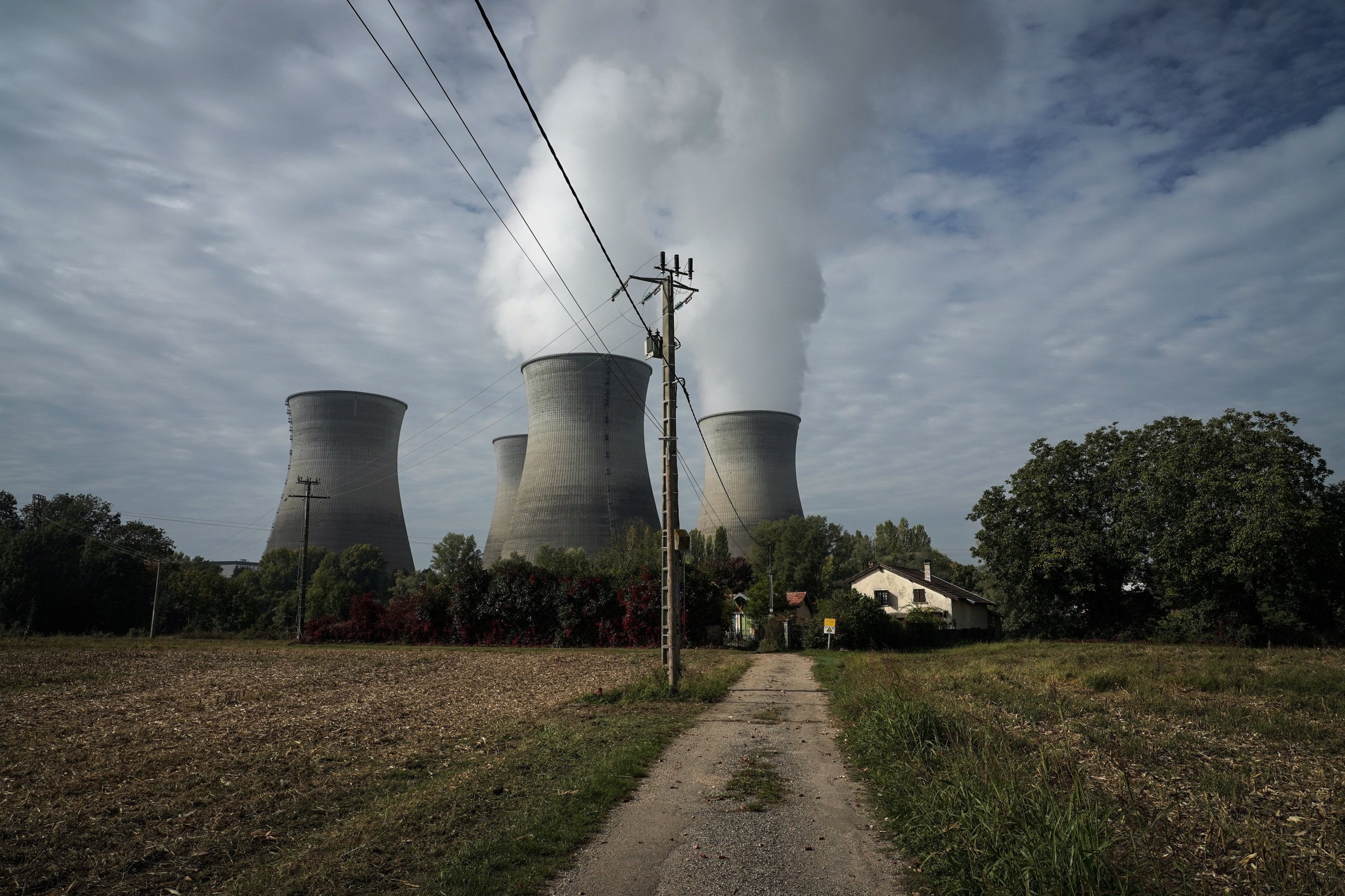
France has more grandiose plans for building nuclear reactors, but has no renewable energy targets.

France outstrips plans, to build additional nuclear plants beyond six
DAILY SABAH, BY AGENCE FRANCE-PRESSE – PARIS JAN 07, 2024
France is set to build eight new nuclear plants on top of six already announced, the energy minister has said, arguing more reactors are needed to hit carbon reduction targets.
A draft law set to be presented soon recognizes that “we will need nuclear power beyond the six first European Pressurized Reactors” (EPRs) announced by President Emmanuel Macron in early 2022, Agnes Pannier-Runacher told Sunday’s edition of the weekly newspaper Tribune Dimanche.
The bill will include a further eight plants that had until now been discussed as an “option” by the government, Pannier-Runacher said.
By contrast, the text would not include any targets for renewable energy generation by 2030, remaining “technologically neutral,” she added………………………………………………..
Pannier-Runacher suggested that the construction of even more than 14 nuclear reactors could be raised in talks with lawmakers once the energy bill reaches Parliament.
State energy firm EDF’s next-generation EPR has had a rocky start.
Three are online, one in Finland and two in China, after suffering massive construction delays and cost overruns that have also beset projects in Britain and France.
The first EPR in France, at Flamanville in Normandy, is set to come online for testing in mid-2024, EDF said last month – 17 years after construction started and at a cost of 12.7 billion euros ($13.9 billion), around four times the initial budget of 3.3 billion. more https://www.dailysabah.com/business/energy/france-outstrips-plans-to-build-additional-nuclear-plants-beyond-six
How Long Can Israel Defy the World?

More probably, however, Israel will resist such pressure and threat to resort to the Samson Option, i.e., a nuclear attack on the countries endangering “Israel’s right to exist”. In this worst-case scenario, Israel would be annihilated, but those who put pressure on it would also suffer enormous casualties. Obviously, no country in the world will run the risk of a nuclear attack to free the Palestinians.
By Prof. Yakov M. Rabkin, https://www.juancole.com/2024/01/long-israel-world.htm
Palestinians in Gaza are being decimated. Over 20,000 have been killed, mostly women and children. Three times more have been wounded. Some experts qualify it as genocide, others as massacre. Two million people have been displaced, many more than during the entire history of displacement of the Palestinians since the start of the Zionist settlement at the turn of the 20th century.
As Israel takes out hospitals and civilian infrastructure, infectious diseases and famine threaten to kill many more people. Several Israeli soldiers have been reported infected during the ground operations, one has died. General Giora Eiland suggests relying on the weapon of imminent epidemics in lieu of endangering the lives of Israeli soldiers in real warfare. Gaza is violently demodernized, bombed into stone age: hospitals, schools, power stations are bombed to rubble. What is happening appears unprecedented.
The number of victims is, indeed, unprecedented. Yet the unfolding tragedy follows the old script of the Zionist project, which is European in more than one sense. It is rooted in ethnic nationalisms of Eastern and Central Europe. Nations must live in their “natural” environment where those not of the titular nationality would be at best tolerated. According to an Iraqi journalist writing in 1945, the Zionists’ goal was “to expel the British and the Arabs from Palestine so that it will be a pure Zionist state. … Terrorism [was] the only means that can bring the Zionist aspirations to fruition.” Significantly, the journalist did not consider the future state Jewish but Zionist. He must have known that Jews from countries other than those of Europe and European colonization constituted a miniscule part of the Zionist movement.
Zionism is also European because it is a settler colonial project, the most recent of all. The Palestine Jewish Colonization Association was among several agencies devoted to turning the multi-ethnic and multi-confessional Palestine into “the Jewish homeland”. The Jewish Colonial Trust, the predecessor of Bank Leumi, today Israel’s largest bank, financed the segregated economic development of the Zionist settlement in Palestine. In the usual colonial manner, the early Zionist settlers were eager to establish a separate colony rather than integrate in the existing Palestinian society.
Zionism is not only the most recent case of settler colonialism. Israel is unique in that, unlike Algeria or Kenya, it is not populated by migrants from the colonial metropolis. But this distinction matters little to the indigenous Palestinians who, just like in many other such situations, are being displaced, dispossessed, and massacred by the settlers. Displacement is enacted not only in Gaza, where it is massive and indiscriminate, but also in the West Bank where it is more focused.
To attain its objectives Zionism has had to rely on major powers, the British Empire, the Soviet Union, France and, nowadays, the United States. The Zionists, committed to the success of their project, have been pragmatic and ideologically promiscuous. They would enjoy the support of the Socialist International during most of of the 20th century and then switch to become the darlings of White supremacists and the extreme-right.
Zionism is a nationalist response to anti-Jewish discrimination and violence in Europe. It deems antisemitism endemic and ineradicable, explicitly rejecting long-term viability of Jewish life anywhere except in “the Jewish state” in Palestine. The Nazi genocide in Europe reinforced this conviction and offered legitimacy to the fledgling colonial project while such projects were crumbling elsewhere in the world. The Zionist project, ignoring the opposition of the Palestinians and other Arabs, simply exported Europe’s “Jewish question” to Palestine.
Palestinians gradually understood that the Zionist project would deprive them of their land and resisted it. This is why the early Zionist settlers, most of them from the Russian Empire, formed militias to fight local population. They perfected their terrorist experience gained during the Russian revolution of 1905 with colonial counterinsurgency measures learned from the vast experience of the British. Established against the will of the entire Arab world, including the local Palestinians, the state of Israel has had to live by the sword. The army and the police have worked hard to keep the Palestinians down (the British used to call it “pacification of the natives”). Their task has been to conquer as much land as possible with as few Palestinians remaining on it as possible.
Many Palestinians now in Gaza had been expelled from the very area in what is now Israel that experienced the Hamas attack in October. They are mostly refugees or descendants of refugees. The high density of the population in an enclosed area (some called it “the largest open-air prison) makes them particularly vulnerable. When Israel did not like the election of Hamas in 2006, it laid siege to Gaza, limiting access to food, medicines, work etc. Israeli officials were openly admitting they were putting the Gazans “on a diet” while having to “mow the lawn” from time to time, subjecting the Gazans to violent “pacification”.
The 16 years of siege intensified anger, frustration and despair leading to the Hamas attack. In response, Israeli used drones, missiles, and aircraft to continue what used to be done with rifles and machine-guns. The death rate has increased, but the goal of terrorizing Palestinians into submission has remained the same. The name of the current onslaught on Gaza is “Iron Swords”, aptly reflects the Zionists’ century-old choice to live by the sword rather than coexist with the Palestinians on equal terms. Ein berera, “we have no choice”, the common Israeli excuse for unleashing violence, is therefore misleading.
Impunity and Impotence
Israel has enjoyed a large degree of impunity, with dozens of UN resolutions simply ignored. Only once, in the wake of the 1956 Suez War, was Israel forced to give up territorial conquest. This happened under a threat coming from both the United States and the Soviet Union. Since then, Israel has relied on firm U.S. diplomatic and military support, which has become more brazen with the advent of America’s unipolar moment after the dissolution of the Soviet Union. This support is now embodied in the supply of American munitions for the war on Gaza, in the presence of U.S. Navy vessels protecting Israel from third parties and in the U.S. vetoes at the Security Council. Israel and the United States are joined at the hip. Europe, while being more critical of Israel rhetorically, closely follows the U.S. line just as it does in the Ukraine conflict. In both conflicts, European chanceries appear to have abdicated independence and, possibly, ability of action.
Israel’s impunity also reflects impotence of the rest of the world. While Muslim and Arab governments decry and protest Israel’s assault on Gaza, none has imposed or even proposed economic, let alone military, sanctions. Fewer than a dozen of countries has suspended diplomatic relations or withdrawn diplomatic personnel from Israel. None has broken relations. Russia and China, along with most of the Global South, express their dismay at civilian casualties in Gaza but they too stop short of going beyond words.
The double standard of the Western reactions is obvious. Drastic economic sanctions imposed on Russia contrast with the generous supply of arms and at best verbal pleas for moderation in response to the Israeli actions in Gaza. In just a few months, the IDF surpassed Russia’s almost two-year record in the Ukraine with respect to the volume of explosives dropped, the number of people killed and wounded, and the civilian/military ratio among the casualties. Western sermons about inclusion and democracy are unlikely to carry much weight in the rest of the world. Palestinian lives do not really matter to Western governments.
This lackadaisical reaction to the massacres in Gaza contrasts with the indignation they provoke in the population in much of the world. Massive demonstrations call on governments to stop the violence. In response, most Western governments have strengthened measures to restrict freedom of speech. Opposition to Zionism has been declared antisemitic, the most recent such measure is the equivalence between anti-Zionism and antisemitism decided by the U.S. Congress in December 2023. Accusations of antisemitism are leveled at students, often Jewish, who organize pro-Palestinian demonstrations. Televised debates as to what constitutes “genocidal antisemitism” on elite university campuses divert attention from what looks like a real genocide in Gaza. Antisemitism serves as Israel’s Wunderwaffe, its ultimate weapon of mass distraction.
Pro-Palestinian demonstrations have been banned in several European capitals where commercial or cultural boycott of Israel has been made illegal. This pressure from the ruling class, including courts, police, corporate media, employers, and university administrations, creates a powerful sense of frustration among the rank-and-file. Shortly after attacking Gaza in 2009, and over sharp criticism of its treatment of the Palestinians, Israel was unanimously accepted into the Organization for Economic Cooperation and Development (OECD), made up of some 30 countries that boast democratic structures of governance. Former Canadian prime minister Stephen Harper, while still in office, placed solidarity with Israel above Canada’s interests to the point of claiming that his government would support Israel “whatever the cost.”
Support for Israel, tending to increase with income, has become a class issue. It serves as another reminder of the growing estrangement between the rulers and the ruled, the proverbial One Per Cent and the rest. It remains to be seen if popular frustration with the hypocrisy of governments in their support for the war on Gaza may one day result in political change that would begin to dent Israel’s impunity.
Israel is a state without borders. Geographically, it has expanded with military conquest or colonization. The Zionist movement and successive Israeli governments have taken great pains never to define the borders they envisage for their state. Israeli secret services and the army pay no heed to borders, striking targets in its neighboring countries at will. This borderless character is also embodied in Israel’s claim that it belongs to the world’s Jews rather than to its citizens. This leads to the overt transformation of Jewish organizations around the world into Israeli agents. This is particularly the case in the United States. Israeli agents, such AIPAC, ensure Israel’s interests in elections on all levels, from school boards to the White House. Israel has even played the legislative against the executive branch in Washington. Yet this unabashed political interference attracts a lot less criticism in mainstream media that the alleged meddling of China or Russia. Israel also intervenes in the political process of other countries.
Conflict Between Jewish and Zionist Values
Zionism has provoked controversy among Jews from its very inception. The first Zionist congress in 1897 had to be moved from Germany to Switzerland because German Jewish organizations objected to holding a Zionist event in their country. The Zionist argument that the homeland of the Jews is not the country, where they have lived for centuries and for which many have spilled their blood in wars, but in a land in Western Asia. For many Jews, this message bears disconcerting resemblance to that of the antisemites who resent their social integration.
Initially irreligious, Zionism transforms spiritual terms into political ones. Thus, ‘am Israel, “the people of Israel”, defined by their relationship to the Torah, becomes ethnicity or nationality in the Zionist vocabulary. This prompted the prominent European rabbi Jechiel Weinberg (1884-1966) to emphasize that “Jewish nationality is different from that of all nations in the sense that it is uniquely spiritual, and that its spirituality is nothing but the Torah. […] In this respect we are different from all other nations, and whoever does not recognize it, denies the fundamental principle of Judaism.”
Another reason for Jewish opposition to Zionism has been moral and religious. While prayers for the return to the Holy Land is part of the daily Judaic ritual, it is not a political, let alone a military objective. Moreover, the Talmud spells out specific prohibitions of a mass move to Palestine before Messianic times, even “with the accord of the nations”. This is why the Zionist project with its addiction to armed violence continues to repel many Jews causing them embarrassment and even revulsion.
True, the Pentateuch and several of the books of the Prophets, such as Joshua and Judges, teem with violent images. But far from glorifying war, Jewish tradition identifies allegiance to God, and not military prowess, as the principal reason for the victories mentioned in the Bible. Jewish tradition abhors violence and reinterprets war episodes, plentiful in the Hebrew Bible, in a pacifist mode. Tradition clearly privileges compromise and accommodation. Albert Einstein was among the Jewish humanists who denounced Beitar, the paramilitary Zionist youth movement, today affiliated with the ruling Likud. He deemed it to be“ as much of a danger to our youth as Hitlerism is to German youth”.
Zionism vigorously rejects this “exilic” tradition, which it deems “consolation of the weak”. Generations of Israelis have been brought up on the values of martial courage, proud of serving in the military. Zionists regularly refer to their state as a continuation of biblical history. The idea of the Greater Israel is rooted in the literal reading of the Pentateuch. Zionism demands total commitment and brooks little opposition or criticism. The passion of the Zionist commitment has led to assassination of opponents, pitched fathers against sons, splitting Jewish families and communities. The historian Eli Barnavi, former Israeli ambassador in Paris, warns that “the dream of a ‘Third Kingdom of Israel’ could only lead to totalitarianism”. Indeed, many Jewish community leaders, undisturbed by the specter of “dual loyalty”, insist that allegiance to the state of Israel must prevail over all others, including allegiance toward their own country.
The Zionists, whether in Israel or elsewhere, have long claimed to be “the vanguard of the Jewish people” with Zionism replacing Judaism for quite a few Jews. Their identity, initially religious, has become political: they are supporters and patriots of Israel, “my country right or wrong” rather than adherents of Judaism.
Generationally, Israel appears an exception among the wealthy countries. With every generation Israelis become more combative and anti-Arab. While in other countries young Jews are usually less conservative than their parents and embrace ideas of social and political justice, young Israeli Jews defy this trend. Israeli education inculcates martial values and the belief that, had the state of Israel existed before World War II, the Nazi genocide would never have taken place. What sustains the fragile unity of the non-Arab majority is fear: a siege mentality that most frequently takes the self-image of a virtuous victim determined to prevent a repetition of the Nazi genocide. The memory of that European tragedy has become a tool of mobilizing Jews to the Zionist cause. Its political utility is still far from exhausted.
Use of the genocide to foster Israeli patriotism has been unflagging since the early 1960s. After an air show in Poland in 2008, three Israeli F-15 fighter jets bearing the Star of David and piloted by descendants of genocide survivors overflew the former Nazi extermination camp while two hundred Israeli soldiers observed the flyover from the Birkenau death camp adjacent to Auschwitz. The remarks of one of the Israeli pilots stressed confidence in the armed forces: “This is triumph for us. Sixty years ago, we had nothing. No country, no army, nothing.”
State schools promote the model of a fighter against “the Arabs” (the word “Palestinian” is usually avoided), glorifies military service turning it into an aspiration and a rite of passage to adulthood. No wonder that Hamas and, by extension, all the Gazans, are often referred to as Nazis. Dozens of Israeli officials and public figures have openly incited genocide of Palestinians: dropping a nuclear bomb on Gaza, flattening it into a parking lot, etc. Israeli political scientists have pointed out that civic religion provides no answers to questions of ultimate meaning, while at the same time it obliges its practitioners to accept the ultimate sacrifice. Civic space in Israel has become associated above all with “death for the fatherland.”
Elsewhere in the world, the Hamas attack has galvanized the Zionist commitment under the slogan “We stand with Israel!”. Massive and organized efforts are made to fight the information war. Israeli officials rely on a network of powerful supporters, including executives of high-tech companies, who make sure that the internet amplifies pro-Israel voices and muffles or cancels pro-Palestinian discourse. Censorship leads to self-censorship because pro-Palestinian involvement impedes job prospects and threatens careers.
However, unlike Israelis, diaspora Jews become less and less committed to Jewish nationalism with every generation. Growing numbers of young Jews refuse to be associated with Israel and choose to support the Palestinians. The systematic AI assisted massacre of Palestinians in Gaza has swollen their ranks, particularly in North America. Most spectacular protests against Israel’s ferocity have been organized by Jewish organizations, such as Not in My Name and Jewish Voice for Peace in the United States, Independent Jewish Voices in Canada, and Union juive française pour la paix in France. Prominent Jewish intellectuals denounce Israel and are found among the most consistent opponents of Zionism.
Albeit incongruently, these Jews are accused of antisemitism. Even more incongruently, the same accusation is hurled at ultra-Orthodox anti-Zionists. While Israel’s claim to be the state of all Jews exposes them to disgrace and danger, many Jews who support the Palestinians rehabilitate Judaism in the eyes of the world.
The Samson Option
Since its beginning, critics of Zionism have insisted that the Zionist state would become a death trap for both the colonizers and the colonized. In the wake of the ongoing tragedy triggered by the Hamas attack, these words of an ultra-Orthodox activist spoken decades ago sound prescient:
“Only blind dogmatism could present Israel as something positive for the Jewish people. Established as a so-called refuge, it has, unfailingly been the most dangerous place on the face of the earth for a Jew. It has been the cause of tens of thousands of Jewish deaths … it has left in its wake a trail of mourning widows, orphans and friends…. And let us not forget that to this account of the physical suffering of the Jews, must be added those of the Palestinian people, a nation condemned to indigence, persecution, to life without shelter, to overwhelming despair, and all too often to premature death.”
The fate of the colonized is, of course, incomparably more tragic than that of the colonizer. Palestinian citizens of Israel face systemic discrimination while their kin in the West Bank are subject to repression from both the Israeli military and their subcontractors in the Palestinian Authority. Arbitrary detention without trial, dispossession, checkpoints, segregated roads, house searches without warrant and more and more frequent death at the hands of soldiers and settler vigilantes have become routine on the West Bank. Palestinians in Gaza, even prior to the operation Iron Swords, lived isolated on a small territory, with their access to food and medicine strictly rationed by Israel. Even peaceful protest would be met by lethal fire from Israeli soldiers sitting on the other side of the barrier. There was little work and no prospects for the future. The pressure cooker was ready to explode as it did on October 7.
Since then, thousands of Gazans have been killed and wounded by one of the most sophisticated war machines in the world. This provokes more anger and hatred among the Palestinians both in Gaza and the West Bank. Israelis find themselves in a vicious circle: chronic insecurity inevitable in a settler colony reinforces the Zionist postulate that a Jew must rely on force to survive, which in turn provokes hostility and creates insecurity.
Over two decades ago David Grossman, one of the best-known Israeli authors, addressed the then prime minister Ariel Sharon known for his bellicosity:
“We start to wonder whether, for the sake of your goals, you have made a strategic decision to move the battlefield not into enemy territory, as is normally done, but into a completely different dimension of reality — into the realm of utter absurdity, into the realm of utter self-obliteration, in which we will get nothing, and neither will they. A big fat zero….”
Critical voices within and particularly outside Israel call on the Israelis to recognize that “the Zionist experiment was a tragic error. The sooner it is put to rest, the better it will be for all mankind.” In practice this would mean ensuring equality for all the inhabitants between the Jordan and the Mediterranean and a transformation of the existing ethnocracy into a state of all its citizens. However, Israeli society is conditioned to see in such calls an existential threat and a rejection of “Israel’s right to exist”.
The settler colonial logic radicalizes society in the direction of ethnic cleansing and even genocide. No Israeli government would be capable of evacuating hundreds of thousands of settlers to free space for a separate Palestinian state; the chances of giving up Zionist supremacy in the entire land are even lower. Only strong-armed international pressure may make Israel consider such a reform.
More probably, however, Israel will resist such pressure and threat to resort to the Samson Option, i.e., a nuclear attack on the countries endangering “Israel’s right to exist”. In this worst-case scenario, Israel would be annihilated, but those who put pressure on it would also suffer enormous casualties. Obviously, no country in the world will run the risk of a nuclear attack to free the Palestinians.
Pressure is more likely to come from the public but largely misdirected at local Jewish communities, almost all of them associated in the public mind with Israel. While these Jews, even the most Zionist, have never influenced Israel’s policies towards the Arabs, they have become easy scapegoats for Israel’s misdeeds.
American politicians seem to agree. President Trump referred to Israel as “your state” when addressing a Jewish audience in the United States. President Biden said that “without Israel, no Jew anywhere is safe.” Israeli leaders appreciate such conflations between Judaism and Zionism, between Jews and Israelis. These conflations boost Zionism, feed antisemitism and push Jews to migrate to Israel. This is a welcome prospect for the country, which these new Israelis will strengthen with their intellectual, entrepreneurial, and financial resources as well as supply more soldiers for the IDF.
Despite the opprobrium and public denunciations, Israel appears immune to pressure from the rest of the world. Israeli disdain for international law, the United Nations and, a fortiori, to moral arguments is proverbial. “What matters is what the Jews do, not what the gentiles say”, was Ben-Gurion’s favorite quip. His successors, a lot more radical than Israel’s founding father, will make sure that the tragedy of Gaza does not lead to any compromise with the Palestinians. The Israeli mainstream mocks or simply ignores well-intentioned pleas of liberal Zionists, an endangered species, to “save Israel from itself”. However counterintuitive today, only changes within Israeli society may shake the usual hubris. In the meantime, Israel will continue to defy the world.
About the Author:
Yakov M. Rabkin is Professor Emeritus of History at the Université of Montréal. His publications include over 300 articles and a few books: Science between Superpowers, A Threat from Within: a Century of Jewish Opposition to Zionism, What is Modern Israel?, Demodernization: A Future in the Past and Judaïsme, islam et modernité. He did consulting work for, inter alia, OECD, NATO, UNESCO and the World Bank. E-mail: yakov.rabkin@umontreal.ca. Website: www.yakovrabkin.ca
TODAY. The subtle ways that the nuclear lobby manipulates corporate media. Example KISHA CLUBS OF JAPAN
Media in other countries are controlled in a similar way, but Japan has the longest and most successful story of corporate media’s obedience to the pro nuclear dogma that prevails across the world.
Paul Richards 5 Jan 24
Starting with, the source: KISHA CLUBS OF JAPAN
Japan’s Press Club System, known as “kisha clubs,” is a unique arrangement that fosters close relationships between journalists and the institutions they cover. This system is prevalent in government offices, ministries, major corporations, and other influential entities.
1] STRUCTURE OF PRESS CLUBS
Exclusive Access:
Journalists from major media outlets join these clubs, gaining exclusive access to news briefings, announcements, and events hosted by specific institutions. Each institution typically has its own press club.
Regular Briefings:
Officials provide information to journalists within these clubs, fostering a symbiotic relationship. In return for access, journalists are expected to adhere to certain unwritten rules, which can include not reporting certain sensitive topics or leaks without permission.
2] HIERCAHICAL EFFECT
Access to Information:
Press club members receive information directly from sources, creating an information hierarchy where those outside the clubs might lack timely or direct access to crucial news.
Influence and Reporting Bias:
The system can create a situation where reporters develop close ties with the sources they cover. This might lead to a reluctance to publish critical or controversial information that could jeopardise their access or relationships. As a result, it can challenge the ability of the press to hold political power accountable.
3] CHALLENGING POLITICAL POWER
Limited Critical Reporting:
While the press club system provides access, it can also limit critical reporting. Journalists might self-censor to maintain access or avoid upsetting their sources, which can indirectly challenge the media’s ability to scrutinise political power thoroughly.
Alternative Media and Challenges:
Independent or smaller media outlets not part of these press clubs might face difficulties accessing information. However, these outlets sometimes challenge the established narrative and provide alternative perspectives, albeit with limited resources and access to official sources.
While the Press Club System provides journalists with unique access to information and sources, it also poses challenges to independent and critical reporting.
The hierarchical nature of information distribution in Japan within these clubs can lead to a cosy relationship between the press and political power, impacting the media’s ability to fully challenge or scrutinise those in authority.
There have been many concerns raised about the Japanese government’s ruling parties, and pressure on media outlets indirectly, such as withholding access to information or using informal means to influence coverage.
This might affect the independence and objectivity of reporting, though direct censorship is not a prevalent practice.
Overall, Japan maintains, it has a reputation for press freedom compared to many other countries.
However, concerns persist about self-censorship, indirect influences, and the limitations of the press club system that can impact the diversity and depth of news coverage.
The nature of political control over the press in Japan tends to be more subtle and indirect rather than overt and explicit.
A Visit to Belmarsh Prison, Where Julian Assange Awaits His Final Appeal Against Extradition to the US

The Wikileaks founder says he fears his own imprisonment, US government surveillance, and restrictions on the group’s funding have effectively scared off potential whistleblowers.
The Nation, CHARLES GLASS, 2 Jan 24
MP BELMARSH—It is 2:30 PM on Wednesday, December 13, when Julian Assange strides into the visitors’ area. He stands out in the column of 23 prisoners for his height—6′ 2″—and flowing white locks with trimmed beard. He squints, looking for a familiar face among the wives, sisters, sons, and fathers of the other inmates. I am waiting, as assigned, at D-3, one of about 40 sets of small coffee tables surrounded by three upholstered chairs—two blue, one red—screwed into the floor of what looks like a basketball court. We spot each other, walk forward, and embrace. It is the first time I have seen him in six years. I blurt, “You’re pale.” Through a mischievous smile I remember from past meetings, he jokes, “They call it prison pale.”
He has not been outdoors—apart from a minute when police dragged him into a paddy wagon—since he took refuge in London’s cramped Ecuadorian Embassy in June 2012. The embassy’s French windows had afforded glimpses of sky. Here at Belmarsh maximum security prison in southeast London, his abode since April 11, 2019, he has not seen the sun. Warders confine him to a cell for 23 out of every 24 hours. His single hour of recreation takes place within four walls, under supervision. His paleness is best described as deathly……………………………………………………………………………………………………………………………..
Julian and I sit down, face to face, me on the red chair, he on one of the blues. Above us, glass globes hide cameras that record the interactions between inmates and their guests.
…………………………. Julian had thought prison meant communal meals at long tables, as in the movies. Belmarsh’s warders shove the food into the cells for prisoners to eat alone. It is hard to make friends that way. He has been there longer than any other prisoner apart from an old man who had served seven years to his four and a half. There are occasional suicides, he tells me, including one the night before.
……………………………… I ask whether he still has the radio he had struggled to obtain in his first year. He did, but it was not working due to a defective plug. Regulations permit each prisoner to have a radio purchased from prison stores. The authorities, however, said no radios were available for him. When I heard about it, I sent him a radio. It was returned. I then sent him a book on how to make a radio. That too was returned………………………………………………………………
How did he, a news addict, keep in touch? The prison allows him to read printouts of news stories, and friends write to him. With the invasions of Ukraine and Gaza, I say, now is an important time for whistleblowers to send documents to WikiLeaks. He regrets that WikiLeaks is no longer able to expose war crimes and corruption as in the past. His imprisonment and US government surveillance and restrictions on WikiLeaks’ funding wards off potential whistleblowers. He fears that other media outlets are not filling the vacuum.
Belmarsh does not offer him education programs or communal activity, like orchestra practice, sports, or publishing a prison journal, that are standard at many other prisons. The regime is punitive; although Belmarsh’s 700-odd inhabitants are on remand, awaiting trial or appeal. They are Category A prisoners, those who “pose the most threat to the public, the police or national security” and stand accused of terrorism, murder, or sexual violence.
We talk about Christmas, which is just another day in Belmarsh: no turkey, no carols, no presents. The prison is closed to visitors on Christmas Day and the day after, and the prison has informed his wife, Stella Moris, that she and their two young sons, Gabriel and Max, may not see him on Christmas Eve. He can attend Catholic Mass celebrated by the Polish chaplain, who has become a friend.
………….Apart from occasional visiting days, his days are all the same: the confined space, the loneliness, the books, the memories, the hope that his lawyers’ appeal against extradition and life imprisonment in the United States will succeed……….. https://www.thenation.com/article/activism/julian-assange-wikileaks-belmarsh-prison/
The Long History Of Zionist Proposals To Ethnically Cleanse The Gaza Strip

Ethnic cleansing or “transfer” is an intrinsic part of Zionism’s early history, and has remained an essential feature of Israeli political life. More recently, “transfer” has been mainstreamed by billing it as encouraging “voluntary emigration.”
SCHEERPOST, By Mouin Rabbani / Mondoweiss, December 29, 2023
Senior Israeli leaders, including Prime Minister Binyamin Netanyahu, are again publicly advocating the ethnic cleansing of the Gaza Strip. Their proposals are being presented as voluntary emigration schemes, in which Israel is merely playing the role of Good Samaritan, selflessly mediating with foreign governments to find new homes for destitute and desperate Palestinians. But it is ethnic cleansing all the same.

Alarm bells should have started ringing in early November when U.S. Secretary of State Antony Blinken and other Western politicians began insisting there could be “no forcible displacement of Palestinians from Gaza.” Rather than rejecting any mass removal of Palestinians, Blinken and colleagues objected only to optically challenging expulsions at gunpoint. The option of “voluntary” displacement by leaving residents of the Gaza Strip with no choice but departure was pointedly left open.

Ethnic cleansing, or “transfer” as it is known in Israeli parlance, has a long pedigree that goes back to the late-nineteenth-century beginnings of the Zionist movement. While the early Zionists adopted the slogan, “A Land Without a People for a People Without a Land,” the evidence demonstrates that, from the very outset, their leaders knew better. More to the point, they clearly understood that the Palestinians formed the main obstacle to the establishment of a Jewish state in Palestine. This is for the simple reason that, to them, a “Jewish state” denotes one in which its Jewish population acquires and maintains unchallenged demographic, territorial, and political supremacy.
Enter “transfer.” As early as 1895, Theodor Herzl, the founder of the contemporary Zionist movement, identified the necessity of removing the inhabitants of Palestine in the following terms: “We shall try to spirit the penniless population across the border by procuring employment for it in the transit countries, while denying it any employment in our own country … expropriation and the removal of the poor must be carried out discreetly and circumspectly.” David Ben-Gurion (née Grün), Chairman of the Executive Committee of the Jewish Agency for Palestine, and later Israel’s first prime minister, was more blunt. In a 1937 letter to his son, he wrote: “We must expel the Arabs and take their place.”
Writing in his diary in 1940, Yosef Weitz, a senior Jewish National Fund official who chaired the influential Transfer Committee before and during the Nakba (“Catastrophe”), and became known as the Architect of Transfer, put it thus: “The only solution is a Land of Israel devoid of Arabs. There is no room here for compromise. They must all be moved. Not one village, not one tribe, can remain. Only through this transfer of the Arabs living in the Land of Israel will redemption come.” His diaries are littered with similar sentiments.
The point of the above is not to demonstrate that individual Zionist leaders held such views, but that the senior leadership of the Zionist movement consistently considered the ethnic cleansing of Palestine an objective and priority. Initiatives such as the Transfer Committee, and Plan Dalet, initially formulated in 1944 and described by the pre-eminent Palestinian historian Walid Khalidi as the “Master Plan for the Conquest of Palestine,” additionally demonstrate that the Zionist movement actively planned for it.
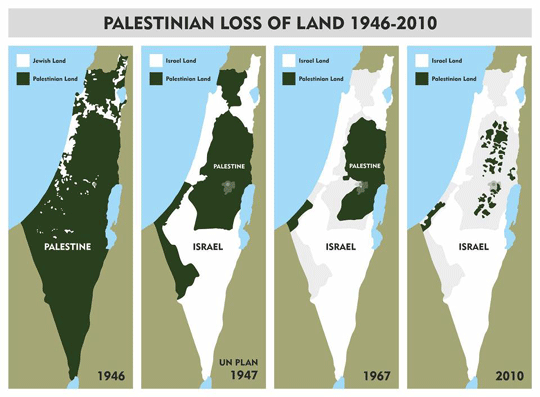
The 1948 Nakba, during which more than four-fifths of Palestinians residing in territory that came under Israeli rule were ethnically cleansed, should, therefore, be seen as the fulfillment of a longstanding ambition and implementation of a key policy. A product of design, not of war (historical Christmas footnote: the Palestinian town of Nazareth was spared a similar fate only because the commander of Israeli forces that seized the city, a Canadian Jew named Ben Dunkelman, disobeyed orders to expel the population, and was relieved of his command the following day).
That the Nakba was a product of design is further substantiated by the Transfer Committee’s terms of reference. These comprised not only proposals for the expulsion of the Palestinians but, just as importantly, active measures to prevent their return, destroy their homes and villages, expropriate their property, and resettle those territories with Jewish immigrants. Weitz, together with fellow Committee members Eliahu Sassoon and Ezra Danin, on June 5, 1948, presented a three-page blueprint, entitled “Scheme for the Solution of the Arab Problem in the State of Israel,” to Prime Minister Ben-Gurion to achieve these goals. According to leading Israeli historian Benny Morris, “there is no doubt Ben-Gurion agreed to Weitz’s scheme,” which included “what amounted to an enormous project of destruction” that saw more than 450 Palestinian villages razed to the ground.
The understandable focus on the expulsions of 1948 often overlooks the fact that ethnic cleansing remains incomplete unless its victims are barred from returning to their homes by a combination of armed force and legislation, and thereafter replaced by others. It is Israel’s determination to make Palestinian dispossession permanent that distinguishes Palestinian refugees from many other war refugees.
After 1948, Israel put out a whole series of fabrications to shift responsibility for the transformation of the Palestinians into dispossessed and stateless refugees onto the Arab states and the refugees themselves. These included claims that the refugees voluntarily left (they were either expelled or fled in justified terror); that Arab radio broadcasts ordered the Palestinians to flee (in fact, they were encouraged to stay put); that Israel conducted a population exchange with Arab states (there was nothing of the sort); and the bizarre argument that because they’re Arabs, Palestinians had numerous other states while Jews have only Israel (by the same logic, Sikhs would be entitled to seize British Columbia and deport its population to either the rest of Canada or the United States). More importantly, even if uniformly substantiated, none of these pretexts entitles Israel to prohibit the right of Palestinian refugees to return to their homes at the conclusion of hostilities. It is, furthermore, a right that was consecrated in United Nations General Assembly resolution 194 of December 11, 1948, which has been reaffirmed repeatedly since.
Ethnic cleansing after 1967
In 1967, Israel seized the remaining 22 percent of Mandatory Palestine — the West Bank (including East Jerusalem) and the Gaza Strip. Depopulation in these territories operated differently than in 1948. Most importantly, Israel, in addition to prohibiting the return of Palestinians who fled hostilities during the 1967 June War, and encouraging others to leave (by, for example, providing a daily bus service from Gaza City to the Allenby Bridge connecting the West Bank to Jordan), conducted a census during the summer of 1967 . Any resident who was not present during the census was ineligible for an Israeli identity document and automatically lost their right of residency.
As a result, the population of these territories declined by more than twenty percent overnight. Many of those thus displaced were already refugees from 1948. Aqbat Jabr Refugee Camp near Jericho, for example — until 1967, the West Bank’s largest — became a virtual ghost town after almost all its inhabitants became refugees once again in Jordan. So many Palestinians from the Gaza Strip ended up in Jordan that a new refugee camp, Gaza Camp, was established on the outskirts of Jerash. The occupied Palestinian territories would not recover their 1967 population levels until the early 1980s.
Within the West Bank, there were also cases of mass expulsion………………………………………………….
Depopulation through administrative rule
In subsequent years, Israel employed all kinds of administrative shenanigans to further reduce the Palestinian population of the West Bank and Gaza Strip. Until the 1993 Oslo Accords, for example, an exit permit from Israel’s military government was required to leave the occupied territory. It was valid for only three years and thereafter renewable annually for a maximum of three additional years (for a fee) at an Israeli consulate. If a Palestinian lost an exit permit or failed to renew an exit permit prior to its expiration for any reason (including bureaucratic foot-dragging), or couldn’t pay the renewal fee, or failed to return to Palestine prior to its expiration, that Palestinian automatically lost residency rights………………………………………………..
………………………………………. the mass expulsion was, as always in such matters, approved by Israel’s High Court of Justice after minor modifications. It ruled, among other things, that this was not a collective deportation but rather a collection of individual deportations……………………………………………….
Israel’s strategies to ‘thin’ Gaza’s population
With the focus in recent years on the intensified campaigns of ethnic cleansing in the West Bank, it is often forgotten that, for decades, the primary target for depopulation was the Gaza Strip, particularly its refugee population, which accounts for approximately three-quarters of the territory’s residents. Even before it occupied Gaza in 1967, Israel regularly promoted initiatives to achieve the “thinning” of its refugee population, with destinations as far afield as Libya and Iraq………………………………………………………………………………….
‘Transfer’ and Gaza today
In the decades since, “transfer,” often presented as the encouragement of voluntary emigration either by providing material incentives or making the conditions of life impossible, has become increasingly mainstreamed in Israeli political life. In 2019, for example, a “senior government official,” quoted in the Israeli newspaper Ha’aretz, expressed a willingness to help Palestinians emigrate from the Gaza Strip.
Mass expulsion has been gaining its share of adherents as well, and it is a position that is today represented within Israel’s coalition government. As has the idea that “transfer” should include Palestinian citizens of Israel — Avigdor Lieberman, for example, who was Israel’s Minister of Defense several years ago, is an advocate of not only emptying the West Bank and Gaza Strip of Palestinians but of getting rid of Palestinian citizens of Israel as well. As one might expect from a minister who was in charge of the Israeli military, he is also an advocate of “beheading” disloyal Palestinian citizens of Israel with “an axe.”
Against this background, Israel saw the attacks of October 7 as not only a threat but also as an opportunity. Fortified with unconditional U.S. and European support, Israeli political and military leaders immediately began promoting the transfer of Gaza’s Palestinian population to the Sinai desert.
The proposal was enthusiastically embraced by the United States and by Secretary of State Antony Blinken in particular. As ever hopelessly out of his depth when it comes to the Middle East, he appears to have genuinely believed he could recruit or pressure Washington’s Arab client regimes to make Israel’s wish a reality. Given Egyptian strongman Abdel-Fatah al-Sisi’s economic troubles, the fallout of the Menendez scandal, and the looming Egyptian presidential elections, it was suggested to him by the Washington echo chamber that it would take only an IMF loan, debt relief, and a promise to file away Menendez to bring Cairo on board. As so often when it comes to the Middle East, Blinken, armed only with Israel’s latest wish list, didn’t have a clue his indecent proposal would be categorically rejected, first and foremost by Egypt.
‘Transfer’ as ‘voluntary immigration’
The fallback position is opposition to “forcible displacement” at the point of a gun, while anything else is fair game. This includes reducing the Gaza Strip to rubble in what may well be the most intensive bombing campaign in history; a genocidal assault on an entire society that has killed civilians at an unprecedentedly rapid pace; the deliberate destruction of an entire civilian infrastructure, including the targeted obliteration of its health and education sectors; the highest proportion of households in hunger crisis ever recorded globally and the real prospect of pre-meditated famine; severance of the water and electricity supply leading to acute thirst, widespread consumption of non-potable water, and termination of sewage treatment; and promotion of a sharp rise in infectious disease. …………………………………………………..
In other words, if desperate Palestinians seek to flee this seventh circle of hell to save their skins, that’s considered voluntary emigration — their choice……………………………………………………………….
As an editorial in the Israeli newspaper Ha’aretz put it on December 27: “Israeli lawmakers keep pushing for transfer under the guise of humanitarian aid.”………………………………………………
Not individual Gazans, but “the people of Gaza.” Notably, such proposals consistently take it as a given that those departing will never return. ………………………………………….
While ethnic cleansing has been intrinsic to Zionist/Israeli ideology and practice from the very outset, it also has a flip side: the 1948 expulsion of the Palestinians expanded what had been a conflict between the Zionist movement and the Palestinians into a regional, Arab-Israeli one. The second Nakba Israel is currently inflicting on the Gaza Strip similarly appears well on its way to instigating the renewal of hostilities across the Middle East.
As importantly, the 1948 Nakba did not defeat the Palestinians, who initiated their struggle from the camps of exile, those in the Gaza Strip most prominently among them. It would take a Blinken level of foolishness to assume the expulsion of Palestinians from the Gaza Strip would produce a different outcome. https://scheerpost.com/2023/12/29/the-long-history-of-zionist-proposals-to-ethnically-cleanse-the-gaza-strip/
1 This month

of the week – Australians for War Powers Reform (AWPR)
To see nuclear-related stories in greater depth and intensity
 Antinuclear