Atomic veterans take their case to UK Supreme Court
Chronic health problems cited by them include cancers, skin defects, fertility problems and birth defects in their children…..In 1998, research from Durham University suggested that one-in-three servicemen died from bone cancers or leukaemia linked to the atomic and hydrogen bomb tests ….”Britain’s nuclear veterans are dying at a rate of around three every month but those who remain say they are determined to continue this battle.”

 Nuclear test veterans set for Supreme Court appeal bid, BBC News 28 July 11,Veterans involved in Britain’s nuclear weapons tests in the 1950s are taking their case for compensation to the Supreme Court. More than 1,000 ex-servicemen say exposure to radiation during tests conducted between 1952 and 1958 left them with ill-health.
A lower court said nine out of 10 lead cases were brought too late to be considered. The Ministry of Defence (MoD) has contested the claims since 2004. Veterans have been battling for recompense and a recognition of their claim that their poor health was caused by radiation exposure.
But the MoD has always denied any link between the veterans’ exposure to radiation and any illnesses.
Chronic health problems cited by them include cancers, skin defects, fertility problems and birth defects in their children.
Ken McGinley, a veteran, told the BBC: “On Christmas Island I witnessed five bomb tests. Basically we had no protection and warnings at all.”All we were told to do was to stand and look at the bomb [and] cover our eyes up in case we got blinded by the flash.”
The UK carried out a series of nuclear weapons tests in mainland Australia, the Montebello islands off the west Australian coast and on Christmas Island, in the Pacific in the 1950s.
In June 2009, the High Court gave the current group of veterans the right to sue the Ministry of Defence.
Veterans who served in the Army, Royal Navy and Air Force – as well as personnel from New Zealand and Fiji – were all exposed to radiation.
Last year the appeal judges said nine test cases were launched outside the legal time limit and so stopped them from proceeding.
In 1998, research from Durham University suggested that one-in-three servicemen died from bone cancers or leukaemia linked to the atomic and hydrogen bomb tests.
Regarding the latest legal bid by UK veterans, BBC defence correspondent Caroline Wyatt said: “Britain’s nuclear veterans are dying at a rate of around three every month but those who remain say they are determined to continue this battle.”
1 Comment »
Leave a comment
1 This month.
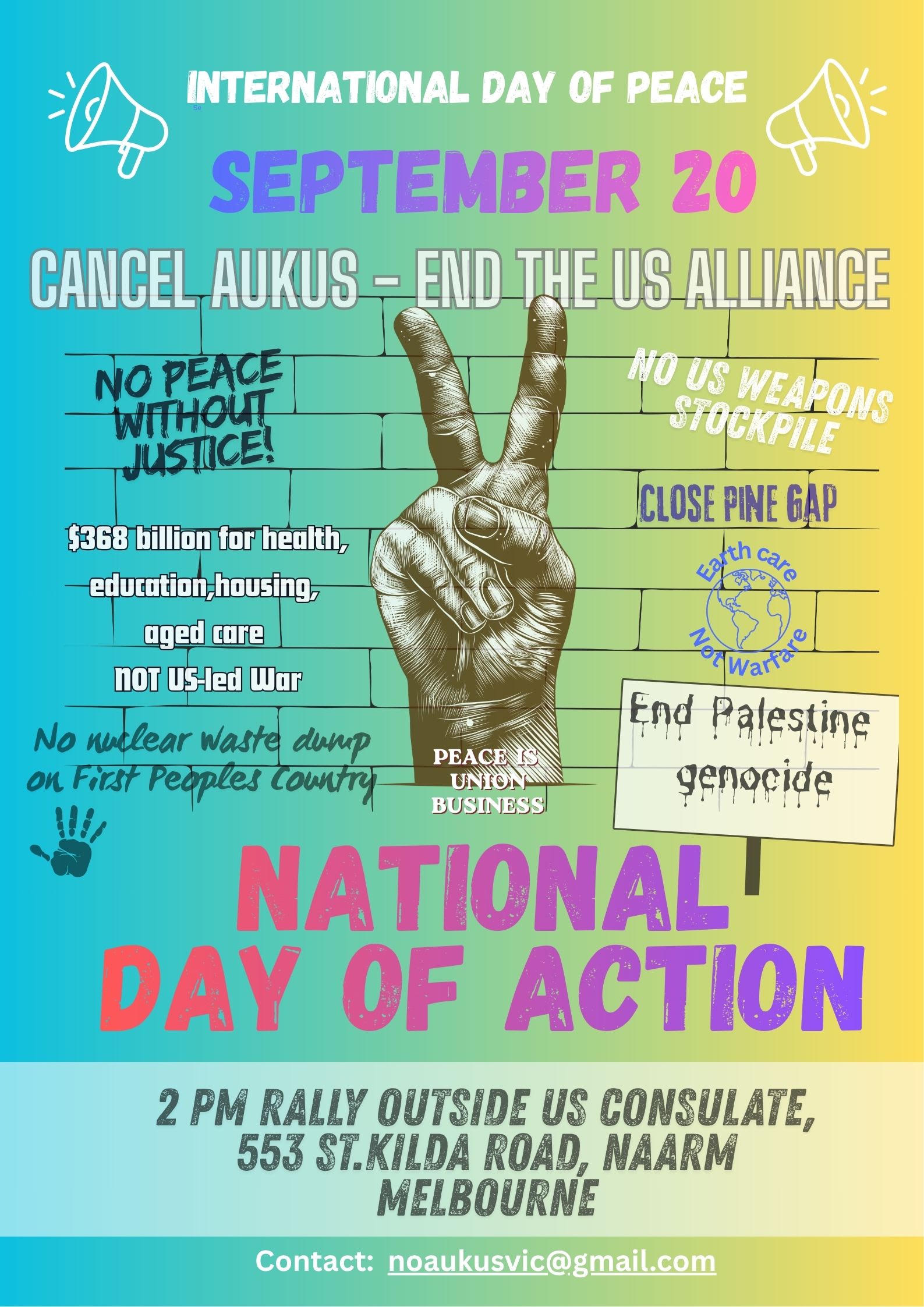
20 September –National Day of Action in Melbourne on the International Day of Peace

Help Aunty Sue Protect Her Land and Sacred Sites From Destructive Rocket Testing.
.

Australians deserve the truth
about
AUKUS – https://aukuspublicinquiry.com/


PETITION – To: Prime Minister Anthony Albanese and the Australian Labor Government

of the week – Australians for War Powers Reform (AWPR)
To see nuclear-related stories in greater depth and intensity
 Antinuclear
PRESS RELEASE FROM STACKS/GOUDKAMP LAW FIRM 29 JULY 2011
Australian veterans of British nuclear tests hopes for compensation boosted by UK court decision
The hopes of hundreds of Australian military veterans of British nuclear tests seeking compensation from the UK Ministry of Defence got a boost overnight after a significant victory in the British courts.
Sydney law firm Stacks/Goudkamp is representing hundreds of Australian veterans of the British nuclear tests at Maralinga and Montebello Island conducted in the 1950s and early 1960s.
Stacks/Goudkamp is pursuing compensation for the veterans’ ill health due to exposure to radiation against the UK Ministry of Defence. But Australian veterans are having to wait for the outcome of the British veterans’ lead cases before launching their own legal action against the UK Ministry of Defence.
Overnight lawyers for British veterans of nuclear tests seeking compensation defeated attempts by the UK Ministry of Defence to have their lead cases thrown out of court.
The UK Supreme Court ruled it will allow the veterans to argue their case that they are not out of time in bringing their action. Even if the veterans are successful and the Supreme Court allows them to go ahead, they will still have to argue their negligence case against a determined UK Ministry of Defence.
The victory provides hope to the 1100 British nuclear veterans that they will be able to proceed to the next stage in their long court battle – to provide evidence that veterans’ ill health including cancer, skin defects and fertility problems were related to the nuclear tests.
Tom Goudkamp of Stacks/Goudkamp said:
“The decision of the English Supreme Court to allow the UK veterans of Maralinga to appeal against the Court of Appeal’s decision against their claims keeps alive the prospect that these veterans, who have been so shamelessly treated by their own government, may finally receive the compensation they deserve.
“It also keeps alive the claims for the Australian veterans who have been waiting for the outcome of the UK case before launching their own class action against the UK Ministry of Defence.”
Stacks/Goudkamp lawyer Michael Giles, who is assembling the cases of the Australian nuclear veterans, is available for comment. He is in Newcastle, NSW.
Michael Giles (02) 4925 3355. Mobile: 0434 905 842
Michael@stacks/goudkamp.comp.au
Press release from
Frank Walker
Media consultant to Stacks/Goudkamp and Stacks/The Law Firm
0417 090 346
frank.walker@optusnet.com.au
LikeLike