World War 2 USA soldiers – radiation victims from Hiroshima and Nagasaki
 When the servicemen returned to the United States, many of them suffered from strange rashes and sores. Years later some were afflicted with disease (such as thyroid problems and leukemia) or cancer associated with radiation exposure. Little could be proven beyond a doubt, and all of their disability and compensation claims were denied,
The Last Great Untold Story of World War II—and the Lingering Effects Today, THE NATION, Greg Mitchell, August 19, 2011 “……..Most of the [U.S.]troops in Hiroshima were based in camps on the edge of the city, but a larger number did set up camps inside Nagasaki. Because of the alleged absence of residual radiation, no one was urged to take precautions. Some bunked down in buildings close to ground zero, even slept on the earth and engaged in cleanup operations, including disposing bodies, without protective gear. Few if any wore radiation detection badges.
“We walked into Nagasaki unprepared…. Really, we were ignorant about what the hell the bomb was,” one soldier would recall. Another vet said: “Hell, we drank the water, we breathed the air, and we lived in the rubble. We did our duty.”
A marine named Sam Scione, who had survived battles on Guadacanal, Tarawa and Okinawa, now arrived in Nagasaki, sleeping first in a burned-out factory, then a schoolhouse. “We never learned anything about radiation or the effects it might have on us,” he later said. “We went to ground zero many times and were never instructed not to go there.” A year later, on his return to the United States, his hair began to fall out and his body was covered in sores. He suffered a string of ailments but never was awarded service-related disability status.
The occupying force in Nagasaki grew to more than 27,000 as the Hiroshima regiments topped 40,000. Included were many military doctors and nurses. Some stayed for months. The US Strategic Bomb Survey sent a small group of photographers to take black-and-white photos of blast effects. By all accounts the Americans were charmed by the Japanese, thankful that the bomb might have helped end the war and profoundly affected by what they witnessed. “In the back of our minds, every one of us wondered: What is this atomic bomb?” a Nagasaki veteran later testified. “You had to be there to rea1ize what it did.” After describing the horrors, he added: “We did not drop those two [bombs] on military installations. We dropped them on women and children…. I think that is something this country is going to have to live with for eternity.”……
8 Comments »
Leave a reply to Daniel Cancel reply
1 This month.

PETITION – To: Prime Minister Anthony Albanese and the Australian Labor Government
Chernobyl: The Lost Tapes – A good documentary on Chernobyl on SBS available On Demand for the next 3 weeks– https://www.sbs.com.au/ondemand/tv-program/chernobyl-the-lost-tapes/235274195556
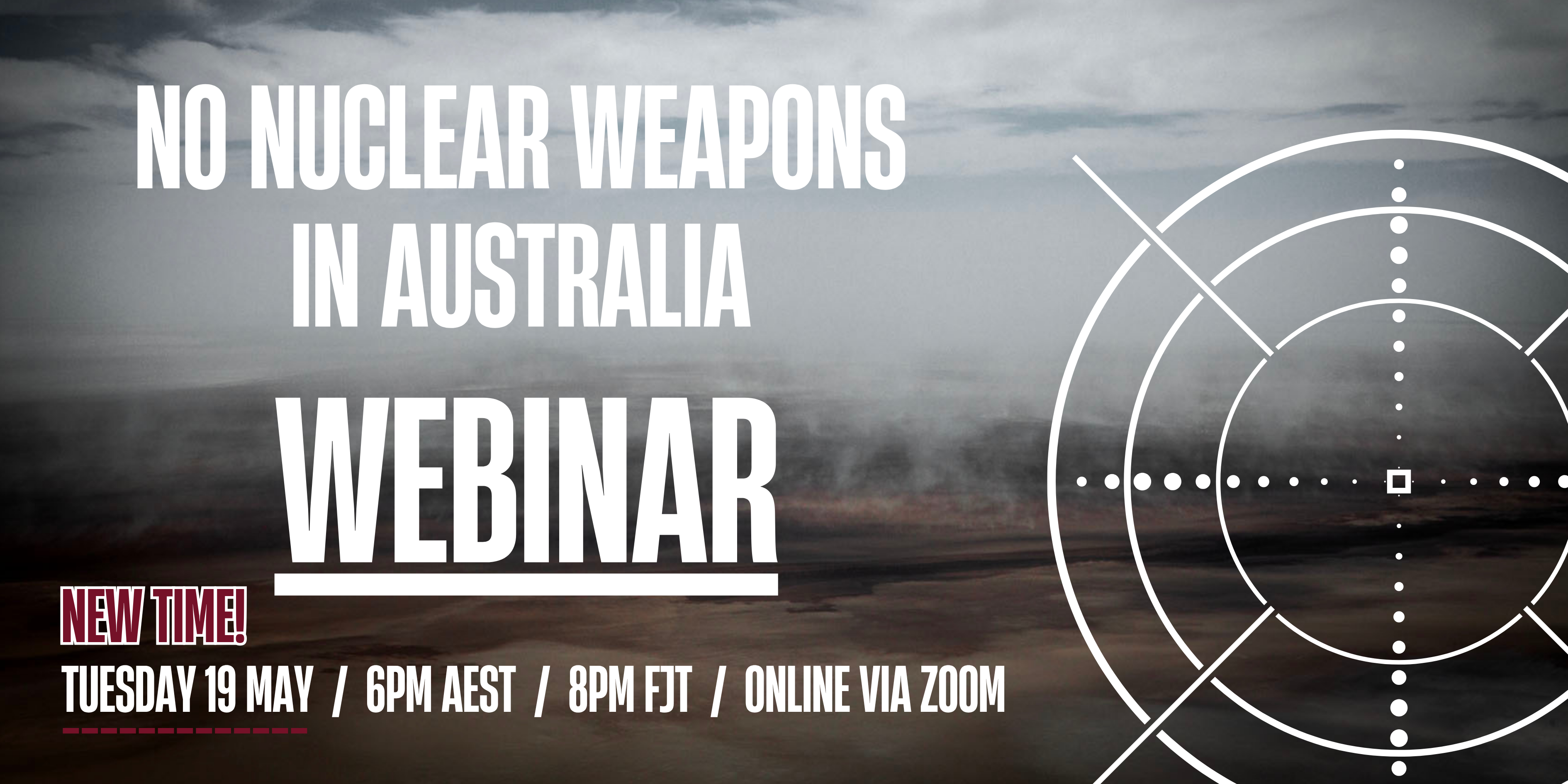
19 May – Webinar- Webinar: No Nuclear Weapons in Australia
Start: 2026-05-19 18:00:00 UTC Canberra, Melbourne, Sydney (GMT+10:00)
End: 2026-05-19 19:30:00 UTC Canberra, Melbourne, Sydney (GMT+10:00)
20 May – Webinar – The dangerous world of AUKUS, US, military occupation and suppression of dissent

National Webinar, 20th May, 2026, 6.30pm AEST. Confronting laws restricting/suppressing protest speech and action
Speakers: Former Sen. Rex Patrick, Lawyer Nick Hanna ,Arthur Rorris ,Jorgen Doyle, Sen David Shoebbridge,
Facilitator Kelley Tranter.

of the week – Australians for War Powers Reform (AWPR)
To see nuclear-related stories in greater depth and intensity
 Antinuclear
My father was a member of the US Navy in Hiroshima in 1945. In later life, in suffered from Parkinson Disease which likely could have developed due to Genetic changes due radiation exposure. He suffered much of his adult life and died at the age of 65 due to complications from Parkinsons.
Mark Abbey
LikeLike
My Grandfather was also there in Hiroshima as a member of the Australian Air force. He died of cancer at age 53…
LikeLike
My father, a WWII Navy veteran doing cleanup there with the Navy Construction Battalion SeaBees, died at age 48 of cancer. This made no sense to me and my ten very young brothers and sisters. Perhaps the radiation?
LikeLike
Perhaps indeed!
Tragically – radiation leaves no “marker”. Unlike mesothelioma – one can’t point directly to something like contact with asbestos.
But they could forensically follow up such cases, among military and navy personnel.
But – scared of compensation – all governments do what the British Ministry of Defence has done so well – not collect the records.
LikeLike
Upon more research, a respected Physicist stated that the radiation at ground zero is less than bomber pilots receive daily at altitude. Radiation poisoning was not very likely. I will take his word and just continue today to honor “all gave some, and some gave all.”
LikeLike
Well good for you
I’d be a bit impressed if that information came from “a respected biologist” “a respected geneticist’ “a respected epidemiologist” “a respected” anybody who came from an area of science that was less connected to the technicalities of the nuclear industry.
LikeLike
One reason I have wondered is all the payouts I hear about concerning Agent Orange exposure.
LikeLike
Of course compensation costs are a huge worry to governments – mind boggling if USA soldiers should ever get acknowledged for their depleted uranium exposure.
As to bomber pilots etc – well – their exposure to radiation has no connection whatever to naval officers’ exposure. And I bet that their cancer levels have not been carefully monitored, anyway.
And now they are investigating the health effects of cosmic on present day commercial pilots.
LikeLike