Climate Change Authority’s disturbing idea to hold back commercial solar energy
Commercial solar – putting solar panels on the roofs of shopping centers and factories – currently represents just 3 per cent of the total solar industry.
SunWiz and Solar Business Services found the unintended consequences of tinkering with the SRES and LRET were likely to greatly outweigh any benefits.
Commercial solar should be encouraged, not discouraged, and the embedded barriers to greater commercial take up should be addressed. Rather than jumping at shadows and trying to fix a non-existent commercial solar boom, it would be better if the CCA helped us to get off the ‘solar-coaster’ and provide the stable policy footing for solar the industry and public so desperately want.
Putting the brakes on commercial solar? http://www.climatespectator.com.au/commentary/putting-brakes-commercial-solar, 7 Nov 2012 John Grimes One of the more peculiar proposals that has surfaced in the Climate Change Authority’s review of the renewable energy target is the suggestion of reducing the size of solar systems covered by the Small-scale Renewable Energy Scheme.This was a thought bubble in search of a home – neither a specific recommendation nor a detailed proposal.
It is the sort of tinkering that has dogged the renewable energy target since it was first established in 2001, and it is making
Australia’s solar industry nervous.
The Climate Change Authority explicitly recommended against merging the Small-scale Renewable Energy Scheme and the Large-scale Renewable Energy Target.
They also recommended that the SRES structure should remain largely unchanged.
However, the CCA went on to float the idea of a half-way house that would see smaller commercial PV systems placed into the large-scale scheme as a way of reducing the cost of the SRES. The CCA’s Discussion Paper states, “the Authority is continuing to consider whether the threshold for a small-scale solar PV system should be reduced below its current 100 kW limit to for example 10 kW.”
This would be an uncertain solution to a non-existent problem. Commercial solar – putting solar panels on the roofs of shopping centers and factories – currently represents just 3 per cent of the total solar industry.
So, where is the evidence that a blow out in the cost of the SRES is
likely from systems sized 10kW-100kW?
To find out the Australian Solar Council commissioned industry
experts, SunWiz and Solar Business Services, to analyse this question,
as well as other recommendations from the CCA.
The Australian Solar Council report concluded that, even if the number
of PV systems above 10kw increased five-fold, transfer of this volume
of certificates from the SRES to the LRET “will have immaterial
consequences on the SRES cost”.
Worse, SunWiz and Solar Business Services found the unintended consequences of tinkering with the SRES and LRET were likely to greatly outweigh any benefits.
They concluded “there is little merit in terms of reduced pressure on
SRES creation or electricity prices from adjusting the size limit.”
The history of the RET is a history of unintended consequences, as
change after change has taken the scheme in unexpected directions.
Another change like this could trip up the smaller scale commercial
solar industry (just as it’s getting started) and deliver more
investor risk to the LRET at a time it needs more certainty and less
risk.
The Australian Solar Council report makes an important point. The
more electricity commercial customers use, the less they pay.
Customers consuming less than 50, 100, or 160 MWh/year (depending on
state) typically pay bundled tariffs that can exceed 35c/kWh. But once
this threshold is reached, business customers can access tariffs of
16c/kWh or less, with the balance of the bill made up by demand
charges.
The tariff structure creates a step-change in the financial viability
of PV. Offsetting expensive tariffs is the goal, but there is no
incentive for any sizable export of excess generation.
It is no wonder then that systems of 5-20kW in size appear to be the
sweet spot and, therefore, systems of these sizes are more likely to
proceed over the next few years, rather than larger systems.
There is already another significant barrier for larger commercial PV
systems. Up to 30kW a solar system is classified as a ‘micro-embedded
generator’ under the National Electricity Rules, and can be connected
in streamlined process.
Beyond that threshold, distribution network operators may impose
additional protection requirements, and the system connection process
generally becomes much more onerous.
There are significant benefits in growing a strong commercial solar
industry in Australia, which have been ignored by the CCA.
Even more than residential solar, commercial solar correlates strongly
with peak demand and has the potential to puncture Australia’s
spiraling peak demand problem.
Commercial solar should be encouraged, not discouraged, and the embedded barriers to greater commercial take up should be addressed. Rather than jumping at shadows and trying to fix a non-existent commercial solar boom, it would be better if the CCA helped us to get off the ‘solar-coaster’ and provide the stable policy footing for solar the industry and public so desperately want.
1 Comment »
1 This month
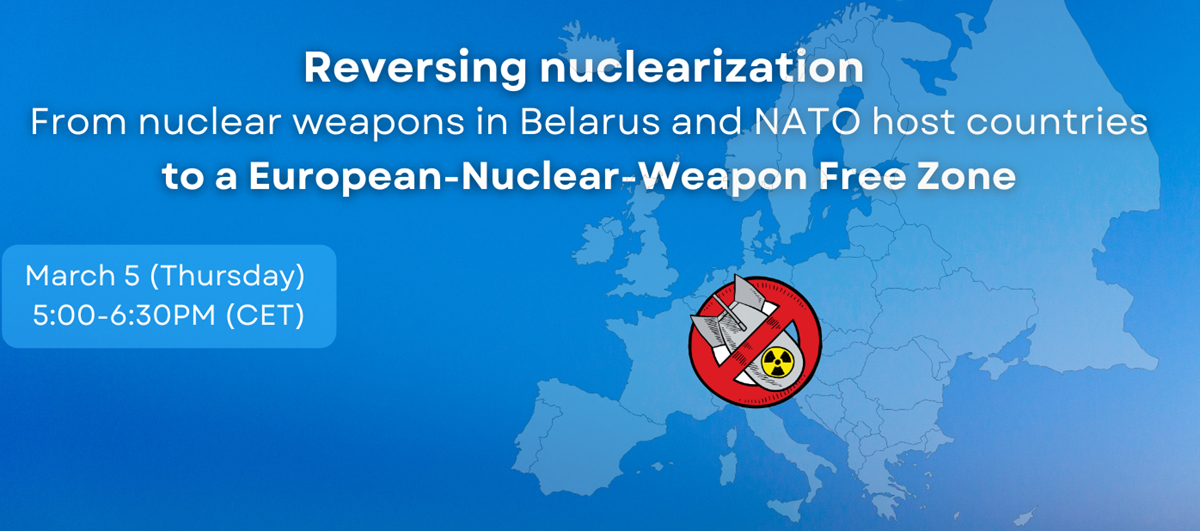
6 March -Online – Reversing nuclearization:
From nuclear weapons in Belarus and NATO host countries to a European-Nuclear-Weapon Free Zone
Mar 6, 2026 03:00 AM in Canberra, Melbourne, Sydney

of the week – Australians for War Powers Reform (AWPR)
To see nuclear-related stories in greater depth and intensity
 Antinuclear
[…] See on antinuclear.net […]
LikeLike
Pingback by Climate Change Authority’s disturbing idea to hold back commercial … | Enlightenings | November 7, 2012 |