Tony Abbott’s climate views a danger to our children’s future
 Christine Milne: Abbott’s climate stance jeopardises the future of children Lenore Taylor, political editor guardian.co.uk, 6 June 13, Greens leader plans ‘keep the bastards honest’ campaign, casting party as Senate curb on Coalition excesses Milne talks to Guardian Australia The Greens leader, Christine Milne, has suggested Tony Abbott is not fit for leadership because of his stance on climate change, but she is preparing a Democrats-style “keep the bastards honest” election campaign to stop Abbott’s “excesses” in the Senate, on the assumption he will be prime minister.
In an interview with Guardian Australia, Milne said the Liberal leader’s personal politics were threatening the planet. “Tony Abbott has been so irresponsible in terms of addressing global warming,” she said. “He has chosen to jeopardise the future of children, of generations henceforth, of species, by putting his own political perspective ahead of actually addressing global warming. Continue reading
Conflicting reports about Fukushima radiation and health
 On May 31, 2013 the United Nations said it did not expect to see elevated rates of cancer from Fukushima, though it recommended continued monitoring <link> .
The report by the U.N. Scientific Committee on the Effects of Atomic Radiation said prompt evacuation meant the dose inhaled by most people was low. But that assessment was at odds with a report by the World Health Organization in February that warned of an elevated cancer risk.
Life and Death Choices: Radiation, Children, and Japan’s Future, 04 June 2013 By David McNeill, The Asia-Pacific Journal: Japan Focus | Report Like most fathers, Fujimoto Yoji frets about the health of his young children. In addition to normal parental concerns about the food they eat, the air they breathe and the environment they will inherit, however, he must add one more: the radioactive fallout from a major nuclear disaster.
Three days after meltdown began at the Fukushima Daiichi nuclear plant on 11 March, 2011, Fujimoto moved his two daughters, then aged four and three, to safety hundreds of kilometers away. In December, 2012 the eldest of the two was diagnosed with adenoidal cysts, the prelude to a type of cancer that often strikes the salivary glands. “I was told by the doctor that it’s very rare,” he says.
Although Mr Fujimoto and his family were in Chiba Prefecture, over 100km (60 miles) from the nuclear plant and in the opposite direction from the worst of the fallout, he believes his daughter inhaled enough radiation to cause her illness. “I’m convinced this is because of the Fukushima accident.” Continue reading
And yet again, uranium market continues its down ward plummet

Uranium – little selling in May 9 News Finance 4 June 13 By Andrew
Nelson Uranium sellers were not inclined to sell in May and
unfortunately for them, the buyers weren’t really buying either. Continue reading
Greens push to cease Future Fund’s investments in fossil fuel industries
 Greens push to end Future Fund fossil fuel investment http://www.smh.com.au/opinion/political-news/greens-push-to-end-future-fund-fossil-fuel-investment-20130606-2nr45.html#ixzz2VVM2J100 Peter Hannam Carbon economy editor, 6 June 13,
The Greens will on Thursday launch a campaign to get the $85 billion Future Fund to sell its holdings in fossil-fuel industries, starting with coal. The fund’s energy holdings now total about $3 billion, and are exposed to a ”carbon bubble” as nations shift towards low-carbon fuels, Greens leader Christine Milne said. The International Energy Agency last year estimated that two-thirds of proven fossil-fuel reserves would have to remain in the ground if the world is to avoid global warming of 2 degrees above pre-industrial levels.
”It’s good for the planet, good for people and good for long-term financial management to get out of coal,” Senator Milne said.The Greens are hoping to match the success of the anti-tobacco push, which led to the Future Fund deciding in February to dump its $222 million holdings of tobacco-related investments.
The Future Fund ”takes a very serious approach to environmental, social and corporate governance issues”, spokesman Will Hetherton said. However, exiting coal or other fossil fuels ”is certainly not on the current agenda”.
Senator Milne is hoping the campaign will spread to other superannuation funds, mimicking the push among US universities and other institutions to divest fossil-fuel investments. Tom Swann, a spokesman for Fossil Free ANU, said his university’s council recently discussed plans to set up responsible investment guidelines and will seek public input.
ANU has more than $80 million invested in coal, coal seam gas and other fossil investments out of about $260 million in equities, he said.
“The divestment campaign has really taken off in the USA, with campuses and city governments as large as Seattle and San Francisco dropping their investments in fossil fuels because people understand that if it’s wrong to wreck the climate, it’s wrong to profit from the wreckage,” said US environmentalist, Bill McKibben, ahead of a speech at ANU on Wednesday. ”Divestment had a real impact in the fight against apartheid, something Nelson Mandela and Desmond Tutu recognise, and it’s an important part of tackling climate change
Australia in some ways a leader in renewable energy – but, after September – a renewable energy backwater?
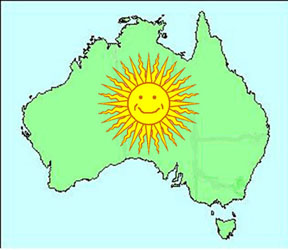 Clean Energy Australia Report http://www.energymatters.com.au/index.php?main_page=news_article&article_id=3778 6 June 13 Australia is on track to reach its 2020 Renewable Energy Target; with renewables supplying a record 13.14 per cent of Australia’s electricity in 2012.
According to the Clean Energy Council’s 2012 Clean Energy Australia Report, enough electricity from renewable sources was generated last year to supply the needs of more than 4 million Australian homes.
Just in terms of wind power alone, the nation’s 62 wind farms supplied electricity equivalent to the consumption of more than one million homes. Continue reading
“Calming anxiety” versus the rational fear of thyroid cancer from Fukushima radiation
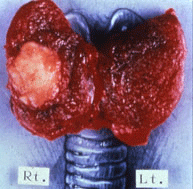 Life and Death Choices: Radiation, Children, and Japan’s Future, Truth Out, By David McNeill, The Asia-Pacific Journal: Japan Focus, 4 June 13 “…….Many parents point to a recent finding that over 40 per cent of nearly 95,000 children checked by Dr Suzuki’s team had thyroid ultrasound “abnormalities”. About 35 per cent had nodules or cysts on their thyroids.
The cysts and nodules are not cancers but they point to an inevitable spike in future health problems, says Mr Fujimoto – a view contested by the government. “I have absolutely no faith in what the Fukushima government is saying,” he retorts. “They want people to go back and live there so they clearly want to keep a lid on the impact of the disaster.”
Parents accuse government scientists of making their minds up before the survey began – Professor Suzuki’s team said last July that their aim was “to calm the anxiety of the population.”
Iwata Wataru, who heads a non-profit group that measures radiation, believes that’s an abuse of science. “A scientific study is normally designed to detect an effect and lead the investigator to accept or reject a stated hypothesis,” he said. “In this case, they have a strong prior belief that there is no physical effect of exposure.” Iwata wants more independent testing.
In the absence of a consensus on the likely impact of the Fukushima accident, the debate has hardened into two sides: people like Fujimoto an Iwata who say the authorities are playing down or even covering up the disaster, and the increasingly vocal official view that their worries are overblown. Those who stray too far from the official line risk being accused of fear-mongering.
That criticism misses the point, says Mochizuki Iori, author of the blog Fukushima Diary. “I was exposed in the first week,” he writes. “It’s irreversible. Not so many people can share this feeling in the world. I check my thyroid, lymph and symptoms of other things that I don’t even want to mention.”
Doctors say children’s thyroids, which help regulate the body’s metabolism, are especially sensitive to radioactive iodine. The gland is very active during childhood development. A study published last year in the International Journal of Cancer found elevated risks of thyroid cancer in childhood survivors of Hiroshima and Nagasaki, 50 years after they were exposed to radiation. The study found over a third of 191 thyroid cancers in adults who were children at the time of the bombing were probably due to exposure. <link>
Whatever the scientists say, Mr. Fujimoto insists he won’t be persuaded by government reassurances that it is safe to return to Fukushima. “There is so much information not getting out at the moment. It will be too late for my children when it is eventually released.”
http://truth-out.org/news/item/16768-life-and-death-choices-radiation-children-and-japans-future
1 This month


Help Aunty Sue Protect Her Land and Sacred Sites From Destructive Rocket Testing.
.

Australians deserve the truth
about
AUKUS – https://aukuspublicinquiry.com/

PETITION – To: Prime Minister Anthony Albanese and the Australian Labor Government

of the week – Australians for War Powers Reform (AWPR)
To see nuclear-related stories in greater depth and intensity

