Our last government led by Julia Gillard was publicly against nuclear power for Australia, now Tony Abbott is in favour of it.
Who says one Government wouldn’t authorize nuclear power for another one to pull the plug just like Angela Merkel?
Considering Australia’s lack of action on this front since 1969, it’s time to look elsewhere and quickly at that.
 We should not start using nuclear power in Australia by James Jesson, Collision Australia , 30 Jan 14 Debate surrounding the implementation of nuclear power is a well- trodden path in Australia. In 1969, a nuclear facility was proposed for Jervis Bay territory. Now there are no operating nuclear power sites in Australia and the concept shouldn’t be considered as the way forward for our energy needs.
The argument against nuclear power hasn’t changed since the debate started and it boils down to two key elements -danger and waste. History has shown us that humanity cannot run nuclear power plants with 100% efficiency.
The same could be said for existing fossil fuel power sources but the magnitude of a nuclear mistake has the potential to be far more catastrophic. The Chernobyl disaster in 1986 was the first and most prominent instance. While those set on implementing nuclear power would argue that human impact was minimal. 31 direct deaths in the first three months afterwards and 237 suffering from Acute Radiation Sickness aren’t insignificant.
The full medical consequences of the radiation over a long period of time are difficult to measure and the full extent of the incident will never be fully known. On top of this, around 135,000 citizens were misplaced from their homes.
Nuclear technology has developed since that time, but it couldn’t lessen or stop the impact of the recent Fukushima incident, the only other nuclear event after Chernobyl to measure a 7 on the International Nuclear Event Scale. Caused largely by a natural disaster, the aftermath especially casualty numbers immediately after the accident don’t seem too severe. Only time will tell if these numbers stay the same. There is no guarantee that if the same were to happen again though that the immediate results would be so forgiving.
With the rise of terrorism, nuclear power stations also present themselves as a target. A successful attack on sites like these would cause widespread devastation and irreversible damage.
The question that Australians have to ask themselves is if they can live with the consequences of simple human error or unforeseen circumstance?
An unfortunate side effect of the whole nuclear power process is the production of highly radioactive waste that is hazardous to both humans and the environment.
To dispose of the waste effectively is an extremely complicated process, one that no one seems to be able to reach a consensus on. There’s the ocean disposal method, it can be buried underground or even sealed in steel drums reminiscent of scenes in The Simpsons and there has even been talk of disposing of nuclear waste in space.
The answer is no one really knows. It has been a debated issue since my 55-year-old father was a young man. In the time since, progress might have been made but we are far from reaching a definitive solution.
What is clear is that it will take extraordinary political will to get nuclear energy off the ground.
In the wake of Fukushima, German Chancellor Angela Merkel hastened her phase out of Germany’s nuclear power stations so that there would be none active in 2022. This came after previous Governments built 9 reactors that accounted for 22.4% of its energy in 2010.
Climate Change scientists are urging Governments around the world to slash their Greenhouse Gas emissions by 2050 or face the consequences. The UMPNER report says that with accelerated construction rates that it will take 15 years to build.
Our last government led by Julia Gillard was publicly against nuclear power for Australia, now Tony Abbott is in favour of it.
The political goodwill to see the project through from start to finish would have to be enormous and endure over a long period of time.
Although it’s extremely unlikely that this would occur in the first place, let alone in the near future.
Who says one Government wouldn’t authorize nuclear power for another one to pull the plug just like Angela Merkel?
Even taking into account the accelerated construction rate, a decisive decision would have to be made soon in order for nuclear power to serve its purpose of reducing Australia’s Greenhouse Gas emissions.
Considering Australia’s lack of action on this front since 1969, it’s time to look elsewhere and quickly at that.
James Jesson has a degree in Professional Communication from RMIT. He is about to begin his Masters of Education at the University of Melbourne.
1 Comment »
Leave a comment
1 This month.
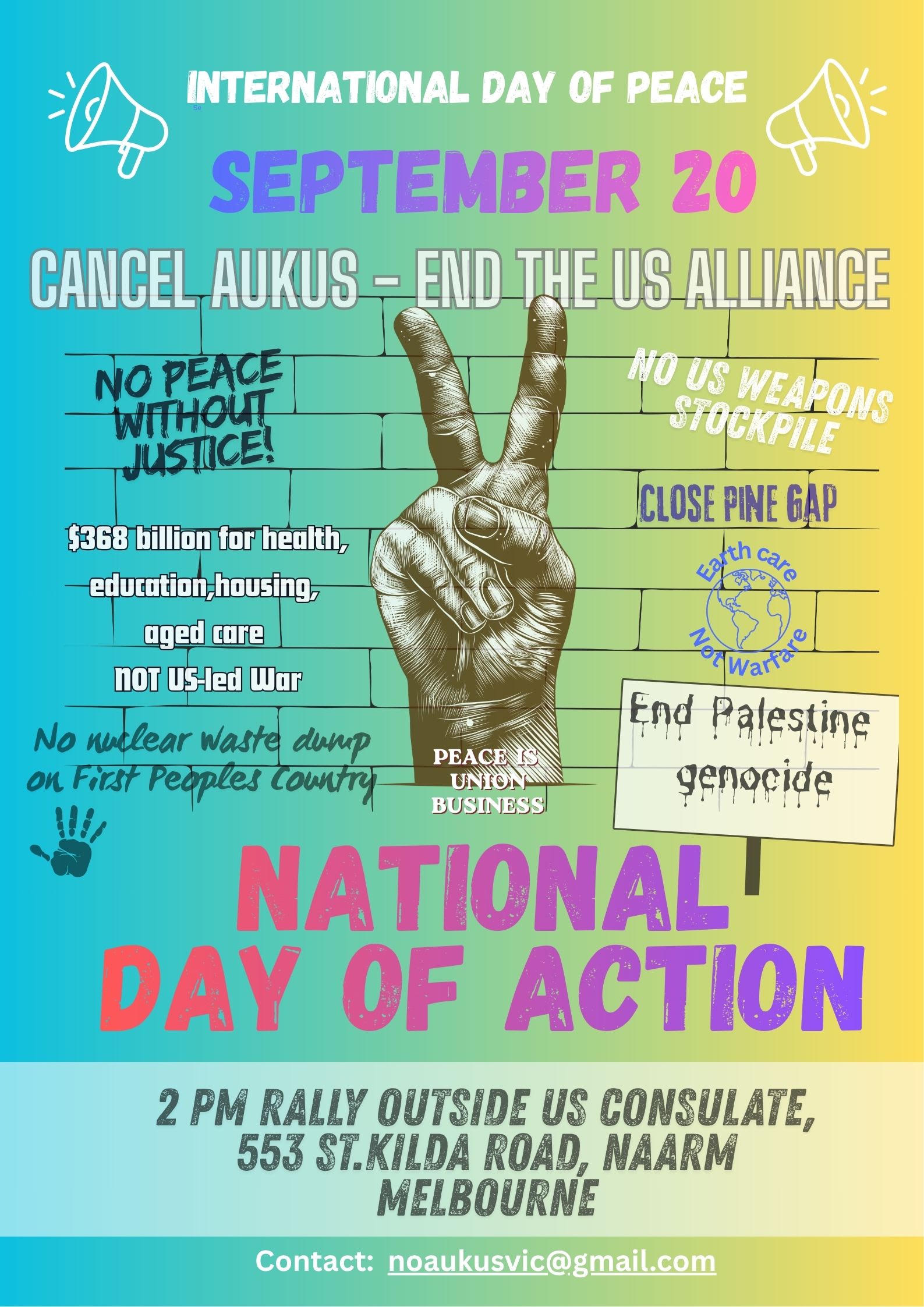
20 September –National Day of Action in Melbourne on the International Day of Peace


Help Aunty Sue Protect Her Land and Sacred Sites From Destructive Rocket Testing.
.

Australians deserve the truth
about
AUKUS – https://aukuspublicinquiry.com/


PETITION – To: Prime Minister Anthony Albanese and the Australian Labor Government

of the week – Australians for War Powers Reform (AWPR)
To see nuclear-related stories in greater depth and intensity
 Antinuclear
I have a solution, and we don’t have to wait for the government to take action. It’s called stand alone power. Renewable energy and a bank of batteries, we can make our own power and keep it for ourselves. We don’t have to pay the man for the use of our power nor do we have to pay the sun or wind for the use of our power.
We pay the setup cost and then 15 to 20 years later we replace those sungel batteries. Stand alone power pays for itself. We can do this property by property, there are companies out there that will set up your stand alone power system. Search online for stand alone power and narrow your search to Australia only, and there they are, choose one in your area. Go Green Australia!
LikeLike