Points for #NuclearCommissionSAust Submission to Issues paper 2 – “Further Processing” – theme for this week
Submissions on this Issue are due by August 3rd. Check tips on submitting.
Questions.2.2 and 2.4. – (feasible for South Australia to make more radioactive substances? What will be future demand for conversion, uranium enrichment, nuclear fuel processing?)
It would not be economically, socially or environmentally feasible for South Australia to further manufacture radioactive substances.
On economics, South Australia would be producing a product whose market is declining.
In Canada, Cameco’s failed laser uranium enrichment project added to its losses in 2014.(1).
“The nuclear industry is in decline: The 388 operating reactors are 50 fewer than the peak in 2002, while the total installed capacity peaked in 2010 at 367 GW before declining to the current level, which is comparable to levels last seen two decades ago.” (2)
Socially, people are becoming more aware of the hazards of uranium enrichment plants. Even in China – Jiangmen residents protested against proposed uranium processing plant (3)
Massive amounts of depleted uranium are created by uranium enrichment, causing social concern a social problem as well as an environmental problem.
Most of the byproducts (garbage) “from uranium enrichment (96%) is depleted uranium (DU)… There are vast quantities of depleted uranium in storage. The United States Department of Energy alone has 470,000 tons.[1] About 95% of depleted uranium is stored as uranium hexafluoride (UF6).” (4)
2.5. (South Australia to get involved in emerging nuclear technologies)
As to new and emerging technologies, it is becoming ever clearer that the untested technologies, such as Liquid Fluoride Thorium Reactors, will not be developed for very many years, during which time renewable energy technologies, including battery storage, are racing ahead. By the time the “Generation IV nuclear reactors are developed, (if they ever are), they will have no appeal in the 21st Century modern energy scene. Even now, their cost is astronomic, and they cannot attract investment. Their only hope is tax payer funding. No Generation IV nuclear reactor will be ready before 2050 (5) .
2.6 (What are the specific models for best practice in these activities?)
As to specific models – there is the failed Mixed Oxide Fuel (MOX facility) at USA’s Savannah River site – an environmental and financial disaster (6)
2.11 (What are the security implications?)
From uranium enrichment, and further processing, danger arises not only from the depleted uranium waste produced, but also from the transport of enriched uranium, – the danger of accidents or of terrorist attacks:
“The transportation of UF6 is dangerous, both because of what it is – a hazardous chemical and radioactive substance; and what it is a part of – the production process of nuclear reactor fuel, nuclear bombs, and uranium ammunition. It is documented that a release of UF6 in a populated area could have catastrophic consequences. Cylinders used to transport UF6will result in quantities of uranium and hydrofluoric acid (HF) in the immediate vicinity far exceeding levels dangerous to health (both chemically and radiologically).
Despite the danger, the dominant belief within governments and the nuclear industry is that UF6 transport is safe. This belief, regrettably, is mainly based on two assumptions shown to be false. These assumptions are that UF6 does not present a significant radioactive hazard, and cylinders used to transport UF6 are built strong enough to survive accident conditions. It is noted, however, that deciding whether or not the transportation of UF6 is dangerous involves qualitative moral and ethical decisions as well as analysis of quantitative, technical data.” (7)
2.13. (How to estimate the financial benefit to South Australians?)
This question is a joke. Given the unfathomable costs and the disastrous history of U.S. Enrichment Corporation (USEC) , it is ludicrous to expect any accurate assessment of the costs, let alone the very hypothetical benefits.(8)
2.14.(What impacts on other sectors of the economy?)
 Whereas in the past, countries like France and USA were complacent about setting up nuclear industries, and not worried about the effects on clean industries – farming, vineyards, fisheries, those days are over.
“The increased exposure of contaminants to crops and livestock, and the natural environment and cumulative “food chain” events of unregulated agricultural products, have the potential for significant safety and health risks to consumers. Perhaps more importantly, the public perception of risk or danger from uranium may also result in serious negative repercussions for the marketability of agricultural products from the nearby regions” (9)
“A nuclear facility in Washington State’s prime wine country is leaching radioactive groundwater….the DOE report released last year that indicated trace amounts of the radioisotope tritium were found in wine samples collected”. (10)
Any nuclear facility – from uranium mining through to waste facility poses a real impediment to tourism, as well as to agriculture. In England, the Lake District is currently facing this threat – Tourism, Milk and Cheese or Nuclear? (11)
All uranium/nuclear activities bring the danger of radioactive leakage to groundwater, with impacts on all agricultural industries. (12_)
So far, I have considered only the effects on industries of the normal operations of advanced uranium and fuel fabrication processes. But what if there’s an accident? (13) Chernobyl and Fukushima give an illustration here, of what happens to farming and fishing industries.
Fukushima’s fish industry is yet to recover. (14) Chernobyl: “Agriculture was hardest hit, with 784 320 hectares taken from production. Timber production was halted in 694,200 hectares of forest. Remediation made “clean food” production possible in many areas but led to higher costs in the form of fertilizers, additives and special cultivation processes.
Even where farming is safe, the stigma associated with Chernobyl caused marketing problems and led to falling revenues, declining production and the closure of some facilities. Combined with disruptions due to the collapse of the Soviet Union, recession, and new market mechanisms, the region’s economy suffered, resulting in lower living standards, unemployment and increased poverty. All agricultural areas, whether affected by radiation or not, proved vulnerable”. (15)
- http://www.starnewsonline.com/article/20141103/ARTICLES/141109942/-1/topic24?Title=Uranium-producer-Cameco-reports-a-third-quarter-loss-
- http://www.worldnuclearreport.org/WNISR2014.html
- The Standard July 12, 2013
- http://en.wikipedia.org/wiki/Nuclear_fuel_cycle
- http://www.no2nuclearpower.org.uk/nuclearnews/NuClearNewsNo74.pdf
- http://io9.com/failed-nuclear-weapons-recycling-program-could-put-us-a-1586851270
- Some Problems And Hazards Associated With The Transportation Of Uranium Hexafluoride by Miles Goldstick
- http://ecowatch.com/2013/uranium-titan-tumbles/
- Maggy J. Lewis http://scholarship.law.wm.edu/cgi/viewcontent.cgi?article=1015&context=wmelpr
- http://www.thedailybeast.com/articles/2015/03/28/hanford-nuclear-site-could-be-threatening-washington-state-s-best-vineyards.html
- https://miningawareness.wordpress.com/2015/02/13/tourism-milk-and-cheese-or-nuclear/
- . SLAC Scientists Search for New Ways to Deal with U.S. Uranium Ore Processing Legacy New Field Project Tests Link Between Organic Materials and Persistent Uranium Contamination http://www.newswise.com/articles/slac-scientists-search-for-new-ways-to-deal-with-u-s-uranium-ore-processing-legacy
- Possible Effects of Nuclear Radiation Accidents on Agriculture http://trace.tennessee.edu/cgi/viewcontent.cgiarticle=1439&context=utk_agbulletin?
- http://www.unisdr.org/archive/43503
- http://www.who.int/mediacentre/news/releases/2005/pr38/en/index1.html
Inaccurate information in #NuclearCommissionSAust’s Issues Paper 1
 the public are making submissions based on inaccurate information provided in the Issues Paper. The dismissive response of the Royal Commission undermines any confidence that the Issues Papers are accurate overviews of the nuclear industry.”
PUBLIC CONSULTATIONS BASED ON MISINFORMATION:
 ROYAL COMMISSION ON THE NUCLEAR FUEL CYCLE FAILS TO CORRECT FACTUAL ERROR IN ISSUES PAPER
Friends of the Earth Adelaide have recently informed the Royal Commission into the Nuclear Fuel Cycle of a factual error in Issues Paper 1, concerning the regulation of Aboriginal Heritage matters in South Australia. Issues Paper 1, which deals with the exploration, extraction and milling of uranium, states that Aboriginal sites of significance are protected by the Aboriginal Heritage Act 1988.
“The Royal Commission was informed in writing that this is not the case for BHP Billiton, South Australia’s biggest miner,” said Nectaria Calan of Friends of the Earth Adelaide. “Under the Indenture Act, which applies solely to BHP Billiton, the company’s Olympic Dam mine and some 15, 000 square kilometres of the surrounding Stuart Shelf are exempt from the Aboriginal Heritage Act 1988. This exemption would carry through to any future expansion of uranium mining by BHP Billiton at Olympic Dam or in the surrounding area.”
In his recent response to Friends of the Earth Adelaide Royal Commissioner Kevin Scarce insisted that in the event of an expansion of uranium mining Aboriginal Heritage matters would be regulated by the Aboriginal Heritage Act 1988.
“This is simply not the law throughout the state,” said Ms Calan. “Friends of the Earth Adelaide have supplied the Royal Commission with referenced information regarding the Roxby Downs (Indenture Ratification) (Amendment of Indenture) Amendment Act 2011, which amends the current Indenture Act to apply to any expansion formally announced by the company up until October 2016. If it was an honest mistake to begin with, it is negligent not to correct it.” Continue reading
Australia should wake up to the realities about nuclear waste, and shut down the Lucas Heights reactor
 Australia must face up to the reality that its radioactive trash that originated in Lucas Heights must come back to this country. It’s not a large amount, and probably could be safely stored at Lucas Heights.
Relatively safely, that is, because it will remain toxic for thousands of years.
Australians need to wake up to the distinction between this situation, of legal obligation to have wastes  returned, and the cranky South Australian plan to be the only nation in the world to actually INVITE in the world’s radioactive trash.
In a reasonable world, in which future generations are considered, the sane thing to do is to shut down the Lucas Heights nuclear reactor, and stop making this trash.
The cry will rise up – “medical benefits, blah blah”. Well the medical isotope thing was the fig leaf tacked on to the nuclear reactor. Medical isotopes can be made by a speciaLised cyclotron, as is being done in Canada. Sure, that’s expensive, FOR THIS GENERATION. The current system’s plan is to pass on the costs to our grandchildren and beyond. So yes, it LOOKS cheaper.
How will the Australian government handle voluntary hosting of radioactive trash?
If the federal Government’s intention of following a voluntarist approach is sincere, it will have to take these factors into account – plus a number of other points that have proven essential and are outlined in the report. The next 12 months will show if we will once again witness a forceful attempt to deal with Australia’s radioactive waste or if the Government is taking its promise of voluntarism serious – and how willing it is to learn from others and its own past.
Can Australia learn from international experience in managing radioactive waste? http://www.onlineopinion.com.au/view.asp?article=17536 Since over twenty years the Australian Government has been trying to declare sites to host our radioactive waste in a centralised facility: first in South Australia and then the Northern Territory. All of these attempts were flawed and ultimately failed – most recently the attempt to dispose of Australia’s low-level radioactive waste and store the intermediate level waste in Muckaty, NT. In 2014 the sustained opposition by Traditional Owners and a broad alliance of civil society organisations finally resulted in the Commonwealth abandoning its aggressive pursuit of the site.
With it came the conclusion that imposing nuclear dumpsites on communities apparently does not work and that a shift is needed towards a voluntarist approach. This is current international best practise and indeed a very welcome change in attitude.
In March this year, Industry Minister Ian Macfarlane called on landowners across Australia to nominate their land to host a radioactive waste management facility. The two-month nomination period ended in the beginning of May. It is currently followed by a desk-study to evaluate the nominated sites’ suitability to host the facility according to a number of social, environmental and economic factors. The resulting shortlist of sites, as well as a complete list of all nominations received, is expected to be released shortly, as Mr Macfarlane repeatedly announced it for the month of July.
It is therefore timely to have a look at what a voluntarist siting process should actually encompass and how Australia’s new approach rates against that.
In a new report titled ‘Wasting time? International lessons for managing Australia’s radioactive waste’, commissioned by the Australian Conservation Foundation, I analyse international experience in siting radioactive waste activities in regards to preconditions for their success. The lessons that can be drawn from this experience are of direct relevance to the currently ongoing Australian National Radioactive Waste Management Project.
Apart from other critical factors, the key characteristics of a successful and truly voluntarist siting process are community consent, continuous engagement with the local community throughout the duration of the project and a flexible timeframe. Continue reading
Labor leader Bill Shorten foresees a climate change election
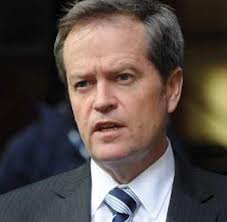 Bring on a climate change election, says Bill Shorten, SMH, July 24, 2015 Michael Gordon Political editor, The Age
Bill Shorten has challenged Tony Abbott to fight the next election on the issue of climate change, declaring: “I’ve got a three-word slogan for him: Bring it on.”
Describing climate change as “an economic and environmental cancer”, the Labor leader has vowed to build an emissions trading scheme and not be intimidated by “ridiculous scare campaigns”.
In a speech to be delivered at the party’s national conference in Melbourne, Mr Shorten says only Labor can save Australia’s renewable energy industry. While Tony Abbott has been a scathing critics of wind farms, Mr Shorten will tell the conference: “I want more Aussie farmers earning more money by putting wind turbines on their land.” Continue reading
Nuclear company Toshiba cooked the books to make nuclear power look profitable
Toshiba had hoped to foster the nuclear power business into a key profit driver.
Overall, Toshiba’s operating profits are expected to be revised down by some ¥200 billion
Toshiba cooked books to tune of ¥160 billion after nuclear disaster decimated profit targets: panel http://www.japantimes.co.jp/news/2015/07/19/business/corporate-business/toshiba-cooked-books-to-tune-of-%C2%A5160-billion-after-nuclear-disaster-decimated-profit-targets-panel/#.VbFdnaSqpHx The total amount of operating profits Toshiba Corp. booked through inappropriate accounting in the five years through March 2014 is believed to have reached around ¥160 billion, sources have said. Continue reading
Bjorn Lomborg’s Climate Consensus Centre for Flinders University?
The Abbott government has held talks with Flinders University about hosting a major policy centre in Adelaide based on the methodology of controversial Danish academic Bjorn Lomborg.
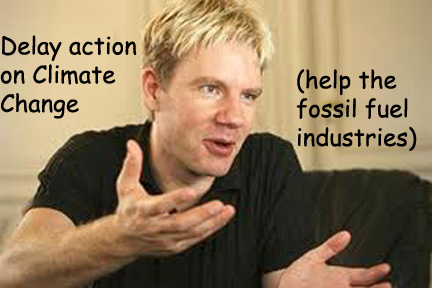
Education Minister Christopher Pyne has been searching for an institution willing to host the so-called Australia Consensus Centre, with $4 million in federal funds, since the University of Western Australia pulled out of its contract in May………
Dr Lomborg has attracted controversy for suggesting that the dangers of climate change have been overstated and that the world faces more pressing challenges, such as poverty.
A spokesman for Mr Pyne confirmed last night that talks with Flinders were at an early stage.
He said that the Adelaide-based university had recently approached the government about the establishment of the Copenhagen Consensus methodology in Australia.
A Flinders spokeswoman confirmed the approach and said the university was yet to make a decision……..
Flinders is led by vice-chancellor Colin Stirling, who took up the position in January. Professor Stirling was formerly the senior deputy vice-chancellor at Curtin University in Perth and a research fellow at the University of California, Berkeley.
The university’s chancellor — or chairman of the board — is leading Adelaide businessman Stephen Gerlach, a former chairman of oil company Santos……..
The federal opposition has questioned the political motivation of the $4 million government grant to set up the centre. It questioned how the centre was given the grant at a time when other universities were facing significant funding cuts.
In May, Professor Johnson said that many UWA academics had complained about Dr Lomborg’s integrity in the area of climate change research and were concerned that these alleged shortcomings might extend into other policy fields to be examined. http://www.theaustralian.com.au/higher-education/flinders-university-in-talks-on-lomborg-plan-for-consensus-centre/story-e6frgcjx-1227454548253
France going for renewables and carbon pricing, moving away from nuclear power

 France Passes New Energy Law Quadruples Carbon Price, Bloombergby Tara Patel , 23 July 15, French lawmakers adopted a long-delayed energy law that will reduce the country’s reliance on nuclear reactors and raise carbon prices almost fourfold.
Lawmakers late Wednesday passed legislation that included a last-minute amendment initially rejected by the government to increase the target price of carbon to 56 euros ($61.48) a ton in 2020 and 100 euros a ton in 2030, according to the National Assemblywebsite. The rate, now 14.50 euros a ton, climbs to 22 euros a ton in 2016 and is integrated in a levy on fossil fuels.
The rise provides “visibility” to the business community on how carbon prices will evolve, Environment Minister Segolene Royal said. Higher taxes on fossil fuels will be offset by lower levies on other products, she also said.
Tony Abbott’s sly way of stopping action on climate change
 Tony Abbott and his mates’ new path of climate change obstruction, Independent Australia, Patrick Keane 22 July 2015 Tony Abbott and opponents of action on climate change have determined a new path of obstruction, writes Patrick Keane: instead of doubting the science they will thwart the solution.
2015 is a momentous year in the story of climate change; never has the world been hotter and never has the Government of Australia done more to thwart action on Climate Change.
The Abbott Government has engaged in an unprecedented attack on renewable energy. …….
The answer is because the fossil fuel industry has married themselves to political interests and only death will them part. The Abbott Government, amongst others, provides a clear example of who – and what – stands in the road of action on climate change with their attacks on renewable energy……..https://independentaustralia.net/environment/environment-display/tony-abbott-new-path-of-climate-change-obstruction,7969
Canada, like Australia, an international climate pariah
At international climate conferences, the Harper government now is routinely handed out mock “fossil” awards for its failure to deal with climate change. Campaigners have accused Harper of treading on the rights of government scientists.
Canada’s PM blocking climate reform, says Ontario premier Kathleen Wynne, Guardian, Suzanne Goldenberg , 21 July 15
Leader of country’s biggest province condemns Stephen Harper ahead of elections: ‘There isn’t a collaborative process around any of this’ The leader of Canada’s biggest province has escalated her feud with the country’s prime minister, accusing Stephen Harper of obstructing efforts to fight climate change and calling on Canadians to make global warming a decisive issue in the coming elections.
In an interview with the Guardian, Kathleen Wynne, the Liberal premier of Ontario, brought long-simmering tensions with Harper over energy and economic policy to a rollicking boil, repeatedly calling out the Conservative prime minister for blocking efforts to cut carbon pollution.
When it came to fighting climate change, Harper was an obstruction rather than a help, she said……….
Wynne called on Canadians to vote on climate change in the October elections. “I hope that climate change and taking action on climate change is an election issue,” she said. Continue reading
United Nations Climate document needs to be short and clear

 U.N. climate deal draft must be shorter, clearer: minister
“It should be something that people can understand, be able to work with and negotiate from,” chief diplomat Tony de Brum told the Thomson Reuters Foundation by phone from France.
The current version of the draft text is a bewildering 85-page list of options, incorporating the demands of the nearly 200 nations participating in the process.
At the last round of formal U.N. talks in June, negotiators slimmed the document down by only a few pages and tasked the co-chairs with preparing a new version, to be published on Friday.
This unofficial document is expected to streamline the text, and may provide more structure aimed at sorting the elements of the draft into a potential core legal agreement and an accompanying set of decisions.
The message from this week’s two-day gathering in Paris of around 40 countries’ delegations, including 26 with ministers, and an earlier meeting of the world’s major economies was that the negotiating text should be short – around 40 pages – and ambitious, de Brum said………….
(Reporting by Megan Rowling; editing by Tim Pearce; Please credit the Thomson Reuters Foundation, the charitable arm of Thomson Reuters, that covers humanitarian news, women’s rights, trafficking, corruption and climate change. Visit www.trust.org) http://www.reuters.com/article/2015/07/22/us-climatechange-un-paris-idUSKCN0PW1NR20150722
Batteries are putting renewable power into the hands of the people
In the end, the solution might lie on a smaller scale: giving everyone the power to store their own power. Tesla is one company of several in this game: it recently announced a device called the Powerwall, designed for homes and businesses. It uses the same batteries as electric cars to store energy, either from renewables or cheap night-time electricity, ready to be used during the day.
If such systems become commonplace, we might all become a little more aware of where our energy is coming from, and how our own behaviour affects its use and production
The battery revolution that will let us all be power brokers, New Scientist 22 July 15

Companies are racing to find better ways to store electricity – and so provide us with cheaper energy when and where we want it “……... Although they are still dwarfed in most respects by the bulky lead-acid batteries found in almost every car on the road today, in 2015, lithium-ion batteries will account for around a third of the money spent on rechargeable batteries globally (see “Turn it on”), and just under a sixth of the total energy stored, according to French research firm Avicenne.
UK Conservative MP slams Tony Abbott’s Climate Policies

 Leading Tory MP calls Tony Abbott’s climate change policies ‘incomprehensible’, The Age July 23, 2015 Deborah Snow Senior writer Tony Abbott is copping a fresh broadside on climate change inaction from an unusual quarter. A prominent British Tory MP has launched a stinging attack on Prime Minister Tony Abbott’s climate change policies, calling them “incomprehensible”, “illogical” and a distortion of “what it means to be a Conservative”.
Mr Abbott’s dismissal of climate science … speaks to a distorted vision of what it means to be a Conservative.
Richard Benyon, Tory MP
Richard Benyon, a former environment minister under British leader David Cameron, says Mr Abbott’s decision to become the first world leader to abolish a carbon price is “mystifying” and his attack on renewable energy targets “bewildering”, especially for a “supposedly pro-business government”. Continue reading
USA Climate Denialists applaud Tony Abbott

 Bravo Australia! Abbott Government gets big tick from U.S. climate change deniers, Independent Australia
‘Bravo Australia!’
So came the cry earlier last week from one U.S.-based climate science denial group.
The Committee for a Constructive Tomorrow was reacting to the latest efforts by the Australian Government to stifle its renewable energy industry.
For a country that claims to be a “good global citizen” on climate change, the support from an organisation that claims human-caused climate change is largely a hoax should be seen as a major embarrassment. https://independentaustralia.net/environment/environment-display/abbott-government-gets-a-big-tick-from-us-climate-denialists,7961
1 This month
7 April – WEBINAR – Australia and the Doomsday Clock – Preventing nuclear war through NoFirstUse and other policies
Online | Tuesday April 7, 4:00-5:30pm, Australian Eastern Time / 8:00-9:30am Central Europe Time
– Access the registration link
15 April – Zoom –Nuclear Power is Not the Solution
Apr 15, 2026 01:00 AM in Canberra, Melbourne, Sydney

Join the International Physicians for the Prevention of Nuclear War (IPPNW) on Tuesday, April 14th for a timely webinar exploring the risks associated with nuclear power and challenging the myth that it offers a simple, safe, carbon-free solution to the climate crisis

of the week – Australians for War Powers Reform (AWPR)
To see nuclear-related stories in greater depth and intensity
 Antinuclear