Climate change slams global economy, study from Stanford and Berkeley shows #Auspol

Climate change could cause 10 times as much damage to the global economy as previously estimated, slashing output by as much as 23 per cent by the end of the century, a new research paper from US universities Stanford and Berkeley finds.
Looking at 166 countries between 1960 and 2010, the researchers identified an optimal average annual temperature that coincides with peak productivity. It’s 13 degrees celsius, or approximately the climate of San Francisco’s bay area (Sydney’s mean temperature last year was 19.3 degrees).
Countries in the tropics, already hotter than this optimal temperature, are likely to face the most dramatic economic pain from warming, found the study, published in the latest issue of Nature. Countries at or just past the 13-degree annual average, like the US, China, and Japan, may be increasingly vulnerable to losses as the temperature warms. Northern countries well below the ideal average may see benefits…
View original post 703 more words
CHANGE NOT JUST WHAT YOU’RE DOING, BUT WHAT YOU’RE BEING #Auspol
Being mindful of overconsumption and bad business practices will help to stem our planet’s degradation. But for the real answer, we need to look inside, writes David Rogers.
Seen from the point of view of a biologist, the success of Homo sapiens as a species is at the expense of many of the other species that share the planet. The key concepts here are “compression” and “competitive exclusion”: relative to other species, humans are omnicompetent omnivores that eat virtually every other edible animal on the planet and eliminate those animals that compete for resources in their evolutionary niche.
Seen from the point of view of an ecologist, the competitive success of humans threatens to be self-defeating. Humanity has co-evolved with a wide range of other species, and exists in a web of co- dependencies. The most vivid example of this in recent years is its reliance on insects for pollination…
View original post 1,531 more words
1 This month
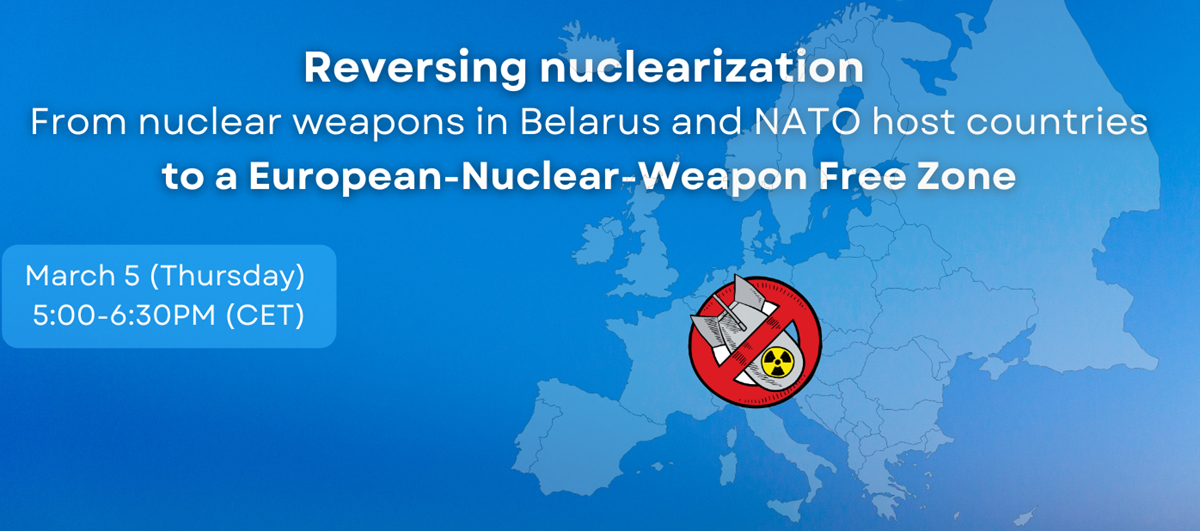
6 March -Online – Reversing nuclearization:
From nuclear weapons in Belarus and NATO host countries to a European-Nuclear-Weapon Free Zone
Mar 6, 2026 03:00 AM in Canberra, Melbourne, Sydney

of the week – Australians for War Powers Reform (AWPR)
To see nuclear-related stories in greater depth and intensity
 Antinuclear