World’s first fully solar-powered train on the New South Wales North Coast
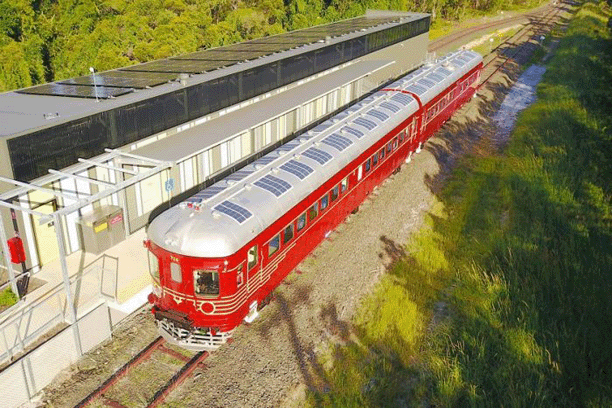
World-first solar train now leaving the platform in Byron Bay with zero emissions, ABC North Coast , By Bruce Mackenzie, 17 Dec 17, What is claimed to be the world’s first fully solar-powered train is operating on the New South Wales North Coast.
A refurbished 70-year-old ‘red rattler’ is running on a three-kilometre stretch of disused rail line at the popular tourist destination of Byron Bay.
It made its maiden trip yesterday with almost 100 passengers on board.
Electric bus solar system
The $4-million project is the brainchild of multi-millionaire businessman Brian Flannery, who owns a resort in the area.
“Hopefully it attracts people to Byron Bay,” Mr Flannery said.
“I think international tourists will come here to have a look at this world’s first solar train.
“So let’s see, in five years’ time they’ll probably still say I’m mad, but it’s a bit of fun.”
Tim Elderton, from the Lithgow Railway Workshop, was tasked with building curved solar panels and a battery system to power the train.
“Of course the major difference is it’s got solar panels on the roof so it can recharge itself.
“For those cloudy days we’ve also got 30 kilowatts of solar panels in this [station’s] roof here so we can also plug it in.
“On a sunny day like today we can do about four or five trips before we have to plug it in.”……..
Tram infrastructure a possibility
Longer trips than this one — 10 minutes to cover three kilometres or so — would require regular recharging stations along the route, but Mr Flannery said the technology might be suited to inner-city trams.
A lot of the tram networks of course have overhead wires and they’re electric but they’re powered off the grid from overhead,” he said.
“But in a case where you want to build a tramline without that infrastructure, I think you could.
“At various stations you could top the train [or tram] up.” http://www.abc.net.au/news/2017-12-16/world-first-solar-train-the-brainchild-of-byron-bay-millionaire/9265522
Glencore’s “non profit” group and the plan to pollute the Great Artesian Basin
Great Artesian Basin Protection Group Fight To Stop Nuclear Waste Dump In Flinders 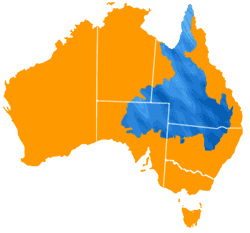 Ranges SA, 17 Dec 17
The “non-profit” wholly-owned subsidiary of Glencore, Carbon Transport and Storage Company spent two hours on Tuesday afternoon informing the community of their proposed plan to drill 1300m underground into the aquifer and inject CO2 in the form of a “supercritical liquid”, with half the density of water.
The project is still in its infancy, with another six years of modelling and technical studies to get through before a trial injection can even be contemplated in 2022.
If the trial does go ahead in 2022, 60,000 tonnes of liquid CO2 would be injected into the aquifer from a Glencore-owned property 15km west of town for three years to determine the feasibility of a larger-scale project.
The liquid CO2 would dissolve into the aquifer’s water, acidifying it to a pH of 5. Water has a pH of 7.
The acidified water would form a plume.”
https://m.chinchillanews.com.au/…/landholders-vow-…/3104799/
S.A. Govt fast-tracks switch to renewables with Zen contract — RenewEconomy
South Australia government fast-tracks switch to 100% renewable energy by signing contract with SIMEC ZEN Energy while Aurora 150MW solar tower and molten salt storage project is built. It will help underpin Zen’s own 1GW solar and storage plans.
via S.A. Govt fast-tracks switch to renewables with Zen contract — RenewEconomy
Thomas Fire Likely to Become Largest in California History — robertscribbler
Fanned by Santa Ana winds gusting up to 65 mph, the Thomas Fire swiftly expanded toward the Santa Barbara community of Monticeto on Saturday. The blaze rapidly grew by 8,500 acres forcing numerous evacuations and road closures, including the emptying of a zoo. Tonight, winds are still fanning burning embers and lighting spot fires in […]
via Thomas Fire Likely to Become Largest in California History — robertscribbler
1 This month
Chernobyl: The Lost Tapes – A good documentary on Chernobyl on SBS available On Demand for the next 3 weeks– https://www.sbs.com.au/ondemand/tv-program/chernobyl-the-lost-tapes/2352741955560
15 April – Zoom –Nuclear Power is Not the Solution
Apr 15, 2026 01:00 AM in Canberra, Melbourne, Sydney

Join the International Physicians for the Prevention of Nuclear War (IPPNW) on Tuesday, April 14th for a timely webinar exploring the risks associated with nuclear power and challenging the myth that it offers a simple, safe, carbon-free solution to the climate crisis

21 April Webinar: No Nuclear Weapons in Australia
Start: 2026-04-21 18:00:00 UTC Canberra, Melbourne, Sydney (GMT+10:00)
End: 2026-04-21 19:30:00 UTC Canberra, Melbourne, Sydney (GMT+10:00)
Event Type: Virtual
A virtual link will be communicated before the event.
Host Contact Info: australia@icanw.org

of the week – Australians for War Powers Reform (AWPR)
To see nuclear-related stories in greater depth and intensity
 Antinuclear