The Anti-Nuclear Coalition South Australia’s survey of political candidates and MPs

 Antinuclear Australia and associated social media will be following with interest the responses of South Australian election candidates to this very important survey
Dear [candidate or MP]
In 2017 South Australians were asked to consider a number of nuclear options for our state. With a State election to be held this year we consider that it is appropriate for all candidates contesting the election to clarify their position on nuclear issues.
Thus we respectfully ask all candidates for the S.A. 2018 election to provide answers to the questions on the accompanying Survey. These questions relate to the policy you will take to the election on :
.uranium mining in S.A.?
.a national nuclear waste dump in S.A.?
.nuclear for defence industry?
.nuclear power generation?
We would greatly appreciate it if you could take the time to answer these questions by circling the appropriate responses on the included survey form.
Thank you for your participation. Mnem Giles (for Anti-Nuclear Coalition SA) PO Box 504 MontacuteSA 5134
SURVEY OF CANDIDATES
CANDIDATE NAME:
CANDIDATE ELECTORATE:
please circle either YES or NO for each of the following questions
DO YOU SUPPORT :
- Expansion of uranium mining in S.A.? YES NO
- Nuclear power generation in S.A.? YES NO
- A storage facility in S.A. for international nuclear waste ? YES NO
- A storage facility in S.A. for Australian nuclear waste? YES NO
- Increased isotope production at Lucas Heights for international market? YES NO
- Construction of nuclear powered submarines in S.A.? YES NO
- Australia signing the UN Treaty on the Prohibition of Nuclear Weapons? YES NO
8 Upholding S.A.’s Nuclear Waste Storage Facility (Prohibition) Act 2000 in the
case of the Federal Government wishing to impose a nuclear waste dump ? YES NO
Please return this form to:
The Anti-Nuclear Coalition SA
using the enclosed addressed envelope.
THANK YOU FOR PARTICIPATING IN THIS SURVEY.
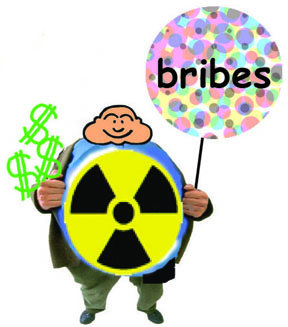
Britain offers communities £1m a year to host nuclear waste dump

 Communities offered £1m a year to host nuclear waste dump https://www.theguardian.com/environment/2018/jan/25/communities-offered-1m-a-year-to-host-nuclear-waste-dump
New search for communities willing to host underground site for thousands of years, Guardian, Adam Vaughan, 25 Jan 18, Local communities around England, Wales and Northern Ireland will be offered £1m a year to volunteer to host an underground nuclear waste disposal facility for thousands of years, as part of a rebooted government programme.
The financial incentive is one way the government hopes to encourage communities to host the £12bn facility, after previous efforts failed in 2013 when Cumbria county council rejected the project.
Under new plans published on Thursday, a test of public support will be required for the scheme to go ahead, which could include a local referendum.
The only areas to explore the idea last time round were Copeland and Allerdale borough councils in Cumbria, and Shepway District Council in Kent.
This time, interested communities that explore hosting the facility will also receive £1m a year, which officials say could be spent on developing skills locally or apprenticeships. The payments, which could rise to £2.5m annually as a community considers whether to proceed, are expected to last for around five years.
The geological disposal facility (GDF) is seen by experts as the best long-term solution to storing the estimated 750,000 cubic metres of waste generated by half a century of nuclear power and defence, which would fill three quarters of Wembley Stadium.
It also includes the radioactive material created by potentially five new plants that the government expects to be built, including Hinkley Point C, which EDF Energy is constructing in Somerset.
The Institute of Directors said storing waste deep underground would be cheaper than storing it above ground, as it is at present at around 30 sites.Business, unions and local authority groups welcomed the renewed bid to site a GDF.
“Running costs for a geological disposal facility storing the waste 1,000 metres below the surface would be significantly lower,” the business group said.
Richard Harrington, energy minister, said: “We owe it to future generations to take action now to find a suitable permanent site for the safe disposal of our radioactive waste. And it is right that local communities have a say.”
But Greenpeace criticised the payments, calling them bribes, and said new nuclear power plants should not go ahead without a long-term solution in place for their waste.
Doug Parr, the group’s chief scientist, said: “Having failed to find a council willing to have nuclear waste stored under their land, ministers are resorting to the tactics from the fracking playbook – bribing communities and bypassing local authorities.
“With six new nuclear plants being planned, the waste problem is just going to get much worse. Since there is no permanent solution for the disposal of spent nuclear fuel, the responsible thing to do would be to stop producing more of it instead of just passing the radioactive buck to future generations.”
Nuclear waste is currently stored at about 30 sites, but predominantly at ground level at Sellafield in Cumbria. The GDF project is expected to cost £12bn, spread over a century.
Nuclear power proponents fighting a losing battle to get any role in Australia’s energy future
Safety risks stall nuclear role in Australia’s energy mix, SMH, 25 January 2018, Cole Latimer
http://www.smh.com.au/business/the-economy/safety-risks-stall-nuclear-role-in-australia-s-energy-mix-20180125-p4yyvj.htmlIf Australia is to hit its Paris climate change targets and lower carbon emissions it needs to think seriously about nuclear energy, lobbyists say, but the safety risks coupled with its economic viability have former supporters doubting its future in Australia.
Australia’s commitment to the 2015 Paris climate agreement – which aims to reduce emissions by 5 per cent below 2000 levels – has increased the pressure to reduce the electricity industry’s emissions levels, and nuclear energy has been put forward as a way to reach decarbonisation of the network.
Robert Parker, who is a current committee member and former president of the Australian Nuclear Association, said nuclear energy could play a major role in Australia’s decarbonisation if it is used along with renewable generation such as wind, solar and pumped hydro storage. Mr Parker said there was the potential to replace Victoria’s brown coal-fired power stations with nuclear reactors once they had reached the end of their operating life. He said the infrastructure was already in place to rapidly build and operate a nuclear power plant…..
Friends of the Earth national nuclear campaigner Dr Jim Green said the cost of nuclear power had made it unviable.
“With the possible exception of carbon capture and storage, nuclear power would be the most expensive and least effective way of reducing emissions in Australia,” Dr Green told Fairfax Media.
“The estimated cost of reactors under construction in the UK is $20 billion each. The estimated cost of reactors under construction in France and Finland has risen to $16 billion each. Energy efficiency and conservation programs, coupled with renewable energy expansion, can sharply reduce emissions in Australia – far more quickly and cheaply than nuclear power.
“Ten years ago, there might have been a debate to be had over the economic merits of nuclear power, when the Switkowski inquiry estimated that a reactor could be built for $4 billion to $6 billion. The Switkowski panel was out by a factor of three and even Ziggy Switkowski himself now acknowledges that renewables are a more economically viable choice.”
Nuclear physicist and NBN chairman Ziggy Switkowski, who once said Australia needs 50 nuclear reactors across the nation, believes “the window for gigawatt-scale nuclear has closed”.
Mr Switkowski said nuclear energy as a power option was now less economically viable than renewables and batteries alone.
“Government won’t move until a real business case is presented and none has been, to my knowledge, and there aren’t votes in trying to lead the debate,” he told Fairfax Media.
He said nuclear was no longer lower cost than renewables and the levelised cost of electricity of the two was rapidly diverging.
While nuclear could provide zero emissions energy, Mr Switkowski said this was more than offset by community concerns about waste and safety.
“Support for nuclear is everywhere except from the generators and financiers who would have real skin in the game.” …………. http://www.smh.com.au/business/the-economy/safety-risks-stall-nuclear-role-in-australia-s-energy-mix-20180125-p4yyvj.html
“Doomsday Clock” moved 30 seconds closer to “midnight,”
 CLOSER TO MIDNIGHT: THE DOOMSDAY CLOCK AND THE THREAT OF NUCLEAR WAR, Wired, 25 Jan 18, THE ACCIDENTAL MISSILE alert in Hawaii earlier this month made real for 38 terrifying minutes the vague, low-level dread that permeates American life today: Nuclear war seems closer and more real than it has in a generation. Even the pope—not exactly a fear-monger—said last week that the world now stood at “the very limit.”That existential fear was affirmed today by the organization of nuclear scientists who have spent seven decades trying to turn humanity away from nuclear weapons: The Bulletin of Atomic Scientists moved its “Doomsday Clock” 30 seconds closer to “midnight,” an unofficial barometer of how close the world stands to a man-made catastrophe. It now stands two minutes away.
“To call the situation dire is to understate the danger,” said Rachel Bronson, the head of the Bulletin, at the National Press Club in Washington, DC, Thursday, announcing the clock’s new setting.
The clock dates back to 1947, when the scientists who participated in the Manhattan Project wanted to create a mechanism to warn of escalating global tensions and the danger of global Armageddon. The iconic stylized timepiece has since become the global arbiter of dread—or hope. It aims to answer two questions: Is the future of civilization safer or at greater risk than it was last year? And how does today’s risk compare to the risks we’ve experienced over the last 71 years?
The graphical clock started at seven minutes to midnight, its two-dozen changes since marking the shifting tensions of the Cold War. Its “peacetime” rating peaked in 1991 at 17 minutes to midnight, as the Soviet Union broke apart. It has gradually ticked darker ever since, first as nuclear weapons proliferated to countries like India and Pakistan, and then as it began to factor in other global threats, like climate change.
Last year, for the first time, it ticked forward a half-minute, reflecting the rise of nationalism and the threat to the post-war international order, as well as President Donald Trump’s troubling supportive comments about the appeal of nuclear weapons, and his climate change skepticism.
At the time, he’d been president only a few days; there was little track record to measure his actions versus his campaign rhetoric. But as Bronson told me last month, “Many of our fears played themselves out in 2017… A lot of our concerns were really borne out.”
Today’s movement of the Doomsday Clock—announced live in a webcast—was yet another sign that the world stands on a precipice perhaps unparalleled in the modern era. It hasn’t sat this close to midnight since 1953, a few months after the United States and Russia tested their first thermonuclear bombs……..
The current system makes nuclear war easier to start than to avoid; there’s precious little room for reflection. The first ICBMs will leave their silos just four minutes after a presidential order; once they launch, there’s no mechanism to stop them. No country on the planet possesses the capability to shoot down an incoming strike………
The Threat of War
- By this point, North Korea’s nuclear ambitions have almost been fully realized
- Meanwhile, Donald Trump’s nuclear rhetoric seems designed to stoke tensions, rather than defuse them
- In some ways, he echoes Richard Nixon’s “madman” tactics during the Vietnam War—but without the strategy to back it up https://www.wired.com/story/doomsday-clock-nuclear-war/
US stealth bombers in Guam preparing for a tactical nuclear strike on North Korea?
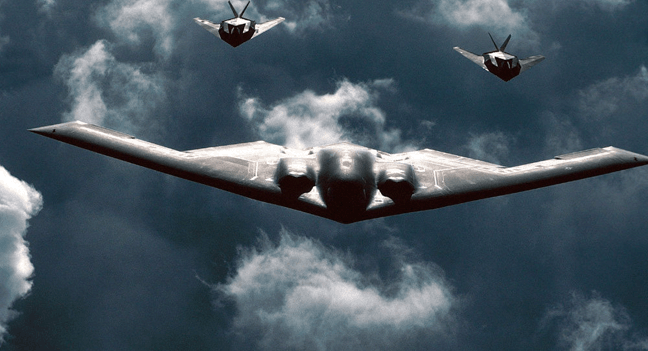 US stealth bombers in Guam appear to be readying for a tactical nuclear strike on North Korea, Business Insider, ALEX LOCKIE, JAN 25, 2018,
Many Australians not aware of significance of Australia Day – Invasion Day
By Nakari Thorpe : NITV News 18 Jan 2018
‘While more Australians say that Australia Day should not be celebrated on a day that is offensive to Indigenous Australians, many do not know the significance of January 26, according to a new poll.’
‘The poll was conducted by Canberra based think-tank, the Australia Institute,
which surveyed 1417 Australians regarding their knowledge about and attitudes to Australia Day.
‘“The polling shows that most Australians don’t know what historical event Australia Day commemorates
and most people are not aware it wasn’t always celebrated on this date.
Perhaps that’s why more than half of Australians say they don’t really mind
when we hold Australia Day, as long as we do,”
Ebony Bennett, Deputy Director of The Australia Institute said.’
Read more of Nakari‘s informative, interesting & well-researched article here:
www.sbs.com.au/nitv/nitv-news/article/2018/01/18/australia-day-poll-while-many-believe-date-shouldnt-offend-many-ignore
The pro nuclear propaganda that I’ve been expecting
-
Small modular reactors more versatile than conventional plants
-
Battery storage still too pricey for large-scale use
Las Vegas Mayor highlights dangers of transporting nuclear waste
 In D.C., Goodman highlights dangers of transporting nuclear
  waste, https://lasvegassun.com/news/2018/jan/25/in-dc-goodman-highlights-dangers-of-transporting-n/ By Yvonne Gonzalez (contact)Thursday, Jan. 25, 2018
Nuclear waste coming to Nevada from all corners of the country would be dangerous, Las Vegas’ mayor told bipartisan city leaders in Washington, D.C. Mayor Carolyn Goodman was in the capital for the U.S. Conference of Mayors winter meetings. She spoke to fellow members about the nation’s aging infrastructure and other risks associated with bringing nuclear waste to Nevada, where a proposed repository at Yucca Mountain has been a political football for years. The American Society of Civil Engineers gives the nation’s infrastructure an average D+ rating.
“Anywhere it’s transported is at risk because of the tunnels, the bridges, the railroads, the roads,” she said. “An accident … puts millions and millions of people around the country at risk for loss of life, cancer and everything else.”
The conference of mayors has expressed concern about the transportation of nuclear waste since as early as 2002, although the group has not explicitly come out against the dumpsite. Goodman said she is talking to mayors at this winter’s meetings and working to get a resolution passed.
“You have to tell them that this stuff is being transported through their city or 50 miles away and the spill-out from an accident” will impact them, she said.
The mothballed Yucca Mountain project could see movement under President Donald Trump, who has called for funding to prepare for the licensing process. The proposed project stalled years ago under President Barack Obama and then-Sen. Harry Reid, a Nevada Democrat.
Henderson Mayor Debra March and Bob Halstead, executive director of the Nevada Agency for Nuclear Projects, were among the Nevada contingent to hold the reception. Halstead and Sen. Dean Heller, R-Nev., spoke to the audience about concerns associated with the project. Rep. Mark Amodei, R-Nev., is the only member of Nevada’s delegation who has not signed onto legislation calling for consent-based siting for nuclear waste storage.
“The issues are very very concerning,” Goodman said. “It’s not so much about Nevada as it is about the people throughout the country who are placing their residents and their visitors at risk.”
Kiata wind farm to strengthen Victoria’s energy network — RenewEconomy

A new wind farm in Western Victoria will power more than 20,000 households as part of a jobs boom in Western Victoria with six projects underway or proposed in the area.
via Kiata wind farm to strengthen Victoria’s energy network — RenewEconomy
FUKUSHIMA: Where are the People? – Arnie Gundersen on the Ongoing Human Toll of the Nuclear Disaster

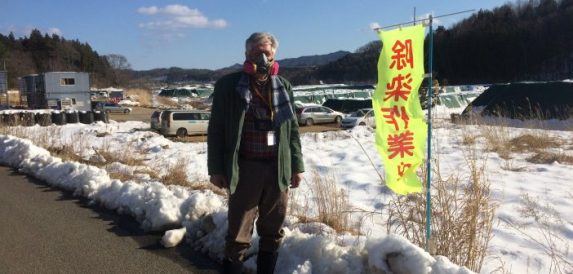
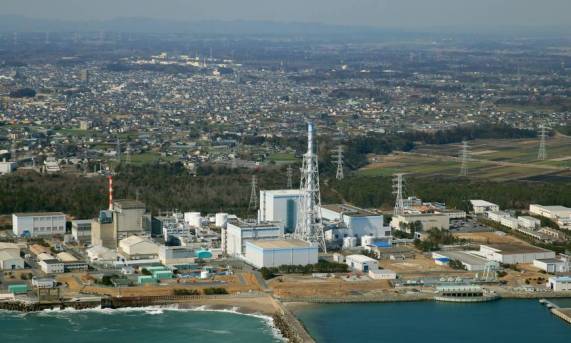
Ibaraki nuclear plant used erroneous fuel rod data for over 40 years, utility says
View original post 64 more words
Tesla among 19 groups competing to build Darwin big battery — RenewEconomy

Tesla among 19 groups bidding for contract to build a big battery in Darwin that will reduce the need for back-up gas generators, and smooth the way for more solar PV in the Northern Territory.
via Tesla among 19 groups competing to build Darwin big battery — RenewEconomy
Tesla big battery setting market prices, including at $14,200 cap — RenewEconomy

Tesla big battery has been been an active bidder in wholesale markets, including being a price-setter for bids at the market cap.
via Tesla big battery setting market prices, including at $14,200 cap — RenewEconomy
Why is Australia misleading consumers on electric vehicle emissions? — RenewEconomy
Craig Kelly has proved a loose cannon on the subject of EV emissions, but the government is not helping by providing misleading information to consumers.
via Why is Australia misleading consumers on electric vehicle emissions? — RenewEconomy
1 This month
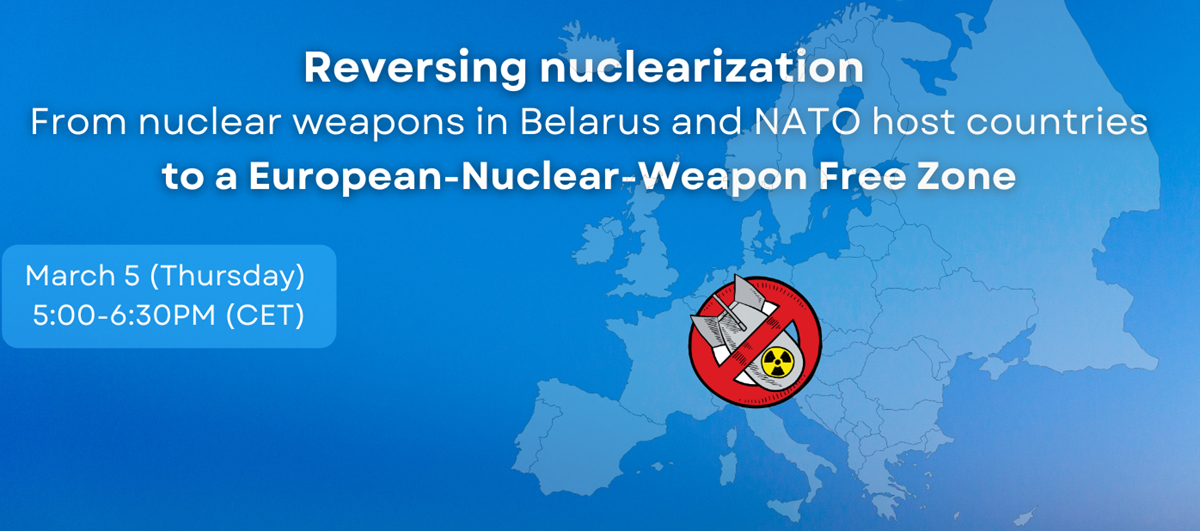
6 March -Online – Reversing nuclearization:
From nuclear weapons in Belarus and NATO host countries to a European-Nuclear-Weapon Free Zone
Mar 6, 2026 03:00 AM in Canberra, Melbourne, Sydney

of the week – Australians for War Powers Reform (AWPR)
To see nuclear-related stories in greater depth and intensity
 Antinuclear