Radioactive pollution problems: Australia’s rare earths mine in Malaysia
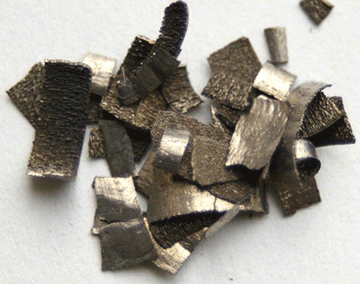 Australian mining plant in Malaysia faces radioactive waste inquiry, As China, the world’s largest producer of rare earth metals, scales back its export operations, the future of Australia’s industry is under a cloud. https://www.sbs.com.au/news/australian-mining-plant-in-malaysia-faces-radioactive-waste-inquiry By Jarni Blakkarly 30 Oct 18, The Chinese government has announced a slashing in the production of rare earth metals, a type of metal used in a range of high-tech products from mobile phones to wind turbines and electric cars.
The country, which is the largest producer and consumer of rare earth metals, has cut its quota for the separation and smelting of rare earths by 36 percent, Reuters reported last week.
China produces roughly 80 per cent of the world’s rare earth metals and the move will likely send global prices skyrocketing. Meanwhile, the joint Australian-Malaysian rare earths operation run by Perth company Lynas, the only major production plant outside of China, is having its own problems.
Earlier this month, the Malaysian government launched a broad parliamentary inquiry into the mine and the management of its radioactive waste.
The Australian company mines rare earth metals in Western Australia before shipping them to Malaysia for processing.
Resources analyst Dylan Kelly from finance group CLSA told SBS News: “It is really critical in a strategic sense as the only real rare earth producer outside of mainland China and one that is high in quality and it is highly sought after in terms of strategic interest, not just for the Japanese, but also the US.”
But questions remain over the management of radioactive waste from the plant and what long-term solutions are in place for its management.
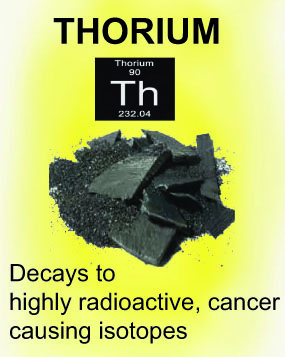 RMIT Professor of environmental engineering Gavin Mudd told SBS News all rare earths processing involves the generation of radioactive thorium and sometimes uranium waste.
The company’s current long-term waste management plans involve repurposing that waste into a soil fertilizer product, but Professor Mudd says not enough has been done yet to guarantee the by-product would be safe.
“Historically the rare earths industry hasn’t got a good track record in being able to demonstrate that safety case,” he said.
While the current government inquiry appears unlikely to shut the processing plant down in its entirety, Professor Mudd says more can be done in terms of increasing environmental reporting and public disclosure around the plant.
Lynas declined to comment to SBS News ahead of the inquiry, but in the past has defended its waste management practices as safe and transparent.
When the plant was approved in 2012 it set a wave of protests by thousands of concerned locals, which was largely ignored by the government.
But with the Opposition coming to power in a surprise election victory in May, the new government is taking a closer look at the plant.
Local Kuantan MP Faziah Salleh says the company needs to develop a new long-term storage plan for the radioactive waste.
“The company has to think about how they dispose of their radioactive waste, because Malaysians, especially people of [the city of] Kuantan, will not except the waste being left … dumped in our backyard, as it is right now,” she said.
The inquiry is due to report back to the government before the end of the year.
10 Comments »
Leave a Reply
1 This month
17 October, Free Public Talk on Nuclear Issues in South Australia
David Noonan will speak on public interest concerns over the new Roxby Downs Indenture Act 2026 on BHP copper-uranium mining and ore processing in SA, and on how AUKUS may face SA with a High-Level nuclear waste agenda.
Dr Jim Green will discuss international developments in the field of nuclear power including ‘small modular reactors’ and Generation 4 ‘advanced’ nuclear reactor concepts.


Help Aunty Sue Protect Her Land and Sacred Sites From Destructive Rocket Testing.
.

Australians deserve the truth
about
AUKUS – https://aukuspublicinquiry.com/

PETITION – To: Prime Minister Anthony Albanese and the Australian Labor Government

of the week – Australians for War Powers Reform (AWPR)
To see nuclear-related stories in greater depth and intensity


While China has reduced H2 2018 rare earth separation quotas when compared to past quotas, the overall quota for 2018 is actually 15% higher when compared to 2017 quotas. Also, judging by Mr Mudd’s comments seriously doubt his knowledge about Lynas operations in Malaysia would qualify him as a competent person on the matter. Lynas has conducted 6 years of R&D and numerous field trials both in Western Australia and Malaysia to prove residues generated by its operations in Malaysia can be safely recycled into fertiliser. The company continuously engages with the public regarding its operations in Malaysia but unfortunately due to the political landscape there are a number of politicians who have purposely mislead the Malaysian public about Lynas operations. The science and facts prove Lynas operations are safe and the residues can be recycled. Only the ignorant and misinformed would suggest or claim otherwise.
LikeLike
Malaysia has a horrible history of pollution due to rare earths processing. https://cilisos.my/30-years-ago-a-huge-radioactive-incident-happened-in-perak-heres-the-story-behind-it/
So it is understandable that Malaysians are apprehensive about the Lynas project. One might well ask -if the Lynas operation is so sweet and safe, why didn’t they do it in Australia?
LikeLike
Anyone aware of the facts would understand the only similarity between Lynas and ARE is the word rare earth. Unfortunately there are a number of NGO’s and politicians who have attempted to distort the facts and spread disinformation about Lynas operations in Malaysia. To answer your question “why didn’t Lynas do it in Australia?”, because they were lured to Malaysia by the government at the time with tax incentives, cheap labour, cheap water, cheap gas, cheap chemicals, cheap land with easy access to deep water ports and Malaysia is strategically positioned near Lynas two main customers, China and Japan. Its called basic economics. Lynas operations have been heavily scrutinised by local and international relevant experts and all aspects of their operations were confirmed to be compliant with international standards. In fact they have stricter standards in Malaysia. Its a shame the Malaysian government does not scrutinise all industries in Malaysia the same way they have Lynas.
LikeLike
Well, I hope that it didn’t start with a factor that Australian safety standards might be harder and more expensive for Lynas. I still suspect that they were dragged, kicking and screaming to do something about the toxic wastes. I’m pretty sure that Lynas did not have much of a plan for that , at the start, and for quite a while afterwards. “IAEA finds Lynas rare earths plan unsatisfactory – no proper radioactive waste plan” – http://www.themalaysianinsider.com/malaysia/article/iaea-teams-says-lynas-plant-generates-low-level-radioactive-waste-bernama#sthash.JEFk1poD.dpuf
LikeLike
No point in hope, just look at the facts. If you really were concerned and knowledgeable on the matter you would at least be able to provide fact based evidence to prove Lynas is not complying with international standards instead of relying on snippets from media articles to form an opinion. Have you actually read the IAEA report? Lynas always intended to recycle any residues produced by its processing plant in Malaysia, even before they commenced building the LAMP in 2008. The company spent millions of dollars over a 6-8 year period on R&D and have successfully proven all residues can be recycled into fertiliser. There is no toxic or radioactive waste. Two residues are produced at the LAMP, NUF and WLP. Both have been extensively and besides the WLP being classified as very low level radioactive material both are not explosive, corrosive, a health hazard, irritant, carcinogenic, eco-toxic or infectious and do not exhibit characteristics of ignitability, reactivity or toxicity. This has been the issue all along, the arguments against Lynas are not based on facts, they are based on emotions and disinformation.
LikeLike
Oh keep your hair on, Chris. I do not claim to be expert or even “knowledgeable”. Furthermore, as a supporter of renewable energy and modern technology, I would need to be a supporter of rare earths processing, wouldn’t I?
My concern is, I believe, a valid one. People in the environmental and nuclear-free movement are all out for renewable energy, and with apparently little awareness that developing the technologies for renewable energy also involves some toxic wastes. Also, a neglected fact is that energy efficiency measures would be the most effective means of cutting greenhouse gases. That’s ignored, too.
I get what I can from the media. And of course, I admit to bias. We un-funded environmental activists have to compete in the noisy world of industry handouts for polluting industries. Our job is to prod them towards clean processes. Too bad if my posts err on the anti-industry side. I’m not interested in advocating for Lynas – let them, (and you) do that for themselves.
LikeLike
Not interested in excuses, only the facts. Unfortunate facts don’t seem to be a necessity when dealing with some environmental activists.
LikeLike
I’m not making excuses. I am just posting articles of interest. And comments./
Your earlier comments were interesting, and, I thought, factual, and a fair reply to the article. I don’t usually bother to post comments that come from industry shills. I thought yours was a bit better. But I don’t appreciate personal goes at me.
LikeLike
Not having a go at you, just a generalisation really. No doubt the device youre using to post comments here contains components that are made with rare earths sourced from unethical, environmentally damaging mines and processing plants in China. In a way youre advocating polluting industries just by using every day devices like a tablet, PC or laptop. At least Lynas can claim to be the only ethical environmentally conscious producer of rare earths in the world.
LikeLike
Well, Chris, I am happy to agree with you here. Of course I am using all sorts of things that most probably do contain minerals from dodgy sources. And I keep on advocating for wind turbines etc.
Good if Lynas is ethical and environmentally conscious. The Chinese claim to be that, nowadays, but they haven’t convinced me – have they really cleaned up all those foul little businesses?.
Of course I am not against rare earths mining and processing. But it is time that the world started designing devices with a view to retrieving and recycling rare earths.
LikeLike