Australia’s oceans absorbing most of the climate heating, but for how much longer

Key points:
- Australia’s climate has now warmed by over 1 degree Celsius since 1910
- Oceans have now warmed by around 1C since 1910
- For the first time, the report draws attention to “compound extreme events” when multiple variables coincide
An extra two years has firmed-up the data to demonstrate that climate change is happening now.
Dr Helen Cleugh, the director of the climate science centre at CSIRO, said the last time the planet saw levels of CO2 this high was at least 800,000 years ago.
She said atmospheric CO2 is up 46 per cent since before the industrial era began in the 1750s.
“We know from our analysis that the cause of the increases in CO2 concentration is human activities, through burning of fossil fuels and through land use change,” Dr Cleugh said.
Ocean sinks
That CO2 is not just staying in the atmosphere.
“As a result of the increased greenhouse gases in the atmosphere we’ve actually got more energy in the Earth’s climate system, and it turns out that over 90 per cent of that extra energy has actually been taken up by the ocean,” Dr Cleugh said.
“Our oceans and land are performing an enormous ecosystem service at the moment because they’re taking up a lot of the anthropocentric [human-generated] CO2 emissions.”
The oceans take up the CO2 directly, removing it from the atmosphere, as well as absorbing heat from the atmosphere. The land also acts as a sink but to a lesser extent.
“That has two really important implications. The first is that it means that the oceans play a really important role in modulating the rate and pace of our changing climate. But the other is it leads to warming,” Dr Cleugh said.
A very live research question right now is will those oceans and land continue to take up CO2 into the future.
“At the moment we’re not seeing any evidence of the weakening of that sink.”
But Dr Cleugh said that models of our future climate suggest that the extra CO2 and heat would not be able to be taken up by the ocean forever.
A bit like sweeping dust under a rug, eventually only so much can fit.
“There are feedbacks that could lead to a weakening of those sinks, either on the land or in the ocean, and that would mean that warming in the atmosphere would proceed at a greater rate,” she said.
Dr Cleugh said it is a very important scientific question to understand the way that the oceans are behaving.
“It turns out the Southern Hemisphere oceans are particularly important in taking out heat and CO2. So it’s really important that we do that research in our own patch,” she said.
Oceans already feeling the heat
Ocean temperatures, already up by around 1 degree Celsius since 1910, has contributed to more and longer marine heatwaves.
The back-to-back bleaching of the Great Barrier Reef in 2016 and 2017 have been well canvased, but the changing ocean is meddling with other ecosystems.
The report states that the Eastern Australian Current — of Finding Nemo fame — is extending further south, encouraging warming in the Tasman Sea and extending the habitat of other species south.
As the ocean warms it is expanding, which is coupling with ice melts to raise sea levels.
The increased CO2 in the water has also lead to a 30 per cent increase in ocean acidity since the late 1800s.
“This has significant implications for our marine ecosystem and the ability of corals to regrow, so it actually is linked back to the coral bleaching,” Dr Cleugh said.
These changes are not happening evenly. Luckily for the Great Barrier Reef, so far it looks like the worst of the ocean warming acidification has happened to the south of Australia……..https://www.abc.net.au/news/2018-12-20/bom-csiro-biennial-state-of-the-climate/10631122
1 Comment »
Leave a reply to John Cancel reply
1 This month.


PETITION – To: Prime Minister Anthony Albanese and the Australian Labor Government
Chernobyl: The Lost Tapes – A good documentary on Chernobyl on SBS available On Demand for the next 3 weeks– https://www.sbs.com.au/ondemand/tv-program/chernobyl-the-lost-tapes/235274195556
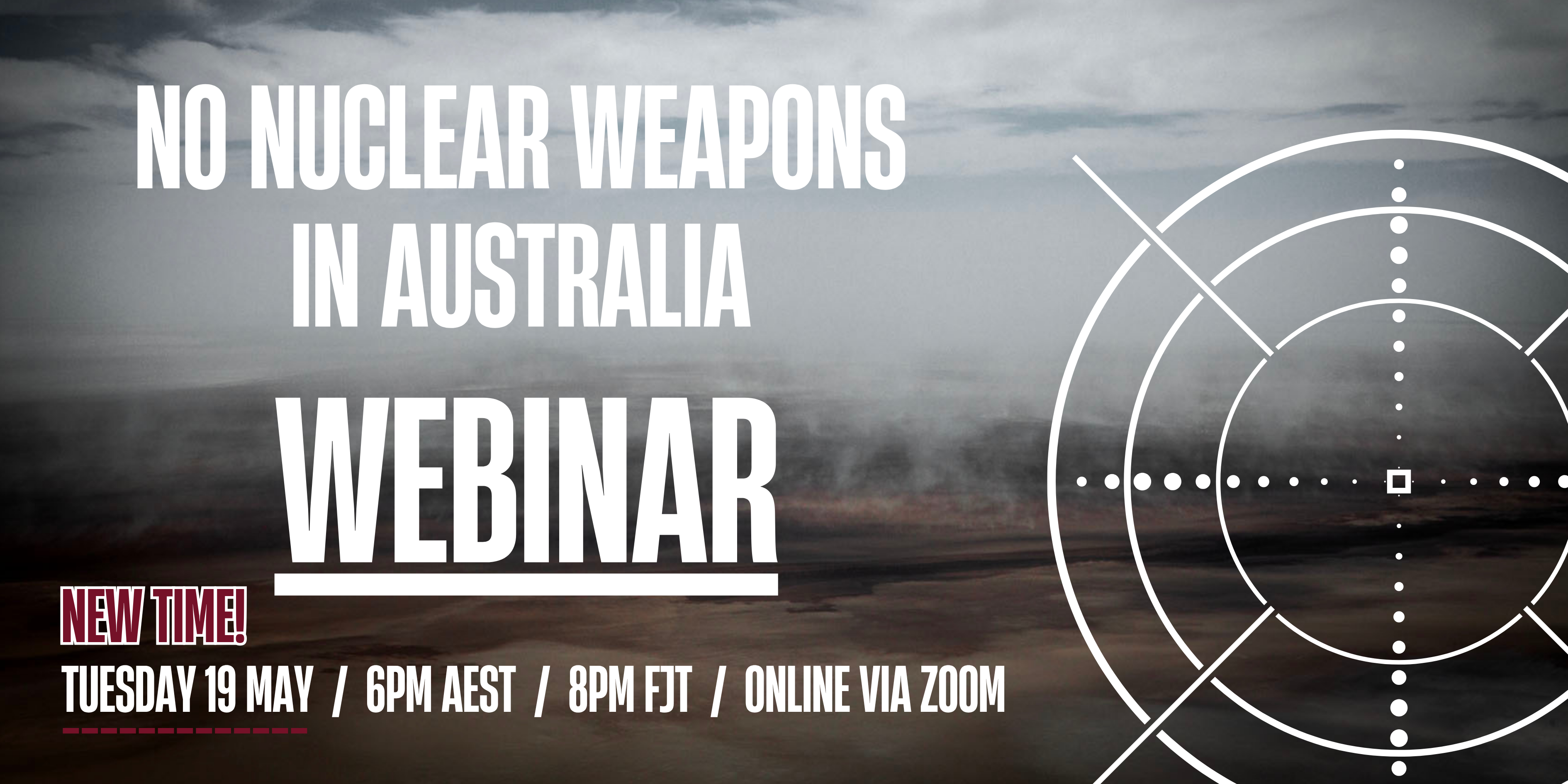
19 May – Webinar- Webinar: No Nuclear Weapons in Australia
Start: 2026-05-19 18:00:00 UTC Canberra, Melbourne, Sydney (GMT+10:00)
End: 2026-05-19 19:30:00 UTC Canberra, Melbourne, Sydney (GMT+10:00)
20 May – Webinar – The dangerous world of AUKUS, US, military occupation and suppression of dissent

National Webinar, 20th May, 2026, 6.30pm AEST. Confronting laws restricting/suppressing protest speech and action
Speakers: Former Sen. Rex Patrick, Lawyer Nick Hanna ,Arthur Rorris ,Jorgen Doyle, Sen David Shoebbridge,
Facilitator Kelley Tranter.

of the week – Australians for War Powers Reform (AWPR)
To see nuclear-related stories in greater depth and intensity
 Antinuclear
Reblogged this on jpratt27.
LikeLike