To 26 August – Nuclear and Climate News
The thing about climate change is – it’s all happening faster than we expected! Only a few days ago, MEDIA MATTERS was highlighting the way that mainstream media was practically ignoring the Amazon forest fires. That is changing. World leaders are now alert to this international tragedy.The Amazon fires bring to the fore the awful dilemma facing climate scientists in telling the public the truth about the world’s climate crisis.
The recent Russian nuclear accident cast a bit of gloom over Russia’s launching of its floating nuclear reactor for the Arctic region. Questions are still flying around about the radioactive illnesses and deaths involved in that accident. Also – a general recognition of the Russian government’s record of secrecy about nuclear accidents.
I suspect that the USA and UK nuclear industries are getting pretty desperate about their commercial future, and the necessity to export new nuclear technology. There’s a hasty push going on in Australia to buy Small Modular Nuclear Reactors. In a rater undignified rush, there are no less than 4 separate Parliamentary Nuclear Inquiries going on, with abnormally short times permitted for Submissions.
AUSTRALIA
NUCLEAR Queensland Labor and Liberal Coalition say NO to nuclear power.
Nuclear weapons – the underlying aim in the new push for nuclear power?
Brief notes/summaries on pro nuclear submissions to Federal govt. Early submissions to Australian govt Inquiry slightly favour nuclear power.Economist John Quiggin on Submissions to Parliamentary Nuclear Inquiries. One gem from the pro nuclear Submissions to FEDERAL. Inquiry into the prerequisites for nuclear energy in Australia. EcoEnviro’s great submission to ‘Inquiry into the prerequisites for nuclear energy in Australia’. 17 submissions now published to Federal Nuclear Inquiry. Nuclear submissions: people are “doubling up”? Sending the same submissions to 2 different Inquiries. About the CURRENT NUCLEAR SUBMISSIONS.
Reaction against Robert Parker’s nuclear reactor plan for Ipswich, Queensland.
Council announces dates for Kimba radioactive waste ballot. Flinders Ranges Council delays nuclear waste dump ballot. Secrecy in Sinister Matt Canavan’s meeting with nuclear waste dump organisations in Hawker, South Australia. Resources Minister Matt Canavan in Kimba : pressing for a ‘Yes” vote in nuclear waste dump ballot? South Australian law – No public money towards nuclear waste dumping facility.
Lynas’ radioactive waste – still a toxic issue in Malaysia.
Wiki cables show Australia thinks Iran is not the aggressor.
CLIMATE
- Labor urges Morrison govt to pressure Brazil to protect Amazon forests.
- One year on, how good is Morrison’s climate and energy denial? Australia losing credibility with Pacific nations, as Morrison supports coal, not climate action.
- Scott Morrison’s failure in diplomacy: the Pacific Forum and climate change. Australia’s Deputy Prime Minister Michael McCormack is an international embarrassment.
- Bass Coast Shire Council declares Climate Emergency.
- Ageing coal plants put Australia on map of global air pollution hotspots.
RENEWABLE ENERGY Solar sends Queensland wholesale day-time prices to zero six days in a row. 5B plans solar “speed record” for 10GW plant in north Australia. Prices hit zero again across the grid as renewables output tops 10GW. Coalition MP Keith Pitt wants Queensland to leave main grid! Schwarzenegger-backed start-up helps Australia wind farms duck negative prices. Landmark deal to power Coles underpins three NSW solar farms. Global industrial giant Molycop turns to wind and solar for half its electricity needs.
INTERNATIONAL
Distinguished scientist Martin Rees – world must fight climate change, don’t waste tax-payers’ money on space travel.
Massive wildfires are burning across the world- July was hottest month ever. New fires – hundreds – in Amazon rainforests. Life on Earth threatened by climate change – loss of Amazon Forests.
Sea level rise only half the story – climate change is altering ocean waves.
Chinese Academy of Sciences warns on the safety hazards of new nuclear .
Nuclear weapons – the underlying aim in the new push for nuclear power?
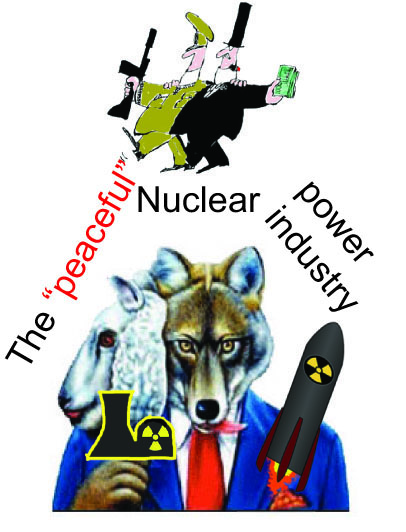 Is the push for nuclear power a covertpush for nuclear weapons? https://reneweconomy.com.au/is-the-push-for-nuclear-power-a-covert-push-for-nuclear-weapons-95422/ Mark Diesendorf & Richard Broinowski, 26 August 2019 Is the push for nuclear power a covertpush for nuclear weapons? https://reneweconomy.com.au/is-the-push-for-nuclear-power-a-covert-push-for-nuclear-weapons-95422/ Mark Diesendorf & Richard Broinowski, 26 August 2019  A recent push for nuclear power in Australia has been promoted by the usual public advocates and amplified by the Murdoch press.The arguments are predictable both in their optimism and inaccuracy: nuclear power reactors are claimed to be safe and cheaper than electricity generation from wind and sun; new generation mini-reactors are claimed to be even cheaper and safer and can be adapted to power a factory or a town. Australia has uranium, and can easily acquire the technology. Advocates for nuclear power are calling for ‘informed’ public debate to quell public fear about nuclear power. In reality, informed public debate has been going on for some time. The latest iteration was the South Australian Royal Commission of 2015-16, which found that “nuclear power would not be commercially viable to supply baseload electricity to the South Australian subregion of the NEM from 2030 (being the earliest date for its possible introduction).” But advocates are not deterred, claiming, despite the evidence to the contrary, that nuclear power is cheaper and cleaner than other forms of electricity generation. The fact is that electricity from new wind and solar farms is much cheaper than from nuclear power stations. According to the multinational investment consultancy, Lazard,the costs of energy from on-shore wind farms in the USA are in the range 29-56 USD per megawatt-hour (US$/MWh), from solar farms 36-46 US$/MWh and from conventional nuclear 112-189 US$/MWh. In Australia, the CSIRO and the Australian Energy Market Operator have jointly found that the cost of a wind or solar farm in 2020 will be approximately half of that from new coal-fired power stations, and about one-fifth of that from nuclear power in the form of the non-commercial small modular reactors currently being promoted by nuclear enthusiasts. Adding sufficient storage to solar and wind to provide equivalent dependability of supply to base-load coal and nuclear will lift the cost of wind and solar in 2020 to equivalence with new coal, but nuclear is still at least 2.5 times the cost of wind and solar. In 2019 the German Institute for Economic Research found that of 674 nuclear reactors built for electricity generation since 1951, all suffered significant financial losses. The (weighted) average net present value was around minus 4.8 billion Euros. The Institute concluded that “nuclear energy has always been unprofitable in the private economy”. So why were 674 reactors built around the world, and why do nuclear advocates want more? One motivation has been to facilitate the covert development of nuclear weapons. It is well documented (e.g. here and here) that India, North Korea, Pakistan and South Africa all used civil nuclear power to assist their respective covert developments of nuclear weapons, while the UKused its first generation nuclear power stations to supplement weapons-grade plutonium it produced in military reactors. Other countries began, then discontinued, nuclear weapons programs based on civil nuclear technology: Argentina, Australia, Brazil, Libya, South Korea, Taiwan (twice) and possibly Algeria. Iran is currently engaged in that process. Today, the UK government is offering to pay the developers of the proposed Hinkley C nuclear power station approximately double the wholesale price of electricity, increasing with inflation, for 35 years. Andy Stirling and Phil Johnstone from the Science Policy Research Unit at University of Sussex speculate that this huge subsidy is motivated by the wish to keep the nuclear industrial sector technically capable of servicing submarine reactors that carry UK’s Trident nuclear missile delivery system. There are two main pathways to nuclear explosives –either by enriching uranium in the isotope U235 or extracting plutonium Pu239 from spent reactor fuel.At various times Australia has flirted with both. In the 1960s, under the Gorton government, Australia started to build a nuclear power station at Jervis Bay with the purpose of producing electricity for the grid and Pu239 for nuclear weapons. The program was abandoned by the Liberal Party when it feared its ambition to acquire nuclear weapons would become known and result in an electoral liability. Another attempt, secretly to enrich uranium, was made between 1965 and the early 1980s by the then Australian Atomic Energy Commission (now the Australian Nuclear Science & Technology Organisation –ANSTO). Australia ratified the Treaty on the Non-Proliferation of Nuclear Weapons (NPT) in 1973 and the Comprehensive Nuclear Test Ban Treaty in 1998, but in the early 2000s pressure was again exerted on the government by elements in the foreign policy and security establishment to revive a nuclear weapons program. In a 2007 article “Creative and uncomfortable policy choices ahead”, Martine Letts, then Deputy Director of the Lowy Institute, concluded that “a thorough nuclear policy review should also consider which strategic circumstances might lead to Australia’s revisiting the nuclear weapons option”. The same year, Robyn Lim, a former Acting Head of Intelligence in the Office of National Assessment wrote that “ [we] live in an uncertain world, and must avoid having our uranium enrichment options closed off”. In 2009, the Australian Strategic Policy Institute joined the discussion, with a report by Rod Lyon, director of its Strategy and International Program. He was quoted on the ABC and in the Canberra Times(15/12/2009) as saying ‘nuclear hedging’– maintaining or appearing to maintain capabilities to acquire nuclear weapons in a relatively short time – would be prudent, a capability available within 10 or 15 years. More recent advocates have included Hugh White, who in a 2019 article in Quarterly Essay, reopened discussion on whether Australia should have its own nuclear deterrent. His concern was stimulated by indications that the USA was developing a more isolationist foreign policy. Defence strategist Paul Dibb has recommended that ‘Australia should at least be looking at options and lead times’. Peter Layton, a retired RAAF Group Captain who taught at the US National Defense University, expressed concern in a Lowy Institute article about the costs of nuclear weapons and their delivery systems and recommended that Australia should seek to acquire US or British nuclear weapons. Stephen Fruehling, an academic in the Strategic and Defence Studies Centre at ANU, considered the possibility of developing nuclear weapons to create a defensive moat around the country to deter invasion by sea. He favoured the uranium enrichment pathway to the nuclear explosive. Meanwhile, supporters of nuclear power for Australia are becoming more vocal. They include the Federal Minister for Energy & Emissions Reduction, Angus Taylor, the Institute of Public Affairs, the Business Council of Australia and several members of the Coalition Government – all supported by the Murdoch media (especially The Australian). None has yet publicly advocated the development of nuclear weapons. Building a nuclear power station used to be an effective cover for a nuclear weapons program. Today, however, with renewable electricity from wind and solar PV being so much cheaper than nuclear electricity, the credibility of nuclear power as an alternative to fossil fuels has become very low. Furthermore, a global over-capacity in uranium enrichment since nuclear electricity generation peaked in 2006 makes uranium enrichment for an Australian nuclear program even less credible. In the words of Rod Lyon, an Australian enrichment capability would also be a strategic signal. This is also the view of John Carlson, former Director-General of the Australian Safeguards and Non-Proliferation Office. If Australia follows the nuclear path, it provides our neighbours – especially Indonesia, Singapore and Malaysia – with an incentive to follow. The proliferation of nuclear power in South East Asia would signal the start of a regional nuclear arms race, making the neighbourhood less safe than ever. Dr Mark Diesendorf, a renewable energy researcher, was trained as a physicist and is currently Honorary Associate Professor at UNSW Sydney. Richard Broinowski is a former Australian diplomat and immediate past president of the New South Wales branch of the Australian Institute of International Affairs. He is the author of ‘Fact or Fission? The truth about Australia’s nuclear ambitions’,and ‘Fallout from Fukushima’. |
|
Queensland Labor and Liberal Coalition say NO to nuclear power
 Nuclear energy policy emerges as Queensland election issue, SMH, By Tony Moore, August 25, 2019 Nuclear energy has emerged as a 2020 Queensland election issue after Labor confirmed its anti-nuclear stand amid a new investigation into nuclear power led by three Queensland federal LNP MPs.Labor’s 2019 state conference on Sunday cemented the party’s opposition to the energy source after three high-profile federal Liberal National Party MPs recently triggered the first federal government inquiry into nuclear power in a decade.
Queensland Labor immediately questioned the LNP’s nuclear power policy before Opposition Leader Deb Frecklington on Sunday afternoon issued a single line statement rejecting nuclear power.
“The state LNP does not support nuclear power in Queensland,” Ms Frecklington said.
Three high-profile Queensland federal MPs – Senator James McGrath, Bundaberg-based MP Keith Pitt and Sunshine Coast MP Ted O’Brien – quietly re-opened a federal government inquiry into nuclear power, which began quietly on August 7.
Mr O’Brien is chairing the House of Representatives Standing Committee investigation into nuclear power, which will receive submissions until September 16.
He said nuclear power had evolved over the past 20 years and it was time to look again.
“The committee will look at the necessary circumstances and requirements for any future government’s consideration of nuclear energy generation, including using small modular reactor technologies,” Mr O’Brien said.
The Labor conference several times highlighted clear policy differences between Labor and the LNP in the 12-month run down to the 2020 Queensland election.
On Sunday ALP delegate Ali King, from the United Voice union, received unanimous support for the party to reconfirm its opposition to nuclear power in Queensland.
Since the (May) federal election we have seen an emboldened LNP federal government flirting with every policy fantasy of the hard right,” Ms King told the conference.
“The most disturbing of these is their insistent push towards imposing nuclear power on a reluctant Australia.”
Cost evaluations showed energy produced from nuclear fusion would be more expensive than renewable energy and the long timeframe – “possibly a generation” – made it impractical, Ms King argued. ……
Nuclear power development is currently banned in Australia under the Federal Government’s Environment Protection and Biodiversity Conservation Act 1999.
“It is this restriction that the LNP are ultimately trying to dismantle,” Ms King said. https://www.smh.com.au/politics/queensland/nuclear-energy-policy-emerges-as-queensland-election-issue-20190825-p52kl3.html
Early submissions to Australian govt Inquiry slightly favour nuclear power
 First views to federal inquiry give tick to nuclear power, The pro-nuclear power camp is slightly ahead in the first batch of views presented to the federal inquiry. Nuclear backers lead charge in new probe Chris Russell, The Advertiser, August 23, 2019
Nuclear power can operate safely and Australia should pursue the technology, a slight majority of initial submissions to the Federal Government’s inquiry into the issue recommend.
However, nearly as many submissions urge against nuclear power, saying it is dangerous and uneconomic.
“There is no business case for nuclear in Australia,” University of Adelaide Professor Derek Abbott argues.
“From an engineering viewpoint, the modern grid in fact needs energy sources that can rapidly respond to changing demand.
“(It) … would be a poor investment in a technology that will be largely redundant in the modern grid.”
Fellow South Australian Denys Smith, a retired analytical chemist, says that having plentiful power would support desalinating water, a hydrogen industry, mineral processing and manufacturing.
“Involve the public in the nuclear power debate as SA did during the royal commission in 2016,” he suggests.
“Information and facts change attitudes.”
The two SA submissions are among the first 17 to be published by the Standing Committee on the Environment and Energy, which is holding an inquiry into The Prerequisites for Nuclear Energy in Australia.
Nine submissions were in favour and seven against, with one recommending a focus on thorium rather than uranium-fuelled reactors.
The inquiry, which was established this month on instruction from federal Energy Minister Angus Taylor is open for submissions until September 16.
It will then hold hearings and request further evidence.
In his submission, Notre Dame University Professor Keith Thompson tells the inquiry nuclear power could assist Australia to fulfil an “altruistic obligation to the world to develop its agricultural potential”.
In contrast, Richard Finlay-Jones, from EcoEnviro consultants, says nuclear will not solve price and reliability issues and that “Australia has such rich renewable energy resources that it has the potential to generate power for all of southeast Asia”.
The first submissions are from individuals, with organisations likely to lodge comprehensive documents nearer to the closing date.
The inquiry must take regard of SA’s 2016 Royal Commission into the Nuclear Fuel Cycle – which found generation was not commercially viable for SA alone but should be considered nationally – and the 2006 Switkowski review.
Mr Taylor has asked the committee to report by the end of the year.
Massive wildfires are burning across the world- July was hottest month ever
|
July was the hottest month ever on Earth. Now massive wildfires are burning across the globe. https://www.usatoday.com/story/news/nation/2019/08/21/wildfires-july-hottest-month-ever-fires-rage-across-globe/2070418001/ DENVER – Wildfires are burning across the globe, clogging the sky with smoke from Alaska to the Amazon, and scientists say it’s no coincidence that July was the warmest-ever month recorded on Earth.… |
|
Ground-level nuclear disasters leave much more radioactive fallout than Tokyo is willing to admit
 The danger of sourcing food and material from
 the Fukushima region Ground-level nuclear disasters leave much more radioactive fallout than Tokyo is willing to admit Hankyoreh By Seok Kwang-hoon, energy policy consultant of Green Korea Aug.25,2019 International concerns are growing over the Japanese government’s plans to provide meals from the Fukushima area to squads participating in the 2020 Tokyo Olympics. The starting point for the Olympic torch relay, and even the baseball stadium, were placed near the site of the Fukushima Nuclear Power Plant. It seems to be following the model of the Tokyo Olympics in 1964, where Japan’s rise from the ashes of the atomic bombs was underscored by having a young man born the day of the Hiroshima bombing act serve as the relay’s last runner. Here we can see the Shinzo Abe administration’s fixation on staging a strained Olympic reenactment of the stirring Hiroshima comeback – only this time from Fukushima.
Labor urges Morrison govt to pressure Brazil to protect Amazon forests
“The Amazon has often been described as the world’s lungs. Its protection matters to the whole international community,” they said.
“We call on the Morrison government to do everything they can to encourage Brazil to respond to this rapidly worsening global disaster.”
They said failure to defend against or prevent these fires stands to derail any international efforts against climate change…….https://www.sbs.com.au/news/labor-urges-more-action-to-protect-the-amazon
1 This month
To see nuclear-related stories in greater depth and intensity
– go to https://nuclearinformation.wordpress.com/


 Antinuclear