The 2019 World Nuclear Industry Status Report
with a summary on page 19, and a country by country analysis p 200 – 208, closing with a devastating conclusion on SMRs.
Climate Crisis – Why nuclear is not helping
www.global2000.at/events/conference-climate-crisis
Scott Morrison on climate change: he just doesn’t “get it
 Morrison’s condescending response to kids and climate https://independentaustralia.net/politics/politics-display/morrison,13153 By Graeme McLeay | 29 September 2019 The best you can say about Prime Minister Scott Morrison is that he doesn’t get it.He and his conservative colleagues in the Coalition do not understand the science of climate change despite what our own scientists are telling them. The only way to explain his behaviour otherwise is to believe that he is deliberately setting out to deceive us.
First, there was the visit with U.S. President Donald Trump. No one would argue that good relations with the United States are not positive for Australia but his closeness to Trump tells us something about his mindset.
Trump is the President who vowed to revive coal, opened up federal parklands to oil and gas, attempted to reverse Obama’s plan to limit coal pollution and California’s vehicle pollution laws, decimated the U.S. Environmental Protection Agency, and withdrew from the Paris Agreement.
At least, French President Emmanuel Macron when visiting Trump raised climate change with him as Morrison surely would have if he understood the science.
Then it gets worse. Morrison continues his sojourn in the U.S. visiting an Australian owned cardboard factory while leaving Foreign Minister Marise Payne to attend the UN Climate Conference.
Had he himself gone he might have learned what the IPCC had to say: that in the last five years climate change has accelerated, a matter of some importance to Australia you might think, given the evidence from our own scientists. They tell us heat waves will increase, sea levels will rise, perennial droughts and a more severe bushfire seas. Continue reading
A mix of solar, wind and batteries threatens the future of nuclear power
A mix of solar, wind and batteries threatens the future of nuclear power, Stars and Stripes By WILL WADE | Bloomberg September 28, 2019
The natural gas boom is killing America’s nuclear industry. Wind and solar may finish the job…….
Battery prices have plunged 85% from 2010 through 2018, and huge storage plants are planned in California and Arizona. Meanwhile, science is advancing on new technology — including chemical alternatives to lithium-ion systems — with the potential to supply power for 100 hours straight, sun or no sun.
“All signs point to the acceleration of renewable energy that can out-compete nuclear and fossil fuels,” said Jodie Van Horn, director of the Sierra Club’s Ready for 100 campaign, a group seeking a grid powered solely by renewables.
The drive for grids that are 100% emissions-free is being pushed by a growing number of U.S. states citing increasingly aggressive time frames. In July, New York mandated that 70% of the state’s power come from renewables by 2030, and 100% by 2040. Seven other states, including California, have similar mandates, and Virginia’s governor this month announced an executive order calling for 100% clean energy there by 2050. ….
By 2050, BNEF expects renewables to account for 48% of the U.S. power system, paired with multiple types of supplemental, peaking plants that can supply electricity when needed…… Meanwhile, over the same period, nuclear will wane, as high costs force most reactors to just shut down.
The U.S. isn’t the only place where the nuclear industry is struggling. Some nations that rely heavily on the technology, including France and Sweden, are reducing nuclear’s load as old reactors retire, and diversifying into cheaper solar and wind power. ……
The first modular nuclear reactors in the U.S. aren’t set to go into service until 2026, and the salt technologies are still largely in the research stage. At the same time, installed capacity of nuclear in the U.S. is forecast to fall to 6 gigawatts by 2050, down from 101 gigawatts now, according to BloombergNEF. ……. https://www.stripes.com/news/us/a-mix-of-solar-wind-and-batteries-threatens-the-future-of-nuclear-power-1.600949
Nuclear Radiation Emergency Planning
 ICRP (accessed) 28th Sept 2019 The International Commission on Radiological Protection (ICRP) is having anconsultation on a new document: “Radiological Protection of People and the
Environment in the Event of a Large Nuclear Accident”. It is an update of
the pre-Fukushima iCRP Publications 109 on “Protection of people in
emergency exposure situations”, and 111 on “Protection of people living in
long-term contaminated areas after a nuclear accident or a radiation
emergency”. The consultation is open until October 25.
http://www.icrp.org/consultation.asp?id=D57C344D-A250-49AE-957A-AA7EFB6BA164
Grim collapse of uranium industry (thorium’s not looking good, either)
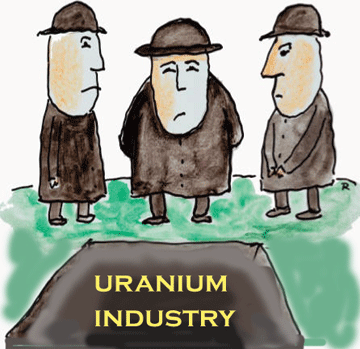 Uranium Sector Won’t Catch A Break, Share Cafe, By Rick Mills September 23, 2019 One week ago Cameco announced it will maintain low output levels until uranium prices recover. The Canadian uranium miner also said it might cut production further, having already closed four mines in Canada and laid off 2,000 of its workers in the uranium mining hub of Saskatchewan.
No end to supply glut
“We are not restarting mines until we see a better market and we may close more capacity, although no decision has been taken yet,” Cameco CEO Tim Gitzel told Reuters recently at the World Nuclear Association’s annual conference.
Just over a year ago Cameco made the difficult decision to close its MacArthur River and Key Lake mines, in response to low uranium prices, leaving the company’s flagship Cigar Lake facility as its only operating mine left in northern Saskatchewan, home to the world’s highest grade uranium deposit.
The mine closures by Cameco were preceded by 20% production cuts in Kazakhstan, the number one uranium-producing country. The former Soviet bloc country has said 2020-21 output will not rise above 2019 levels. In Canada, the second largest U producer, 2018 production was cut in half to 7,000 tonnes.
An estimated 35% of uranium supply has been stripped from the market since Kazakhstan’s supply reductions in December 2017…..
Eight years later, only nine of 33 remaining reactors have been re-started, and Japan’s nuclear operators are reportedly starting to sell their uranium fuel, as the chances fade of more reactors coming online, and adding to the six currently operating. Long-term contracts are also being canceled.
In another blow to the industry, Japan’s new environment minister, Shinjiro Koizumi, has said he wants all reactors shuttered to avoid a repeat of the Fukushima catastrophe that leaked radiation and forced 160,000 people to flee the area, many of whom have not returned.
As reactors close in the United States, Germany, Belgium and other countries, “traders and specialists say the market is likely to remain depressed for years,” Reuters reported in August.
Germany has pledged to shut down all its reactors by 2022 and the Belgian government has agreed to a new energy pact that will see nuclear power phased out over the next seven years…….
(makes case for thorium)….As far as disadvantages, thorium takes extremely 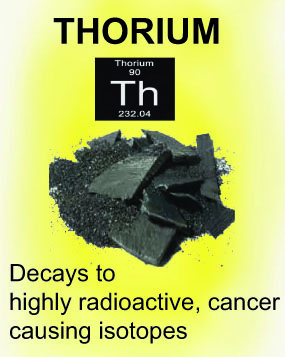 high temperatures to produce nuclear fuel (550 degrees higher than uranium dioxide), meaning thorium dioxide is expensive to make. Second, irradiated thorium is dangerously radioactive in the short-term.
Detractors also say the thorium fuel cycle is less advanced than uranium-plutonium and could take decades to perfect; by that time, renewable energies could make the cost of thorium reactors cost-prohibitive. The International Nuclear Agency predicts that the thorium cycle won’t be commercially viable while uranium is still readily available………… https://www.sharecafe.com.au/2019/09/23/uranium-sector-wont-catch-a-break/
Pacific Island nations urge action on climate change at UN
Two huge renewable hydrogen projects planned for Queensland — RenewEconomy

ARENA funds studies into two huge renewable hydrogen projects in Queensland that would shift ammonia production to solar and wind from gas. The post Two huge renewable hydrogen projects planned for Queensland appeared first on RenewEconomy.
via Two huge renewable hydrogen projects planned for Queensland — RenewEconomy
September 29 Energy News — geoharvey

Opinion: ¶ “Greta Thunberg Got The World’s Attention. But Are Leaders Really Listening?” • The science is clear that we need to act now on climate change. But commitments to reduce planet-warming emissions that were announced at the UN Climate Summit this week show some world leaders are not yet willing to take really transformative […]
The worst nuclear disaster you’ve never heard of — Beyond Nuclear International

Mayak may still be churning radioactivity into the environment
via The worst nuclear disaster you’ve never heard of — Beyond Nuclear International
1 This month
7 April – WEBINAR – Australia and the Doomsday Clock – Preventing nuclear war through NoFirstUse and other policies
Online | Tuesday April 7, 4:00-5:30pm, Australian Eastern Time / 8:00-9:30am Central Europe Time
– Access the registration link
15 April – Zoom –Nuclear Power is Not the Solution
Apr 15, 2026 01:00 AM in Canberra, Melbourne, Sydney

Join the International Physicians for the Prevention of Nuclear War (IPPNW) on Tuesday, April 14th for a timely webinar exploring the risks associated with nuclear power and challenging the myth that it offers a simple, safe, carbon-free solution to the climate crisis

21 April Webinar: No Nuclear Weapons in Australia
Start: 2026-04-21 18:00:00 UTC Canberra, Melbourne, Sydney (GMT+10:00)
End: 2026-04-21 19:30:00 UTC Canberra, Melbourne, Sydney (GMT+10:00)
Event Type: Virtual
A virtual link will be communicated before the event.
Host Contact Info: australia@icanw.org

of the week – Australians for War Powers Reform (AWPR)
To see nuclear-related stories in greater depth and intensity
 Antinuclear