To 30 October – nuclear news Australia
On October 24, seven Catholic peace activists were convicted on all counts for their 2018 protest against nuclear weapons. They face 20 years in gaol. This case is symbolic of where we are at – in the nuclear weaponisation of our planet. At the same time, Julian Assange, in solitary confinement in UK, faces extradition to USA and a life sentence- for exposing the truth on U.S. military atrocities.
Climate change is going to be even more costly than we thought. In California, the severity of wildfires signals the future climate situations.
A bit of good news – The cleanest waste-to-energy power plant in the world.
AUSTRALIA
Australia’s media under threat. ABC challenges the validity of Federal Police raids. Australian Federal Police put their case at Federal Court hearing about their raid on ABC. Attorney General Christian Porter backs laws that restrict journalists’ reporting. A new court order is being abused in order to harass a journalist. Australia’s environment department is unlawfully withholding documents from the public.
CLIMATE CHANGE. 85 fires burning across New South Wales Iconic Macquarie Marshes on fire. Climate change and the prospects this year for the Darling River. Some good news for a change: Australia’s greenhouse gas emissions are set to fall.
Why we can’t trust Scott Morrison – his REAL climate policy. Australian Prime Minister Morrison’s attitude to Pacific Islanders – “Take the Money and Shut Up about Climate Change”. Angus Taylor repeats misleading claim on carbon emissions yet again.
240 conservation scientists call on Australian government to strengthen environmental protection laws. 47 experts urge NSW government to defend NSW law and climate.
NUCLEAR.
- Voting begins in Kimba as nuclear waste issues divide the community. Farmers, traditional owners and ratepayers unite in anti-nuclear rally. South Australian Labor comes out swinging against nuclear waste dump selection process. Can the Australian government impose a nuclear waste dump on South Australia?
- MP Sonja Terpstra and Victoria’s Labor government stand by existing bans on nuclear activities. New political party Reform WA wants nuclear power as an option for Western Australia.
- Radioactive liquids in Olympic Dam waste pools are killing native birds.
Tilman Ruff discusses radiation risks regarding Olympic events at Fukushima.
RENEWABLE ENERGY. Jobs and growth: Albanese recasts Labor’s planned clean energy revolution. Morrison and Taylor’s little big grid plan not quite what it seems. Building Tasmania’s future on renewable energy. Another 162MW solar farm gets connection approval in Queensland. Townsville shopping centre builds “Australia’s biggest” solar car park. ARENA-backed project trials all-electric “net zero energy” homes in Melbourne. Big wind farm and even bigger battery approved for South Australia.
World Nuclear Waste Report (WNWR) to be launched 11th November.
A young Hannah Rabin was the peace movement’s Greta.
Over 300 financial institutions put $748 billion in to nuclear weapons companies.
The hazards of nuclear submarines.
Offshore wind to become a $1 trillion industry by 2040.
Science journalism – dominated by white males.
Australian government rejects call for help from Julian Assange’s legal team
 Why is it that the Australian government is so helpful to Australian murderers and drug dealers imprisoned overseas, but so relentlessly unhelpful to an Australian whose only crime is to tell the truth?
Assange legal team asks for Australian government help amid growing health fears, https://www.theage.com.au/politics/federal/assange-legal-team-asks-for-australian-government-help-amid-growing-health-fears-20191028-p534xw.html, By Rob Harris
The WikiLeaks founder has been held in HM Prison Belmarsh since his April 11 arrest at the Ecuadorian embassy, where he had lived in asylum for almost seven years.
Australian officials told a Senate estimates hearing on Thursday that diplomats had not heard back from Assange’s lawyer since writing to her last week asking that she raise with him their offer of consular assistance.
The 48-year-old is fighting US attempts to extradite him to face 17 counts of spying and one of computer hacking in relation to WikiLeaks’ release of thousands of classified Pentagon files regarding the Iraq and Afghanistan wars.
Barrister Greg Barns, an adviser to the Australian Assange campaign, told The Age and The Sydney Morning Herald his UK lawyers on Friday requested consular assistance following a recent inquiry from the Department of Foreign Affairs and Trade.
“Julian’s lawyers are asking for the Australian government’s assistance in dealing with their client’s inhumane conditions in Belmarsh prison which has led to, and is continuing to cause, serious damage to Julian’s health,” Mr Barns said.
His supporters say he is being kept in solitary confinement and is allowed out of his cell for only 45 minutes a day. At a court appearance last week, he appeared gaunt and disorientated.
Assange was due to be released on September 22 but was told at a court hearing last month he would be kept in jail because there were “substantial grounds” for believing he would abscond.
The Australian Lawyers Alliance (ALA) passed a motion at its national conference on Saturday calling for the Australian government to do “all it can” to bring Assange home and resist US attempts to extradite him.
ALA national president Andrew Christopoulos said it was an important issue about the rule of law and protecting an Australian in a vulnerable position overseas.
“This is about standing up for the rule of law, fairness and the freedom to expose wrongdoing,” he said. “The reported decline of Julian Assange’s physical and mental health heightens the need for urgent government intervention. The government has intervened in cases like this before and should do so in this circumstance.”
If the case goes to a series of appeals, Assange could remain in a UK jail until at least 2025.
Foreign Minister Marise Payne last week acknowledged the publicity around the case and that Assange had high-profile and loyal supporters. She said it was important to let the legal process run its course.
“He has been offered consular services … like any other Australian would,” Senator Payne told the Senate committee. “I think it’s important to remember that as Australia would not accept intervention or interference in our legal processes, we are not able to intervene in the legal processes of another country
Australia’s media under threat

“Media outlets have faced attacks in the form of centralisation of private ownership, funding cuts to public broadcasters, and potential prosecution of journalists, including News Corp journalist Annika Smethurst.”
One of the report’s authors, Geoffrey Watson, SC, former counsel assisting the Independent Commission Against Corruption, said he had been shocked by how quickly the brutal type of politics that evolved in the United States and the United Kingdom, and partly led to the ascendancy of Donald Trump and Boris Johnson, had taken root in Australia.
“One day you see the judiciary attacked and the next someone in the media,” said Mr Watson, who is a director of the Centre for Public Integrity. “On the third day it might be the CSIRO, they even attack our scientists. Some people don’t recognise it as the same problem, but it is all part of the same disease.”
He said the effectiveness of the media in Australia as a watchdog was not only threatened by personal and legal attacks by the government, but by regulations that had allowed ownership of newspapers to be reduced to an effective duopoly.
The report, entitled “Protecting the Integrity of Accountability Institutions”, said that a range of institutions – including the judiciary and the Administrative Appeals Tribunal, the public service, integrity commissions such as the ICAC, statutory authorities such as the Human Rights Commission and the Fair Work Commission, and the CSIRO – had all been targeted in recent years by interested parties seeking to undermine their independence and public trust.
“These institutions are important not only because they ensure actual accountability, transparency and good governance but because they build confidence and trust within the Australian community,” it said. “When this confidence and trust is diminished, divisiveness and conflict increase. This impacts social cohesiveness and the economy, and the welfare of all Australians suffers. Ultimately, as international experience has shown, it is a threat to democracy itself.”
It cited as examples of interference attempts by federal ministers to influence the Victorian Court of Appeal in 2017 terrorism cases, sustained funding cuts and personal attacks on the ABC, and the de-skilling of the public service through the outsourcing of up to 50 per cent of government departments to contractors.
The report listed a series of principles that needed to be respected in order to protect the independence of the threatened institutions. They include protection from political retribution, secure and sufficient funding, secure tenure of senior officials and public access to advice to the government from accountability institutions, as well as the creation of an effective federal integrity watchdog.
The Centre for Public Integrity, a independently funded think tank, was formed earlier this year in part to champion the case for a such a body. The report comes in the midst of a campaign by Australian media, including the Herald and The Age, to defend the public right to information in the face of increasing attempts by government and government agencies to suppress information, prosecute whistleblowers and criminalise legitimate public interest journalism.
Tilman Ruff discusses radiation risks regarding Olympic events at Fukushima
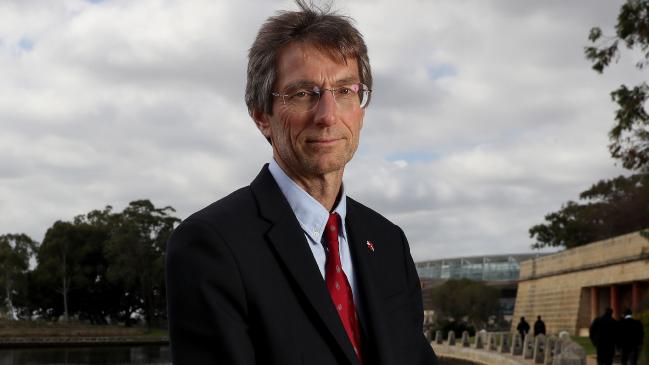 Warning on Fukushima fallout for Tokyo 2020 Olympians, https://www.theaustralian.com.au/sport/olympics/warning-on-fukushima-fallout-for-tokyo-2020-olympians/news-story/ed7bf1f0415ca7eb05ce9587b6d1989f, VICTORIA LAURIE. SENIOR REPORTER. OCTOBER 29, 2019
The Australian Olympic Committee has been urged to inform its athletes and team members about the ongoing health effects of the 2011 Fukushima nuclear reactor disaster for those attending the 2020 Tokyo Games.
Tilman Ruff, a public health expert who co-founded the Nobel Peace Prize-winning International Campaign to Abolish Nuclear Weapons (ICAN) in Melbourne, said he had written to the AOC to warn that levels of radioactivity in certain areas could be above the recommended maximum permissible exposure level. He said the Japanese Olympic Committee planned to host baseball and softball competitions and part of the torch relay in Fukushima City, 50km away from the ruins of the Fukushima Dai-ichi nuclear power plant.
In 2011, multiple nuclear meltdowns at the damaged facility caused radioactivity to leak out across Japan and the Pacific.
“It was a catastrophe comparable only to the nuclear meltdown of Chernobyl,” he said. While contamination was not as severe as at Chernobyl, “it was widespread and persists”.
At least 50,000 residents have not yet been able to return to the most affected areas in Fukushima prefecture. “The Japanese government is making a concerted effort to present the Fukushima nuclear disaster as over and effectively dealt with in the lead-up to the Olympics. Some of these efforts are misleading and should not be accepted at face value,” Dr Ruff said.
He said thyroid cancers had notably increased among young people in Fukushima, with a total of about 200 cases.
He has made several visits to Fukushima since 2011, the latest in May when he provided radiation health advice to the Fukushima prefectural government.
Dr Ruff said he then wrote to the AOC urging it to “properly inform and safeguard the best interests of the Australian staff and team, and their accompanying families, especially women who may be pregnant and young children”.
He said short-term visits to areas contaminated by radioactive fallout “now involve low to minimal risk”.
“However, if any (AOC) members or athletes plan to be based in Fukushima or neighbouring contaminated prefectures for weeks or months, they should be informed about the health risks of radiation exposure,” Dr Ruff said.
International physician groups have criticised the Japanese government’s decision shortly after the 2011 disaster to increase the maximum permissible radiation dose for Japanese citizens from one to 20 millisieverts. “Eight years later, it has not reversed that decision,” Dr Ruff said. “No other government in the world has ever accepted such a high level of radiation beyond the immediate emergency phase of a nuclear disaster for its citizens.”
An AOC spokesman said Tokyo 2020 provided regular updates to the IOC regarding the situation. “We have been given assurances that radiation levels in Fukushima City are safe, noting that the IOC Co-ordination Team has made several visits to the region and that ongoing monitoring is conducted independently of the Japanese government,” the spokesman said.
Climate change – more costly than we realised
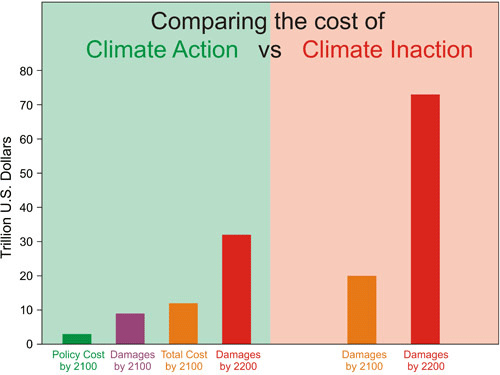
- But it’s worse than that. A set of assumptions and practices in economics has led economists both to underestimate the economic impact of many climate risks and to miss some of them entirely. That is a problem because, as the report notes, these “missing risks” could have “drastic and potentially catastrophic impacts on citizens, communities and companies.”One problem involves the nature of risk in a climate-altered world. Right now, carbon dioxide is at its highest concentration in the atmosphere in three million years (and still climbing). The last time levels were this high, the world was about five degrees Fahrenheit warmer and sea level 32 to 65 feet higher. Humans have no experience weathering sustained conditions of this type……..
A second difficulty involves parameters that scientists do not feel they can adequately quantify, like the value of biodiversity or the costs of ocean acidification. Research shows that when scientists lack good data for a variable, even if they know it to be salient, they are loath to assign a value out of a fear that they would be “making it up.”……A third and terrifying problem involves cascading effects. One reason the harms of climate change are hard to fathom is that they will not occur in isolation, but will reinforce one another in damaging ways. In some cases, they may produce a sequence of serious, and perhaps irreversible, damage…….
The urgency and potential irreversibility of climate effects mean we cannot wait for the results of research to deepen our understanding and reduce the uncertainty about these risks. This is particularly so because the study suggests that if we are missing something in our assessments, it is likely something that makes the problem worse.
This is yet another reason it’s urgent to pursue a new, greener economic path for growth and development. If we do that, a happy ending is still possible. But if we wait to be more certain, the only certainty is that we will regret it. https://www.nytimes.com/2019/10/23/opinion/climate-change-costs.html
ABC challenges the validity of Federal Police raids
 We don’t want any sensationalist headlines,’ AFP
  allegedly told ABC, https://www.theage.com.au/national/we-don-t-want-any-sensationalist-headlines-afp-allegedly-told-abc-20191028-p534ux.htmlby Michaela Whitbourn ,October 28, 2019 —An Australian Federal Police agent told the ABC it wanted to avoid “sensationalist headlines” such as “AFP raids ABC” before it seized a raft of documents from the broadcaster’s Sydney headquarters, the Federal Court has heard.
The ABC is challenging the legal validity of the search warrant authorising the June 5 raid by the federal police on its offices in Ultimo and is seeking the return of documents seized at the time. Continue reading
Climate change – iconic Macquarie Marshes on fire
Key points:
- Since Saturday, around 3,000 hectares of Ramsar-protected national park has burnt out
- An ecologist fears the fire may destroy the unique ecosystem of Macquarie Marshes — home to numerous waterbirds
- Fires have swept through before, but the soil is dryer than usual with a flood over the next year needed for reed roots to survive
The Ramsar-protected wetland regularly supports more than 20,000 waterbirds, and more than 500,000 birds when there are large floods.
But the blaze, which started on Saturday, has so far burnt 3,000 hectares of national park and early estimates suggest 90 per cent of the wetland’s main reed bed has been razed.
Director of the Centre for Ecosystem Science at the University of New South Wales Professor Richard Kingsford feared the fire could destroy the unique ecosystem.
“Reeds are very deep-rooted plants, but they can only come back if there’s water in the system,” Professor Kingsford said…….
Drought, fire threaten endangered species
Professor Kingsford has been studying waterbirds in the Macquarie Marshes for almost 30 years.
Right now it was the driest he had ever seen it.
“It’s almost impossible to find any water in the northern part of the Macquarie Marshes,” he said.
“Water birds there are extremely low in numbers and when we were out there in September there were a lot of dead and dying animals around……
Massive flood needed
Floodplain landholder Dugald Bucknell runs his grazing operation alongside the national park.
He described the latest wildfire as the “devastating” consequence of drought and failed water policy.
In August, the Berejiklian Government intervened to divert water from the Macquarie River at Warren to drought-hit towns such as Cobar and Nyngan.
“There’s no water in Burrendong Dam upstream of the marshes, there’s virtually no water in stock and domestic dams downstream of it, and somehow we’re meant to wish for a miracle to re-wet our marshlands,” Mr Bucknell said.
He said the wetlands were not getting the water they needed to survive and feared more fires would follow.
“It’s becoming unsustainable. Its frightening,” Mr Bucknell said.
“We’re killing off our kids’ and grandkids’ future to take a bit more water elsewhere in the system.”
https://www.abc.net.au/news/2019-10-28/macquarie-marshes-on-fire-90pc-reed-bed-razed/11645914
Australian Federal Police put their case at Federal Court hearing about their raid on ABC
No role’ for implied freedom of political communication in ABC raid decision: AFP, The Age Michaela Whitbourn, October 29, 2019 The ABC had “no basis” for claiming the implied freedom of political communication acted as a handbrake on a court’s power to issue a warrant to the Australian Federal Police to raid its Sydney headquarters, lawyers for the police have told the Federal Court.
The national broadcaster is challenging the legal validity of the search warrant authorising the June 5 raid on its offices in Ultimo and is seeking the return of documents seized at the time.
After a series of preliminary legal fights earlier this year, the full hearing in the Federal Court commenced on Monday and continued on Tuesday with submissions from the federal police.
The ABC is challenging the warrant on four bases, including the decision to grant the search warrant, made by a Local Court registrar, fell foul of the implied freedom of political communication in the Commonwealth Constitution…….
In documents filed in court, the ABC argues the implied freedom is relevant and “investigative journalism in the public interest that relies on information provided to journalists by confidential sources … is fundamental to the maintenance of the Australian system of representative democracy” which is provided for in the Australian Constitution. ……
David William McBride, a former military lawyer, has previously admitted leaking material to the ABC that formed the basis of its reports and has been charged with a range of criminal offences.
Some good news for a change: Australia’s greenhouse gas emissions are set to fall
In a policy brief released today, we predict that Australia’s greenhouse gas emissions will peak during 2019-20 at the equivalent of about 540 million tonnes of carbon dioxide.
After a brief plateau, we expect they will decline by 3-4% over 2020-22, and perhaps much more in the following years – if backed by government policy.
Australia: a renewables superstar
Deployment of solar and wind energy is the cheapest and quickest way to make deep emissions cuts because of its low and falling cost. Higher deployment rates would yield deeper emissions cuts, but this requires supportive government policy.
Australia: a renewables superstar
Deployment of solar and wind energy is the cheapest and quickest way to make deep emissions cuts because of its low and falling cost. Higher deployment rates would yield deeper emissions cuts, but this requires supportive government policy.
The emissions road ahead
Continued rapid deployment of solar and wind requires that governments enable construction of adequate electricity transmission and storage.
In the longer term, solar and wind can cut national emissions by two-thirds. Beyond the electricity sector, this involves electrifying motor vehicles, residential heating and cooling and industrial heating. National emissions could be cut by another 10% by stopping exports of fossil fuels, which creates fugitive emissions.
Misuse of funds in South Africa”s nuclear reactor project
Is this outfit similar to ANSTO and the Lucas Heights reactor? They both seem like mavericks running their own show without accountability
The letter reveals that Necsa has been making massive operating losses since 2014, which have deteriorated over the years, and has resulted in various ring-fenced funds being irregularly used to meet operating expenses, including salaries. Continue reading
Jobs and growth: Albanese recasts Labor’s planned clean energy revolution — RenewEconomy

Albanese sells Labor’s clean energy revolution as key to jobs and manufacturing, and promises a future for coking coal industry. The post Jobs and growth: Albanese recasts Labor’s planned clean energy revolution appeared first on RenewEconomy.
via Jobs and growth: Albanese recasts Labor’s planned clean energy revolution — RenewEconomy
Morrison and Taylor’s little big grid plan not quite what it seems — RenewEconomy

The transmission upgrade funded by federal Coalition and NSW not quite what it seems, and will only deliver stated capacity at night, in winter, and when demand is low. The post Morrison and Taylor’s little big grid plan not quite what it seems appeared first on RenewEconomy.
via Morrison and Taylor’s little big grid plan not quite what it seems — RenewEconomy
Transport minister avoids electric in rambling speech on driverless cars and grey nomads — RenewEconomy

Transport minister Michael McCormack misses the point about autonomous cars, saying only they might be good for grey nomads, and making no mention of electric vehicles. The post Transport minister avoids electric in rambling speech on driverless cars and grey nomads appeared first on RenewEconomy.
October 28 Energy News — geoharvey

Opinion: ¶ “Why Is Tesla Now The Most Valuable American Automaker?” • I cannot speak for the rest of the $58.78 billion market cap of Tesla, but from my perspective as a tiny shareholder who has covered Tesla professionally for several years, I’ve got a few thoughts on why it is Tesla has become the […]
Building future on renewable energy — Tasmanian Business Reporter

By Guy Barnett, Minister for Energy Renewable energy is perhaps Tasmania’s greatest economic opportunity for the next decade, with our Battery of the Nation pumped hydro plans, new wind farm projects and now a bigger second interconnector set to create thousands of jobs and billions in investment for Tasmania over the coming years. Tasmania has […]
via Building future on renewable energy — Tasmanian Business Reporter
1 This month
15 April – Zoom –Nuclear Power is Not the Solution
Apr 15, 2026 01:00 AM in Canberra, Melbourne, Sydney

Join the International Physicians for the Prevention of Nuclear War (IPPNW) on Tuesday, April 14th for a timely webinar exploring the risks associated with nuclear power and challenging the myth that it offers a simple, safe, carbon-free solution to the climate crisis

of the week – Australians for War Powers Reform (AWPR)
To see nuclear-related stories in greater depth and intensity
 Antinuclear