Nuclear news – quiet in Australia? Tense worldwide

Some bits of good news:Photos show increasing numbers of rare one-horned rhinos in Indian national parkBritain’s butterflies bolstered by conservation efforts. Indigenous rangers program doubles with $636 million boost . Back from the brink: Tiny bush carnivore gets a new lease on life. Ancient rock art site returned to Aboriginal owners — and they’re keen to share it, on their own terms.
On the nuclear and military scene – what a mess ! Yes, the Russian invasion is illegal and wrong. And yes, atrocities are being committed, and the Ukrainian people are suffering terribly. But, I hope that people are becoming aware of the very carefully managed anglophone media coverage, which is emphasising human emotional stories, while not really covering the progress of the war, nor the USA resistance to peace talks.. No other invasion, such as those in Iraq, Libya, Afghanistan, has been media-manipulated in this way.
Meanwhile – inexplicably, Western governments are pushing for new nuclear reactors at the very time when Ukraine is demonstrating how terribly dangerous they are!
AUSTRALIA.
Julian Assange’s family tirelessly advocate for his freedom.
NUCLEAR/URANIUM Australian Radiation Protection and Nuclear Safety Agency Key explanatory ARPANSA quotes on nuclear waste management in Australia.. Under the shadow of Fukushima and Juukan Gorge: Deep Yellow uranium takeover poses deep risks at Mulga Rock. Conservationists in bid to kill WA’s last uranium project. It’s been three years, but tourism operators say there’s no sign of $276m promised for Kakadu National Park
Australia’s Parliament has little control over military matters, and Prime Ministers kow tow to USA and the White Anglosphere to go to war. Weapons corporations infiltrate our schools and charities, promoting war-mongering to our youth. NATO Enhanced Opportunities Partner Australia to deliver armored vehicles to Ukraine — Anti-bellum.
CLIMATE. “Perverse:” Australian fossil fuel subsidies will top $22,000 a minute this year. Senate again blocks Angus Taylor’s bid to redirect ARENA funds to Carbon Capture Storage projects. Australia gets a fail-grade for climate action, falls behind G20 peers. Morrison Government’s climate record deemed ‘a catastrophic failure’: one in four Australians give zero rating.
INTERNATIONAL
The information war that precedes and complements kinetic war — Anti-bellum . Ukraine: Transfer of Power Balance from West to East.
. Chernobyl: radiation sickness in soldiers, theft of radioactive materials, wildfires – a frightening case of the multiple dangers of nuclear power. Ukraine Negotiations: No Fly Zone, Nukes, Neutrality, and Disarmament. Chris Hedges On Ukraine, Russia & NATO Urgent need to bring about new arms control agreements. https://www.youtube.com/watch?v=_I6ZkPi6NSI
Depicting Putin as ‘Madman’ Eliminates Need for Diplomacy. What is the current nuclear arms pact between Russia and the US? The Red Scare, Viewpoint by Alice Slater. Frenzy for selling bunkers, but they might not be much use, really. How would a nuclear winter impact food production?
Coastal communities across the world already feeling the impacts of climate change. Climate crisis worsened by population and economic growth. Nuclear on the ”frontline of climate change” – and not in a good way!
War in Ukraine has produced a new energy crisis. Energy efficiency is the fastest way to address this..
ANTARCTICA. Scientists caught off guard by massive ice shelf collapse in ‘coldest, driest’ part of Antarctica Hotter Antarctic summers posing increasing threat to stability of world’s largest ice sheet.
UKRAINE. Media coverage of the nuclear dangers in Ukraine often poorly informed and downplayed due to the influence of the pro nuclear lobby. Ukraine, Poland discuss NATO “peacekeeping” force in Ukraine — Anti-bellum. Russian troops pull out out of Chernobyl after suffering ”acute radiation sickness”. Wide reporting on Russian soldiers affected by radiation, leaving Chernobyl. Anxieties at Varash nuclear power station, and other ones in Ukraine – ”town smells of fear.”.
Nuclear catastrophe threatened, as fires sweep through forests towards Chernobyl site. 7 wildfires in Chernobyl Exclusion zone exceed Ukraine’s emergency classification tenfold. Head of IAEA to visit Chernobyl, as Russians withdraw from the site. Ukraine’s Ministry of Defense warns on radioactivity danger from the Chernobyl Excusion Zone. UN nuclear watchdog chief in Ukraine for safety talks. U.S. ambassador incites Georgians to confront Russia — Anti-bellum.
France pays the steep cost of inflexible and ageing nuclear as electricity prices soar — RenewEconomy

French baseload and peak prices soar due to a combination of massive outages of French nuclear power plants, cold weather and inefficient heating
France pays the steep cost of inflexible and ageing nuclear as electricity prices soar — RenewEconomy
The common refrain among critics of wind and solar is to blame their “variability” or “intermittency” for soaring electricity prices as Europe wrestles with gas shortages worsened by the war in Ukraine. But France, the nuclear “pin-up” country for the anti-renewables brigade, is not faring so well either.
Over the weekend, the key “day ahead” prices of electricity in France surged to unprecedented levels. On Friday, the futures price for “baseload” for wholesale French electricity price hit the eye-watering level of €714 a megawatt hour ($A1050/MWh).
It didn’t get much better by Sunday, when the day-ahead price for Monday settled at €515/MWh ($A758/MWh), which is the predicted average price over a 24-hour period. The price for peak electricity between 8am and 9am was €2,987/MWh ($A4,400/MWh).
The prices for both baseload and peak prices in the rest of the European market were significantly cheaper, and in Germany it was dramatically so.
The main reasons? Both supply and demand. Less than half (30GW) of France’s 64GW of nuclear capacity was available, thanks to planned and unplanned outages, and extended repairs due to corrosion issues in their ageing plants.
The forecast is for cold weather, and many French homes are fired with inefficient, energy hungry electric resistance heating, largely as a result that the French believed they had no reason to be energy efficient because of the their massive investment in nuclear.
“Massive outages of French nuclear power plants, in combination with cold weather and electric (often resistance) heating, are causing a critical situation for electricity supply there tomorrow,” energy analyst Kewes van der Leun tweeted over the weekend.
The French authority called on consumers to reduce their power consumption.
The situation in Europe is similar to the growing “north-side” divide in electricity prices in Australia, identified by the Australian Energy Market Operator, which has noted that since early 2021 average prices in the most heavily coal dependent states of Queensland and NSW are considering higher than elsewhere.
Partly that is due to a lack of transmission (France has similar problems), but also to the inflexibility of baseload, and the desperation of baseload owners to bid up prices when they can to recoup their costs.
Sure, states with high amounts of renewables do experience price spikes, but they tend to be short lived and the average price is significantly lower than so-called “cheap” coal.
The situation in France is not likely to get better any time soon. President Emmanuel Macron has pledge to invest significantly more in nuclear and his far-right opponent, Marine Le Pen (who is given an outside chance of unseating him) has pledge to stop all new wind and solar development.
But new nuclear won’t help. At the very best, a new reactor could be online by 2035, although France’s recent experience with massive cost over-runs and delays would put a major question mark over that being achieved.
Macron rubbing hands with glee as UK energy crisis means EDF poised for ‘£30bn payday’
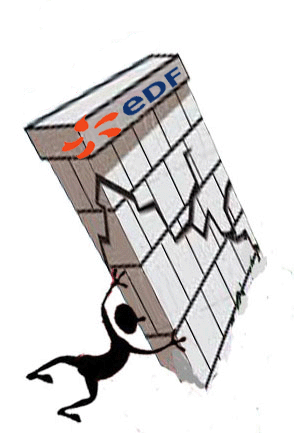
Macron rubbing hands with glee as UK energy crisis means EDF poised ‘£30bn payday’. EMMANUEL MACRON could win big from the UK energy crisis, with EDF being tipped to secure contracts worth nearly £30 billion.
Dr Paul Dorfman, an associate fellow at the University of Sussex said: “The UK has a very strong relationship with EDF, they own and run the substance of UK reactors and are helping to build Hinckley point and the rest of it.
“However, EDF are in debt. Moodys, the financial organisation has recently downgraded EDF’s credit rating. A quarter of all of France’s reactors are currently offline due to safety and security problems, that’s
largely because they have an ageing nuclear fleet, like us.
“In order to kind of try to prolong their lifespan, the French government has big upgrade of their nuclear. “The cost estimates are around £70-80 billion just to upgrade, just to keep them tottering on.”
EDF is currently constructing the Hinckley Point C nuclear power station and is also adding new reactors to Sizewell C in Suffolk and Bradwell B in Essex. Dr Dorfman has warned that these new reactors constructed by EDF are the same type of EPR reactors that were built in France, which the French court of Auditors estimated cost an extra €19billion (almost £16 billion). He continued: “EDF is clear about the need for Government investment in order to proceed with Sizewell C.”
Express 1st April 2022
Portugal to speed up switch to renewable power in wake of Ukraine war

https://www.reuters.com/business/sustainable-business/portugal-speed-up-switch-renewable-power-wake-ukraine-war-2022-04-01/?fbclid= By Sergio Goncalves,
LISBON, April 1 (Reuters) – Portugal aims to accelerate its energy transition and increase the proportion of renewable sources by 20 percentage points to 80% of its electricity output by 2026, four years earlier than previously planned, the government said on Friday.
As part of a global shift away from carbon-emitting fossil fuels, countries are betting on renewable energies such as wind and solar, a transition that is being accelerated in Europe after Russia’s invasion of Ukraine.
The new Socialist government that was sworn in on Wednesday, said in its overall programme released on Friday that the energy plans should mobilize more than 25 billion euros of investment in the next 10 years, involving public and private players, incentives and financing.
“Portugal has already taken very significant measures in the energy transition, but the evolution and duration of the war in Ukraine must necessarily imply new measures,” Cabinet Minister Mariana Vieira da Silva told a news conference.
The country, committed to become carbon neutral by 2050, currently gets 60% of its electricity from renewable sources – one of the largest proportions of green energy use in Europe.
Unlike central European countries, Portugal does not depend on Russian natural gas pipelines, as it mainly imports liquefied natural gas from Nigeria and the United States, and has not imported Russian crude since 2020.
The government also wants to “more than double the installed capacity of renewable sources in the next decade”.
Portugal, which closed its two coal-fired power plants last year, has 7.3 GW of hydroelectric capacity and 5.6 GW of onshore wind parks, which together represent 83% of its total installed capacity. Reporting by Sergio Goncalves Editing by Andrei Khalip and Frances Kerry
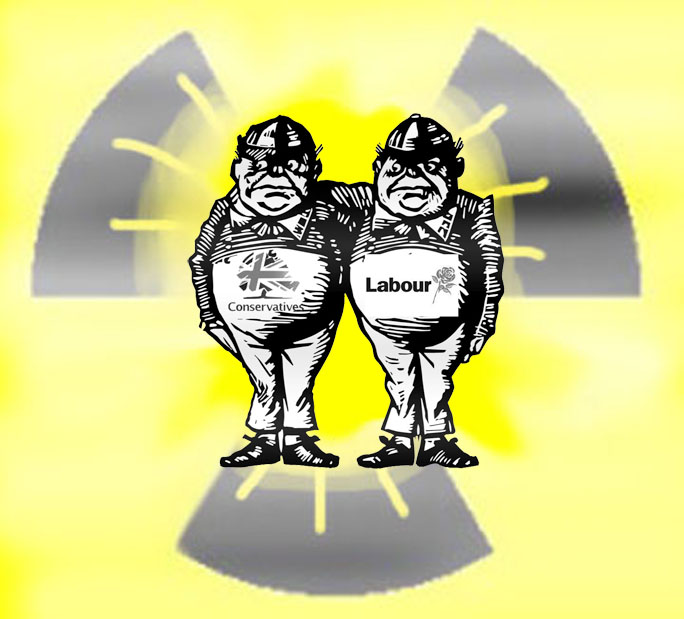
Why UK Labour’s green policies are fatally undermined by its ‘nuclear first’ stance
Dave Toke’s green energy blog, https://realfeed-intariffs.blogspot.com/2022/04/why-labours-green-policies-are-fatally.html
It is now clear from Labour’s stance in the House of Commons, that nuclear power comes before every thing else. Indeed, aside from Keir Starmer’s emphasis on ‘nuclear first’ attacks on the Government in the House of Commons, Labour’s allegedly massive green energy spending strategy seems likely to be swallowed up almost entirely by its pledge to rush to embrace the Sizewell C development.
The Treasury knows full well that to get Sizewell C going reasonably quickly the Government will have to commit to a potential bill of £30 billion or more in public spending. This must come, either or both, from hard-pressed energy consumers by adding to their bills, or directly from Treasury coffers. The Department of Business Energy and Industrial Strategy’s (BEIS) spending plans are closely controlled by the Treasury, and the commitment to Sizewell C will swamp the budget and reduce Labour’s ability to spend on things like insulation and heat pumps to a trickle.
Keir Starmer thinks he has seen a weak point in the Conservative’s energy strategy in that it is finding it difficult to turn the commitment to support Sizewell C into reality. But that’s because funding Sizewell out of a public commitment is likely to present the Government with a crippling financial burden. It is especially crippling because Starmer will refuse to acknowledge the fact that to get Sizewell C going will require the Government to fund a black hole of spending as cost overruns inevitably escalate on the project.
It’s a cynical ploy on Labour’s part. They know full well that the Government’s difficulties with launching Sizewell C are to do with the sheer financial unviability of new nuclear power, not from any lack of faith in nuclear power on the part of the Government. But apparently, Starmer does not care about this, and it also seems that he takes the green energy lobby for granted in that he expects that it will support him regardless.
But if other Labour commitments to support really big programmes in areas like heat pumps and insulation are to happen, there’s just not enough money going to be made available for them if BEIS’s budgets are swallowed up by the commitment to support Sizewell C.
So how should green energy supporters react to this? Well, there’s plenty of other parties to vote for. Indeed if this Government does actually go ahead and reverse the English planning ban on onshore wind, there’s probably not going to be much difference, in practice, between Labour and Conservatives on energy. Except of course that the Conservative will be more cautious, it seems, on accepting unmanageable commitments to new nuclear power!
As water levels rise so too does the pressure to stop building houses on flood plains
As water levels rise so too does the pressure to stop building houses on flood plains
Residents of flood-prone Hawkesbury-Nepean Valley near Sydney say real estate agents should have to advise buyers of risks
1 This month
17 October, Free Public Talk on Nuclear Issues in South Australia
David Noonan will speak on public interest concerns over the new Roxby Downs Indenture Act 2026 on BHP copper-uranium mining and ore processing in SA, and on how AUKUS may face SA with a High-Level nuclear waste agenda.
Dr Jim Green will discuss international developments in the field of nuclear power including ‘small modular reactors’ and Generation 4 ‘advanced’ nuclear reactor concepts.


Help Aunty Sue Protect Her Land and Sacred Sites From Destructive Rocket Testing.
.

Australians deserve the truth
about
AUKUS – https://aukuspublicinquiry.com/

PETITION – To: Prime Minister Anthony Albanese and the Australian Labor Government

of the week – Australians for War Powers Reform (AWPR)
To see nuclear-related stories in greater depth and intensity

