TODAY. 11 year old boys and nukes in space

Yeah – I’ve been reading about the awful threat of Russia sending its evil nuclear weapons up into space to destroy our benign satellites. Shock horror – we could lose TikTok coverage and our media focus on Taylor Swift!
Not to mention that it’s not a great idea to cause nuclear explosions in space, and spread toxic radioactive debris all over the place.
But – is it true?
Are the Russians that stupid?
or the North Koreans, or the Chinese ? Or anyone else that we’re scared of?
Well, they might be. Because. Here’s the rub. The biological development of the male does mean that they have a tendency towards aggression, and to develop inhibition rather late – say towards the age of 30. So the young teenage boys, on average, are a bit keener on risk-taking than they will be at later ages.
This aggression, competitive drive, and low fear of danger was probably useful way back when sabre-toothed tigers were the big threat. But not so useful now when other teenage boys can be a big threat.
The problem is – that risk-taking, competitive, aggressive teenager seems to still live and thrive within the men that are actually running things in our world.
They probably are not planning nuclear weapons to hit satellites, because even they see what a stupid idea that is. However, they’re surely organising all sorts of other ways to damage the satellites of “the other side”. Do you think for one moment that it’s only the Russians etc who are doing this? Of course the 11 year-old boys inside the psyche of the Western leaders are up to the same tricks, and probably leading the pack.
Dutton goes nuclear on government’s renewable plans

The Age, By Mike Foley, February 16, 2024
Opposition Leader Peter Dutton is ramping up his campaign against the Albanese government’s renewable energy goals, making the claim that next-generation nuclear technology is a cheaper, more reliable alternative to wind and solar energy.
Dutton claimed on Friday the government’s renewable goals would drive household power bills “through the roof” and argued nuclear was a climate-friendly option, setting up an energy policy clash with Labor at the federal election due by May next year.
Prime Minister Anthony Albanese won the 2022 election pledging to more than double the share of clean energy to 82 per cent of the grid by 2030. This is a cornerstone of Labor’s commitment to cut greenhouse emissions by 43 per cent on 2005 levels by the end of the decade.
Albanese said on Friday the government had capped the price of coal and gas to lower electricity prices. The government says its renewables policy will lower power bills by $275 a year by 2025.
But Dutton said Australia needed to have a “mature” conversation about nuclear.
“There are 20 countries similar to ours … who have a nuclear industry or they’re committed to do so,” he told media in Adelaide…..
However, experts say nuclear technology is more costly than renewables and would take decades to deploy if Australia lifted its long-standing ban on nuclear power.
The small modular reactors Dutton favours are not in commercial production. Some companies are conducting research and are expected to take several more years to build a working unit.
US company NuScale Power was developing the world’s most advanced commercial SMR project in Utah, but the project was abandoned in November due to a 70 per cent blowout in project costs.
Former chief scientist Alan Finkel, who was also a special adviser to the federal government on low-emissions technology, said it would take at least 20 years from the ban being lifted until a reactor could start generating electricity for the grid.
The government would need to dramatically beef up its nuclear regulation, which was currently equipped only to oversee radioisotopes used in medicine, select sites for construction of a reactor and for waste disposal, and set up a fund for decommissioning.
Finkel said it would also need to wait for a jurisdiction with regulations similar to Australia, such as the United States, United Kingdom, Canada or Europe, to deploy a small modular reactor.
“We are a laggard in the nuclear power industry, we’re not going to suddenly become a trailblazer,” he said.
“It’s very hard to imagine that [deploying nuclear energy] being done in less than 20 years from today.”
……..”if you want to get a fast transition to a low-emissions electricity system, the only option we’ve got today is solar and wind,” he said.
The CSIRO’s GenCost report in December calculated the 2023 costs of electricity generation for renewables, coal and small modular reactors and projected what they would be in 2030.
It found that a mix of wind and solar power in 2023 would generate electricity for $90 to $134 per megawatt hour, falling to $70 to $100 by 2030. These costs include investment of $30 billion to upgrade transmission lines to link wind and solar farms to the grid, and to build back-up power such as hydro dams.
…….If small modular reactors were available today, CSIRO estimated they would generate electricity at a cost of $380 to $640 a megawatt hour, dropping to $210 to $350 in 2030. https://www.theage.com.au/politics/federal/dutton-goes-nuclear-on-government-s-renewable-plans-20240216-p5f5g3.html
Wind and solar are delivering an energy transition at record speed
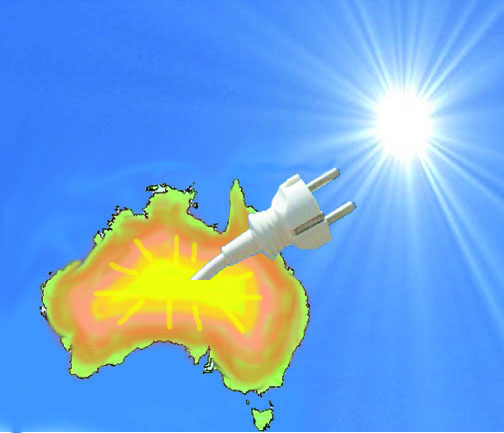
As Australia’s federal Coalition and the Murdoch media intensify their
calls for nuclear to replace the country’s ageing coal fired generators,
thereby ensuring that the switch to renewables is halted and climate action
delayed, it is worth reminding ourselves exactly how quickly wind and solar
can do the job.
As RenewEconomy has noted, South Australia has shone the
light for the rest of the country on the path to renewables, achieving an
average 82 per cent share for wind and solar over the entire December
quarter. That’s a world record share for a grid of this size, and an
achievement that proves the technology doubters wrong. If it can be done at
gigawatt scale, it can be done elsewhere.
Renew Economy 16th Feb 2024
From Russia with nukes? Sifting facts from speculation about space weapon threat
“Nuclear weapons in space are a really, really dumb idea,” said Jessica West of Canadian non-profit Ploughshares, but experts note that with Russia, nothing can ever be fully ruled out.
By THERESA HITCHENSon February 15, 2024
https://breakingdefense.com/2024/02/russia-nuclear-weapon-space-mike-turner-threat-white-house/
WASHINGTON — In the 24 hours since a cryptic, but scary, warning from Ohio Rep. Mike Turner, the chair of the House Intelligence Committee, of a “serious national security threat,” mainstream and social media sites alike have been chock-a-block with breathless, and sometimes contradictory, speculation about what might be going on.
Even as other members of Congress and the White House sought to play down Turner’s statement, leaks began to fill the press that the situation involves some sort of Russian nuclear capability in orbit.
The New York Times today quoted officials “briefed on the matter” as saying that the Biden administration has “informed Congress and its allies in Europe about Russian advances on a new, space-based nuclear weapon designed to threaten America’s extensive satellite network.”
PBS News Hour, on the other hand, on Wednesday said that sources characterized the new weapon as a nuclear-powered satellite carrying an electronic warfare payload — which is a very different beast than a nuclear weapons-carry satellite — but today reported that it is unclear which of those two things is correct.
The most detail shared by the administration came in a press conference today, where White House spokesperson John Kirby confirmed that the threat in question is “related to an anti-satellite weapon that Russia is developing.” He also noted that it is not an “active capability that has been deployed,” and that “there is no immediate threat to anyone’s safety.” However, Kirby refrained from providing more specific details.
Moscow, predictably, has issued a blanket denial.
Whatever the exact nature of the new threat is, the White House and President Joe Biden are “taking it seriously,” Kirby said, with briefings planned to Congress, as well as allies and partners. Further, he said, the administration is undertaking “direct diplomatic engagement with Russia” on US concerns.
To be clear, any type of Russian on-orbit anti-satellite (ASAT) would be a bad thing. But all things considered, a nuclear weapon in space would be worse than a nuclear-powered satellite carrying a disruptive EW payload — although for a number of reasons much less likely to be what Moscow is up to.
Nuclear Weapons in Space: Been There, Done That
Yes, nuclear weapons have been detonated in space before, by both the Soviet Union and the US during the early days of the Cold War. The largest was done by the US in 1962. After a series of failed tests, the United States conducted the Starfish Prime experiment, setting off a 1.45 megaton nuke at an altitude of about 450 kilometers (about 280 miles) above sea level.
The blast created an electro-magnetic pulse and lingering radiation belts that ultimately killed eight of the 24 satellites that were then on orbit, including one owned by the United Kingdom, according to a 2022 report by the American Physical Society.
There are around 7,000 active satellites on orbit today, as well as 10 humans aboard the International Space Station and China’s Tiangong station. Thus, a nuclear explosion on orbit likely would create even more havoc than Starfish Prime — including, almost certainly, for Russia’s own assets.
“Nuclear weapons in space are a really, really dumb idea, first because they are banned, but also because they have immediate and long lasting indiscriminate effects on the space environment which means that everyone — including the deployer and its allies — is affected,” explained Jessica West of Canadian non-profit Ploughshares in an email.
The 1967 Outer Space Treaty, to which both Russia and the US are parties, was created by the United Nations precisely to ban nuclear weapons in space.
“Some people might say that Russia doesn’t care about this because its space capabilities are waning so it has a smaller stake in the game. But I don’t think that any state can aim for functionality let alone ‘great power’ without being able to exploit outer space. There are also easier (and currently legal) ways of having large scale effects on the space environment such as the use of destructive weapons and dirty bombs,” West added.
Todd Harrison of the American Enterprise Institute agreed.
“There is no need to place nukes in orbit. Keeping nukes on Earth atop ICBMs is less expensive, more flexible to operate, easier to upgrade and maintain, etc. But what if your intent is to use the nuke in space (e.g., an EMP blast)? It is still better to base it on the ground,” he told Breaking Defense in an email.
“Detonating nuclear weapons has also been banned by treaty since 1963, not that it would stop Russia from doing it,” he added. “But why did the US and USSR agree to this ban so long ago and stick to it for all these years? It’s because popping off a nuke in space creates a real mess that affects satellites indiscriminately.”
That said, it would be very hard to detect if any country decided to deploy a nuke on a satellites, said Henry Sokolski, executive director of the Nonproliferation Policy Education Center. He told Breaking Defense in an email today that this verification problem was one of the key findings of an unclassified wargame the center conducted last spring on the use of a nuclear weapon in low Earth orbit.
“My hunch is that nobody wants to admit that this is the case. It’s a pretty important point,” he added.
Nuke-Powered Satellite: Old Tech, New Use?
Several experts said that Russian development of an anti-satellite (ASAT) weapon being carried on a nuclear-powered satellite, one using a small nuclear reactor to generate on-board electricity, is a more likely scenario. This is because both NASA and Russia’s Space Agency Roscosmos, have used nuclear power for space systems in the past. Indeed, NASA’s famous Voyager spacecraft carry nuclear power generators.
“The advantage is that a nuclear power source gives you power all the time, instead of being dependent on solar arrays pointing at the sun and charging batteries,” Harrison said.
Russia in the 1970s launched a series of naval reconnaissance satellites, called RORSATs for Radar Ocean Reconnaissance Satellites, equipped with a small reactor. Infamously, one of them crashed into Canada’s Northwest Territories in 1978, scattering radioactive debris for miles. Thus, the UN has “adopted principles regarding the use of nuclear power sources in outer space,” West said, which focus on safety and peaceful uses.
Still, she noted that “obviously the use of nuclear anything in space is fraught with safety concerns, and when this is combined with a military capability, it adds on security concerns and fears that it could also be used as a nuclear weapon.”
Harrison explained that a nuclear power source could be used to operate a number of payloads capable of disabling satellites.
“A nuclear power source could be used for a lot of things, like powering a radio frequency jamming payload to block signals or a high-powered microwave payload that could potentially fry the circuits on a satellite. Both of these applications would make a lot of sense from space,” he said.
Secure World Foundation’s Brian Weeden, in a thread on X (formerly Twitter), said a nuke-powered EW satellite is likely what the Russians are working on — especially considering that there is evidence that they have been developing such a technology, as documented in a 2019 article in The Space Review. The satellite system in question, called Ekipazh, is being developed by KB Arsenal (or Arsenal Design Bureau) of St. Petersburg under a contract with the Ministry of Defense, the article asserts.
All that said, Harrison said that it is also possible that some other non-nuclear capability is at play.
“Of course, all of the speculation could be completely wrong and it could be some other type of counterspace weapon. Russia has tested crazy things in the past, like firing a machine gun in space,” he said.
“But until we know more, and knowing Russia’s history of ASAT weapon development and testing, it is certainly something to be concerned about. Our economy and military are heavily dependent on space, and Russia knows that,” he added.
France’s first 6 EPR2 nuclear reactors will cost much more than the planned 52 billion euros
Why the first six EPR2s will cost much more than the 52 billion euros
initially planned by EDF. During a hearing in the Senate, the executive
director of EDF’s new nuclear projects, Xavier Ursat, indicated that the
first six EPR2s will cost more than the 52 billion euros announced in 2021.
A first slippage in costs including the new estimate is promised for the
end of 2024.
Why the first six EPR2s will cost much more than the 52
billion euros initially planned by EDF. EDF does not brag about it. But in
the Senate commission of inquiry into the price of electricity, Xavier
Ursat, its executive director in charge of the engineering department and
new nuclear projects, was obliged to talk about it.
As predicted by an expert report in 2021, the construction of the first six EPR2s will indeed
cost more than the 51.7 billion euros, rounded to 52 billion by the State,
calculated by EDF at the time Emmanuel Macron had to decide on the relaunch
of a new nuclear program in France. A relaunch confirmed in his speech on
Belfort’s energy strategy on February 10, 2022. “We are carrying out a
new economic assessment. It led to a figure higher than 52 billion,”
Xavier Ursat declared to the senators. Which, for him, “is not very
surprising”.
L’Usine Nouvelle 12th Feb 2024
Biden disparages Netanyahu in private but hasn’t significantly changed U.S. policy toward Israel and Gaza

As the reported Palestinian death toll in the Gaza Strip reaches 28,000, the president continues to believe that unequivocally supporting Israel is the right policy.
Yet, even as Biden has escalated his rhetoric, he is not yet prepared to make significant policy changes, officials said. He and his aides continue to believe his approach of unequivocally supporting Israel is the right one.
As the reported Palestinian death toll in the Gaza Strip reaches 28,000, the president continues to believe that unequivocally supporting Israel is the right policy.
NBC News, Feb. 12, 2024, By Carol E. Lee, Jonathan Allen, Peter Nicholas and Courtney Kube
WASHINGTON — President Joe Biden has been venting his frustration in recent private conversations, some of them with campaign donors, over his inability to persuade Israel to change its military tactics in the Gaza Strip, and he has named Prime Minister Benjamin Netanyahu as the primary obstacle, according to five people directly familiar with his comments.
Biden has said he is trying to get Israel to agree to a cease-fire, but Netanyahu is “giving him hell” and is impossible to deal with, said the people familiar with Biden’s comments, who all asked not to be named.
“He just feels like this is enough,” one of the people said of the views expressed by Biden. “It has to stop.”
Biden has in recent weeks spoken privately about Netanyahu, a leader he has known for decades, with a candor that has surprised some of those on the receiving end of his comments, people familiar with them said. His descriptions of his dealings with Netanyahu are peppered with contemptuous references to Netanyahu as “this guy,” these people said. And in at least three recent instances, Biden has called Netanyahu an “asshole,” according to three of the people directly familiar with his comments……………………………………………………………………………………………………………………….
Yet, people familiar with Biden’s private comments said he has told them he believes it would be counterproductive for him to be too harsh on Netanyahu publicly.
Biden’s frustrations with Netanyahu have also not led to a major policy shift, but his administration has begun to consider such options. Two weeks ago, officials told NBC News that the administration was discussing delaying or slowing U.S. weapons sales to Israel as leverage to get Netanyahu to dial down Israeli military operations in Gaza and do more to protect civilians………………….
Yet, even as Biden has escalated his rhetoric, he is not yet prepared to make significant policy changes, officials said. He and his aides continue to believe his approach of unequivocally supporting Israel is the right one…………………………
“I’m a Zionist,” Biden said, reiterating his views that Hamas must be destroyed and that Israel must be protected, according to the supporter……………………………………………….. https://www.nbcnews.com/news/investigations/biden-disparages-netanyahu-private-hasnt-changed-us-policy-israel-rcna138282
1 This month

of the week – Australians for War Powers Reform (AWPR)
To see nuclear-related stories in greater depth and intensity
 Antinuclear