Submarine boss refuses to answer questions over multi-billion-dollar AUKUS payments
By defence correspondent Andrew Greene, https://www.abc.net.au/news/2024-06-07/submarine-bossmulti-billion-aukus-payments/103952528
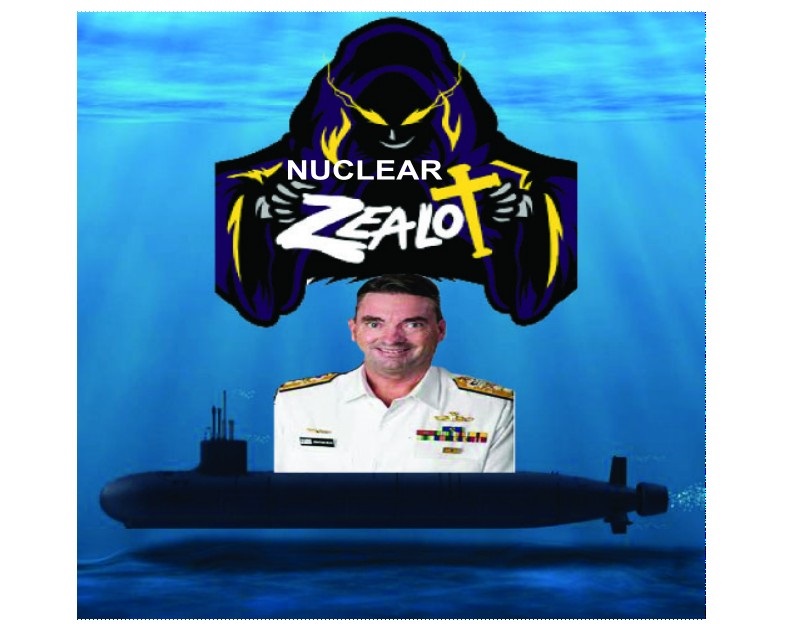
The head of the AUKUS submarine program has refused to say whether an almost $5 billion government payment to the United States will be refunded if no nuclear-powered boats are delivered to Australia.
Under the tri-nation agreement, Australia is providing multi-billion-dollar contributions to the United States and United Kingdom to help expand their submarine industrial bases, but for months officials have declined to discuss details of the transfers.
During a Senate estimates hearing, Greens senator David Shoebridge attempted to extract details of the impending $4.7 billion payment to the US from the head of the Australian Submarine Agency, Vice Admiral Jonathan Mead.
Under questioning late on Thursday, the ASA boss repeatedly refused to say if a refund clause was included with Australia’s payment in case the United States fails to transfer Virginia class submarines in the 2030s.
“I just go back to the original statement — the US has committed to providing two US submarines from its submarine industrial base in the early 2030s and a third one on procurement,” the vice admiral told the committee.
What if the United States determines not to give us a nuclear submarine? Is there a clawback provision in the agreement?” Senator Shoebridge then demanded to know.
“That’s a hypothetical and I’m not going to entertain … The US has committed to transferring two nuclear-powered submarines to Australia,” the ASA boss asserted.
“It may be embarrassing that you have entered into an agreement that sees Australian taxpayers shelling out $4.7 billion — which we don’t get back if we don’t get our nuclear submarines,” Senator Shoebridge responded.
Under the final stage of AUKUS the United Kingdom will help develop a new class of nuclear-powered submarine to be known as SSN-AUKUS, with Australia’s boats to be built locally in Adelaide.
Ahead of the ambitious venture, Australia will hand almost $5 billion to British industry over the next decade for design work and to expand production of nuclear reactors that will eventually be installed on AUKUS submarines
Navy apologises to traditional land owners over nuclear expansion
Defence has apologised to traditional land owners in Western Australia who live around the Garden Island naval base for not consulting them about upgrades being made to accommodate visiting nuclear-powered submarines.
During Senate estimates, Greens senator Dorinda Cox, who is a Yamatji-Noongar woman, expressed concerns on behalf of her community about the AUKUS work that will soon occur at HMAS Stirling.
Chief of Navy Vice Admiral Mark Hammond told the Senator he wanted to discuss the matter on his next visit, an offer she accepted.
“I’m just surprised that this has been such an oversight for an extended period of time, I do apologise, I’m in Western Australia in a couple of weeks’ time and again in July. I’d like to formally engage with your concurrence.”
Experts unite to condemn Coalition nuclear policy meltdown.

Climate Media Centre
Energy and health experts as well as affected regional and global communities have condemned reports today of the Coalition’s energy policy which includes large nuclear reactors to be sited on mothballed coal-fired power stations across regional Australia, as well as a plan to rip up Australia’s commitments to the Paris Agreement.
The CSIRO’s recent GenCost report showed that renewable energy remains the fastest, safest and lowest-cost energy option is what we’re already building. Clean energy like solar and wind already makes up 40% of our national electricity grid, and one in three households have installed solar panels. Staying this course is the most responsible path toward slashing emissions this decade to avoid the worst impacts of climate change.
Andrew Bray, National Director, RE-Alliance – “The Federal Coalition’s energy policy is a false solution to Australia’s emission reduction commitments – the shift to a clean energy supply is already under way, with the latest data showing almost 40% of Australia’s electricity generation came from renewable energy sources in 2023.
“Policies relying on non-existent small modular reactor (SMR) nuclear technologies and large-scale nuclear plants that take decades to build would commit Australia to a polluting and unreliable fossil fuel powered system for the next 20 years. Our current trajectory will see these ageing plants close progressively over the next ten years.
“Renewable energy is here right now. Australians are increasingly using a cleaner and cheaper electricity supply, which we need to minimise the increasing impacts of climate change. Regional communities can greatly benefit from the rollout of renewable energy infrastructure – provided governments and industry are committed to sustained and significant investment in community engagement.
“We need to stick to the plan but shift our focus to ensure regional communities get the benefits they deserve from the roll-out.”
IEEFA Australia CEO, Amandine Denis Ryan, said: “The research by IEEFA’s nuclear experts calls into question whether nuclear makes financial sense for Australia, for a multitude of reasons – timing, cost, compatibility with renewables and liability issues to cite just a few.”
“Our research shows that nuclear reactors – both small modular reactors (SMRs) and gigawatt-scale reactors – in comparable countries have consistently taken longer and have been more expensive to build than expected. With over 50 years experience in this space, our analysts have researched nuclear projects around the world. For a country like Australia, starting from scratch, we expect that nuclear power reactors would not reach commercial operation before the 2040s, would come at a high cost, and require substantial government support.
“Nuclear plants in Australia cannot be built in time to replace Australia’s fleet of coal power stations, more than 90% of which are expected to retire in the next 10 years. Our research aligns with CSIRO and the regulators’ assessment that it would take at least 15 years to first production. The few existing SMRs in operation took over 12 years to build, despite original construction schedules of three to four years. Large reactors have a history of long delays, with most recent projects taking nine years or more from the first concrete pour, which in turn can only take place after years of planning, contracting and pre-construction works. This is in addition to the time required to develop the regulatory regime.
 Experts unite to condemn Coalition nuclear policy meltdownClimate Media CentreEnergy and health experts as well as affected regional and global communities have condemned reports today of the Coalition’s energy policy which includes large nuclear reactors to be sited on mothballed coal-fired power stations across regional Australia, as well as a plan to rip up Australia’s commitments to the Paris Agreement. Experts unite to condemn Coalition nuclear policy meltdownClimate Media CentreEnergy and health experts as well as affected regional and global communities have condemned reports today of the Coalition’s energy policy which includes large nuclear reactors to be sited on mothballed coal-fired power stations across regional Australia, as well as a plan to rip up Australia’s commitments to the Paris Agreement.The CSIRO’s recent GenCost report showed that renewable energy remains the fastest, safest and lowest-cost energy option is what we’re already building. Clean energy like solar and wind already makes up 40% of our national electricity grid, and one in three households have installed solar panels. Staying this course is the most responsible path toward slashing emissions this decade to avoid the worst impacts of climate change. To arrange interviews, please contact:Danielle Veldre +61 408972997 dan.veldre@climatemediacentre.org.auEmily Watkins +61 420622408 emily.watkins@climatemediacentre.org.au Andrew Bray, National Director, RE-AllianceAndrew has been working with regional communities hosting large scale renewable and transmission infrastructure for more than a decade. He can discuss the policy solutions that are needed to support regional communities to harness the benefits available in the shift to renewable energy.Location: Bungendore, NSW (near Canberra) “The Federal Coalition’s energy policy is a false solution to Australia’s emission reduction commitments – the shift to a clean energy supply is already under way, with the latest data showing almost 40% of Australia’s electricity generation came from renewable energy sources in 2023. “Policies relying on non-existent small modular reactor (SMR) nuclear technologies and large-scale nuclear plants that take decades to build would commit Australia to a polluting and unreliable fossil fuel powered system for the next 20 years. Our current trajectory will see these ageing plants close progressively over the next ten years. “Renewable energy is here right now. Australians are increasingly using a cleaner and cheaper electricity supply, which we need to minimise the increasing impacts of climate change. Regional communities can greatly benefit from the rollout of renewable energy infrastructure – provided governments and industry are committed to sustained and significant investment in community engagement. “We need to stick to the plan but shift our focus to ensure regional communities get the benefits they deserve from the roll-out.” IEEFA Australia CEO, Amandine Denis Ryan, said: “The research by IEEFA’s nuclear experts calls into question whether nuclear makes financial sense for Australia, for a multitude of reasons – timing, cost, compatibility with renewables and liability issues to cite just a few.” “Our research shows that nuclear reactors – both small modular reactors (SMRs) and gigawatt-scale reactors – in comparable countries have consistently taken longer and have been more expensive to build than expected. With over 50 years experience in this space, our analysts have researched nuclear projects around the world. For a country like Australia, starting from scratch, we expect that nuclear power reactors would not reach commercial operation before the 2040s, would come at a high cost, and require substantial government support. “Nuclear plants in Australia cannot be built in time to replace Australia’s fleet of coal power stations, more than 90% of which are expected to retire in the next 10 years. Our research aligns with CSIRO and the regulators’ assessment that it would take at least 15 years to first production. The few existing SMRs in operation took over 12 years to build, despite original construction schedules of three to four years. Large reactors have a history of long delays, with most recent projects taking nine years or more from the first concrete pour, which in turn can only take place after years of planning, contracting and pre-construction works. This is in addition to the time required to develop the regulatory regime. “Nuclear plants are notorious for cost overruns. Our analysts found that SMRs in operation or under construction cost three to seven times more than originally planned. Proposed SMRs in the US have also already seen cost estimates blow out by between two and four times in recent years. Large-scale reactors often face cost overruns as well. The Flamanville EPR in France is an extreme example of this, with costs having more than quadrupled despite France’s deep expertise on nuclear. |
“Nuclear plants are not a good complement for renewable generation. They can be flexible within a range, however the economics rely upon being operated in ‘baseload’ mode. In the 2040s, when the first nuclear plants could begin operating, the Australian Energy Market Operator expects that over 90% of generation will be supplied by variable renewables (wind and solar), and that the average annual utilisation factor of gas generation assets will be between 3% and 15% to complement them. Our analysts estimate that at a utilisation factor below 25%, the cost for electricity supplied by an American SMR would increase to more than AUD 600/MWh, if it was even possible to achieve such a low utilisation operationally.
| Experts unite to condemn Coalition nuclear policy meltdownClimate Media CentreEnergy and health experts as well as affected regional and global communities have condemned reports today of the Coalition’s energy policy which includes large nuclear reactors to be sited on mothballed coal-fired power stations across regional Australia, as well as a plan to rip up Australia’s commitments to the Paris Agreement. The CSIRO’s recent GenCost report showed that renewable energy remains the fastest, safest and lowest-cost energy option is what we’re already building. Clean energy like solar and wind already makes up 40% of our national electricity grid, and one in three households have installed solar panels. Staying this course is the most responsible path toward slashing emissions this decade to avoid the worst impacts of climate change. To arrange interviews, please contact:Danielle Veldre +61 408972997 dan.veldre@climatemediacentre.org.auEmily Watkins +61 420622408 emily.watkins@climatemediacentre.org.au Andrew Bray, National Director, RE-AllianceAndrew has been working with regional communities hosting large scale renewable and transmission infrastructure for more than a decade. He can discuss the policy solutions that are needed to support regional communities to harness the benefits available in the shift to renewable energy.Location: Bungendore, NSW (near Canberra) “The Federal Coalition’s energy policy is a false solution to Australia’s emission reduction commitments – the shift to a clean energy supply is already under way, with the latest data showing almost 40% of Australia’s electricity generation came from renewable energy sources in 2023. “Policies relying on non-existent small modular reactor (SMR) nuclear technologies and large-scale nuclear plants that take decades to build would commit Australia to a polluting and unreliable fossil fuel powered system for the next 20 years. Our current trajectory will see these ageing plants close progressively over the next ten years. “Renewable energy is here right now. Australians are increasingly using a cleaner and cheaper electricity supply, which we need to minimise the increasing impacts of climate change. Regional communities can greatly benefit from the rollout of renewable energy infrastructure – provided governments and industry are committed to sustained and significant investment in community engagement. “We need to stick to the plan but shift our focus to ensure regional communities get the benefits they deserve from the roll-out.” IEEFA Australia CEO, Amandine Denis Ryan, said: “The research by IEEFA’s nuclear experts calls into question whether nuclear makes financial sense for Australia, for a multitude of reasons – timing, cost, compatibility with renewables and liability issues to cite just a few.” “Our research shows that nuclear reactors – both small modular reactors (SMRs) and gigawatt-scale reactors – in comparable countries have consistently taken longer and have been more expensive to build than expected. With over 50 years experience in this space, our analysts have researched nuclear projects around the world. For a country like Australia, starting from scratch, we expect that nuclear power reactors would not reach commercial operation before the 2040s, would come at a high cost, and require substantial government support. “Nuclear plants in Australia cannot be built in time to replace Australia’s fleet of coal power stations, more than 90% of which are expected to retire in the next 10 years. Our research aligns with CSIRO and the regulators’ assessment that it would take at least 15 years to first production. The few existing SMRs in operation took over 12 years to build, despite original construction schedules of three to four years. Large reactors have a history of long delays, with most recent projects taking nine years or more from the first concrete pour, which in turn can only take place after years of planning, contracting and pre-construction works. This is in addition to the time required to develop the regulatory regime. “Nuclear plants are notorious for cost overruns. Our analysts found that SMRs in operation or under construction cost three to seven times more than originally planned. Proposed SMRs in the US have also already seen cost estimates blow out by between two and four times in recent years. Large-scale reactors often face cost overruns as well. The Flamanville EPR in France is an extreme example of this, with costs having more than quadrupled despite France’s deep expertise on nuclear. “Nuclear plants are not a good complement for renewable generation. They can be flexible within a range, however the economics rely upon being operated in ‘baseload’ mode. In the 2040s, when the first nuclear plants could begin operating, the Australian Energy Market Operator expects that over 90% of generation will be supplied by variable renewables (wind and solar), and that the average annual utilisation factor of gas generation assets will be between 3% and 15% to complement them. Our analysts estimate that at a utilisation factor below 25%, the cost for electricity supplied by an American SMR would increase to more than AUD 600/MWh, if it was even possible to achieve such a low utilisation operationally. “One of the major risks for investors in nuclear assets is the size and allocation of liability in case of an accident, with international conventions stating that operators of nuclear installations are liable should an incident occur. Such liabilities are very challenging for a company to carry by itself. In the United States, this issue was addressed with the Price–Anderson Nuclear Industries Indemnity Act (1957) by creating a shared insurance pool, now totalling AUD 22.5 billion across the almost 100 reactors covered. The US Government is exposed to costs beyond the insurance pool. Full costs associated with the 2011 Fukushima disaster could be as high as AUD 770 billion. It is unclear how Australia would be able to manage these liabilities without very material government underwriting of risk.” |
Mia Pepper, Campaign Director at the Conservation Council of WA said: “The Coalition’s nuclear power plans reported today are a clear plan to distract and delay from real action on climate change.
“Nuclear power is expensive, slow and dangerous and simply cannot deliver the energy needed in the time frame we have to decarbonise.
“WA is currently exiting coal and well advanced on the transition to cheaper, safer, cleaner alternatives like renewables. It makes no economic, environmental or energy sense to change direction now.
“The WA Liberals have already ruled out nuclear power for WA, saying it is too expensive and doesn’t make sense for WAs grid. Peter Dutton’s irresponsible reactor plan has failed to convince his own party – and it certainly hasn’t and won’t convince the wider WA community. The Liberal party energy policy is nothing more than a dangerous distraction and delay from the much needed transition out of fossil fuels.”
“Nuclear is thirsty, requiring huge volumes of water for cooling, in an uncertain climate future nuclear also becomes one of the most dangerous and unreliable forms of energy we have seen these issues emerge in nuclear powered countries like France.
There remain significant and unresolved issues with the management of High-Level nuclear waste, insurmountable issues with security, and deep connections to the production of weapons grade materials. The risks of things going wrong are catastrophic.”
Masayoshi Iyoda – 350.org Japan Campaigner, said: “You cannot call nuclear clean energy, and completely ignore the voices of the victims of nuclear disasters and the burden on future generations. Nuclear is simply too costly, too risky, too undemocratic, and too time-consuming. We already have cheaper, safer, democratic, and faster solutions to the climate crisis, and they are renewable energy and energy efficiency.”
Joseph Sikulu – 350.org Pacific Managing Director said: “The legacy of nuclear power in the Asia Pacific region is a harmful one, as is the legacy of climate-destroying fossil fuels. The possibility of Australia venturing into nuclear is dangerous and concerning, and a distraction from what we should really be focused on – the just transition to renewable energy.”
Dutton spruiks gas and nuclear to win back Victoria
Gus McCubbing, AFR, Jun 7, 2024
“……………………… During a wide-ranging speech in which he spruiked the safety credentials of nuclear small modular reactors, attacked former Victorian premier Daniel Andrews and the Suburban Rail Loop, and claimed that teal MPs are Greens in disguise, Mr Dutton on Friday told a Melbourne business lunch the Liberals were “back in town”.
……………………………………. Mr Dutton said Australia must embrace next-generation nuclear technologies as part of its energy mix to achieve cheaper, consistent and cleaner power, despite the CSIRO last month warning the first large-scale nuclear power plant could cost as much as $17 billion in today’s dollars, and would not be operational until at least 2040.
He claimed that a 470-megawatt small modular reactor produces waste the size of a Coca-Cola can each year, with zero emissions…………….

COMMENT. While the toxic radioactive residue from small nuclear reactors IS small in volume – it is so highly toxic that it requires larger space between used fuel rods in disposal – so ending up with an equally dangerous waste problem.
When asked why his former government never moved to roll out nuclear energy during its nine years in office, Mr Dutton said there was no political appetite before AUKUS.
“I don’t think it would have been possible for us to adopt the position that we have if the Labor Party hadn’t signed up to nuclear [powered] submarines,” Mr Dutton said… https://www.afr.com/politics/dutton-spruiks-gas-and-nuclear-to-win-back-victoria-20240605-p5jjcl
1 This month

of the week – Australians for War Powers Reform (AWPR)
To see nuclear-related stories in greater depth and intensity
 Antinuclear