Nuclear powers down as global reactor numbers shrink.

By Jennifer Dudley-Nicholson, March 3 2025 – https://www.canberratimes.com.au/story/8906917/nuclear-powers-down-as-global-reactor-numbers-shrink/
The number of nuclear reactors operating around the world is shrinking, a report has found, and renewable energy generation is outpacing the technology.
The EnergyScience Coalition released the findings on Monday in a report analysing progress on renewable and nuclear energy generation, as well as investments in each.
It found nuclear power generation was “stagnating rather than growing” despite claims to the contrary, and that only three countries were planning to add nuclear reactors to their energy mix, while another three were planning to phase it out.
The report comes after the coalition pledged to establish nuclear power plants in seven Australian locations if it won the upcoming federal election, and after warnings that Australia could miss its climate targets by years under a nuclear plan.
The EnergyScience Coalition study, authored by academics from the University of Melbourne and the Nuclear Consulting Group, found the number of nuclear power plants worldwide had shrunk from 438 in 2002 to 411 last year.
Nuclear reactors also generated just 9.15 per cent of the world’s energy in 2024, it noted, compared to 17.5 per cent in 1996, and gained 4.3 gigawatts during the year.
By comparison, renewable energy sources added 666 gigawatts, according to the International Energy Agency, and were expected to overtake coal-fired power generation this year.
Claims about the number of countries investing in nuclear reactors had also been overstated in Australia, co-author and Nuclear Consulting Group member Jim Green said.
Nuclear reactors were being built in 13 countries, the study found, but only three were new to nuclear energy: Egypt, Bangladesh and Turkey.
“This report provides a factual rebuttal to the pro-nuclear disinformation campaign currently underway in Australia,” Dr Green said.
“There has been zero growth in nuclear power over the past 20 years and the number of countries operating reactors is the same as it was in the late 1990s.”
Four countries had already phased out nuclear power generation, including Italy and Germany, the report said, and another three were planning to phase out the technology, including Switzerland and Spain.
Recent nuclear power projects in countries where the technology was well established had also suffered significant cost and time blow-outs including a project the US state of South Carolina that was abandoned and the Hinkley Point reactor in the UK that was expected to cost 11.5 times more than its original estimate.
The examples proved Australia would face a significant challenge to build nuclear reactors within deadlines and budgets, co-author and University of Melbourne Professor Jim Falk said.
“Reactor construction projects in countries with vast expertise and experience, such as France, the US and the UK, have run literally tens of billions of dollars over budget and construction schedules have slipped by many years,” he said.
“Since those countries have failed to build reactors on time and on budget, it would be naive to believe that a nuclear newcomer country such as Australia could do it.”
The coalition’s nuclear plan would establish five large nuclear reactors and two small modular reactors across five states, with the first forecast to be operational by 2035.
But a recent report from the Climate Change Authority found switching from a renewable energy pathway to nuclear would delay Australia’s progress to its 2030 climate goal by 12 years.
Dutton’s nuclear gamble short on detail, but voters don’t seem to care
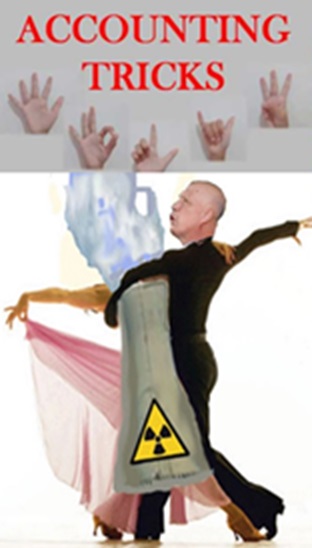
Dutton is unlikely to be bothered by the pockets of negativity towards nuclear, as they are concentrated among “high-information” voters who pay a lot of attention to politics………. he’s pitching himself to the so-called low information voters.”
the specific unpopularity of nuclear is unlikely to be politically significant in the outer-suburban electorates that Dutton covets.
The Coalition does not really want to talk about the practicalities of establishing nuclear energy in Australia. The question is: does anyone?
AFR, Ryan Cropp, 3 Mar 25
ppearing in front of local media in the north Queensland town of Ingham last month, Opposition Leader Peter Dutton was asked about his nuclear policy.
Did he expect the teals to support the Coalition’s nuclear plan? Dutton said yes, citing the new bipartisan support for nuclear in the UK and US, before unspooling a range of loosely related talking points: power bills, Victorian gas imports, and the floods that were affecting mobile phone and internet coverage.
For those opposed to Dutton’s nuclear policy, the pivot was telling. If elected, the Coalition has promised to build seven nuclear reactors, from scratch. But eight months since announcing the policy, Dutton has so far managed to dodge questions on many of the key details of his nuclear gamble.
Those details include the cost of building them, which Labor puts at $600 billion; the earliest a reactor could be built, arguably a decade later than Dutton’s plan; the extra billion tonnes of emissions caused by running old coal plants for longer, threatening Australia’s international commitments to reduce its carbon pollution; not to mention questions about water use, insurance and safety and health risks.
“It’s not clear exactly how they’re going to introduce nuclear,” says Tony Wood, an energy expert at the Grattan Institute.
“What is the policy plan? [There is a] vague idea that they’re going to have some big nuclear plants in seven places … and they’re also going to have these small ones – but they’re not too sure where and how they would run.
“It’s a high-risk strategy and the opposition is really not very clear on how they’re going to deliver on that.”
Despite the big outstanding questions, Labor has so far struggled to land any significant punches on the subject. The Coalition, it appears, does not really want to talk about the practicalities of establishing nuclear energy in Australia. The question is: does anyone?
Mentions of Dutton alongside nuclear in print and online media have halved since their peak in December 2024, when the Coalition released the policy costings, according to media intelligence provider Streem.
A survey of Dutton’s recent doorstop interviews and radio and television appearances also shows the nuclear issue falling from the top of the agenda, overwhelmed by concerns around antisemitism, Donald Trump and interest rates.
The longer Dutton can keep his big policy a small target, the longer he can keep the focus on his core message: cost-of-living, energy prices, and why Labor’s “renewables only” policies are making it worse.
That high-level, “vibes-based” messaging appears to be part of a broader political strategy.
Dutton wants to use nuclear to replace the country’s ageing coal-fired power generators and shore up the country’s energy security for decades to come. He says the first would be built in 2035 if a small modular reactor, or 2037 if a large power plant.
The policy ostensibly aligns a party with a large contingent of fierce climate sceptics behind Australia’s Paris Agreement commitments to net zero emissions by 2050. It also contrasts with Labor’s plan, which relies for the most part on a massive build-out of large-scale wind and solar, plus 10,000 kilometres of new poles and wires to connect it all to the grid.
According to one former senior Liberal who remains close to the party, Dutton’s nuclear gambit not only puts a Band-Aid over the party’s internal warfare on energy, but also shifts the debate over the green transition back onto Labor.
“He’s been able to change the debate with the government into a question of how you get [to net zero], and in doing so, has backed the government into the position of being seen to be the dogmatists,” said the former Liberal, who requested anonymity in order to speak freely.
For his part, shadow energy minister Ted O’Brien denies the small target strategy. “We’re not taking a small target approach – we’re leading the debate on how to fix Labor’s energy mess. The real question is: why is Labor running scared from serious conversations about nuclear?”
Opponents of Dutton’s nuclear plan take heart from a steady stream of studies that show the technology to be among the least favourable energy sources among voters.
Polling commissioned by the Clean Energy Council found only a third of voters supported nuclear, with half supporting gas and close to 80 per cent favouring rooftop solar.
Similar Australian Financial Review/Freshwater polling over the last two years has consistently shown that nuclear comes in only marginally above coal on a net favorability basis, and is well behind renewable sources of power like solar and wind.
But according to the former Liberal politician, Dutton is unlikely to be bothered by the pockets of negativity towards nuclear, as they are concentrated among “high-information” voters who pay a lot of attention to politics.
“That’s not where Dutton is pitching himself,” the former Liberal says. “In this area – and in a lot of other areas – he’s pitching himself to the so-called low information voters.”
“These are people who are not particularly interested in politics anyway, but they hear through the fog: ‘Oh, Dutton wants nuclear. The government’s against it. That’s interesting.’ That’s all they hear.”
Voters are ‘not resistant’ to nuclear
That’s a view shared by electoral experts, who say that the specific unpopularity of nuclear is unlikely to be politically significant in the outer-suburban electorates that Dutton covets.
To win government, the Coalition is targeting voters aggrieved by the difficult economic circumstances of the post-COVID years – many of whom live in mortgage belt seats held by Labor.
Dutton, pollsters say, will not be overwhelmed with demands for details of his nuclear policy on the streets of western Sydney.
Redbridge analyst Kos Samaras says there is not a huge amount of opposition to the idea of nuclear energy in Australia…………………………………
Rural support is key to the Coalition’s plan. Under Labor’s preferred energy mix, copious new solar and wind facilities need to be built in the regions, then connected to the grid by a vast new network of poles and wires. Many of these projects have been plagued by pockets of intense community pushback, undermining the social licence required for the renewables rollout to proceed…………………………………..
Also significant in the opposition’s calculations is the apparent age differential on support for nuclear, which Samaras says is clearly evident, but not likely to be a huge vote-swinger.
“I don’t believe nuclear is an issue in the marginal seats.”— John Black, demographic analyst
“Younger Australians in particular don’t want to rule out all solutions,” he said. “But it is nuanced. When it comes to nuclear, young people do have some reservations about things like safety.”
This age dynamic is well understood within Coalition ranks, according to two party sources not authorised to speak publicly….. those of a younger vintage are open to persuasion……………………………………
The most recent cost of energy report published by US investment bank Lazard, which looks at global averages, also found large-scale onshore wind and solar to be substantially cheaper than nuclear.
On top of the cost, Labor has zeroed in on the logistical difficulties of actually building the reactors, on time and on budget. Experts appearing at a recent Labor-led inquiry into nuclear energy estimated that in a best-case scenario, the earliest Australia was likely to get a nuclear plant up and running from a standing start was the mid-2040s – well beyond the Coalition’s estimates.
In addition to production and supply chain difficulties, the switch to nuclear would also involve overturning a handful of state and federal laws, as well as navigating even more complex planning and environmental approvals.
And given the cost and timing blowouts of other large infrastructure projects like Snowy Hydro and the National Broadband Network, only the most optimistic of nuclear boosters would be willing to put money on a facility being up and running in just over a decade.
And that delay comes with its own costs. In a dramatic intervention last week, the government’s independent advisory body, the Climate Change Authority, said that even under the optimistic scenario modelled by Frontier Economics, the Coalition’s plan to extend coal and gas generation until nuclear comes online would produce an additional billion tonnes of carbon emissions from the electricity sector alone………………………………………
Dutton should expect the government to keep up the negative messaging. On Friday, the prime minister advised Australians to “buy some popcorn” after Bowen invited O’Brien to debate him on nuclear at the National Press Club.
The opposition leader, for his part, lets it all roll off his back.
With recent polls showing the Coalition edging ahead of the government on a two-party preferred basis, it appears nuclear is not registering as the political liability many on the Labor side of politics think it could be………………..https://www.afr.com/companies/energy/dutton-s-nuclear-gamble-short-on-detail-but-voters-don-t-seem-to-care-20250219-p5ldj0
New report details nuclear power’s demise
March 3, 2025 AIMN Editorial, EnergyScience Coalition , https://theaimn.net/new-report-details-nuclear-powers-demise/
A new report by the EnergyScience Coalition corrects false claims by the federal Coalition and others that ‘the world is going nuclear’.
Co-authors Assoc. Prof. Darrin Durant, Prof. Jim Falk and Dr. Jim Green note that:
- The number of operating power reactors worldwide has fallen to 411, which is 27 fewer than the peak of 438 reactors in 2002.
- In 2024 there were 666 gigawatts (GW) of global renewable power additions compared to nuclear growth of 4 gigawatts, a ratio of 155:1. In China the ratio was 100:1.
- Nuclear power’s contribution to global electricity production fell to 9.15 percent last year, barely half of its peak of 17.5 percent in 1996. Conversely, the International Energy Agency expects renewables to jump sharply from 30 percent of global electricity generation in 2023 to 46 percent in 2030.
- Global nuclear power capacity is no greater than it was 20 years ago.
- Of the 32 countries operating power reactors, less than one-third (10) are building new reactors.
- The number of countries building nuclear power reactors fell from 15 to 13 last year. Seven percent of the world’s countries are building reactors; 93 percent are not.
- The number of potential nuclear ‘newcomer’ countries with reactor approvals secured and funding in place, or construction underway, is just three and those projects are all heavily funded by the Russian state.
- The ‘small modular reactor’ sector continues to go nowhere with setbacks in 2024 including the suspension of the Nuward project in France and the bankruptcy of US company Ultra Safe Nuclear.
Report co-author Prof. Jim Falk said: “Reactor construction projects in countries with vast expertise and experience ‒ such as France, the US and the UK ‒ have run literally tens of billions of dollars over-budget and construction schedules have slipped by many years. Since those countries have failed to build reactors on-time and on-budget, it would be naïve to believe that a nuclear ‘newcomer’ country such as Australia could do so.”
Co-author Dr. Jim Green said: “This report provides a factual rebuttal to the pro-nuclear disinformation campaign currently underway in Australia. Simple facts are ignored by the nuclear lobby, such as the fact that there has been zero growth in nuclear power over the past 20 years and the number of countries operating reactors is the same as it was in the late 1990s.”
The report, titled ‘Nuclear Power’s Global Stagnation and Decline’, is co-authored by Assoc. Prof. Darrin Durant (Associate Professor in Science and Technology Studies at the University of Melbourne), Prof. Jim Falk (Professorial Fellow in the School of Geography, Earth and Atmospheric Sciences at the University of Melbourne; Emeritus Professor at the University of Wollongong) and Dr. Jim Green (President of Friends of the Earth Australia and a member of the Nuclear Consulting Group).
1 This month
17 October, Free Public Talk on Nuclear Issues in South Australia
David Noonan will speak on public interest concerns over the new Roxby Downs Indenture Act 2026 on BHP copper-uranium mining and ore processing in SA, and on how AUKUS may face SA with a High-Level nuclear waste agenda.
Dr Jim Green will discuss international developments in the field of nuclear power including ‘small modular reactors’ and Generation 4 ‘advanced’ nuclear reactor concepts.


Help Aunty Sue Protect Her Land and Sacred Sites From Destructive Rocket Testing.
.

Australians deserve the truth
about
AUKUS – https://aukuspublicinquiry.com/

PETITION – To: Prime Minister Anthony Albanese and the Australian Labor Government

of the week – Australians for War Powers Reform (AWPR)
To see nuclear-related stories in greater depth and intensity

