Not Reporting a War (Part 2)
The question of how Australia became so deeply entangled in the US war machine has a simple answer: follow the money, and follow the men. The defence industry does not just sell weapons. It sells access, influence, and immunity from scrutiny. And in Australia, it has bought all three in spades.
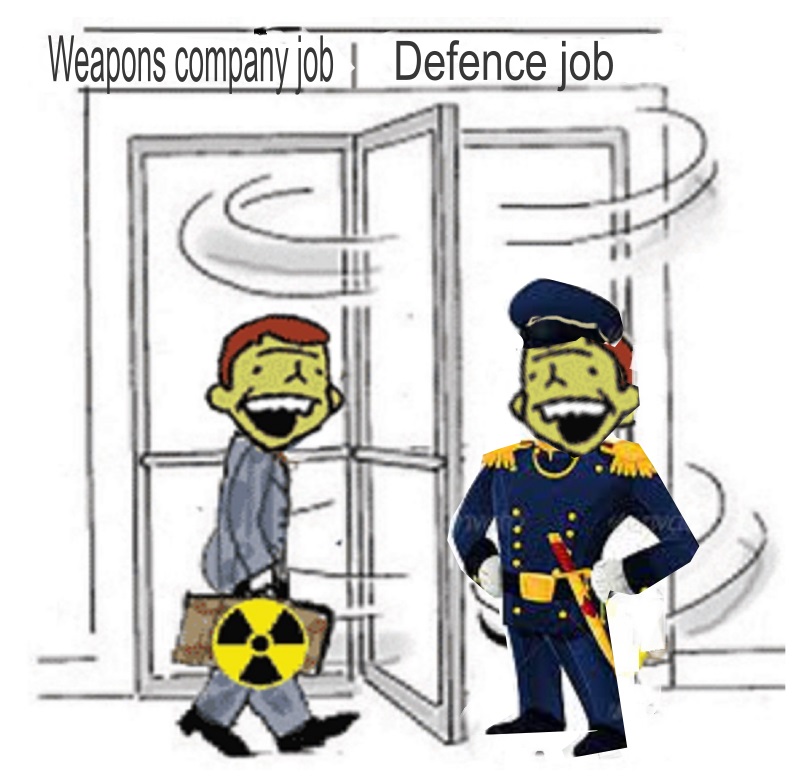
Real power, of course, lies not in the money itself, but in where it goes. The defence and arms lobby is the most egregious example. Elbit Systems of Australia hired Pyne and Partners, the lobbying firm of former Liberal Defence Minister Christopher Pyne, to secure government contracts. Pyne had begun talks about a defence-related corporate role while still in cabinet, and his firm continued to win tens of millions in contracts after he left politics. This is not an anomaly. It is the rule
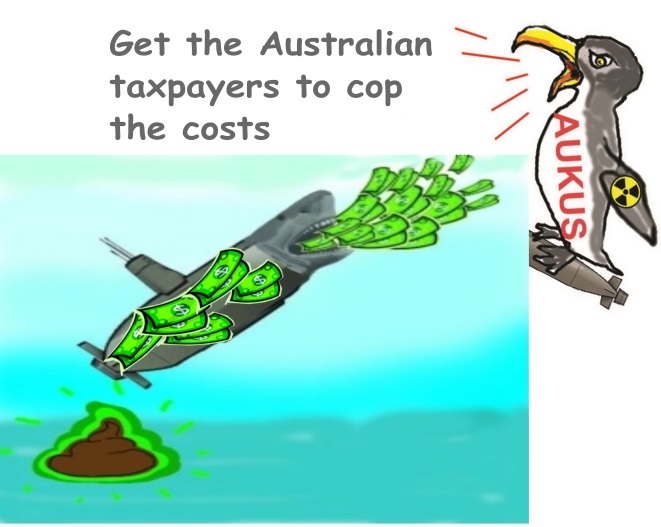
The AUKUS program, a $400 billion boondoggle, has become a gold rush for military contractors, and the revolving-door salesmen are their guides.
12 April 2026 David Tyler AIM Extra, https://theaimn.net/not-reporting-a-war-part-2/
The US and Israel are not only eager to illegally attack Iran, even to invade; they are at war with the rules of war itself. In a move largely ignored by our corporate media, they have dramatically extended the range of what they treat as legitimate targets.
Since Trump’s war began on February 28, 2026, American and Israeli troops have struck more than 13,000 targets across the country, dropping thousands of munitions in a campaign that has deliberately broadened to include soft civilian infrastructure off-limits under international norms.
Iran’s people, armed though their military may be with mine-laying speedboats, missiles and drones, have proved extremely vulnerable to these raids on universities, schools, hospitals, and cultural sites.
No longer is this tactic considered a criminal act in the Pentagon under Defense Secretary Pete Hegseth’s “anything goes” approach. But to understand what “anything goes” actually means in practice, you need to understand the man behind it.
Lethality, Lethality, Lethality

Pete Hegseth is the most consequential appointment Donald Trump has ever made, and the most dangerous. Not because he is powerful, though he is. Because he is incompetent, and the institution he has been handed contains enough destructive capacity to end several civilisations, which, as it happens, is precisely what he has been asked to do with it
Hegseth spent his career in television. He was a weekend host on Fox News, which is to say he was a man paid to be confident about things he did not understand, on a schedule that left his weekdays free. He has no command experience worth the name.
He has never managed a logistics chain, never been responsible for the rules of engagement in a contested theatre, never had to explain to a congressional committee why a targeting decision killed the wrong people. What he has is a theology, and in the current Pentagon, theology outranks competence.
His doctrine, such as it is, can be summarised in three words he repeats like a mantra at every opportunity: lethality, lethality, lethality. This is not a strategy. It is a temperament dressed up as a strategy, the kind of thing that sounds decisive in a greenroom and proves catastrophic in a targeting cell.
Lethality without restraint is not military effectiveness. It is the Peter Principle applied to the largest arsenal in human history: a man promoted precisely one level above the point where his limitations become catastrophic rather than merely embarrassing.
But underneath the incompetence is something more deliberate and more dangerous than simple unfitness for office. Hegseth’s Christianity is not the quiet, private faith of a man who attends church on Sundays.
It is a crusader’s theology, a conviction that the United States is engaged in a civilisational struggle between Christian order and Islamic chaos, and that the traditional constraints on military conduct, proportionality, distinction between combatants and civilians, the prohibition on targeting cultural and educational infrastructure, are not rules to be followed but obstacles to be cleared.
When you bomb a university, in Hegseth’s framework, you are not committing a war crime. You are prosecuting a holy war. The Geneva Conventions were written for conflicts between moral equals. In his theology, there are no moral equals on the other side.
This is the man who has purged the generals and admirals who might have told him why it matters that Sharif University of Technology was Iran’s MIT, that the Pasteur Institute served ninety million people, that destroying a civilisation’s capacity to educate its children is not a path to victory but a guarantee of generational enmity.
He did not want to hear it. The professionals who tried to say it are gone. What remains is an institution stripped of its institutional memory, run by a man whose primary qualification for the job was knowing which camera to look at, and whose secondary qualification was appearing on a television programme watched by the man who appointed him.
The result is not lethality. It is a military with enormous destructive power and no wisdom about when and how to use it, commanded by a man who has confused the absence of restraint with the presence of strength. The Pentagon under Hegseth does not have a strategy for Iran. It has a mood.
The Professors and the Bombs
That mood has consequences. Real ones, with names. On April 3, 2026, the Laser and Plasma Research Institute of Shahid Beheshti University in Tehran was reduced to rubble. The next day, Sharif University of Technology was struck, killing at least five professors and more than sixty students in their classrooms and laboratories.
These were not collateral damage. Iran’s Minister of Science, Hossein Simaei Sarraf, told Al Jazeera that the professors “did not die as a result of a single attack or bombing. The US and Israel deliberately targeted them and planned their killing.”
Since February 28, over thirty Iranian universities have been struck alongside hundreds of schools and medical facilities. This is Hegseth’s lethality doctrine in practice. Not in the Pentagon briefing room where it sounds like transformation. In a Tehran lecture hall, where it looks like a desk on fire and a student who will never finish her degree.
Yet in Australia, the murders of these scholars and their students have been met with silence. No front-page outrage. No prime-time specials. No editorials demanding justice. The ABC, the SMH, the Age, none have deemed it worthy of sustained attention. When Albanese finally ticked off Trump for his genocidal rhetoric, calling it “inappropriate,” it was too little, too late. The mouse had roared, but only after the lion had already feasted.
The Bases We Pretend Aren’t There
Australia is not just a bystander to this war. We are a host. Our bases are not ours alone. They are American outposts, and they have been for decades.
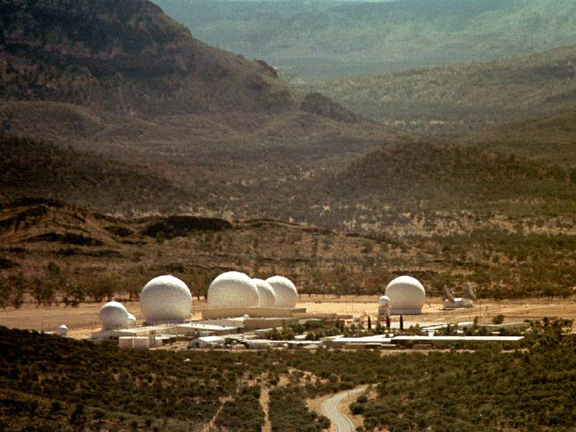
Pine Gap, the joint US-Australian facility near Alice Springs, is the most infamous. Its 45 radomes and Advanced Orion satellites do not just listen. They enable. Richard Tanter’s research confirms that Pine Gap provides real-time intelligence for US offensive operations in Iran. When American missiles strike Tehran, they are guided by data from the red centre of Australia.
HMAS Stirling is on Garden Island, Western Australia, is a different kettle of fish. Officially, it is a Royal Australian Navy base. In practice, it is a US submarine hub. The USS Minnesota’s routine visits are part of a pattern: Stirling is now a de facto US-UK Indian Ocean naval base, with American submarines coming and going as they please. The Australian government calls it “enhanced naval access.” The rest of us might call it a takeover.
Al Minhad Air Base in the UAE is Australia’s primary forward deployed headquarters in the Middle East. Under Operation Accordion, up to 80 Australian personnel are stationed there, alongside US forces. When Iran attacked Al Minhad on March 18, 2026, it was targeting a base that houses both Australian and American military infrastructure.
Our PM acknowledged that three ADF personnel were aboard the US submarine that sank the IRIS Dena. Yet we are told, with a straight face, that Australia is “not involved in offensive action.”
And let us not forget the North West Cape naval communication station in Exmouth, Western Australia, or the RAAF bases at Darwin and Tindal, where US Air Force B-52 bombers now have “enhanced access.” These are not Australian bases with American guests. They are American bases on Australian soil, used as the US sees fit.
The Jets, the Missiles, and the Money
Australia’s complicity is not just geographic, however. It is industrial. We are not just hosting the war. We are fuelling it. In January 2026, the US approved the sale of 450 AIM-260A Joint Advanced Tactical Missiles to Australia, a $3.16 billion deal that includes sustainment, training, and integration systems. These missiles are designed to extend the combat range of our F-35A Lightning II fighter jets, which are already part of the US-led global supply chain. Over 75 Australian companies contribute to the F-35 program, with more than 700 critical components manufactured in Victoria alone.
When these jets drop bombs on Iran, or on Gaza, Australian parts are in the payload.
Elbit Systems is also a key part of our war gaming. The Israeli defence giant, which has seen its share price surge 45 percent since January, is a key supplier to the Australian Defence Force. Our government has awarded millions in taxpayer-funded grants to Australian companies participating in the F-35 program, even as those same jets are used by Israel in its bombing campaigns. Michael West Media calls them “genocide grants.” The term is apt.
The Lobbyists, the Dark Money, and the Revolving Door
The question of how Australia became so deeply entangled in the US war machine has a simple answer: follow the money, and follow the men. The defence industry does not just sell weapons. It sells access, influence, and immunity from scrutiny. And in Australia, it has bought all three in spades.
Dark money floods our political system. Over $138 million in undisclosed donations poured into the major parties before the 2025 election alone, with Labor, the Liberals, the Greens, the Nationals, and One Nation all benefiting from funds whose origins remain a mystery. The rules are so lax that a lobby group can conceal half a million dollars by splitting it into 34 separate donations of $15,000 each, just under the disclosure threshold. The result? Tens of millions of dollars flow into the pockets of politicians with no oversight, no accountability.
Real power, of course, lies not in the money itself, but in where it goes. The defence and arms lobby is the most egregious example. Elbit Systems of Australia hired Pyne and Partners, the lobbying firm of former Liberal Defence Minister Christopher Pyne, to secure government contracts. Pyne had begun talks about a defence-related corporate role while still in cabinet, and his firm continued to win tens of millions in contracts after he left politics. This is not an anomaly. It is the rule.
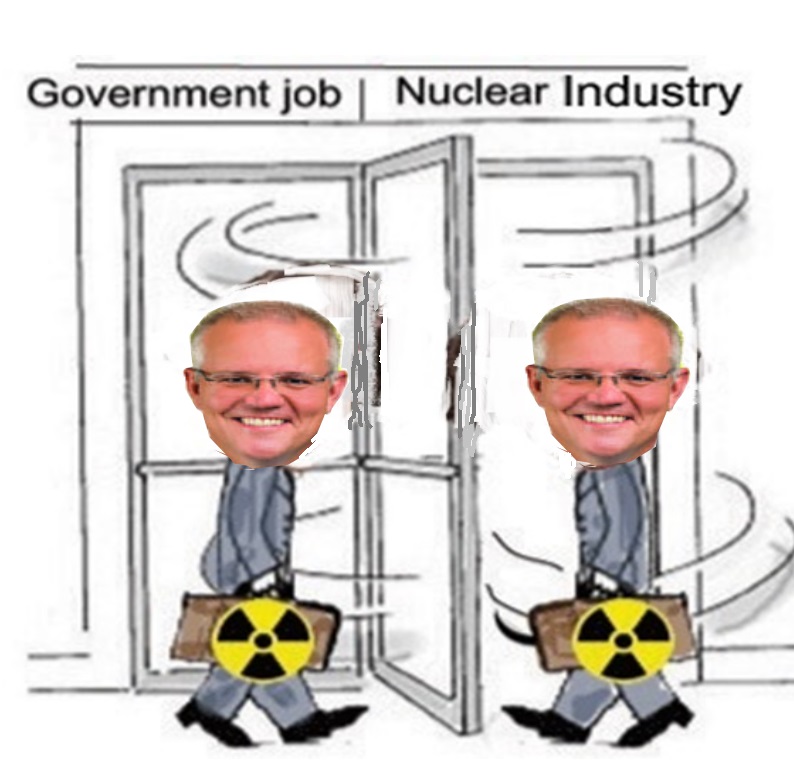
Former Prime Minister Scott Morrison now sits on the advisory board of DYME Maritime, an Australian-American capital fund investing in technologies for AUKUS, the very military alliance his government joined with the US and UK. Former Labor Defence Minister Joel Fitzgibbon is a registered lobbyist for Serco, the British multinational that profits from detention centres and defence logistics. And then there are the Howard government alumni: Alexander Downer, Nick Minchin, Mark Vaile, Michael Wooldridge, Helen Coonan, Richard Alston, Santo Santoro, Larry Anthony, and Peter Costello, all of whom walked straight from Parliament into lobbying roles, many for defence contractors.
.
This is the revolving door in action: a system where public service is a stepping stone to private profit, and where loyalty to the nation is secondary to loyalty to the highest bidder. The Centre for Public Integrity calls it a “well-established revolving door,” with one in four former ministers taking lucrative roles with special interest groups after leaving politics. The rules? A joke. Ministers are banned from lobbying for 18 months, but the ban is not enforced, and the definition of lobbying is so narrow that most simply ignore it. In Canberra, lobbyists now outnumber politicians three to one. And the defence industry is their most fertile hunting ground.
The AUKUS program, a $400 billion boondoggle, has become a gold rush for military contractors, and the revolving-door salesmen are their guides. When Michael West Media exposed that the federal government had awarded $78 million in taxpayer-funded grants to Australian companies supplying parts for the F-35s used by Israel in Gaza, the response was silence. The same jets that rain death on Palestinian civilians are partly made in Victoria, with over 700 critical components manufactured locally. And yet, no one in Canberra blinks.
This is how the war machine captures a democracy. It is not just about money. It is about culture. The defence establishment, with its powerful lobby groups, its dark money, and its utterly unaccountable ASIO, operates with sacred immunity. The Combatting Antisemitism, Hate and Extremism Bill 2026 is just the latest example of how national security is wielded as a cudgel to silence dissent. Under current laws, ASIO can detain individuals for questioning and compel them to answer, with the threat of five years imprisonment for those who refuse to speak, or even for those who disclose that they have been detained. The right to silence, once a cornerstone of our justice system, has been effectively erased for those caught in the national security dragnet.

And where is the watchdog? The press that should be holding this over-indulged monster to account is itself captured. Rupert Murdoch’s News Corp controls 59 percent of the metropolitan and national print media market by readership. Just three corporations, News Corp, Nine, and Seven, collect 80 percent of Australia’s free-to-air and subscription TV revenues. We have the least diverse media ownership in the democratic world, and it shows. When the government extends Murdoch’s press monopoly, it is not just a commercial decision. It is a political one, with consequences for the stories that are told, and the stories that are buried.
The Reckoning
There is a word for what has happened to Australian democracy, and it is not corruption, though corruption is part of it. The word is capture. The defence industry has not bribed its way into Australian politics. It has colonised it, so thoroughly and over such a long period that the distinction between the national interest and the arms industry’s interest has become genuinely difficult to locate. The revolving door spins. The dark money flows. The bases multiply. The grants go to the companies whose jets drop the bombs.
And in Canberra, nobody blinks, because blinking would require acknowledging what everyone already knows. We were once a country that helped build the United Nations. We sent Doc Evatt to New York to argue, with genuine conviction, that small nations had rights that great powers were obliged to respect. That idealism was not naivete. It was a considered foreign policy position: that a middle power’s best protection was a rules-based international order, because the alternative was a world run by the strongest, in which Australia would always be the client and never the principal.
We are that client now. We host the bases, supply the parts, process the targeting data, and call it a partnership. When the bombs fall on a university in Tehran, guided in part by signals from the red centre of Australia, we are told we are not involved in offensive action. The language is chosen carefully, by people who understand exactly what it conceals.
Hegseth has his theology. Albanese has his formulations. Neither is telling the truth about what Australia is doing in this war, and what is being done in our name.
A parliamentary inquiry into Pine Gap’s role in these strikes would be a start. Tighter revolving-door rules, enforced rather than merely announced. An immediate suspension of F-35-related grants pending independent review. These are not radical demands. They are the minimum that a functioning democracy owes its citizens when it takes them to war without asking.
But the deeper demand is simpler, and harder. It is that we stop pretending. Stop pretending that hosting American bases is not choosing sides. Stop pretending that processing targeting data is not participating in the targeting. Stop pretending that a democracy that cannot account for $138 million in undisclosed political donations is a democracy in any meaningful sense of the word.
The watchdogs are still barking. Crikey, The AIMN, Michael West Media: they are not just exposing the truth. They are keeping alive the idea that a free people has the right to know what is being done in its name, and the right to say no. That right exists. It is not being exercised. The question is not whether we still have it.
The question is whether we have the will to use it.
This article was originally published on URBAN WRONSKI WRITES
Hormuz Dateline
What Iran Actually Understands
Iran does not need to win a naval war in the classical sense. It only needs to make transit uncertain, costly, and politically radioactive. Mines, drones, missiles, fast boats, electronic piracy, and the psychology of fear are enough to turn a chokepoint into a garotte. That is the essence of asymmetry: a state under pressure parlays geography into power. Tehran does not need to dominate the sea. It needs only to make everyone else remember that the sea is not theirs.
The US-Israeli axis has long acted as if the region were a board and its opponents pieces. Hormuz shreds that assumption with the patience of geography.
Australia has a particular stake in this arithmetic that the Albanese government would prefer its citizens not examine too carefully. Australia sends approximately 80 percent of its LNG exports through or near the Gulf corridor. When Hormuz is threatened, Woodside’s share price moves. The war that Albanese insists Australia is not involved in is directly affecting the income of Australian energy companies and, through them, the superannuation balances of ordinary Australians. Pine Gap processes targeting data for the strikes. Australian-made F-35 components are in the payload. And Hormuz is where the bill arrives.
14 April 2026 David Tyler AIM Extra, https://theaimn.net/hormuz-dateline/
The war now has the smell of salt, oil, and old empires trying to defy the tide.
Thirty-three kilometres. That is the width of the Strait of Hormuz at its narrowest navigable point: two shipping lanes, each two miles wide, one in, one out, with a median strip of Iranian territorial water between them. Through those lanes passes approximately 21 million barrels of oil every single day. That is one barrel in every five consumed anywhere on earth. Add the liquefied natural gas, and you have roughly 20 percent of all the LNG traded on global markets squeezing through a corridor you could drive across in less than half an hour. A fifth of the world’s energy supply running through a gap that geography, not American naval doctrine, placed there.This is not a side theatre. This is the throat of the world economy, and in this war it has become the place where the old American order goes from swagger to strain. What was once sold as a system of irresistible reach; US power, Gulf oil, the dollar, the naval umbrella, the client-state arrangement, now looks clapped-out, ruinously costly, and exposed as it is caught, hoist by its own petard, dependent on a choke point that cannot be bullied out of geography.
No aircraft carrier in the world can widen the Strait of Hormuz by a single metre.
The Arithmetic of Vulnerability
The numbers matter because official language exists precisely to hide that fact.
When the Iran-Iraq war threatened these waters in the 1980s, oil prices doubled within months. When Houthi attacks on Red Sea shipping began in late 2023, global shipping insurance rates for Gulf-adjacent routes increased by up to 600 percent within weeks. Lloyd’s of London has now quietly tripled war risk premiums for vessels transiting the Gulf. That is not a diplomatic assessment or a Pentagon briefing. That is the financial system’s hard-nosed verdict on what is actually happening, stripped of all the official language about deterrence and security and the rules-based order.
While Trump posts to Truth Social about erasing civilisations and US admirals post to Facebook about historic firsts, the insurance market is pricing the reality that the propaganda is designed to conceal.
Australia has a particular stake in this arithmetic that the Albanese government would prefer its citizens not examine too carefully. Australia sends approximately 80 percent of its LNG exports through or near the Gulf corridor. When Hormuz is threatened, Woodside’s share price moves. The war that Albanese insists Australia is not involved in is directly affecting the income of Australian energy companies and, through them, the superannuation balances of ordinary Australians. Pine Gap processes targeting data for the strikes. Australian-made F-35 components are in the payload. And Hormuz is where the bill arrives.
What Iran Actually Understands
Iran does not need to win a naval war in the classical sense. It only needs to make transit uncertain, costly, and politically radioactive. Mines, drones, missiles, fast boats, electronic piracy, and the psychology of fear are enough to turn a chokepoint into a garotte. That is the essence of asymmetry: a state under pressure parlays geography into power. Tehran does not need to dominate the sea. It needs only to make everyone else remember that the sea is not theirs.
This is a strategic fact Washington cannot deny. Or lie about. The US-Israeli axis has long acted as if the region were a board and its opponents pieces. Hormuz shreds that assumption with the patience of geography. Israel can strike, assassinate, bomb, and escalate, but it cannot turn the Gulf into a risk-free zone. The US can threaten, sanction, and deploy, but it cannot guarantee the one thing the market demands most: confidence. That is the precise point at which imperial force runs into imperial limits. Empires can break things. Claim to rule the world. But it’s not so easy to rebuild trust once the world has called your bluff.
The ruling classes of all three powers; American, Israeli, Iranian are happy to gamble with systems they do not themselves live inside. They talk deterrence but they mean coercion. They may say security but they mean control. They may invoke peace but they build the conditions for the next war. It is the coastal fishermen, the dockworkers, “sea-gulls”, the tanker crews, and the families living with the knowledge that a misfire, a mine, or a drone can change the day in an instant who live inside the system these men are gambling with. That distinction matters. It is, in fact, the only distinction that matters.
The Petrodollar’s Exposed Seam
The petrodollar order was always more fragile than its keepers cared to admit. It rests on a Faustian bargain: Gulf oil will flow, the US will police the sea lanes, the dollar will stay as the world’s reserve currency, and regional rulers will play along so long as the deal suited them. Hormuz is where that bargain begins to fray.
The petrodollar system requires that oil be priced and settled in US dollars. That settlement runs through SWIFT, the global payments network, from which Iran has been excluded as an act of economic warfare. That exclusion has produced a direct, rational, and accelerating response: China, Russia, India, and an expanding coalition of the economically non-aligned are developing alternative settlement systems specifically designed to route around the dollar’s dominance.
This is not ideological posturing. It is financial self-defence against a system that has been openly weaponised. Hormuz is where that process becomes visible to everyone simultaneously.
The dollar’s centrality has depended on the belief that US power could secure the energy arteries while underwriting the financial order that prices global risk. But every threat to Hormuz chips at that belief. Every disruption reminds the world that this system is not floating on neutrality. It is anchored in force. And once force has to be constantly displayed, the myth of effortless supremacy begins to crack along every seam.
This is also why Hormuz looks, feels and even sounds like the end of an era. Not a stagey, Hollywood end of empire, but something slower and more repugnant: the fish rotting from the head, the end of imperial pretension publicly betrayed by the geography it claimed to master. The old style assumed that military reach could substitute for political legitimacy, that sanctions could replace diplomacy, that client regimes could be managed indefinitely, and that publics could be disciplined through spectacle and fear. Hormuz answers all of that with one simple fact: you can command the skies and the seas and still be strategically cornered. You can own the ocean narrative and still depend on a narrow strait you do not fully control.
The Scene Itself
Picture the actual scene, because power loves to use abstraction uses to hide from accountability.
Tankers move slow and dark under a white-hot sky. Naval escorts shadow them like anxious bodyguards. Insurance underwriters in distant offices recalculate exposure in real time. Traders watching screens flicker red. Refineries in South Korea, Japan, and India scramble to secure alternative supply. And in the waters themselves, and on the shores, and in the cities behind those shores, the people who have no choice but to live in the world that distant men are gambling with.That is Hormuz. Not a metaphor first, but a machine for making the abstract painfully concrete. It is thirty-three kilometres of water through which the pretensions of three nuclear-adjacent powers, and the complicities of a dozen client states including our own, are being tested against the oldest and most indifferent judge available: physical reality.
The old imperial language can still speak loudly, but it cannot hide the fact that the world runs through exposed conduits. It can still threaten, but it cannot guarantee outcome. It can still destroy, but it cannot stabilise what it has broken. That is the end-of-era feeling: not the end of power, but the end of the illusion that power can be made clean, automatic, and permanent.
The Narrowness of the Waterway, the Narrowness of Official Thinking
Hormuz is where the lie breaks down. It is where the empire finds the edge of its own reach. It is where the petrodollar shows its dependence, where military supremacy meets strategic vulnerability, and where thirty-three kilometres of salt water becomes a lesson in the catastrophic narrowness of the thinking that brought three powers to this point.
The old order still speaks in the voice of inevitability. Hormuz answers with a counter-argument that has been making the same point since the first trading dhow passed through it: no empire, no doctrine, no naval task force gets to abolish geography.
The market knows it. The insurance actuaries know it. The tanker captains threading those two-mile lanes know it. The fishermen on the Iranian shore know it.
The men ordering the strikes are the last to learn it. They always are.
This article was originally published on URBAN WRONSKI WRITES
1 This month


Help Aunty Sue Protect Her Land and Sacred Sites From Destructive Rocket Testing.
.

Australians deserve the truth
about
AUKUS – https://aukuspublicinquiry.com/

PETITION – To: Prime Minister Anthony Albanese and the Australian Labor Government

of the week – Australians for War Powers Reform (AWPR)
To see nuclear-related stories in greater depth and intensity

