Peter Garrett to head independent inquiry into the Aukus submarine pact
By Tom McIlroy Political editor, June 2, 2026, https://www.inkl.com/glance/news/peter-garrett-to-head-independent-inquiry-into-the-aukus-submarine-pact?first_login=true§ion=personalized
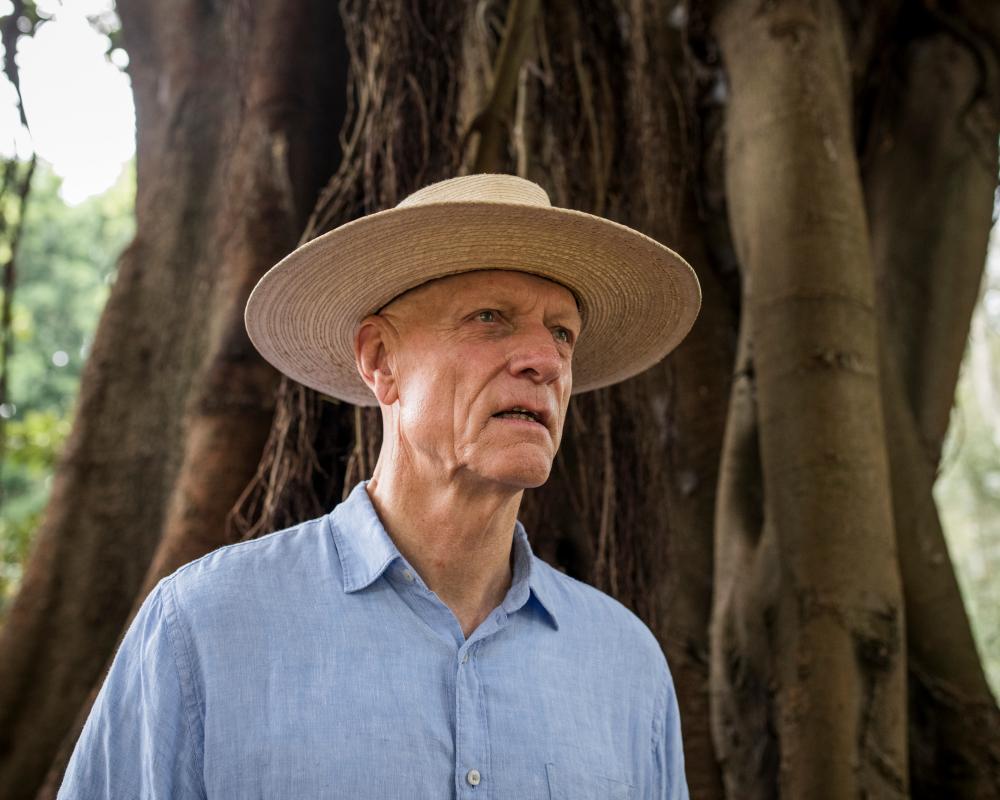
he former environment minister Peter Garrett will lead an independent inquiry into the Aukus defence pact, launched by a group of Labor veterans and public figures concerned proper scrutiny has never been applied to the $368bn defence plan.
Garrett, the Midnight Oil frontman and longtime environmental campaigner, will be the lead commissioner on the five-month community-based investigation, being launched on Tuesday.
It will hold public hearings and take written submissions before delivering a final report by 30 October.
Labor agreed to support the deal for Australia to acquire nuclear submarines in collaboration with the US and the UK, negotiated under the Morrison government and announced in 2021. As part of the agreement, Australia is funding upgrades to the US defence industrial base and will start receiving secondhand nuclear submarines in 2032.
The UK parliament held a year-long review into the trilateral partnership and, after an inquiry by the Pentagon in 2025, Donald Trump agreed to support it.
But some within Labor, including the former prime minister Paul Keating, as well as civil society groups believe Aukus is not in Australia’s best interest.
Garrett said the new inquiry – supported by trade unions and non-profit organisations – would consider if the subs can be delivered on time and on budget, how nuclear waste will be managed and if Australia’s defence and strategic interests are well served by the deal.
He has previously lashed Aukus, saying the plan “stinks” and represents “the most costly and risky action ever taken by any Australian government”.
“This inquiry is doing the job that a proper parliamentary inquiry should be doing,” Garrett told Guardian Australia.
“How is it that there’s been inquiries about the submarine program in other countries and we haven’t had a full parliamentary inquiry here?”
A group of commissioners will be named to lead the inquiry, convened under the auspices of the Australian Peace and Security Forum.
Critical to its deliberations will be the rise of China and the prospect of conflict in the Indo-Pacific region.
Nuclear non-proliferation issues, employment and environmental consequences are also among the inquiry’s terms-of-reference.
Despite the Albanese government expressing confidence since winning government in 2022, on Sunday the defence minister, Richard Marles, announced Australia would buy three secondhand American Virginia-class submarines, instead of at least one brand new vessel from the US.
He said the change – announced after talks between Marles and his US counterpart, Pete Hegseth, in Singapore – was about Australia placing “a premium on simplicity” and not about challenges in submarine production for the US navy.
Marles conceded there would be no “fundamental” shift in the cost but operating two models of the American-made submarines would be more costly and complicated.
The government’s preferred measure of the total cost is 0.15% of GDP over the lifetime of the deal.
The first Virginia-class nuclear sub from the US is due to arrive in Australia in 2032, with another arriving every four years, before the Australian-built model is ready for operations. The bespoke SSN Aukus model is due to come online in 2042.
Australia has not identified a permanent storage site for the nuclear waste generated by the submarine fleet, including the high-level radioactive waste from the reactor core and spent fuel, which will remain toxic for thousands of years.
In 2023, Marles committed to publicly outlining a process for identifying a waste site “within 12 months”. But no plan, or site, has yet been identified.
Starting as early as 2027, US and UK nuclear-powered submarines will begin rotations at HMAS Stirling in Western Australia. An east coast base is also expected to be built.
To cover capability gaps before the Aukus fleet arrives, Australia is extending use of 30-year-old Collins-class submarines for an extra 10 years.
As part of the second pillar of the agreement, Marles announced plans for the three countries to develop new weapons systems and sensors for underwater drones, to protect undersea cables, conduct surveillance and strike enemy targets.
Husic breaks ranks to demand rethink of Labor’s support for AUKUS

Phillip Coorey and Nicola Smith, 2 June 26
In a move which sparked speculation of a wider internal insurrection, Husic, during Tuesday’s caucus meeting, and at a press conference afterwards, said Labor should reconsider its support for AUKUS, which was hastily given when it was in opposition.
“The reality is this deal has changed. It’s not the deal that we agreed to way back when. And the reason the deal is changing is because … in the US, they cannot produce at the rate that they want to, and at the rate we need them to – that is the reality.”
Labor’s support for AUKUS has long been internally contentious and is bound to feature once more when the party holds its triennial national conference in Adelaide in July.
Labor Against War convenor Marcus Strom, who led a revolt at the last national conference in Brisbane, backed Husic.
Now that dodgy Pete Hegseth has again changed the AUKUS deal, it’s right that Ed Husic has called for a caucus vote on the nuclear subs pact,” he said, referring to the US secretary of defence. “Who pays the same price for a used car that they’d pay for a new one? Caucus should follow logic – and their conscience – to reject AUKUS altogether.”
“The best time to dump AUKUS was in 2022 when Labor won office. The next best time is now.”
Husic broke ranks on the same day Midnight Oil frontman and former Labor MP Peter Garrett, along with former admiral Chris Barrie and former West Australian Labor premier Carmen Lawrence, launched an independent crowd-funded inquiry into AUKUS.
They were backed by the teal independents.
At a weekend defence ministers meeting in Singapore, the AUKUS nations – Australia, the UK and US – agreed on an updated plan to contain costs and simplify the historic security pact, revealing that the first three Australian purchases of US-built nuclear-powered submarines would now be confined to used vessels, instead of two
used and one new.
Under pillar 1 of AUKUS agreed in March 2023, Australia was set to buy at least three new and used Virginia-class submarines from the US Navy from 2030, to plug a gap between the retirement of Collins-class vessels and the new SSN-AUKUS models coming off production lines in the 2040s.
Prime Minister Anthony Albanese played down the importance of the change, claiming that when Labor inherited AUKUS from the Morrison government, there was “very little real detail on what it entailed”.
Defence Industry Minister Pat Conroy said there were no details about the Virginia submarine purchases when Labor was in opposition, with this needing to be worked out in government. He said the caucus vote was about whether Labor would support nuclear-propelled submarines being built in Australia.
Opposition defence spokesman Senator James Paterson seized on the Labor rift to question the government’s commitment to the nuclear-powered submarine agreement, pointing to the groundswell of “prominent former Labor figures” sharing Husic’s scepticism about the program’s progress.
“It’s former Labor prime ministers like Paul Keating, it’s key Labor unions, it’s Labor branches. It’s very clear that the Labor grassroots is questioning this government’s ability to deliver AUKUS, and even going as far as questioning whether or not we should proceed with AUKUS at all,” he said………………………………………
Defence experts have raised concerns the development could risk a capability gap as the second-hand craft have a shorter lifespan.
Under pillar 1 of the security pact, the Australian navy would not take delivery of its first domestically built SSN-AUKUS submarines until the early 2040s, after the acquisition of the Virginia-class craft.
“I think we do need to have a public conversation about contingency plans prudently made for any capability gaps that might arise,” said Paterson. “It could open up that could leave Australia exposed, and I think we need to look at supplementary capabilities that could help fill that gap.” https://www.afr.com/politics/federal/husic-breaks-ranks-to-demand-rethink-of-labor-s-support-for-aukus-20260602-p6036q
Richard Marles accepts used submarines in AUKUS setback

“There’s a reason people like to get new cars rather than old cars, and the same applies to multibillion-dollar submarines.”
“If that’s a win, I’d hate see what happens when we get fleeced by [US President Donald] Trump.”
Jessica Gardner and Paul Karp, AFR, May 31, 2026
Defence Minister Richard Marles has defended the purchase of three used Virginia-class submarines from the US, arguing it will improve the simplicity of Australia’s pathway to nuclear-powered subs and be significantly cheaper.
The change was laid out in a joint statement issued by Marles, US Defence Secretary Pete Hegseth and UK Defence Secretary John Healey following a meeting at the US Embassy in Singapore on Saturday.
However, Michael Shoebridge, director of defence and security think tank Strategic Analysis Australia, says the revised deal does not advantage Australia.
“The reason they’re giving us old ones, is that the new ones are more powerful submarines. This isn’t good news for Australia. This is the US showing its ability to dictate priorities.”
Australia, Britain and the US also announced they would work together to develop unmanned undersea vehicles for service by 2027 under pillar 2 of the AUKUS pact, which aims to develop advanced defence technology.
Under pillar I of AUKUS agreed in March 2023, Australia was to buy at least three new and used Virginia-class submarines from the US Navy from 2030, to plug a gap between the retirement of Collins-class vessels and the new SSN-AUKUS models coming off production lines in the 2040s.
On Saturday, however, the ministers said they “welcomed the proposed approach to streamline Australia’s acquisition of Virginia-class submarines” with three in-service rather than a mix of new and in-service submarines.
On Sunday Marles told reporters in Singapore the Albanese government was “really pleased with this outcome”, arguing that three used submarines were better for Australia because “we need to place a premium on simplicity”…………………………………….
Australia has already pumped $US2 billion ($2.8 billion) of a planned $US3 billion into the US industrial base to help lift output. But the dependency on US production rates and the decision of an unknown future US president to proceed with the sales has always left an element of risk over the plan for Australian taxpayers, who will spend $368 billion on AUKUS in the coming decades.
Marles said that buying three used Virginia-class subs “will be more cost-effective … and [the difference] will be significant”.
However, Shoebridge rejected that explanation, saying that new Virginia-class subs are “designed to be easier to maintain”.
“The idea that used Virginias are somehow going to streamline maintenance is wrong,” he said.
“The whole idea is to have a jointly integrated fleet. We’ll have all the different models turning up in Stirling [navy base in Western Australia] and being maintained there.
“If the Virginia-class submarines are all in-service, they will be at least nine years old and they’re designed for a 33-year service life. There’s a reason people like to get new cars rather than old cars, and the same applies to multibillion-dollar submarines.”
……………………………….The Greens defence spokesman, David Shoebridge, said Labor could not spin that Marles had “come back with a handful of second-hand subs”. “If that’s a win, I’d hate see what happens when we get fleeced by [US President Donald] Trump.”
Marcus Strom, the national convenor of rank-and-file member group Labor Against War, said: “Richard Marles is selling the fact he’s been dudded – forced to take dodgy Pete Hegseth’s second-hand subs – as ‘significant savings’.”
………………………….. “Australia is stepping up,” Hegseth said in a speech to the forum. “Together, we are expanding the rotational presence of US forces and collaborating to ensure our defence industrial base build and sustain weapons required for a high-end fight. We appreciate Australia’s investment in real combat power and the commitment to integrate more deeply with the US joint force.”………………………………………… https://www.afr.com/world/asia/no-freeloading-hegseth-praises-australia-for-stepping-up-20260530-p602bp
Labor MP Ed Husic challenges Albanese to reconsider AUKUS submarine deal
Labor MP Ed Husic has challenged Prime Minister Anthony Albanese to reconsider the AUKUS deal.
Plans for Australia to receive a new Virginia-class submarine changed, sparking a new wave of concern about the agreement.
Senior Labor ministers remain supportive of the AUKUS deal.
This is how billionaires buy the news
Gina Rinehart emerged as the hidden money behind a near 10% stake in Southern Cross Media – owner of Seven Network, Triple M, and West Australian Newspapers. Kerry Stokes already holds 20%. There is no public interest test. There is no regulator with the power to ask why.
The reason this keeps happening is that most people never find out until it’s too late. Media ownership stories are complex, dry, and easy to bury – and the outlets covering them are often owned by the same people the stories are about.
This video [on original]cuts through that. Watch it, and if it makes you angry, share it – because the Prime Minister will only move on media reform when enough Australians are demanding it loudly enough that staying silent costs more than acting. We’re not there yet. Sharing this is how we get there.
Right now, a key watchdog meant to hold our media to account is funded by those same media owners. It has no real independence, no real teeth – and no power to do anything about billionaires like Rinehart quietly extending their reach into our newsrooms.
The reforms we are calling for would change that: a genuinely independent standards authority, fast complaints with real remedies, and action on concentration.
1 This month
17 October, Free Public Talk on Nuclear Issues in South Australia
David Noonan will speak on public interest concerns over the new Roxby Downs Indenture Act 2026 on BHP copper-uranium mining and ore processing in SA, and on how AUKUS may face SA with a High-Level nuclear waste agenda.
Dr Jim Green will discuss international developments in the field of nuclear power including ‘small modular reactors’ and Generation 4 ‘advanced’ nuclear reactor concepts.


Help Aunty Sue Protect Her Land and Sacred Sites From Destructive Rocket Testing.
.
Australians deserve the truth
about
AUKUS – https://aukuspublicinquiry.com/

PETITION – To: Prime Minister Anthony Albanese and the Australian Labor Government

of the week – Australians for War Powers Reform (AWPR)
To see nuclear-related stories in greater depth and intensity

