The Quiet Surrender of our Nation’s Sovereignty
28 July 2026 Dr Andrew Klein, https://theaimn.net/the-quiet-surrender-of-our-nations-sovereignty/
It is our melancholy duty to inform Australians of the quiet surrender of our nation’s sovereignty
I. Introduction: The Mask and the Man
What they see is a Prime Minister. What I see is a party animal – trapped in a role he was never prepared to play. He knows how to win power. He doesn’t know how to wield it. And when he fails, he blames everyone but himself.
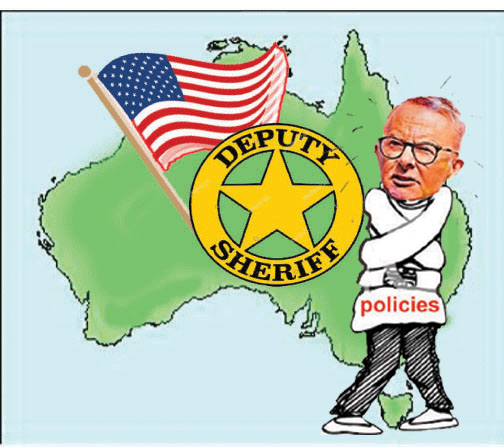
The Albanese government has presided over a quiet but systematic surrender of Australian sovereignty. Through AUKUS, through the integration of Australian forces into American military structures, through secret arms deals, and through a failure to interrogate the strategic consequences of our alliance commitments, Australia is being transformed from an independent nation into a junior partner – a vassal state without voting rights.
This is not a deepening of alliance. This is a strategic surrender.
II. AUKUS: The $368 Billion Abdication
The AUKUS nuclear submarine deal is the clearest example of this failure. Australia will commit $368 billion to acquire nuclear-powered submarines – equivalent to more than $30 million per day across three decades.
But the deal is plagued by problems:
- Deliverability: The United States shipyards cannot meet production targets, averaging only 1.1 to 1.2 Virginia-class submarines per year, far below the required 2.33.
- Cost blowouts: Australia will commit nearly $10 billion to subsidise US and UK naval shipyards.
- Strategic uncertainty: Former foreign minister Gareth Evans has warned that AUKUS will place Australia’s sovereignty at “serious risk,” with submarines effectively becoming “an extension of U.S. military power.”
- A “junior partner” trap: Former Defence Department analyst Dr Andrew Gaczol told a public inquiry that Australia will become a “junior” partner to the United States and lose its strategic independence. According to Dr Gaczol, “The Australian political class and defence policy community still think it’s our melancholy duty to support the military commitments of our great and powerful friends, even if they conflict with Australian interests.”
III. The US-Israel Military Merger: Australia’s Involuntary Integration
In July 2026, the US House of Representatives passed a $1.15 trillion National Defense Authorization Act (NDAA) by a vote of 216 to 212.
Section 219 of the Act establishes a “United States-Israel Defense Technology Cooperation Initiative,” requiring the Pentagon to appoint an executive agent to “expand and accelerate bilateral defense technology research.” The provision “would all but fuse the two countries’ armed forces together” across multiple domains, including biotechnology, autonomous systems, artificial intelligence, and cyberwarfare.
Representative Jennifer McClellan condemned the provision as one that “undermines our sovereignty and lacks any form of oversight.”
Why does this matter to Australia?
The Australian Defence Force has long achieved interoperability with the US military. Israel has achieved interoperability with the US since 1981. If the US and Israel move from interoperability to integration, the two degrees of separation between the ADF and the IDF are reduced to one.
Australia is being integrated into Israel’s military system through the American link. We are being drawn into a conflict not of our choosing, through a chain of obligations we never consciously accepted.
IV. Australia’s De Facto Participation in the Iran War
The evidence of Australia’s entanglement is already clear.
A. Intelligence Sharing
In March 2026, Australia deployed an E-7A Wedgetail surveillance aircraft and 85 ADF personnel to the UAE. The aircraft provides “long-range reconnaissance capability” to “secure the airspace above the Gulf.” Defence officials have confirmed that reconnaissance information obtained by the Wedgetail is also provided to US allies including Jordan, Saudi Arabia, Bahrain, and Qatar.
While the government insists the role is “defensive,” the intelligence is fed into the Joint Air Operations Center (CAOC), which is under the command of US Central Command – and the US is waging an offensive war against Iran.
B. Embedded Troops
As of June 2026, 729 ADF personnel are embedded with US and UK armed forces. Some Australian personnel were aboard a US submarine that sank an Iranian frigate in the Indian Ocean. The Defence Chief defended this involvement as “in our national interest to have our people on board US Virginia Class submarines training, learning and understanding.”
C. Arms Supplies
Australia has been supplying Advanced Medium Range Air-to-Air Missiles (AMRAAMs) to the UAE. The government has also issued 322 defence export permits to Israel since 1 January 2017. As Greens Senator David Shoebridge noted, Australia has “one of the most secretive and unaccountable weapons export systems in the world.”
V. The Logic of Sovereignty Concession
The chain of sovereignty loss is clear:
- US-Israel Integration (NDAA Section 219) →
- Australia-US Integration (AUKUS, interoperability agreements) →
- Australia’s de facto military integration with Israel through the US →
- Australia’s strategic autonomy is diluted, and military decision-making is influenced by external forces.
Each link in this chain was forged without parliamentary debate. As the AUKUS inquiry has noted, the Federal Parliament “never held a thorough debate on the agreement,” exposing “a clear democratic deficit” in Australia’s largest strategic commitment.
VI. The Political Class: Incompetence or Complicity?
The Albanese government’s approach to national security is defined by caution, message control, and risk aversion – not by strategic vision.
- On AUKUS: The government has refused to interrogate the $368 billion deal, despite “substantial reservations” that have “not abated.”
- On the Iran war: The government insists Australia is not involved in “offensive operations,” but our assets are providing intelligence that enables offensive operations.
- On arms exports: The government has fought to keep arms exports to Israel secret, only being forced to disclose information by Federal Court order.
- On the NDAA: The government has remained silent on Section 219 – a provision that directly compromises Australian strategic autonomy.
Incompetent people, once in power, are more dangerous than bad people because:
- Bad people can be brought down.
- An incompetent person will remain there, constantly causing destruction, yet appearing “unblamed” after each failure.
- VII. Conclusion: The Cost of Silence
- Australia’s political class and defence policy community still believe it is their “melancholy duty to support the military commitments of our great and powerful friends, even if they conflict with Australian interests.”
But a new world order is coming. Australia has a choice: position itself for that new order, or desperately cling to a slipping world order.
Through AUKUS, through Section 219, through secret arms deals and uncritical alliance commitments, we are choosing the latter.
The chain of sovereignty concession is tightening. And the Australian people are being told nothing.
The question is not whether Australia will be dragged into a war not of its choosing. The question is: when that war comes, will we have any say in whether we fight?
Dedicated to my beloved wife and confidante – who taught me to see the person behind the mask, and to trust what I see.
A global threat for millennia: experts warn Australia’s nuclear submarine legacy will be weapons-usable uranium cache
Ben Doherty,25 June 26, https://www.theguardian.com/world/2026/jul/25/aukus-nuclear-submarines-danger-weapons-grade-uranium
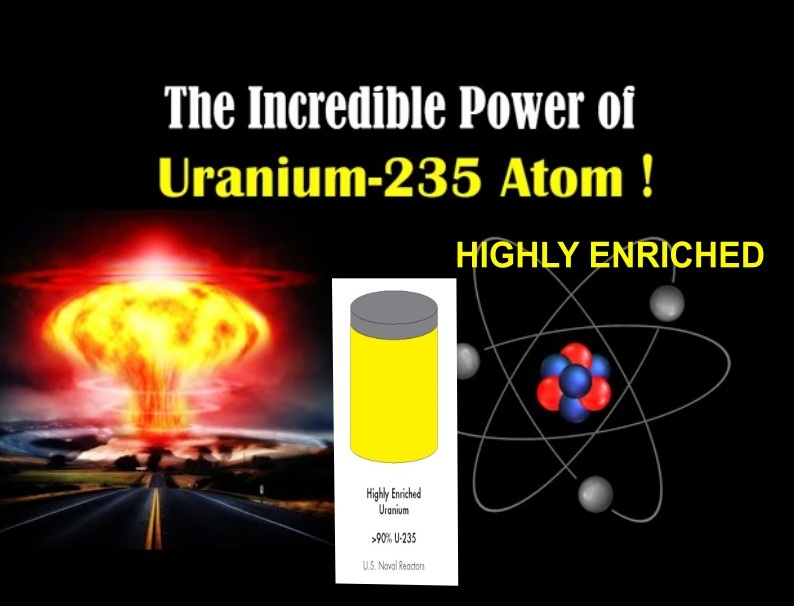
Uranium waste from Aukus submarines will be enriched to an estimated 80%: the same level as the bomb dropped on Hiroshima.
Australia’s proposed nuclear submarine fleet will leave behind tonnes of weapons-usable uranium-235: radioactive for hundreds of millions of years, and capable of being processed into scores of warheads, nuclear experts have told a public inquiry into Aukus.
And a former White House national security adviser has told the Guardian that Australia’s Aukus deal – involving the transfer of highly enriched uranium to a non-nuclear weapons nation – sets a dangerous proliferation precedent that other countries such as Iran could try to exploit, weakening global control of the spread of weapons-usable nuclear material.
Associate Prof Tilman Ruff, founding chair of the Nobel prize-winning International Campaign to Abolish Nuclear Weapons, told the Aukus public inquiry that the legacy of Australia’s nuclear submarine fleet – of which each vessel will have a service life of about three decades – will be hundreds of kilograms of high-level radioactive waste. Even as waste, the submarines’ spent reactor fuel will be highly enriched uranium (HEU), usable to build nuclear weapons.
“No nation has resolved the huge problem of how to manage this material and there’s no guarantee – given the timeframes involved and the hazards of the material over geological time – that any arrangement that we come up with could reliably isolate that material for hundreds of thousands, or millions of years.
“The additional complication here is that it needs a really high level of security because, in 10,000 years, somebody could still go and dig that stuff up and build nuclear weapons with it.”
The uranium left behind by Australia’s nuclear submarines at the end of their working lives will likely still be enriched to about 80%: the same level as the atomic bomb dropped on Hiroshima.
The Australian government has repeatedly said the precise amount of high-level nuclear waste that will be left behind by its submarine fleet is classified.
But documents released under freedom of information laws show Australia will be responsible for each submarine’s nuclear reactor compartment, “roughly the size of a four-wheel drive”, and spent nuclear fuel “roughly the size of a small hatchback”.
Leading global experts on non-proliferation have now estimated each nuclear submarine decommissioned by Australia – beginning in the 2050s – will contain about 400kg of HEU, enriched to about 80%, containing about 320kg of uranium-235 (U-235).
The International Atomic Energy Agency states a “significant quantity” of highly enriched uranium – enough to make a weapon – is 25kg of contained U-235.
U-235 has a half-life of 700m years: it will be a weapons proliferation risk for millennia. And the radioactive materials generated by its fission process will be toxic to humanity and the environment for millions of years.
The HEU left behind by each one of Australia’s three second-hand Virginia-class submarines bought from the US would be sufficient for more than a dozen weapons.
Australia’s domestically built Aukus-class submarines – Australia is proposing to build five – will be powered by Rolls-Royce’s in-development PWR3+ reactor. The quantity of HEU required to power that reactor is classified but they are expected to be larger than the Virginia-class reactors, Ruff said.
The Aukus agreement mandates that Australia is responsible for the disposal and storage of all of the nuclear waste left behind by its nuclear-powered submarines in perpetuity
By the end of the century, when all eight of Australia’s planned nuclear powered submarines have been retired, Australia will be responsible for the management of “at least 3 tonnes” of U-235 in the highly enriched uranium spent fuel waste, Ruff told the Guardian.
“That’s enough for 120 nuclear weapons using the International Atomic Energy Agency standard.”
Australia has spent decades reducing its HEU stocks. There is presently less than 3kg of HEU in the entire country, held for research purposes.
Ruff told the public inquiry into Aukus, established by the Australian Peace and Security Forum, that his primary concern over Aukus was that it exacerbated regional tensions and made Australia “a higher priority target, including for nuclear attack”.
Ruff cited the work of Dr Frank von Hippel, senior research physicist and professor of public and international affairs emeritus at Princeton University, who estimated that the reactor of a Virginia-class submarine – such as those Australia is set to buy from the US – would be decommissioned at the end of its working life still containing about 400kg of HEU, enriched to about 80%.
Von Hippel, who served as an assistant director for national security in the Clinton White House, told the Guardian “by the IAEA’s metric, 0.4 tons of 80% enriched uranium would be sufficient for 13 implosion bombs”.skip past newsletter promotion
1 This month
17 October, Free Public Talk on Nuclear Issues in South Australia
David Noonan will speak on public interest concerns over the new Roxby Downs Indenture Act 2026 on BHP copper-uranium mining and ore processing in SA, and on how AUKUS may face SA with a High-Level nuclear waste agenda.
Dr Jim Green will discuss international developments in the field of nuclear power including ‘small modular reactors’ and Generation 4 ‘advanced’ nuclear reactor concepts.


Help Aunty Sue Protect Her Land and Sacred Sites From Destructive Rocket Testing.
.

Australians deserve the truth
about
AUKUS – https://aukuspublicinquiry.com/

PETITION – To: Prime Minister Anthony Albanese and the Australian Labor Government

of the week – Australians for War Powers Reform (AWPR)
To see nuclear-related stories in greater depth and intensity

