Australian nuclear-related news this week
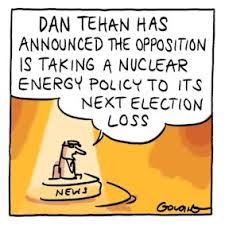
Australian news this week
- AUKUS Inquiry exposes nuclear weapon-sized crater.
- Coalition MPs push for nuclear-powered data centres.
- The Quiet Surrender of our Nation’s Sovereignty.
- NACC handed naval contracts corruption case back to Defence.
- Are Australian military exports fuelling massacres in Sudan?.
- When genocide is silenced in the name of “unity”
Coalition MPs push for nuclear-powered data centres
“……………………………………..Shadow Energy and Emissions Reduction Minister Dan Tehan has argued the government’s proposed standards for data centres are too restrictive.
Ahead of releasing the Coalition’s revitalised energy policy, Mr Tehan has said that all options should be on the table to power future data centres, including nuclear energy.
“When [companies] look to invest in Australia, they are deterred by our moratorium preventing them from powering their centres through nuclear,” Mr Tehan said in a statement.
Mr Tehan said that US companies such as Google and Amazon were investing in “their own zero emissions nuclear power to power data centres”.
According to the International Energy Agency [IEA], nuclear energy plays a supporting part in powering the world’s biggest data centre markets: the United States and China.
The autonomous intergovernmental organisation expects nuclear power’s role to grow from 2030, when it is expected that more small modular reactors [SMRs] come online.
Google, for example, signed a landmark deal in 2024 with Kairos Power to buy energy from several SMRs to help support the tech giant’s AI infrastructure.
The first of the reactors is expected to come online by 2030.
Nationals Deputy Leader Darren Chester, whose electorate of Gippsland in Victoria is experiencing significant data centre investment, said he believed that it was “inevitable” that Australian-based facilities would be powered by nuclear energy to some degree in the future.
Mr Chester said “large-scale” nuclear reactors were “proven technology”, but he would be open to other options in the years to come, such as SMRs.
“Removing the moratorium on nuclear [energy] is a sensible thing to do,” Mr Chester said.
Shadow Infrastructure and Sovereign Capability Minister, Andrew Hastie, said it was not feasible for AI data centres to be powered solely off renewables.
“There needs to be a mix of base load power, and nuclear should be part of that mix,” Mr Hastie said in a statement.
The Coalition’s nuclear energy aspirations for Australia suffered a significant blow in its election drubbing in 2025.
An internal review found the opposition’s election campaign was perceived as “incoherent,” and acknowledged the Coalition’s plan for nuclear was among policies widely criticised as “politically mistimed or alienating”.
At the core of the policy was a plan to build seven nuclear power sites, but the party did not specify whether large-scale reactors, small modular reactors [SMRs], or a combination of both, would be used.
National science agency CSIRO and the Australian Energy Market Operator [AEMO]’s latest GenCost report showed introducing nuclear power to Australia would attract significant up-front costs.
“New large-scale nuclear costs are significantly lower than nuclear SMR, but both represent moderate-to high-cost sources of electricity generation,” the report stated.
Nuclear power generation has been banned in Australia under federal laws since the late 1990s.
States and territories also have legislation prohibiting nuclear energy production, with some jurisdictions also restricting certain nuclear-energy-related activities, such as uranium mining.
Labor is emphatically opposed to lifting the moratorium on nuclear energy in Australia.
Energy Minister Chris Bowen recently told Sky: “Nuclear is not an answer for Australia any time.”
Instead, the government is focusing on transitioning to renewable energy, specifically solar and wind energy backed up by hydro storage and gas, with a goal of having 82 per cent of electricity generated by renewables by 2030.
Experts weigh in on how to power Australia’s data centres
Tony Irwin, a nuclear energy advocate and ANU honorary associate professor who spent three years building nuclear reactors in the UK, believes nuclear energy should be used to help power data centres.
“Solar and wind obviously can play a part in it. But nuclear should also be playing a part because, as I say, it’s reliable, it’s low emissions,” he said.
Mr Irwin believes large-scale reactors could be used, but SMRs and what are known as “micro-reactors” could be less costly.
Operational SMRs are only found in Russia and China, according to Energy Strategy Reviews. Micro-reactors are still in development.
The prime minister said in his speech that both Australia’s land and sunshine were among reasons the world was “queuing up to invest” in the nation.
“Think about what we have … the space to build. The sunlight to power affordable, renewable, reliable energy,” he said.
Tony Wood, a senior fellow at Grattan Institute’s Energy and Climate Change Program, welcomed the government’s new rules but questioned how data centre operators would be forced to supply their own renewable energy.
“We are going to get on top of this. That’s what this is about, and I fully support that,” he said.
“I’ve not seen anything that really expands on how such a requirement would be implemented.”
Mr Wood said the opposition’s push for nuclear power for data centres was a “political sideshow”……….
He described the government’s plan for Australia’s energy transition as “plan A”.
“I think we’ve got a very strong plan A and we should stick with it in Australia,” he said.
“And just because someone else does it [nuclear energy] doesn’t mean we should fire.”……..https://www.abc.net.au/news/2026-07-29/data-center-boom-powers-up-political-energy-debate/106929726
1 This month
.

Australians deserve the truth
about
AUKUS – https://aukuspublicinquiry.com/

PETITION – To: Prime Minister Anthony Albanese and the Australian Labor Government

of the week – Australians for War Powers Reform (AWPR)
To see nuclear-related stories in greater depth and intensity

