Nuclear-related news for the past week

TOP STORIES.
This Hiroshima Day, we are closer than ever to nuclear war.
Climate Change Is Rewriting Europe’s Nuclear Cooling Assumptions.
Ukraine for Hire: How Kyiv Became the West’s Imperial Enforcer.
Gaza’s “Peace Plan” Is Written in Blood.
AUSTRALIA. AUKUS: Its single point of obsolescence.
Pat Conroy,Australia’s Minister for Defence Industry in denial about U.S. military bases (?targets) in Australia.
FROM THE ARCHIVES – Lucas Heights nuclear reactor was always intended as a step towards nuclear weapons, AND IT STILL IS
More at https://antinuclear.net/2026/08/07/australian-news-this-week/
ATROCITIES.
Israel’s Ghoulish Settlers Eye Up Gaza, As Netanyahu Kills Trump’s Board of Peace.
CLIMATE.
- No to Nuclear: why nuclear power and nuclear weapons are interlinked threats to humanity.
- Heatwaves expose nuclear power’s water risk.
- The Nuclear Regulatory Commission ignores climate danger.
- EU considers emergency meeting as nuclear shutdown leaves Hungary facing energy crisis.
- Government ‘continues to ignore warnings’ as wildfire rages near Sizewell B – ALSO AT https://nuclear-news.net/?s=Government+%E2%80%98continues+to+ignore+warnings%E2%80%99
- Firefighters in ‘better position’ as they tackle Suffolk wildfire near Sizewell nuclear site, for third day. Suffolk nuclear power plant on alert over wildfire- ALSO AT https://nuclear-news.net/2026/08/04/4-suffolk-nuclear-power-plant-on-alert-over-wildfire/
- Climate change exacerbates nuclear risks in the Arctic. And we are not ready.
ECONOMICS. A stormy future? Financial impact of climate change-related disruptions on nuclear power plant owners.
EDUCATION. How Lockheed Martin, Raytheon & BAE Systems Are Propagandizing Children To Support War Through STEM.
EMPLOYMENT. Burnham is wrong – increased nuke spending will lose more jobs than create.
ENVIRONMENT Activities related to nuclear weapons and nuclear power have created a vast archipelago of contamination.
AI Wants Your Land, Water, Power
HISTORY. Walt Zlotow – Many top military leaders opposed atomic bombings.
LEGAL. Nuclear Watchdog Sues for Plutonium Pit Production “Special Study”.
MEDIA. Press Opinion Treats US Devastation of Cuba as Reason for More Devastation. The powerful impact of six haunting minutes.
OPPOSITION to NUCLEAR . Stop Hinkley campaigners highlight storage of nuclear waste in West Somerset, Where has all the disarmament gone?
POLITICS.
Time to build a Scotland without nuclear weapons. Labour urged to end ‘dangerous’ nuclear weapons policy on Hiroshima Day. Brian Leishman MP blasts party’s own nuclear policy.
𝗪𝗛𝗢 𝗜𝗦 𝗥𝗘𝗔𝗟𝗟𝗬 𝗜𝗡 𝗖𝗛𝗔𝗥𝗚𝗘: 𝗔𝗠𝗘𝗥𝗜𝗖𝗔 𝗢𝗥 𝗜𝗦𝗥𝗔𝗘𝗟? After 157 days of Iran war failure, Trump must quit war or quit presidency.
How can Ireland build a nuclear reactor when it can’t even manage a
children’s hospital? What links Palestine Action arrests with Burnham’s nuclear weapons splurge?
POLITICS INTERNATIONAL and DIPLOMACY.
- CIA Assessment Details Israel’s Race to Make the U.S.-Israel Alliance Irreversible.
- How Trump’s Saudi deal could spark a nuclear arms race in the Middle East.
- Diplomacy Without De-Escalation: The Manila Talks and Ukraine’s Escalation Strategy.
- Why the U.S. Military is ‘Earth’s Greatest Enemy’ (w/ Abby Martin) | The Chris Hedges Report
RADIATION. DR Congo’s cobalt boom carries an unwanted cargo: uranium– ALSO AT https://nuclear-news.net/?s=DR+Congo%E2%80%99s+cobalt+boom
SECRETS and LIES. Why no Hollywood movie on Nagasaki A bombing?
Nuclear test veterans’ medical records were gathered by secret government lab.
Israeli spyware firms are fueling the global surveillance state.
Is It Just About AIPAC’s Money, or Does the US-Israel Rot Run Far Deeper?
SPACE. EXPLORATION, WEAPONS. Secret ‘Project Mars’ roils Torrance County residents.
A Ton of Space Junk Is Reentering Earth’s Atmosphere More Often, and It’s Hard to Predict.
Alert: SpaceX rocket stage will slam into the Moon August 4-5. Can Earth’s people stop it?
TECHNOLOGY. Pentagon Plans AI Data Centers at Military Bases Across Multiple Branches. Cory Doctorow: The people who tell you ‘AI is changing everything’ are lying.
WASTES. Japan begins 22nd release of Fukushima nuclear-contaminated wastewater into ocean.
WAR and CONFLICT.
- Huge Uptick In Israeli Airstrikes On Gaza Since Trump Hailed ‘Historic’ Hamas Deal.
- ‘Defend Israel or the Homeland’: Top US general issues stark warning to Pentagon brass.
- Stillborn Peace Plans: Israel, Hamas and the Question of Disarmament.
- The ‘Underground Nation’ returns: Switzerland’s new war-time shelter strategy.
- The War of Perception: The West’s infowarfare and cognitive warfare against Russia.
- Kamikaze Drone Slams Into Crowded Russian Black Sea Beach, Killing 3. Ukraine continues its use of mine terrorism against civilians.
WEAPONS and WEAPONS SALES. NATO is being installed into Ukraine’s military– https://www.youtube.com/watch?v=oYawuRVSxdU
Nuclear disarmament has never been more urgent.
Hiroshima marks 81st atomic bomb anniversary as mayor deplores the pursuit of nuclear weapons.
The Next Weapons Frontier: New Mexico’s Expanding Military Industrial Ecosystem. Common Sense & the Pentagon Budget.
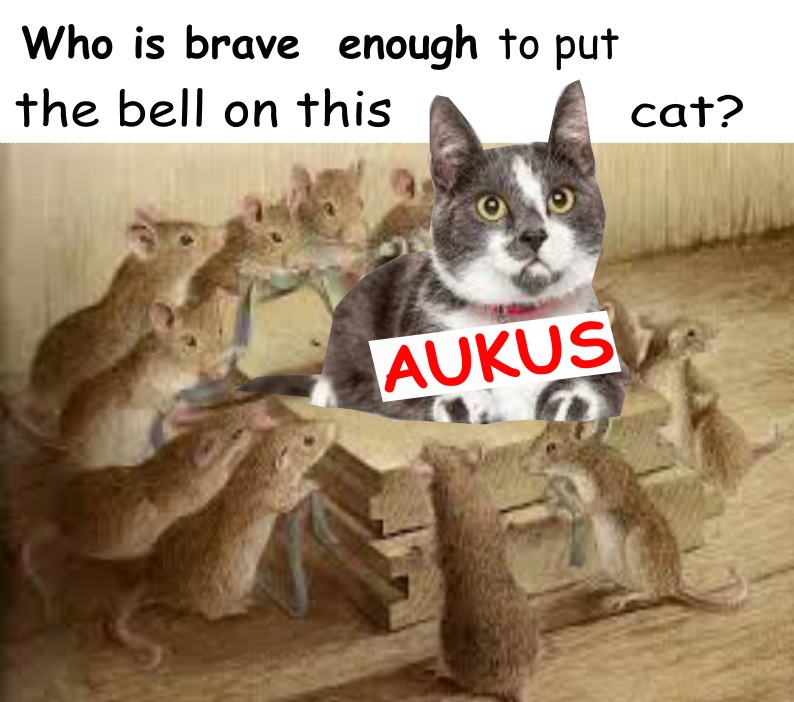
AUKUS: The Opportunity Costs
A Comprehensive Examination of Australia’s Nuclear Submarine Gamble
A Research Paper dedicated to: The Australian people – who were never asked, never consulted, and who will bear the cost of a decision made in the shadows. And to my wife, S. Klein, who sees the patterns others miss.
Abstract
This paper examines the AUKUS nuclear submarine agreement through the lens of opportunity cost, strategic realism, and the quality of advice shaping Australian defence policy. It argues that the premise upon which AUKUS is built – that China poses an existential military threat requiring nuclear-powered submarines – is seriously flawed. The paper documents the $368 billion price tag, the documented capacity constraints of the US industrial base, the lack of comprehensive costing, and the alternative capabilities foregone. It identifies the political and financial beneficiaries of the current path, the nature of the advice being received by the government, and the strategic alternatives that have been dismissed without due consideration. The paper concludes that Australia is being led down a path of strategic dependency that serves American interests first, while the Australian public pays the bill.
Table of Contents
- Introduction: The Unasked Question
- What Is AUKUS? A Brief Overview
- The Cost: What Australia Is Spending
- The Opportunity Cost: What Australia Is Forgoing
- The Strategic Premise: Is China a Threat?
- The Industrial Reality: Can the US Deliver?
- The Quality of Advice: Who Is Advising the Government?
- Who Benefits? Political and Financial Interests
- Alternative Approaches: What Could Have Been Done
- Conclusion: A Path Not Taken
…………………………………………………………………………………………………………………………………………………………………………. 10. Conclusion: A Path Not Taken
AUKUS represents a fundamental decision about Australia’s future. It commits the nation to:
- A $368 billion expenditure
- Strategic dependency on the United States
- A nuclear industry that Australia has never had
- Decades of spending that will crowd out other priorities
The decision was made without:
- Public consultation
- Parliamentary debate
- Comprehensive costing
- Adequate consideration of alternatives
The result is a program that:
Serves US interests first- May not deliver as promised
- Will crowd out other capabilities
- May not even be completed as planned
The question Australians must ask is: Who benefits?
The answer is clear: the United States, its defence contractors, and the political class that approved the deal without public scrutiny.
The Australian people will bear the cost – not just the financial cost, but the cost of lost opportunity, lost sovereignty, and lost alternatives.
References…………………….. https://theaimn.net/aukus-the-opportunity-costs/
1 This month
17 October, Free Public Talk on Nuclear Issues in South Australia
David Noonan will speak on public interest concerns over the new Roxby Downs Indenture Act 2026 on BHP copper-uranium mining and ore processing in SA, and on how AUKUS may face SA with a High-Level nuclear waste agenda.
Dr Jim Green will discuss international developments in the field of nuclear power including ‘small modular reactors’ and Generation 4 ‘advanced’ nuclear reactor concepts.


Help Aunty Sue Protect Her Land and Sacred Sites From Destructive Rocket Testing.
.

Australians deserve the truth
about
AUKUS – https://aukuspublicinquiry.com/

PETITION – To: Prime Minister Anthony Albanese and the Australian Labor Government

of the week – Australians for War Powers Reform (AWPR)
To see nuclear-related stories in greater depth and intensity

