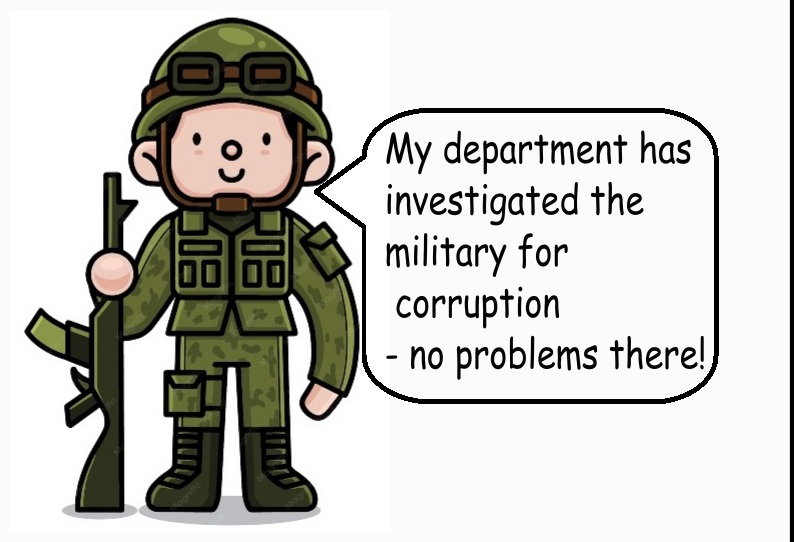
Can the Israeli military be trusted to investigate itself? Evidence shows genuine accountability is rare
Shannon Bosch, Associate Professor (Law), Edith Cowan University, August 20, 2026, https://theconversation.com/can-the-israeli-military-be-trusted-to-investigate-itself-evidence-shows-genuine-accountability-is-rare-290142
Australian Prime Minister Anthony Albanese says it’s an “outrage” the Israeli Defense Forces (IDF) have decided not to open a criminal investigation into the Israeli strikes that killed an Australian aid worker, Zomi Frankcom, and six of her colleagues in Gaza in April 2024. He added:
It falls far short of the accountability that we expect and consistently called for on behalf of Australia.
International law is clear: states are obligated to investigate alleged war crimes committed by their nationals or armed forces, or on their territory. And, if it’s appropriate, they are obligated to prosecute the suspects.
To this end, military and civilian leaders must report suspected breaches of the law up the chain of command to ensure prompt, independent and impartial investigations are carried out.
On Wednesday, the IDF published the findings of an internal investigation into five incidents in Gaza since the war began in October 2023.
Two incidents were deemed to raise “reasonable suspicion of criminal misconduct”. The IDF ordered the Military Police Criminal Investigation Division, the primary investigative unit within the IDF, to open criminal probes into them. They are:
The killing of Hind Rajab, January 2024: The IDF acknowledged that soldiers opened fire on a vehicle carrying five-year-old Hind Rajab and her family as they fled Gaza City. In addition, the IDF said “a shell was fired toward” an ambulance trying to reach the car, killing two paramedics.
The killings of Palestinian rescue workers, March 2025: The review also referred the killings of 15 Palestinians in southern Gaza – some of whom it recognised as paramedics and medical personnel – to criminal investigators.
It said Israeli troops fired on three vehicles, which were later identified as ambulances, a fire truck and a UN vehicle.
Forensic Architecture, a research group at the University of London, alleges the military tried to cover up the killings by crushing and burying the medics’ vehicles.
The IDF investigators did not recommend further investigations into three other incidents, including:
The strikes on the World Central Kitchen convoy, April 2024: In addition to Frankcom, three British nationals, a Palestinian, a Pole and a dual US-Canadian citizen were killed when the IDF mistakenly identified their vehicles as carrying Hamas operatives.
The investigation found serious operational failures in the soldiers’ actions. Two commanders were stripped of their ranks and three officers were reprimanded. However, the review did not find “reasonable suspicion” of criminal conduct.
The other two incidents related to the killings of four employees of Médecins Sans Frontières in 2023 and 2024.
How often are Israeli soldiers prosecuted?
Statistically, very few complaints against IDF personnel result in investigations or criminal convictions.
The Israeli human rights group Yesh Din analysed complaints made to the IDF in 2019–20 and found 72% were closed without criminal investigation and just 2% led to prosecutions.
Another investigation of 52 Israeli military probes between 2023 and 2025 found 88% were either still under review or had been closed. Only one case had led to a prison sentence for an Israeli soldier.
What are the concerns with the IDF investigating itself?
Human Rights Watch has expressed serious concerns with IDF investigations into incidents involving Palestinian civilians. The group says they are “not impartial, thorough or timely”.
Cases often take months or years to navigate the IDF investigative process). Critics say this undermines the cases and diminishes the prospects for prosecutions.
Human Rights Watch reports that initial investigations largely rely on soldiers’ own accounts. The military advocate general, who advises the IDF during military operations, subsequently determines whether conduct should be criminally investigated or prosecuted.
Critics also argue that investigators frequently fail to contact readily available Palestinian witnesses, lack Arabic-speaking investigators, and rely heavily on Israeli NGOs to locate witnesses and obtain evidence.
Palestinian witnesses are often reluctant to cooperate in investigations because of fears of arrest, retaliation or mistreatment.
The military insists investigations are slowed by the difficulties of ensuring due process for its personnel in an active combat zone.
But rights groups say that by the time detectives are authorised to investigate, physical evidence is often long gone, the scenes have been compromised, and witnesses’ memories have faded.
That said, war crimes are not subject to any statutory limitation, meaning prosecutions can occur decades after an alleged offence.
What happens next in these cases?
The Hind Rajab and paramedic cases will now be transferred to military police for formal criminal investigations. They will collect forensic evidence, review communications logs and interrogate the soldiers and commanders involved.
Once complete, the investigation will be handed back to the military advocate general, who will decide whether to issue criminal indictments.
Structural legal barriers suggest, however, that the cases may not go anywhere.
Under Israeli military law, the legality of conduct in war must be assessed based on what a “reasonable commander” knew (or should have known) at the split-second the trigger was pulled. Did they honestly believe they were firing at a legitimate target?
Unless prosecutors can prove explicit intent to murder civilians, cases are often downgraded to “negligence” or closed entirely.
Lengthy proceedings can also create difficulties for eventual prosecution. As evidence becomes unavailable or less reliable over time, defence lawyers may argue that continued proceedings would prejudice their clients’ rights to a fair trial.
In some cases, concerns such as these can lead to reduced charges, plea agreements or the withdrawal of an indictment.
What other options exist?
The International Criminal Court (ICC) is designed to be a “court of last resort”. This means it only steps in if a nation is “unwilling or unable” to genuinely carry out investigations of suspected war crimes.
Israel has long argued that its investigative procedures in cases such as these are both credible and independent.
However, international observers and groups like the Hind Rajab Foundation maintain these internal probes function primarily as a public relations shield rather than a pathway to genuine accountability for wrongdoing.
As Human Rights Watch has put it: “a system that overwhelmingly closes cases without accountability, years after the fact, and only in response to sustained international pressure, is not justice, it’s a whitewash”.
Cases like these could also be investigated and tried in other countries’ courts under what’s known in international law as universal jurisdiction.
This allows domestic courts to launch prosecutions, even when the countries have no link to the perpetrator, victim, national interest or territory where the incidents occurred.
These prosecutions can be supported by UN-appointed independent international commissions of inquiry. These fact-finding bodies collect evidence, interview witnesses and compile exhaustive archives of offences in war zones.
While these UN panels do not hold trials, their formalised, verified evidence files are designed to be handed over to foreign prosecutors or future tribunals.
Segal’s speech code meets the law: Justice Fagan wrecks Canberra’s Israel exception
by Andrew Brown | Aug 22, 2026 , https://michaelwest.com.au/segal-ihra-antisemitism-justice-fagan-decision/
The Israel lobby wrote itself a dictionary. Governments adopted it, regulators enforced it and police made arrests under it. Then it met a judge who required evidence, and it collapsed in an afternoon. Andrew Brown on the Fagan judgement.
Justice Desmond Fagan’s decision in State of New South Wales v Farhat wrecks the architecture designed by Jillian Segal, adopted by Anthony Albanese and enforced across Australia.
Australians have been instructed that hostility towards Israel is hostility towards Jews. The lobby never won that argument. It changed the dictionary instead.
Albanese supplied the imprimatur. Chris Minns supplied the muscle. David Crisafulli criminalised protest slogans. Peter Malinauskas carried the doctrine into the South Australian parliament.
Different parties. Different states. The same obedient genuflection.
The vandal who wasn’t an antisemite
Mohommed Farhat was a vandal for hire. He caused more than $110,000 in damage, torched a vehicle and painted “Fuk Israel” across Woollahra. Fagan found he was recruited and did not know what some slogans meant. Yet the State wanted him branded an antisemite and shackled with 55 terrorism supervision restrictions.
Fagan refused. His judgment is an autopsy of how propaganda becomes administrative fact. Police, prosecutors, the Crown Solicitor and the Director of Public Prosecutions repeated an unexamined claim until repetition replaced proof. The label was false and “injustice to the defendant” followed.
Then he turned to the definition. The IHRA formulation promoted by Segal and embraced by Canberra was, he found, “verbose and imprecise” and “detached from the reality of common usage”. Promoting it sought to change the settled meaning of “a word that has been in use in the English language for 150 years” and to “graft” onto the community’s abhorrence of antisemitism”a parasitic rejection of protest against Israel”.
Fagan cited Pew polling showing 74 per cent of Australians unfavourable towards Israel, rising to 79 per cent this year, and inferred a “humanitarian reaction to Israel’s genocide of the Gazans”. A definition that tars four in five Australians is not detecting hatred.
“It is outlawing majority opinion.”
Antisemitism, Fagan said, is simply “hostility to Jews for their Jewishness”. It is real, repugnant and must be confronted. Israel is a foreign state. Zionism is a political ideology. Neither is entitled to immunity from condemnation.
Protecting Jewish Australians is essential. Protecting a foreign government from criticism is not.
The lobbyist who wrote the law
Segal became special envoy after leading the Executive Council of Australian Jewry, whose published mission includes defending Israel, encouraging Zionism and lobbying governments for positions favourable to Israel.
The referee was recruited from one team’s front office.
She may hold those views. She may not launder them through the Commonwealth and receive them back as law. Albanese outsourced the dictionary to a protagonist, then adopted her every recommendation despite warnings from Jewish and civil liberties groups that it would punish lawful advocacy for Palestine.
Palestine.
Not consultation. Capitulation, formalised in a press release.
The government’s response commits the Commonwealth, states and territories to implementing Segal’s program. National machinery of compliance, and the premiers queued up to install it.
Minns, Crisafulli, Malinauskas
Minns expanded police powers and created new speech offences. Crisafulli criminalised two protest slogans, with two years in prison where words might reasonably cause somebody to feel menaced, harassed or offended.
Offended. The decay of liberal democracy, compressed into one word.
Malinauskas backed IHRA through the South Australian parliament, then pressed Adelaide Writers’ Week to dump Palestinian Australian writer Randa Abdel-Fattah. David Gonski, whose name once meant needs based schooling, now fronts an Antisemitism Education Taskforce with Segal at his side.
The Australian Public Service Commission says IHRA applies in federal workplaces. AHPRA adopted it across sixteen professions and more than 960,000 practitioners. A reference tool held over a doctor’s registration is not a dictionary but a threat to a livelihood. Fear is the cheapest police force ever deployed.
Executive policy cannot rewrite ordinary language. A circular cannot create law. Parliament never enacted IHRA, so the court gave it no force. Not a High Court ruling, but a preview.
Eighteen police, one shirt
I have been the test case.
On 3 November 2024, NSW Police arrested me at Bondi for wearing “Fuck Israel, Fuck Zionism”. I threatened nobody and damaged nothing. I was handcuffed, held six hours, fingerprinted and DNA tested by force over my objection.
Three charges followed, with bail conditions that ran more than a year. At one point I was banned from the eastern suburbs. My home in Surry Hills sat 400 metres from the boundary. One wrong walk meant arrest and up to twelve months in a cell awaiting a hearing. For a shirt.
All three charges collapsed in December 2025 once my lawyers raised the implied freedom of political communication.
On 6 April this year, as many as eighteen officers surrounded me at Bondi over the same shirt, among them Odin squad taskforce officers and two senior officers from area command. Overhead, a drone and a helicopter. On standby, an ambulance and two caged wagons.
Odin is a tactical unit for crowd management, high-visibility policing and high-risk operations. The high-risk operation that morning was a shirt. I took it off. They arrested the shirt. A penalty notice arrived a week later.
Fagan has not decided my remaining matter, but he has demolished its pretence. He found the sprayed “Fuk Israel” was “crude political expression of contempt” for a foreign state, not hatred of Jews. If those words were not antisemitic when painted during a crime spree, they cannot become Jew hatred worn peacefully on cotton.
“The obscenity was never the shirt. It was the state power assembled around it.”
Segal supplied the language. Albanese supplied the authority. Gonski took the classroom, AHPRA the professions, Minns the handcuffs, Crisafulli the statute book, Malinauskas the parliament and the festival stage.
Justice Fagan supplied something none of them could survive: the law.
1 This month
17 October, Free Public Talk on Nuclear Issues in South Australia
David Noonan will speak on public interest concerns over the new Roxby Downs Indenture Act 2026 on BHP copper-uranium mining and ore processing in SA, and on how AUKUS may face SA with a High-Level nuclear waste agenda.
Dr Jim Green will discuss international developments in the field of nuclear power including ‘small modular reactors’ and Generation 4 ‘advanced’ nuclear reactor concepts.


Help Aunty Sue Protect Her Land and Sacred Sites From Destructive Rocket Testing.
.

Australians deserve the truth
about
AUKUS – https://aukuspublicinquiry.com/

PETITION – To: Prime Minister Anthony Albanese and the Australian Labor Government

of the week – Australians for War Powers Reform (AWPR)
To see nuclear-related stories in greater depth and intensity

