773 SUBMISSIONS to the AUKUS Public Inquiry – so far I have not found one in favour of AUKUS!

I don’t think that I, as one small observer, will be able to read, let alone copy out, every submssion.
But already I am struck by the fact, that the nuclear lobby seems to have not bothered to send any submissions.
This is so typical of the arrogance of the pro-nukes. Over so many decades they have insulted, condemned, scoffed, or patronised, any critic.
If a critic happens to be a nuclear physicist, (and there are quite a few of these) well then the lobby explains that he or she is at least “out of date”, but more likely “a mentally unstable radical”, or a dangerous person, and unemployable.
If the critic is not a nuclear physicist, well, they can be disregarded, due to their ignorance. If they’re female, then they’re “hysterical” like Dr Helen Caldicott
So, no need to participate in this Public Inquiry. Good heavens, no! It was not run by nuclear physicists!
Australia’s continued enmeshment with the US could make it a nuclear target, former Labor minister warns
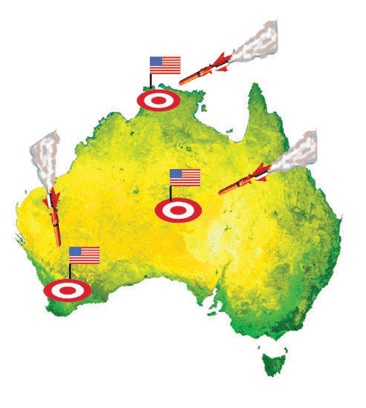
“This makes Australia a priority nuclear target for any adversary of the United States,”
“An adversary would target Australia before targeting the US directly since to do so would invite immediate retaliation.”
Former Labor minister Melissa Parke has warned that Australia’s close military ties to the United States make it a priority nuclear target that adversaries would likely strike before attacking the US directly.
By Tegan George, Tue 8 Sep 2026 , https://thepoint.com.au/new/260908-australias-continued-enmeshment-with-the-us-could-make-it-a-nuclear-target-former-labor-minister-warns
Former Labor minister Melissa Parke has warned that Australia’s close military ties to the United States make it a priority nuclear target that adversaries would likely strike before attacking the US directly.
Speaking on the Australia Institute’s After America podcast, Ms Parke said Australia’s increasing enmeshment with the US was even more reason for it to join the “groundbreaking” Treaty on the Prohibition of Nuclear Weapons (TPNW).
“It’s the first treaty to comprehensively and categorically prohibit nuclear weapons and anything to do with them: developing, possessing, testing, using, threatening to use, sharing, deploying, et cetera,” she said.
Ms Parke, now executive director of the International Campaign to Abolish Nuclear Weapons (ICAN), said more than half the world’s countries had joined as states parties or signatories, including almost all of Australia’s neighbours in Southeast Asia and the South Pacific.
While Labor has committed in its national platform to joining the treaty since 2018, the Albanese government is yet to sign on the dotted line.
The commitment was moved by Anthony Albanese and seconded by Richard Marles, now Prime Minister and Defence Minister.
Defence Minister Richard Marles recently travelled to the US to meet his counterpart, Defence Secretary Pete Hegseth, as the countries marked the 75th anniversary of the ANZUS alliance.
Following the meeting, they agreed to “accelerate force posture initiatives” at Australian bases but didn’t say whether that would mean more American troops heading down under.
The growing US military presence includes the rotation of nuclear-powered submarines through HMAS Stirling and nuclear-capable B-52 bombers at RAAF Base Tindal in the Northern Territory, alongside existing joint facilities such as Pine Gap.
“This makes Australia a priority nuclear target for any adversary of the United States,” said Ms Parke.
“An adversary would target Australia before targeting the US directly since to do so would invite immediate retaliation.”
She argued other countries in the region had joined the treaty without damaging their US relationship, pointing to Palau, New Zealand, the Philippines and Thailand.
Ms Parke said she understood the Albanese government was concerned about “upsetting” the US but cited former prime minister Paul Keating’s remark that “we couldn’t get rid of the Americans even if we wanted to”.
“Our own former foreign minister, Gareth Evans, says that reliance on US nuclear deterrence is both dangerous because it makes us a nuclear target and absurd because the US would never sacrifice one of its cities for ours.”
She said the treaty also provided victim assistance and remediation of affected environments.
“There’s a bit of a myth out there that nuclear weapons have only ever been used twice in Hiroshima and Nagasaki,” she told the podcast.
“But in fact, nuclear weapons have been exploded more than 2000 times around the world, mostly on colonised Indigenous and vulnerable communities.”
That includes Australia, where the British conducted 12 major nuclear detonations and hundreds of radiological trials in Western and South Australia between 1952 and 1963.
The tests caused severe radioactive contamination and prompted a royal commission into their lasting health and environmental impacts.
The treaty’s first review conference is due to be held in New York from 30 November to 4 December, but Ms Parke said some affected communities would not attend because they “don’t feel safe” under the Trump administration.
Ms Parke accused the US of doing “enormous damage” to international institutions and appearing willing to violate and discard any rule or norm of international law.
“When we only negotiate bilaterally with a hegemon, we negotiate from weakness,” she said.
“We accept what’s offered. We compete with each other to be the most accommodating. This is not sovereignty. It’s the performance of sovereignty while accepting subordination.”
1 This month
17 October, Free Public Talk on Nuclear Issues in South Australia
David Noonan will speak on public interest concerns over the new Roxby Downs Indenture Act 2026 on BHP copper-uranium mining and ore processing in SA, and on how AUKUS may face SA with a High-Level nuclear waste agenda.
Dr Jim Green will discuss international developments in the field of nuclear power including ‘small modular reactors’ and Generation 4 ‘advanced’ nuclear reactor concepts.


Help Aunty Sue Protect Her Land and Sacred Sites From Destructive Rocket Testing.
.

Australians deserve the truth
about
AUKUS – https://aukuspublicinquiry.com/

PETITION – To: Prime Minister Anthony Albanese and the Australian Labor Government

of the week – Australians for War Powers Reform (AWPR)
To see nuclear-related stories in greater depth and intensity

