The normalising of nuclear
6 October 2026 Noel Wauchope, https://theaimn.net/the-normalising-of-nuclear/
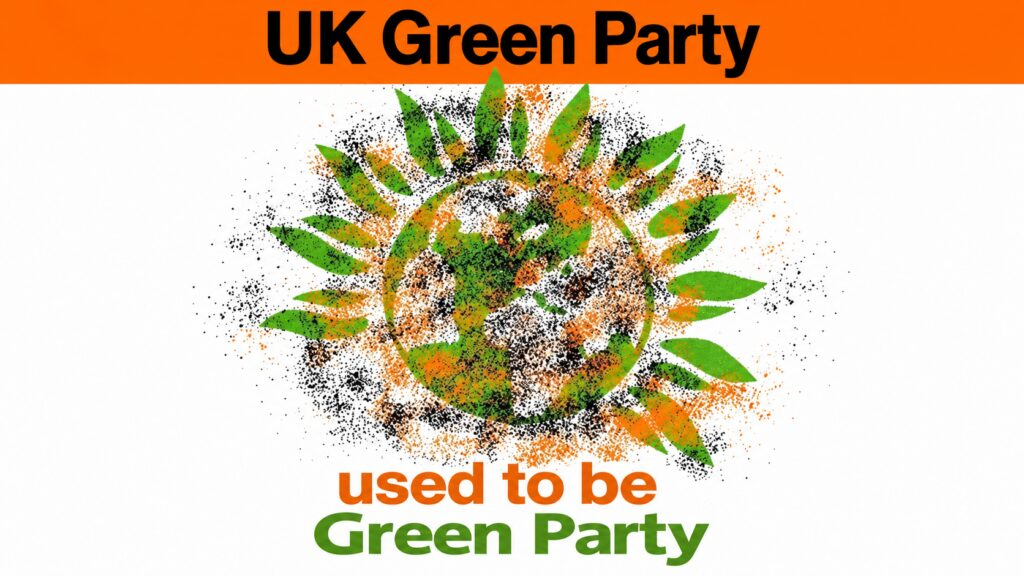
The facts on the nuclear industry’s effects on health and environment are now seen through a blur of discussion on climate change, and costs, and connection with military power, and it all seems too hard to grasp. When the UK’s Green Party decides to go sorta kinder pro-nuclear, well, nuclear power and nuclear weapons are beginning to look sort of OK and normal.
We are in a strange period of time, in which things previously agreed on, are now up for doubts and denial. Just as an example, in Australia, free infant vaccinations supplied by the government have pretty much been for many decades considered mandatory (although not legally mandatory). Now infant vaccination rates are falling. This fall reflects a loss of trust in health authorities. Most Australian children still do receive the full schedule of vaccines, but there’s a lessening of understanding of the reasons behind the programme. That’s combined with misinformation about vaccination as the cause of autism, among other false claims.
That’s just one very important example of the atmosphere of doubt and distrust that is becoming more prevalent in society at large, and Australia is not immune from this “fog of disbelief” about public health.
The vaccination issue is particularly misunderstood and dangerous, because that programme depends on “herd immunity.” A century ago, Australian families were all too likely to lose several of their many children to infectious diseases. In any old country cemetery in Victoria, you will find a whole lot of graves of infants, who died 100 years ago, many from the same families. Over the 20th Century a universal programme of infant vaccination revolutionised that, and survival rates for children rocketed up.
Well, I certainly have strayed away from my main theme – which is the growing acceptance of the nuclear industry as probably OK. I do think that social media, with its briefness and lack of fact-checking has contributed to the blurring of information, and the growing distrust of genuine experts.
What is happening in the UK, under a Labour government, is a definite case of the blurring of information about the nuclear industry. This started in 2006, with Tony Blair reversing Labour’s opposition to new nuclear, and it steadily moved on to Keir Starmer’s enthusiasm for it in 2025. Now the UK Labour government has a seemingly more moderate and “leftish” Prime Minister, with a more nuanced approach to things nuclear. Their latest effort is acting on the report of the Nuclear Regulatory Taskforce Review, which recommends a “radical reset” of the UK’s nuclear regulatory framework to streamline approvals, reduce costs, and support safe, rapid delivery of civil and defence nuclear projects. So, the The UK’s Environment Agency is moving towards treating nuclear energy more like other industries by implementing a Nuclear Transformation Programme. It is an almost imperceptible change.
But it is such a telling change. No other industry has this extraordinary feature – that it involves the highly toxic fuels of uranium and plutonium, that its very essence is in splitting the atom to release ionising radiation As there has not been a nuclear disaster since 2011, it seems to be accepted by the powers that be that there will never be another one. At the same time, today’s warfare of drones and missiles raises a scary idea that a weapon might strike a nuclear facility. No other industry has this unique vulnerability that a great spread of toxic radiation would result from such a hit.
The dangerous effects of ionising radiation have been recognised since 1896, and confirmed more recently in several scientific studies, such as cancer mortality after low dose exposure to ionising radiation in workers in France, the United Kingdom, and the United States (INWORKS): cohort study. And we all think it’s fine, we don’t think twice, as the radiographer darts out of the room when we have an X-ray.
So the nuclear industry is not like other industries. It has always had exceptional regulations to deal with this unique danger. Now the USA under Trump is denying the danger, and trashing the safety regulations. You might expect a British Labour government to have a more principled approach to health and safety. But, under the pressures of propaganda, of industry lobbying, of determination to stay in power, this process of normalisation of nuclear is underway in the UK.
Who can we turn to, to speak truth to power? Not the UK Greens. They have just voted to end the party’s opposition to nuclear power, dropping a commitment to phase out the technology in a major shift in its energy policy. Matthew Pearce, The Guardian, has explained this – “The Green MP Carla Denyer said the decision recognised there was a role for nuclear while the country moved towards an electricity system based primarily on renewables.” The article quotes Professor Andrew Stirling, who commented that “the motion was “completely irrational”. “Why would a party that pioneered concerns about nuclear power that have been so broadly vindicated by history, choose now to shift its position?”
One does wonder how long it will be, before something happens. We have been extraordinarily lucky in that the big accidents have been relatively few, and not in recent years. Unfortunately, while people are shocked and concerned about big dramatic accidents, the slow insidious spread of “low level” ionising radiation just goes on, unnoticed. It’s “normal”.
I for one am quite saddened at the UK Greens’ decision. You wonder who is left – anyone in politics, in power, in the media, who is not so hell-bent to hang on to their job, that they might stick their head above the parapet and say NO to nuclear.
No comments yet.
1 This month
17 October, Free Public Talk on Nuclear Issues in South Australia
David Noonan will speak on public interest concerns over the new Roxby Downs Indenture Act 2026 on BHP copper-uranium mining and ore processing in SA, and on how AUKUS may face SA with a High-Level nuclear waste agenda.
Dr Jim Green will discuss international developments in the field of nuclear power including ‘small modular reactors’ and Generation 4 ‘advanced’ nuclear reactor concepts.


Help Aunty Sue Protect Her Land and Sacred Sites From Destructive Rocket Testing.
.

Australians deserve the truth
about
AUKUS – https://aukuspublicinquiry.com/

PETITION – To: Prime Minister Anthony Albanese and the Australian Labor Government

of the week – Australians for War Powers Reform (AWPR)
To see nuclear-related stories in greater depth and intensity


Leave a comment