All energy costs rise but small nuclear most reactive
29 July 2025, Jennifer Dudley-Nicholson, Australian Associated Press, https://australian.museum/aap/all-energy-costs-rise-but-small-nuclear-most-reactive-1/
Next-generation nuclear reactors are the most expensive of all energy-producing technologies, a report has found, and would significantly increase electricity prices in Australia.
Establishing a large-scale nuclear power plant for the first time would also require more than double the typical costs, and estimates for wind projects had inflated by four per cent due to unforeseen requirements.
The CSIRO, Australia’s national science agency, released its GenCost report on Tuesday, revealing rising construction and finance costs would push up prices for energy projects of all kinds in the coming years.
The findings come after a heated debate about introducing nuclear power to Australia and after members of the federal coalition questioned the nation’s reliance on renewable energy projects to achieve net zero by 2050.
The final GenCost report for 2024-2025 analysed the cost of several energy-generating technologies, including variations of coal, gas, nuclear, solar and wind projects.
Renewable technology continued to provide the cheapest energy generation, the report’s lead author and CSIRO chief energy economist Paul Graham said.
“We’re still finding that solar PV and wind with firming is the lowest-cost, new build low-emission technology,” he told AAP.
“In second place is gas with (carbon capture storage) … then large-scale nuclear, black coal with CCS, then the small modular reactors.”
Small modular nuclear reactors proved the most expensive technology of the eight options by a large margin, with the report basing its costs on Canada’s Darlington nuclear project, announced in May.
The 1200-megawatt development is estimated to cost $23.2 billion and will be the first commercial small modular reactor built in a Western country.
The new reactors produce one-third the power of typical nuclear reactors and can be built on sites not suitable for larger plants, but have only been built in China and Russia.
“This is a big deal for Canada – it’s their first nuclear build in 30 years,” Mr Graham said.
“It’s not just about meeting electricity demand … they’ve said a few things that indicate they’re trying to build a nuclear SMR industry and export the technology.”
In addition to the cost of different technologies, the report estimated “premiums” for establishing first-of-a-kind energy projects, with the first large-scale nuclear project expected to command 120 per cent more and the first offshore wind development expected to cost an extra 63 per cent.
The cost of wind projects also grew by four per cent as researchers factored in building work camps to accommodate remote employees, and capital financing costs rose by one per cent.
Developing energy projects was also expected to cost between six and 20 per cent more by 2050, the report found, due to the rising price of materials such as cement and wages, as detailed in a report by Oxford Economics Australia.
Findings from the CSIRO report would help inform the design of future energy infrastructure, Australian Energy Market Operator system design executive general manager Merryn York said.
“We’ll use the capital costs for generation and storage from GenCost in the upcoming Draft Integrated System Plan in December,” she said.
Nuclear technology is banned as an energy source in Australia, which has a target of achieving 82 per cent renewable energy in the national grid by 2030 and reaching net zero by 2050.
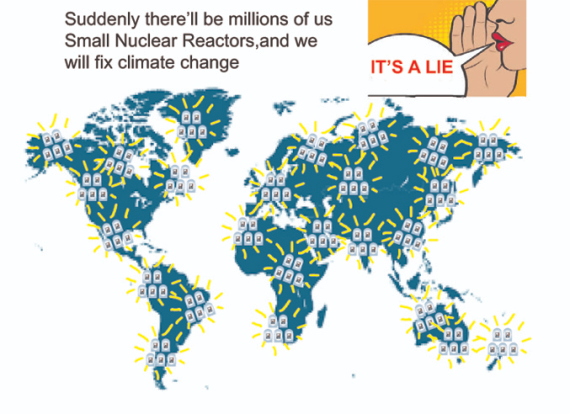
Nuclear needs to build up to 8,000 SMRs just to catch up with wind and solar. By 2035, they might have 5
Giles Parkinson, ReNewEconomy, May 27, 2026
Australia’s almost indistinguishable far right political parties – the Liberals, Nationals and One Nation – are pushing the nuclear barrow once again, not for climate reasons but because of the “anything but wind and solar” ideology demanded by their fossil-fuelled benefactors.
So it came as a timely reminder on Wednesday, when one of the world’s leading green energy analysts, Michael Liebreich, underlined just how useless nuclear energy is for dealing with climate change, and how far the small nuclear reactors championed by many are from competing with surging wind and solar.
Liebreich is the founder of Bloomberg New Energy Finance and his address to the Energy Efficiency Council’s National Conference also touched on the perils of net zero targets (because it puts the focus on what’s really hard rather than what’s readily achievable), and the overwhelming push for electrification for “just about everything.”
But it was the nuclear hype that he was also keen to puncture, if only to underline the sheer scale and dominance of wind and solar, and its rapidly growing share of “useable” energy, as opposed to “primary energy” that ignores the massive inefficiencies of fossil fuels.
SMR are still not being built but they are championed by some of the world’s richest people, the AI and social media “tech bros” who are looking for ample energy sources to power their massive data centre needs (while contracting tens of gigawatts of wind and solar in the meantime).
“They (the tech bros) love nuclear, and they’re going to be very angry when they discover what everybody discovers, which is nuclear is kind of expensive and long and complicated,” Liebreich said.
“But even if they succeed, it’s not going to be a climate solution,” he said. And the reason is that simply to match the output of wind and solar in the 2024 calendar year, the industry would need 1,250 of the 470 MW SMRs that are being developed by Rolls Royce, or up to 8,000 of the much smaller SMRs pushed by the likes of Oklo.
“If they build five by 2035 that will be a big win,” Liebreich said. “And so, as a climate solution, by the time you did build 2000 Westinghouse SMRs, where do you think wind and solar is going to be?
“It’s obviously going to have grown. That green curve is not stopping, it is taking off, and you can see it’s taking off even in the countries that are really trying to build nuclear.”
The nuclear push is usually associated in Australia by calls to abandon net zero targets, with the main argument being – without evidence – that it is trashing the economy.
Net zero has been criticised by others supportive of strong action. Andrew Forrest, aiming for real zero at Fortescue’s giant iron ore mines by 2030, says net zero is an excuse to do not much and use offsets instead of cutting emissions, others say a 2050 target is used by an excuse to do not much anytime soon.
Liebreich’s criticism is that it makes everything sound too hard. “By focusing on zero, immediately your eye is drawn to doing the difficult bits, and the difficult bits are expensive, and we just don’t have to have those discussions right now…………………………………. https://reneweconomy.com.au/nuclear-needs-to-build-up-to-8000-smrs-just-to-catch-up-with-wind-and-solar-now-by-2035-they-might-have-5/
Nuclear brawl erupts over powering Australia’s AI data boom
Ronald Mizen, Financial Review, Aug 25, 2026
A political fight has broken out over using small modular nuclear reactors to meet the soaring electricity demand from data centres, and new research shows that using renewable power could make Australia a regional hub for low-carbon computing power capacity.
On Monday, Coalition frontbencher Jonno Duniam said using SMRs to power data centres should be part of the conversation, and the government should end the moratorium on nuclear power.
Duniam is leading a push within the Coalition to land a largely bipartisan position on artificial intelligence.
Last week, he was appointed deputy chairman of a bipartisan committee on AI and recently travelled to the United States where he held talks with major AI and data centre companies.
“It was clear to me when talking with representatives of major AI and data centre operatives that, if the moratorium was not in place, these companies would be seriously looking to nuclear SMRs to power their operations and not drive up prices,” he told The Australian Financial Review on Tuesday.
The fresh brawl over nuclear power comes ahead of a meeting of the national cabinet on Wednesday during which Prime Minister Anthony Albanese will seek support from premiers and chief ministers for his AI agenda.
The Albanese government wants to force the owners of next-generation, large-scale data centres – those that train and power artificial intelligence agents – to use renewable electricity, and to add more power to the grid than they consume.
This proposal is opposed by Coalition governments in the Northern Territory and Queensland, which want an energy-agnostic policy, including allowing gas.
Grattan Institute energy program director Tony Wood said that despite having as many SMRs today as there are unicorns, Australia needed a plan B to get its electricity emissions to zero.
“It could be [viable],” Wood said of using SMRs. If the technology is viable, it should be part of the energy mix, he said.
Industry Minister Tim Ayres labelled the idea “an ideological fantasy” and said “nobody in the real world with real money” was talking about nuclear power. Energy Minister Chris Bowen said he was opposed based on “cost and delay”, not safety.
“I’m not aware of any proposals to do that in Australia,” Bowen said.
But the AI sector, in Australia and overseas, is keeping a close eye on the development of SMRs, which some believe could power data centres in as little as three to five years.
In late 2024, Google signed a world-first agreement to purchase up to 500 MW of nuclear energy for its data centres from Kairos Power in the US. The first SMR is scheduled to be online in 2030, and the rest are targeted for 2035.
Local industry sources are reluctant to speak publicly on the topic, given how politically charged it is.
A report commissioned by Data Centres Australia from economic consultancy Mandala, being released on Wednesday, shows Australia could become a big exporter of green computing power capacity to the Asia-Pacific region because emissions from hosting this locally are far less than in other countries…………………..https://www.afr.com/politics/federal/nuclear-brawl-erupts-over-powering-australia-s-ai-data-boom-20260825-p60rce
1 This month

4 November – Will AUKUS keep us safe – at what cost?
the Commissioners of the AUKUS Public Inquiry present their findings at the National Press Club of Australia in Canberra. iview.abc.net.au/show/national-press-club-address
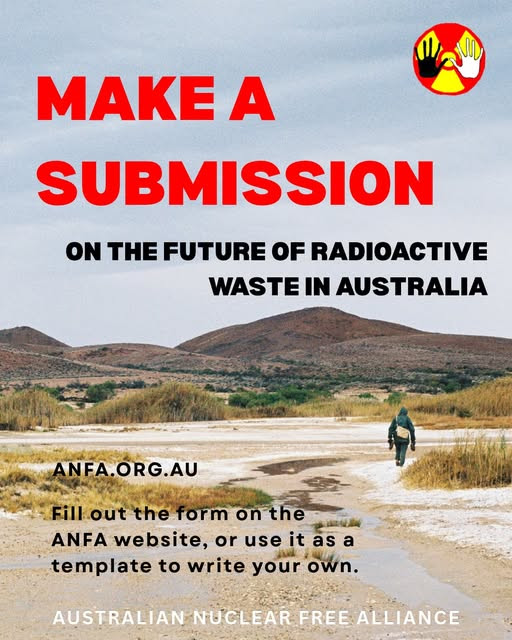
Submissions to the federal government’s new draft framework close on the 13th November 2026.
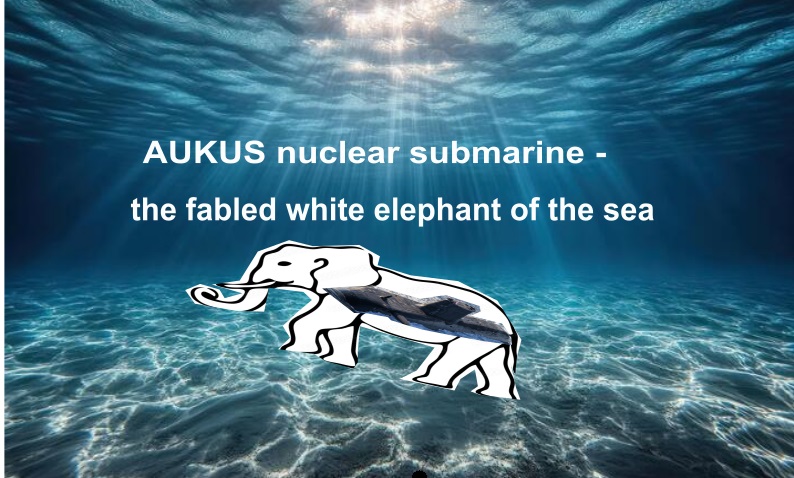
Australians deserve the truth
about
AUKUS – https://aukuspublicinquiry.com/

PETITION – To: Prime Minister Anthony Albanese and the Australian Labor Government

of the week – Australians for War Powers Reform (AWPR)
To see nuclear-related stories in greater depth and intensity

