Monazite – From Brazil to Chicago, Utah, and Nevada / The Brazil–Chicago–Utah–Nevada Connection
20.10.26 – Rio de Janeiro – Pressenza New York, https://www.pressenza.com/2026/10/from-brazil-to-chicago-utah-and-nevada-the-brazil-chicago-utah-nevada-connection/
Monazite sand mining and processing for the production of rare-earth minerals is a risky business and can contaminate people and environment with radioactive thorium, uranium and their decay products. All that was not known in the 19th century when the first Monazite mining boom happened at the coast of Brazil. Now the region and its indigenous peoples are facing the third rush for its thorium and rare earth elements containing sands.
One of the mining companies responsible for that is Energy Fuels Inc. Already in 2023 the U.S.-based critical minerals company acquired about 15,000 hectares at the coast of Southern Bahia, encompassing the municipalities of Alcobaça, Caravelas, and Prado. „The Bahia Project is an initiative that transcends traditional mining, playing a vital role in advancing the global energy transition. Specializing in the extraction of strategic minerals essential for the manufacture of clean technologies, the project strategically positions itself at the forefront of efforts towards a globally less fossil fuel-dependent economy“, writes Energy Fuels.
The company intends to mine between 3,000 and 10,000 tons of monazite sand per year that will be shipped to the US and processed at its White Mesa Uranium Mill in Utah, approximately five miles north of the White Mesa Reservation, home to the Ute Mountain Ute people. The operation is planned to start in 2028, when the expansion of its White Mesa Mill is completed.
However, for decades the Ute demand the closure of the mill, citing significant threats to Indigenous health, sacred lands, water, cultural heritage, and public health…………………………………………………………………………………………………………………………………………………………………………………………………………………………………………………………………………….
The US Environmental protection Agency (EPA) first discovered thorium contamination at Lindsay Light’s Illinois Street location in 1993. Since then, further investigations found soil contamination at more than a dozen locations in the Streeterville neighborhood and additional locations on the south side of the Chicago River. Prolonged or high levels of radiation exposure can damage genetic material in cells and cause cancer and other diseases later on, especially for children, who are more sensitive to radiation. The EPA estimated that, before the waste was removed, radiation levels in some residential neighborhoods in West Chicago increased lifetime cancer risks up to 70 times.
To date, cleanups have been completed at more than a dozen properties. More than 55,000 cubic yards of thorium-contaminated materials have been removed and shipped to Utah. „Several properties known to have contamination remain to be cleaned up“, writes EPA on its website, last updated on March 10, 2026. „EPA’s cleanup at the Lindsay Light site is ongoing. „Because of the long-lived nature of thorium contamination, the need to know that these areas are safe for workers will continue far into the future.“
Norbert G. Suchanek — Journalist, author, photographer, and documentary filmmaker; co-founder of the International Uranium Film Festival, which since 2010 has organized more than 60 festivals across seven countries, bringing nuclear and uranium-related issues to public audiences worldwide.
Nuclear Kills Kids – by Tony Webb

To put it simply and in language that will resonate with workers and their families in the communities around the seven nuclear power plant sites the federal Liberal-National Coalition proposes to build if elected to government, nuclear kills kids.
Tony Webb,, April 2025, https://www.fabians.org.au/nuclear_kills_kids
One moment from my work in the USA in the early 1980s stands out in my memory. I’d driven from Chicago to Cleveland at the invitation of the Health and Safety Officer of the US Boilermakers Union. The purpose was to speak to the members meeting held on the night ahead of the recruitment of members for work on the annual ‘clean-up’ of the local Nuclear Power plant. The hired workers would be ‘radiation sponges’ – short-term casuals recruited for the ‘dirty jobs’ that would result in significant radiation exposures sometimes up to the permitted annual exposure limit and ‘let go’ if they reached that limit. The practice offered some protection to the company’s full -time employees whose skills would be needed on an ongoing basis and whose exposures needed to be kept below the limit. The meeting was well attended , rowdy, with a lot of questions and discussion which spilled over into the carpark after the meeting closed. I noticed one man hanging back from the circle and invited him to join and share his thoughts. As I recall them the essence was:
“I will be going in to apply for work tomorrow. I understand what you shared about the risks . . . no safe level of exposure and chance of getting cancer perhaps 20 years from now . . . It will put a roof over my family’s heads and food on the table . . . BUT my wife and I have had all the family we want. If we hadn’t, what you shared about the genetic risks, the damage to our children and future generations . . . no I wouldn’t be going . . . “
It is a sad fact that workers, both men and women will choose, often from necessity, to put their health at risk from the work environment. What is however consistent in my experience of working on radiation and other occupational health and safety issues is that they are far more concerned, cautious and likely to prioritise safety when it comes to risks to their children.
We now have solid evidence(1) that workers in nuclear power plants routinely exposed to radiation face significantly increased cancer risks, risks of cardiovascular disease including heart attacks and strokes, dementia and potentially other health effects. There is also an increased risk of genetic damage that can be passed on to their children and future generations. But perhaps most significant of all there is now solid evidence of increased rates of leukaemia in children living close to nuclear power plants.
To put it simply and in language that will resonate with workers and their families in the communities around the seven nuclear power plant sites the federal Liberal-National Coalition proposes to build if elected to government, nuclear kills kids. It matters little whether or not these nuclear plants can be built on time, within budget, make a contribution to climate change, reduce electricity prices, or secure a long-term energy future; these nuclear power plants will likely kill kids who live close by. They cannot operate without routine releases of radioactive material into the environment and our young will be exposed and are particularly susceptible to any exposure that results.

Now add to that if you care that women are more susceptible than men; that workers in these plants face greater exposure and health risks than adults in the community; that nuclear plants have and will continue to have both major accidents and less major ‘incidents’ resulting in radiation releases, community exposures and health damage. Add also that quite apart from the workers and others exposed when these plants need to be decommissioned, the radioactive wastes resulting from perhaps 30-50 years life will need to be safely stored and kept isolated from human contact for many thousands of years longer than our recorded human history. And, again if you care, also add in the concerns around proliferation of nuclear weapons which historically has occurred on the back of, enabled by and sometimes concealed by countries’ developing so called peaceful nuclear power.
All these arguments add weight to the absurdity of Australia starting and the world continuing down this nuclear power path. But if we want a single issue that strikes at the heart of human concerns it is this – and forgive me saying it again, it needs to be repeated many times until the electorate in Australia hears it loud and clear – Nuclear Kills Kids.
Dr Tony Webb is a Fabian and a long-time community and environmental activist. He has worked on housing, unemployment, worker cooperatives, anti-nuclear, radiation and health, food policy, and energy/climate issues in the UK USA Canada and Australia. Along the way he picked up an MSc in Energy Resources Management and a PhD in Humanities.
(1) SOURCES……………………………………………………………….
1 This month
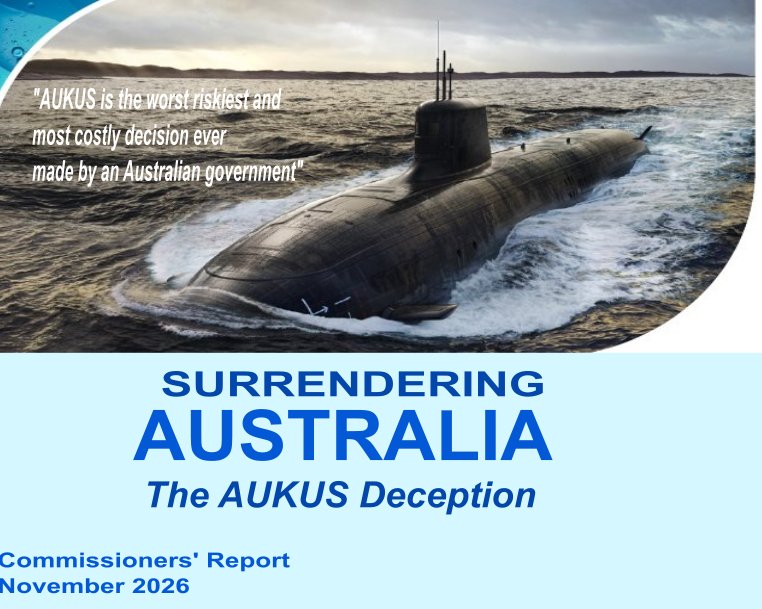
Read the Public Inquiry Report, the Commissioners’ report, Surrendering Australia: The AUKUS Deception is available to download for free at aukuspublicinquiry.com. Or just watch the replay of the National Press Club Luncheon.

4 November – Will AUKUS keep us safe – at what cost?
the Commissioners of the AUKUS Public Inquiry present their findings at the National Press Club of Australia in Canberra. iview.abc.net.au/show/national-press-club-address
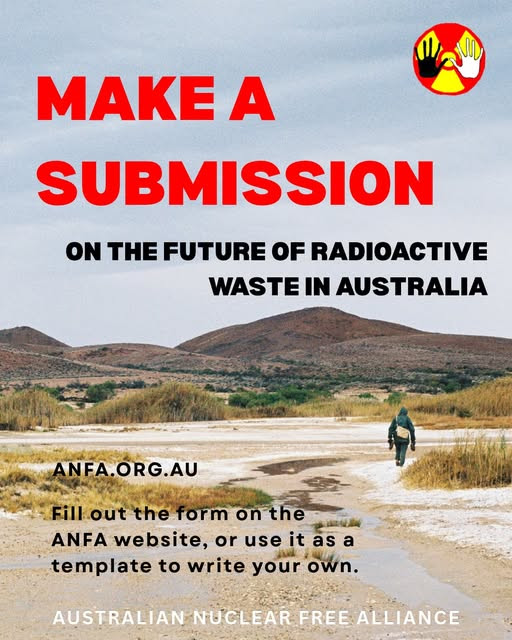
Submissions to the federal government’s new draft framework close on the 13th November 2026.
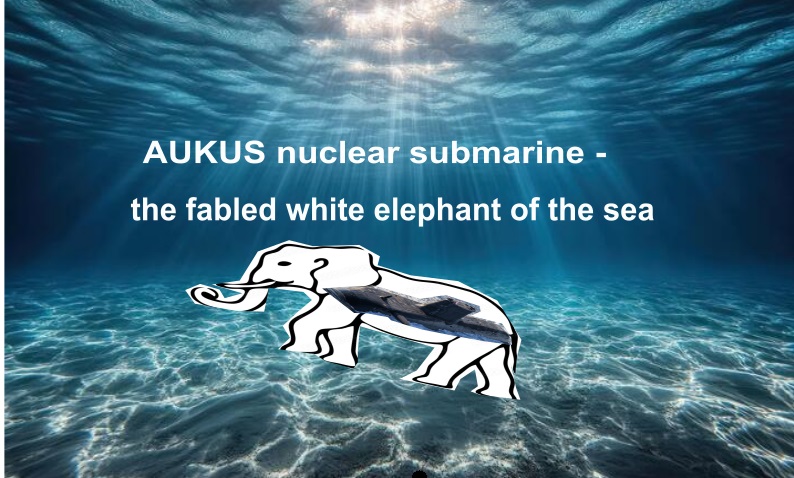
Australians deserve the truth
about
AUKUS – https://aukuspublicinquiry.com/

PETITION – To: Prime Minister Anthony Albanese and the Australian Labor Government

of the week – Australians for War Powers Reform (AWPR)
To see nuclear-related stories in greater depth and intensity

