US warned supplying nuclear-powered submarines to Australia would diminish its own fleet for ‘many years’
The US can refuse to transfer any submarines to Australia without penalty, under the terms of the Aukus agreement.
The US can refuse to transfer any submarines to Australia without penalty, under the terms of the Aukus agreement.
Congressional Budget Office also questions whether Australian-flagged vessels could be compelled into a conflict with China under Aukus deal
Ben Doherty in New York, 20 Nov 26, https://www.theguardian.com/world/2026/nov/20/aukus-defence-us-warned-supplying-nuclear-powered-submarines-to-australia-would-diminish-its-own-fleet-for-many-years
Providing nuclear-powered submarines to Australia would diminish the US navy’s own fleet for “many years”, a new report for the US Congress has cautioned, questioning whether Australian-flagged vessels could be compelled into service in a conflict with China.
The US navy’s latest shipbuilding plan does not countenance the Aukus agreement in its forecasts at all, noting only in a footnote that the transfer of any Virginia-class submarine to Australia “has not been factored into the plan”, the report says.
But the Congressional Budget Office has evaluated the impact of Aukus, releasing detailed analysis on Friday morning, finding “the US submarine industrial base is currently struggling to meet the Navy’s demand for submarines”.
“Increasing production further to replace SSNs [attack submarines] sold to Australia would increase the challenges that the Navy and the shipyards are facing,” the report found.
“The sale of SSNs to Australia would reduce the number of attack submarines available to the Navy for many years.”
Under the so-called “Pillar One” of Aukus, the US has agreed to sell between three and five in-service Virginia-class submarines to Australia, beginning in 2032.
The CBO analysis questioned whether any submarines transferred to Australia could be utilised in the event of a US conflict with China.
“Would China be less deterred if the United States reduced the number of its attack submarines to help Australia develop its own submarine force?”
The report argued that because of the longstanding, and robust, alliance between the US and Australia, boosting the Australian navy’s submarine fleet could help offset the US Navy’s “potential loss of capability”.
“That loss might even be more than offset because the Australian submarines would be based in the Western Pacific region and therefore could respond more quickly to any conflict with China over Taiwan or other issues in the South China Sea.
“However, Australia would control its own submarines, and their participation in any particular conflict would not be guaranteed.”
In 2023, Australia’s defence minister, Richard Marles, said Australia would make no promises it would deploy its submarines in support of any US conflict with China, and that any future Australian submarines would be “under the complete control of the Australian government of the day”.
Submarine-building rates in the US have been tenaciously laggard. The country’s shipyards are currently producing Virginia-class submarines at a rate of 1.13 a year: that rate needs to lift that to two submarines a year to service America’s own needs, and 2.33 a year to have additional boats to transfer to Australia.
The CBO report said submarine-building rates had slowed over the past two decades, and Virginia-class submarines were delayed between 24 and 36 months.
“Building … submarines took five to six years in the 2000s but now takes an average of 10 to 11 years, according to current schedules.”
The US legislation governing Aukus states that the president of the US can only transfer a submarine to Australia if losing that submarine from US service “will not degrade the United States undersea capabilities”.
The US can refuse to transfer any submarines to Australia without penalty, under the terms of the Aukus agreement.
Critics of Aukus have said there is vanishingly little chance the US will have the capacity to sell any of its in-service submarines to Australia.
The former foreign affairs minister Bob Carr told Guardian Australia both countries were “living a lie” in upholding the fiction that the submarine deal would happen. “It’s now conventional wisdom in Washington as well as in Canberra that we’re not going to get the subs.”
But the deal has avowed, bipartisan broad political support across both the US and Australia. Marles said earlier this month: “Aukus is happening, our alliance is happening, and all of that continues unimpeded.”
ete Hegseth, the US secretary of defense, affirmed his support for the Aukus agreement, and the two countries’ commitment “to advance the alliance and strengthen deterrence in the Pacific” at a meeting with Marles in September.
The US Congressional Research Service has openly countenanced an “alternative division of labour” under which no Virginia-class submarines are ever transferred to Australian control.
The research service’s latest report on Aukus, issued in January, considered a revision of the Aukus deal under which the submarines earmarked for sale to Australia were instead retained under US command to be sailed out of Australian bases.
The report argued both for and against the US selling three Virginia-class submarines to Australia, beginning in 2032. But it makes the case that, in the event of a “conflict or crisis” with China over Taiwan, submarines under Australian command could not be ordered into operation, whereas US-commanded vessels, operated out of Australian bases, could be immediately deployed.
THE WORLD HAS CHANGED: EUROPE IN MELTDOWN AS XI, TRUMP AND PUTIN MEET
A conversation with Prof Warwick Powell
Ian Proud Nov 19, 2026, https://thepeacemonger.substack.com/p/the-world-has-changed-europe-in-meltdown?utm_source=post-email-title&publication_id=3221990&post_id=225631364&utm_campaign=email-post-title&isFreemail=true&r=1ise1&triedRedirect=true&utm_medium=email
The World Has Changed. Europe Hasn’t Noticed.
As I write this, Presidents Xi Jinping, Donald Trump and Vladimir Putin are meeting in Shenzhen on the sidelines of the APEC summit. Three nuclear powers, talking to each other in the same city. In Britain and across much of Europe the reaction has been depressed, almost panicked. Many see it as a retrograde step, a bad day for the West. From where I sit, that reaction says more about Europe’s state of mind than it does about the meetings themselves.
A meeting Europe was never going to be part of
APEC is an Asia-Pacific economic forum. It has 21 members. Neither Britain nor the European Union is one of them for the simple reason that they are not Asian or Pacific powers. The fact that the presidents of China, the United States and Russia happened to be in the same place at the same time is a consequence of that gathering, not some secret anti-European conspiracy. Yet the mood in London and Brussels has been one of deep unease. Professor Warwick Powell, speaking to me from Australia, put it bluntly: it is a little sad. Years of political choices have left ordinary Europeans poorer, and the response of many leaders has been to double down on confrontation rather than look for settlements that might restore prosperity.
Economics first, or politics first?
Asia is becoming the centre of global growth. Doom-mongers have predicted China’s hard landing for twenty years and it still hasn’t arrived. The countries around the Pacific have spent the last year quietly reducing trade frictions, upgrading free-trade deals and keeping supply chains moving. Meanwhile Europe has spent the same period prioritising political goals over economic ones. Expensive energy, self-harming sanctions and an open-ended commitment to a war of attrition in Ukraine have all come with dire costs. Those costs are now visible in living standards. As Powell noted, structural change takes time and is politically difficult. European leaders have preferred the simpler path of moralising about the world they wish still existed.
The multipolar reality
There is a recognition inside parts of the American system that the world of 1991 is gone. Marco Rubio has spoken of multipolarity, even if his version of it emphasises spheres of influence and competition. China and Russia have their own views of what multipolarity means. The important point is that all three recognise the distribution of economic and technological power has shifted. Europe’s position, by contrast, often seems to be that the change is immoral and can therefore be reversed if only Russia withdraws from Ukraine and everyone goes back to the old rules. That is not a strategy. It is a refusal to look at the balance of productive capacity, energy and technology as it actually exists in 2026.
What the meetings might actually produce
Powell does not expect China to insert itself deeply into the Ukraine question. The more interesting possibilities lie elsewhere: a modest step on nuclear risk reduction, an agreement that artificial intelligence should stay away from nuclear command systems, or simply a mechanism for the three powers to keep talking when tensions rise. None of these would be dramatic. All of them would be more useful than, for example, the current European insistence that nothing of substance can be discussed on the Ukraine war until a ceasefire is already in place and even then the substance should remain off-limits.
A lesson Europe is ignoring
The most striking contrast is not between the three leaders and Europe. It is between the way APEC members handle disagreement and the way European institutions often do. Twenty-one diverse countries, with different political systems and stages of development, still manage to keep economic channels open and look for practical ways to share burdens. Europe, facing its own energy and security pressures, has tended to pull up the drawbridge and silence dissenting voices. That approach may feel principled in the short term. It is unlikely to produce either security or prosperity for ordinary Europeans over the longer one.
The meetings in Shenzhen will not redraw the map overnight. They do, however, illustrate a simple fact: the major powers are adjusting to a changed world, however imperfectly. Europe is still arguing about whether the change should be allowed to happen.
1 This month
23 Nov – Online via Zoom – Ask the Commissioners
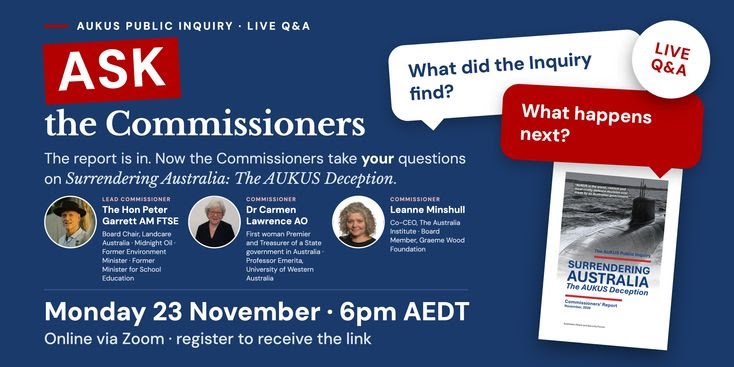
Mon, 23 Nov, 6pm – 7pm AEDT Get tickets
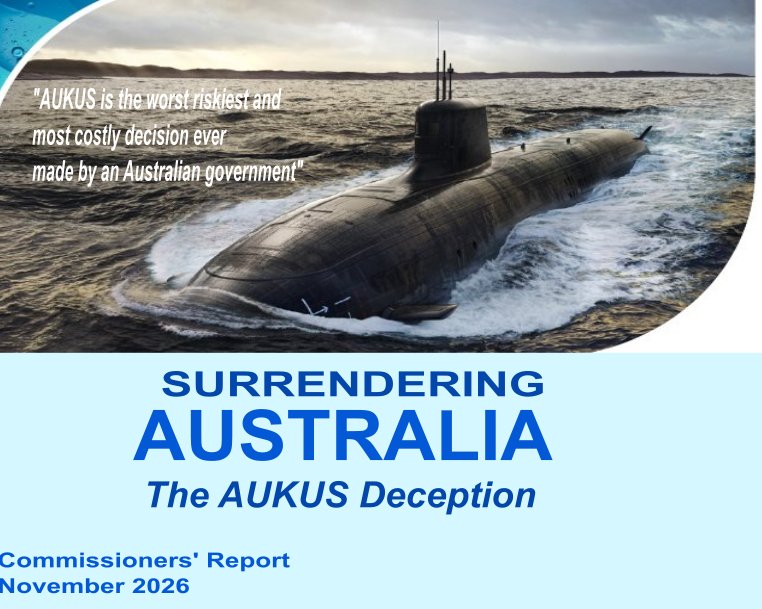
Read the Public Inquiry Report, the Commissioners’ report, Surrendering Australia: The AUKUS Deception is available to download for free at aukuspublicinquiry.com. Or just watch the replay of the National Press Club Luncheon.
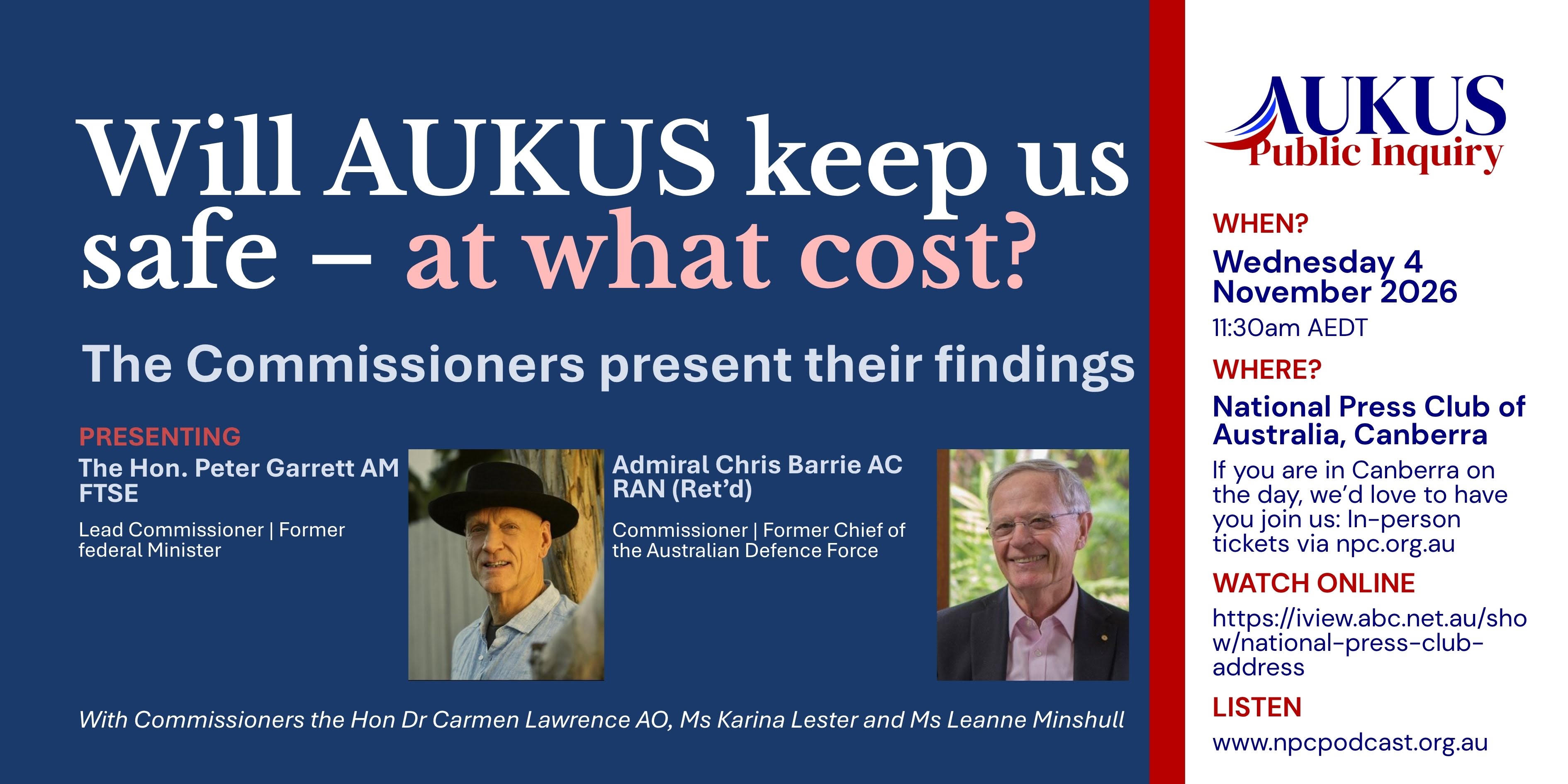
Will AUKUS keep us safe – at what cost?
the Commissioners of the AUKUS Public Inquiry presented their findings at the National Press Club of Australia in Canberra. iview.abc.net.au/show/national-press-club-address
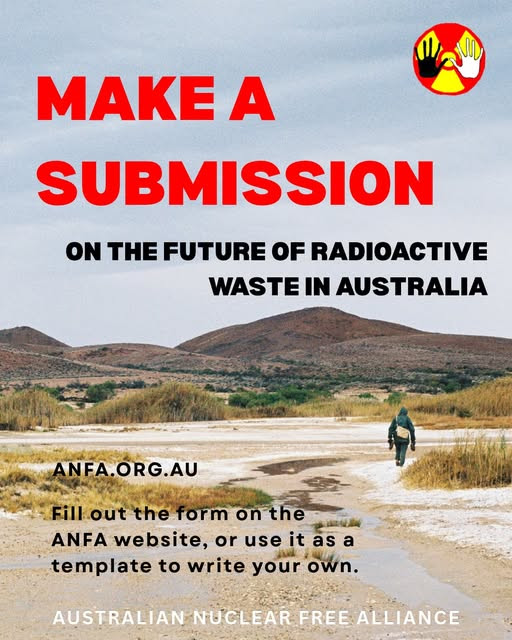
Submissions to the federal government’s new draft framework close on the 13th November 2026.
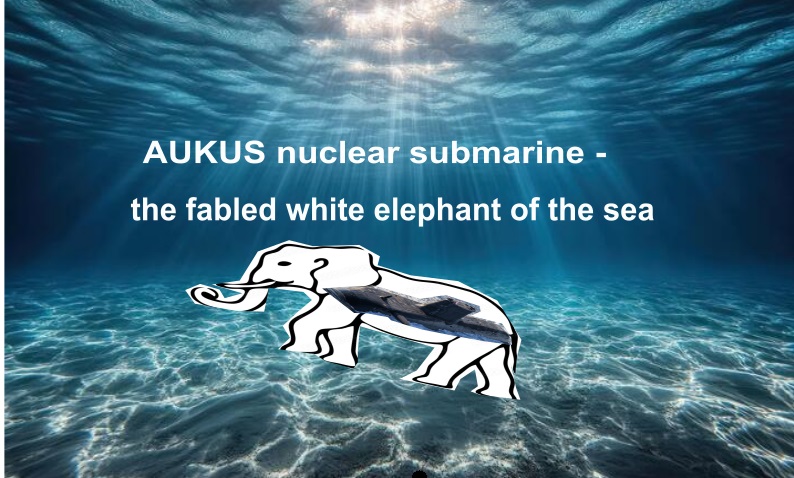
Australians deserve the truth
about
AUKUS – https://aukuspublicinquiry.com/

PETITION – To: Prime Minister Anthony Albanese and the Australian Labor Government

of the week – Australians for War Powers Reform (AWPR)
To see nuclear-related stories in greater depth and intensity

